
Federal Cabinet Bans Tehreek-e-Labbaik Pakistan Under Anti-Terrorism Law After Violent Protests

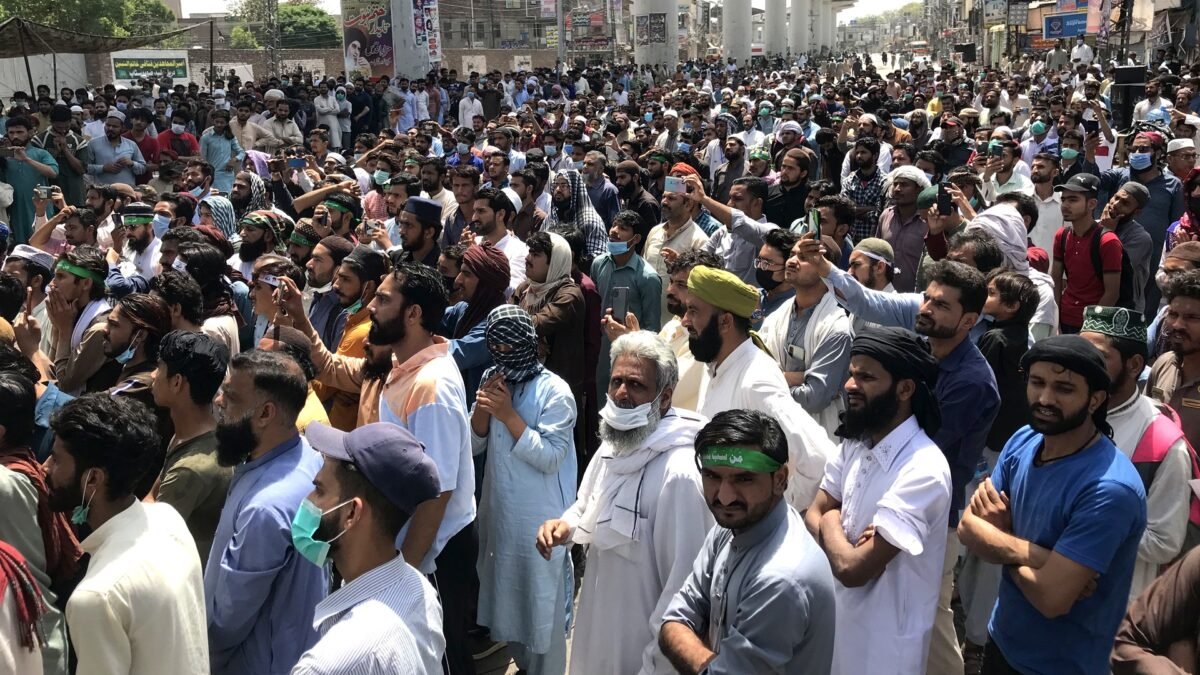
Pakistan’s federal cabinet has unanimously approved a ban on the hardline religio-political party Tehreek-e-Labbaik Pakistan (TLP) under the Anti-Terrorism Act, declaring it a proscribed organisation, the Prime Minister’s Office announced on Thursday. The interior ministry followed up with a formal notification on Friday, placing the TLP on the list of banned groups maintained by the National Counter Terrorism Authority (NACTA) — the same list that includes the Tehreek-i-Taliban Pakistan and the Baloch Liberation Army.
According to the interior ministry notification, a copy of which was reported by Dawn.com, the federal government acted on the belief that it had “reasonable grounds” to think the TLP was connected to terrorism. Invoking Section 11B(1)(a) of the Anti-Terrorism Act of 1997, the notification ordered the TLP to be listed in the First Schedule of the Act as a proscribed organisation.
The cabinet decision was taken at a meeting in Islamabad chaired by Prime Minister Shehbaz Sharif, on a recommendation from the Punjab government. Senior Punjab officials joined the federal cabinet’s deliberations by video link, according to the PMO’s press release, which said the interior ministry had presented a summary of the Punjab government’s request and briefed the meeting on what it called the “violent and terrorist activities of TLP in the country”.
The press release stated that the federal cabinet, after the briefing and the Punjab recommendation, “unanimously concluded that the TLP is involved in terrorism and violent acts”. It noted that the organisation, established in 2016, had repeatedly incited violence across the country, and that “in the past, security personnel and innocent bystanders have been killed in violent protests and rallies by the TLP”.
The Gaza march that triggered the crackdown
The immediate trigger for the ban was the TLP’s “Gaza Solidarity March”, which the party launched from Lahore earlier this month and pledged to carry to Islamabad, where it intended to protest in front of the United States embassy in a show of support for Palestinians.
The march never got past Muridke, a town about 60 kilometres from Lahore. On October 13, police forcibly dispersed the TLP’s protest camp there, and what followed was a confrontation that quickly turned violent, according to officials and news reports. The News reported that the clashes resulted in the death of a police station house officer (SHO) and three others, including a passerby. The Punjab Police said TLP protesters had resorted to violence in Muridke, claiming that 48 police and Rangers personnel were injured — 17 of them by gunfire — and that three TLP workers and one passerby were also killed, with at least 30 more people injured.
The Punjab cabinet, chaired by Chief Minister Maryam Nawaz, had moved first: it recommended the ban to the federal government, decided that TLP leaders and workers implicated in the deaths of police personnel and the destruction of public property would be tried in anti-terrorism courts, and launched a province-wide crackdown. Reports said the authorities had arrested thousands of TLP activists, sealed the group’s bank accounts and several properties, and that the party’s leader, Saad Rizvi, had gone underground.
A second ban — and the 2021 precedent
This is not the first time the Pakistani state has banned the TLP. In 2021, the government of then-prime minister Imran Khan outlawed the group after violent protests against France and attacks on law-enforcement agencies. That ban was lifted six months later after the party pledged to refrain from unrest and violent activities.
The cabinet was explicitly reminded of that history this week. The PMO’s press release pointed out that the 2021 ban had been revoked on the condition that the organisation would not carry out unrest or violent activities in the future, and described the current ban as a consequence of the party reneging on those guarantees. The interior ministry notification struck the same note: the 2021 ban had been lifted on assurances of non-violence, and the present proscription stemmed from the group’s violation of those assurances.
The TLP, founded in 2016 by the late firebrand cleric Khadim Hussain Rizvi, grew out of the Barelvi movement and built its identity around an uncompromising defence of Pakistan’s blasphemy laws. It has repeatedly demonstrated an ability to paralyse cities through street mobilisation — the 2017 Faizabad sit-in, which blocked Islamabad for weeks, remains the reference point the government itself keeps returning to. Prime Minister’s political affairs adviser Rana Sanaullah, speaking on Geo News after the cabinet decision, said the ban was aimed at curbing the group’s violent tendencies rather than its religious ideology. “No one has any issue with their religious views,” he said, adding that the problem arises when “their protests turn violent and cause loss of life”. He cited the 2017 Faizabad sit-in as an example of how the TLP had repeatedly challenged state authority through violence.
The party also grew into an electoral force: the TLP contested national elections and secured a substantial share of the popular vote in 2018 and again in 2024, making it one of the country’s largest parties by vote share outside the traditional big three. That dual character — street movement and ballot contender — is what makes proscribing it a far more consequential act than banning a purely militant outfit.
Analysis: Why It Matters
A proscription under the ATA is a heavier instrument than the 2021 ban
The 2021 ban was politically expedient and relatively short-lived — imposed in April and lifted by November after negotiations. A proscription under Section 11B of the Anti-Terrorism Act carries sharper legal teeth: bank accounts frozen, assets sealed, members subject to surveillance under the Fourth Schedule, and leadership exposed to prosecution in anti-terrorism courts. As the notification’s wording makes clear, the state is now formally characterising the TLP as a terrorist organisation rather than merely an unruly political party. That classification changes the rules of engagement: future street mobilisation by the party can be met with counter-terrorism machinery, not crowd-control politics. Whether the state sustains that posture this time — or negotiates another exit ramp, as it did in 2021 — will be the defining question.
The Gaza optics cut both ways
The party chose its battlefield carefully. A “Gaza Solidarity March” towards the US embassy wraps a confrontation with the state in the language of the Palestinian cause, which commands broad public sympathy in Pakistan. The government, for its part, has tried to separate the two: its public line, voiced by Rana Sanaullah, is that the ban targets violence, not religious or political expression. But the optics remain combustible. The TLP will now present itself to sympathisers as having been banned for marching for Gaza — a framing that could win it more sympathy than its leadership’s actual conduct might warrant. How the government manages this narrative, particularly among the party’s Barelvi support base, will matter as much as the legal paperwork.
A state asserting itself on multiple fronts
The ban lands in a week in which the federal government has been visibly asserting authority across the political spectrum. The same cabinet has been dealing with the fallout of the October 11 emergency and governor’s rule in Khyber Pakhtunkhwa, the Peshawar High Court’s notices to the centre, and the stalled dialogue with the opposition alliance. Banning the TLP under the ATA while simultaneously prosecuting a constitutional confrontation with the PTI’s provincial government presents an image of a state willing to use the full toolkit of executive power — emergency provisions against a political rival’s government, counter-terrorism law against a religious party. Supporters of the government will call this the restoration of the state’s writ; critics will call it the expansion of executive overreach. Both readings share the same premise: this is not a government shrinking from confrontation.
Pakistan’s record with bans is discouraging
The cautionary history is long. The 2021 TLP ban lasted six months and ended in a negotiated settlement. Jamaat-ud-Dawa, the political front of Lashkar-e-Taiba, has been banned and renamed and banned again across two decades without disappearing. Proscribed groups in Pakistan have a documented habit of surviving through rebranding, charitable fronts and electoral participation under new names. The TLP itself demonstrated this resilience: banned in April 2021, unbanned by November, back on the streets by 2023, and contesting elections again. A ban can freeze bank accounts and remove a party symbol, but dismantling a movement rooted in a religious constituency and street infrastructure is a different, longer undertaking — and the state has rarely completed it.
The electoral question nobody has answered yet
The TLP is not just a street movement; it is a registered political party that won millions of votes in the last two general elections. Proscription under the ATA raises unresolved questions about its electoral future: whether the Election Commission of Pakistan will move to de-list the party or withdraw its electoral symbol, and whether a banned organisation can contest future polls under a successor banner. The party’s supporters have already demonstrated their defiance — one report noted TLP backers rallying in Lahore the day after the ban. If the state intends the proscription to hold, the next arena will be the courts, where the party is likely to challenge the executive action — and where the judiciary will have to weigh Article 17’s protections for political parties against the government’s terrorism case.
What to Watch Next
- The TLP’s legal response: The party is widely expected to challenge the proscription in court. The terms of any judicial review — and whether the ban survives it — will determine whether this becomes a permanent outcome or another 2021-style episode.
- Saad Rizvi’s next move: The TLP chief has reportedly gone underground following the crackdown. Whether he surfaces to lead a legal fight, calls for street mobilisation, or is detained will set the immediate temperature.
- The Punjab trials: The Punjab government has said TLP leaders and workers implicated in the Muridke deaths and property destruction will be tried in anti-terrorism courts. The pace and visibility of those trials will signal how far the state intends to go.
- ECP’s decision on the party’s status: Watch whether the Election Commission moves against the TLP’s registration or electoral symbol — a step that would convert a security ban into a political one.
- PTI’s position: Imran Khan’s party, itself in a bruising confrontation with the federal government over Khyber Pakhtunkhwa, has opposed the ban, according to reports. How the opposition alliance positions itself on the TLP proscription will shape the political narrative around it.
Sources
- The News — “Federal cabinet gives nod to ban Tehreek-e-Labbaik Pakistan”
- South Asia Terrorism Portal — “Federal Government approves ban on TLP under anti-terrorism act” (reporting Dawn)
- The Free Library — “Interior ministry notifies ban on TLP following federal cabinet’s approval” (reporting Dawn.com)
- IANS — “Pakistan: Shehbaz Sharif govt approves ban on TLP under anti-terrorism act” (reporting The Express Tribune)

About the Author — Abdul Mannan
Related Articles
Government Offers Talks as Opposition Insists on Its Terms, Venue Row and Imran Khan Access Demands Stall Dialogue
Islamabad renews its dialogue offer to the opposition, but a venue row, the demand for access to Imran…
PM Shehbaz Announces Rs160 Billion Package for KP on First Peshawar Visit Since Governor’s Rule, Accuses PTI of ‘Callousness’
Prime Minister Shehbaz Sharif on Thursday visited Peshawar for the first time since the federal government imposed an…
PTI Infighting Erupts as Gandapur and Salman Akram Raja Trade Accusations Over Failed Protest and K-P Power Struggle
A public row between PTI Secretary General Salman Akram Raja and former Khyber Pakhtunkhwa chief minister Ali Amin…