
PM Shehbaz Announces Rs160 Billion Package for KP on First Peshawar Visit Since Governor’s Rule, Accuses PTI of ‘Callousness’

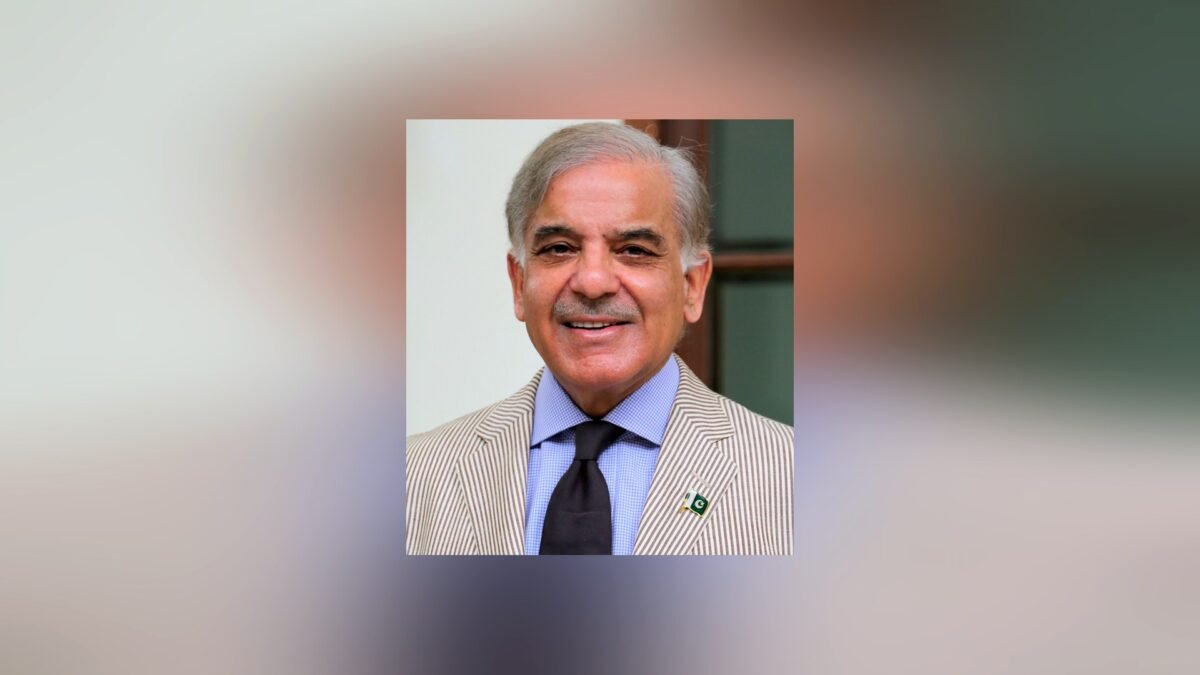
Prime Minister Shehbaz Sharif on Thursday visited Peshawar for the first time since the federal government imposed an emergency and governor’s rule in Khyber Pakhtunkhwa on October 11, announcing a Rs160 billion development package for the province and delivering a blistering attack on the Pakistan Tehreek-e-Insaf’s record on security and governance.
Chairing a meeting of the provincial apex committee at the Governor House, the prime minister said the emergency measures had been imposed “under extreme compulsion” and accused the previous PTI-led provincial government of “callousness” and “criminal negligence” in the fight against terrorism.
“I promise that we will leave no stone unturned in bringing back the happiness and era of progress to this province, and in the practical realisation of the wishes, aspirations, and dreams of this province’s people that have been shattered due to the worst actions of recent years,” Shehbaz said, according to Dawn.
The meeting was attended by Chief of Defence Forces and Chief of Army Staff Field Marshal Syed Asim Munir, Khyber Pakhtunkhwa Governor Faisal Karim Kundi, federal ministers, newly appointed provincial advisers and senior officials. It reviewed the province’s security situation following the imposition of governor’s rule, which the Centre says was necessitated by the former PTI government’s “deliberate disengagement” from the fight against terrorism.
Later, addressing the Area Representative and Development Council (ARDC) — a body representing 12 districts of the province that face serious security challenges — the prime minister announced that the federal government would provide KP with Rs160 billion for development projects. The council covers Dera Ismail Khan, Tank, Lakki Marwat, Bannu, Bajaur, Mohmand, Khyber, Kurram, Orakzai, North Waziristan, South Waziristan Upper and South Waziristan Lower, and includes 48 elders and prominent personalities from those districts.
Shehbaz also promised that the Centre would supply the province with “as much wheat as is needed” from the storages of the Pakistan Agricultural Storage and Services Corporation (Passco), warning that there must be no hoarding and that wheat should reach the common man at the same price the federal government supplies it.
The prime minister assured the council that the federal government would provide “whatever assistance” was needed in operations and resources to fight terrorism, and said directives had been issued to strengthen the Counter-Terrorism Department and complete the long-delayed Safe City projects.
Scathing attack on PTI’s record
The prime minister used the occasion to mount a detailed charge against the PTI’s stewardship of the province, which the party governed from 2013 until governor’s rule was imposed earlier this month.
He regretted that “terrorists were summoned back here” after peace had been established, “washing down all sacrifices down the drain”, and called for an “all-encompassing analysis as to why this happened”.
“There can be no greater enmity with the country than not honouring and respecting such sacrifices, not holding them in esteem,” he said, recalling that young soldiers had left their homes and families to defend the country.
Shehbaz asserted that 5,000 police vacancies had never been filled, the Safe City projects were yet to be completed, the capacity of the Counter-Terrorism Department had not been significantly enhanced, and no special measures had been taken for police training during PTI’s tenures.
He recalled that all provinces had agreed at the time of the 2010 National Finance Commission Award that KP, as the front-line region in combating terrorism, needed ample resources. “From 2010 to today, more than Rs800 billion in funds have either already been provided or are being provided under this,” he said.
“However, not only did it [terrorism] resurface, but the weapons needed to counter terrorism, the required capacity, and the trained officers needed were nowhere to be found,” he added.
The prime minister also levelled corruption allegations against the former provincial government, citing what he described as a Rs100 billion scam in a clean drinking water project under the Cities Improvement Project and a Rs37 billion scandal at the Kohistan District Accounts Office.
He said he had personally assured the former chief ministers, Ali Amin Gandapur and Sohail Afridi, of the Centre’s full support in the fight against terrorism. “But nothing was done regarding this,” he said, adding that the government could not remain a “silent spectator” when a “party was stooping to such enmity against the country”.
Shehbaz also recalled the breakdown of the October 3 talks between the Centre and the PTI government, reiterating that his government was “compelled to make this decision” of imposing governor’s rule.
“The federal government could not remain a silent spectator when terrorists were roaming around dancing in all areas of KP, and were ruling over some areas in the evening, and collecting extortion,” he said.
He noted that the province had been “shattered with wounds due to the circumstances created in the past several years”, and said the economy had suffered losses of several hundred billion dollars while 80,000 people had been martyred before peace was “completely restored in this country” in 2018.
Governor outlines priorities
Governor Faisal Karim Kundi, who is now in charge of running the province under an 11-member advisory council, told the apex committee that establishing peace and stability in KP was a “collective priority” in the interest of the entire country.
He paid tribute to the people of the province for showing restraint during the transition, asserting that there had been no untoward incident following the imposition of emergency measures. He also paid tribute to the personnel of the police, army, Frontier Corps and Federal Constabulary who sacrificed their lives in the war against terrorism.
“These sacrifices demand a more effective strategy to combat terrorism,” Kundi said, adding that the foremost priority of the KP Advisory Council was to restore peace and eliminate terrorism, while the facilitators and financiers of terrorists would also be targeted.
The governor declared the development of the merged districts a “special priority”, saying: “The people of these regions have paid a heavy price during this fight against terrorism. Now, they deserve better education, health, and economic opportunities.”
Separately, Kundi announced the relaxation of a ban on the procurement of vehicles for the police, which the KP government had imposed in July, to ensure the force has the resources it needs. He said the restrictions would be loosened “within the approved scope and against funds already allocated in the Police Procurement Plan”, strengthening operational capacity “without placing any additional burden on the provincial exchequer”.
Analysis: Why It Matters
The visit is the message
The first thing to understand about Shehbaz Sharif’s trip to Peshawar is that the journey itself is the headline. A prime minister visiting a province his government has just placed under emergency rule is a carefully staged act of ownership. By physically standing in the Governor House alongside the army chief and the new provincial administration, Shehbaz is telling the country — and the province — that the Centre did not grab Khyber Pakhtunkhwa from the PTI in a vacuum; it intends to govern it.
That is a high-risk, high-reward proposition. If security improves and development money visibly flows, the October 11 decision begins to look like the rescue operation the government says it is. If it does not, the prime minister has now personally taken ownership of a province whose problems have defeated every administration of the past two decades.
Rs160 billion as a political instrument
The Rs160 billion package is as much politics as economics. Coming just days after PTI figures floated vastly larger numbers, the federal announcement is an attempt to seize the development narrative from a party that spent 13 years branding itself as the province’s defender.
The figure should be read in the context of the prime minister’s own arithmetic: he told the council that more than Rs800 billion had been provided to KP under the NFC Award since 2010 for counterterrorism, with little to show for it. The implicit question he is putting to voters is straightforward: if hundreds of billions did not buy security under the PTI, what exactly was bought? The corruption figures he cited — Rs100 billion in a water project, Rs37 billion in Kohistan — are the answer he wants them to reach.
‘Callousness’ and the terrorism blame game
The rhetorical heart of the visit was the prime minister’s accusation that the PTI showed “callousness” and “criminal negligence” toward the national interest by failing to confront terrorism. This is the core of the government’s legal and political case for governor’s rule: that the provincial government had a “nexus” with terrorist groups and deliberately disengaged from counterterrorism.
It is a grave charge, and the PTI has denied it. The party argues that it was excluded from security decisions and that its demand for a review of counterterrorism policy was a legitimate one. What is notable about Shehbaz’s framing is how he fused the security argument with the governance argument — unfilled police posts, unfinished Safe City projects, an under-capacity CTD — making the case that the failures were institutional and systemic, not merely political.
The new administration structure takes shape
The visit also offered the clearest picture yet of how the province will actually be governed. The 12-district Area Representative and Development Council, with its 48 elders, is the Centre’s answer to the democratic deficit of governor’s rule: a consultative body drawn from the most affected areas that lends tribal legitimacy to federal decisions. Combined with the governor-led advisory council and the presence of the army chief at the apex committee, the picture is of a heavily centralised security-and-development apparatus in which the army, the federal cabinet and local elders each have a defined seat.
That is a defensible design for a counterterrorism campaign. Whether it is a durable model of governance is another question entirely — one that the Peshawar High Court, which is hearing challenges to the emergency, may yet answer.
What this means for PTI’s next move
For the PTI, the Peshawar visit is a problem layered on top of a problem. The party is already consumed by internal warfare — the public feud between former chief minister Ali Amin Gandapur and secretary general Salman Akram Raja has exposed deep fractures over who speaks for the party in Khyber Pakhtunkhwa. Now the federal government is planting its flag on the party’s home turf, announcing development money and accusing its leaders of theft and treachery.
The party’s options are narrowing. Street agitation has produced diminishing returns since the October 11 crackdown. The courts remain a venue, but legal challenges to the emergency are slow. And every week that governor’s rule continues without serious public unrest strengthens the government’s claim that the people of the province prefer order to the PTI’s version of resistance.
What to Watch Next
- The first spending disclosures: The Rs160 billion announcement is only a number until projects, timelines and disbursement mechanisms are published. Watch whether the governor’s administration releases a detailed spending plan in the coming weeks.
- Police and CTD reform: The relaxation of the vehicle procurement ban and the promised CTD upgrades are the first test of whether the new administration can move faster than its predecessor.
- The court challenge: The Peshawar High Court is hearing petitions against the emergency and governor’s rule. Any adverse ruling would transform the political calculus overnight.
- The 12-district experiment: The separate administrative arrangement for the former tribal districts is the most consequential governance change. Watch whether it delivers security gains or deepens local resentment.
- PTI’s response: Whether the party mounts a coordinated counter-narrative or remains mired in its internal leadership fight will determine how much political space the federal government gets in the province.
Sources
- Dawn News English – PM Shehbaz vows to restore progress in Khyber Pakhtunkhwa
- Abb Takk News – PM Shehbaz announces Rs160 billion development package for KP
- ADN News English – Prime Minister announces PKR 160 billion package for Khyber Pakhtunkhwa
- Daily The Destination – Shehbaz Peshawar visit: PM defends KP emergency rule, criticises PTI

About the Author — Abdul Mannan
Related Articles
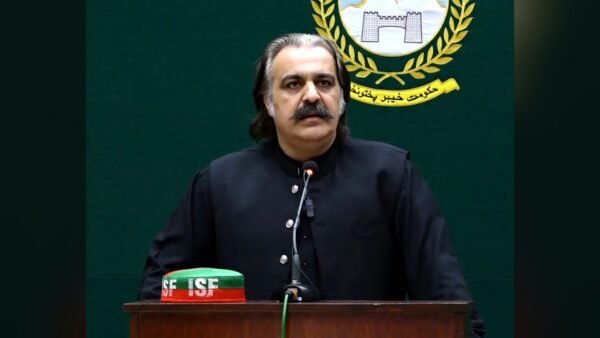
PTI Infighting Erupts as Gandapur and Salman Akram Raja Trade Accusations Over Failed Protest and K-P Power Struggle
A public row between PTI Secretary General Salman Akram Raja and former Khyber Pakhtunkhwa chief minister Ali Amin…
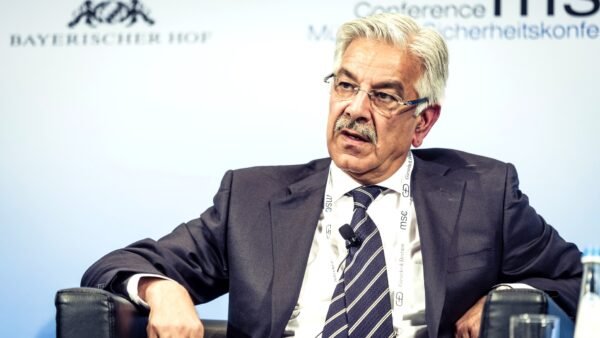
Pakistan, Türkiye, Qatar and Indonesia Sign ‘Badr’ Defence MoU in Doha
Pakistan, Türkiye, Qatar and Indonesia signed the "Badr" defence memorandum of understanding in Doha on 21 October 2026,…
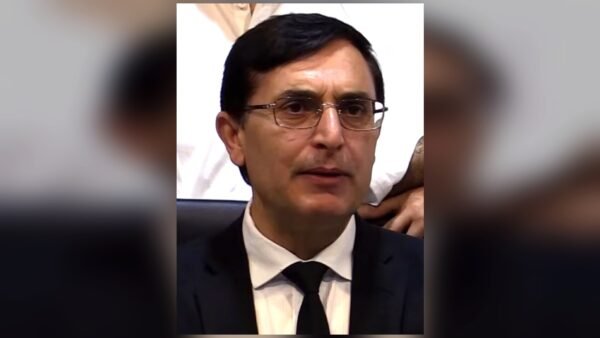
PTI Rules Out ‘Minus’ for Opposition Leader Achakzai, Says No Talks on Fazl Replacement
PTI chairman Barrister Gohar Ali Khan says Mahmood Khan Achakzai retains Imran Khan's full confidence and rules out…