
Government Offers Talks as Opposition Insists on Its Terms, Venue Row and Imran Khan Access Demands Stall Dialogue

Islamabad
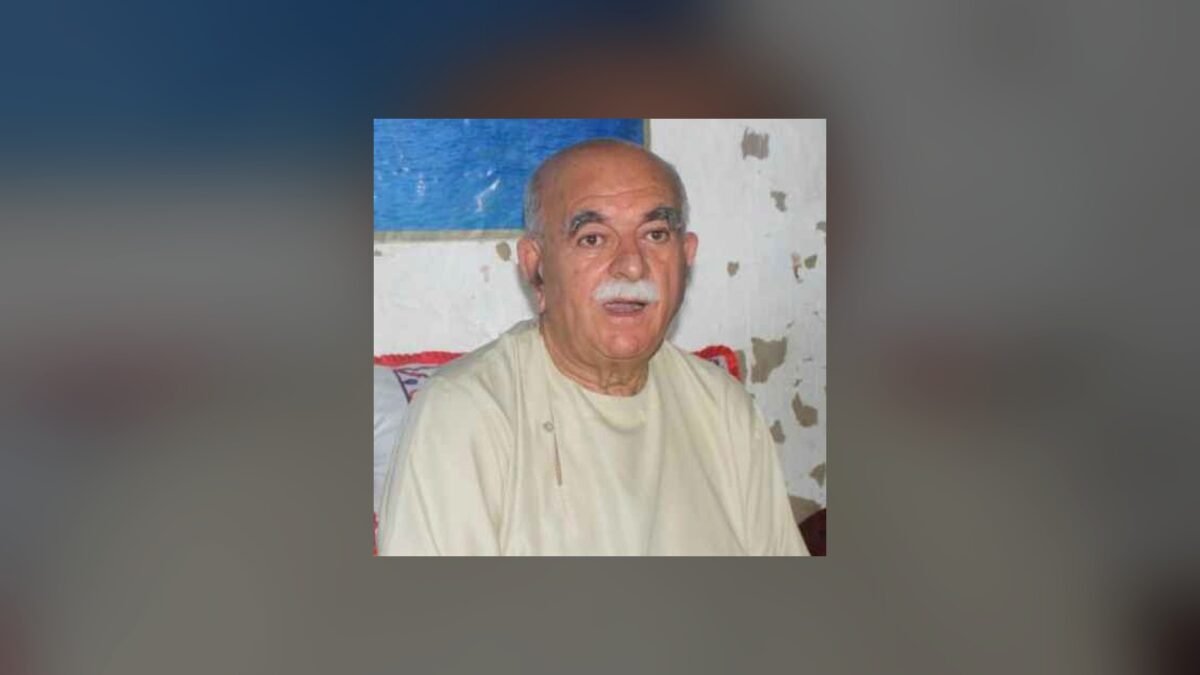
The government of Pakistan has renewed its offer of dialogue to the opposition, but the two sides remain stuck over where and how the talks should take place — and whether anything meaningful can happen without access to jailed former prime minister Imran Khan. Federal Minister for Parliamentary Affairs Tariq Fazal Chaudhry said on Thursday that the agenda of a meeting between Prime Minister Shehbaz Sharif and Leader of the Opposition in the National Assembly Mahmood Khan Achakzai was more important than its venue, signalling that the prime minister was ready to meet Achakzai to discuss matters of national interest and fulfil constitutional requirements, according to The News.
Speaking to Geo News, Chaudhry said the government remained willing to engage the opposition and that the venue should not become an obstacle when discussions concerned national interest. The opposition, however, has continued to demand a neutral location. Earlier in the day, the opposition alliance Tehreek Tahaffuz Aiyeen-e-Pakistan (TTAP) proposed the Constitution Room in Parliament as the talks venue. “If the prime minister comes to the opposition chamber, we will take him to the Constitution Room,” TTAP spokesperson Akhunzada Hussain said, adding that ego or stubbornness should not obstruct dialogue.
A TTAP spokesperson said a meeting at the Prime Minister’s Office would count as a meeting, but not as real negotiations, which could instead be held in the Constitution Room or at the residences of Rana Sanaullah or Chaudhry himself. The government had earlier insisted that the meeting be held at the PM House — which Rana Sanaullah said belongs to the state.
Talking to the media outside the Parliament House, Achakzai said he would go to any venue the prime minister invited him to, or could himself go to the PM House and suggest one. “But negotiations can’t be held this way that you make fun of PTI, Maulana Fazl and our other leaders,” he said, referring to remarks by government figures that the opposition says have poisoned the atmosphere. Achakzai revealed that a formula had been agreed after Maulana Fazlur Rehman, Allama Raja Nasir Abbas and Barrister Gohar held deliberations — but the government then announced governor’s rule in Khyber Pakhtunkhwa instead of a promised meeting with Imran Khan. He said meaningful negotiations were impossible without a meeting with the jailed PTI founder.
The venue dispute is only one layer of a deeper deadlock. Achakzai also disclosed that he had called the National Assembly Speaker a “hawaldar” — a police constable — over a remark about watching members’ conduct, which he described as unjustified. He proposed the formation of a panel to probe corruption allegations against the government, and said the opposition would resist what he called the “undemocratic system” through democratic means.
Rejecting claims that the Centre wanted to take control of Khyber Pakhtunkhwa for political reasons, Chaudhry said the emergency rule was imposed to restore peace and promote development in a province facing terrorism and resource constraints. He added that four drafts had been finalised during the earlier round of talks, but that opposition negotiators repeatedly sought Chief Minister Sohail Afridi’s approval and eventually backed away from the fourth draft, saying he did not agree. Chaudhry urged all parties to work together against terrorism.
PTI Secretary General Salman Akram Raja rejected the claim that Afridi was responsible for the collapse of the talks. Telling a private channel that the deadlock stemmed mainly from the refusal to let Imran’s personal physicians examine him and from the dispute over provincial autonomy, he called the emergency and governor’s rule unconstitutional and said the PTI could not accept unrestricted federal intervention in KP. Salman Raja announced an all-parties conference within ten days or earlier, saying several parties — including Maulana Fazlur Rehman’s Jamiat Ulema-e-Islam-Fazl — were in contact with him. He added that PTI’s long march had not ended.
Senate Opposition Leader Allama Raja Nasir Abbas said the political and economic crises could not be resolved without the rule of law and adherence to the Constitution. He said the trust deficit between the rulers and the public was at its highest ever, and accused the government of continuing to register fabricated cases against the opposition.
PTI Chairman Barrister Gohar Ali Khan said the opposition had joined talks in good faith and without preconditions, and questioned why its loyalty to the state was still being doubted. “Pakistan first, the state first,” he said. He also said Afridi remained PTI’s choice for KP chief minister, a decision he said rested with Imran Khan.
Gohar demanded access to the PTI founder, noting that Imran’s wife, three sisters, a nephew and a cousin were in jail. He said terrorism must be eradicated under the National Action Plan — but asked whether politically motivated transfers and the destruction of PTI placards in Khyber Pakhtunkhwa counted as counter-terrorism measures. The opposition, he said, supported operations against terrorism but opposed political victimisation.
Separately, PTI Senator Ali Zafar said negotiations with the government were not imminent, noting that the party’s parliamentary group had yet to settle its terms of reference for any talks — a reminder that even if the venue row is resolved, the opposition has not yet decided what it will talk about.
The latest standoff comes against the backdrop of the federal government’s imposition of governor’s rule and an emergency in Khyber Pakhtunkhwa on October 11 — a move the prime minister defended on Thursday during his first visit to Peshawar since the imposition, saying it was taken “under extreme compulsion” amid deteriorating security in the province.
Analysis: Why It Matters
The venue is not the point — trust is
Read closely, the argument about the PM House versus the Constitution Room is not really about geography. In parliamentary systems, the choice of venue for sensitive talks is rarely neutral: it signals who is doing whom a favour, who holds the advantage, and whose word counts. The government says the PM House “belongs to the state” — a framing meant to strip the venue of partisan meaning. The opposition says a meeting at the Prime Minister’s Office would count as “a meeting, not negotiations” — a framing that treats venue as a proxy for sincerity. When politicians argue this hard about the room, it is almost always because they cannot yet argue about the substance. The Constitution Room compromise is clever precisely because it belongs to Parliament as an institution rather than to either side — but cleverness about venue does not substitute for agreement on what the talks are for.
Imran Khan access remains the real gate
Achakzai’s blunt statement — that meaningful negotiations are impossible without a meeting with the jailed PTI founder — is the sentence that matters most in this story. It converts a procedural dispute into a structural one. The government’s position has been that talks are between the government and the parliamentary opposition; the opposition’s position is that no settlement is credible if the man whose name animates the largest opposition force is unreachable. The parallel demand from Barrister Gohar — access to Imran, whose family members are also in jail — and from Salman Raja — access by Imran’s personal physicians — shows how access to Adiala jail has become the choke point of the entire political process. Until that gate opens, every other negotiation risks looking like a conversation about a person who is not in the room.
Governor’s rule hangs over everything
The talks did not collapse in a vacuum. They collapsed on the same day — and in the opposition’s telling, in the same sequence — as the imposition of governor’s rule in Khyber Pakhtunkhwa. Achakzai’s account is precise: a formula had been agreed after deliberations involving Fazlur Rehman, Raja Nasir Abbas and Barrister Gohar, and then, instead of a promised meeting with Imran Khan, the government announced governor’s rule. Whether or not the two events were causally linked, the sequencing has destroyed the government’s credibility as a negotiating partner in opposition eyes. Chaudhry’s account — four drafts, opposition stalling for Afridi’s approval — is equally precise, and equally damning of the other side. When both sides agree that a deal was close and each blames the other for walking away, the lesson is that proximity to agreement is not the same as trust in it.
The drafts that died: what the collapse tells us
Chaudhry’s disclosure that four drafts were finalised before the talks fell apart is significant in two ways. First, it confirms that the negotiations were substantive — drafts do not get written for photo opportunities. Second, it exposes the opposition’s own coordination problem: if negotiators repeatedly needed Chief Minister Sohail Afridi’s approval, then the opposition delegation was not fully empowered to close, and the government was negotiating with a team that could not say yes. That is a structural weakness the PTI has not solved — Ali Zafar’s admission that the parliamentary group has not even settled its terms of reference confirms it. A government that suspects its counterpart cannot deliver will always prefer unilateral action, like governor’s rule, to open-ended talks. The opposition’s disarray is not an excuse for the government’s actions, but it is an explanation for why they happened.
An all-parties conference and the unfinished long march
Salman Raja’s announcement of an all-parties conference within ten days — with the JUI-F reportedly in contact — is the opposition’s attempt to rebuild leverage outside the negotiation room. It is worth noting what an all-parties conference is and is not: it is a show of breadth, not necessarily of unity. The last time Pakistan’s opposition assembled broad coalitions, they fractured over who led and who compromised. The parallel reminder that “PTI’s long march had not ended” is the other half of the leverage strategy: the street as insurance against failure at the table. The government will read both as threats; the opposition will describe them as preparation. Either way, the space for a quiet, bilateral deal between Shehbaz Sharif and Achakzai — the meeting Chaudhry is now offering — is shrinking under the weight of these public postures.
What to Watch Next
- A direct invitation: The opposition has repeatedly said the prime minister must invite Achakzai directly. Watch whether Shehbaz Sharif extends a formal, personal invitation — and whether it specifies the Constitution Room. The form of the invitation will matter as much as its content.
- The venue compromise: The Constitution Room offer is on the table from TTAP. If the government accepts a parliamentary venue rather than the PM House, the procedural logjam breaks — and the focus shifts immediately to substance.
- Access to Imran Khan: The promised meeting with the PTI founder that Achakzai says was traded away for governor’s rule remains the opposition’s precondition. Any movement on access — family visits, physician visits, or a political meeting — would signal that the gate is opening.
- PTI’s all-parties conference: Salman Raja’s ten-day clock is running. The attendee list — especially whether Fazlur Rehman’s JUI-F formally joins — will show whether the opposition is broadening or merely regrouping.
- Terms of reference: Ali Zafar says negotiations are “not imminent” until the PTI parliamentary group settles its terms. If the party finalises them, it means the opposition is preparing to talk seriously; if it does not, the current posture is leverage, not negotiation.
Sources

About the Author — Abdul Mannan
Related Articles
PM Shehbaz Announces Rs160 Billion Package for KP on First Peshawar Visit Since Governor’s Rule, Accuses PTI of ‘Callousness’
Prime Minister Shehbaz Sharif on Thursday visited Peshawar for the first time since the federal government imposed an…
PTI Infighting Erupts as Gandapur and Salman Akram Raja Trade Accusations Over Failed Protest and K-P Power Struggle
A public row between PTI Secretary General Salman Akram Raja and former Khyber Pakhtunkhwa chief minister Ali Amin…
Pakistan, Türkiye, Qatar and Indonesia Sign ‘Badr’ Defence MoU in Doha
Pakistan, Türkiye, Qatar and Indonesia signed the "Badr" defence memorandum of understanding in Doha on 21 October 2026,…