
Trump Rules Out Iran Strike ‘Today’ Even as US Forces Stand Ready to Act Within 96 Hours

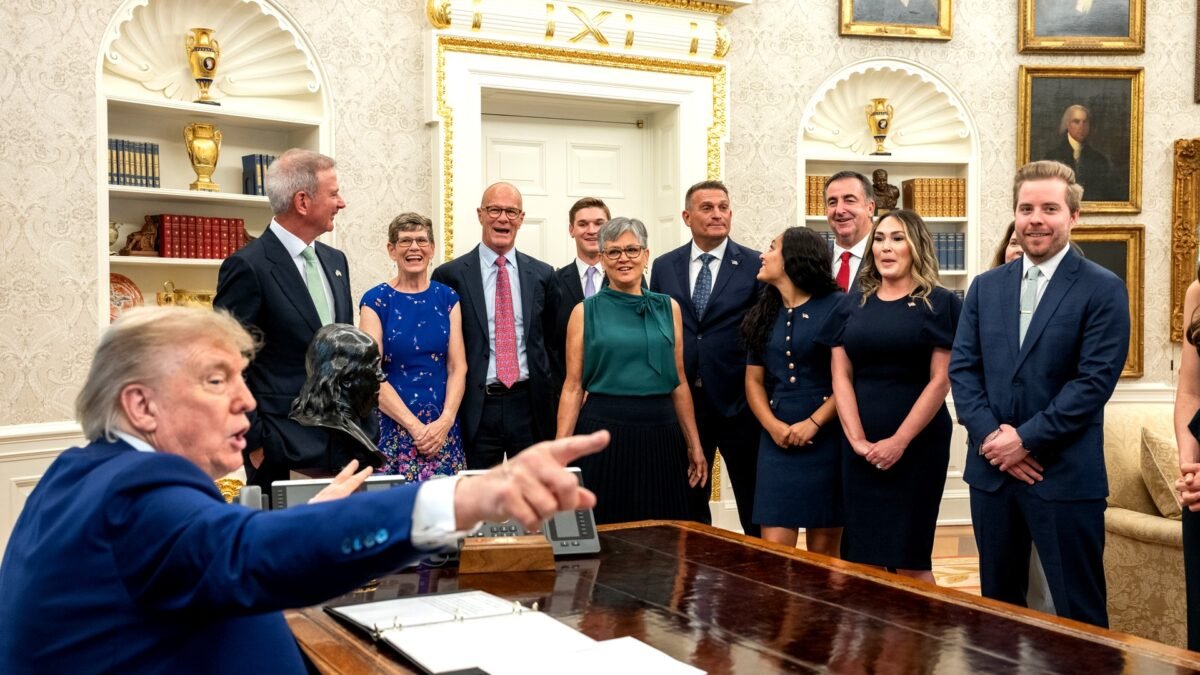
US President Donald Trump has said there would be no American strike on Iran on Sunday, even as senior US officials said forces in the Middle East are now in a position to launch major new operations against Iran within 96 hours of receiving an order from the president, according to CNN.
The two messages, delivered on the same day, capture the contradiction at the heart of Washington’s current approach to Iran: an immediate pause, set against a military build-up that officials say could lead to a far larger campaign, most likely after the midterm elections on 3 November.
Asked by reporters as he left the White House for a campaign rally in Michigan whether the United States would attack Iran on Sunday, Mr Trump answered directly, according to Al Jazeera’s live coverage: “There will not be a strike today.” The remark followed a Fox News interview on Sunday morning in which he framed his choice in stark terms, saying, according to reports of the interview: “I have a decision to make: Do I finish it off, which would be very easy to do, or do I make a deal?” He added: “We don’t play games.”
According to CNN, which cited two US officials, sufficient forces are now deployed in the region to carry out potential attacks, and the scope of any new operations would likely go well beyond the pattern of recent months. Rather than simply striking radars, launchers and other assets that can quickly be rebuilt — described by officials as “mowing the lawn” — a new campaign could be, in the words of one official quoted by CNN, “a big effort”.
US Central Command and the Pentagon have been developing a wide-ranging target list, according to CNN, including Iranian energy infrastructure, military sites and nuclear facilities. Officials told CNN that Mr Trump has not yet made up his mind about what to do after the midterms, but appears to be leaning towards ordering major action. The same officials cautioned, however, that Mr Trump has in the past appeared to lean towards a course of action only to step back at the last moment.
The White House declined to comment to CNN on the planning reports. A senior Pentagon official told CNN in a statement: “The Department is a planning organization, and its job is to develop and execute military options ordered by the President.”
Iran, for its part, has said that renewed attacks by the United States and Israel would achieve no different outcome from previous operations, according to Al Jazeera. Iranian officials have also warned that any resumption of war would be met with a response, and Tehran has said the diplomatic window has not fully closed, with messages passing through intermediaries. According to reports of the latest diplomacy, Qatari mediators visited Tehran on Sunday, in what one source described to Reuters as a US-coordinated effort, although an Iranian official described the visit as routine, according to Al Jazeera.
The immediate context is a war that, according to reports of the conflict, began with joint US and Israeli strikes on Iran at the end of February and is now approaching its eighth month. A ceasefire and a memorandum aimed at a final peace agreement followed the opening phase, but fighting resumed, and the conflict has continued to shape oil prices, shipping through the Strait of Hormuz and the security calculations of governments across the Gulf.
According to CNN, recent US intelligence assessments indicate that Iran and the Houthi movement in Yemen are taking the possibility of renewed US and potentially Israeli attacks very seriously. An unclassified memorandum dated 23 October from Director of National Intelligence Jay Clayton to Secretary of State Marco Rubio, previously reported by CNN, said US intelligence had found that Iran had “substantially increased efforts to target US personnel” and that plotting efforts had “reached advanced stages in both the Middle East and certain other countries”.
US intelligence officials believe, according to CNN, that Iran and the Houthis are unlikely to launch pre-emptive escalatory attacks against American personnel or Israel at this stage, but would not hesitate to respond if Iran is targeted first by US or Israeli forces. That assessment, officials said, is one reason Washington is quietly pulling personnel from its embassies across the Middle East in the coming days. According to CNN, the US Embassy in Riyadh is the only American diplomatic facility in the region under an ordered departure so far, but others are expected to receive similar directives, and facilities that do not will be scaled down under a personnel cap. Non-essential US military personnel who had been expected to deploy to the Middle East as part of the next troop rotation have been told they are no longer being sent, according to a US official cited by CNN.
The Strait of Hormuz, the narrow waterway through which a large share of the world’s oil and liquefied natural gas passes, remains central to the confrontation. According to CNN, Admiral Brad Cooper, the commander of US Central Command, visited the strait on Sunday, flying over it in a helicopter and meeting service members who cleared the waterway of Iranian mines. In a news release, Admiral Cooper said: “We continue to stand shoulder to shoulder with our Gulf partners and the shipping industry. This visit underscores our strong commitment to continued freedom of navigation through the Strait of Hormuz.” Despite an increase in tankers transiting the strait, oil prices remain high, partly because of the threat of possible Iranian attacks, according to CNN. One US official acknowledged that the status quo around the strait is “untenable” for the long term, and, barring a last-minute diplomatic breakthrough, is one reason Mr Trump may turn to military action.
Oil markets reflected that unease on Monday. According to market reports, Brent crude slipped from a six-month high, trading below 116 dollars a barrel, while West Texas Intermediate was near 102 dollars, after surging the previous week. Traders have been weighing the same two possibilities that dominate the political debate: a deal that eases the confrontation, or a renewed campaign that disrupts supply.
Israel’s role in the next phase is also under scrutiny. According to CNN, Prime Minister Benjamin Netanyahu has been pushing for new attacks on Iran, but US officials have asked him to delay until the Trump administration is ready to conduct joint operations. An Israeli security source told CNN: “Netanyahu really wanted and tried to convince Trump for a joint attack in Iran before the elections, and Trump did not give a green light.” One reason Mr Trump declined, according to the same source, is that Israel Defense Forces chief of staff Eyal Zamir told US General Dan Caine, chairman of the Joint Chiefs, that a strike before Israel’s own elections would harm those elections and could lead to their postponement.
According to CNN, Israel was preparing for the possibility of launching additional attacks in the last week or so and had been lobbying US officials to support and complement those strikes, but senior US officials, including Mr Trump, told Israel to hold off, signalling that the two countries would launch joint operations soon. Israel appears to have delayed plans in the immediate term, according to CNN, but is building up for potential joint operations, likely after the American midterms. Israel agreed to delay in part, according to a source briefed on the matter, because it needs US support for missile defence: Iran and the Houthis would likely retaliate against an attack, and Israel’s defensive munitions have been strained during the war.
Mr Netanyahu said this week in a speech at an Israel Defense Forces graduation ceremony that his directive to the military, the Mossad and other security branches is to topple the regime in Iran, according to CNN. Recent US intelligence assessments, according to CNN, indicate that Mr Netanyahu and his allies still lack a clear strategic objective beyond demonstrating some sort of “progress” and continuing to degrade the Iranian regime. “The plans are ready, waiting for Trump’s approval, could be after the midterms,” the same source told CNN.
Analysis: Why It Matters
The significance of Sunday’s statements lies less in the denial of a strike on a single day than in what the denial reveals about timing, leverage and risk. A president who says “there will not be a strike today” is not ruling out a strike tomorrow, next week or after an election. He is, instead, managing a timetable. That distinction matters for everyone watching: for Gulf governments deciding how much to spend on defence, for shipping companies deciding whether to send tankers through Hormuz, for oil traders pricing risk, and for American voters who will go to the polls on 3 November with the war as one of the issues in the background.
The first question is why the pause, if the military option is ready. One answer is electoral. A major new campaign in the final days before the midterms would dominate the news cycle, move oil prices and invite a retaliation that could put American personnel at risk, all while voters are making up their minds. Delaying until after the vote gives the administration more freedom of manoeuvre, at the cost of leaving allies and adversaries guessing. The second answer is diplomatic. The reported Qatari visit to Tehran suggests that channels remain open even when public language is at its harshest. Mediators do not travel for no reason, and the fact that both sides are still talking, directly or through intermediaries, suggests that neither has yet decided that war is the only outcome.
The third answer is military. The CNN reporting makes clear that the next campaign, if it comes, is intended to be different in kind, not just in scale. Striking assets that can be rebuilt within weeks has not ended the confrontation; striking energy infrastructure, military sites and nuclear facilities would be an attempt to change the strategic balance. That ambition carries a higher risk of retaliation, and it explains why the Pentagon is also preparing for the consequences: drawing down embassy staff, holding back non-essential deployments and reinforcing missile defence for Israel. A government that is confident of a quick, contained operation does not take those precautions.
For Iran, the calculation is equally difficult. Tehran has said a renewed war would change nothing, but it has also signalled, through its foreign ministry, that diplomacy remains possible through intermediaries. That dual message — defiance in public, openness in private — is familiar in protracted confrontations. It allows a government to avoid appearing to surrender while keeping a route back to negotiation. The risk is that the other side reads defiance as intransigence and openness as weakness, and acts accordingly.
For the wider region, the stakes are immediate and practical. The Strait of Hormuz is not an abstraction. It is the route for a significant share of global oil and gas, and any disruption there feeds directly into fuel prices, inflation and the cost of living in countries far from the Gulf. The United States’ naval presence in the strait, including a third carrier strike group reported to be heading to the region, is both a deterrent and a potential target. The more forces are concentrated in a narrow waterway, the greater the chance that a miscalculation, a mine or a missile produces an incident that neither side intended.
For American domestic politics, the Iran question now sits alongside the midterm campaign in a way that is difficult to separate. The president travelled to Michigan for a rally on the same day he ruled out a strike, and the war has become part of the broader debate about the cost of living, energy prices and America’s role in the world. Voters may not decide their vote on Iran alone, but a sharp rise in petrol prices or news of American casualties would change the political atmosphere quickly. That is why the timing of any decision, before or after 3 November, is itself a political act, whatever the military logic.
What to Watch Next
Several markers will show which direction this confrontation is heading. The first is any White House statement on Iran in the days after the midterms, and whether the language shifts from “decision to make” to a concrete announcement. The second is the outcome, if any, of the Qatari mediation effort and whether Iranian officials comment publicly on it. The third is the movement of US personnel in the region: further embassy drawdowns or a reversal would signal how seriously Washington takes the threat of retaliation. The fourth is Israel’s election on 27 October and whether its result changes Mr Netanyahu’s room for manoeuvre. The fifth is oil: a sustained fall would suggest markets believe a deal is more likely, while a renewed spike would suggest they expect escalation.
None of these markers, on its own, will settle the question. Together, they will show whether Sunday’s “no strike today” was a brief pause before a larger campaign, a genuine opening for diplomacy, or simply the latest turn in a confrontation that has repeatedly swung between threats and talks without reaching a conclusion. Until one of those paths becomes clear, the most honest description of the situation is the one Mr Trump himself gave: a decision still to be made, with both a deal and a major military effort still on the table.
Sources

About the Author — Abdul Mannan
Related Articles
Trump Votes Early in Florida as Obama Rallies Democrats in Ohio and Michigan in Final Midterm Push
President Donald Trump voted early in Florida on Saturday while former President Barack Obama rallied Democrats in Ohio…

Eleven Shot, Including Six Youngsters, Near Florida A&M Stadium After Homecoming Game
Eleven people, including six juveniles, were shot near Florida A&M University's Bragg Memorial Stadium in Tallahassee on Saturday…
Appeals Court Rules Trump’s Los Angeles National Guard Deployment Was Unlawful in 2-1 Decision
In a 2-1 ruling, the Ninth Circuit held that President Trump's 2025 federalisation of 4,000 California National Guard…