
Africa Welcomes the Olympics at Last: Dakar 2026 Youth Games Open in Historic First for the Continent

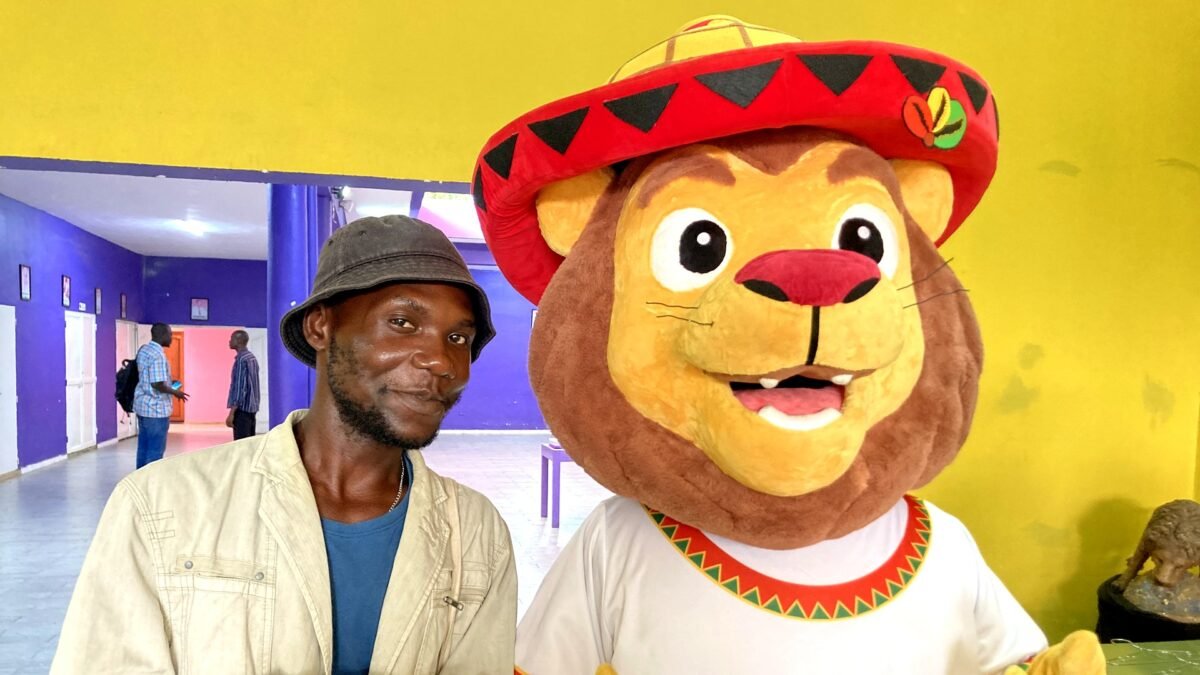
Africa has finally welcomed the Olympic Movement home. The Dakar 2026 Youth Olympic Games opened on Saturday night in Senegal, the first Olympic sporting event ever held on African soil, 130 years after the modern Games began in Athens in 1896, according to the Associated Press.
Senegalese President Bassirou Diomaye Faye formally declared the Games open at the Abdoulaye Wade Stadium in Diamniadio, outside the capital Dakar, before a packed crowd of 55,000, as 2,655 young athletes from 205 delegations paraded into the arena for the Parade of Nations. International Olympic Committee President Kirsty Coventry stood beside Faye for the ceremony, and watched as Senegalese fencer Abdourahmane Marième Sy and judoka Aïcha Diop lit the Youth Olympic cauldron to begin two weeks of competition running until 13 November.
“This is the Africa that I am so proud of and so excited for the world to experience,” Coventry told the stadium, according to the Associated Press. “And it makes me incredibly proud to be standing here tonight; a proud Zimbabwean, proud to be an African woman, and so proud that our continent is welcoming the Olympic Movement for the very first time.”
The opening marked the end of a wait that has defined the Olympic movement for more than a century. Africa is the only inhabited continent that had never hosted any edition of the Olympic Games — Summer, Winter or Youth — and Dakar 2026 is the first to break that absence. The Games bring together athletes aged 14 to 17, according to the Associated Press, competing in 153 medal events across 25 sports in three host areas: the capital Dakar, the new city of Diamniadio and the coastal resort town of Saly.
Competition began on Sunday, with judo, swimming, rugby sevens and futsal among the first sports under way, and baseball5 matches having started on Friday. The Games will close on 13 November.
A ceremony built on teranga
The opening ceremony was built around the Senegalese tradition of teranga, the Wolof concept of hospitality and generosity, and it took the audience on a journey through Africa’s past, present and future. Under the theme “The Flight of Sitoé”, the production followed three symbolic characters — Alkebulan, the mother; her son, Keb; and Sitoé, a young girl embodying the continent’s future — through music, dance, traditional Senegalese wrestling, percussion, visual art and storytelling.
A total of 1,115 performers took part in the ceremony, including 628 dancers, according to the Associated Press, and nearly 1,500 costumes were made locally with the involvement of about 100 craftspeople and creative professionals. Senegalese artists Baaba Maal, Kiné Lam and Daara J Family performed, alongside Gambian kora musician Sona Jobarteh, while Nigerian spoken-word artist IB Quake delivered a piece that drew one of the loudest responses of the night.
“And if we can do so much apart, imagine what happens when 54 nations move as one,” IB Quake said during her performance, according to the Associated Press. “Our diversity is our greatest technology. We carry the dream of Alkebulan. We join Sitoé in our inheritance. This is not just any one nation. This is Africa.”
As at every Games, Greece led the Parade of Nations, followed by the Youth Refugee Olympic Team, which is taking part in a Youth Olympic Games for the first time. Host nation Senegal entered last, led by flag bearers Ndèye Khady Anna Diatta, a beach wrestler, and taekwondo athlete Ibrahima Bèye. Senegal has 136 athletes competing in 23 sports, the largest home team in the event’s short history.
The Youth Olympic flame completed its journey across Senegal before the ceremony, travelling through all 14 of the country’s regions carried by more than 450 torchbearers, according to RFI. Among the final relayers on the eve of the opening were Fatma Samoura, the former secretary-general of FIFA, social media star Khaby Lame, actor Omar Sy and wrestler Modou Lô.
Rwandan President Paul Kagame was among the leaders in attendance, alongside the sports ministers of all 54 African countries, according to organisers. Coventry, a former Zimbabwean swimmer and two-time Olympic champion who became the first woman to lead the IOC earlier this year, addressed the athletes directly before inviting President Faye to declare the Games open.
“Sport opened so many doors in my life. It gave me confidence to believe in myself and to dream big, and that is what I wish for every single one of you during these Games,” she said, according to IANS. “I hope these Games give you the confidence to believe in yourselves. To dream big, and to do things you never thought were possible. So give it everything you’ve got.”
“This is a historic moment for Senegal. For Africa. For our entire Olympic family,” Coventry said, according to Xinhua. “These really are Games by the youth, for the youth.”
One hundred and thirty years in the waiting
Senegal was chosen to host the Games at the IOC Session in Buenos Aires in October 2018, becoming the first African nation ever selected to stage an Olympic event. The competition was originally scheduled for 2022, but in July 2020 the IOC and the Senegalese government agreed to postpone it to 2026 because of the disruption caused by the Covid-19 pandemic, which had also forced the Tokyo 2020 Olympics back by a year.
Dakar 2026 is the fourth edition of the Summer Youth Olympic Games, following Singapore in 2010, Nanjing in 2014 and Buenos Aires in 2018. The Youth Olympic Games were created by the IOC in 2007 as a smaller, youth-focused counterpart to the senior Games, combining competition with education and cultural exchange for teenagers. The winter edition began in Innsbruck in 2012 and was most recently held in Gangwon, South Korea, in 2024.
The wait for Africa to host has been one of the longest-standing gaps in world sport. Since the first modern Olympic Games were held in Athens in 1896, every edition of the Summer, Winter and Youth Games has taken place in Europe, the Americas, Asia or Oceania. African cities have bid before — Cape Town was a candidate for the 2004 Summer Games — but none had ever been selected until Dakar. The 2018 decision was itself a deliberate break with the past: the IOC announced that year that it would recommend the Games be held in Africa, and its members confirmed Senegal as host at the session in Buenos Aires.
The postponement from 2022 to 2026 gave Senegal four extra years to prepare, and the country used them to build and refurbish venues across the three host zones rather than concentrating everything in the capital. The Games are also the first Youth Olympic Games held under Coventry’s presidency, and the first edition to include a Refugee Olympic Team — a milestone the IOC has presented as part of a broader effort to make the event more inclusive.
Dakar 2026 is also the first Youth Olympic Games to achieve full gender equality across athlete quotas, sports, disciplines and events, according to the IOC. The 2,655 athletes are split evenly between girls and boys, and the programme of 25 sports includes urban disciplines the IOC has been promoting to younger audiences, among them 3×3 basketball and beach wrestling, alongside the traditional Olympic programme of athletics, swimming, judo and gymnastics.
What the Games look like
The competition is spread across eight venues in three distinct areas, a deliberate choice by the organisers to share the event across the region rather than confining it to a single Olympic park. Dakar hosts athletics, swimming and 3×3 basketball. Diamniadio, the planned city about 30 kilometres outside the capital, concentrates several indoor competitions as well as the Youth Olympic Village. Saly, the coastal town about 80 kilometres south of Dakar, hosts the beach sports and some water disciplines, including beach sprint coastal rowing, whose time trials began before the opening ceremony.
The Abdoulaye Wade Stadium, where the opening ceremony was held, is a 55,000-seat arena opened in 2022 and named after the former president. It is the centrepiece of the Diamniadio sports complex, which also includes the Dakar Arena, an indoor venue that will host basketball and other indoor events during the Games.
The 205 delegations include 204 National Olympic Committees and the Youth Refugee Olympic Team, according to the Associated Press, with most delegations represented by two flag bearers, one girl and one boy. India has sent a 17-member contingent across 11 sports, with Paris 2024 Olympian Dhinidhi Desinghu and shuttler Dev Ruparelia carrying the flag at the opening ceremony. India has won 23 medals across the three previous editions of the Youth Olympics — three gold, 16 silver and four bronze — with its most successful campaign coming at Buenos Aires 2018, where it won 13 medals.
For many of the athletes, Dakar is a first step rather than a destination. The Youth Olympic Games have become a recognised pathway to the senior Olympics, and the teenagers competing in Senegal will be aiming to follow that route towards the Los Angeles 2028 Games and beyond. The IOC’s stated purpose for the event is not only competition but education: athletes take part in cultural and learning activities alongside their events, and the Dakar programme includes ten engagement sports designed to let young people try disciplines outside their own.
The Games are being staged under the slogan “Africa Welcomes, Dakar Celebrates”, in French “L’Afrique accueille, Dakar célèbre”. It is a message the organisers have repeated at every stage of the build-up, and one that Coventry echoed in her opening address: that the event belongs not only to Senegal but to the continent, and that its success will be measured by whether it changes how the world sees African sport.
Senegal’s bet on legacy
Hosting the Games has required substantial public investment. The Senegalese government allocated at least 91 billion CFA francs for the Youth Olympic Games infrastructure programme in its 2026 budget, according to Financial Afrik, covering venue construction and refurbishment, transport and the Youth Olympic Village.
The legacy plan is central to how Senegal has sold the project at home. The upgraded sports facilities, including the Iba Mar Diop and Tour de l’Œuf complexes in Dakar, are expected to remain in use after the Games, and the Youth Olympic Village, built at Amadou Mahtar Mbow University in Diamniadio, will be returned to students once the athletes leave. The organisers have presented the event as a chance to develop organisational expertise and create long-term skills, not simply to stage two weeks of sport.
That argument matters in a country where the government of President Faye, who took office in 2024, has made youth employment and opportunity a central promise. Senegal’s population is strikingly young — more than half of its people are under 20 — and the Games have been framed from the start as an event for that generation, staffed in large part by young volunteers and built around sports that young Senegalese already play on the country’s beaches and streets.
The economic test will come after the closing ceremony. The organisers and the government hope the Games will strengthen Dakar’s profile as an international sporting destination and attract tourism and future events. The risk, familiar from Olympic history, is that the venues and the village become expensive to maintain once the world’s attention moves on. The decision to spread the Games across existing and refurbished venues, rather than building a single vast Olympic park, was designed to reduce that risk, but it will be judged in the years after 2026, not during the fortnight itself.
For now, the mood in Dakar is celebratory. The flame’s journey through all 14 regions, the packed stadium for the opening ceremony, and the presence of leaders and ministers from across the continent all suggest a host nation determined to treat the Games as a national moment, not merely a sporting one.
Analysis: Why It Matters
1. A 130-year absence ends, and the map of world sport changes
The most important fact about Dakar 2026 is not a result or a record but a location. For 130 years, the Olympic movement has talked about universality while staging its defining events on four continents and never on the fifth. That contradiction is now gone, and its removal matters beyond symbolism. Once an Olympic event has been held in Africa, the argument that the continent cannot host one — too poor, too disorganised, too risky — loses its force. Future bids from African cities, including for the senior Summer Games, will start from a different place: not whether Africa can do it, but when it will do it again. The IOC’s own language has shifted in the same direction. Coventry’s emphasis on pride, on being an African woman standing in an African stadium, was not ceremonial filler; it was the president of the movement acknowledging, in public, that the institution she leads had taken far too long to arrive.
2. The Youth Games are the right vehicle — and a deliberate choice
It is no accident that Africa’s Olympic debut came through the Youth Games rather than the senior Olympics. The Youth Olympics are smaller, cheaper and more flexible than the senior Games, and they carry a different purpose: development rather than spectacle. That made Dakar a manageable first step for both Senegal and the IOC, and it is a model worth noting. If the Youth Games succeed in Dakar, they demonstrate that the Olympic movement can reach new continents without demanding the vast infrastructure and spending that have made the senior Games a burden for many host cities. If they struggle, critics will say the IOC chose the safest possible test and still could not make it work. Either way, the Youth Games format — 2,655 athletes, eight venues, three host towns — is the experiment, and its outcome will shape how the IOC thinks about expansion for a generation.
3. Gender equality and the refugee team set a new standard
Dakar 2026 is the first Youth Olympic Games to achieve full gender equality across athlete quotas, sports, disciplines and events, and the first to include a Refugee Youth Olympic Team. Neither milestone should be treated as a footnote. The refugee team’s presence, marching second in the Parade of Nations behind Greece, is a deliberate statement about who the Games are for, and it comes at a time when displacement is at record levels worldwide. The gender-equality achievement is equally significant: it shows that parity is attainable when it is built into the design of an event from the start, rather than added afterwards. Other major sporting events, including the senior Olympics, have moved towards parity more slowly. Dakar sets a benchmark that will be hard for future hosts to fall below.
4. Senegal is betting its reputation on legacy, not spectacle
The Senegalese government has spent at least 91 billion CFA francs on the Games, and its public case for that spending rests on what remains afterwards: refurbished venues, a village that becomes student housing, and organisational skills that stay in the country. That is a sensible argument, and it is also a demanding one, because legacy is where Olympic hosts most often fail. The decision to spread venues across Dakar, Diamniadio and Saly, and to reuse existing facilities where possible, reduces the risk of white elephants, but it does not eliminate it. The real test will be visible in two or three years, when the Iba Mar Diop complex and the Diamniadio venues either hum with local sport or stand empty. For President Faye, whose government has promised opportunity for a very young population, the Games are also a political test: a successful fortnight strengthens the claim that Senegal can deliver big projects; a troubled one hands critics a ready-made symbol of misplaced priorities.
5. For the athletes, this is the start of a longer road
It is easy to lose sight of the competitors amid the history and the ceremony, but Dakar 2026 exists for them. The 2,655 teenagers in Senegal are at the age when sporting careers are made or broken, and the Youth Olympics are designed to give them a first taste of a multi-sport Games — the village, the parade, the pressure — before they face the senior version. For athletes from smaller nations, including many African countries, it may be the largest stage they ever compete on. For the strongest, it is a stepping stone towards Los Angeles 2028. Either way, the value of the event will ultimately be measured not in the grandeur of its opening ceremony but in how many of these young athletes are still competing, coaching or leading sport in their countries a decade from now. That is the quiet, long-term purpose of the Youth Games, and the one that matters most.
What to Watch Next
- The first medals: competition began on Sunday in judo, swimming, rugby sevens and futsal, with the first Youth Olympic champions of the Dakar Games to be crowned in the coming days — and the first African medallists on home soil likely to draw the loudest cheers.
- Senegal’s home campaign: the hosts have 136 athletes in 23 sports, their largest team at a Youth Games, and their results will be followed closely in Dakar; a strong home performance would deepen public enthusiasm for the event.
- The Refugee Youth Olympic Team: the team’s debut at a Youth Games is a first for the movement, and its athletes’ performances and reception will be watched as a measure of how far the IOC’s inclusion agenda has travelled.
- Venue and transport performance: with competition spread across Dakar, Diamniadio and Saly, the smooth running of transport, scheduling and facilities over the next two weeks will be the practical test of Senegal’s preparations.
- The closing ceremony and the legacy question: when the Games close on 13 November, attention will turn to what happens next — whether the village, the venues and the skills built for Dakar 2026 are put to lasting use, and whether Africa’s Olympic debut leads to a senior Games bid.
Sources
- The Associated Press (via Bantu Gazette) — “Dakar 2026 opens in Senegal, bringing Olympic competition to Africa for first time”
- IANS (via New Kerala) — “Dakar 2026 Youth Olympic Games open with 2,655 athletes”
- Xinhua (via People’s Daily) — “IOC president Coventry hails Africa’s Olympic debut at Dakar YOG opening ceremony”
- RFI (via ArchySport) — “Dakar 2026 Youth Olympic Games: Opening Ceremony Kicks Off Historic Event in Africa”
- Financial Afrik — “Dakar 2026 Youth Olympic Games: 10 Key Facts to Remember from Africa’s First Olympic Event”

About the Author — advmannan1
Related Articles
Erdoğan and Zelenskyy Agree to Rebuild Black Sea Grain Corridor as Türkiye Warns Ukraine War Is ‘No Longer Sustainable’
Erdoğan and Zelenskyy agreed in Istanbul to work on a new Black Sea grain corridor after a month…
Poland’s Constitutional Tribunal in Crisis as Rival Judges Claim Control and Riot Police Guard the Court
Poland's highest court is claimed by two rival leaderships after a judge suspended its president, riot police ringed…
Starved Residents Return From Russian-Occupied Oleshky Under First Humanitarian Truce of the War as Ceasefire Expires
Hundreds of starving residents have returned to Ukraine from the Russian-occupied town of Oleshky under a six-day ceasefire…