
Starved Residents Return From Russian-Occupied Oleshky Under First Humanitarian Truce of the War as Ceasefire Expires

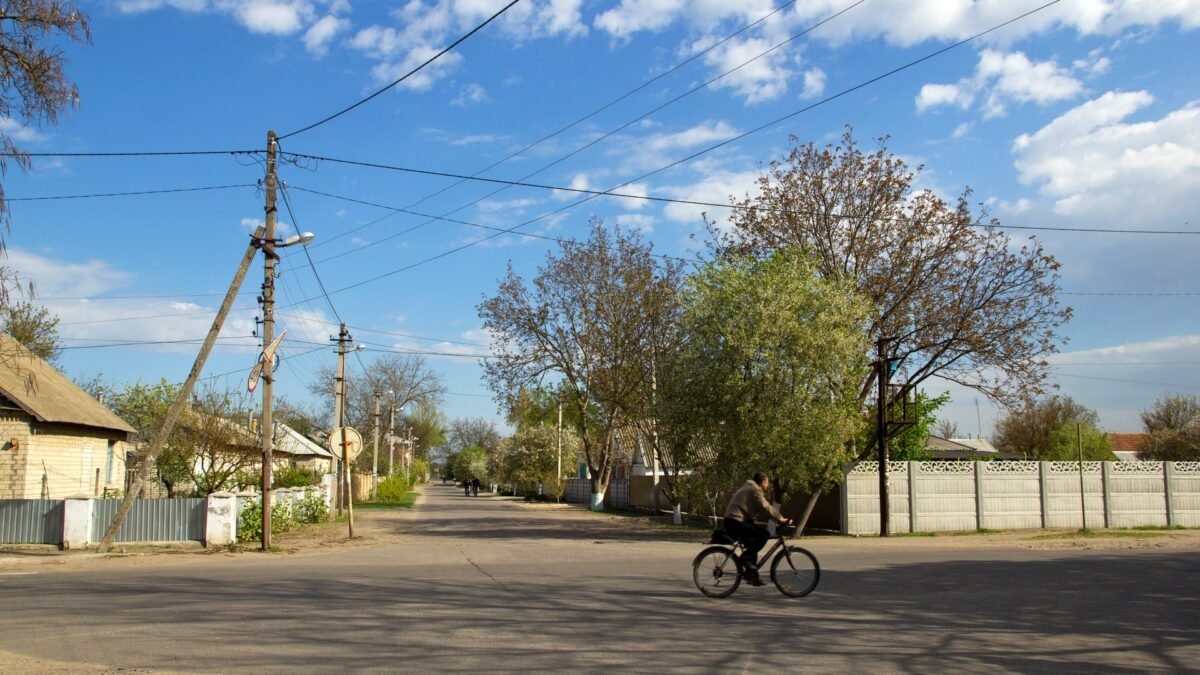
Hundreds of starving residents have returned to Ukrainian-controlled territory from the Russian-occupied town of Oleshky, crossing the border on Saturday under a six-day local ceasefire that both sides have described as the first humanitarian truce of its kind in more than four years of war.
The evacuees arrived in Ukraine’s northern Chernihiv region on Saturday afternoon, 31 October, after a journey that took them by bus through occupied Crimea to the Russian town of Anapa, by plane to Gomel in Belarus, and then by bus again to the Ukrainian border, according to Reuters. The ceasefire that made the evacuation possible, which took effect on Tuesday, 27 October, is due to expire on Sunday, 1 November.
The truce was reached after mediation efforts by the United States First Lady, Melania Trump, and with the involvement of Pope Leo XIV, Reuters reported. It is the longest local pause in fighting since Russia launched its full-scale invasion of Ukraine in February 2022, and the first time the two sides have agreed a humanitarian halt of this kind.
Ukraine’s President, Volodymyr Zelenskyy, announced the arrival of the evacuees on Telegram, thanking Mrs Trump for her help with the mediation. “As of now, Ukrainian citizens from Oleshky have crossed the Ukrainian border in the Chernihiv region. All of them will receive the assistance they need,” he said, according to Reuters.
“And I thank everyone in the world — all journalists, all political and civic leaders, and all concerned people — who drew global attention to the situation in Oleshky and the genuine humanitarian catastrophe in the territory of Ukraine temporarily occupied by Russia. When the world pays attention, people are saved,” Mr Zelenskyy added, according to CNN.
Mrs Trump said on X that “Oleshky proves we can raise humanity above war,” CNN reported.
The exact number of people who returned has not been disclosed. Ukrainian officials restricted disclosure of the figure, citing security, according to Reuters. Ukraine’s human rights ombudsman, Dmytro Lubinets, said the oldest returning resident was 94, while the youngest was a baby just over one year old. Many of the evacuees were elderly, and some required help to walk, while a few were carried on stretchers or in wheelchairs, Reuters reported.
At the border, the returnees were greeted by relatives, many of them in tears. Ambulances lined the street, and several large military tents had been erected where hot meals, tea and medical aid were provided, according to Reuters. Ukrainian officials greeted the evacuees with posters reading “You’re not alone” and “We embrace with our hearts.” Strangers lined the road for miles waving Ukrainian flags as the convoy of buses set off again, CNN reported.
Reunited after 1,711 days
Among those waiting at the border was Dmytro, a 54-year-old Ukrainian soldier, who had not seen his wife Larisa for 1,711 days. He had been counting, CNN reported.
When the couple finally reunited on Saturday afternoon, Dmytro kissed Larisa over and over again and held her in his arms with such determination that it looked as though he would never let go of her again, according to CNN.
Larisa’s diminished frame — she has lost a third of her body weight under the occupation — looked almost lost in Dmytro’s hands, CNN reported. But she held her head high, and her deep-set blue eyes were sparkling with joy.
Asked how she was, Larisa spoke of others who are still suffering. “It’s hard for everyone in the country; there are so many people in the same situation as me. There are people in different situations, and some are even worse off. We’re waiting for all this to end, for peace to come, and for victory,” she told CNN.
Dmytro’s military service had made Larisa vulnerable when Russia took over Oleshky, their southern Ukrainian hometown, CNN reported. The couple managed to get their daughter out, but Larisa was worried that if she tried to leave, she would be picked up at a Russian military checkpoint during “filtration” — the questioning Ukrainians who found themselves under Russian occupation had to undergo before being allowed to leave for areas still under Ukrainian control. So she stayed, hoping for a miracle. Instead, her life became a nightmare, according to CNN.
Another family was reunited after three years apart. Zhanna Ptakhova and her daughters Elizaveta and Daria Paliy were among those who made it out when it was still possible, but Ptakhova’s husband, and the girls’ father, stayed in Oleshky to take care of their home until they could safely return. That never happened, CNN reported.
“The conditions were terrible. No electricity, no gas, no heat — but he’s a man with golden hands,” Ptakhova told CNN. “He took a house that had been adapted for modern civilian life and turned it into a home suited for a primitive lifestyle; he built a stove, raised chickens to feed himself, planted a garden, and through his own hard work, he survived there.”
Her husband, Mykhailo Paliy, said he spotted his daughters right away, even from the bus. The family was reunited on Saturday, according to CNN.
A town that ran out of food
Oleshky, a town on the eastern bank of the Dnipro River in the Kherson region, across from the Ukrainian-controlled city of Kherson, had a pre-war population of about 24,000. It has been under Russian occupation since the first days of the full-scale invasion, according to Reuters.
About 40 per cent of the town’s pre-war population managed to flee to Ukrainian-controlled territory when it was still possible early in the fighting, according to the Institute for the Study of War, a United States-based conflict observer cited by CNN. Thousands of others have escaped since then, but many remained, either unable or unwilling to leave. Before the evacuation, an estimated 1,700 people remained in the town, Reuters reported.
The town was hit by a major flood in 2023 after the nearby Nova Kakhovka Dam collapsed, an event CNN notes was most likely caused by a Russian explosion. More destruction followed in the subsequent years of heavy fighting, and the humanitarian situation deteriorated sharply in recent months, according to CNN.
Ukrainian authorities reported that the town had run out of food and other supplies in September, with no access to electricity, gas, medicine and other essentials. Reports from that time said people were surviving on grass and weeds, CNN reported.
According to Reuters, food deliveries to Oleshky had stopped in May, pushing hundreds of people into starvation. The evacuees speaking to CNN on Saturday said there had been no food deliveries to the town since the summer. One woman said she had not had bread for more than a year and had survived on vegetables she planted earlier in the year, mostly tomatoes and cucumbers.
One evacuee, an elderly man in a wheelchair, told Reuters that he had lost 20 kilograms over the past year, becoming so weak that he required hospital treatment. Another resident, Svitlana Yermakova, said they had to eat grass to survive the food shortages. “We chopped grass and squash … just to hold on,” she said, adding that she risked riding by bicycle through minefields to a nearby village to get food for herself and her dog, Manila, according to Reuters.
Another evacuee, Oleksandr, told CNN he had “never felt better in my life” after crossing into Ukraine. “It was like I’d escaped from hell,” he said. “I didn’t go outside at all … where we were, where we lived, we couldn’t get any food. We just ate whatever people had left in their apartments — canned goods, pickles.”
The director of the Chernihiv Regional Hospital, Andriy Zhydenko, was waiting at the border with his staff to provide medical assistance to the evacuees. He told CNN that the effects of prolonged malnutrition will be a key concern, explaining that the evacuees will need to be fed carefully because they have been starving for so long that consuming too much food too quickly could be dangerous.
“There are people with injuries, stroke survivors and those with limited mobility,” he said, adding that everyone at the hospital was overjoyed to be welcoming Ukrainian citizens home. “All of my staff wanted to come here. People have suffered greatly there. There is no humanity.”
The long way home
Access routes to Oleshky have been heavily mined and littered with drone and vehicle debris, and evacuation across the Dnipro River directly into Ukrainian-controlled territory is not possible, according to CNN. That made the journey out long and frightening.
Once a two-day demining operation was completed on Thursday, people who wanted to leave gathered on Friday and travelled through the occupied Ukrainian peninsula of Crimea to Anapa in Russia’s Krasnodar region, CNN reported. The evacuees then flew from Anapa airport to Gomel in Belarus, according to the Russian Defence Ministry and Ukrainian officials, and then travelled by bus to Ukraine.
A video shared by Ukraine’s ombudsman showed dozens of Oleshky residents slowly disembarking from a plane at a Belarusian airfield, Reuters reported. Many people were elderly. Some required help to walk, and a few were carried on stretchers or in wheelchairs. They carried minimal luggage — only a bag or two. Dogs were unloaded from the plane in cages.
“We have come a complicated way: from negotiations and agreeing on a ceasefire to delivering humanitarian aid directly to Oleshky and organising the evacuation of civilians,” Mr Lubinets said, according to Reuters.
The ceasefire has been holding since Tuesday without violations, according to both Ukrainian and Russian officials. It allowed them to de-mine the roads and bring food, medicines and other supplies into the town, Reuters reported.
Mr Lubinets travelled to Oleshky to personally escort the evacuees, becoming the first high-profile Ukrainian official to openly travel to occupied areas under Russian control and Russia since the start of the war, according to CNN. Speaking to CNN after crossing the border, he said the operation was extremely difficult but he hoped it could serve as an inspiration for the future.
“Now we have a unique positive experience how to negotiate with the Russian side with the coordination role of Melania Trump,” he said. “We have a lot of similar villages where we have right now the same problems with food and medicine. Our idea is to continue. But it doesn’t only depend on Ukraine,” he told CNN, adding that he spoke to Russia’s human rights commissioner, Yana Lantratova, in Oleshky on Friday.
Not everyone chose to leave. Some residents decided to stay in Oleshky, even though the ceasefire is set to expire on Sunday, and both Ukrainian and Russian authorities said they were provided with humanitarian aid, according to CNN. Another group chose to go to Russia. Ms Lantratova said on Saturday that those evacuees were received at a temporary accommodation centre in Simferopol, in Crimea.
“The mission has come to an end,” Ms Lantratova said on Telegram, according to Reuters. “We have agreed to carry out regular humanitarian missions, which is a very important step.” She said living conditions in the town remain difficult, and that she would continue to work with her Ukrainian counterpart to help those who stayed.
Kremlin spokesman Dmitry Peskov said the Ukrainian and Russian ombudsmen had a good dialogue and had gradually begun to trust each other as they worked together during the Oleshky ceasefire, Russia’s Vedomosti newspaper reported, according to Reuters. But the Kremlin said on Friday that it was an isolated situation, which was difficult to extrapolate to the broader peace process.
Fighting raged on elsewhere
Despite the ceasefire on the southern Kherson front, fighting raged on in other parts of the front on Saturday, and both Russia and Ukraine kept up their drone attacks on each other, according to Reuters.
Mr Zelenskyy said Russia had attacked Ukrainian energy infrastructure, hitting electricity substations, thermal power plants and gas infrastructure. Ukraine’s military said it had hit a major Russian producer of missile fuel in the Rostov region, Reuters reported.
A Russian drone attack on a railway station in the city of Dnipro on Thursday killed at least 14 people, according to Reuters. The attack was raised by Britain’s Foreign Secretary, Ed Miliband, at the G20 foreign ministers’ meeting in Atlanta on Friday, where he told Russia’s Foreign Minister, Sergei Lavrov, that Moscow was “not winning this war”.
Russia’s Defence Ministry said its forces shot down 433 Ukrainian drones overnight, according to reports of the ministry’s statement. A Ukrainian drone attack killed a 30-year-old woman and a 41-year-old man in Russia’s western Bryansk region, according to local officials.
The war also crossed another European border on Saturday. An aerial target entered Romania’s airspace without authorisation on Saturday afternoon, from the direction of the Republic of Moldova, prompting the deployment of two F-16 aircraft and a helicopter to verify the situation, according to Romania’s Ministry of National Defence, cited by the Romanian news outlet Informat.ro. The authorities sent RO-Alert emergency messages in six counties in the north-east of the country.
According to the ministry, the target was detected by the radar surveillance system approximately 10 kilometres from the border with Moldova. The two F-16 aircraft were on air policing combat duty and took off to monitor the object. The ministry said that, since the beginning of 2026, 35 unauthorised incursions into Romania’s airspace have been recorded. On the same day, a drone also flew over the airspace of the Republic of Moldova without authorisation, leading to flight restrictions in the northern and central parts of the country, according to Informat.ro.
Meanwhile, Kyiv has challenged reports that it agreed to suspend attacks on Russian oil refineries under American pressure. The Wall Street Journal reported on 29 October, citing people familiar with the operations, that Ukraine had agreed to a “pause” in attacks on Russian oil refineries, expected to remain in place until after the United States midterm elections on 3 November, according to the Kyiv Independent.
However, Ukrainian officials told the Kyiv Independent that Kyiv had never agreed to halt the strikes. Less than 24 hours after the Wall Street Journal made the claim, multiple Ukrainian drones struck the Novokuibyshevsk refinery in Russia’s Samara region.
Ukrainian officials told the Kyiv Independent that the United States envoy Jared Kushner had indeed suggested a pause, but that Ukraine had never agreed to it. “Jared suggested that we not hit refineries for 30 days,” a senior Ukrainian official told the Kyiv Independent, adding that “nobody had given such an order”, and that they “didn’t know where” the Wall Street Journal had heard otherwise.
Mr Zelenskyy had previously publicly refuted claims that Ukraine had ordered a pause in strikes on Russian oil refineries. “Our guys tried to be a little more careful during these days. But they do not have an order,” he told journalists in Kyiv on 27 October, according to the Kyiv Independent. Another senior Ukrainian official told the Kyiv Independent that Ukraine would continue to strike Russian oil infrastructure but would not publicly take credit for such strikes, to avoid the appearance of deliberately picking a fight with the Trump administration.
Negotiators from Ukraine, Russia and the United States are due to resume talks in Abu Dhabi in early November, after discussions were suspended in February following the outbreak of the war in Iran, Reuters reported.
Analysis: Why It Matters
1. Proof that a channel still works
After more than four years of full-scale war, in which direct contact between Kyiv and Moscow has been reduced to prisoner exchanges and the occasional technical meeting, the Oleshky operation is proof that a working channel between the two sides still exists when both want one. The ceasefire held for six days without a single reported violation, according to both Ukrainian and Russian officials. Roads were de-mined, food and medicine were delivered, and hundreds of civilians were moved through three countries to safety. That is not a small administrative achievement in an active war zone. It required agreement on routes, timings, security guarantees and the handling of the sick and elderly, and it required both sides to keep their word for almost a week. The fact that it worked at all matters, because it shows that the machinery of negotiation has not completely seized up. The question now is whether that machinery can be used for anything larger, or whether, as the Kremlin insists, Oleshky was a one-off.
2. An unlikely mediator takes centre stage
The most striking feature of the Oleshky operation is who made it happen. Melania Trump, the First Lady of the United States, is not a diplomat, not a negotiator by profession, and not a figure with any previous public record of mediating between warring states. Yet both Kyiv and Moscow credit her with the coordination role that brought the ceasefire about, and President Zelenskyy thanked her by name. Her own verdict — that “Oleshky proves we can raise humanity above war” — is the language of moral appeal rather than statecraft, and that may be precisely why it worked. The operation sat outside the formal diplomatic tracks that have repeatedly stalled, and it was framed, from the start, as a humanitarian act rather than a political concession. Neither side had to admit anything, concede anything or change any position. That framing is a model worth studying: in a war where every formal proposal becomes a test of strength, the humanitarian route may be the only one that both sides can walk down without losing face. The risk, of course, is that the model depends on a single individual’s access and goodwill, and it is not clear that it can be repeated at will.
3. The limits are written into the story itself
For all its humanity, the Oleshky operation also shows how narrow the space for agreement has become. The ceasefire covered one town, lasted six days, and expired on Sunday with no extension announced. While it held in Kherson, the war went on everywhere else: energy infrastructure was hit, drones crossed into Romania and Moldova, and two people were killed in Bryansk. The Kremlin was quick to frame the operation as “an isolated situation” that was difficult to extrapolate to the broader peace process. That is a deliberate narrowing, and it is worth taking seriously. Moscow has no interest in allowing a successful local truce to become a precedent for a wider ceasefire, because a wider ceasefire would freeze a front line it still hopes to move. Kyiv, for its part, has no interest in a pause that lets Russia regroup. The ombudsmen, Mr Lubinets and Ms Lantratova, have agreed to carry out regular humanitarian missions, which is genuinely encouraging, but regular missions are not a peace process. They are a way of managing the war’s human cost, not of ending the war.
4. The energy war is now the main front
The dispute over the reported refinery pause reveals where the real contest now lies. Russia is systematically destroying Ukraine’s electricity and heating systems ahead of winter, while Ukraine is striking the Russian oil refineries that fund the war. The United States, worried about fuel prices before Tuesday’s midterm elections, has pressed Kyiv to stop hitting refineries, and the Wall Street Journal’s report of an agreed pause — swiftly denied by Kyiv, and swiftly contradicted by a strike on the Novokuibyshevsk refinery — shows how contested this front has become. Mr Zelenskyy’s position is straightforward: he has offered to stop attacking Russian oil infrastructure if Moscow stops attacking Ukraine’s energy system, and Russia has made no such commitment. The asymmetry is the point. Ukraine’s refinery campaign is its main lever against a much larger enemy; giving it up for nothing would be strategically foolish, and Kyiv knows it. The fact that the Trump administration is pressing for a pause at all, days before an election in which the cost of living is the dominant issue, shows how deeply domestic American politics is now entangled with the conduct of this war.
5. The spillover problem is getting worse
Saturday’s drone incursions into Romanian and Moldovan airspace are a reminder that this war does not stay inside Ukraine’s borders. Romania, a NATO member, has now recorded 35 unauthorised incursions into its airspace since the beginning of 2026, and Moldova has recorded dozens more. Each incident forces NATO aircraft into the air, triggers emergency alerts for civilians, and raises the same question: what happens when a drone does not just pass through, but lands somewhere it should not, or hits something it should not? So far, the alliance has treated each incursion as an accident of a war fought with long-range weapons near its borders. But the frequency is rising, and the margin for error is shrinking. The Oleshky ceasefire shows that restraint is possible when both sides choose it. The airspace incidents show what happens when they do not.
What to Watch Next
- Whether the ceasefire is extended or repeated. The six-day truce expires on Sunday. Watch for any announcement of an extension, or of a second operation in another occupied town. Mr Lubinets has said Ukraine wants to continue, and Ms Lantratova has agreed to regular humanitarian missions — but neither side has named a place or a date.
- Who remains in Oleshky. Around 1,700 people were in the town before the evacuation, and some chose to stay despite the lack of gas, electricity and running water. Whether aid continues to reach them, and whether a second evacuation is offered, will test the ombudsmen’s promise of regular missions.
- The Abu Dhabi talks. Negotiators from Ukraine, Russia and the United States are due to resume talks in Abu Dhabi in early November. Watch whether the Oleshky experience — and the trust the two ombudsmen say they built — features in those discussions, or whether the Kremlin’s “isolated situation” line holds.
- The refinery campaign and the midterms. The reported pause was supposed to last until after the United States midterm elections on Tuesday, 3 November. Watch whether Ukrainian strikes on Russian refineries continue after the election, and whether Washington renews its pressure once the votes are counted.
- Airspace incidents over NATO territory. With 35 incursions recorded over Romania this year and fresh incidents on Saturday, watch for NATO’s response — and for any incident in which a drone causes damage or casualties on allied soil, which would change the political calculus overnight.
Sources
- Reuters — “Starved residents of Russian-occupied Oleshky return to Ukraine during a rare local ceasefire” (31 October 2026)
- CNN — “Reunited after 1,711 days: Oleshky evacuees return to Ukraine under Melania Trump-brokered ceasefire” (31 October 2026)
- Kyiv Independent — “Ukraine never agreed to pause strikes on Russian refineries, sources confirm” (31 October 2026)
- Informat.ro — “Two drones detected near the border with the Republic of Moldova” (31 October 2026)
- Political.org — “Starved residents of Russian-occupied Oleshky return to Ukraine during a rare local ceasefire” (31 October 2026)

About the Author — advmannan1
Related Articles
320,000 March Across France in Third Weekend of Youth-Led Protests as Unrest Spreads Across Europe
An estimated 320,000 people marched across France on Saturday in a third weekend of youth-led protests over living…
US and Russia Veto Each Other’s Western Sahara Plans as UN Mission MINURSO Loses Its Mandate
Russia vetoed a US plan to reshape the Western Sahara mission and Washington vetoed Moscow's rival text, leaving…
Polish President Turns Plane Around and Enters Constitutional Tribunal as Rival Judges Claim Control of Top Court
Karol Nawrocki cut short a trip to Senegal, flew home and pushed his way into Poland's Constitutional Tribunal…