
Herzog Hands Eisenkot the Mandate to Form Israel’s Next Government in Setback for Netanyahu

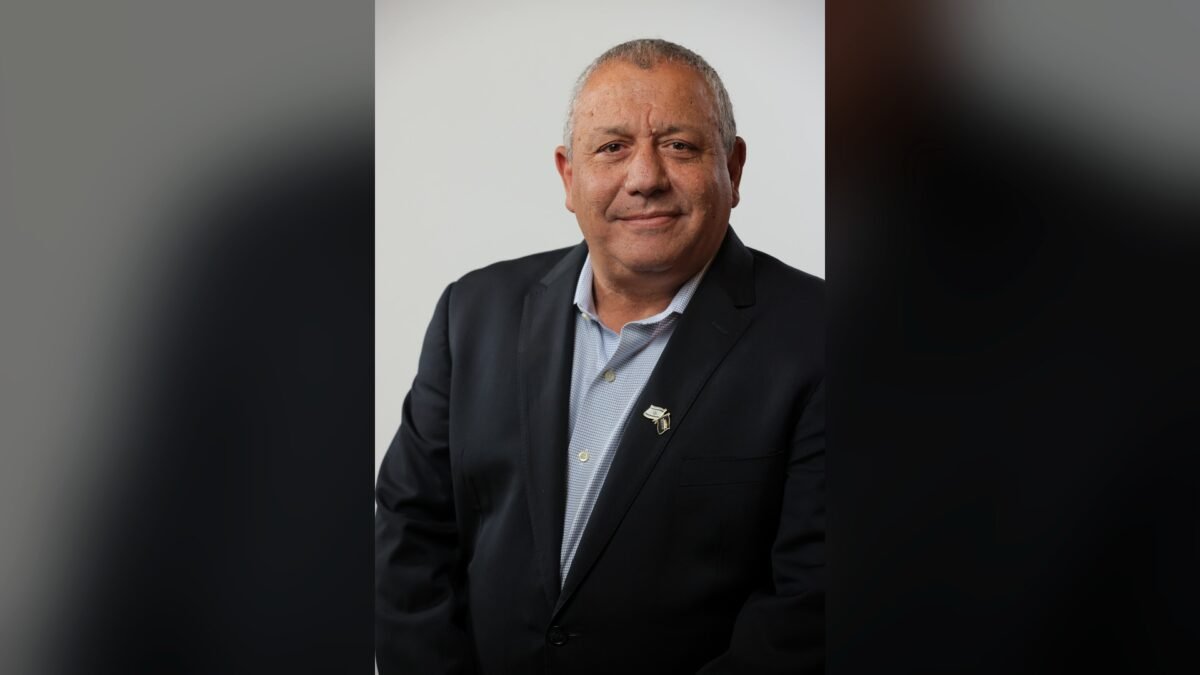
Israeli President Isaac Herzog has chosen opposition leader Gadi Eisenkot to make the first attempt at forming Israel’s next government, dealing the most serious blow yet to Prime Minister Benjamin Netanyahu’s hold on power after nearly two decades at the top of Israeli politics. According to CNN, Herzog announced his decision on Saturday, 7 November, and will formally hand Eisenkot the mandate at the President’s Residence in Jerusalem on Sunday, 8 November, at 5 p.m. local time.
The decision follows two days of consultations last week in which factions representing 67 of the Knesset’s 120 members recommended Eisenkot, the retired military chief who led the centrist Yashar party into the election on 27 October. Netanyahu, by contrast, received the backing of just 46 lawmakers, while seven members of the ultra-Orthodox United Torah Judaism party declined to recommend either candidate, according to Fox News.
Herzog’s choice does not remove Netanyahu from office. The prime minister remains in place as a caretaker leader while Eisenkot tries to turn a paper majority into a working government, and the path ahead is, in CNN’s words, “fraught with political obstacles and divisions within the opposition itself.” Yet the symbolism is unmistakable: for the first time since the inconclusive election, the formal machinery of the Israeli state has moved against the country’s longest-serving prime minister.
Eisenkot will have 28 days from Sunday to assemble a coalition, with a possible 14-day extension. If he fails, the mandate passes to Netanyahu for a further four weeks. The clock, in other words, has started on the most consequential negotiation in Israeli politics in years — and on a contest that will decide not only who governs Israel, but how the country handles a war with Iran, a fragile ceasefire in Gaza, and a rapidly changing relationship with Washington.
The numbers behind the decision
The arithmetic that produced Herzog’s decision was set out in the president’s own statement after the consultations. Eisenkot’s 67 recommendations comfortably exceed the 61 seats needed for a parliamentary majority, but they are not the same thing as a coalition. They are the sum of two very different blocs that agree on one thing — that Netanyahu should go — and disagree on much else.
The first bloc is the four-party opposition alliance that campaigned to replace Netanyahu. It won 48 seats in the election: Eisenkot’s Yashar with 21, the Together alliance led by former prime ministers Naftali Bennett and Yair Lapid, the left-wing Democrats led by Yair Golan, and Avigdor Liberman’s Yisrael Beiteinu. The second bloc is the two Arab-led parties, the Joint List with 11 seats and Ra’am with eight, which together hold 19 seats and recommended Eisenkot to the president.
Netanyahu’s side of the ledger tells its own story. His Likud emerged from the election as the largest single party, with 27 seats, but his wider religious-nationalist bloc won only 53 — down from 68 at its peak in the outgoing parliament and eight short of a majority. Seven of those 53, the members of United Torah Judaism, refused to recommend him to Herzog, a public crack in an alliance that has sustained Netanyahu for years. The ultra-Orthodox party’s abstention, driven by its demand for legislation preserving the military-service exemption for yeshiva students, left Netanyahu with 46 recommendations and exposed how far his coalition has frayed.
Herzog himself warned on Thursday, when he published the consultation totals, that the figures might look clearer than they were. “The results of the consultations may appear clear,” he said in his 5 November statement, but competing political demands and vetoes had left the prospects for forming a government uncertain. His decision on Saturday was therefore not a declaration that Eisenkot can govern. It was a judgement that Eisenkot, with 67 recommendations behind him, has the best claim to try first.
What Eisenkot plans to build
Eisenkot has moved fast to define the government he wants. In a lengthy statement on Friday, he outlined a plan to establish what he called a “national emergency government,” initially based on the four opposition parties committed to replacing Netanyahu, while leaving the door open for additional parties and lawmakers to join. According to Fox News, he said Israel was facing “a genuine, tangible and dangerous national emergency,” accused the outgoing government of threatening Israeli democracy, and warned that continued political instability could deepen the country’s security and diplomatic challenges.
He also set out four founding principles for any party that wishes to join. A partner must recognise Israel as a Jewish, democratic, liberal and egalitarian state; accept the values of Israel’s Declaration of Independence; commit to universal service, whether military, national or civilian; and recognise Hamas as a terrorist organisation, alongside a commitment to dismantle its military and governing capabilities. He said he would invite lawmakers from across the political spectrum to join if they accepted those principles.
The fourth condition carries a deliberate consequence. By requiring partners to label Hamas a terrorist organisation and commit to dismantling it, Eisenkot has effectively ruled out the Arab parties sitting in his cabinet, even though their recommendations helped him win the mandate. The Joint List has already said it will not join any government, and Ra’am has signed no deal. What the Arab parties could offer instead is support from outside: abstaining, or voting with the government on confidence motions, to give a minority cabinet a parliamentary safety net.
That is the option Eisenkot is openly considering. According to CNN, he is pushing to swear in a minority government as soon as possible, built on the four Jewish opposition parties, and to govern with outside support rather than wait for a full 61-seat coalition. Israeli law requires only a simple majority to establish a government, which makes a minority cabinet legally possible — though removing one is far harder, requiring an absolute majority of 61 votes behind an alternative government. A minority government would be fragile by design, but Eisenkot’s allies argue that speed matters more than stability while a caretaker prime minister who has lost his majority continues to run the country’s security apparatus.
Eisenkot framed the urgency in stark terms on Friday. “A situation in which a caretaker prime minister in the minority, who has lost the trust of the people in such an extreme way, continues to operate the security system and law enforcement authorities, is a dangerous situation that must not continue even for one more day,” he wrote on X. It was, in effect, a declaration that he intends to govern quickly or not at all.
The Liberman problem
The single greatest obstacle to that plan sits inside Eisenkot’s own camp. Avigdor Liberman, the leader of Yisrael Beiteinu and a former defence, foreign affairs and finance minister, has ruled out any government that depends on the Arab parties. A minority government, he argues, will be short-lived, and in the long run will only strengthen Netanyahu. “We’ll have Netanyahu come back with 70 seats for another four years, and from there it’s a short road to annihilation,” Liberman wrote on X on Friday, according to CNN.
Liberman has proposed a different route. Dropping his years-long veto on the ultra-Orthodox parties, he urged a “maximum effort” to form a coalition of 61 lawmakers with the two ultra-Orthodox parties, Shas and United Torah Judaism, and without the Joint List and Ra’am. Once such a government is formed, he added, three or four lawmakers from Likud may defect. On Friday he also signalled a willingness to compromise on military conscription for ultra-Orthodox Jews, reversing a position that had long prevented political cooperation with the religious parties, according to Fox News.
That shift opened a door that had been shut for years. United Torah Judaism leader Yaakov Asher welcomed Liberman’s flexibility on Friday, though he said his party had not yet received a concrete proposal and that any agreement would require approval from its religious leadership, according to the Times of Israel. Even if the ultra-Orthodox parties could be brought in, the arithmetic is unforgiving: adding United Torah Judaism’s seven seats to the opposition’s 48 would still leave Eisenkot short of the 61 needed for an outright majority, and Shas, which holds six seats, recommended Netanyahu to Herzog.
The deeper problem is that Liberman’s plan collides with one of the opposition’s core commitments. Ending the blanket exemption of ultra-Orthodox men from mandatory military service was a central campaign pledge for Eisenkot, Liberman and their partners, and the ultra-Orthodox parties are pressing for legislation that would enshrine the exemption. A government built on a conscription compromise would have to square a promise made to voters with a concession demanded by its newest partners — and one of the ultra-Orthodox parties, Shas, remains loyal to Netanyahu.
Netanyahu fights back
Netanyahu has not accepted the verdict of the consultations, and he spent Saturday making clear that he intends to fight for his political survival. In a video statement, he warned that if a minority government is formed with the Arab parties’ support, Israel will “simply not survive.” Instead, he called for a national unity government under his leadership, bringing in his entire bloc, including the far-right and ultra-Orthodox parties. He appealed to “all Zionist parties that want to preserve our one and only state of the Jewish people,” according to CNN.
Eisenkot dismissed the message as a “pathetic spin.” In a statement, the Yashar party said: “If the Likud wants a broad unity government, it is more than welcome to announce the dissolution of the alliance with the extremists and enter a government under Prime Minister Eisenkot.” The exchange captured the bitterness of the moment: Netanyahu presenting himself as the guardian of the state, his challenger presenting Netanyahu’s own allies as the obstacle to unity.
Behind the rhetoric, Netanyahu is also challenging the election result itself. He has claimed, without evidence, that the vote was “stolen” by Arab parties through bribery and foreign funding. Israel’s Central Elections Committee certified the results on Wednesday 4 November after reviewing all 9,069 polling stations, finding no evidence of irregularities that compromised the integrity of the election or affected its outcome, according to Reuters. The committee’s chairman, Justice Noam Sohlberg, warned that doubting the results posed “a real danger” to Israel’s democracy.
The dispute has spilled into the security services. David Zini, Netanyahu’s loyalist director of the Shin Bet domestic intelligence agency, has been pushing to investigate Arab politicians without any public evidence, according to CNN. Attorney General Gali Baharav-Miara blocked the interrogations, ruling that in a country governed by the rule of law, citizens and elected officials cannot be interrogated without evidence to justify it. The episode has become, for the opposition, Exhibit A in its case that a caretaker prime minister in the minority should not go on running the security system.
Netanyahu’s personal stakes are also high. A request for a pardon in his long-running corruption trial, in which he denies all charges, is pending before President Herzog — the same president who has now handed his rival the mandate. As caretaker prime minister, Netanyahu retains the powers of the office, but every day that passes without a new government deepens the sense that his authority is draining away.
A soldier turned politician
Eisenkot’s rise is one of the more remarkable stories in Israeli politics. He served as chief of staff of the Israel Defense Forces from 2015 to 2019, the country’s most senior military officer, and spent four decades in uniform before entering politics. His military reputation was built on a career that spanned the Lebanon wars and the Gaza conflicts, and his public standing was deepened by personal loss: his son was killed fighting in Gaza in December 2023, during the war that followed the Hamas attacks of 7 October that year.
He entered the election as the leader of Yashar, a new centrist party, and was formally named the opposition’s candidate for prime minister at a meeting in Herzliya on 3 November, attended by Bennett, Lapid, Golan and Liberman. The five leaders agreed to recommend him to Herzog and endorsed his four principles as the basis for a replacement government. Yashar’s 21 seats made it the second-largest party in the new Knesset, behind only Likud.
What Eisenkot lacks in political experience he has made up for in clarity of purpose. Where other opposition leaders spent years circling Netanyahu without landing a blow, Eisenkot has presented himself as a national emergency candidate: a former general who can be trusted with security, untainted by the corruption allegations that dog the prime minister, and willing to govern with whoever accepts his principles. Whether that pitch survives contact with coalition negotiations — where principles are usually the first casualty — is the question the next 28 days will answer.
Analysis: Why It Matters
The mandate is a beginning, not a transfer of power
The most important thing to understand about Herzog’s decision is what it does not do. It does not make Eisenkot prime minister, it does not end Netanyahu’s tenure, and it does not guarantee that a new government will be formed at all. What it does is start a clock and assign the first attempt to the candidate with the strongest claim. That distinction matters because the history of Israeli coalition negotiations is littered with mandate-holders who could not close the deal, and because Netanyahu has survived more political obituaries than any leader in the country’s history. Eisenkot has 28 days, extendable by 14, and then the mandate reverts to Netanyahu for four more weeks. The president’s decision changes the direction of travel; it does not settle the destination. Anyone reporting this as the end of the Netanyahu era is getting ahead of the facts, and the facts are that the hardest negotiations have not yet begun.
The Arab-party paradox sits at the heart of the crisis
Israel’s political system has produced a genuine paradox. The Arab-led parties hold 19 seats — a record — and their recommendations were decisive in giving Eisenkot his 67. Without them, he would have 48, well short of a majority. Yet the parties that supplied that majority cannot sit in the government they helped to create, because Eisenkot’s own conditions exclude them, and because a key partner, Liberman, has vetoed any government that depends on them. This is not a quirk of the numbers; it is the central structural fact of the crisis. Roughly a fifth of Israel’s citizens are Palestinian Arabs, and their elected representatives are now kingmakers in a system whose leading parties compete over who can most credibly refuse to govern with them. The paradox will not be resolved by clever drafting. Either a government is formed that relies on Arab support from outside, and lives with the charge that it is illegitimate, or a government is formed without them, and lives with the arithmetic that makes that nearly impossible. The way Israel answers that question will say a great deal about the future of its democracy.
The draft law is the real fault line
Beneath the arguments about Arab parties lies a more concrete dispute, and it may prove decisive: who serves in the army. The exemption of ultra-Orthodox men from conscription has divided Israel for decades, but the war in Gaza and the war with Iran have made it an active wound. Soldiers serve long tours, reservists are called up repeatedly, and the families who bear that burden watch a growing community exempt from it. Eisenkot and his partners campaigned on universal service, and the ultra-Orthodox parties demand the opposite — legislation entrenching the exemption. Liberman’s sudden flexibility on the issue is therefore the most significant development of the week, because it suggests that at least one opposition leader is willing to trade a principle for a coalition. But flexibility is not agreement, and United Torah Judaism’s rabbinical leadership has the final word. If a deal on the draft can be struck, a 61-seat coalition without the Arab parties becomes conceivable. If it cannot, Eisenkot is left with the minority-government option that Liberman has already denounced. Watch the draft negotiations, not the press conferences: that is where this government will be made or lost.
Netanyahu’s options are narrowing, but they are not exhausted
It is tempting to read the mandate as the closing chapter of Netanyahu’s career, and the temptation should be resisted. He remains prime minister, he commands the largest single party, he retains the loyalty of most of his bloc, and he has a fallback: if Eisenkot fails, the mandate comes to him. His strategy is visible in his Saturday statement. By framing a minority government as an existential threat and demanding a unity government under his own leadership, he is trying to peel away opposition lawmakers who fear governing with Arab support, and to present himself as the only figure who can hold the country together. He is also counting on time. Every week of deadlock strengthens his argument that only he can provide stability, and every failure by Eisenkot to close a deal makes the next election — which Netanyahu would fight as the wronged incumbent — more likely. His weaknesses are real: he has lost his majority, his fraud claims have been rejected by the elections committee, and his own allies are hedging. But a leader who has won elections from worse positions before should not be written off while he still holds the office.
The wars and Washington raise the stakes beyond politics
This is not an ordinary coalition crisis, because it is unfolding in the middle of two wars and a rupture with Israel’s closest ally. The war with Iran, which began in late February 2026, has closed the Strait of Hormuz and drawn the United States into direct military action, including strikes on Qeshm Island this month. The ceasefire in Gaza, brokered a year ago, is fraying, with heavy rain flooding tens of thousands of tents housing displaced families in the first winter storm of the season. And in Washington, President Donald Trump has announced that the United States will end roughly $4 billion in annual military aid to Israel by the end of the year — a decision he says was agreed with Netanyahu, but which caught Israel’s own finance and defence establishments by surprise. A caretaker government with a minority in parliament is a weak instrument for managing any of this, and the United States, Iran and Hamas are all watching the negotiations in Jerusalem closely. Whoever forms the next government will inherit a security situation that does not pause for coalition talks, and a relationship with Washington that is being renegotiated in real time. That is why Eisenkot calls it a national emergency, and why the 28 days ahead matter far beyond Israel’s borders.
What to Watch Next
- Sunday’s mandate ceremony (8 November, 5 p.m. Israel time): Herzog will formally hand Eisenkot the mandate at the President’s Residence, starting the 28-day clock. Watch for the language both men use — and for whether Herzog offers any public guidance on the shape of government he expects.
- Tuesday’s Knesset swearing-in: The new Knesset is sworn in on Tuesday, and the opposition intends to use its first sitting to replace Netanyahu’s Speaker, weakening his grip on parliament and opening the way to a state commission of inquiry into the security failures behind the 7 October 2023 Hamas attack.
- The Liberman–ultra-Orthodox talks: The decisive negotiation is whether Liberman’s flexibility on conscription can produce a deal with United Torah Judaism and Shas. Any concrete proposal — and the rabbinical leadership’s response — will signal whether a 61-seat coalition is real or a talking point.
- The 28-day deadline: If Eisenkot cannot form a government, the mandate passes to Netanyahu for four weeks. The midpoint of Eisenkot’s window, roughly two weeks in, is when the pressure to accept a minority government — or admit failure — will become acute.
- Netanyahu’s next move: Watch whether the prime minister escalates his fraud claims, seeks new defections from the opposition, or makes a fresh offer of a unity government on terms the opposition could accept. His pardon request, still pending before Herzog, is another lever that may come into play.
Sources
CNN — “In setback to Netanyahu, rival Eisenkot to be tasked with forming next Israeli government”
Fox News — “Israeli president taps Netanyahu rival to form government as coalition battle looms”
London Daily — “Herzog to name Israeli government nominee on Sunday as 67 back Eisenkot”

About the Author — Abdul Mannan
Related Articles
Syria Sends Military Advisers to Saudi Arabia Under New Defence Pact as Houthi War Escalates
Damascus has sent military advisers to Saudi Arabia under a defence cooperation deal signed in Riyadh, as the…

Tankers Hit Again in the Strait of Hormuz as Iran Claims Fresh Mine Strikes and Trump Turns to Qatar’s Emir
Iran claimed two more oil tankers struck mines in the Strait of Hormuz on Friday as shipping attacks…
Türkiye Ratifies Mecca Defence Pact With Saudi Arabia and Pakistan, Binding Three Nations to Mutual Defence
Türkiye's parliament has ratified the Mecca Joint Defence Agreement with Saudi Arabia and Pakistan by 279 votes to…