
Judge Allows Trump’s $10 Billion Defamation Case Against the BBC to Proceed

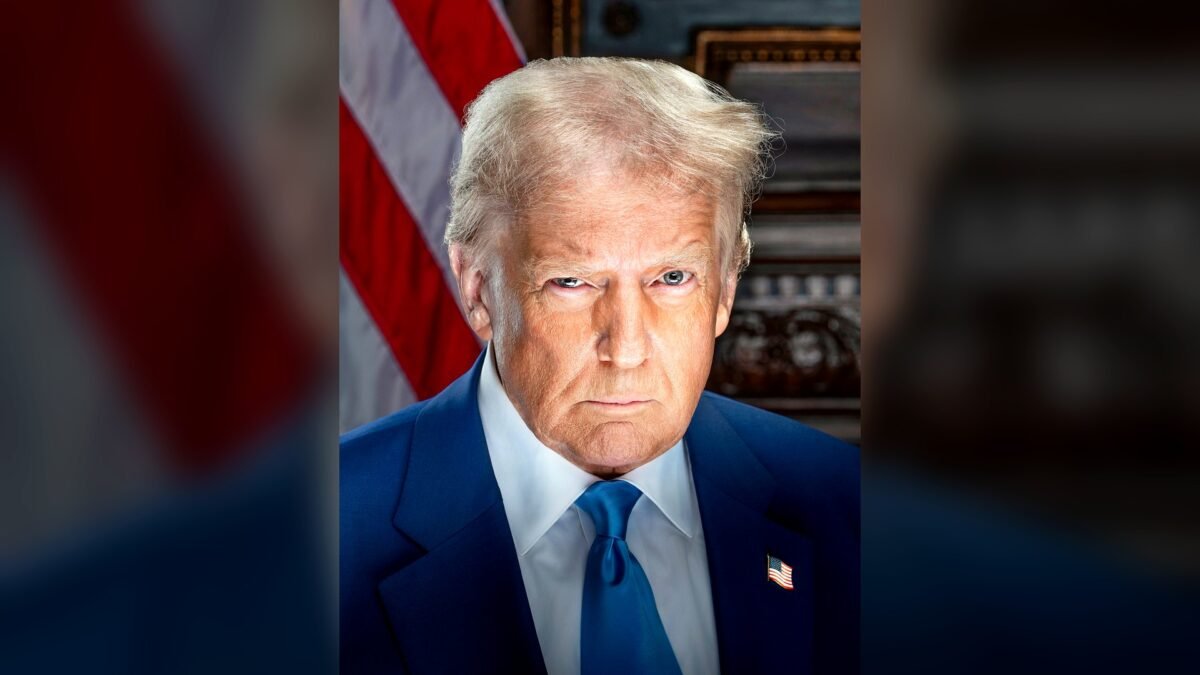
A federal judge in Florida has refused to dismiss President Donald Trump’s defamation lawsuit against the BBC, allowing a case seeking at least $10 billion (£7.5 billion) to move towards a trial that could put Britain’s publicly funded broadcaster in the dock in an American courtroom. The ruling, handed down on Tuesday 10 November 2026, is the most serious legal setback yet for the BBC in a dispute that has already cost the corporation its director-general and its head of news, and it sets up a confrontation with consequences far beyond the two parties in the case.
US District Judge Jeffrey T. Kuntz, sitting in the Southern District of Florida, declined to throw out Mr Trump’s defamation claim over a misleadingly edited clip of his speech on 6 January 2021, which was broadcast in a BBC Panorama documentary shortly before the 2024 presidential election. According to Reuters, Judge Kuntz found that Mr Trump had plausibly alleged that the broadcaster damaged his reputation and knew, or should have known, that the clip was misleading. The judge did not decide whether Mr Trump has proven those claims. That question, the judge made clear, is left for another day.
The BBC scored one legal win in the ruling. Judge Kuntz dismissed Mr Trump’s separate claim that the broadcaster had violated Florida’s Deceptive and Unfair Trade Practices Act, ruling that the documentary did not amount to commercial speech. But the survival of the defamation claim itself is the outcome that matters, and it was greeted with delight by the president and dismay by the broadcaster. Mr Trump called the ruling a “huge victory” in a social media post, writing: “We will continue fighting against, and defeating, all of those who try to deceive the American People!” A BBC spokesperson said the corporation was surprised by the decision but respected the court’s authority, and that it remained confident in its position.
The case now moves to its next stage. The BBC has been ordered to file a response to the ruling by 1 December. Discovery, the process in which both sides exchange evidence, is scheduled to conclude on 18 December, and a trial has been provisionally scheduled for February 2027. Before any of that, however, Mr Trump himself faces a deadline of his own: a magistrate judge has ordered him to sit for a deposition, answering questions under oath from BBC lawyers, by 11 December, or risk court-imposed sanctions that could include the dismissal of his lawsuit.
What the judge decided
Judge Kuntz’s ruling dealt with the BBC’s motion to dismiss the case before it could reach a trial. In American defamation law, a motion to dismiss is a relatively low hurdle for a claimant to clear. The judge is not asked to decide whether the claim is true, but whether the complaint, taken at face value, sets out a claim that could succeed. That distinction matters, and it is the reason both sides can plausibly describe the same ruling as significant and as limited at the same time.
According to Reuters, Judge Kuntz concluded that Mr Trump had plausibly alleged that the BBC damaged his reputation and that the broadcaster knew, or should have known, that the edited clip was misleading. The ruling did not decide whether Mr Trump has proven those claims. It did not find that the BBC defamed him. It found only that the claim is strong enough, on the facts as alleged, to proceed.
The judge’s reasoning turned on the BBC’s own admissions. The corporation has already accepted that the editing was misleading and has apologised to Mr Trump. In the words quoted by the Press Association from the ruling: “Here, the news entity created the story. BBC admitted as much by confirming it had edited a video to make it appear as though President Trump made a statement he never made.” That admission, Judge Kuntz found, supported a plausible inference that the BBC knew, or ought to have recognised, that the section it had created “wouldn’t and couldn’t have been a truthful assertion”.
The judge also addressed the question of damages, which is likely to become the central battleground of the case. According to reporting of the ruling, Judge Kuntz determined that Mr Trump will have to prove that he suffered “actual damages” from the airing of the documentary, which was not broadcast in Florida. That point matters for two reasons. First, the figure of $10 billion is, on any measure, an extraordinary sum for a defamation claim, and the president will have to produce evidence that his reputation was harmed to anything like that extent. Second, the question of where the documentary was seen goes to the heart of the jurisdictional argument: the BBC has argued that the Panorama episode was not produced, created or broadcast in Florida, while Mr Trump’s team has pointed to the programme’s apparent availability on the BritBox streaming service.
The dismissed trade practices claim is a smaller matter, but it is not without significance. The BBC had argued that the claim was an attempt to dress up a defamation complaint in consumer-protection clothing. Judge Kuntz agreed, in effect, that the documentary was journalism rather than commercial speech, and the claim fell away. The defamation claim, however, survived intact.
The clip at the centre of the case
The dispute turns on a sequence of a few seconds in a Panorama documentary called Trump: A Second Chance?, which was broadcast in the United Kingdom a week before the 2024 presidential election, an election Mr Trump went on to win. The programme spliced together two separate excerpts from the speech Mr Trump gave to supporters in Washington on 6 January 2021, the day a mob stormed the US Capitol as Congress was certifying the result of the 2020 election, which Mr Trump had lost to Joe Biden.
In the edited version, Mr Trump was shown telling supporters: “We’re going to walk down to the Capitol and I’ll be there with you, and we fight. We fight like hell.” The words were taken from sections of his speech delivered almost an hour apart, according to reporting of the case, and the edit omitted a section in which he called for peaceful protest. The effect, the BBC later accepted, was to give “the impression of a direct call for violent action”.
The BBC’s chairman, Samir Shah, apologised on behalf of the broadcaster over what he described as an “error of judgment”, and accepted that the editing of the programme gave that impression. The corporation has also apologised directly to Mr Trump, and has agreed not to show the edition of Panorama again on any of its platforms. What the BBC has not done is accept that it is liable for defamation, or that Mr Trump suffered any actual damage as a result of the edit. That distinction — between an admitted editorial error and legal liability for defamation — is the ground on which the case will now be fought.
The lawsuit was filed in December 2025 in federal court in Florida. The Wrap reported that the suit as originally filed sought $5 billion; the damages now at issue are described by Reuters as at least $10 billion. The complaint accuses the BBC of defaming Mr Trump by splicing together parts of the speech, including one section in which he told supporters to march on the Capitol and another in which he said “fight like hell”, while omitting his call for peaceful protest.
How the BBC got here
The edited clip might have remained an obscure footnote in the history of the 2024 election had it not been for an internal BBC memo. Concerns about the edit were first raised by Michael Prescott, a former independent external adviser to the BBC’s editorial guidelines and standards committee, who had been hired by the corporation to review its editorial standards. His memo cited the edits as evidence of potential political bias at the BBC, and it also raised concerns about the broadcaster’s coverage of the Israel-Hamas war, transgender issues and other subjects.
Excerpts from the Prescott memo were published by The Telegraph, and the row that followed engulfed the BBC’s leadership. Tim Davie, the corporation’s director-general, announced his resignation on a Sunday in November 2025, after five years in the job. Mr Davie, who was 58 and had served as director-general since September 2020, said in a letter to staff that he had to take ultimate responsibility, and that while it was not the only reason, “the current debate around BBC News has understandably contributed to my decision”. Deborah Turness, the head of BBC News and Current Affairs, stepped down on the same weekend.
The resignations were the most dramatic consequence of the scandal, but they were not the only one. The BBC’s chairman apologised personally to the White House in a letter to Mr Trump, making clear that he and the corporation were sorry for the edit. The corporation rejected Mr Trump’s demands for compensation after his lawyers threatened to sue for $1 billion unless the BBC issued a retraction, apologised and settled. The apology was given; the compensation was refused; the lawsuit followed.
The BBC has also faced questions about the cost of defending the case. As a publicly funded institution, every pound spent on legal fees is a pound that can be presented by its critics as money taken from licence-fee payers, and the corporation’s opponents have used the lawsuit as evidence that the institution is no longer fit for purpose.
It is worth remembering what the BBC is, because it is central to why this case is so unusual. The corporation is Britain’s publicly funded broadcaster, paid for by the licence fee, and it is governed by a royal charter that requires it to be impartial. It is not a commercial news organisation, and it is not an arm of the British state. It occupies a strange middle ground: a public institution with a global reputation for independence, now being sued in a foreign court by a foreign head of state for a programme it broadcast at home.
The two sides respond
Mr Trump’s response to the ruling was swift and characteristically blunt. On Truth Social, his social media platform, he wrote: “A Huge Victory against Fake News BBC, a terrible abuser of the truth, just handed down by highly respected District Court Judge, Jeffrey T. Kuntz, of the Southern District of Florida.” He added: “We will continue fighting against, and defeating, all of those who try to deceive the American People!”
The BBC’s response was, by contrast, restrained to the point of flatness. A spokesperson said: “We are surprised by this decision but respect the Court’s authority and note the case will now proceed to the next stage. We remain confident in our position and will continue to respond through the proper legal process. It would be inappropriate to comment further while proceedings are ongoing.”
The contrast between the two statements captures something important about the case. For Mr Trump, the lawsuit is a public fight, conducted in the open, in which every ruling is a victory to be proclaimed. For the BBC, it is a legal process to be managed quietly, in which every public statement is a potential liability. That asymmetry has shaped the dispute from the start, and it will continue to shape it as the case moves towards trial.
Behind the public statements, the BBC’s legal position is more nuanced than its brief statement suggests. In seeking to have the case dismissed, the corporation warned of the “chilling effect” a ruling against it would have on “robust reporting on public figures and events”. That argument — that allowing a foreign head of state to sue a British broadcaster in an American court for a programme broadcast in Britain would deter journalism — is one the BBC is likely to keep making, in different forms, as the case proceeds. It is also an argument that has divided opinion among media lawyers, some of whom see it as a principled defence of press freedom and others as a plea for special treatment for an institution that has already admitted it got the facts wrong.
Analysis: Why It Matters
A procedural ruling, not a verdict
The first thing to understand about Judge Kuntz’s ruling is what it is not. It is not a finding that the BBC defamed Donald Trump. It is not a finding that Mr Trump suffered $10 billion of damage to his reputation. It is not even a finding that the BBC acted with the state of mind that American defamation law requires for a public figure to win. It is a finding that the complaint, as written, clears the low bar that American courts set at the motion-to-dismiss stage, and that the case should be allowed to proceed to the stage at which evidence is tested.
That distinction is not a technicality. It is the difference between a claim and a proven fact, and it is a distinction that is often lost in the coverage of high-profile litigation. Mr Trump’s supporters will present the ruling as vindication. The BBC’s supporters will present it as a routine procedural step that says nothing about the merits. Both descriptions contain a grain of truth, and both are incomplete.
What the ruling does establish is that the BBC’s own admission has become the strongest evidence against it. The corporation’s apology, which was intended to draw a line under the affair, is now the foundation of the claim that the broadcaster knew, or should have known, that the clip was misleading. Judge Kuntz’s observation that “the news entity created the story” is a striking one, because it reframes the BBC not as a reporter of events but as the author of a false impression. That framing, if it survives to trial, will be difficult for the BBC to escape, because it rests on facts the corporation does not dispute.
The harder question for Mr Trump is the one Judge Kuntz has reserved for later: damages. American defamation law sets a high bar for public figures, who must prove not only that a statement was false and damaging, but that it was made with “actual malice” — that is, with knowledge that it was false, or with reckless disregard for whether it was false. And even if Mr Trump clears that bar, he must prove that he suffered actual damage, and that the damage was caused by the BBC’s documentary rather than by the many other things that have been said and written about him. A figure of $10 billion will require evidence of a kind that defamation cases rarely produce. The judge’s insistence on proof of actual damages is a reminder that the case has a long way to go.
The edit itself, and why 55 minutes matters
The second thing to understand is why the edit matters so much. On its face, splicing two clips from the same speech might seem a minor editorial sin. News programmes routinely condense speeches, and nobody expects a documentary to play an hour-long address in full. But the gap between the two clips — almost an hour, according to reporting of the case — is what gives the edit its significance. It is not the length of the gap that matters, but what the gap contained: a call for peaceful protest, and an hour of intervening context in which the character of the speech changed.
By joining a passage in which Mr Trump told supporters to march to the Capitol to a passage, delivered much later, in which he told them to “fight like hell”, the edit created a sentence Mr Trump never spoke, in a form he never delivered it. The BBC has accepted that this gave “the impression of a direct call for violent action”. That is not a small admission for a broadcaster whose charter requires impartiality, and it is not a small admission in a case about a speech delivered on the day of a riot in which five people died and the Capitol was stormed.
The timing of the broadcast compounds the problem. The documentary aired a week before the 2024 presidential election, at a moment when the question of Mr Trump’s responsibility for the events of 6 January 2021 was a central issue in the campaign. A misleading impression created at that moment, in a programme presented as a factual documentary, is a more serious matter than the same error in a different context. The BBC’s critics will argue that the timing was not a coincidence. The BBC’s defenders will argue that it was. Either way, the timing is part of why the case has become so politically charged.
The BBC’s institutional crisis
The third thing to understand is that this case is not only about a single edit. It is about an institution in crisis. The resignations of Tim Davie and Deborah Turness were the most senior departures at the BBC since the Jimmy Savile scandal, and they came about because of a memo that raised questions not only about the Trump edit but about the corporation’s broader editorial culture. The Prescott memo cited concerns about coverage of the Israel-Hamas war and transgender issues, among other subjects, and it painted a picture of an organisation in which impartiality had been compromised.
The BBC has always been a lightning rod for criticism, from all sides of the political spectrum, and it has always survived it. But the Trump affair has been different in kind, because it has combined an admitted editorial error with a legal threat of extraordinary scale, and because it has arrived at a moment when the corporation’s funding model and its charter are themselves under debate. The licence fee, which funds the BBC, is a tax on television ownership that is increasingly questioned in an age of streaming, and the corporation’s critics have used the Trump case as evidence that the institution is no longer fit for purpose.
That is a political argument, not a legal one, and it should not be confused with the question before the Florida court. But it is part of the context in which the case is being fought, and it helps to explain why the BBC’s response has been so cautious. The corporation is defending not only a lawsuit but its reputation, its funding and its future. A defeat in Florida, even a partial one, would be seized upon by its critics as proof of institutional failure. A victory, on the other hand, would be presented by its defenders as proof that the system works.
Mr Trump’s media-litigation strategy
The fourth thing to understand is that this case is part of a pattern. According to Reuters, the BBC lawsuit is one of several Mr Trump has filed against news organisations as part of a wider pressure campaign against coverage he dislikes. The president has made no secret of his hostility to much of the mainstream media, and he has used litigation as a tool of that hostility, filing suits that his critics describe as an attempt to intimidate journalists and that his supporters describe as a legitimate defence of his reputation.
The strategy has an obvious logic. Lawsuits are expensive to defend, even when they fail, and the threat of a $10 billion claim concentrates the mind of any news organisation. The BBC, which is funded by the public and accountable to Parliament, is particularly vulnerable to that pressure, because every pound spent on legal fees is a pound that can be presented as money taken from licence-fee payers.
But the strategy also carries risks for Mr Trump, and the deposition order is the clearest example. In late October, a federal magistrate judge ordered the president to answer questions under oath from BBC lawyers by 11 December, after he cancelled a previous deposition. If he fails to comply, he could face sanctions, including the dismissal of his own lawsuit. A deposition is a double-edged sword for any claimant: it is an opportunity to make a case, but it is also an opportunity for the other side to ask difficult questions, under oath, about the very matters at the heart of the dispute. Mr Trump will be asked about his 6 January speech, about his reputation, and about the financial damage he claims to have suffered. His answers will be on the record, and they will be scrutinised.
There is a further irony. The BBC’s defence rests, in part, on the argument that the documentary did not cause Mr Trump any damage, because he went on to win the 2024 election a week after it aired. That is a powerful argument, and it is one the BBC is likely to press at trial. But it is also an argument that cuts against the scale of the claim: if the documentary did not prevent Mr Trump from winning the presidency, it is hard to see how it caused him $10 billion of harm.
What it means for journalism beyond Britain
The fifth thing to understand is that this case is being watched far beyond Britain and the United States, because it raises questions that affect journalism everywhere. The first is the question of jurisdiction. If a British broadcaster can be sued in Florida for a programme broadcast in Britain, on the basis that the programme was available on a streaming service in the United States, then the reach of American defamation law extends a long way beyond American shores. That is a prospect that alarms media organisations in many countries, and it is one reason the case is being followed closely by press-freedom groups.
The second is the question of the standard of proof. American defamation law, with its requirement of actual malice for public figures, is famously protective of the press. It is one of the reasons the United States has been a difficult place for public figures to win libel cases. If Mr Trump succeeds in this case, it will be seen as evidence that the bar, while high, is not insurmountable, and that a news organisation that admits to misleading editing can be held liable for it. If he fails, it will be seen as confirmation that the American system protects even flawed journalism from ruinous claims.
The third is the question of what counts as journalism. The BBC’s argument about a “chilling effect” rests on the idea that robust reporting on public figures requires room for error, and that the threat of massive damages will deter news organisations from holding powerful people to account. Mr Trump’s argument rests on the idea that there is a difference between an error and the creation of a false impression, and that a broadcaster that splices a speech to make it appear that a president called for violence has crossed that line. Both arguments have force, and the Florida court will have to weigh them.
What to Watch Next
- The BBC’s response by 1 December. The corporation must file its formal response to the ruling, and the contents of that response will show how it intends to defend the case at trial.
- Mr Trump’s deposition by 11 December. The president has been ordered to answer questions under oath from BBC lawyers. Whether he complies, and what he says if he does, will be closely watched.
- The end of discovery on 18 December. The exchange of evidence between the two sides will reveal what each of them can prove, and what they cannot.
- The trial, provisionally set for February 2027. If the case reaches trial, it will be one of the most closely watched defamation cases in American legal history, and its outcome will be studied by media lawyers around the world.
- Whether the case settles. Many high-profile defamation cases end in settlement rather than trial, and the scale of the claim makes a settlement attractive to both sides. The BBC would avoid the risk of a ruinous judgment; Mr Trump would avoid the risk of a deposition and a trial in which his own conduct is examined.
- The BBC’s future. Whatever happens in Florida, the case has already changed the BBC. Two of its most senior leaders have gone, its editorial standards are under review, and its funding model is under debate. The outcome of the lawsuit will shape the next chapter of that story.
Sources
- Reuters — US judge says Trump’s $10 billion BBC defamation case can proceed
- The Wrap — BBC fails to get Trump’s defamation lawsuit dismissed
- Press Association via Kilmarnock Today — Florida court rules Donald Trump’s defamation case against BBC can proceed
- JRL Charts — Trump BBC lawsuit: $10B case advances, judge orders him to testify under oath
- Native World News — Federal judge allows Trump’s $10bn defamation lawsuit against BBC to proceed
- BritBrief — BBC apologises to Trump over edited Panorama speech but rejects compensation claim

About the Author — Abdul Mannan
Related Articles
French Police Raid the Ritz Paris and Detain Five in Mohamed Al Fayed Abuse Inquiry
French police searched the Ritz Paris and two other properties linked to Mohamed Al Fayed in October, detaining…
David Walliams Named as Celebrity Behind Failed Injunction as Guardian and ITV News Publish Grooming and Sexual Misconduct Allegations
David Walliams has been named as the celebrity who failed to stop publication of a three-year Guardian and…
US Evacuates Aircraft from RAF Mildenhall After Iran Threat as Two British Bases Raise Alert to Second-Highest Level
The United States moved refuelling tankers out of RAF Mildenhall on Monday after a threat linked to Iran,…