
PTI Takes the Khyber Pakhtunkhwa Fight to the Constitutional Court as Its Missing Chief Minister Stays Out of Sight

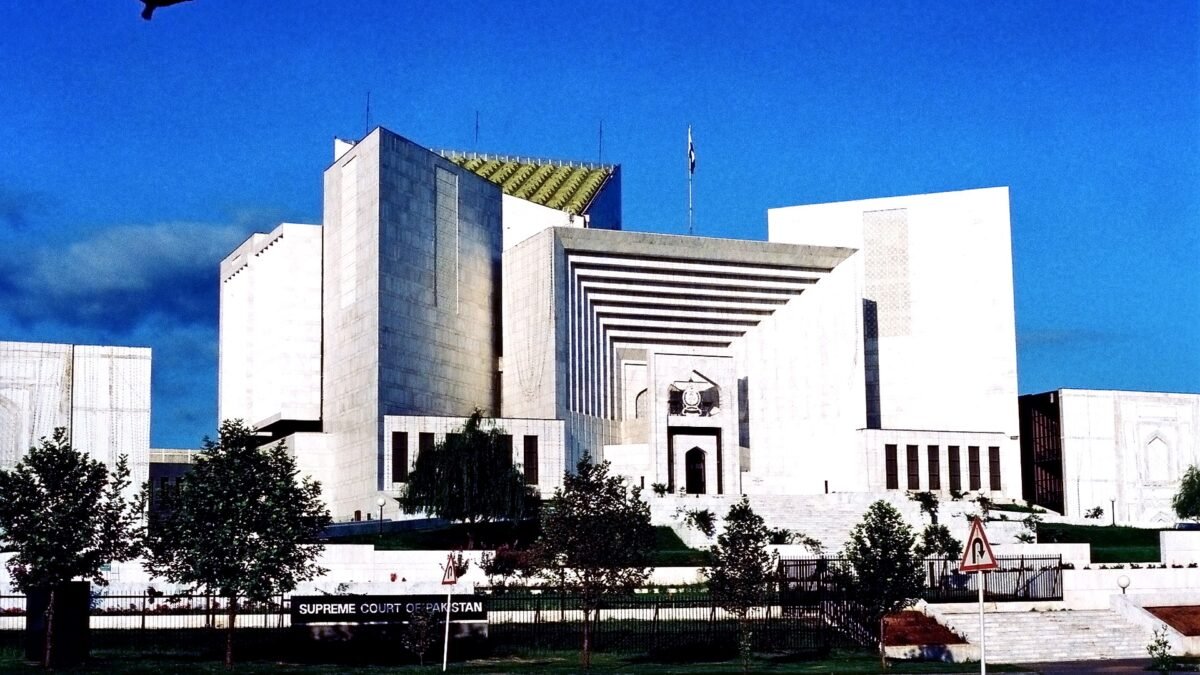
Pakistan Tehreek-e-Insaf has taken its fight over Khyber Pakhtunkhwa to the Federal Constitutional Court, filing two petitions in Islamabad on Thursday that ask the country’s new constitutional court to order the release of the province’s missing chief minister, its assembly speaker and a member of the National Assembly — and to reopen the doors of the Peshawar High Court, which has been barred from hearing the cases for more than a week.
The petitions, filed on 12 November, are the opposition party’s most direct legal challenge yet to the emergency and governor’s rule imposed in Khyber Pakhtunkhwa on 11 October. They arrive at a moment when the province has had no functioning elected government for more than a month, when its chief minister has not been seen in public since the day the emergency was declared, and when the high court that would ordinarily hear such complaints has been told it cannot.
One petition was filed by PTI member of the National Assembly Shandana Gulzar, who asked the court to order the recovery of Chief Minister Sohail Afridi, Provincial Assembly Speaker Babar Saleem Swati and MNA Junaid Akbar, according to The News. The other was filed by PTI Chairman Barrister Gohar Ali Khan, who asked the court to review its own order of 5 November — the order that stopped the Peshawar High Court from hearing the cases — and to let the high court resume its work, according to Pakistan Point and Dunya News.
Together, the two filings put a single question before the Federal Constitutional Court: whether the extraordinary measures imposed in Khyber Pakhtunkhwa — emergency rule, a suspended provincial government, detained elected leaders and a high court told to stand aside — can stand together under the Constitution, or whether the court will insist that even an emergency has limits that judges can enforce.
The recovery petition: three men, no answers
Shandana Gulzar’s petition, filed under Article 175E(3) of the Constitution, names the defence ministry, the interior ministry, the Khyber Pakhtunkhwa chief secretary and the provincial inspector general of police as respondents, The News reported. It asks the court to declare that the arrest, detention, confinement and restriction of movement of Afridi, Swati and Junaid Akbar was without lawful authority, unconstitutional and of no legal effect.
The petition goes further than a simple plea for release. It asks the court to direct the respondents to disclose, before the court, the precise whereabouts of the three men, the identity of the authority exercising custody over them, the legal instrument and statutory provisions invoked, the grounds of detention, and the date and circumstances of their taking into custody. It also asks the court to direct that the detainees be produced before it, in person or through secure and appropriate means, so that their condition, liberty and legal status can be independently ascertained.
The petition also asks for a wider declaration: that Articles 232, 234 and 245 of the Constitution — the provisions under which the emergency was imposed and the armed forces were called in aid of the civil administration — do not, by themselves, confer any independent or unrestricted authority to arrest, detain, confine or conceal the whereabouts of any person. Every such exercise of state power, the petition argues, remains subject to constitutional safeguards and judicial review, and the fundamental rights of citizens cannot be suspended under the pretext of imposing governor’s rule or a state of emergency.
The urgency of the plea is easy to understand. Afridi, 37, was elected chief minister on 13 October 2025, winning 90 votes in the 145-member provincial assembly, and took the oath of office two days later. He was the first chief minister elected from the former tribal districts, and the fourth PTI chief minister to lead the province since 2013. His tenure came to an end on 11 October 2026, when President Asif Ali Zardari signed a summary on the advice of Prime Minister Shehbaz Sharif imposing an emergency and governor’s rule under Articles 232 and 234 of the Constitution.
Since that day, Afridi has not been seen in public. A federal minister confirmed a day after the proclamation that he and some cabinet members were in preventive custody, according to Independent Pakistan, but the government has not disclosed where he is being held, under what authority, or on what grounds. The petition filed on Thursday is, in effect, a demand that the state answer those questions in court.
Swati, the speaker of the provincial assembly, and Junaid Akbar, a member of the National Assembly and the PTI’s provincial president, are in the same position. Their names appear alongside Afridi’s in the recovery petitions that the Peshawar High Court was hearing before it was stopped — petitions that sought their production before the court and an account of their detention.
The review petition: a court asked to reconsider its own order
The second petition, filed by Barrister Gohar Ali Khan, takes a different route to the same destination. It asks the Federal Constitutional Court to review the order it issued on 5 November, on petitions filed by the Khyber Pakhtunkhwa government, which suspended proceedings on constitutional petitions filed in the Peshawar High Court on or after 12 October, according to Pakistan Point.
The petition asks that Gohar and the other petitioners be made parties to the case and given an opportunity to present their position, and it argues that the 5 November order has affected proceedings on constitutional petitions pending before the Peshawar High Court. It also seeks the release of the chief minister and the speaker, and asks the court to protect citizens’ fundamental rights and ensure access to justice.
Gohar had signalled the move three days earlier. Speaking on 9 November, he said the constitutional court’s 5 November decision had created several complications, affecting not only political figures but also ordinary citizens, and that the party would approach the court to have the stay order withdrawn. The Peshawar High Court, he said, had delisted PTI cases scheduled for hearing on 10 November, and the right course would have been for the high court to hear the cases and determine how the 5 November decision applied to them.
The 5 November order was made by a two-member bench of the Federal Constitutional Court headed by Chief Justice Aminuddin Khan and comprising Justice Amir Farooq. It was hearing appeals by the Khyber Pakhtunkhwa government against interim orders of the Peshawar High Court that had restrained arrests of political workers under Section 3 of the Maintenance of Public Order Ordinance and directed the release of detained activists.
In a four-page written order, the court held that because the armed forces had been called in aid of the civil administration in Khyber Pakhtunkhwa under Article 245 of the Constitution, proceedings on Article 199 petitions filed on or after 12 October stood suspended by virtue of Article 245(4). It suspended the challenged orders, issued notices to the parties and adjourned the proceedings indefinitely. It also directed the provincial advocate general, Sanaullah Khan, to produce a report within seven days identifying the areas where the armed forces were no longer needed, and said it might modify its order after examining the report.
That order had immediate and sweeping consequences. The Peshawar High Court’s administrative committee, headed by Chief Justice S. M. Atiq Shah, directed that no writ petitions filed under Article 199 of the Constitution on or after 12 October be fixed for hearing, and that petitions filed under Article 199 be returned to the petitioners, who were told to approach the “appropriate forum” — without the forum being named.
A high court that cannot hear
On 7 November, the Peshawar High Court removed about 105 petitions from its hearing list for Tuesday 10 November, according to Independent Pakistan. The petitions included challenges to the emergency and governor’s rule imposed on 11 October, and pleas over the alleged illegal detention of Afridi, Swati and Junaid Akbar, as well as dozens of lawmakers and other party workers.
The scale of the removal was striking. Among the petitions struck from the cause list were those filed by Gohar himself, by the leader of the opposition in the National Assembly, Mahmood Khan Achakzai, by the Khyber Pakhtunkhwa Bar Council, by National Democratic Movement chairman Mohsin Dawar and by MNA Shandana Gulzar. The high court had been the forum where the emergency was being tested. Within days of the constitutional court’s order, that forum was closed.
The closure was all the more consequential because the high court had been active. Before the 5 November order, it had granted bail to 23 PTI workers arrested under Section 3 of the Maintenance of Public Order Ordinance, and it had sought replies from the governor and the speaker over the imposition of governor’s rule. On 20 October, a two-member bench had asked the respondents — including the federal government — to file a detailed report within ten days on the chief minister’s whereabouts, and on whether he had been arrested or named in any criminal case. The respondents did not file the report in time. On 3 November, a bench referred the matter to the chief justice, suggesting a larger bench hear it.
The lawyers of the province responded with a strike. On Tuesday 10 November, lawyers in Khyber Pakhtunkhwa boycotted court proceedings on the appeal of the Khyber Pakhtunkhwa Bar Council, disrupting judicial work across the province, according to Pakistan Point. The Bar Council said suspending the powers of high courts under Article 199 of the Constitution was unconstitutional and tantamount to ending fundamental rights in the province. Its president, Muhammad Rafiq Mohmand, announced that the council would also file an application to become a party in the relevant case.
The opposition alliance Tehreek-e-Tahafuz-e-Ayin-e-Pakistan, known as TTAP, had already demanded a transparent judicial review of the constitutional grounds for imposing governor’s rule and an emergency, warning on 9 November that such measures undermine provincial autonomy, the public mandate and parliamentary democracy. The alliance, led by Achakzai, Senate opposition leader Allama Raja Nasir Abbas and former National Assembly speaker Asad Qaiser, had formed a committee on 5 November to facilitate an all-parties conference.
Why the emergency was imposed
The federal government’s case for the emergency rests on security. When President Zardari approved the prime minister’s advice on 11 October, the government cited a deterioration in the security situation, an increase in terrorist attacks, and what it described as the provincial administration’s failure to cooperate effectively in counter-terrorism efforts. Executive powers were transferred to Governor Faisal Karim Kundi, assisted by an 11-member advisory council, while emergency measures were imposed in 12 districts. Law Minister Azam Nazeer Tarar said the measures were initially for six months.
The security backdrop is real. Pakistan’s military said on Friday that security forces had killed at least 74 militants in raids on hideouts in Khyber Pakhtunkhwa and Balochistan, along the border with Afghanistan, over the past ten days, according to the daily briefing published by Just Security. On Wednesday, at least 11 police personnel, including Deputy Superintendent of Police Haider Zaman and Sub-Inspector Mukhtar Ahmed, were killed and 12 injured when militants ambushed a police team in the Darbokach area of Kohat district, according to the Express Tribune and the Associated Press. The banned Tehreek-e-Taliban Pakistan later claimed responsibility for that attack.
PTI rejects the government’s position. The party argues that the emergency was imposed not because of security but because the provincial government was organising a march towards Islamabad, and that the real purpose was to remove an elected provincial government and detain its leaders. The party’s original march, planned for 27 September, was postponed to 4 October for talks and ultimately never took place.
The dispute over the emergency is now inseparable from a wider constitutional argument. The Federal Constitutional Court, which issued the 5 November order, was itself created by the 27th Constitutional Amendment, signed into law in November last year. That amendment established the court to hear constitutional matters, disputes between governments and many petitions previously heard by the Supreme Court. The court that PTI is now asking to review the Khyber Pakhtunkhwa emergency is, in other words, the newest institution in Pakistan’s constitutional order — and its handling of this case will shape how the country understands the court’s role.
A week of courtrooms, jail visits and street calls
The two petitions landed in a week crowded with developments in PTI’s legal and political battles. On Tuesday 10 November, the Islamabad High Court directed jail authorities to arrange a one-hour meeting between Imran Khan and his wife, Bushra Bibi, and their lawyers at Adiala Jail, while hearing the couple’s appeals against their convictions in the £190 million Al-Qadir Trust case.
The meeting, held on Wednesday 11 November, lasted nearly three hours, from 4pm to 7pm, according to Barrister Salman Safdar, who said the couple gave comprehensive instructions on their legal matters. Sardar Latif Khosa, who also attended, confirmed that a possible 28th Constitutional Amendment had come under discussion but declined to disclose further details. The meeting came a day after Khan was taken to the Pakistan Institute of Medical Sciences in Islamabad for a medical examination and follow-up treatment for his eye condition, and hours after the couple’s lawyers had been allowed their first substantive meeting in months — Safdar had last seen Khan seven months earlier, and Bushra Bibi eleven months earlier.
On Thursday, the Islamabad High Court admitted the couple’s appeals and fixed the hearing for 18 November, according to Pakistan Point. A two-member bench headed by Chief Justice Sarfraz Dogar and comprising Justice Muhammad Asif will hear the appeals, and the court directed that the paper books be prepared within seven days. The couple were sentenced by an accountability court on 17 January 2025 — Khan to 14 years and Bushra Bibi to seven years — in a case concerning £190 million returned to Pakistan by Britain’s National Crime Agency in 2019, money the prosecution says was used to settle a property tycoon’s liabilities rather than going into the national treasury. Both have denied wrongdoing.
There were also signs of contact between the two sides. PTI leader Ali Muhammad Khan said on television on Friday that meetings between Gohar and Interior Minister Mohsin Naqvi had taken place, and that such communication should continue to facilitate engagement between the government and the opposition. He also said Prime Minister Shehbaz Sharif had extended five offers of negotiations over the previous 18 months, though he did not confirm that any formal agreement had been reached.
Naqvi himself was at the centre of another political story this week. On Thursday he proposed holding a referendum to gauge public opinion on the creation of new provinces, and later the same night flew to Nawabshah for a nearly hour-long meeting with President Zardari, where the discussion reportedly covered the new-provinces proposals, a proposed 28th Constitutional Amendment and possible action against the Jamiat Ulema-e-Islam-Fazl, according to The Nation.
And on the streets, PTI had called for countrywide demonstrations on Friday after prayers, at district headquarters across the country, against the constitutional amendment package, the treatment of Imran Khan in jail and the denial of access to him for his lawyers, leaders and family. The call was issued before the release of two of Khan’s sisters, and it demanded the release of Aleema Khan and Uzma Khan, who were then in detention. Uzma Khan and Noreen Niazi were freed from Kot Lakhpat Jail in Lahore on Thursday after 53 days in preventive detention; Aleema Khan remains in custody under a separate order. No verified account of Friday’s demonstrations, their turnout or any arrests had been published by the time this report was filed.
Analysis: Why It Matters
The missing chief minister is the case
Everything else in this story — the emergency, the court orders, the strikes, the protests — is an argument about power. The missing chief minister is a fact about a person. Sohail Afridi has not been seen in public for more than a month. The government has not said where he is, who holds him, or under what law. A federal minister confirmed he was in preventive custody, and then the state went silent. That silence is what Shandana Gulzar’s petition is really about. A state that can hold an elected chief minister for a month without telling a court where he is has claimed a power that no emergency provision, on its face, grants. If the Federal Constitutional Court orders the government to produce him, it will have drawn a line that matters far beyond Khyber Pakhtunkhwa. If it does not, the silence will stand as a precedent.
A court asked to judge its own order
Gohar’s review petition asks the Federal Constitutional Court to do something courts dislike: revisit their own decision. But the 5 November order is an unusual one to defend. It did not decide a case; it suspended the ability of another court to decide cases. It did not rule on whether the emergency was lawful; it removed the forum in which that question could be asked. And it did so indefinitely, with only a promise to reconsider after a report from the provincial advocate general. The review petition gives the court a dignified way out — a chance to narrow its own order, restore the high court’s jurisdiction over cases that have nothing to do with military operations, and let the ordinary business of justice resume. Whether the court takes it will tell the country a great deal about whether the new constitutional court sees itself as a guardian of access to justice or as an instrument for closing it off.
The high court that cannot hear
The most consequential fact in this story may be the least dramatic: about 105 petitions were struck from a single day’s cause list. Those petitions were not only about politicians. They included cases about detentions under the Maintenance of Public Order Ordinance, about ordinary citizens caught in the emergency’s machinery, about the basic question of whether a person taken by the state can ask a judge why. When a high court cannot hear, the loss is not abstract. It is felt by every family that cannot find its detained relative and by every worker who cannot challenge an arrest. The Bar Council’s strike on 10 November was, in that sense, not a protest about politics. It was a protest about the disappearance of a remedy.
Street and courtroom, together
PTI is fighting on two fronts at once, and the two fronts are connected. The party called for demonstrations on Friday, and on Thursday it filed petitions in the constitutional court. The street is where the party shows it still has supporters; the courtroom is where it shows it still has arguments. Neither front is sufficient on its own. Protests without a legal case are easily dismissed as disruption. Petitions without a political base are easily ignored. The combination is the party’s strategy: keep the pressure visible in public while forcing the state to answer in a forum where it must give reasons. The risk is that both fronts fail at the same time — that the protests fade and the court declines to intervene — leaving the emergency to run its course unchallenged.
What the constitution is for
The deepest question in this case is the one Shandana Gulzar’s petition puts in plain language: do the emergency provisions of the Constitution give the state an independent, unrestricted authority to detain people and hide them, or does every exercise of state power remain subject to constitutional safeguards and judicial review? The government will argue that the security situation in Khyber Pakhtunkhwa is exceptional, and that exceptional measures are needed. That argument has force; the province has suffered terribly from militancy, and the week’s killings in Kohat are a reminder of the cost. But the petition’s answer is that the Constitution was written precisely for exceptional times, and that its safeguards are meaningless if they can be set aside whenever the government says the situation is serious. The Federal Constitutional Court was created to answer questions like this one. Its answer, when it comes, will define not only the fate of three detained men, but the meaning of emergency rule in Pakistan.
What to Watch Next
- When the court lists the petitions. The Federal Constitutional Court has not yet fixed a date for hearing either petition. The listing itself will be a signal: a swift listing suggests the court takes the questions seriously; a long delay suggests it does not.
- The advocate general’s report. The 5 November order directed the Khyber Pakhtunkhwa advocate general to report within seven days on the areas where military assistance was no longer required. That deadline fell this week. Whether the report was filed, what it says, and whether the court modifies its order in light of it will determine whether the Peshawar High Court’s doors reopen.
- Whether Afridi is produced. The recovery petition asks the court to order the three men produced before it. If the court makes that order and the government complies, the country will finally see its missing chief minister. If the court declines, or the government resists, the standoff deepens.
- Friday’s protests and their aftermath. The scale of Friday’s demonstrations, and whether any protesters or leaders were detained, will show whether the party’s street campaign still has force after a month of emergency rule.
- The Islamabad High Court on 18 November. The hearing of Imran Khan and Bushra Bibi’s appeals in the £190 million case is the next fixed date in the party’s legal calendar, and the court’s handling of the paper books and the defence’s request for time will set the pace for the months ahead.
- Aleema Khan’s detention. Two of Imran Khan’s sisters were freed on Thursday after 53 days. Aleema Khan remains in custody under a separate order, and her case — and the Lahore High Court’s handling of it — remains an open thread in the same story of preventive detention.
- The 28th Amendment and new provinces. The discussion of a further constitutional amendment, and of a referendum on new provinces, is moving from speculation to open debate. Any formal proposal would reopen the constitutional argument on a new front, and PTI has already said it will resist it.
Sources
- The News — “FCC moved for recovery of KP CM, 2 others”
- Pakistan Point — “PTI Moves Federal Constitutional Court Against Governor’s Rule, Emergency”
- Shafaqna Pakistan (Dunya News) — “PTI approaches FCC against governor’s rule, emergency in KP”
- Independent Pakistan — “PHC pulls 105 challenges to provincial takeover, missing CM from hearing list after top court order”
- Pakistan Point — “Lawyers Strike in Khyber Pakhtunkhwa Against Constitutional Court Ruling”
- Pakistan Point — “IHC Sets Appeals Against Imran Khan, Bushra Bibi’s Sentences for Hearing on November 18”
- Independent News Pakistan — “PTI all set to hold massive countrywide protest tomorrow”

About the Author — Abdul Mannan
Related Articles
Imran Khan’s Sisters Uzma and Noreen Freed After 53 Days in Lahore Jail as Aleema Remains Behind Bars
Dr Uzma Khan and Noreen Niazi walked out of Lahore's Kot Lakhpat Jail on Thursday after 53 days…
Imran Khan Taken to PIMS Overnight for Sixth Eye Injection Before Lengthy Adiala Meeting as Lawyers Warn His Blood Pressure Is Alarmingly High
Jailed former prime minister Imran Khan was taken to PIMS hospital overnight for a sixth eye injection and…
Eleven Policemen Killed in Kohat Ambush as Militants Target Anti-Gold-Mining Operation
Eleven policemen, including a deputy superintendent, were killed and 12 injured when gunmen ambushed a police team heading…