
Imran Khan’s Sisters Uzma and Noreen Freed After 53 Days in Lahore Jail as Aleema Remains Behind Bars

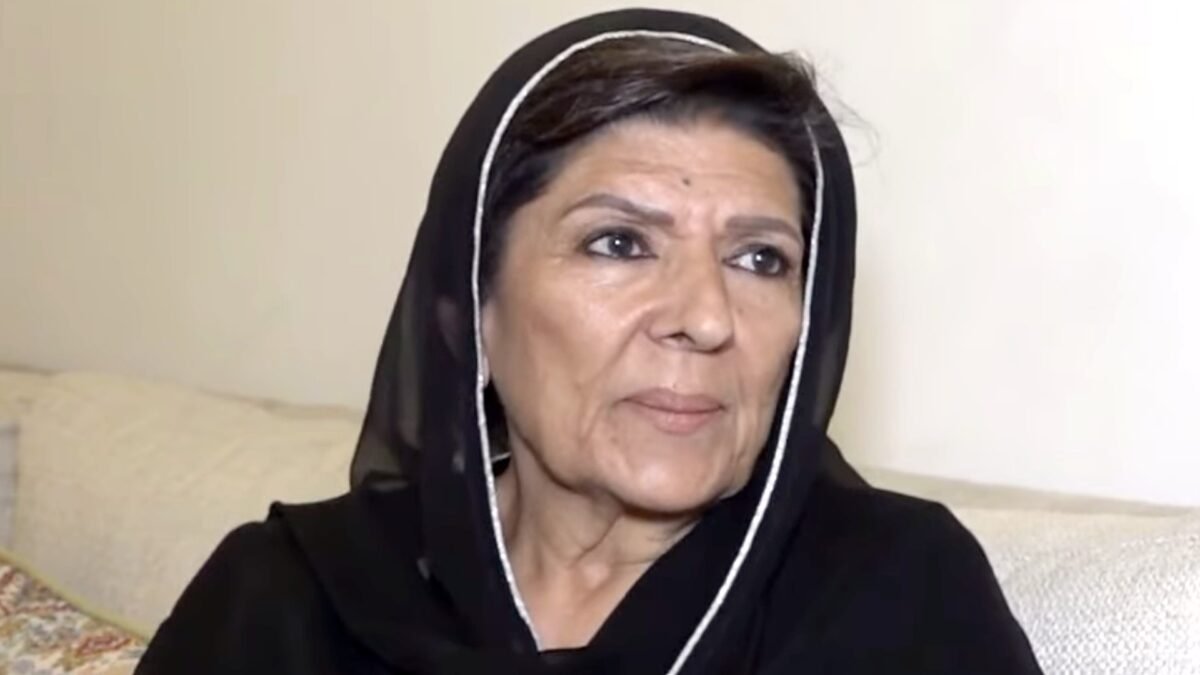
Two sisters of Pakistan’s jailed former prime minister Imran Khan walked out of a Lahore prison on Thursday after 53 days in preventive detention, but the family’s ordeal is far from over. Dr Uzma Khan and Noreen Niazi left Kot Lakhpat Jail in the afternoon after the authorities withdrew the detention orders holding them, while their sister Aleema Khan remained behind bars under a separate order, according to Dawn and Reuters.
The release, confirmed by the family’s lawyer and by Khan’s Pakistan Tehreek-e-Insaf (PTI) party, came hours before a scheduled court hearing at which the legality of the detentions was to be challenged. It ended nearly two months of confinement for two women who were never charged with any offence, yet it left the central question unanswered: why were they locked up at all, and why does one sister remain in jail while the other two go home?
PTI legal counsel Rana Mudassar Umer told Dawn on Thursday that the extended detention orders against Uzma Khan and Noreen Niazi had been withdrawn and that both women had returned home safely. In a post on X, he wrote that the two had been released and had arrived home safely. PTI lawyer Taimur Malik also confirmed the release on X, describing the detention orders as unlawful and calling for the release of everyone else held under similar orders.
According to the family, the two women walked out of the jail at about 2pm on Thursday, 12 November, after spending 53 days in custody. PTI leader and former federal minister Moonis Elahi said the Punjab government had withdrawn the orders. The Kot Lakhpat Jail superintendent, Chaudhry Ijaz Asghar, confirmed to The Express Tribune that Aleema Khan remained incarcerated, and the family’s lawyers were seeking the withdrawal of her separate detention order as well.
A detention without a charge
The three sisters were detained in September under Section 3 of the Punjab Maintenance of Public Order Ordinance, 1960, on orders issued by the Lahore deputy commissioner. The law allows the authorities to detain a person preventively where officials fear a threat to public order. No criminal case was registered against any of the three women, and none of them was ever formally charged or put on trial.
Aleema Khan, the eldest of the three and the most publicly visible of Khan’s sisters, was taken into custody on 20 September. Noreen Niazi and Dr Uzma Khan were detained a day later, on 21 September, according to The News. The detentions came as the PTI was preparing a protest march towards Islamabad, planned for 27 September, to demand the release of Imran Khan. The march was subsequently postponed to 4 October and ultimately never took place.
The initial detention orders ran for 30 days. When that period lapsed in the middle of October, the Punjab government told the Lahore High Court that it had extended the detentions for a further 30 days. A government law officer informed the court that the extension had been approved on 7 October on the recommendation of the Lahore deputy commissioner. The initial orders had expired on 19 October for Aleema Khan and on 20 October for Noreen Niazi and Dr Uzma Khan.
The government’s stated reason for the detentions was that the sisters could have posed a threat to law and order ahead of the planned march, Reuters reported. That march, as Reuters noted, ultimately did not go ahead. The sisters’ family and their lawyers have maintained throughout that the detentions had no basis in law. Uzma Khan’s son, Wali Khan, said in a post on X that his mother had been detained for 53 days and then released, and that neither decision was based in law. “Their jailing was arbitrary, and so is their release,” he said.
The court battle
The detentions were challenged in the Lahore High Court almost immediately. Aleema Khan’s son, Shahrez Khan, filed a petition seeking the recovery and production of the three women, arguing that they were not wanted in any criminal case and that preventive detention could not be used as a substitute for ordinary criminal law. A second petition was filed by Sakeena Bibi. The cases came before Justice Abher Gul Khan.
On 24 September, the Lahore High Court declined a plea to suspend the detention orders immediately. Counsel for Uzma Khan and Noreen Niazi argued before the bench that both women were non-political and had been incarcerated without any legal rationale, and pointed out that Uzma Khan had already secured an acquittal in a previous case registered against her. The judge said the court would await an official report from the authorities before ruling on the suspension application, and issued notices to the respondents, who included the Lahore deputy commissioner, the capital city police officer, the home department secretary and the superintendent of Kot Lakhpat Jail.
On 26 October, the Lahore High Court disposed of a petition after the Punjab government confirmed that the preventive detention of the three women had been extended for another 30 days. An assistant advocate general told Justice Khan that the extension had been granted on the recommendation of the Lahore deputy commissioner, and submitted a report on behalf of the home secretary. The petitioner’s counsel, Rana Mudassar Umer, argued that the continued confinement beyond the initial period was unlawful. The judge observed that the petitioner had failed to make the Lahore deputy commissioner a respondent in that petition, despite that official having issued the detention notifications, and held that the court could not issue an order beyond the scope of the petition.
Separately, the Lahore High Court summoned the Punjab home secretary and the Kot Lakhpat Jail superintendent to appear in person for a hearing on 28 October, and on 3 November it summoned the Lahore deputy commissioner over the continued detention, directing that Noreen Niazi be allowed to meet her daughters. The court directed the deputy commissioner to appear in person on 4 November, and ordered that Noreen’s two daughters be allowed to meet their mother in jail for an hour. During the hearing, the family’s lawyer told the court that the three sisters had spent 44 days in jail without committing any offence.
It was ahead of a scheduled hearing in that continuing legal challenge that the authorities withdrew the orders against Uzma Khan and Noreen Niazi on Thursday. Aleema Khan’s case, held under a separate order, was not withdrawn.
A hospital transfer that alarmed the family
The detention also took a worrying turn for the family in late October. On 28 October, Noreen Niazi was moved from Kot Lakhpat Jail to the Punjab Institute of Cardiology in Lahore after experiencing high blood pressure and heart-related discomfort. Her lawyer said at the time that no family member had been informed about her deteriorating health. The PTI condemned the transfer without informing the family and expressed grave concern over her health.
The government insisted that she was fine after being provided medical treatment. The adviser to the prime minister on political affairs, Rana Sanaullah, told the Senate on 29 October that all her medical tests were normal. A government lawyer later told the Lahore High Court that Noreen had received treatment at the hospital and had been transferred back to jail on doctors’ advice, and that her daughter Hajra Niazi had met her on 29 October during her hospital treatment.
The episode fed into a wider anxiety in the family about the health of its most prominent member. Imran Khan himself, 74, was taken from Adiala Jail in Rawalpindi to the Pakistan Institute of Medical Sciences (PIMS) in Islamabad during the night of 10 and 11 November for a follow-up eye procedure, according to Dawn and Reuters. It was the sixth injection he has received in his right eye for central retinal vein occlusion, a condition in which a blockage in the main vein draining blood from the retina can cause bleeding and fluid accumulation and impair vision.
Khan first reported blurred vision in his right eye in October 2025, and was diagnosed with the condition after examination by a PIMS ophthalmologist. He received his first anti-VEGF injection at the hospital on 24 January 2026. According to a PIMS statement, the ophthalmology team administered a further injection on the advice of his treating ophthalmologist during the overnight visit, and he was discharged at about 2.30am with instructions for further care and follow-up. The hospital said his vital parameters were normal and that he remained clinically stable before, during and after the procedure.
Reuters, citing sources, reported that Khan had also experienced blood pressure problems and was given the required treatment before being returned to his prison cell. His lawyers say his health has deteriorated in prison and that he has lost significant vision in his right eye. Barrister Salman Safdar, who met Khan after the hospital visit, said Khan had told him his eyesight had improved but his blood pressure remained uncontrolled, warning of a risk of brain haemorrhage. The Supreme Court had ordered in August that Khan be moved to a private hospital of his choice in Islamabad. Instead, he was taken to PIMS and returned to jail, a point his party has raised repeatedly.
Khan has been imprisoned since August 2023, following a series of convictions that his party describes as politically motivated. Reuters reported that all but one of those convictions have since been suspended or overturned on appeal. He served as prime minister from 2018 to 2022, after a career as one of Pakistan’s most celebrated cricketers, and his imprisonment has dominated the country’s politics for more than three years.
The march that never happened
The sisters were detained in the shadow of a confrontation that never fully materialised. The PTI had planned a march on Islamabad for 27 September to demand Khan’s release, and the authorities moved against the party’s organisers in the days beforehand. The federal government then went further: on 11 October it imposed a state of emergency and governor’s rule in Khyber Pakhtunkhwa, the northwestern province run by Khan’s party, under Articles 232 and 234 of the Constitution, suspending the provincial government that had been organising the demonstration.
The emergency placed the province under the authority of Governor Faisal Karim Kundi, who took charge with an 11-member advisory council, and transferred the chief minister’s powers to the governor. The federal cabinet accused the provincial government of what it called deliberate disengagement from the fight against terrorism, a charge the PTI rejected. Parliament subsequently backed the emergency proclamation, and the PTI challenged the decision in the Peshawar High Court. The sisters’ release comes a month after that intervention, and days after the prime minister visited Peshawar to defend it and announce a development package for the province.
The political temperature has not cooled. The PTI’s political committee announced this week that the party would resist recent constitutional amendments and hold a nationwide protest on Friday, 13 November. The party is also pressing against a new round of constitutional debate: a proposal to reorganise Pakistan into 12 provinces, which would require a 28th Constitutional Amendment, has been discussed in political circles, and the possibility of a referendum has been raised. The News reported that the National Assembly and Senate sessions beginning on 16 November are unlikely to take up constitutional reforms, with no proposal for any amendment, referendum or electoral reform on the agenda so far.
Against that background, Federal Interior Minister Mohsin Naqvi met President Asif Ali Zardari in Nawabshah on Thursday. According to Capital News Point, the two leaders discussed the establishment of new administrative units and the possibility of a 28th Constitutional Amendment, the meeting between Khan and his lawyers, the release of his sisters and the potential political implications of these developments. President Zardari emphasised the need for negotiations with opposition parties to resolve outstanding issues, and the meeting was described as significant in the context of talk of a possible political “reset” in the country.
Analysis: Why It Matters
A release that settles nothing
The withdrawal of two detention orders on the eve of a court hearing is, on its face, good news for two families. But the manner of the release raises as many questions as it answers. The authorities did not say the detentions had been wrong, or that the women should never have been held. They simply withdrew the orders, and only two of the three. That is the pattern of preventive detention: it begins with an administrative order, it continues without a trial, and it can end the same way, with no explanation and no accountability.
For the government, the release removes an embarrassment. Two women held for 53 days without charge, one of them hospitalised with high blood pressure, had become a standing reproach, and the Lahore High Court was asking increasingly pointed questions about the legal basis for their confinement. Withdrawing the orders before the next hearing avoids a judicial ruling that might have gone against the state. For the family, the release is welcome but incomplete. As long as Aleema Khan remains in custody under a separate order, the family will argue that the injustice has not ended, only narrowed.
The family as the front line
There is a reason the sisters matter so much in this story, and it goes beyond blood. Since Khan’s imprisonment in August 2023, his sisters have been his most consistent public advocates. Aleema Khan in particular has become the family’s voice outside Adiala Jail, speaking to the media, attending court hearings and leading the campaign for access to her brother. That visibility is precisely what made them targets: the detentions came a week before a planned march, and the government’s own justification was that the sisters could have posed a threat to public order.
The episode illustrates a wider feature of Pakistan’s current politics, in which the families of detained politicians become political actors in their own right, and are then treated as political actors by the state. The sisters were described by their own counsel as non-political. The state treated them as potential organisers of a protest. The gap between those two descriptions is the whole argument about preventive detention in one sentence: the same person can be, simultaneously, a private citizen visiting her brother and, in the eyes of an administration preparing for a march, a risk to be managed.
Preventive detention on trial in the courts
The legal story here is as important as the human one. The Maintenance of Public Order Ordinance is a colonial-era instrument, and Section 3 gives a district officer the power to detain a person on the basis of anticipated trouble rather than proven wrongdoing. The sisters’ case shows both the strength and the limits of that power. It is strong enough to hold three women for 53 days without a charge. It is limited by the courts, which can demand reports, summon officials, order family meetings and, ultimately, hear a challenge to the legality of the orders.
What the courts did not do, in the end, was rule on whether the detentions were lawful. The Lahore High Court disposed of one petition after the government confirmed the extension, declined to suspend the orders immediately, and was still hearing the matter when the orders were withdrawn. That is a familiar outcome in preventive detention cases: the state retreats before the court can deliver a verdict, and the legal question remains open for the next case. The family’s lawyers will argue that this is a deliberate strategy. The government will argue that it acted within its powers and then exercised its discretion to release. Neither side has been tested in a final judgment, and that ambiguity is itself part of the story.
Health, access and the politics of a hospital visit
The sisters’ release cannot be separated from what happened to their brother two nights earlier. Khan’s overnight transfer to PIMS for his sixth eye injection, his return to jail at 2.30 in the morning, and his lawyers’ warnings about uncontrolled blood pressure have kept his health at the centre of the political argument. The Supreme Court’s August order that he be moved to a private hospital of his choice has not been carried out in the way his party expected, and each hospital visit becomes a fresh dispute about access, information and medical care.
Noreen Niazi’s own hospital transfer, on 28 October, followed the same pattern on a smaller scale: a medical emergency, a family that said it was not informed, and a government that said the patient was fine. These episodes matter because they are not only about medicine. In a case where the prisoner is a former prime minister and the detainees are his sisters, every hospital visit is also a test of transparency. The state’s account, that vital signs were normal and the patient was stable, and the family’s account, that blood pressure was uncontrolled and the risk was serious, cannot both be the whole truth. The public is left to choose between them, and that choice is itself political.
A Friday of protests and a parliament that waits
The timing of the release is impossible to ignore. It came on the eve of a nationwide protest called by the PTI for Friday, and on the same day that the interior minister met the president to discuss a possible political reset, the release of the sisters and the prospect of a 28th Amendment. Whether the release was a concession, a tactical retreat or a coincidence, it will be read by all sides as a signal.
For the PTI, the release of two sisters and the continued detention of the third is an invitation to keep protesting, and the party has said it will. For the government, it is a way of lowering the temperature before a Friday of demonstrations without conceding the principle that it can detain whom it chooses. For the president, who has emphasised negotiations with the opposition, it is a small opening in a much larger argument about the Constitution, the provinces and the balance of power. The sessions of parliament beginning on 16 November are not expected to take up constitutional reforms, which suggests that the bigger argument has been deferred rather than resolved. The sisters’ release is a single move in a longer game, and its meaning will only become clear when the next moves are made.
What to Watch Next
- Aleema Khan’s detention: whether the authorities withdraw her separate detention order, or whether her lawyers force the issue back before the Lahore High Court.
- Friday’s protests: how large the PTI’s nationwide demonstrations on 13 November prove to be, and how the authorities respond in Lahore, Karachi, Islamabad and Peshawar.
- The constitutional debate: whether the proposal for 12 provinces and a possible 28th Amendment advances, or whether the parliamentary sessions beginning on 16 November confirm that it has been shelved.
- Imran Khan’s health: the date of his next eye review, the state of his blood pressure, and whether the Supreme Court’s order on treatment at a private hospital of his choice is finally carried out.
- The remaining MPO detainees: whether the release of Uzma Khan and Noreen Niazi is followed by the release of others held under preventive detention orders, as PTI lawyer Taimur Malik has demanded.
- The Khyber Pakhtunkhwa challenge: the progress of the PTI’s legal challenge to the emergency and governor’s rule in the Peshawar High Court, and the monthly reports the governor must send to the federal government.
- The political reset: whether the meeting between Mohsin Naqvi and President Zardari leads to substantive negotiations with the opposition, or remains, as such talk often has, a rumour.
Sources
- Reuters — Pakistan releases two sisters of ex-PM Imran Khan from jail (via Barbados Gazette)
- Dawn — Detention of Imran Khan’s sisters under the Maintenance of Public Order Ordinance
- The News — LHC summons Lahore DC over Imran’s sisters’ detention
- Reuters — Former Pakistan PM Imran Khan back in jail after medical treatment (via The Business Standard)
- Medical News — Imran Khan undergoes eye procedure at PIMS
- The News — NA, Senate unlikely to take up constitutional reforms in session on 16th
- Capital News Point — Political reset buzz intensifies as Mohsin Naqvi meets President Zardari

About the Author — Abdul Mannan
Related Articles
Imran Khan Taken to PIMS Overnight for Sixth Eye Injection Before Lengthy Adiala Meeting as Lawyers Warn His Blood Pressure Is Alarmingly High
Jailed former prime minister Imran Khan was taken to PIMS hospital overnight for a sixth eye injection and…
Eleven Policemen Killed in Kohat Ambush as Militants Target Anti-Gold-Mining Operation
Eleven policemen, including a deputy superintendent, were killed and 12 injured when gunmen ambushed a police team heading…

Pakistan Cuts Petrol Price by Rs8 to Rs338 a Litre and Diesel by Rs7 to Rs371
Petrol falls to Rs338 a litre and diesel to Rs371 as Pakistan's new daily pricing system passes a…