
South Sudan Delays Its First-Ever Elections Again, Pushing the Vote to February 2027 as War Fears Grow

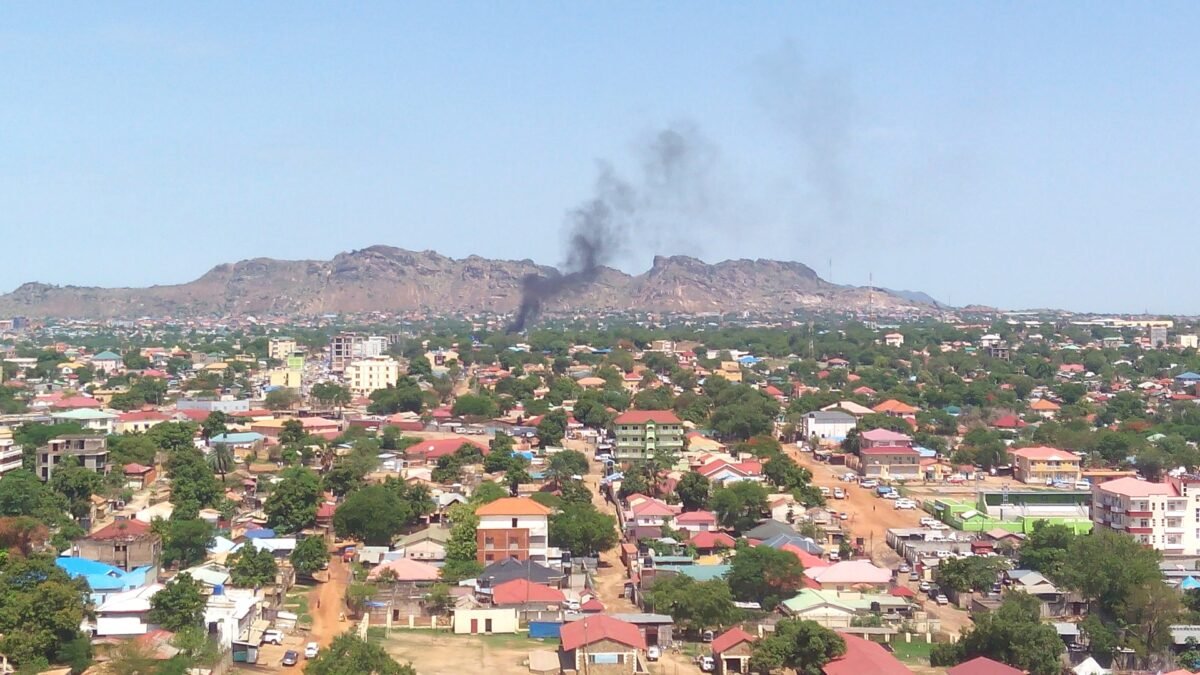
South Sudan has postponed its first national elections since independence, pushing the vote from 22 December this year to 11 February 2027, in the latest delay to a ballot first promised in 2022.
The National Elections Commission announced the revised timetable on Saturday, giving no reason for the change. The decision, reported by Reuters, means the world’s youngest country will pass fifteen and a half years of independence without ever having held a national election.
Presidential and parliamentary elections were scheduled for 22 December. Under the new calendar, voter registration opens on Saturday and runs until 28 November, campaigning is due to run from 27 December to 9 February, with one day of silence before the vote, and results are expected four days after polling, according to the commission’s timetable.
“This is the timeline we have come up with after a thorough consultation with the stakeholders,” Josephine Achiro Fortelo, a commissioner of the National Elections Commission and its spokesperson, told Reuters on Saturday, confirming that the electoral date had been changed.
The commission’s secretary general, Ahon Malou Lueth, confirmed the postponement to the AFP news agency but declined to provide a reason or further details.
The delay lands on a country sliding back towards the war it formally ended eight years ago. Fighting between forces loyal to President Salva Kiir and supporters of his detained former deputy, Riek Machar, has escalated in recent months, and the United Nations has warned repeatedly that the country lacks the safeguards and conditions for peaceful and credible elections.
The new timetable
The revised calendar, published by the commission on social media, sets out the full sequence of the delayed vote. Voter registration begins on Saturday 14 November and closes on 28 November, with the provisional register due on 29 November. Candidate nominations follow, campaigning runs for 45 days from 27 December to 9 February, and 10 February has been designated as a day of election silence. Polling takes place on Thursday 11 February 2027, final results are scheduled for 15 February, with publication the next day, and election disputes are to be handled through 15 July.
Commission chairman Gabriel Bol Deng said 3,161 registration centres had been set up across the country and more than 22,000 staff hired for the registration operation, according to reports of the announcement. The commission had said in a public notice on 13 November that registration would begin on Saturday, giving eligible citizens 14 days to sign up.
But the announcement came on the very day registration was due to begin, and officials acknowledged that some centres had yet to receive all the necessary equipment, according to AFP. The timing alone tells a story: a commission announcing a new date on the morning the old timetable was supposed to start working is a commission that was not ready.
The new polling date sits just eleven days before South Sudan’s transitional period is due to end on 22 February 2027, under a 2024 agreement published by the election commission. The African Union’s Peace and Security Council said in August that the transition must end in February without further extensions. The revised calendar does not explain how election disputes continuing into July would affect a transition that is supposed to be over by then.
Registration: the hardest test
Registering voters may prove harder than setting the date. According to the World Bank, about 90 percent of South Sudan’s roughly 15 million people have no state-recognised identification. Mr Deng said people without papers, especially in rural areas, would be identified by community leaders and given a form that allows them to vote.
That arrangement, practical as it sounds, carries obvious risks in a country where local authority is often contested and where armed groups control territory the state cannot reach. A registration system that depends on the word of community leaders is only as credible as those leaders, and in South Sudan’s most divided areas, that credibility is precisely what is in dispute.
The logistical scale is daunting in its own right. South Sudan is a vast country with almost no paved roads outside the capital, Juba. Much of it floods for months of the year. Registration centres must be staffed, supplied and secured across ten states and three administrative areas, in a country where the government’s writ has always been thinnest outside the towns. The commission says 3,161 centres and more than 22,000 staff are ready. Whether they can actually operate in areas where fighting has displaced tens of thousands of people is a different question, and one the commission has not answered.
There is also the question of who counts as a voter. South Sudan has never held a census that the whole country accepts, and it has no permanent constitution. The vote is being organised in a state that has not yet settled the basic facts about itself: how many people it has, where they live, and who is entitled to choose its government.
A vote without an opposition?
The most troubling feature of the coming election is not its date but its politics. The man who would be the leading opposition candidate is in detention, on trial for his life.
Riek Machar, the former first vice-president and the leader of the Sudan People’s Liberation Movement-in-Opposition, has been under house arrest in Juba since 26 March 2025. He appeared before a televised special court in Juba on 22 September 2025 to answer charges including treason, murder, terrorism and crimes against humanity. The trial remained under way at the time of the latest reporting, with no verdict delivered.
The charges arise from an attack in early March 2025 in which fighters from the Nuer “White Army” militia overran a government garrison at Nasir, in Upper Nile State, killing a large number of soldiers. A United Nations helicopter sent to evacuate troops came under fire during the operation, and a crew member was killed. The government holds Mr Machar responsible for the attack; his movement says the detention violates the 2018 peace agreement that formed the unity government.
Mr Machar’s arrest effectively ended the power-sharing arrangement at the heart of that agreement. In September 2026, President Kiir dissolved the transitional unity government altogether and named a caretaker administration, a step that let the country move towards elections without first finishing a permanent constitution and a census.
Critics said the move tore up the power-sharing arrangement that had kept the peace, however imperfectly, since 2018. Yasmin Sooka, who chairs the UN Commission on Human Rights in South Sudan, called it “a constitutional coup through legislative reforms” in October.
An election held while the principal opposition leader is on trial for treason, his movement’s forces in open conflict with the army, and the power-sharing government dissolved is an election whose result will be contested before a single ballot is cast. The government insists the vote will go ahead. The question is whether anyone outside Juba will accept the outcome.
The United Nations’ warnings
The United Nations has been warning about exactly this for months. In September, the UN Commission on Human Rights in South Sudan said the country lacked the safeguards and conditions needed for peaceful and credible elections. In October, the commission cautioned that holding elections under the prevailing conditions could reignite conflict, warning that escalating tensions had heightened “the risk of renewed conflict and atrocity crimes”.
The UN Mission in South Sudan, UNMISS, has been more direct still. When Mr Machar was placed under house arrest in March 2025, the mission’s head, Nicholas Haysom, warned that unilateral changes to the peace agreement “jeopardise the hard-won gains of the past seven years and risk returning the country to a state of war”. In briefings to the Security Council since then, UN officials have said the gains of the peace process have been largely eroded since March 2025, with military offensives continuing and trust in the 2018 agreement undermined.
The warnings matter because the UN is not a bystander in South Sudan. UNMISS is one of the largest peacekeeping missions in the world, with thousands of troops deployed across the country. Its protection-of-civilians sites still shelter people who fled the last war and never went home. When the mission says the conditions for an election do not exist, it is speaking from inside the country it would have to help protect.
A country that has never voted
South Sudan won independence from Sudan in July 2011, after decades of struggle and a referendum in which almost the entire population voted to secede. It was the world’s newest country, rich in oil, and full of hope. Within two and a half years it was at war with itself.
The civil war began in December 2013, when a political dispute between President Kiir and his then deputy, Mr Machar, turned into fighting between their forces. The conflict, which ran until 2018, killed at least 400,000 people, according to the figures cited by Reuters and AFP, and displaced millions. It was fought along ethnic lines, Dinka against Nuer, and it left a legacy of grievance and armed mobilisation that has never been resolved.
The Revitalised Agreement on the Resolution of the Conflict in South Sudan, signed in September 2018, ended the fighting and created a unity government in which Mr Kiir remained president and Mr Machar returned as first vice-president. The agreement set out a transitional period, at the end of which the country would hold its first elections.
That period has now been extended three times. The vote was first promised for 2022, then pushed to December 2024, then to December 2026, and now to February 2027. Each extension was presented as the last. Each time, the conditions the agreement was supposed to deliver — a unified army, a permanent constitution, a census, disarmament — remained unfinished.
The pattern is familiar to anyone who has followed South Sudan. Deadlines are set, missed, and reset. The political class in Juba has governed for fifteen years without ever facing the voters. The postponement announced on Saturday is not an aberration. It is the normal way the country has been run since independence.
The humanitarian backdrop
Behind the politics sits a humanitarian crisis of extraordinary scale. As of mid-2025, United Nations briefings put the number of people in need of assistance at 9.3 million, in a population of about 15 million. Some 7.7 million people were suffering food insecurity, including 83,000 at risk of catastrophic conditions. The civil war in neighbouring Sudan has driven 1.2 million refugees into South Sudan, straining already limited resources, while the same war has disrupted the oil flows on which South Sudan depends for almost all of its revenue.
Funding is collapsing just as needs rise. Halfway through 2025, the UN’s Humanitarian Needs and Response Plan for South Sudan was only 28.5 percent funded. Aid agencies have warned that millions are going without life-saving assistance. Brutal sexual violence is on the rise, according to UN briefings, and the fighting has destroyed civilian infrastructure in the areas where it has flared.
An election costs money that South Sudan does not have, and it will be held in a country where most people are worried about food, not ballots. That does not make the vote unimportant. It makes the stakes higher: a contested election in a country where nine million people already need help is a recipe for the kind of displacement that would overwhelm the aid system entirely.
Analysis: Why It Matters
A delay that changes the question
The move from December to February looks small. Fifty-one days is not much in the life of a country that has waited fifteen years to vote. But the new date changes the question the election must answer. December’s vote would have taken place inside a transitional period that still had weeks to run. February’s vote takes place eleven days before that period expires, with disputes scheduled to run until July.
If the result is contested, and it almost certainly will be, there will be no transitional framework left to hold the country together while the dispute is settled. The African Union has said the transition must end in February without further extensions. The commission’s own calendar runs disputes into the middle of next year. Something has to give, and in South Sudan, when timetables collide, it is usually the constitution that loses.
The opposition is on trial, not on the ballot
No election can be credible when the leading opposition figure is facing treason charges in a special court. That is not a partisan judgement. It is the position the United Nations has taken, repeatedly, in its warnings about the conditions for a credible poll. A vote in which one side’s leader is in detention and his movement is being bombed is not an election. It is a ratification exercise.
President Kiir’s government will argue that Mr Machar is being tried for real crimes, and that the law must take its course. That argument has force. The Nasir attack was a genuine atrocity, and those responsible should face justice. But justice and politics cannot be separated when the accused is the man who would lead the opposition into the election. The timing of the trial, the dissolution of the unity government, and the election itself are all part of the same political sequence, and they all point in the same direction: the consolidation of one man’s power.
The UN’s warnings are being ignored
The most striking feature of this story is how clearly the danger was flagged, and how completely the warnings were ignored. The UN Commission on Human Rights said in September that the conditions for a credible election did not exist. In October it warned that holding one could reignite conflict. The election commission went ahead anyway, and simply moved the date.
This is not a failure of information. The international community knows exactly what is happening in South Sudan. It is a failure of leverage. South Sudan’s government has learned that it can ignore UN warnings, dissolve the unity government, detain its rival, and still expect the world to fund its humanitarian response and recognise its elections. Until that calculation changes, the warnings will keep coming and the delays will keep happening.
A regional problem, not a local one
South Sudan’s crisis does not stop at its borders. The country sits at the junction of Sudan’s civil war, the Great Lakes, and East Africa’s trade routes. A return to full-scale war would send refugees into Uganda, Kenya, Ethiopia and the Democratic Republic of Congo, all of which already host large South Sudanese populations. It would further disrupt the oil pipeline through Sudan, on which both Sudans depend. And it would hand armed groups across the region another ungoverned space to operate in.
The region knows this. The African Union, the Intergovernmental Authority on Development and neighbouring governments have all pressed Juba to keep the peace agreement alive. Their leverage is limited, because South Sudan’s leaders have repeatedly shown that they will accept isolation rather than share power. But the cost of failure is regional, and the region will pay it whether or not it caused it.
Fifteen years without a vote is the story
Step back from the timetable and the story is stark. South Sudan has been independent for fifteen years. It has never held a national election. Its people have never chosen their president, their parliament, or their government. The men who run the country today are the same men who fought the war of independence, and the same men who fought the civil war that followed.
That is the real significance of Saturday’s announcement. It is not that the vote was delayed by seven weeks. It is that a country whose people voted overwhelmingly for independence in 2011 has never once been allowed to vote for its own government. Every delay is presented as technical, a matter of logistics and preparation. But after fifteen years, the technical excuses have run out. The delay is the politics.
What to Watch Next
- Voter registration, 14 to 28 November: whether the 3,161 centres actually open, whether they receive their equipment, and how many people manage to register in a country where 90 percent lack identification.
- The Machar trial: whether the special court reaches a verdict before the campaign begins, and whether the trial’s outcome is used to bar Mr Machar or his movement from contesting the vote.
- Security in Upper Nile and Jonglei: whether fighting between government forces and opposition supporters escalates as the election approaches, and whether UNMISS reports further displacement.
- The UN Security Council’s response: whether the council, which has debated South Sudan repeatedly this year, takes any action on the commission’s warnings that the conditions for a credible election do not exist.
- The African Union’s position: whether the Peace and Security Council holds to its August statement that the transition must end in February without further extensions, and what it does if the election is disputed into the summer.
- Campaigning, 27 December to 9 February: whether opposition parties other than Mr Machar’s movement are able to campaign freely, and whether the caretaker government uses state resources to its own advantage.
- Polling day, 11 February 2027: turnout, the conduct of the count, and whether the result is accepted — or whether South Sudan’s first election becomes the trigger for its next war.
Sources
- Reuters — South Sudan delays election to February 11 2027
- AFP via The Telegraph Nigeria — South Sudan postpones first national elections until February
- The Insight International — South Sudan delays its first-ever national elections again, to February 11
- Interbellum News — South Sudan Sets February 2027 Vote After December Delay
- United Nations Human Rights Council — Commission on Human Rights in South Sudan
- United Nations Mission in South Sudan (UNMISS)

About the Author — Abdul Mannan
Related Articles
US Floated Trading Donbas for NATO Membership, Zelenskyy Says — the First Time the Two Have Been Linked
President Volodymyr Zelenskyy says US negotiators asked for the first time whether Ukraine would withdraw from Donbas in…
Trump, Xi and Putin to Hold First-Ever Three-Way Summit in Shenzhen as Nuclear Arms Top the Agenda
The White House has confirmed the first-ever three-way meeting of the leaders of the United States, China and…
Europe Picks Its Team for the Ukraine Peace Talks: Five Nations and the EU to Join the Next Round
EU leaders meeting in Dublin have agreed that Europe will be represented at the Ukraine peace talks by…