
Europe Picks Its Team for the Ukraine Peace Talks: Five Nations and the EU to Join the Next Round

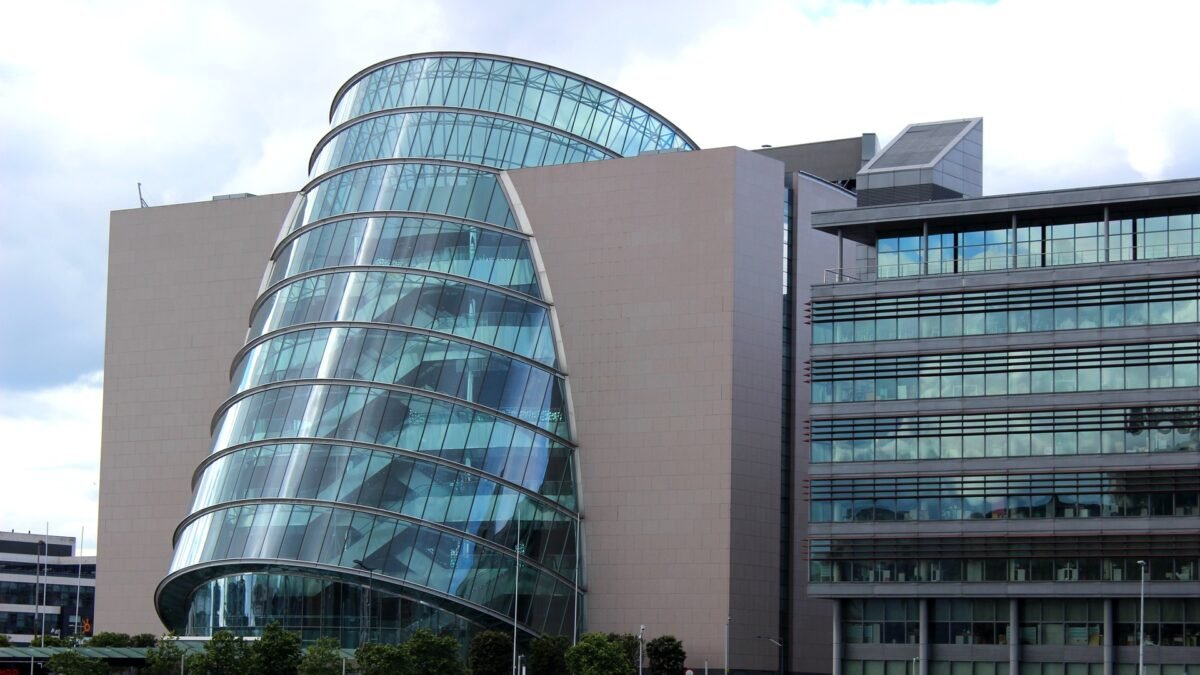
Europe has decided who will speak for it at the Ukraine peace talks. After months of arguing over a single envoy, leaders meeting in Dublin on Friday agreed instead to send a team: the five biggest military powers on the continent — Britain, France, Germany, Italy and Poland — alongside the institutions of the European Union.
European Council President António Costa announced the decision at the close of an informal summit of the European Union’s 27 leaders in Dublin, the day after a broader gathering of 40 European countries in the same city declared that no question touching European security should be decided without Europeans in the room. According to Reuters, Mr Costa told reporters that the team would be the European Union institutions and the so-called E5 of the “coalition of the willing” — the group of nations that has pledged to underpin a future ceasefire in Ukraine with military support.
“Europe must speak with one clear voice and united voice in all discussion that shape the future of Ukraine and the security of our continent. And this is ultimately a team effort,” Mr Costa said, according to Reuters.
The decision settles, for now, the question that has dominated European diplomacy all week: who, exactly, represents Europe when the United States, Russia and Ukraine sit down to negotiate an end to a war that is approaching its fifth year. It does not settle everything else. No date has been set for the next round of talks, no single lead negotiator has been named, and the team has not yet been given a specific mandate. Russia, for its part, has not confirmed that it will accept Europeans at the table at all.
Still, the Dublin agreement is the clearest sign yet that Europe will not be a bystander in the American-led peace process. The continent that pays most of Ukraine’s bills and would bear most of the risk of any settlement has now named the people who will carry its voice into the room.
What was decided in Dublin
The agreement was reached at an informal meeting of EU heads of state or government in Dublin on Friday 13 November, the second of two back-to-back summits in the Irish capital. The first, on Thursday, was the ninth meeting of the European Political Community, the forum of 47 European countries created in 2022 after Russia’s full-scale invasion of Ukraine. Around 50 leaders attended what the Irish government described as the biggest gathering of heads of state or government ever held in Ireland, under the theme “Europe — strong, secure, and connected”. Both meetings were held at the Convention Centre Dublin.
According to Reuters, EU officials said the representatives for Europe in future talks were likely to be the national security advisers of the five countries, plus delegates from the European Commission and the European Council, the body that brings together EU governments. NATO is also expected to be represented, the officials said.
Mr Costa set out the division of labour. On questions of territory and sovereignty, he said, only Ukraine would have the legitimacy to decide. The European Union would take the lead on Ukraine’s membership of the bloc, on reconstruction and on the use of immobilised Russian assets. The coalition of the willing would handle security guarantees, in coordination with NATO.
Portuguese Prime Minister Luís Montenegro said the team had not yet received a specific mandate, and the European Commission is due to put forward a 22nd package of sanctions against Russia and plans to close Ukraine’s financing gap for 2027 before the next formal European Council meeting on 26 and 27 November.
The decision came a day after the 40 countries at the European Political Community meeting signed a declaration, published by French President Emmanuel Macron’s office, affirming that “the path to peace in Ukraine should be decided with Ukraine and that any matter affecting European security should be decided with the Europeans”.
Mr Macron, speaking on Thursday, put the stakes bluntly. “Without Europeans, there is no support for Ukraine,” he said. “There is no more U.S. support.” He added: “At the end of the day, we will be the ones to define and decide for our future security as Europeans.”
Who is on the team — and who is not
The five countries chosen are the continent’s heavyweights: Britain, which is not an EU member but is one of the largest military spenders in Europe and a central member of the coalition of the willing; France and Germany, the EU’s two biggest states; Italy; and Poland, the voice of the EU’s eastern flank, which faces constant hybrid threats from Russia, including influence campaigns and disruptive drone incursions.
The choice of a team rather than a single envoy was itself a compromise. For weeks, European leaders had split into camps over the question. Italian Prime Minister Giorgia Meloni was among those who argued for one person, saying the absence of a united European voice had allowed individual countries or small groups to engage in what she called freelance diplomacy. “There are too many different groupings discussing the issue,” she said, according to the Associated Press. She criticised, among other initiatives, an October telephone call to President Vladimir Putin by Finnish President Alexander Stubb and Norwegian Prime Minister Jonas Gahr Støre, which she said could undermine European interests.
Others resisted handing the role to a single figure in Brussels. German Chancellor Friedrich Merz pushed back against the idea of one envoy, calling the existing format of five representatives “a well-established format”. France and Germany were reluctant to hand their own seats to Brussels, according to reports, while a smaller group backed the EU’s foreign policy chief, Kaja Kallas.
Ms Kallas laid claim to the role herself on Friday, telling reporters: “I’m the one who is representing Europe in the foreign and security policy.” She added: “I know that the Russians don’t want me, but, you know, do we have a say, who is representing Russia? We can’t send any person that has no institutional role like the Americans are sending.”
Taoiseach Micheál Martin, Ireland’s prime minister, who hosted the Dublin meetings, said European representation “can’t just be European Union”. “It’s a European continentwide issue,” he said, pointing to the role of Norway and Britain in supporting Ukraine.
The team format allows all of these tensions to coexist. Britain, which left the EU in 2020, sits at the table as a member of the coalition of the willing rather than as an EU state. Poland speaks for the eastern flank. The EU institutions are present through the Commission and the European Council. And no single leader has to give up a seat to another.
Whether that is a strength or a weakness will be tested at the first meeting. A team of seven voices — five countries plus two institutions, with NATO expected alongside — risks speaking in several directions at once, which is precisely the criticism Ms Meloni levelled at the old arrangement. The answer from Dublin is that the team will speak with one voice because it has agreed to do so. That is a promise, not a structure, and promises in European diplomacy have a way of being tested by events.
Moscow’s conditions
The Kremlin’s response on Friday was carefully conditional. Russia would be open to European countries taking part in the Ukraine peace talks if it saw that they genuinely intended to contribute to peace, the Kremlin said, according to Reuters. Russian officials also called for a broad agreement on Europe’s security architecture to be reached before the specifics of the war are addressed.
Kremlin spokesman Dmitry Peskov had said on Thursday that Europe must first name a representative, adding, according to the Associated Press: “The Europeans squabble like spiders in a jar.” On Friday, he said Moscow wanted to understand the Europeans’ true intentions and their willingness to contribute to the peace process before deciding on talks in an expanded format, and he expected a new round to take place fairly quickly, without naming a date.
Mr Merz dismissed the Kremlin’s comments as “the same old game” and said Europe and the United States had agreed on a clear message. “There will be no discussions about Ukraine without Ukraine, and no discussions about Europe without Europe. Furthermore, there is no need to talk about European security architecture. We have that already,” he told reporters midway through the summit.
Ms Kallas said Russian calls for discussions about Europe’s security architecture threatened to divert attention from the need for a ceasefire. Latvian Prime Minister Andris Kulbergs called such discussions “a trap”. Polish Prime Minister Donald Tusk said it was important to avoid unnecessary concessions to Russia. “My view was shared by many others: there can be no revision of Europe’s security architecture — that is what Putin is demanding,” he said.
Mr Tusk went further, questioning the process itself. “In my opinion, calling them negotiations is an exaggeration,” he said on Thursday. “We will not build a new security architecture simply because the Russian president, or someone in the United States, wishes it.”
The disagreement over Europe’s security architecture is not a side issue. Before its invasion of Ukraine in 2022, Russia demanded the withdrawal of NATO forces from countries that joined the alliance after 1997. NATO rejected the demand. Moscow has now returned to the theme, and European leaders in Dublin were united in refusing to reopen it. During a meeting on Thursday, leaders from Poland, the Baltic states and Nordic countries warned against brainstorming with the United States or Russia about Europe’s security architecture, according to a European diplomat and a European official cited by Reuters.
There is also a genuine tension at the heart of the Dublin announcement that the article must state plainly. The American envoys who met Mr Putin in Moscow on Thursday, Steve Witkoff and Jared Kushner, announced afterwards that the Russian president had agreed to let Europeans join the next round. Mr Kushner said both sides had agreed to expand the talks to include European partners, and that Mr Putin “is willing to give it a try”. Mr Witkoff told Russian state television: “The Europeans will join at the next meeting, which we consider to be a very important moment because they are our partners and it’s important for them to take part.”
But Kremlin aide Yuri Ushakov did not confirm that European representatives would attend the next round of negotiations, and said their current stance on Ukraine amounted to “a recipe for endless war”. So the agreement announced in Dublin is, for now, Europe’s decision about itself. Whether Moscow accepts it remains an open question, and the Kremlin’s Friday statement — open in principle, conditional in practice — keeps that question open.
How the week got here
The Dublin decision is the latest step in a week of shuttle diplomacy that has moved quickly and produced, so far, more process than peace. On Tuesday and Wednesday, American envoys brokered two days of talks between Russia and Ukraine in Abu Dhabi, the first direct United States-mediated negotiations between Moscow and Kyiv in nine months. The talks ended with an agreement in principle on a large prisoner exchange, which the American envoys described as potentially the war’s biggest swap, but with no ceasefire and no breakthrough on the central issue of territory.
Representatives from Britain, France, Germany, Italy and the European Union attended discussions nearby in Abu Dhabi, but no European representative sat in the trilateral talks with Russia. Mr Kushner said afterwards that a peace deal could not be concluded without the Europeans at the negotiating table.
On Thursday, Mr Witkoff and Mr Kushner flew to Moscow and met Mr Putin at the Kremlin. Afterwards, they flew on to Dublin, where they briefed Ukrainian President Volodymyr Zelenskyy, who was attending the European Political Community summit. Mr Zelenskyy welcomed the prospect of European participation and said he hoped the agenda for the next round would include concrete steps towards a ceasefire and de-escalation.
“It’s important that everything is unblocked,” Mr Zelenskyy said after meeting the envoys in Dublin. “We decided that we will work on an agenda about any kind of de-escalation, some kind of ceasefires… I hope that we will have such agenda. Yes, this is important.” He added that Europe would send a negotiating team, saying: “They will have a voice.”
Mr Zelenskyy had urged European leaders to settle the question of who would represent Europe quickly, telling them: “In November, not later, we need to accept who will represent Europe in negotiations.” Dublin has now answered that call, at least in part.
The backdrop to all of this is a war that continues at full intensity. While diplomats talked in Abu Dhabi, Moscow and Dublin, Russian forces kept up overnight missile and drone attacks on Ukraine, and hundreds of thousands of consumers in eastern Ukraine were left without power. Mr Zelenskyy has said that the Starshield satellite system, which helps Ukraine intercept jet-powered drones, has faced “significant disruptions” and “systematic speed restrictions”, a claim SpaceX has denied. Mr Putin, for his part, told the American envoys that he wants peace “eternal, for good”, while also warning that foreign troops deployed in Ukraine after any agreement would be legitimate military targets, rejecting demilitarised zones, and telling Europe to choose “peace or war”.
The next milestone in the diplomacy is expected next week, when Mr Trump is due to meet Mr Putin around the APEC summit in China, with reports pointing to 18 or 19 November. Mr Merz said European leaders feared another “Anchorage moment” — a reference to the Alaska summit where they were stunned by Mr Trump’s overtures to the Russian leader in the absence of Ukrainian or European envoys. “Please, no surprises,” Mr Merz said. “Continue to play in team Europe and in the team with Ukraine.”
Analysis: Why It Matters
A seat is not a voice
The most important thing to understand about the Dublin decision is what it does not do. It gives Europe a seat at the table. It does not guarantee Europe a voice at the table, and the difference between the two is the whole story of European diplomacy over the past four years.
Europe has been paying for this war in ways that Washington has not. European countries fund the largest share of Ukraine’s budget support, host millions of Ukrainian refugees, and have absorbed the economic shock of severing their energy dependence on Russia. They would also bear the largest share of the risk of any settlement: a bad peace that leaves Ukraine exposed would be a security problem for Warsaw, Vilnius and Tallinn long before it became one for Washington. And yet, until this week, Europe was not in the room where the terms of peace were being discussed. The Americans, the Russians and the Ukrainians talked in Abu Dhabi; the Europeans waited nearby. That arrangement was not sustainable, and Dublin is Europe’s answer to it.
But a seat is only the beginning. The team format chosen in Dublin — five countries, two institutions, NATO alongside — is a coalition, and coalitions need to agree before they speak. The five countries do not always agree. France and Germany have different instincts about how hard to press Russia. Poland and the Baltic states are more hawkish than the western Europeans. Britain, outside the EU, has its own channel to Washington. If the team arrives at the next round with five positions instead of one, Moscow will have no difficulty playing them against each other, and Washington will have little reason to treat the team as a serious negotiating partner. The test of Dublin is not whether the team was named, but whether it can hold together under pressure.
The architecture trap
The second thing to watch is the phrase that kept recurring in Dublin: “Europe’s security architecture”. It sounds like diplomatic jargon, and it is, but it is also the most dangerous idea in this negotiation. Russia wants a broad agreement on the security architecture of Europe before the specifics of the war in Ukraine are addressed. European leaders in Dublin refused. Mr Merz said there was no need to talk about it because “we have that already”. Mr Tusk said there could be no revision of it. Mr Kulbergs called it “a trap”.
They are right to be wary. “Security architecture” is the language Russia used before the invasion to demand that NATO pull its forces back from the countries that joined after 1997 — which would mean, in practice, stripping the Baltic states, Poland, Romania and others of their protection. It is a demand that no European leader can accept, because accepting it would mean negotiating away the security of other European countries in order to end a war in Ukraine. It is also a useful diversion: as long as the conversation is about the architecture of Europe, it is not about a ceasefire in Ukraine, and the war goes on.
Ms Kallas put it most directly, saying the Russian calls threatened to divert attention from the need for a ceasefire. That is the real risk. Every week spent debating the architecture of Europe is a week in which the war continues, and the side that benefits from delay is the side that is gaining ground on the battlefield. Europe’s refusal to reopen the architecture question is therefore not stubbornness. It is the one clear red line the continent has drawn, and Dublin reaffirmed it.
Kissinger’s question, answered with a committee
There is a famous question often attributed, wrongly, to the former United States Secretary of State Henry Kissinger: “Who do I call if I want to call Europe?” Mr Kushner echoed it this week, saying that if Europe could identify one person to speak on its behalf, “that would be a bigger achievement than getting the Russians to include them in the negotiation”. Dublin’s answer is, in effect, that there is no one person to call. There is a team.
That is both a realistic answer and an unsatisfying one. It is realistic because Europe is not a single state and cannot pretend to be one. The European Union has 27 members with different histories, different geographies and different relationships with Russia. A single envoy would have to speak for countries that do not agree with each other, and the envoy’s authority would be questioned from the moment of appointment — as Ms Kallas’s claim to the role this week showed, with several leaders backing other candidates and France and Germany resisting a Brussels monopoly.
But a committee is a poor instrument for negotiation. Negotiations need someone who can make a decision in the room, not someone who has to telephone five capitals first. The Dublin format tries to solve this by putting the national security advisers of the five countries in the room, rather than the leaders themselves. National security advisers are close to their leaders and can speak with authority, but they are also, by definition, advisers. Whether they will have the mandate to make real decisions, or whether they will have to report back and wait, is the question that will decide whether the team is a negotiating partner or a debating society. Mr Montenegro’s admission that the team has no specific mandate yet is honest, and it is also worrying.
Washington’s leverage, Europe’s fear
Underneath the Dublin agreement lies a fear that European leaders have been reluctant to state plainly but which shaped the whole week: the fear that the United States will cut a deal with Russia over Europe’s head. Mr Macron’s remark that “there is no more U.S. support” was a recognition that Europe can no longer assume American backing as a given. Mr Merz’s plea to Mr Trump — “Please, no surprises” — was the same fear in different words. The “Anchorage moment” he cited, when European leaders were stunned by Mr Trump’s overtures to Mr Putin in Alaska, is now the reference point for everything Europe fears about this process.
That fear is the real reason Dublin matters. The team is not just a negotiating format. It is an insurance policy. If Mr Trump meets Mr Putin next week and returns with a proposal, Europe now has named representatives who can say whether that proposal is acceptable — and, more importantly, who can say no. A continent that has spent four years learning that it cannot outsource its security to Washington has now taken the first formal step towards owning its own diplomacy. That is a significant shift, whatever happens in the next round of talks.
It is also worth noting what Europe is bringing to the table beyond its presence. The European Union will decide on Ukraine’s membership, on reconstruction and on the use of immobilised Russian assets — questions that are, in the long run, at least as important as the terms of a ceasefire. A country that joins the European Union is, in a real sense, secured, whatever the formal security guarantees say. And the frozen Russian assets, worth hundreds of billions, are the largest single source of leverage the West holds over Moscow. By keeping those questions in European hands, Dublin has ensured that the peace process cannot be concluded without Europe, even if the Americans and the Russians would prefer it that way.
What Kyiv actually needs
Finally, it is worth asking what this means for Ukraine, which is the party with the most at stake and the least control over the process. Mr Zelenskyy welcomed the Dublin decision, and he had reason to. Ukraine has been reluctant to leave the talks solely in the hands of an American administration that has often seemed to lean towards Moscow’s views, as the Associated Press put it. A European team at the table gives Kyiv an ally in the room — a group of countries that has consistently backed Ukraine’s position that only Kyiv can decide questions of its own territory and sovereignty.
But Ukraine also needs something more concrete than a sympathetic audience. It needs a ceasefire, and it needs security guarantees that will hold after the fighting stops. The coalition of the willing was created precisely to underpin a future ceasefire with military support, and its members are now the core of the European negotiating team. That is a logical connection, but it is also a test: if the countries that promise to guarantee Ukraine’s security cannot agree among themselves on the terms of a settlement, the guarantee will not be worth much.
Mr Zelenskyy’s deadline — “in November, not later” — has now been met in form. Whether it has been met in substance will be known when the team sits down with the Russians and the Americans, and when the first real disagreement arrives. Dublin has given Europe a voice. The voice has not yet been used.
What to Watch Next
- The date of the next round. No date has been announced for the talks at which the European team will take its seat. Watch for whether a date is set before the Trump-Putin meeting next week, or whether that meeting itself determines the timetable.
- The Trump-Putin meeting. Mr Trump is expected to meet Mr Putin around the APEC summit in China, with reports pointing to 18 or 19 November. What the two leaders agree — or fail to agree — will shape everything that follows, and Europe will be watching for surprises.
- Moscow’s formal answer. The Kremlin has said it is open to European participation if Europeans genuinely intend to contribute to peace, but Mr Ushakov has not confirmed it. Watch for a clear Russian statement accepting or rejecting the European team.
- The mandate. The team has no specific mandate yet. The next European Council meeting on 26 and 27 November, and the Commission’s 22nd sanctions package and Ukraine financing plans, will show how much authority the team actually carries.
- Who leads the team in the room. No lead negotiator has been named. Whether Ms Kallas, Mr Costa, or one of the five national security advisers emerges as the voice of the team will tell us how the format works in practice.
- The prisoner exchange. The large exchange agreed in principle in Abu Dhabi has not yet taken place. Its implementation — or its failure — will be the first test of whether this round of diplomacy produces anything real.
- The battlefield. While diplomats talk, the war continues. Russian attacks on Ukraine’s energy infrastructure, the power cuts in the east, and the pressure on Ukrainian air defences will determine how much time Kyiv has — and how much leverage it carries into the next round.
Sources
- Reuters — “EU settles on five-nation group to speak for Europe at Ukraine peace talks” (via WNCY)
- Associated Press — “Europe to send a diplomat team to Ukraine talks as leaders push for a voice” (via Europe Says)
- Irish Presidency of the Council of the EU — Media information on the EPC Summit, Dublin
- Wikipedia — 9th European Political Community Summit (venue, participants, declaration)
- EU Perspectives — “Who will speak to Putin? EU leaders agree team for Ukraine peace talks”
- The Asia Live — “Putin Agrees to European Participation in Next Round of Ukraine Peace Talks, US Envoy Says”

About the Author — Abdul Mannan
Related Articles
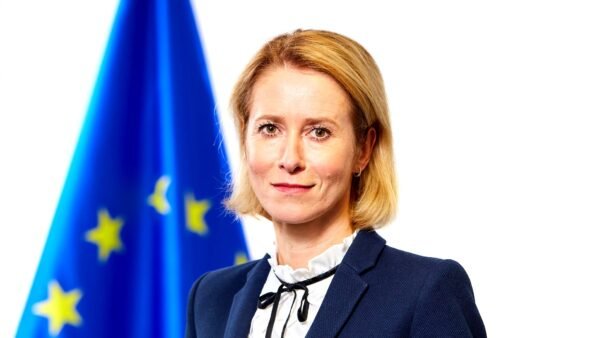
EU Leaders Debate Who Should Speak for Europe at Ukraine Peace Talks After US Envoys Win It a Seat
EU leaders met in Dublin on Friday to decide who should represent Europe in the Ukraine peace talks…
Pope Leo XIV Returns to Chiclayo for Homecoming Mass as a Million Pilgrims Gather in His Former Diocese
Pope Leo XIV returns to Chiclayo, the Peruvian city where he served as bishop for eight years, for…
China Stages Unannounced Pacific Drills Around Taiwan in ‘Silent Intimidation’ as Xi Demands Reunification
China massed more than 100 naval and coast guard vessels in an unannounced exercise around Taiwan, Taipei says,…