
Trump, Xi and Putin to Hold First-Ever Three-Way Summit in Shenzhen as Nuclear Arms Top the Agenda

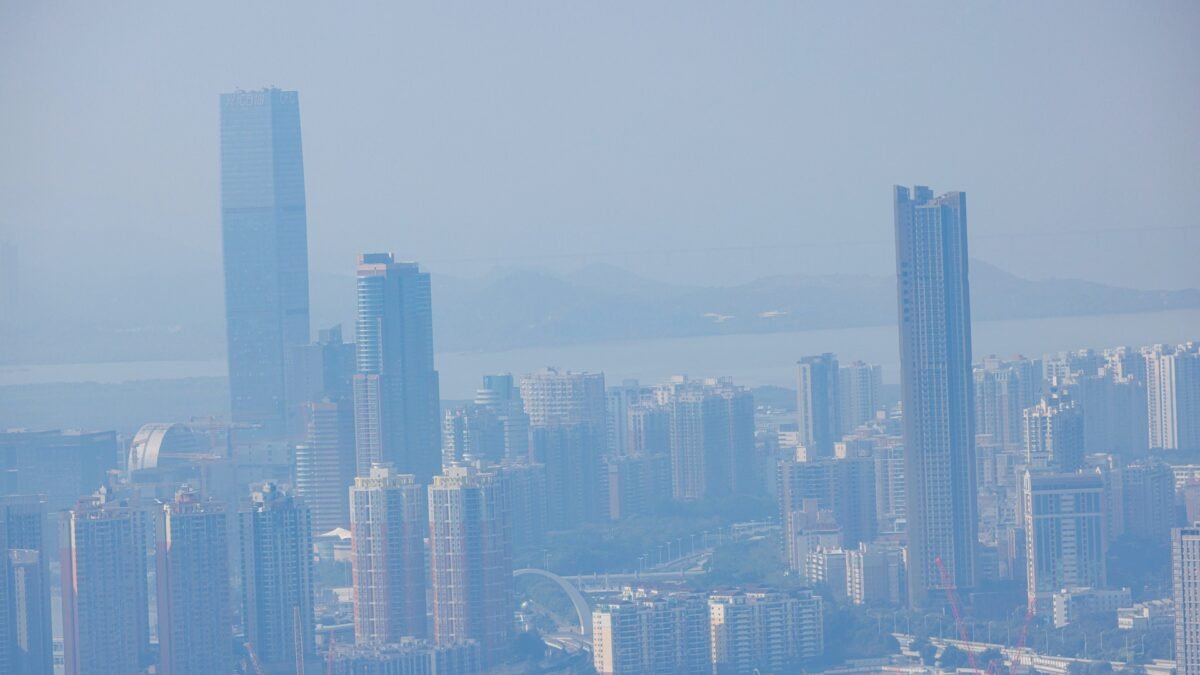
The leaders of the United States, China and Russia will sit down together for the first time ever next week, the White House confirmed on Friday, in a three-way summit in Shenzhen that will put nuclear arms reduction at the top of the agenda and leave the war in Ukraine off it.
President Donald Trump, Chinese President Xi Jinping and Russian President Vladimir Putin are scheduled to meet on Thursday, 19 November, on the sidelines of the Asia-Pacific Economic Cooperation summit in the southern Chinese technology hub, according to the White House. It will be the first trilateral meeting of the leaders of the world’s three largest nuclear powers, and officials on all sides have been quick to say that no agreement should be expected from it.
White House spokeswoman Olivia Wales told reporters on Friday that Mr Trump “will discuss the reduction of nuclear weapons in the world, whose proliferation President Trump believes is very dangerous”, according to the Associated Press. A senior United States official who briefed reporters on condition of anonymity was blunt about what the session can deliver. “We do not expect to get to any kind of agreement,” the official said, describing the meeting instead as “the entry point, the first conversation”, Reuters reported.
The same official said Mr Trump also plans to raise the war in Iran with Mr Xi and Mr Putin, but will steer away from discussing Russia’s war in Ukraine at the three-way table. That division of subjects is already the most argued-over feature of a meeting that has not yet happened: Kyiv has warned that a gathering of the three men could become a platform for deciding Ukraine’s fate without Ukraine in the room, while the Kremlin has signalled that it intends to talk about a Ukraine settlement with Mr Trump anyway, on the margins of the summit.
The meeting comes nine months after New START, the last nuclear arms treaty between Washington and Moscow, expired in February, leaving the world’s two largest atomic arsenals without a binding cap for the first time in more than half a century. When the treaty lapsed, Mr Trump rejected a Russian proposal to extend it for another year and called instead for “a new, improved and modernized” deal that includes China. Shenzhen is the first attempt to turn that demand into a conversation.
The announcement
The White House confirmed the plan on Friday, 13 November, a day after Mr Trump’s envoys Steve Witkoff and Jared Kushner met Mr Putin in Moscow and then flew to Dublin to brief the Ukrainian president, Volodymyr Zelenskyy, on the state of the peace talks. According to the Associated Press, plans for the three-way summit were confirmed on Friday by the White House after days of speculation that such a meeting was being arranged.
Ms Wales told reporters that the three leaders will meet on Thursday on the sidelines of the APEC summit, which brings together 21 economies and which China is hosting in Shenzhen. The meeting would be the first of its kind, Reuters reported, and the White House described the planned session as a first for the three leaders.
Mr Trump leaves on Monday for a four-day Asia trip that includes a stop in the Philippines before he travels on to China, Reuters reported. He will be accompanied on the trip by Elon Musk, according to reporting of the travel plans. On Thursday morning, 19 November, the president will take part in a multilateral meeting with APEC leaders before holding a bilateral meeting and working lunch with Mr Xi, the Jerusalem Post reported, with the trilateral meeting with Mr Putin scheduled to take place at the conclusion of the China visit.
Neither Beijing nor Moscow had formally confirmed the trilateral meeting when the White House announcement landed on Friday, Reuters reported. Chinese state media have said Mr Xi will hold “bilateral” talks at the summit but have not mentioned a trilateral meeting. No joint announcement has been issued by the three governments.
What is on the agenda, and what is not
Nuclear arms reduction is the stated centrepiece. The senior United States official who briefed reporters said the talks will focus on nuclear arms reduction and the war the United States is currently waging against Iran, according to the Associated Press. The official described the gathering as the “beginning of hopefully a conversation” on nuclear disarmament “that can be productive going forward”, adding that no new agreements are expected to be announced.
The numbers explain why the subject is so difficult. Russia holds the most nuclear warheads, followed by the United States and then China, according to the Stockholm International Peace Research Institute. Beijing’s arsenal of more than 600 warheads, according to Pentagon estimates, is far smaller than the inventories held by the United States and Russia, each estimated to have more than 5,000 warheads, the Associated Press reported.
That gap is the heart of China’s objection. In October, its Foreign Ministry said it would be “neither fair, reasonable nor realistic to ask China to join the so-called trilateral nuclear disarmament negotiations at this stage”, Reuters reported. Chinese officials have also described Mr Xi as reluctant to discuss either nuclear arms or Ukraine at the proposed gathering. Trump administration officials acknowledge that the nuclear stockpile issue is a difficult one for Beijing to engage on, but the senior United States official characterised the meeting as the moment for China to “step up … to the adult table” on a matter of international importance, according to the Associated Press. “This is a difficult topic for China to address, but we do think it’s time for China to sort of step up, you know, to the adults’ table, if you will, and have adult conversations about adult things,” the official said, Reuters reported.
The war in Iran is also expected to feature prominently in the discussions, according to senior United States officials. The United States and Israel began strikes on Iran in late February 2026, and Mr Trump declared the war “effectively over” on Tuesday, 10 November, although Israel’s security cabinet has since ordered its military to step up preparations for a possible new strike, and American commanders in the region have told Israeli officers to be ready for the possibility that the fighting could resume. The war, and the strain it has put on the region, is one of the few subjects all three leaders have a direct stake in: Russia has deepened its military, intelligence and diplomatic partnership with Iran, while China is a major buyer of Iranian oil.
Ukraine, by contrast, will not be discussed at the trilateral meeting, according to the senior United States official. The official told the Associated Press that Mr Trump does plan on discussing the Iran war with Mr Xi and Mr Putin, but will steer away from discussing Ukraine. The reasoning, as presented by American officials, is that Washington is pursuing a separate negotiation process on Ukraine involving Kyiv and Moscow, and that China is not part of that track, so it would not be appropriate to hold the Ukraine discussion in a three-way forum.
Kyiv’s fear: a deal made without Ukraine
That explanation has not reassured Kyiv. Ukrainian President Volodymyr Zelenskyy has expressed concern that the trilateral meeting could serve as a platform for discussing a possible Ukraine deal behind Kyiv’s back, the Associated Press reported. His foreign minister, Andrii Sybiha, went further, saying the summit would only “encourage Putin to continue this war”, according to the Kyiv Independent.
The fear is not abstract. The three leaders have never met together before, and the idea of the world’s three biggest nuclear powers settling questions between themselves carries an obvious echo for a country that has spent nearly five years fighting a war of survival while insisting that nothing about Ukraine can be decided without Ukraine. European governments share the concern: they have repeatedly opposed decisions about Ukraine being made without Ukrainian participation.
The Kremlin has done little to calm those nerves. According to the Wall Street Journal, Mr Putin proposed the trilateral meeting in order to secure a peace deal more favourable to Russia. And the Kremlin has maintained that negotiations on Ukraine will go forward at APEC without representation from Ukraine or the Europeans. Kremlin foreign policy aide Yuri Ushakov told Russian state media that Mr Trump and Mr Putin would hold in-depth talks on a peace settlement on the sidelines of the summit, a separate bilateral encounter from the three-way meeting itself.
The tension between the two accounts — Washington saying Ukraine is off the trilateral agenda, Moscow saying it will discuss a settlement with Mr Trump in Shenzhen anyway — is one of the central uncertainties of the week ahead. It is also, in a sense, the point of the meeting for Mr Putin. “I think the key for Putin was that this was very much about signaling a desire to talk to the president and talk to Chairman Xi in a way that suggests that they’re making decisions on Ukraine, which obviously the Ukrainians and the Europeans don’t like,” Edgard Kagan, a former United States ambassador to Malaysia who is now at the Center for Strategic and International Studies, told the Associated Press.
The treaty that expired
To understand why a meeting with no expected outcome still matters, it helps to start with what disappeared in February. New START, signed by the United States and Russia in 2010, was the last treaty limiting the nuclear arsenals of the two countries. It capped each side at 1,550 deployed strategic warheads and 700 deployed delivery vehicles, and it included inspections and data exchanges that gave both sides a verified picture of the other’s arsenal.
When it expired in February 2026, the caps fell away. The last nuclear arms pact between Russia and the United States expired in February, removing caps on the two largest atomic arsenals for the first time in more than a half-century, the Associated Press reported. Russia had proposed extending the two-country deal for another year; Mr Trump rejected that call and demanded a new deal that includes China.
The demand reflects a real change in the nuclear landscape since New START was signed. When the treaty was negotiated, China was a minor nuclear power, and a two-country agreement between Washington and Moscow covered nearly all of the world’s deployed strategic warheads. China has since expanded its arsenal rapidly — the Pentagon estimates it now holds more than 600 warheads and is building more — and it is the only one of the three powers whose stockpile is growing fast. From Washington’s point of view, a new treaty that leaves China outside it would be an agreement about the past. From Beijing’s point of view, being asked to accept limits while holding a fraction of the other two arsenals is, in its Foreign Ministry’s words, “neither fair, reasonable nor realistic”.
That disagreement is why officials are so careful to lower expectations. The meeting is intended to serve as the “beginning of hopefully a conversation” on nuclear disarmament, the senior United States official said. “I would be shocked if there were a joint statement that came out of this meeting that said anything about denuclearisation,” Mr Kagan told the Associated Press. The realistic ambition, in the White House’s own framing, is to start a process, not to finish one.
Three men, three different summits
Each of the three leaders arrives in Shenzhen wanting something different from the same photograph, and the differences are as revealing as the meeting itself.
For Mr Trump, the summit is the centrepiece of a week in which he is trying to show that he can convene the world’s most powerful men and set the agenda for them. He has warmly embraced Mr Xi after coming to a truce in their short-lived trade war last year, the Associated Press reported, and he has sought to build his relationship with Mr Putin even as the Russian leader has persisted in his nearly five-year-old war with Ukraine. The president has insisted that the three-way meeting would provide an opportunity to discuss the war with Iran and his goal of reaching a three-way agreement on nuclear arms stockpiles. He has also, according to the Associated Press, recently struck a diesel deal with Russia, waiving sanctions against Moscow and allowing for the sale of millions of tons of the fuel, a reminder that his approach to Moscow mixes pressure and accommodation in ways that unsettle allies. He has blamed surging energy prices on Ukraine’s attacks on Russian oil refineries; analysts, the Associated Press noted, say the rise in global crude prices is due mostly to the Iran war.
For Mr Xi, hosting the meeting is an opportunity to display China’s standing. By agreeing to host the meeting, Mr Xi may be calculating that the moment offers him an opportunity to flex China’s growing clout and prestige, the Associated Press reported. Shenzhen is the showcase for that ambition: a city that transformed from a small fishing village into a global technology and economic hub in just a few decades, and the trilateral meeting could very well overshadow the APEC summit itself, which is bringing 21 economies to the city. But there is a cost, too. The gathering could undercut China’s push to portray itself as a defender of free trade at APEC, said Hoo Tiang Boon, a professor of Chinese foreign policy at Nanyang Technological University. “You sort of run counter to Chinese support of multilateralism,” he told the Associated Press. China has also argued that a Cold War mentality in the West was a contributing factor that led to Russia’s war on Ukraine, and that the United States has undermined international institutions and treaties with how it has executed its war against Iran — positions that sit awkwardly with a three-way great-power meeting held on the margins of a multilateral summit.
For Mr Putin, the meeting is a coveted chance to posture as a superpower on par with Washington and Beijing, the Associated Press reported. Russia is the smallest of the three economies by a wide margin, and it has spent the war years under Western sanctions and diplomatic isolation. A photograph of Mr Putin seated as an equal between the American and Chinese presidents, in a Chinese city, on an agenda he is said to have proposed, is worth more to the Kremlin than any communiqué. It also carries a message for Kyiv and for Europe: that the great powers are talking about the future of the continent, and that Ukraine and the Europeans are not in the room where it happens.
The three men are no strangers to one another, but they have never been together. Mr Putin and Mr Xi have fostered a close personal relationship, meeting more than 40 times since Mr Xi became president in 2013 and addressing each other as “dear friend”, the Associated Press reported. Mr Trump and Mr Putin have met face-to-face on seven different occasions, most recently in Alaska in August 2025. Mr Xi and Mr Trump have held face-to-face talks on eight occasions, including a September state visit to Washington by Mr Xi, according to the Associated Press.
The relationship between Moscow and Beijing has deepened steadily through the war. Beijing is the number one trading partner for Moscow, a relationship that has strengthened since Mr Putin sent troops into Ukraine in 2022, the Associated Press reported. As the European Union and the West sought to economically isolate Russia, China increased its purchases of Russia’s energy resources and became Moscow’s principal supplier of key technologies, including high-tech components for Russian weapons industries. Beijing has ignored Western demands to cut those supplies. In the lead-up to Russia’s war on Ukraine, Mr Xi and Mr Putin declared their countries had a “no-limits friendship”. China officially has said it is neutral on the conflict, while charging that Kyiv’s Western allies played a part in provoking Russia’s military action in Ukraine. Moscow, in turn, has repeatedly declared its support for Beijing’s policy on issues related to Taiwan.
The road to Shenzhen
The summit does not come out of nowhere. It is the latest turn in a fortnight of intense diplomacy around the war in Ukraine, and it follows directly from the talks that have dominated the past week.
On Tuesday and Wednesday, American, Russian and Ukrainian negotiators met in Abu Dhabi for the first direct United States-mediated talks between Russia and Ukraine in nine months. The talks ended with an agreement in principle on a large prisoner exchange but no ceasefire, and with disagreement over territory unresolved. On Thursday, Mr Trump’s envoys, Mr Witkoff and Mr Kushner, met Mr Putin in the Kremlin, where the Russian leader offered no compromise on territory and warned that foreign troops in Ukraine would be legitimate military targets. Mr Witkoff said afterwards that progress had been made and that the trilateral process had been restarted. Mr Kushner said both sides had agreed to a European presence at the next round of talks, although the Kremlin’s spokesman, Dmitry Peskov, was cooler, saying Europe must first show a willingness to contribute to peace.
On Friday, European Union leaders meeting in Dublin agreed on the shape of that European presence: the United Kingdom, France, Germany, Italy and Poland, the so-called E5, plus the institutions of the European Union, will take part in the next round of the Ukraine peace talks. It was the first time Europe had a defined seat at the table since the war began. The decision was announced by European Council President António Costa, who said Europe must speak with one clear voice in all discussions that shape the future of Ukraine.
The Shenzhen trilateral sits alongside that process, not inside it. Washington’s position is that the Ukraine talks continue on their own track, with Kyiv and the Europeans now included, while the three-way meeting in China deals with nuclear arms and Iran. The Kremlin’s position, as expressed by Mr Ushakov, is that Mr Trump and Mr Putin will use the APEC sidelines to discuss a Ukraine settlement in depth. Both things can be true at once: the trilateral may not formally discuss Ukraine, while the bilateral meeting between Mr Trump and Mr Putin on the same trip very well may. That ambiguity is likely to dominate the coverage of the week, and it is the reason Kyiv is watching Shenzhen so closely.
The Yalta shadow
Planning for the summit has drawn comparisons to the Yalta Conference, the 1945 gathering at which the leaders of the United States, Britain and the Soviet Union agreed to divide Germany and Berlin into four military occupation zones and finalised plans for establishing the United Nations, the Associated Press reported. The comparison is flattering to the three leaders and alarming to everyone else, and it has been made often enough that the Kremlin has felt the need to answer it.
Kremlin spokesman Dmitry Peskov dismissed the Yalta comparisons, noting that any potential agreements reached in Shenzhen cannot be enforced on others, the Associated Press reported. “It’s clear that a meeting between the leaders of countries such as Russia, China and the United States is extremely significant,” Mr Peskov said. “However, let’s not forget that the vision for a global order is that no one tries to impose any particular view of global order, and it should be based entirely on mutual benefit and mutual respect.”
The dismissal is worth taking seriously, and so is the comparison. Yalta was a meeting of victors dividing a defeated continent; Shenzhen is a meeting of three powers that are not at war with one another but are bound together by two wars, in Ukraine and in Iran, that none of them can end alone. The difference is that in 1945 the men in the room could impose their decisions on the absent. In 2026, the absent — Ukraine, the Europeans, Taiwan, the countries of the Middle East — have armies, economies and alliances of their own, and a habit of refusing to accept decisions made about them without them. Mr Peskov’s point, that nothing agreed in Shenzhen can be enforced on others, is both a reassurance and a limit. It is also, perhaps, the most honest statement made about the meeting so far.
Analysis: Why It Matters
A first that matters even if nothing is agreed
The White House has gone out of its way to say that no agreement is expected in Shenzhen, and it is probably right. But the absence of an agreement is not the same as the absence of significance. The three leaders of the world’s largest nuclear powers have never met together before. The last time the United States and Russia had a binding cap on their arsenals, the treaty expired in February, and the world has spent nine months without one. The act of sitting down — of treating nuclear arms as a subject for three-way conversation rather than two-way rivalry — is itself a change in the architecture of arms control, even if the conversation produces nothing more than a promise to keep talking. The danger is that the photograph becomes a substitute for the work: a summit that is heavier in symbolism than substance, as analysts quoted by the Associated Press put it, can also become an excuse for delay, a way of looking busy while the arsenals grow and the caps stay gone. The test of Shenzhen will not be what is announced on Thursday. It will be whether anyone is still talking about nuclear limits in six months’ time.
The empty chair is the point
Strip away the ceremony and the summit is, at bottom, an attempt to solve a problem created by China’s rise. New START worked because it covered the two countries that held nearly all the world’s nuclear weapons. It stopped working when a third country built an arsenal large enough to matter and refused to be bound by a treaty it had no part in writing. China’s objection — that it would be neither fair, reasonable nor realistic to ask it to join trilateral disarmament talks at this stage — is not a debating point. It is a statement of fact about relative arsenals: more than 600 warheads against more than 5,000 on each side. No Chinese leader can accept parity talks from a position of such numerical inferiority without looking, at home, as if he has conceded the game before it starts. The American answer — that it is time for China to step up to the adult table — is a demand that Beijing accept the responsibilities of a great power without the leverage that great powers usually insist on first. Both positions are defensible, and that is why the negotiation, if it ever becomes one, will be so hard. The most important thing about Shenzhen may be that the argument is finally being had face to face, in the same room, rather than through communiqués and press conferences.
Ukraine’s absence is the loudest part of the agenda
The decision to keep Ukraine off the trilateral agenda is presented as a matter of process: the Ukraine talks have their own track, China is not part of it, and mixing the two would confuse both. That is a reasonable argument, and it is also, from Kyiv’s point of view, beside the point. The fear in Kyiv is not that the three leaders will formally negotiate Ukraine’s future in Shenzhen. It is that they will do so informally, in the corridors and in the bilateral meeting between Mr Trump and Mr Putin, and that the formal agenda will provide cover for the informal one. Mr Putin is reported to have proposed the trilateral precisely to secure a more favourable peace deal, and his aide has already said the two presidents will discuss a settlement in depth on the sidelines. Mr Zelenskyy’s worry — that the meeting could become a platform for discussing a Ukraine deal behind Kyiv’s back — is therefore not paranoia. It is a reading of what the Kremlin has said it intends to do. The test will be what Mr Trump says about Ukraine in public in Shenzhen, and what he says to Mr Zelenskyy afterwards. The Europeans, who only on Friday secured their own seat at the Ukraine table, will be watching the same thing. A summit that is officially about nuclear weapons and unofficially about Ukraine would confirm every suspicion Kyiv has ever had about great-power diplomacy.
Three different summits in one room
It is worth remembering that the three men in Shenzhen will not be attending the same meeting. Mr Trump will be attending a demonstration that he can bring the world’s most powerful leaders to a table he set. Mr Xi will be attending a showcase of China’s arrival as a host and a power, in a city built to impress. Mr Putin will be attending a rehabilitation: a return to the top table after years of isolation, seated as an equal between Washington and Beijing. Each of them can leave Shenzhen claiming success without any of them having agreed on anything, because each of them wants a different thing from the photograph. That is both the strength and the weakness of the format. It makes the meeting almost certain to happen, because no one has to give anything up to attend. And it makes the meeting almost certain to disappoint anyone looking for a result, because a photograph is not a treaty. The real question is whether the three different summits can, over time, become one conversation — whether the symbolism of the first meeting can be converted into the substance of a second and a third.
The Yalta shadow, and why 2026 is not 1945
The comparison with Yalta is irresistible and, in the end, misleading in an instructive way. At Yalta, three leaders divided a continent because they could: their armies held the ground, and the peoples concerned had no say. At Shenzhen, three leaders meet while the wars that concern them are still being fought, by countries that are not in the room and that have repeatedly refused to accept settlements made over their heads. Ukraine has made that refusal the centre of its diplomacy for nearly five years. The Europeans made it the centre of theirs when they insisted on a seat at the Ukraine talks. Even China, the host, has spent the war arguing that the West’s Cold War mentality helped cause it — a position that sits uneasily with a meeting that looks, to many, like a return to great-power management of the world. Mr Peskov is right that nothing agreed in Shenzhen can be enforced on others. The question is whether the three leaders understand that as a limit on what they can do, or as a challenge to be worked around. The answer will shape not only the week in Shenzhen, but the year that follows it.
What to Watch Next
- Formal confirmation from Beijing and Moscow. Neither government had confirmed the trilateral meeting when the White House announced it. Watch for statements from China’s Foreign Ministry and the Kremlin, and for whether Chinese state media begin to mention the three-way meeting alongside the bilateral talks they have already publicised.
- Mr Trump’s departure on Monday. The president leaves on a four-day Asia trip that includes a stop in the Philippines before China. Any remarks he makes on departure, and any change to the published schedule, will be the first signal of how the White House wants the week framed.
- The Trump–Xi bilateral on Thursday afternoon. Before the trilateral, Mr Trump and Mr Xi will hold a bilateral meeting and working lunch. The tone and content of that encounter, including whether trade, Taiwan or the Iran war comes up, will set the terms for the three-way session that follows it.
- Whether anything is announced at all. American officials say no agreement is expected and no joint statement is likely. Any joint statement, any agreed language on nuclear arms, or even a commitment to a follow-up meeting would exceed the low expectations set in advance and would be significant precisely because it was not promised.
- What is said about Ukraine, and where. Watch for any public remarks about Ukraine from Mr Trump in Shenzhen, for the readout of his bilateral meeting with Mr Putin, and for the reaction from Kyiv and from European capitals. The gap between the official agenda and the Kremlin’s stated intentions is the story to follow.
- Kyiv’s and Europe’s response. President Zelenskyy and his foreign minister have already criticised the meeting. Watch for further statements from Kyiv, from the European Union’s leadership, and from the E5 countries, whose own place at the Ukraine talks was only agreed on Friday.
- The arms-control follow-up. If the meeting is genuinely the beginning of a conversation, there should be a next step: a date for officials to meet, a working group, or a statement of principles. If none appears in the days after Shenzhen, the summit will be remembered as a photograph rather than a process.
Sources
- Associated Press — Trump, Xi and Putin plan unprecedented summit as wars strain global relations (via AmeriLedger)
- Reuters — Trump to meet Xi, Putin for three-way huddle on nuclear arms talks (via TBS News)
- The Jerusalem Post — Trump-Xi-Putin to discuss Iran, nuclear arms in trilateral summit in China (via BytesEU)
- Asia Journal Press — Trump to meet Xi, Putin in China, no plans for Kim summit
- NationWire — Trump, Xi and Putin to Meet in Shenzhen Nov 19
- Zot News — White House confirms Trump-Xi-Putin summit, Ukraine war off trilateral agenda

About the Author — Abdul Mannan
Related Articles
Europe Picks Its Team for the Ukraine Peace Talks: Five Nations and the EU to Join the Next Round
EU leaders meeting in Dublin have agreed that Europe will be represented at the Ukraine peace talks by…
EU Leaders Debate Who Should Speak for Europe at Ukraine Peace Talks After US Envoys Win It a Seat
EU leaders met in Dublin on Friday to decide who should represent Europe in the Ukraine peace talks…
Pope Leo XIV Returns to Chiclayo for Homecoming Mass as a Million Pilgrims Gather in His Former Diocese
Pope Leo XIV returns to Chiclayo, the Peruvian city where he served as bishop for eight years, for…