
US Floated Trading Donbas for NATO Membership, Zelenskyy Says — the First Time the Two Have Been Linked

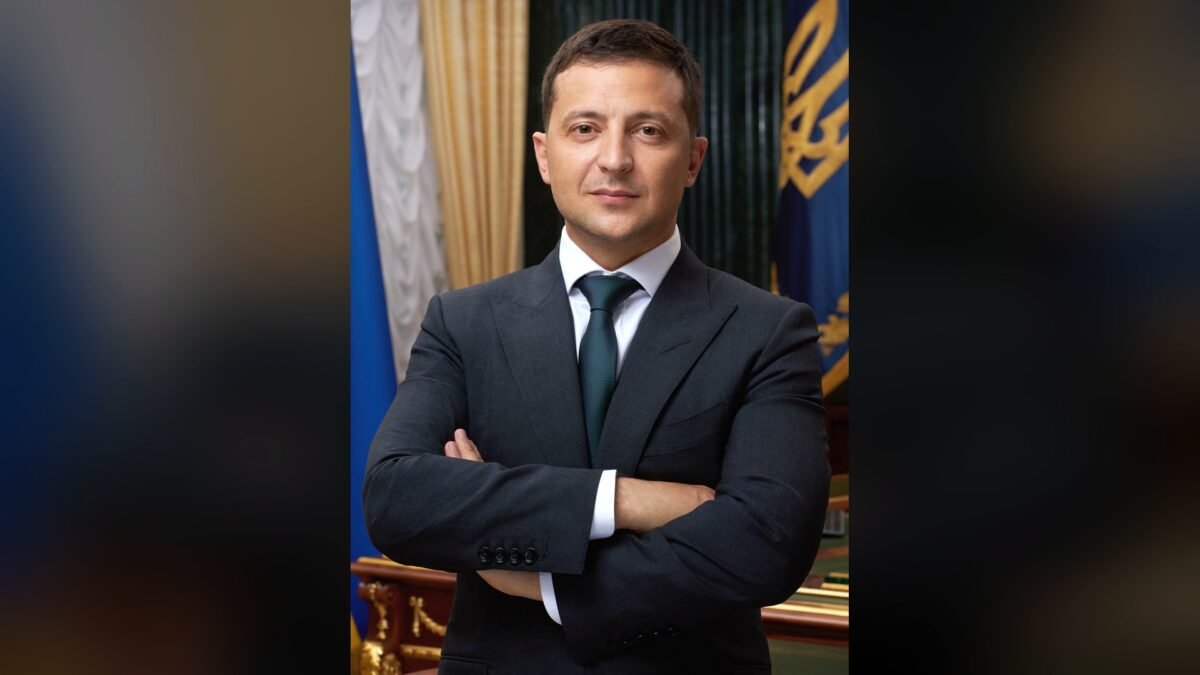
United States negotiators have asked Ukraine, for the first time in the diplomacy of the war, whether Kyiv would withdraw its forces from the parts of the Donbas it still holds in exchange for membership of NATO, President Volodymyr Zelenskyy said on Saturday.
The question, put to the Ukrainian side during the latest round of American-brokered talks, links two issues that Washington had until now kept firmly apart: the territory Russia demands and the alliance membership Ukraine has sought for years. Mr Zelenskyy disclosed it in remarks to reporters made on Friday and released by his office on Saturday, telling journalists that the Americans had raised the idea and that it was the first time it had been put to Kyiv in that form.
“The Americans raised a question: ‘What if Ukraine joins NATO? Would Ukraine withdraw from Donbas?’” Mr Zelenskyy said, according to Reuters. “This was the first time this had been raised.”
He added that the development had changed his reading of Washington’s position. “That is why I believe NATO is back on the agenda,” he said. “But you have also heard [Russian President Vladimir] Putin’s signals, and this is an extremely difficult conversation.”
Mr Zelenskyy was emphatic that Kyiv had not agreed to anything. He repeated that Ukraine was not ready to concede territory, but said that if he received a comprehensive package — security guarantees, the right to a strong and well-funded Ukrainian army and funds to rebuild — he would put the question to a national referendum.
“If the American side confirms precisely this to us, together with other NATO partners, then I will ask our Ukrainian society what it thinks: do we accept it or not?” he said, according to CNN. “I have no right to make that decision on my own. But we need specifics, and we don’t have them yet.”
No American official had confirmed or denied the question on the record by late on Saturday morning, according to reports of the briefing. The White House has said nothing publicly about a Donbas-for-NATO exchange. That silence is itself part of the story: what Mr Zelenskyy described is, for now, a question asked across a negotiating table, not a written offer, and the distance between the two in this war has often been measured in years.
The disclosure lands at a delicate moment. Two days of American-mediated talks between Ukrainian and Russian delegations in Abu Dhabi ended on Wednesday without a breakthrough, though the sides agreed in principle to a prisoner exchange involving more than 1,000 people. American envoys Steve Witkoff and Jared Kushner then flew to Moscow, where they met Mr Putin on Thursday, before travelling to Dublin to brief Mr Zelenskyy the same day. On Friday, European leaders meeting in Dublin agreed the team that will represent Europe at the next round of talks. And the White House has said President Donald Trump will meet Mr Putin and President Xi Jinping of China on Thursday on the sidelines of the APEC summit in Shenzhen, the first three-way meeting of its kind.
Into that crowded week, Mr Zelenskyy has now dropped the most consequential question of the war’s diplomacy: whether the price of the alliance’s protection is the land Ukraine’s soldiers are still dying to hold.
What Zelenskyy said
The Ukrainian president spoke to journalists on Friday after a week that took him to Copenhagen and Dublin, following the two days of American-brokered talks in Abu Dhabi on Tuesday and Wednesday. His remarks were embargoed until Saturday, when his office released them and Reuters, CNN, the BBC, the Associated Press and Agence France-Presse all reported them.
The core of what he said is narrow and precise. American negotiators asked, for the first time, whether Ukraine would withdraw from the Donbas if it were admitted to NATO. He called it the first time the two issues had been linked. He did not say which American asked the question, or on what day, and he did not say the Americans had made a formal offer. What he said was that a question had been raised, that it had never been raised before, and that it put NATO — which American officials had previously said was off the table for Ukraine — back on the agenda.
Mr Zelenskyy was equally precise about what would have to happen before any such question could go to the Ukrainian people. He set out a package, not a price. It would include specific security guarantees from NATO and the European Union, a Ukrainian army with enough troops, weapons and financing for a set period, and a recovery plan funded from identified sources, according to the Kyiv Independent’s account of the same briefing. He said he had asked for guarantees modelled on Article 5 of the NATO treaty — the alliance’s mutual-defence clause, under which an attack on one member is treated as an attack on all — “as an absolute minimum”.
Washington, he said, is now describing something closer to a mix of Articles 4 and 5, or bilateral guarantees similar to those the United States extends to Israel. He also said the American side answered “No” when he asked whether American soldiers would be deployed on Ukrainian soil under such guarantees.
Two limits he set in advance. Any deal, he said, would come “without any recognition of the occupied territories as Russian”. And he said he would not write neutrality into Ukraine’s constitution, arguing that such a step would not guarantee lasting security. The constitution has enshrined the goal of NATO membership since February 2019, and Mr Zelenskyy applied for accelerated accession on 30 September 2022, the day Russia announced the annexation of four Ukrainian regions.
He also made clear that the decision would not be his alone. “If the American side confirms this to us together with other NATO colleagues, then I will ask the opinion of our society: do we accept or do we not accept?” he said. Under Article 73 of Ukraine’s constitution, changes to the country’s territory are decided only by a national referendum. Ukrainian law bars referendums while martial law is in force, and martial law has been in force since 24 February 2022, the day of Russia’s full-scale invasion. A vote of the kind Mr Zelenskyy described could therefore only happen after the war, or after martial law is lifted — which is itself one more reason the question he disclosed is the beginning of a conversation, not its end.
The price Kyiv would demand
The package Mr Zelenskyy described is, in effect, a list of everything Ukraine has asked for since the first weeks of the war, now bundled into a single demand. Security guarantees from NATO and the EU. An army with no limits on its size, fully funded and armed. Money to rebuild a country that has endured nearly five years of full-scale war. And guarantees modelled on Article 5 as the floor, not the ceiling.
That list matters because it shows how Mr Zelenskyy is framing the question. He is not treating NATO membership as a favour to be bought with land. He is treating it as one element of a settlement that must, in his words, be comprehensive — and he is insisting that the guarantees come first, in writing, confirmed by the United States and by Ukraine’s NATO partners, before any question goes to the public.
The distinction between Article 5 and what Washington is said to be offering is not a technicality. Article 5 is a treaty obligation: an armed attack against one ally is considered an attack against them all, and each ally must take such action as it deems necessary, including the use of armed force, to restore security. A mix of Articles 4 and 5 — Article 4 requires only consultation when a member’s security is threatened — or bilateral guarantees modelled on those given to Israel would be weaker, and would depend on the political will of a future American administration rather than on a treaty ratified by the United States Senate. Mr Zelenskyy’s insistence on Article 5 “as an absolute minimum” is, in that light, a demand for a guarantee that cannot be withdrawn by a change of government in Washington.
It is also a demand that exposes the central difficulty of the whole idea. NATO membership is not America’s to give. Under Article 10 of the North Atlantic Treaty, new members are invited “by unanimous agreement”, and every one of the alliance’s 32 members must then ratify the accession, each through its own parliament or procedure. Thirty of those 32 members are European. An American envoy can float a question; he cannot sign a membership card.
Mr Zelenskyy knows this, which is why his answer was careful rather than grateful. He welcomed the fact that NATO was, in his words, back on the agenda. He did not welcome the price. He put the decision to the Ukrainian people, conditional on a package that does not yet exist, in specifics he says he does not yet have.
The week that brought the question to the table
The question was raised in the course of the latest round of American-brokered talks, held in Abu Dhabi on Tuesday and Wednesday. They were the first direct talks involving both Ukrainian and Russian delegations in months, mediated by Trump administration envoys, and they were described as constructive by both Mr Zelenskyy and the United States Secretary of State, Marco Rubio, although they ended without any major breakthrough.
Ukraine’s priorities in Abu Dhabi, Mr Zelenskyy said, included an energy ceasefire, reopening the Black Sea, prisoner releases and preparations for a meeting between leaders to end the war, according to the Associated Press. The one concrete outcome was an agreement in principle to a prisoner exchange involving more than 1,000 people, Mr Zelenskyy said, with the final numbers still under discussion. Britain, France, Germany and Italy were among the countries represented at the Abu Dhabi meetings, he said, though European delegates did not sit at the table with Russia.
On the ceasefire, the Russian delegation said it did not have a mandate to decide, Mr Zelenskyy said, and negotiators were told to resolve ceasefire questions directly with Mr Putin. Mr Witkoff and Mr Kushner had pledged to raise an energy ceasefire with Mr Putin at their meeting in Moscow on Thursday, Mr Zelenskyy said, but there was no news of any progress after their talks. Moscow turned down a proposal for a ceasefire in attacks on energy targets at the Abu Dhabi talks, he added. “Putin personally does not support a ceasefire,” he said.
Mr Zelenskyy also dismissed a Russian proposal for a local humanitarian ceasefire in Kostiantynivka, a hotly contested city in Ukraine’s eastern Donetsk region, saying it reflected Moscow’s inability to take the city by force. “Putin simply wants us to leave Kostiantynivka so that they can move in and occupy the entire city that way,” he said, according to Reuters. Civilians there had already had the opportunity to evacuate, he added. Ukraine has given a list of seven or eight other frontline settlements where civilians, including children, are trapped for a potential humanitarian truce, but Russia prefers to use them as military targets, Mr Zelenskyy said. Moscow denies deliberately targeting civilians in the war.
The envoys’ week did not end in Abu Dhabi. Mr Witkoff and Mr Kushner met Mr Putin in the Kremlin on Thursday, then flew to Dublin, where they briefed Mr Zelenskyy after his meetings with European leaders. On Friday, at an informal summit in Dublin, EU leaders agreed that Europe’s team for the next round of talks would comprise the United Kingdom, France, Germany, Italy and Poland — the so-called E5 — plus representatives of the European Commission and the European Council. Mr Zelenskyy said the American negotiators had told him that all sides had agreed for Europe to have a seat at the negotiating table in the forthcoming talks.
That sequence matters. The Donbas question was raised in Abu Dhabi, before the envoys went to Moscow and Dublin. Mr Zelenskyy disclosed it only after the European team had been agreed and the envoys had briefed him. The timing suggests he is using the disclosure to shape the next round, not merely to report the last one — putting the question in public, with his conditions attached, before it can be put to him in private without them.
Moscow’s answer: the red line has not moved
Mr Putin has long said Ukrainian membership of NATO is a red line for Moscow, citing the issue as one reason for launching Russia’s full-scale invasion in 2022, according to Reuters. Nothing in the past week suggests that position has changed. If anything, the Russian demands reported from Abu Dhabi point in the opposite direction.
According to a list obtained by the German newspaper Bild and reported by Politico, Russia’s asks in Abu Dhabi included keeping the land it already occupies, gaining more, demilitarising Ukraine’s ports, removing NATO bases from the Baltic states, and Finland leaving the alliance altogether. Moscow has previously proposed limits on the size of Ukraine’s military, territorial concessions and Kyiv’s guaranteed neutrality as conditions of a peace deal. Ukraine has rejected these, arguing that such constraints would hamper its ability to stave off any future invasion.
The contradiction at the heart of the week’s diplomacy is therefore stark. The Americans are said to have asked Ukraine whether it would trade land for NATO membership. The Russians are demanding the land and opposing the membership. Both cannot be satisfied, and Mr Zelenskyy’s disclosure makes the contradiction public rather than leaving it to be discovered in a negotiating room.
Mr Zelenskyy also warned that a separate American idea — a new European security framework, raised by the United States as part of efforts to end the war — could benefit Mr Putin, according to the Associated Press. He said Moscow could use such discussions to weaken NATO and reshape the continent’s borders, and described the Kremlin’s demands to redraw Europe’s security architecture as “dangerous” and capable of leading to more wars, according to Agence France-Presse. Russia, he said, was “betting everything” on this winter’s campaign.
Echoing comments made by European leaders at the summit in Dublin on Friday, Mr Zelenskyy dismissed Russia’s call for a broad agreement on European security architecture to be reached before the specifics of ending the war in Ukraine are agreed. “We cannot turn everything upside down and start by talking about changing the security framework in the world or across the continent overall, and only then talk about ending this war. This war must be ended first,” he said.
The territory at stake is smaller than the name suggests, and larger than any map can show. Russia occupies roughly a fifth of Ukraine, including most of Donetsk and Luhansk, the two regions that make up the Donbas. What Kyiv still holds there is a narrow slice, but ceding it would amount to accepting that the Donbas is Russian, which is why Mr Zelenskyy treats it as symbolically decisive. Ukrainian soldiers have died holding those towns. The fortified belt around Kramatorsk, Sloviansk and Kostiantynivka is the line Russia has spent years trying to break, and Moscow’s grinding ground offensive in the region has largely stalled, according to CNN. To withdraw from it voluntarily, in exchange for a promise, would be to give up in negotiation what Russia has failed to take by force.
The long shadow of Bucharest
The idea of Ukraine in NATO is not new. It is eighteen years old, and it has been a promise without a date for most of that time. At the Bucharest summit in April 2008, NATO leaders declared that Ukraine and Georgia “will become members of NATO”, but offered neither country a Membership Action Plan, the first formal step towards accession. The declaration was celebrated in Kyiv and read in Moscow as a provocation. Russian tanks rolled into Georgia four months later. Ukraine lost Crimea six years after that.
Since then, the promise has been repeated and the date has never been set. Ukraine wrote the goal of membership into its constitution in February 2019. It applied for accelerated accession on 30 September 2022, the day Russia announced the annexation of four Ukrainian regions. At the alliance’s summits since the full-scale invasion, leaders have repeated that Ukraine’s future is in NATO, while declining to invite it to join while the war continues — a position driven by the fear that admitting a country at war would immediately trigger the alliance’s collective-defence obligations.
American policy has swung with administrations. The previous American peace plan drafts, circulated late last year, demanded that Ukraine cede the Donbas and renounce NATO — land and membership both surrendered. The question Mr Zelenskyy says was asked in Abu Dhabi reverses the second half of that formula: land surrendered, membership granted. It is, in that sense, the most interesting idea anyone has put on the table in months. It is also, as Mr Zelenskyy himself acknowledged, an extremely difficult conversation, because it asks Ukraine to pay in the only currency it has — territory its soldiers hold — for a membership card that no single government can issue.
In December 2025, Mr Zelenskyy said Kyiv was ready to set its NATO bid aside in exchange for binding guarantees from Washington and Europe, while refusing then, as now, to cede territory. The Abu Dhabi question tests whether that position has moved, and whether Washington has moved with it. His answer — a referendum, conditional on a comprehensive package, with no recognition of occupied land as Russian — keeps both doors open while committing to neither.
Analysis: Why It Matters
A question is not an offer — and the gap between them is the whole story
The most important fact about this story is also the easiest to miss. Mr Zelenskyy did not say the United States had offered Ukraine NATO membership in exchange for the Donbas. He said the Americans had raised a question. No text was given to Kyiv. No specifics exist, by his own account. No American official has confirmed the question on the record. What was floated is an idea, and ideas in this war have a habit of dying in the gap between a negotiating room and a signed document.
That gap matters because it is where the last three years of American peace proposals have gone to die. Draft plans have been leaked, denounced, revised and abandoned. A 28-point plan circulated late last year demanded territorial concessions and neutrality; it was reworked after European objections. The Abu Dhabi question may prove to be the same kind of trial balloon — an envoy testing how far Kyiv will move, rather than a policy Washington has adopted. Mr Zelenskyy’s decision to disclose it publicly, with his conditions attached, is best read as an attempt to make sure that if the balloon floats, it floats with his price tag on it.
The sequencing trap: land first, membership later
Suppose the question became an offer. The practical problem would be the order of events. Ukraine would withdraw its forces from the Donbas first, handing over the fortified belt it has held through years of grinding assault. NATO membership would follow — after unanimous agreement among 32 allies, after ratification in 32 parliaments, after a process that in the fastest recent cases took months and in Ukraine’s case has already taken eighteen years. Land surrendered on a Tuesday; a guarantee pending on some Thursday nobody can name.
That is why Mr Zelenskyy’s conditions are sequenced the way they are: a comprehensive package first, confirmed by the United States and by NATO partners, and only then a referendum. He is insisting, in effect, that the guarantee be locked in before the land changes hands. It is the only sequencing that makes sense for Kyiv, and it is the sequencing Moscow has every reason to resist. Russia wants the territory; it does not want Ukraine in NATO; and it has no interest in a process that delivers the first and withholds the second. Any negotiation that begins with Ukraine withdrawing and ends with a membership vote that might fail is, from Kyiv’s perspective, not a deal but a trap.
NATO membership is not Washington’s to give
The third difficulty is the one Washington cannot solve by itself. Of NATO’s 32 members, 30 are European. Each must agree, and each must ratify. Several allies have spent the past four years insisting that Ukraine cannot join while the war continues, for fear of being drawn directly into it. Others — Hungary and Slovakia among them — have been openly sceptical of Kyiv’s membership ambitions. And the European team agreed in Dublin on Friday — Britain, France, Germany, Italy and Poland, plus the EU institutions — was assembled precisely because Europe intends to have a say in any settlement, not to rubber-stamp one negotiated over its head.
That gives the Abu Dhabi question a second audience. It was asked of Kyiv, but it will be answered, in part, in European capitals. If the Americans have floated the idea without consulting the allies whose votes it requires, the question may collapse the moment it reaches them. If they have consulted them, the silence from those capitals since Saturday morning is itself informative. Either way, the lesson of the past week — Europe demanding and winning a seat at the table — applies here too. A deal about Ukraine’s future in NATO cannot be struck without the Europeans who make up most of NATO.
Why a president under martial law is talking about a referendum
Mr Zelenskyy’s promise of a referendum is, on its face, a strange one. Elections are suspended while Ukraine remains under martial law, and referendums are barred under it. A vote of the kind he described could not legally happen until the war ends or martial law is lifted. Why, then, promise it?
Partly because the constitution requires it: Article 73 reserves decisions on territorial change to a national referendum, and a president who gave away territory by decree would face a constitutional crisis as well as a political one. Partly because Mr Zelenskyy has said before that he would give up the presidency in exchange for NATO membership, and that he would hold elections within months of a peace deal. And partly, one suspects, because a referendum is the one answer that cannot be given in a negotiating room. It moves the decision out of the hands of envoys and presidents and into the hands of a public that has endured nearly five years of war — a public whose answer, on present evidence, would be far from certain. Polls have consistently shown Ukrainians opposed to territorial concessions, even as war-weariness grows. By promising a vote, Mr Zelenskyy is buying time, sharing responsibility, and telling Washington that the price of the Donbas is not his to set.
Moscow’s red line has not moved — and neither has the battlefield
The final reason for caution is the simplest. The question assumes that Russia would accept a settlement in which Ukraine keeps most of its territory and joins NATO. Nothing in Moscow’s conduct suggests it would. Mr Putin has called Ukrainian NATO membership a red line since before the invasion, and his demands in Abu Dhabi — more land, a demilitarised Ukraine, NATO bases removed from the Baltics, Finland out of the alliance — point towards a settlement in which the alliance retreats, not one in which it advances to Russia’s border.
Meanwhile the war continues on its own terms. Russia has rejected an energy ceasefire, rejected a humanitarian ceasefire in Kostiantynivka, and, by Mr Zelenskyy’s account, is “betting everything” on this winter’s campaign. The prisoner exchange agreed in Abu Dhabi is real, and it matters to the families waiting for it. But it is a humanitarian measure, not a path to peace. Until one side’s battlefield position changes, or until Mr Putin decides that a settlement serves him better than a winter offensive, questions floated in Abu Dhabi will remain questions — however interesting, however unprecedented, and however much they reveal about how Washington’s thinking is shifting.
What to Watch Next
- Whether the White House confirms, denies or reframes the question. No American official had spoken on the record by late on Saturday morning. A confirmation would turn a disclosure into a policy; a denial would end the story; a reframing — calling it a hypothetical, or one option among many — would leave it exactly where it is.
- The Kremlin’s response. Moscow has not yet answered Mr Zelenskyy’s disclosure. Watch for whether Mr Putin repeats his red line on NATO membership, and whether the Kremlin treats the question as an American provocation or as a basis for discussion.
- What the E5 and NATO allies say. Britain, France, Germany, Italy and Poland now hold Europe’s seat at the table. Their reaction — and that of the wider alliance, including its sceptics — will determine whether the idea has any life beyond Washington.
- The Trump–Putin meeting in Shenzhen on Thursday. The White House has said Mr Trump will meet Mr Putin and Mr Xi on the sidelines of the APEC summit. It will be the first three-way meeting of its kind, and the first time Mr Trump and Mr Putin have met since the Abu Dhabi round.
- The European Council on 26–27 November. The Commission is expected to propose a 22nd sanctions package and financing plans for Ukraine in 2027. The summit will test whether Europe’s new seat at the negotiating table comes with the money and the measures to back it.
- The prisoner exchange. The one concrete outcome of Abu Dhabi — a swap involving more than 1,000 people — still needs final numbers and a date. Its implementation will be the first test of whether the talks produced anything that survives contact with reality.
- Kostiantynivka and the energy war this winter. Russia has rejected an energy ceasefire and a humanitarian ceasefire in the city. How the winter campaign unfolds — and whether the lights stay on in Ukraine — will shape every negotiation that follows.
Sources
- Reuters — US floated idea of Ukraine ceding Donbas for NATO membership, Zelenskiy says
- CNN — US floated idea of Ukraine swapping land for NATO membership, Zelensky says
- Associated Press — Zelenskyy says a new European security framework floated by US could benefit Putin
- Agence France-Presse — US proposes Ukraine cede territory in exchange for joining NATO: Zelenskyy
- NATO — Enlargement and Article 10
- ASTIG — The US asked Ukraine to trade the Donbas for NATO membership, and Zelensky wants a referendum

About the Author — Abdul Mannan
Related Articles
Trump, Xi and Putin to Hold First-Ever Three-Way Summit in Shenzhen as Nuclear Arms Top the Agenda
The White House has confirmed the first-ever three-way meeting of the leaders of the United States, China and…

Europe Picks Its Team for the Ukraine Peace Talks: Five Nations and the EU to Join the Next Round
EU leaders meeting in Dublin have agreed that Europe will be represented at the Ukraine peace talks by…
EU Leaders Debate Who Should Speak for Europe at Ukraine Peace Talks After US Envoys Win It a Seat
EU leaders met in Dublin on Friday to decide who should represent Europe in the Ukraine peace talks…