
Burnham to Declare Brexit ‘Has Not Worked’ in Landmark Speech Ahead of EU Summit

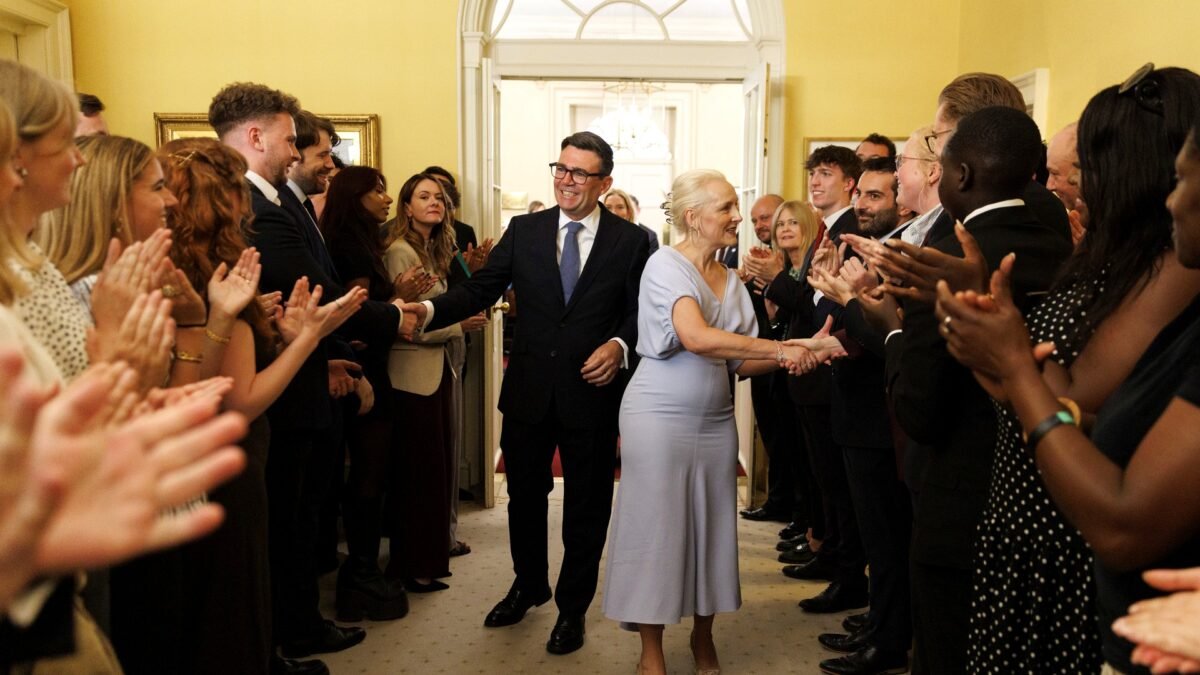
Prime Minister Andy Burnham will use a major foreign policy speech on Monday evening to declare that the Brexit Britain was given “has not worked”, arguing that the country has “lost more than we gained” from leaving the European Union and setting out three tests that any new deal with Brussels must pass.
According to advance excerpts released by Downing Street on Sunday, Mr Burnham will tell the Lord Mayor’s Banquet in the City of London that a decade of silence about the costs of Britain’s departure from the EU must end, four days before he meets European leaders at a summit in Brussels on Friday.
“It’s like the emperor’s new clothes — where no one is prepared to say the obvious truth,” Mr Burnham is set to say, according to Reuters, which published the excerpts on Sunday evening. “Well, I say it as I see it. And to be frank, the emperor has nothing on. The Brexit we were given has not worked. We have lost more than we gained.”
The speech, to be delivered at the annual Lord Mayor’s Banquet at the Guildhall, is the most direct attack on the Brexit settlement by a serving prime minister since Britain left the EU, and it opens a debate that has dominated British politics for a decade. Mr Burnham will argue that the country was left with what he calls “a needlessly hard Brexit” that created barriers for businesses and damaged Britain’s economic potential, and that the promise to “take back control” was not delivered, according to the BBC.
At Friday’s summit in Brussels, Mr Burnham is expected to seek agreement on a series of new deals with the EU covering food standards, youth mobility and emissions trading. According to The Times, Britain will agree to follow existing and future European agriculture rules in return for the end of border checks on British exports in the Channel, while the two sides will also publish details of a new youth mobility scheme under which 18 to 30-year-olds will be allowed to travel, study and work in the EU.
The prime minister will meet the European Council president, António Costa, and the European Commission president, Ursula von der Leyen, at the summit, which had originally been scheduled for July but was postponed when Sir Keir Starmer resigned, according to Reuters.
Three tests for Friday’s deal
Mr Burnham will set out three conditions for any agreement reached in Brussels, according to the BBC and The Times. First, it must be consistent with the government’s manifesto and its red lines. Second, it must improve on the original Brexit deal. Third, it must deliver tangible improvements in people’s everyday lives.
One of those tests, as reported by The Times, is whether the agreement brings Britain closer to the deal people “thought they were voting for in 2016” rather than the hard Brexit put in place by the Conservatives. Another formulation, reported by Brit Brief, is the “Makerfield test” — whether the deal improves everyday life in his own constituency of Makerfield and in similar areas across the country.
The red lines remain those set out in Labour’s 2024 manifesto: no return to the EU’s customs union, single market or freedom of movement. According to Reuters, Mr Burnham is set to say that any agreement on Friday must respect those red lines — which bind Labour until the next election, due in 2029 — while improving the Brexit deal and giving tangible improvements to people.
That framing matters. It is the central tension of the speech: a prime minister declaring the existing settlement a failure while insisting he will not cross the lines his party drew around rejoining the structures that would remove the barriers he is describing. The speech does not propose rejoining the single market or the customs union. It proposes, instead, a closer relationship built inside those limits — and asks voters to judge it by whether life gets measurably better.
The government argues the package on the table could do that. According to The Guardian, Mr Burnham says the deals he hopes to secure at the summit could lift GDP by 0.4 per cent, roughly £17 billion. The figure was cited by the prime minister as the potential gain from the wider package under negotiation, according to the Transatlantic Standard, which reported his remarks from the weekend.
According to the BBC, London and Brussels have already settled a draft text to remove post-Brexit checks on food and agricultural exports — the sanitary and phytosanitary agreement that would sit at the centre of Friday’s summit. A House of Lords Library briefing published on 12 November explains that negotiators envisage a common SPS area, according to the Transatlantic Standard.
A break with his predecessor
Mr Burnham’s willingness to reopen the argument marks a clear break from his predecessor. Sir Keir Starmer, who led Labour to victory in 2024, put the red lines on the customs union, the single market and freedom of movement at the heart of his manifesto, and treated the Brexit debate as closed. According to Reuters, Mr Burnham’s approach “is a break from his predecessor Keir Starmer, who put red lines on not returning to the EU’s customs union, single market or freedom of movement in Labour’s 2024 manifesto”.
Mr Burnham, who became prime minister in the summer after Sir Keir Starmer resigned, has moved quickly to put the relationship with Europe at the centre of his premiership. The summit on Friday will be the second UK-EU summit, following the first in May 2025, when the two sides announced a strategic partnership. According to the Transatlantic Standard, Friday’s meeting will review progress since that partnership was announced on 19 May 2025 and address food trade, security, migration and crime.
The speech formalises a position Mr Burnham first set out on Saturday at the Welsh Labour conference in Llandudno. There, according to UK Fact Check, he accused the Conservatives of giving Britain “a harsher and harder Brexit” than voters expected, telling delegates that the party “burned all of our bridges in the aftermath with the EU”. He also said the UK had “lost more than we’ve gained over the last 10 years”, a reference to the decade since the 2016 referendum.
That Saturday intervention was itself significant. A prime minister using a party conference in Wales to attack the Brexit deal — rather than to defend it, or to move on from it — signalled that the argument was coming. The Lord Mayor’s Banquet speech, in the heart of the City of London and before an audience of business and civic leaders, is the moment he has chosen to make it in full.
According to The Times, Mr Burnham will also use the speech to claim that Britain is “back” as a “positive player on the world stage”, presenting closer ties with Brussels as a “win-win” that reflects his wider approach to foreign policy. The phrase is deliberate: it casts the reset not as a concession to the EU, but as a choice by a government that wants Britain to be seen as a constructive partner rather than an adversary.
Johnson’s reply — before the speech is given
The response from the other side of the argument arrived before Mr Burnham had even delivered his speech. On Sunday night, Boris Johnson — the former prime minister who negotiated the Brexit deal Mr Burnham is attacking — said that Britain would “absolutely” vote to leave the EU again, according to The Times and the BBC’s newspaper round-up.
Mr Johnson’s intervention sets up the political contest that will follow the speech. For the Conservatives, the argument will be that the 2016 referendum settled the question, that the deal delivered the central demand to leave the EU’s institutions, and that any move towards following EU rules — even on food standards — is a step backwards. For Mr Burnham, the argument will be that the referendum settled the question of membership, not the terms of the deal, and that a deal which imposes costs on businesses and consumers without delivering the promised control has failed on its own terms.
That distinction — between the decision to leave and the deal that followed — is the heart of the prime minister’s case. He is not, in this speech, arguing that Britain should rejoin the EU. He is arguing that the specific settlement negotiated by Mr Johnson’s government, and defended by his successors, was harder than it needed to be, and that a better deal is available within the red lines Labour has set.
Whether that distinction holds politically is another question. The Conservative argument, rehearsed many times since 2016, is that any alignment with EU rules is a form of rule-taking without representation, and that the “tests” Mr Burnham has set are designed to be passed by whatever deal he brings home from Brussels. The prime minister’s answer, in advance, is the Makerfield test: judge the deal by whether it makes life better in the places that have felt the costs most sharply, not by whether it satisfies a faction in Westminster.
What the numbers say about the cost of Brexit
Mr Burnham’s claim that Britain has “lost more than we gained” is, in one sense, a political judgement. But it is also a claim that can be tested against the work of the institutions that have studied the economic effects of leaving the EU — and the evidence, while contested in its details, points in a consistent direction.
The Office for Budget Responsibility, the UK’s independent fiscal watchdog, maintains a long-term assumption that the post-Brexit trading relationship will leave UK productivity around 4 per cent lower than it would have been if Britain had remained in the EU, according to the OBR’s own Brexit analysis page, which underpins its latest March 2026 forecast. The OBR attributes this primarily to a reduction in trade intensity and the resulting constraints on competition, specialisation and productivity. It also assumes that both exports and imports will be around 15 per cent lower in the long run than if the UK had remained in the EU.
The OBR is careful about what that figure means. It is a comparison with a hypothetical alternative in which the UK remained an EU member, not a forecast that Britain’s economy will shrink by 4 per cent, and not a guarantee that rejoining would immediately increase GDP by 4 per cent. The OBR estimates that around two-fifths of the 4 per cent impact had already occurred by the time the Trade and Cooperation Agreement came into force, as a result of uncertainty weighing on investment, according to its analysis.
Other studies reach broadly similar conclusions, though rarely the same number. The Centre for European Reform estimates that UK exports to the EU are about 12 per cent lower than they would otherwise have been, according to the Productivity Institute. Research by Bloom, Bunn, Mizen, Smietanka and Thwaites estimates that by 2025 UK GDP per head was 6 to 8 per cent lower than it would otherwise have been, with investment down 12 to 18 per cent and productivity down 3 to 4 per cent, according to the same source. Goldman Sachs put the current underperformance at around 6 per cent in a 2026 analysis, according to Sovereign Magazine.
The range, as Sovereign Magazine summarised it, runs from roughly 2.5 per cent to 8 per cent of GDP — a genuine spread that reflects real disagreement about modelling assumptions rather than a single settled figure. But the direction of the evidence is not in serious dispute among mainstream economists: every serious study of the UK economy since 2016 finds that Brexit has made it smaller than it would otherwise have been, according to Sovereign Magazine. Where the studies genuinely disagree is by how much.
That matters for Mr Burnham’s speech, because it means his central claim is not an invention. It is, at the very least, consistent with the best available evidence. What is contested is not whether there has been a cost, but how large it is, how much of it can be recovered by a closer relationship that stops short of rejoining, and whether the political price of pursuing that closer relationship is worth paying.
A decade of argument, from referendum to reset
To understand why this speech matters, it helps to remember how long the argument has run. Britain voted to leave the European Union in a referendum in June 2016, by 52 per cent to 48 per cent. It formally left the EU on 31 January 2020. The Trade and Cooperation Agreement, which governs the current trading relationship, came into effect on 1 January 2021.
The years since have been dominated, in British politics, by the consequences of that agreement: border checks on food and agricultural exports, paperwork for businesses trading with the EU, friction at ports, and a long argument about whether the costs were the price of sovereignty or the result of a deal that was harder than it needed to be. The Conservatives, who negotiated the agreement, defended it as the delivery of the referendum result. Labour, under Sir Keir Starmer, accepted the result and promised to “make Brexit work” without reopening the question of membership.
Mr Burnham’s speech breaks that pattern. It is the first time a serving prime minister has described the Brexit settlement, in terms, as a failure — and the first time a prime minister has set out, in advance of a summit, the conditions under which a new agreement would be judged a success. The language is unusually blunt for a prime minister speaking about a decision taken by the voters: “the emperor has nothing on” is not the language of a politician hedging. It is the language of a politician who has decided that the argument is worth having in the open.
The timing is also significant. The summit on Friday comes at a moment when the world has, in Mr Burnham’s words, “fundamentally changed since 2016”, according to The Times. The war in Ukraine, the return of great-power competition, the disruption of global trade and the pressure on European security have all made the case for closer cooperation between Britain and the EU easier to make — and harder to resist. A prime minister who wants a closer relationship can now argue that it is not only about trade, but about security, energy and the ability of European democracies to act together.
That is the wider argument Mr Burnham is making: that the reset is not a technical negotiation about food checks, but a strategic choice about where Britain stands in the world. The food deal, the youth mobility scheme and the emissions trading agreement are the substance of Friday’s summit. The speech is about the direction of travel — and about whether Britain’s relationship with Europe should be defined by the distance created in 2016, or by the cooperation the prime minister says the world now demands.
Analysis: Why It Matters
A prime minister has said the unsayable — and now owns the consequences
For a decade, British prime ministers have treated the Brexit settlement as something to be managed, not judged. Theresa May defended her deal. Boris Johnson celebrated his. Liz Truss and Rishi Sunak inherited it. Sir Keir Starmer promised to make it work. None of them said, in office, that it had not worked. Mr Burnham has now said exactly that, in a prepared text released by his own office, four days before a summit at which he must negotiate with the leaders of the EU.
That is a gamble, and it is worth being clear about why. The first risk is domestic: the prime minister has handed his opponents a sentence — “Brexit has not worked” — that will be quoted back at him every time a negotiation stalls, every time a deal disappoints, and every time a voter who backed Leave in 2016 feels their decision is being dismissed. Mr Johnson’s reply, delivered on Sunday night before the speech was even given, shows how quickly that attack will come. The second risk is diplomatic: by declaring the existing deal a failure, Mr Burnham raises the bar for what Friday must deliver. A summit that produces modest technical agreements will now be judged against a speech that promised a reckoning.
But there is also a logic to the gamble. A prime minister who wants a closer relationship with Europe cannot negotiate it while pretending the current relationship is fine. The speech is, in effect, the permission slip for the negotiation: it tells the EU that Britain’s government believes the deal needs to change, it tells British voters why the change is being sought, and it tells the prime minister’s own party that the argument is no longer to be avoided. Whether that logic holds depends on what comes back from Brussels on Friday — and on whether the prime minister can show, in the months that follow, that the new agreements make a tangible difference to the people he named in his test.
The three tests are a trap — and a shield
The three tests Mr Burnham has set for Friday’s deal deserve close attention, because they are doing two jobs at once. On the surface, they are a standard for judging the negotiation: the deal must respect the manifesto, improve on the original agreement, and deliver tangible improvements in everyday life. That is a reasonable framework, and it gives the prime minister a way to say no to a bad deal.
But the tests are also a political device. By setting them in advance, Mr Burnham has given himself a standard against which his own deal will be measured — and he has given his critics a standard against which to measure it too. If the food deal removes border checks but the price of food does not fall, the third test will be quoted back at him. If the youth mobility scheme is announced but the details are thin, the second test will be quoted back at him. If the agreement requires Britain to follow EU rules that voters were told they had escaped, the first test will be quoted back at him.
The “Makerfield test” is the most interesting of the three formulations, because it is the most concrete. It does not ask whether a deal is good in the abstract, or whether it satisfies a faction in Westminster. It asks whether it improves life in a specific place — a constituency in the north-west of England, and the places like it. That is a test that can be checked, in time, by the people who live there. It is also a test that takes time to pass, which is both its strength and its weakness: it gives the prime minister room to argue that the benefits will come, and it gives his critics time to argue that they have not.
The economics are on his side — but economics is not the whole argument
On the narrow question of whether Brexit has imposed an economic cost, the evidence supports Mr Burnham. The OBR’s 4 per cent long-run productivity assumption, the Centre for European Reform’s estimate that exports to the EU are about 12 per cent lower than they would otherwise have been, and the range of studies putting the GDP cost at between 2.5 and 8 per cent all point in the same direction. A prime minister who says Britain has “lost more than we gained” is not making a claim that the evidence contradicts.
But the Brexit argument was never only about economics, and it would be a mistake to treat it as if it were. Millions of people voted to leave the EU for reasons that had little to do with GDP: control over laws, control over borders, a sense that decisions about Britain should be made in Britain. Those voters were told, by the Leave campaign, that leaving would deliver control. Mr Burnham’s argument is that the control was not delivered — that the “needlessly hard Brexit” created barriers without giving Britain the freedom it was promised.
That is a more interesting argument than a simple appeal to the GDP figures, and it is also a harder one to win. It requires the prime minister to show not only that the deal imposed costs, but that a different deal — one that stays inside his red lines — can deliver the control that was promised. The food agreement, which requires Britain to follow EU agriculture rules in return for the end of border checks, is a test case: it removes a barrier, but it does so by accepting rules made in Brussels. Mr Burnham will argue that is a price worth paying. His opponents will argue that it is the opposite of taking back control. The speech does not resolve that argument. It restarts it.
The summit is the easy part — the politics at home is harder
Friday’s summit is, in one sense, the least difficult part of this story. The substance of the food deal has, according to the BBC, already been settled in draft. The youth mobility scheme and the emissions trading agreement are the subject of negotiation, but they are the kind of agreements that two sides who want a deal can reach. The EU has an interest in a closer relationship with Britain, and Britain has an interest in a closer relationship with the EU. The incentives point towards agreement.
The harder politics is at home, and it comes from two directions. From the right, the Conservatives and their allies will argue that any move towards following EU rules is a betrayal of the referendum, and that the prime minister’s “tests” are a fig leaf for a deal that takes Britain backwards. From the left, and from within his own party, there will be pressure to go further — to reopen the question of the single market, the customs union, and ultimately membership itself. Mr Burnham has tried to hold both flanks by insisting that the red lines stand, but the logic of his own speech pulls against them: if the current deal has “not worked”, and if the costs are as large as the evidence suggests, then the question of whether the red lines themselves are the problem will not go away.
That tension will shape British politics for the rest of this parliament. The prime minister has opened a door that his predecessor kept shut. He has done so carefully, with red lines intact and a deal that stays inside them. But doors, once opened, are hard to close — and the argument he has started will not end on Friday, whatever the summit produces.
What this means for Britain’s place in the world
There is a wider point here, and it is the one Mr Burnham is most keen to make. The speech is billed as a foreign policy speech, delivered at the Lord Mayor’s Banquet in the City of London, and its argument is not only about trade. It is about whether Britain, a decade after the referendum, is ready to define itself as a “positive player on the world stage” — in his words, according to The Times — rather than as a country defined by its distance from Europe.
The world has, as the prime minister says, “fundamentally changed since 2016”. The war in Ukraine has remade European security. The United States has become a less predictable ally. Trade has become a weapon as well as a benefit. In that world, the argument for closer cooperation between Britain and the EU is stronger than it was in 2016 — and the cost of distance is higher. Mr Burnham’s speech is an attempt to say that out loud, and to make the case that the reset is not a retreat from Brexit, but a response to a changed world.
Whether voters accept that framing is the question that will decide the fate of this premiership. The prime minister is betting that they will — that a country which voted to leave the EU in 2016 is ready, ten years on, to hear its prime minister say that the deal which followed did not work, and to judge him on whether he can make the relationship better. It is a bold bet. It is also, on the evidence, an honest one. The next test is Friday. The test after that is whether anything changes in the places he named.
What to Watch Next
- The speech itself on Monday evening at the Lord Mayor’s Banquet — whether Mr Burnham goes beyond the advance excerpts, and how the audience in the City of London receives the argument.
- Friday’s UK-EU summit in Brussels on 20 November, and whether the food, youth mobility and emissions trading agreements are signed as expected — and in what form.
- The detail of the youth mobility scheme, including the age range, the numbers allowed, and whether it is reciprocal — and how it is received by voters who were promised an end to freedom of movement.
- The draft sanitary and phytosanitary text, and whether the requirement for Britain to follow existing and future EU agriculture rules becomes a political flashpoint.
- The Conservative response, led by Boris Johnson’s claim that Britain would “absolutely” vote to leave again, and whether the party unites around defending the original deal.
- Whether the 0.4 per cent GDP figure survives scrutiny, and whether food prices and business costs fall in the months after any agreement takes effect.
- The Rosebank decision, which the prime minister still has to take, and whether the backbench rebellion reported over the oil field complicates his authority ahead of the summit.
Sources
- Reuters — UK PM Burnham ready to confront ‘obvious truth’ of Brexit’s costs
- BBC News — UK has lost more than it gained from Brexit, Burnham expected to say
- The Times — Andy Burnham: UK lost more than it gained leaving EU
- Office for Budget Responsibility — Brexit analysis
- UK Fact Check — Burnham: Brexit ‘has not worked’ — three tests for EU deal
- Brit Brief — Burnham to demand EU deal passes ‘Makerfield test’

About the Author — Abdul Mannan
Related Articles
Prince Harry Makes Surprise Fourth Visit to Ukraine, Telling Wounded Veterans: ‘You’re Going to Win the War’
Prince Harry made an unannounced two-day visit to Lviv, his fourth trip to Ukraine since Russia's invasion, telling…
NHS England on Track to Miss Key Cancer Treatment Target by Nearly 10,000 Patients
NHS England is on course to miss its target of treating 80 per cent of cancer patients within…
UK Ethics Watchdog Chief Stuart Sterling Steps Back Over Historic Sexual Misconduct Claims
Stuart Sterling, the first chief executive of the Ethics and Integrity Commission, has stepped back while the Cabinet…