
Hegseth Signs Military Pact in Caracas as US and Venezuela Restore Defence Ties Ten Months After Maduro’s Capture

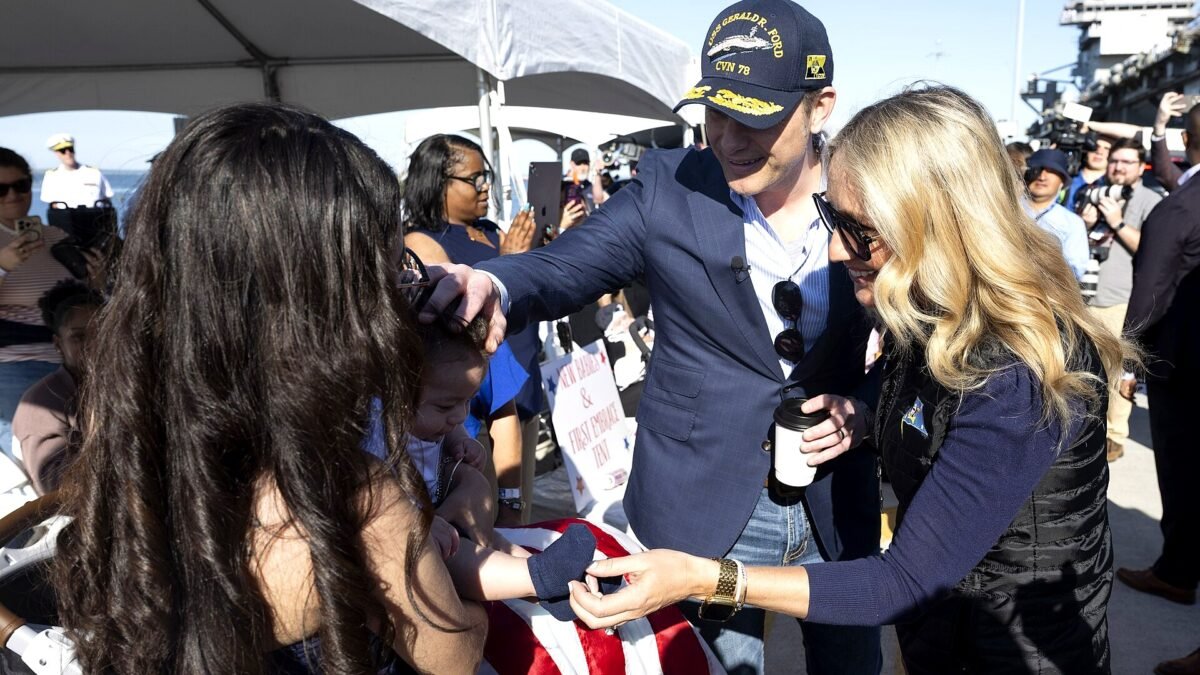
The United States and Venezuela signed an agreement on Wednesday to re-establish military cooperation, ten months after American forces captured then-President Nicolás Maduro in a surprise raid on Caracas, according to the Associated Press and Reuters. United States Defence Secretary Pete Hegseth announced the deal during an unannounced visit to the Venezuelan capital, where he met the country’s interim president, Delcy Rodríguez, at the Miraflores presidential palace.
Hegseth said the agreement would cover joint training, intelligence sharing and the supply of more defence equipment, and he described Venezuela as a country transformed in American eyes. “Venezuela has gone from our most aggressive regional threat to a compliant security partner,” he told an audience of diplomats and military officials from both countries, according to the Associated Press.
The visit was not announced in advance by the Pentagon, and a Pentagon spokesperson did not respond to multiple requests for comment about Hegseth’s travel, according to USA Today. Footage broadcast by the Venezuelan state television channel VTV showed Rodríguez receiving Hegseth at the presidential palace, and the two later appeared together at a formal ceremony.
Neither side released the text of the agreement, and the Pentagon did not immediately offer further details on the new partnership. Hegseth offered only a broad description of what the two militaries would do together. “Training together, partnering together, sharing intelligence, more defense equipment and capabilities together,” he said, according to the Associated Press.
Rodríguez welcomed the deepening of military ties and said she hoped the cooperation “can be brought to its highest possible level” to allow the two countries to “address common threats,” the Associated Press reported. Speaking separately, she said the renewed opportunity to strengthen the training of Venezuela’s Bolivarian National Armed Force, improve its operational equipment and open access to new technologies was “highly beneficial for our military personnel,” according to Reuters.
The Deal Signed in Caracas
Hegseth was received at Miraflores Palace by Foreign Minister Oliver Blanco, according to Sociedad Media, and the agreement was signed by Hegseth and his Venezuelan counterpart, Defence Minister Gustavo González López, in the Simón Bolívar Hall in front of Rodríguez. Venezuelan state television broadcast the ceremony live.
“I stand here on behalf of President Trump, who sends his greeting,” Hegseth said to Rodríguez, according to The Wall Street Journal. He called the agreement “a revitalization of our defense partnership and an opportunity for cooperation between our two great armed forces,” Sociedad Media reported.
Hegseth thanked Rodríguez personally for her cooperation with Washington since Maduro’s removal. “I want to personally thank President Rodríguez for working closely and pragmatically and diligently with the United States to stabilize Venezuela,” he said in televised remarks, according to USA Today. “We have more work to do and quickly, but we could not have accomplished so much in less than a year without her leadership.”
He said the two countries’ militaries would work together “to ensure the Venezuelan people are not threatened by foreign actors or narco-terrorists or criminals,” according to USA Today. He also pointed to Venezuela partnering with the United States “to recover its territory from narco-terrorist networks,” the Associated Press reported.
Also present at the palace was Alejandro Betancourt, the Venezuelan businessman who controls North American Blue Energy Partners, the second-largest oil operator in Venezuela, according to the Associated Press. Betancourt told reporters he had discussed the progress of oil cooperation with Hegseth, Reuters reported.
The precise scope of the agreement remains undisclosed. It is unclear whether the deal covers joint exercises, technical assistance or other forms of cooperation beyond the training and intelligence sharing that Hegseth described, and troop numbers, funding, duration and any role for United States personnel on Venezuelan soil have not been made public, according to Sociedad Media. The New York Times reported weeks earlier that the administration was negotiating a Status of Forces Agreement that could lay the groundwork for a long-term United States military presence, covering ship visits, training, exercises and humanitarian aid, Sociedad Media reported.
Hegseth’s trip was cloaked in secrecy, according to The Wall Street Journal. On Tuesday, the day before the Caracas visit, he visited the offices of United States Southern Command in Doral, Florida, the headquarters of the American military in Latin America. After Venezuela, Hegseth was expected to travel to Bogotá to meet Colombian officials, according to USA Today, citing reports in Colombian media. Colombia’s defence minister said Hegseth was due to hand over a Lockheed Martin Hercules C-130 aircraft and discuss United States support as Colombia battles drug trafficking groups and other illegal armed actors, Reuters reported.
Ten Months After the Raid That Seized Maduro
The agreement is the latest step in a relationship that has been remade with extraordinary speed since the United States operation that removed Maduro from power. In the early hours of 3 January 2026, American forces carried out a surprise nighttime raid in Caracas, captured Maduro and flew him to New York to face drug trafficking charges, according to the Associated Press. His wife, Cilia Flores, was seized with him.
Hegseth used his speech in Caracas to boast about the operation, calling it “the single most sophisticated military operation in the history of Latin America” and saying it “lasted just 48 minutes,” the Associated Press reported. “America’s best and bravest warfighters solved a 27-year problem for this hemisphere in a matter of hours,” he added. He also turned one of Maduro’s own catchphrases from last year back on him, saying that as the ousted leader had “predicted,” the operation ended with “no war, yes, peace.”
Venezuelan officials said at the time that 24 security personnel were killed during the operation, according to Journalism Central. Maduro has denied the accusations against him in court in the United States. He and Flores pleaded not guilty in January to four counts covering narcotics trafficking and weapons charges, and his trial has been set to begin on 1 June 2027.
On Monday 17 November, the day before Hegseth’s visit, Maduro appeared before a federal judge in Manhattan for a hearing on his lawyers’ bid to dismiss the drug charges on the ground that, as a sitting head of state at the time of his capture, he is entitled to sovereign immunity from United States criminal jurisdiction, according to Journalism Central. United States District Judge Alvin Hellerstein heard the arguments, and no ruling was immediately reported.
Rodríguez, who served as Maduro’s vice president, was sworn in to lead the country after his capture. The legal position is unusual. When American forces seized Maduro on 3 January, Venezuela’s Supreme Court did not declare the presidency vacant. Instead, it invented a category the constitution does not contain — a “forced absence” — swore in Rodríguez as acting president, and left the question of whether the vacancy was temporary or permanent unresolved, according to AInvest, citing El País. The court’s own ruling says it made no “substantive decision on the definitive legal classification of the presidential vacancy,” and Maduro is still officially the country’s president.
Rodríguez’s court-allowed term expired in July, yet she continues to function as Venezuela’s head of state, the Associated Press reported. The United Nations’ meeting record from 23 September 2026 lists Rodríguez as “Acting President of Venezuela,” and the United Nations Protocol and Liaison Service’s current head-of-state list gives Venezuela’s head-of-state title as “Presidenta Encargada de la República Bolivariana de Venezuela,” dated 13 July 2026, according to AInvest.
The ruling party, which has held power in Venezuela since 1999, still leads the nation, just now with Rodríguez in charge, the Associated Press reported. President Donald Trump and Rodríguez held a brief one-on-one meeting in September in New York, on the sidelines of the United Nations General Assembly, according to USA Today.
Oil First: The Energy Partnership Behind the Military Pact
The military agreement follows months in which Washington’s influence in Venezuela has grown fastest in the energy sector. Trump said in August that Hegseth helped broker a sweeping deal for the United States to take control of some Venezuelan oil reserves, according to the Associated Press, and Hegseth praised that energy deal during his Caracas visit.
Under the deal, producer North American Blue Energy Partners, known as NABEP, was granted long-term access in August to 17 oilfields containing about a fifth of the country’s oil reserves, through a partnership with the United States government, Reuters reported. The United States secured a 35 per cent stake in NABEP’s parent company, a guaranteed share of output and first refusal rights on the remainder.
Betancourt, who controls NABEP and was central to the agreement, was seen at the presidential palace and the United States embassy on Wednesday, Reuters reported. He told reporters that NABEP plans to produce more than 250,000 barrels per day of oil by the end of the year as it prepares to have 10 well clusters in service, an increase on the 224,000 barrels per day it produced in mid-October, according to company figures cited by Reuters.
Rodríguez asserted in her meeting with Hegseth that the deal enables “the energy development of our nations” and “benefits both the people of the United States and the people of Venezuela,” the Associated Press reported.
Hegseth linked the oil partnership directly to the war in Iran. Speaking at the United States embassy in Caracas, he said the Venezuela oil deal “makes the Strait of Hormuz a non-factor for the Western Hemisphere,” according to the Associated Press. The Iran conflict has disrupted global energy supplies through the Persian Gulf waterway, raising petrol prices and contributing to the Republican Party’s severe losses in this month’s midterm elections, the Associated Press reported.
Hegseth is the latest member of Trump’s cabinet to travel to Caracas since the operation to remove Maduro, following visits this year by the energy and interior secretaries, who focused their efforts on tapping Venezuela’s oil reserves and critical minerals, according to the Associated Press. The head of United States military operations in Latin America, General Francis Donovan of United States Southern Command, has also met interim authorities in Venezuela at least twice this year.
A Government With No Election Date
The military pact arrives at a moment of deep uncertainty for Venezuelans about who will lead the country in the coming months and years, the Associated Press reported. No date has been announced for Venezuela’s next presidential election, and that absence has left many Venezuelans conflicted in their feelings towards Trump. While relieved that Maduro is no longer president, many believe the White House’s decision to prioritise reviving Venezuela’s oil industry over steps towards democracy was the wrong approach for meaningful change in their country, the Associated Press reported.
Opposition leader María Corina Machado recently returned to Venezuela from exile following seven failed attempts that opposition activists claimed were thwarted by the government, according to the Associated Press. United States Secretary of State Marco Rubio has said her “safe” return was the result of “reconciliation talks” supported by the United States, which he considered “the best opportunity” Venezuela has had in three decades to achieve free and fair elections and a lasting democracy.
Rubio laid out the sequence Washington expects on 5 November, according to AInvest: a renewed Supreme Court and electoral council, security-force reform and a debt restructuring before any vote. No timetable for those steps has been published.
The visit also comes as the United States military has expanded its attention on the region since Trump’s return to the White House last year, with the president promising to focus more on the Western Hemisphere and battle Latin American drug cartels, the Associated Press reported. To try to stem the flow of narcotics into the United States and the scourge of fatal overdoses, American forces have been attacking what the Trump administration says are boats smuggling drugs in the Caribbean Sea and the eastern Pacific Ocean.
At least 240 people have been killed since the administration began targeting those it calls “narco-terrorists” in September 2025, the Associated Press reported, although United States officials have released little evidence publicly to support claims that the vessels were carrying drugs or that the strikes have made an impact on the availability of drugs in the country. USA Today reported that more than 240 people have been killed in the strikes, many of them near Venezuela, and that the Pentagon has provided scant evidence to back up its claim that the targeted boats were operated by drug traffickers.
Analysis: Why It Matters
The signing ceremony in the Simón Bolívar Hall was, on its face, a modest event: a short agreement, few details, and a pair of speeches heavy on praise and light on specifics. But the history it closes, and the future it opens, make it one of the most consequential American foreign policy moments of the year. Ten months ago the United States treated Venezuela as a hostile state run by a drug trafficker. On Wednesday, its defence secretary stood in the presidential palace and called the same government a “compliant security partner.” That reversal deserves to be understood in full, because it tells us how the Trump administration intends to run the Western Hemisphere — and what it is prepared to trade away to do it.
From invasion to alliance in ten months
The speed of the reversal is the first thing to grasp. On 3 January, American special forces seized a sitting head of state in his own capital, killed two dozen of his security personnel, and flew him to a New York jail. By November, the American defence secretary was being received with full ceremony by the government that man left behind, thanking its leader for her pragmatism and signing a pact to train her soldiers and share intelligence with them. No treaty was debated in the Senate. No election intervened. No new government took power in Caracas. The same ruling party that has governed Venezuela since 1999 is still in charge, now led by the woman who was Maduro’s vice president.
That is not how alliances are normally built. Alliances usually follow elections, revolutions, or long negotiations. This one follows a military operation and a commercial deal, in that order. The sequence matters because it establishes the template: force first, partnership second, and the partnership extended to whoever is left holding power, regardless of how they got there. For other governments in the region watching Caracas, the lesson is plain. Cooperation with Washington is available to incumbents who accommodate American interests, even incumbents whose legitimacy Washington questioned only months ago.
Oil first, guns second
The second thing to notice is the order in which the partnership was built. The oil deal came in August. The military pact came in November. The energy secretaries visited before the defence secretary did. Betancourt, the oilman, was in the room for the military signing. Hegseth himself connected the two halves of the policy in a single sentence at the American embassy, when he said the oil deal “makes the Strait of Hormuz a non-factor for the Western Hemisphere.”
That sentence is the key to the whole visit. The administration is fighting a war with Iran that has disrupted energy supplies through the Persian Gulf, pushed up petrol prices at home, and, by the Associated Press’s own account, contributed to the Republican Party’s heavy midterm losses. Venezuelan crude offers a hedge against that disruption, and it offers it in the Americas, beyond the reach of Iranian missiles and Houthi drones. The military agreement protects the investment. It gives Washington a formal channel to train, equip and share intelligence with the armed forces of the country that holds the world’s largest proven oil reserves, and it does so before any election has tested whether the government in Caracas actually represents the Venezuelan people.
There is nothing unusual about energy shaping foreign policy. What is unusual is the openness of it. Previous American administrations wrapped oil interests in the language of democracy promotion. This one has inverted the order: the oil deal is announced first, the military pact follows, and the democratic transition is described as something that will happen later, after courts and electoral councils are rebuilt and debts restructured. Venezuelans who hoped the removal of Maduro would mean a rapid return to democracy have reason to be disappointed. The administration’s own sequence puts elections last.
The deal’s silence is the story
The third point is what was not said. No text was published. No figures were given. The Pentagon offered no details. It is not clear whether the agreement covers joint exercises, whether American personnel will be stationed on Venezuelan soil, how much money is involved, or how long the arrangement lasts. Even the description of its contents — “training to intelligence sharing” — comes from Hegseth’s remarks, not from a published document.
That silence should be read carefully. A Status of Forces Agreement, which the New York Times reported was under negotiation weeks ago, is the kind of document that normally attracts congressional scrutiny, public debate and legal challenge, because it defines the rights of foreign troops on a host country’s soil. Announcing a partnership first and publishing its terms later — or never — avoids that scrutiny. It also leaves the Venezuelan public, and the American public, unable to judge what has actually been agreed. A military pact whose contents are secret is, in practical terms, a blank cheque drawn on two countries’ armed forces. The questions it raises will not go away simply because no one in Caracas or Washington chose to answer them on Wednesday.
Rodríguez’s gamble
The fourth point concerns the woman at the centre of the ceremony. Delcy Rodríguez governs Venezuela but does not, in law, hold its presidency. Her court-allowed term expired in July. The Supreme Court’s invention of a “forced absence” left Maduro as the official president and Rodríguez as the acting one, a constitutional fiction that has now been in place for more than ten months. She has no electoral mandate of her own and no announced date for an election that might give her one.
Her gamble is clear. By cooperating with Washington — on oil, on drugs, and now on the military — she has bought survival and recognition. Hegseth’s praise, Trump’s September meeting in New York, and the flow of cabinet visitors to Caracas all amount to a de facto recognition of her government, even if no formal diplomatic step has been taken. In exchange, she has accepted a subordinate role: her armed forces will be trained by the military that seized her predecessor, her oil will be pumped by a company in which Washington holds a stake, and her political future will be decided, in part, by a reform sequence drawn up in Washington.
It is a gamble that could pay off handsomely if it ends with her leading Venezuela into an election she can win, or with a negotiated transition that leaves her a central figure. It could also end badly. If the military partnership deepens American influence faster than Venezuelan politics can absorb it, she risks being seen at home as the administrator of an occupation rather than the leader of a sovereign state. And if an election is eventually held and she loses it, the agreements she has signed will bind her successors — which is, of course, precisely why Washington wanted them signed now.
The hemisphere test
The final point is the regional one. Hegseth did not stop in Caracas and go home. He was expected in Bogotá the same day to hand over a C-130 aircraft and discuss security cooperation with Colombia, a country fighting drug trafficking groups and illegal armed actors of its own. General Donovan of Southern Command has visited Caracas at least twice this year. The boat strikes in the Caribbean have killed more than 240 people. The administration has made the Western Hemisphere the centre of its foreign policy, and Venezuela is the proof of concept.
The test of that concept will not be whether the pact is signed — it has been signed — but whether it produces what its authors claim: a Venezuela that is stable, cooperative and no longer a source of drugs, migrants or regional tension. The early evidence is mixed. The oil is flowing and production is rising. The drugs keep flowing too, if the administration’s own justification for the boat strikes is to be believed. And the political question — who governs Venezuela, and by what right — has not been answered at all. It has been postponed.
That postponement is the real story of Wednesday’s ceremony. The United States has chosen order over democracy in Venezuela, and it has chosen it openly. Whether that choice holds will depend on things no ceremony can settle: whether Rodríguez can govern without an election indefinitely, whether Machado’s return leads to a genuine political opening, whether the courts and electoral council are rebuilt rather than simply renamed, and whether the American public accepts a military partnership with a government whose leader’s term expired in July. Until those questions are answered, the pact signed in Caracas is best understood as a beginning, not an end.
What to Watch Next
- The text of the agreement: whether the Pentagon or Caracas publishes any part of the pact, and whether a Status of Forces Agreement follows, as the New York Times reported was under negotiation.
- The Bogotá visit: what Hegseth agrees with Colombia, whether the C-130 delivery goes ahead, and how Colombia’s government positions itself alongside the new Venezuela partnership.
- An election date: whether Rodríguez or the electoral council announces a date for Venezuela’s next presidential vote, and whether opposition figures are allowed to compete freely.
- María Corina Machado: what role the opposition leader plays after her return from exile, and whether the “reconciliation talks” described by Secretary of State Marco Rubio produce any concrete political opening.
- Rubio’s reform sequence: whether the promised renewal of the Supreme Court and electoral council, security-force reform and debt restructuring actually begins, and in what order.
- The Maduro trial: how Judge Alvin Hellerstein rules on the head-of-state immunity bid argued on 17 November, and whether the trial scheduled for 1 June 2027 proceeds.
- Oil production figures: whether NABEP reaches its target of more than 250,000 barrels per day by the end of the year, and whether the revenue reaches ordinary Venezuelans.
- The Caribbean strikes: whether the administration provides evidence for its claim that the boats it has attacked were carrying drugs, and whether Congress demands oversight of a campaign that has killed more than 240 people.
Sources
- Associated Press — “US and Venezuela sign a deal to reestablish military ties, Hegseth says in visit to Caracas”
- Reuters — “Hegseth, in Caracas, announces new US-Venezuela military partnership agreement”
- USA Today — “Hegseth makes unannounced Venezuela trip to pledge deeper military ties”
- The Wall Street Journal — “Hegseth Cements New Military Deal in Visit to Venezuela”
- Military.com — “Hegseth Is in Venezuela to Meet Interim Leaders in Latest Trump Cabinet Visit Since Maduro’s Ouster”
- Sociedad Media — “Hegseth Signs Military Cooperation Deal in Venezuela”

About the Author — Abdul Mannan
Related Articles
Mary Peltola Wins Alaska Senate Race, Giving Democrats a 56th Seat and Completing the Midterm Sweep
Democrat Mary Peltola has defeated Republican Senator Dan Sullivan in Alaska, completing the Democrats' midterm sweep with a…
White House Drops Heidi Overton’s Nomination to Lead the FDA on Eve of Senate Committee Vote
The White House has pulled Dr Heidi Overton's nomination to lead the Food and Drug Administration hours before…
Mullin Flew Government Plane to LSU–Texas Game as Stranded Travellers Waited, Then Told CNBC: ‘We Still Gotta Live Our Life’
Homeland Security Secretary Markwayne Mullin flew on a government plane to the LSU–Texas game on Saturday, less than…