
White House Drops Heidi Overton’s Nomination to Lead the FDA on Eve of Senate Committee Vote

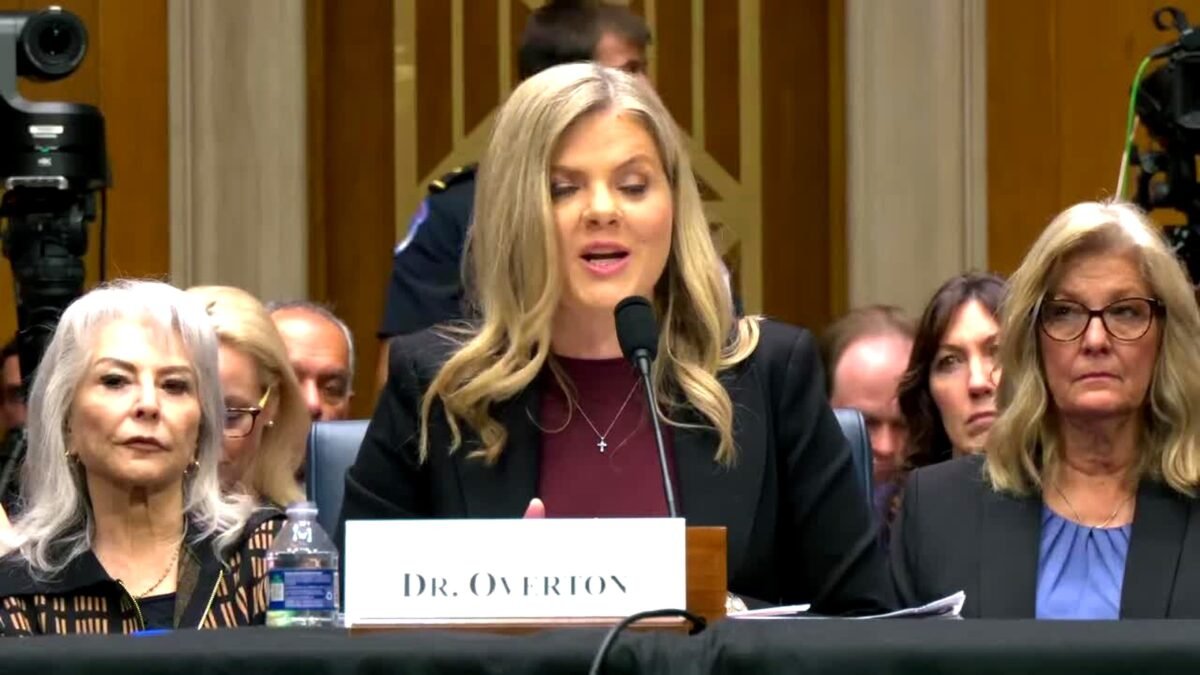
The White House has abandoned President Donald Trump’s nomination of Dr Heidi Overton to lead the Food and Drug Administration, pulling the pick on Tuesday evening, hours before a Senate committee was due to vote on whether to advance her to the full Senate.
According to CNN, the White House is dropping Overton’s nomination “in the face of Senate opposition to her candidacy”, a decision confirmed by a White House official and two sources familiar with the matter. The Associated Press reported that the White House said on Tuesday it had pulled the nomination “amid growing indications she didn’t have the votes needed to win Senate confirmation”.
Axios was first to report the decision. A senior administration official told Axios that “FDA nominee Heidi Overton lacks the support on the Hill to move forward with her confirmation”, according to the New York Post, which said a White House official confirmed to the paper that the nomination had been pulled.
Overton, a physician and deputy director of the White House Domestic Policy Council, was scheduled to face a vote on Wednesday morning before the Senate Health, Education, Labor and Pensions Committee, known as the HELP Committee, which would have decided whether her nomination advanced to the full Senate. The decision to withdraw her instead means the agency that regulates America’s medicines, vaccines, food supply and tobacco products will remain without a Senate-confirmed commissioner for a seventh month, with no successor yet named.
The collapse of the nomination is a rare public defeat for the Trump administration’s health team, and it exposes the fault lines running through the president’s “Make America Healthy Again” agenda. Overton was opposed from both directions at once: by Democrats and abortion-rights supporters who distrusted her record on abortion medication, and by Republicans who questioned her positions on vaccines and vaping. In the end, according to the Wall Street Journal, she would have needed the support of every Republican on the Senate’s health panel to advance, and that support was not there.
A nomination that ran out of votes
The arithmetic of Overton’s confirmation was unforgiving from the start. The HELP Committee has 21 members, and Republicans hold only a one-seat majority. That meant Overton needed 11 votes, and if every Democrat voted against her, a single Republican defection would have ended her candidacy. As the Wall Street Journal reported, she would have needed the support of every Republican on the panel, and several of them had made clear they were not ready to give it.
The most consequential of those Republicans was the committee’s chairman, Senator Bill Cassidy of Louisiana, himself a physician. Cassidy said on Sunday that he still had unanswered questions about Overton, and when asked on the CBS programme “Face the Nation” whether she would be approved, he answered: “I don’t know that.” On Tuesday, the day the White House pulled the nomination, Cassidy told reporters he remained undecided about Overton ahead of the critical vote scheduled for Wednesday, according to the Associated Press.
According to CNN, Trump administration officials spent recent days working to lock down the necessary support from a handful of senators, including abortion-rights proponents Senators Susan Collins of Maine and Lisa Murkowski of Alaska, and abortion opponent Senator Josh Hawley of Missouri. The fact that the White House was simultaneously courting senators on opposite sides of the abortion question illustrated how narrow Overton’s path had become: she needed votes from lawmakers who disagreed with each other about the very issues that had made her nomination controversial.
The Washington Post reported on Monday that some Trump administration officials were growing sceptical that the Senate would confirm Overton, and that the White House was discussing whether to shore up or abandon the nomination. By Tuesday evening, the discussion was over.
The committee had also been scheduled to vote on Wednesday morning on advancing Jim O’Neill, the nominee to direct the National Science Foundation, and picks for senior labour and education roles, according to CNN. A HELP Committee spokesperson did not immediately respond to questions about the rest of the committee’s votes.
Three issues that sank the nomination
Three subjects dominated the opposition to Overton, and each of them cut across the usual partisan lines: vaccines, vaping and abortion.
On vaccines, Overton faced sustained questioning about her role in the administration’s drive to scale back the number of vaccinations routinely recommended for children. According to the Wall Street Journal, she drafted President Trump’s August executive order recommending that children receive fewer immunisations. At her confirmation hearing on 24 September, the committee’s chairman pressed her repeatedly on whether she would uphold vaccine standards if the president asked her to break them.
Overton’s answers at that hearing were, on vaccines at least, strikingly direct. She told senators that the combined measles, mumps and rubella vaccine is “not lethal”, directly contradicting a claim the president had made, and that it is safe, effective and “our best tool right now in the public health response to the measles outbreak”, according to CNN. Asked whether any vaccine on the United States market was unsafe, she replied: “Every vaccine on the US market right now is safe and effective according to the FDA.” She also told senators she had seen no evidence that the use of Tylenol during pregnancy causes autism, according to Scientific American.
But the hearing also exposed the tension at the heart of her candidacy. She had stood behind the president in August as he signed the executive order aimed at altering the childhood vaccine schedule, and she had called that order “historic”, according to reporting on the hearing. When senators pressed her on the president’s characterisation of the MMR vaccine as “quite lethal”, she repeatedly declined to say whether the president was wrong, according to Scientific American. The hearing took place as the United States recorded its highest number of measles cases since 1991, according to MedPath Trial.
On vaping, Overton faced questions about the agency’s recent decisions to authorise new flavoured e-cigarettes, including blueberry, mango and cappuccino flavours. Senator Collins focused her questions on those decisions, noting that nearly 90 per cent of young e-cigarette users choose flavoured products, according to MedPath Trial. Overton defended the authorisations, telling the committee that career scientists at the FDA had recommended them because so many adults use flavours to quit smoking, and she said there was “100% agreement from this administration that we must protect kids”, according to the same report. She also pledged to work with Collins to reduce youth vaping, and committed to cracking down on illicit Chinese vapes when asked by Senator Ashley Moody of Florida.
The vaping question carried a particular sting because it was at the centre of her predecessor’s departure. According to the Wall Street Journal, the FDA is currently being led on an acting basis by lawyer Kyle Diamantas, and the agency has been without a permanent commissioner since Dr Marty Makary resigned in May. Makary, Trump’s first FDA commissioner, served for about 13 months. On 11 November, Politico reported that Makary had accused White House and Department of Health and Human Services officials of pressuring him to accommodate industry lobbyists, particularly those representing the vaping industry. The White House has rejected claims that industry interests control its decisions. According to reporting by CNN and the Associated Press in May, Makary’s resistance to certain flavoured vaping approvals contributed to the conflict preceding his departure.
On abortion, Overton was pressed repeatedly about mifepristone, one of two medications used to induce abortions and the subject of an ongoing FDA safety review. In 2023 she wrote an article calling abortion medication dangerous to women, and she has praised the Supreme Court’s decision to overturn Roe v. Wade and advocated for more controls over prescribing abortion drugs, according to MedPath Trial. At the hearing, Senator Patty Murray of Washington asked her directly whether she considered mifepristone safe. Overton replied: “According to FDA standards, the drug is safe and effective as labeled today with the appropriate risk evaluation mitigation strategy”, noting that an ongoing safety review of the drug is under way. When Senator Tammy Baldwin of Wisconsin asked whether she thought the FDA should change the label or conditions of approval for mifepristone, Overton noted that the agency is conducting an internal review of the drug, according to CNN.
Senator Chris Murphy of Connecticut told her during the hearing: “You’ve done a good job at avoiding questions”, in response to her answers about fruit-flavoured e-cigarettes and the FDA’s scaled-back use of advisory committees, according to a law firm’s account of the proceedings. Senator Murray said on social media that Overton was “a far-right, anti-abortion extremist who has no business leading the FDA”, according to CNN.
The abortion question mattered for the vote count as well as for the politics. According to MedPath Trial, Overton’s abortion views could complicate her efforts to win over Collins and Murkowski, both of whom have supported federal access to abortion, while Hawley, an abortion opponent, had his own concerns. The FDA is set to finish its safety review of mifepristone in March, according to Finwire, one of the most consequential decisions the agency faces. The drug was approved by the FDA in 2000 and the agency has repeatedly affirmed its safety while broadening access, including allowing it to be sent through the mail, according to MedPath Trial.
The Kennedy problem
Perhaps the most revealing element of the nomination’s collapse is what it says about the relationship between Overton and Health and Human Services Secretary Robert F. Kennedy Jr., the driving force behind the administration’s health agenda.
Kennedy praised her nomination in August, when Trump announced it. But according to CNN, those familiar with the dynamics between them have described the relationship as less than close. Asked shortly after her selection about Overton’s relationship with Kennedy, one person familiar with the dynamic bluntly characterised it as “not good”. Another called their interactions “icy”. “She’s not MAHA,” said a second person familiar with the dynamic, using the shorthand for the Make America Healthy Again movement.
According to CNN, as a senior White House domestic policy adviser, Overton spent the past year and a half as the main conduit between HHS leaders working to advance a handful of key MAHA policies and top Trump White House officials who have stalled them in recent months, sowing frustration and distrust within the broader MAHA movement. In other words, the woman nominated to run the FDA was, in the eyes of some in the movement, part of the apparatus that had been slowing its agenda down.
A senior administration official told Axios that the White House wants a new direction at the FDA consistent with Kennedy’s Make America Healthy Again agenda, according to FDA Webview. That framing suggests the withdrawal was not only about votes, but also about the administration’s own doubts over whether Overton was the right person to carry its health programme forward.
The tension is not new. According to the Wall Street Journal, Kennedy recently reached out to Senator Roger Marshall, a Republican from Kansas and a physician, about taking Overton’s place. Marshall lost his re-election bid earlier this month, according to Semafor, which reported that Republicans were discussing him as a possible replacement. No new nominee has been announced, and the White House has not said when one will be named.
Six months without a leader
Whatever comes next, the FDA now faces a deepening leadership vacuum. The agency has been without a Senate-confirmed commissioner since Makary left in May, leaving it under acting leadership for six months. Diamantas, the acting commissioner, is a lawyer who previously headed the agency’s Human Foods Program, and he stepped into the role temporarily after Makary’s departure, according to Food Safety Magazine. According to the Wall Street Journal, Diamantas is expected to leave his post by the end of the year.
The vacancy matters because the FDA is one of the most consequential agencies in American life. It decides which drugs reach the market, sets the rules for the food supply, regulates tobacco and vaping products, and oversees the safety of vaccines. Its commissioner must balance the demands of the White House, the scientific evidence, the pharmaceutical and food industries, and a Congress that is itself divided over the agency’s direction.
The turmoil at the FDA is part of a wider period of upheaval at the nation’s top health agencies. According to AmeriLedger, the Centers for Disease Control and Prevention went through a series of acting leaders before the Senate confirmed Dr Erica Schwartz in August, after the administration’s first pick for that role, former congressman Dave Weldon, could not secure enough Republican support. The pattern is now repeating at the FDA: a nominee chosen by the White House, opposed on multiple fronts, and withdrawn before a vote that would have settled the question in public.
There is also a clock running. According to Political.org, Republicans are trying to confirm Trump nominees before Democrats take control of the Senate in January, following the midterm elections on 3 November. If no new FDA nominee is named and confirmed quickly, the decision about who runs the agency could fall to a Senate controlled by the opposition party, which would make confirmation harder still.
Analysis: Why It Matters
A defeat that came from both sides at once
Most failed nominations fail for one reason. Overton’s failed for three, and the three reasons pointed in different directions. Abortion-rights supporters distrusted her record on mifepristone. Public health advocates worried about her role in scaling back vaccine recommendations. Senators of both parties questioned the flavoured vaping authorisations she defended. That breadth of opposition is what made the arithmetic impossible: there was no bloc of senators she could win over without losing another. The lesson for the White House is that the FDA commissionership is not a post that can be filled by satisfying one faction of the president’s coalition. It requires a nominee who can survive scrutiny from public health experts, from the abortion debate’s two sides and from an industry that watches every decision the agency makes.
The MAHA movement’s internal war is now public
The most important revelation in this episode may not be the withdrawal itself, but the reporting around it. According to CNN, people close to the process described Overton’s relationship with Kennedy as “not good” and “icy”, and said flatly: “She’s not MAHA.” That is an extraordinary thing for an administration to have said, on the record through anonymous sources, about its own nominee. It suggests that the Make America Healthy Again movement, which presents itself as a unified crusade against the food, drug and chemical industries, is in fact divided over who counts as a true believer and who is merely a manager. Overton’s sin, in the eyes of some in the movement, appears to have been that she was a White House policy official who worked with the system rather than against it, and who served as the conduit for policies that the White House then stalled. The FDA is now caught in the middle of that argument, and the next nominee will have to answer the same question: loyal to the movement, or loyal to the agency’s scientific process?
Vaccines are now a confirmation issue
Overton’s hearing showed how far vaccine politics has moved into the centre of American public life. A nominee to run the FDA was asked, on the record, whether the measles vaccine is lethal, and whether she would defy the president if he asked her to break vaccine standards. She answered the science correctly and the politics evasively, declining to say the president was wrong. That combination was not enough. Senators wanted a commissioner who would defend the vaccine programme without qualification, and they were not convinced she would. The fact that the hearing took place during the worst measles outbreak in the United States since 1991 only sharpened the point. Whoever is nominated next will face the same questions, and the answers will be watched just as closely.
The vaping file will not go away
Flavoured vapes were the issue that ended Makary’s tenure and helped to end Overton’s nomination before it began. The pattern is worth noting: an FDA commissioner resisted flavoured vaping approvals and left; his would-be successor defended those approvals and could not get confirmed. The agency is trapped between two pressures, one from an industry that wants its products authorised and one from senators and public health advocates who see flavoured products as a route to addicting children. The next commissioner will inherit the same file, the same authorisations and the same arguments. Until the administration decides what its vaping policy actually is, the FDA will keep paying the price for the ambiguity.
A vacancy with a deadline
The practical consequence of the withdrawal is straightforward: the FDA will be run by an acting commissioner who is expected to leave by the end of the year, with no confirmed successor in sight. That leaves the agency’s biggest pending decisions, including the mifepristone safety review due in March, in the hands of temporary leadership. It also leaves the White House with a narrowing window. If a new nominee is not named and confirmed before Democrats take control of the Senate in January, the confirmation will become substantially harder. The administration must now find a candidate who can satisfy Kennedy’s movement, survive the abortion and vaccine debates, and win the votes of a Senate that is about to change hands. That is a taller order than the one Overton failed to meet.
What to Watch Next
- Who the White House names next: Senator Roger Marshall has already been approached, according to the Wall Street Journal, but no nominee has been announced. The choice will signal whether the administration wants a MAHA loyalist or a consensus figure.
- The HELP Committee’s Wednesday session: the committee was due to vote on Overton on Wednesday morning. Watch whether the vote is formally cancelled, and what happens to the other nominees on the agenda, including Jim O’Neill for the National Science Foundation.
- Kyle Diamantas’s departure: the acting commissioner is expected to leave by the end of the year, according to the Wall Street Journal. If no successor is named by then, the FDA could be left with yet another acting leader.
- What Cassidy says next: the committee chairman’s public doubts helped to sink the nomination. His view of the next nominee will matter just as much.
- The mifepristone review: the FDA is set to finish its safety review of the abortion drug in March. The review will now be completed under acting leadership, and its outcome will be one of the most politically charged decisions of the year.
- The measles outbreak: with the highest number of American measles cases since 1991, the new commissioner’s stance on vaccines will be tested immediately, whatever the White House decides.
- The January clock: with Democrats set to take control of the Senate in January, the White House has weeks, not months, to get a new nominee through the confirmation process.
Sources
- CNN — White House drops Trump’s FDA pick ahead of confirmation vote
- Associated Press — White House pulls FDA nominee Heidi Overton after wavering support from Senate Republicans
- The Wall Street Journal — White House Abandons Trump’s Pick to Lead the FDA
- STAT — Heidi Overton withdrawn as Trump pick to lead the FDA
- Scientific American — Trump’s FDA nominee Heidi Overton affirms MMR vaccine and mifepristone are safe at crucial Senate hearing
- Regulatory Affairs Professionals Society — Trump taps Heidi Overton as next FDA Commissioner

About the Author — Abdul Mannan
Related Articles
Mullin Flew Government Plane to LSU–Texas Game as Stranded Travellers Waited, Then Told CNBC: ‘We Still Gotta Live Our Life’
Homeland Security Secretary Markwayne Mullin flew on a government plane to the LSU–Texas game on Saturday, less than…

Trump Flies Into Manila for First Quad Summit in Two Years as Asia Trip Builds to Xi-Putin Meeting
Donald Trump lands in Manila on Tuesday for the first Quad leaders' meeting in two years, a gathering…

Army Whistleblower Says Pentagon Ignored Warnings Before Iranian Drone Killed Six US Soldiers in Kuwait
Army Major Stephen Ramsbottom, who survived the March 1 drone strike at Port Shuaiba in Kuwait, has filed…