
Mullin Flew Government Plane to LSU–Texas Game as Stranded Travellers Waited, Then Told CNBC: ‘We Still Gotta Live Our Life’

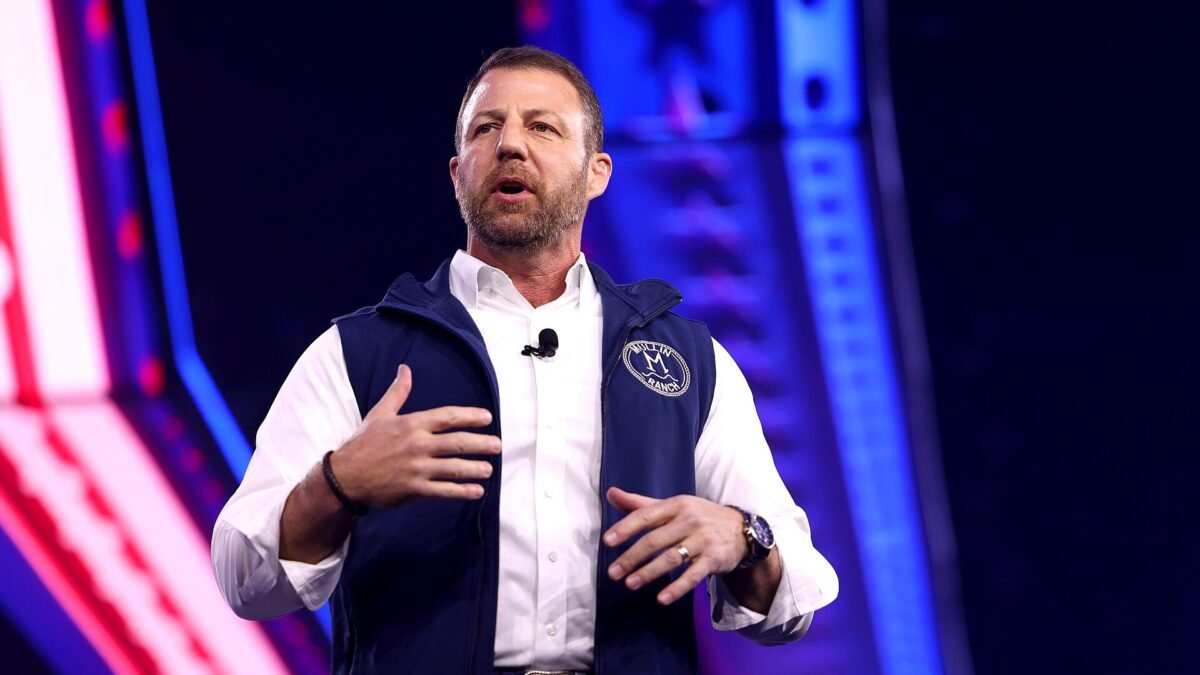
Homeland Security Secretary Markwayne Mullin flew on a government plane to watch a college football game in Louisiana on Saturday, less than a day after he had stood at the White House briefing room podium explaining a nationwide air travel shutdown that left millions of Americans stranded, according to the New York Post, which first reported the trip on Tuesday.
Mullin, 49, travelled from Washington to Baton Rouge on Saturday, 14 November, to watch Louisiana State University play the University of Texas, according to the report. He sat in a private box belonging to Ben Bordelon, the chief executive of Bollinger Shipyards, a Louisiana company that holds billions of dollars in contracts with the Department of Homeland Security, including a recent 2.2 billion dollar deal to build icebreakers for the Coast Guard.
The revelation, first published by the New York Post on Tuesday, 17 November, was quickly picked up by other outlets, including People magazine and the Washington Examiner. It landed at the worst possible moment for the administration: the Federal Aviation Administration had ordered only the second nationwide ground stop since the attacks of 11 September 2001 on Friday afternoon, and by the time Mullin was airborne on Saturday evening, thousands of travellers were still sleeping on terminal floors, rebooking cancelled flights and facing delays that in some cases stretched to 60 hours.
Pressed about the trip on CNBC on Tuesday morning, Mullin did not apologise. “We would’ve never went if the airways weren’t completely open,” he said, according to the Washington Examiner. “We still gotta live our life at the same time.”
The Department of Homeland Security has defended the journey, saying Mullin is required by law to travel on a government aircraft, that he paid personally for the trip, and that the flight took off and landed almost exactly 24 hours after the FAA reopened American airspace. No rule was broken, the department says, and no exception was made. Critics say that misses the point entirely. The question, they argue, is not whether the flight was legal. It is whether the man in charge of the nation’s security, on the weekend his own department’s aviation system failed, should have been flying to a football game in the private box of a man whose company depends on his department for billions of dollars.
The flight and the game
According to the New York Post, Mullin flew to Baton Rouge on Saturday to take in the Texas-LSU game at Tiger Stadium, one of the most eagerly awaited fixtures of the college football season. He was joined in the stands by House Majority Leader Steve Scalise, actor Matthew McConaughey, football greats Peyton and Eli Manning, influencer Alix Earle and 102,315 other spectators, according to the report.
Texas rallied from an 11-point second-half deficit to edge LSU 22-21, according to the New York Post. The result mattered less than the company Mullin kept while watching it. During the game he was spotted in the private box of Ben Bordelon, the chief executive of Bollinger Shipyards, according to the report. Bordelon is a former LSU offensive lineman who graduated in 1997 and played three years in the National Football League for the San Diego Chargers before retiring to run his family’s business, according to the New York Post.
Bollinger Shipyards is a longtime government contractor that has worked with the Department of Homeland Security since the department was founded in 2002, according to the report. Among its contracts is a recent 2.2 billion dollar deal to build six icebreakers for the Coast Guard, the maritime service that sits inside Mullin’s department. The company did not respond to a request for comment, according to the New York Post. People magazine also reported that Bollinger Shipyards did not immediately respond to its request for comment.
The football game was the second half of a sporting double-header for the secretary on Saturday. Earlier in the day, he had attended the annual Secretaries’ Cup match between the Coast Guard Academy and the Merchant Marine Academy at Audi Field in Washington, according to the New York Post. People magazine confirmed the same detail. From there, he flew to Louisiana for the evening kickoff.
By Sunday he was back in Washington, appearing on Fox News’ “The Sunday Briefing”. Asked about possible consequences for the ground stop, he predicted that no one would lose their job over it. “I don’t think anybody’s going to get fired over this,” he said, according to People magazine, which cited The Hill. “This was an issue with the equipment.”
A weekend of stranded travellers
The scale of the disruption Mullin flew over is difficult to overstate. On Friday afternoon, 13 November, the Federal Aviation Administration ordered every departing flight in the country grounded, only the second nationwide ground stop since 2001, according to the Washington Examiner. The order lasted just under five hours and was lifted at about 8:15 p.m. Eastern Time on Friday evening, according to the Washington Examiner.
But the end of the ground stop was not the end of the chaos. Nearly 7,000 flights were cancelled and almost 8,000 were delayed, according to the New York Post. Aviation analytics company Cirium told the Washington Examiner that 18,400 flights were cancelled between Friday and Monday morning. With an average of 50 to several hundred passengers per plane, well over one million people had flights cancelled, in addition to those whose flights were delayed, according to the Washington Examiner.
Some passengers endured 60-hour journeys as they tried to get home, with John F. Kennedy International Airport in New York among the major hubs dealing with the fallout, according to the New York Post. People magazine reported that passengers at major airports such as Kennedy continued to face delays of up to 60 hours even after the FAA’s systems were back up.
The disruption rippled through the weekend’s sporting calendar as well. Several college football teams had to scramble to make their Saturday fixtures, and the Southeastern Conference contest between Ole Miss and Oklahoma was postponed to Sunday afternoon, according to the New York Post. The irony was not lost on commentators: while teams were struggling to reach their games, the secretary responsible for homeland security was flying to one on a government jet.
It was Mullin himself who had been the first public official to answer questions at the White House about the shutdown. On Friday afternoon, standing alongside Transportation Secretary Sean Duffy in the briefing room, he told reporters that the FAA had been installing new equipment and new technology and that it was overwhelming the older system, according to the Associated Press, cited by People magazine. “What it appears to be right now is, as Secretary Duffy was going in and putting patches into the system, they were putting new equipment and new technology and that new equipment, new technology, just wasn’t – it was overwhelming the older system,” Mullin said, according to the New York Post. “Which is why Secretary Duffy made it very clear, the patchwork doesn’t work. We need one complete system.”
He added that there appeared to be no indication of a cyberattack. “There was never any lives at risk,” he said, according to People magazine. “There was no flights at risk. FAA was able to handle it. We did it out of an abundance of caution.”
Almost exactly 24 hours later, according to the New York Post, he was on his way to Baton Rouge.
The box, the contractor and the 2.2 billion dollar question
The detail that has drawn the sharpest scrutiny is not the flight itself but where Mullin sat when he got there. The private box belonged to the chief executive of a company that does billions of dollars of business with his department. That fact, more than the timing, is what has turned a story about bad optics into a story about ethics.
“During a national disaster, Markwayne Mullin chose to fly to Louisiana to watch a football game with someone who has a 2 billion dollar DHS contract,” a critic of Mullin’s activity told the New York Post. The remark captures the core of the criticism: even if nothing improper happened in that box, the appearance of a cabinet secretary accepting hospitality from a major contractor is precisely the kind of situation federal ethics rules are designed to prevent.
The department’s response has been to stress distance. Mullin had never met Bordelon before the weekend’s game, according to a source cited by the New York Post. He obtained his tickets through a close friend and paid fair market value for them, according to the same source. People magazine reported the same account from a Department of Homeland Security source, which said Mullin had not met Bordelon before the game and had obtained and paid for the tickets through a close friend.
On CNBC on Tuesday morning, Mullin said House Majority Leader Steve Scalise had helped him get the tickets, according to the Washington Examiner. The department also pointed out that the 2.2 billion dollar icebreaker contract was awarded before Mullin was confirmed as secretary this spring, according to the Washington Examiner.
“Secretary Mullin abides by all ethics requirements,” a Department of Homeland Security spokesperson told the New York Post. That statement, repeated in substance to other outlets, is the department’s bottom line: the secretary followed the rules, paid his own way, and broke no law.
What the department has not done is explain why the secretary chose to attend this particular game, in this particular box, on this particular weekend. People magazine noted that it was unclear why the secretary chose to attend the LSU-Texas game. That silence leaves the central question unanswered, and it is the question his critics keep returning to: what was he doing there at all?
The department’s defence
The Department of Homeland Security’s defence rests on three claims, all of them made to the New York Post and repeated to other outlets. First, that Mullin is required by law to travel on a government aeroplane. Second, that he pays personally for any travel unrelated to his official duties. Third, that the flight to Louisiana took off and landed almost exactly 24 hours after the FAA reopened American airspace, and that no exception was made for it.
“Secretary Mullin is required by law to travel on a government airplane. This is to ensure access to secure communications and to comply by his constitutional duty of continuity of government should a national emergency arise,” a Homeland Security spokesperson told the New York Post. The same statement was obtained by People magazine. “Any flight not related to his service as DHS Secretary he pays for personally.”
“The flight took off and landed almost exactly 24 hours after the FAA reopened US airspace — no exceptions were made for this flight,” a government source added, according to the New York Post.
On the substance of the rules, the department is on firm ground. Senior American officials, including the secretaries of state, defence and homeland security, are required to travel on government aircraft for security reasons and to maintain secure communications and continuity of government in an emergency. When they travel for personal reasons, they are expected to reimburse the government at the equivalent commercial fare. The department says Mullin did exactly that, paying for his journey to Louisiana the same way he pays for all other personal travel, according to People magazine.
None of that is in serious dispute. What is in dispute is whether legality is the right standard to apply. A trip can be lawful, properly reimbursed and still be a serious error of judgement. That distinction sits at the heart of this story, and it is the distinction the department’s statements have so far failed to address.
“We still gotta live our life”: the CNBC exchange
If the department hoped the story would fade, Mullin’s own appearance on CNBC on Tuesday morning ensured that it would not. Pressed by host Joe Kernen, the secretary offered a defence that instantly became the story’s defining quotation.
“The big kerfuffle is that Americans were grounded, and you were flying around on a private jet to go to a football game,” Kernen said, according to the Washington Examiner.
“We would’ve never went if the airways weren’t completely open,” Mullin replied, referring to the 8:15 p.m. Eastern Time end to the ground stop on Friday evening, the night before he left. “We still gotta live our life at the same time.”
Kernen pressed on, noting that Mullin had been in box seats with a chief executive who does business with the Department of Homeland Security. Mullin replied that Steve Scalise had helped him get the tickets, according to the Washington Examiner.
The exchange, clipped and shared widely on social media on Tuesday, did what the original report alone might not have done: it gave the story a voice. The phrase “we still gotta live our life” is now attached to the image of a cabinet secretary at a football game while ordinary travellers slept on airport floors. For a politician, that kind of quotation is more damaging than any number of critical editorials, because it is short, memorable and impossible to take back.
The timing of the interview made it worse. Mullin appeared on CNBC on Tuesday morning, less than a day after the ground stop ended, according to the Washington Examiner. The aftershock of the shutdown was still being felt, with airlines continuing to reschedule cancelled flights from the weekend. By Tuesday, the story was no longer about a single flight. It was about an attitude.
The ground stop itself: what went wrong
The controversy over Mullin’s trip has overshadowed the more important question raised by the weekend: why did the American air traffic system fail in the first place? On that question, the picture became clearer on Tuesday, and it is not reassuring.
Transportation Secretary Sean Duffy said on Monday that it remained unclear why a Juniper router installed by L3Harris Technologies in a remote Arkansas facility triggered a nearly five-hour nationwide aviation ground stop, the longest in the United States since the September 11, 2001 attacks, according to Reuters. The Federal Aviation Administration said on Tuesday that it was immediately pausing deployment of additional Juniper routers pending further testing, after the ground stop led to the cancellation of more than 18,000 flights, according to Reuters.
Duffy said the installation at an FAA radio communications site in El Dorado, Arkansas, led to an overload of a key government communications system at a rate of 1,000 connection attempts every four to five seconds, according to Reuters. That destabilised aircraft communications and radar feeds, affecting 17 of 22 FAA en route air traffic control centres that were using old routers, according to Reuters.
The FAA said on Sunday that the initial investigation suggested the data overload could have happened in two locations: the El Dorado site and a radar site in Amarillo, Texas, according to Reuters. Duffy said L3Harris replaced the router in Amarillo three weeks earlier, and that testing of the two routers was taking place at an L3Harris laboratory in Florida, according to Reuters. L3Harris has said it is cooperating with the official investigation, according to Reuters.
The scale of the unfinished work is striking. Based on information provided by L3Harris, the copper-to-fibre transition involves converting 3,648 routers to Juniper devices, according to a letter from 13 Democratic senators on the Senate Commerce Committee, led by Senator Maria Cantwell of Washington. To date, only 400 devices have been installed, and 69 are operational, the senators wrote. “With thousands of conversions remaining, FAA must address outstanding safety and reliability concerns before expanding installation,” they wrote, according to Reuters.
The senators, all Democrats on the committee overseeing aviation, called on the FAA to pause any similar installation until the agency can address what went wrong with the contractor’s copper-to-fibre router installation on 13 November in Arkansas, according to the North Dakota Monitor. They requested a technical briefing by 23 November, according to the report. Duffy was set to brief senators on Tuesday, according to Reuters.
Senator Josh Hawley, a Republican from Missouri, called for an explanation of the outage, saying the alleged reason of a router in Arkansas was “a little hard to believe”. “The full Senate ought to be briefed on what exactly is going on,” he said. Duffy called on Congress on Friday to approve 50 billion dollars for upgrades to the ageing American air traffic control system, according to Reuters.
The initial explanations from the Transportation Department and L3Harris differed, according to the North Dakota Monitor, and it was still unclear why the router installation caused a communications failure. That uncertainty is itself a significant fact. Four days after the longest ground stop in a quarter of a century, the government still cannot say with confidence what happened.
Analysis: Why It Matters
Optics are not the same as wrongdoing — but they are not nothing either
The first thing to say about this story is also the thing most often lost in the noise around it: nothing yet reported suggests that Markwayne Mullin broke the law. The Department of Homeland Security says he was required to fly on a government aircraft, that he paid for the personal trip, and that the flight departed after the airspace had reopened. If those claims are accurate, and no evidence has yet emerged to contradict them, then the secretary did nothing illegal.
That matters, because the distinction between illegality and poor judgement is one that public life depends on. A political culture that treats every lapse in judgement as a crime quickly loses the ability to distinguish real corruption from bad timing. The department’s defenders are right to insist on the distinction, and the secretary’s critics should be careful not to blur it.
But the distinction cuts both ways. A trip can be lawful and still be wrong. Senior public officials are not judged only by the letter of the rules. They are judged by whether they understand the moment they are living in, and whether they act as though the burdens they impose on others apply to them as well. On Friday afternoon, Mullin stood in the White House briefing room and explained to the country why its planes could not fly. On Saturday evening, he flew to a football game. The airspace had reopened, the flight was legal, and the reimbursement was paid. None of that changes what the sequence looks like to the millions of people who spent the weekend stranded.
That is what the word “optics” is supposed to capture, and it is a word that politicians use too casually, as though appearances were a superficial concern separate from substance. They are not. In public life, appearances are a form of substance. A government that asks citizens to endure disruption must show that it shares the disruption. When it does not, the damage is not cosmetic. It is a loss of trust, and trust is the currency in which governments govern.
The contractor’s box is the part that will not go away
The flight can be defended. The box cannot be defended as easily. The private box at Tiger Stadium belonged to the chief executive of a company that holds billions of dollars in contracts with the secretary’s own department, including a 2.2 billion dollar deal to build icebreakers for the Coast Guard. That is not a detail. It is the heart of the story.
Federal ethics rules exist precisely because of situations like this one. They restrict gifts from contractors and other interested parties, not because every gift is a bribe, but because the appearance of influence is itself corrosive. A cabinet secretary who accepts hospitality from a major contractor creates a perception that the contractor has special access, whether or not any favour was asked or given. The rules are designed to remove that perception before it can form.
The department’s answer is that Mullin had never met Bordelon before the game, that he obtained his tickets through a close friend, that he paid fair market value, and that the icebreaker contract was awarded before he was confirmed as secretary. Each of those claims, if true, weakens the case for impropriety. But none of them answers the question of why he was in the box at all. A secretary who does not know a contractor can still create the appearance of closeness by sitting in his box. A ticket bought at fair market value can still look like a favour when the seat is in a private box at a sold-out game. And a contract awarded before a secretary’s confirmation can still be renewed, expanded or overseen by that secretary in the future.
The department has said that the secretary “abides by all ethics requirements”. What it has not said is whether the secretary, or anyone in his office, considered the ethics of the seating arrangement before he took the seat. That is the question that will determine whether this story ends here or grows. If the department can show that the arrangement was reviewed and cleared in advance, the story shrinks. If it cannot, the story grows, because it will suggest that nobody in the secretary’s orbit thought the arrangement was worth a second look.
The ground stop’s unanswered questions are the bigger story
Lost in the argument over the football game is the fact that the American air traffic system suffered its longest nationwide shutdown since 2001, and that four days later the government still does not know exactly why. That should alarm people far more than a cabinet secretary’s weekend plans.
The known facts are troubling enough. A single router installation at a radio communications site in El Dorado, Arkansas, overloaded a key government communications system at a rate of 1,000 connection attempts every four to five seconds, according to Reuters. That destabilised communications and radar feeds at 17 of 22 en route air traffic control centres. The ground stop that followed cancelled more than 18,000 flights. And the conversion programme of which that router was a part is barely begun: 400 of 3,648 routers installed, 69 operational.
The system that failed is, by the government’s own account, ageing and patched together. Mullin himself said on Friday that “the patchwork doesn’t work” and that “we need one complete system”. Duffy has asked Congress for 50 billion dollars to modernise air traffic control. The FAA has now paused further router deployments. Thirteen senators have demanded a pause and a technical briefing. A Republican senator has called the official explanation “a little hard to believe”. The initial explanations from the department and the contractor differed.
Each of those facts points in the same direction: the modernisation of American air traffic control is being carried out on live infrastructure, with equipment that is not fully understood, under a system that has no margin for error. The ground stop was the consequence. The next failure may not be so benign. That is the story that deserves sustained attention, and it is the story that the argument about a football game threatens to bury.
Cabinet travel has ended careers before
Mullin is not the first cabinet secretary to discover that travel can become a political crisis. In 2017, Tom Price, then the secretary of health and human services, resigned after reports that he had used private jets for official travel at a cost of hundreds of thousands of dollars. Price reimbursed the government for a portion of the cost, but the reimbursement did not save him. The story had become a symbol of a wider problem, and the symbol was more powerful than the accounting.
The comparison is instructive, and it is also limited. Price’s travel was official business conducted on chartered aircraft at public expense. Mullin’s travel was personal, on a government aircraft he was required to use, and reimbursed by him. The facts are different, and the difference matters. But the political lesson of the Price case applies here all the same: once a travel story becomes a symbol, the details stop mattering. What matters is the image, and the image here is a cabinet secretary at a football game while the country he is supposed to keep safe cannot fly.
That is why the CNBC interview may prove to be the most consequential part of this story. “We still gotta live our life” is the kind of remark that attaches itself to a politician and follows him. It suggests, fairly or not, that the secretary regards the disruption as something that happened to other people. Whether that is what he meant is almost beside the point. In politics, what a remark is heard to mean is what it means.
The test now is transparency, not tone
The way out of this story, for the secretary and for the department, is straightforward: transparency. The department should publish the details of the trip — the cost, the reimbursement, the flight logs, the ticket arrangements and any ethics review that took place. If everything was done properly, the documents will show it. If something was not done properly, the documents will show that too, and the department will have to deal with it.
The same applies to the ground stop. The FAA and the Transportation Department should explain, in detail and on the record, what happened at El Dorado, why the initial explanations differed, and what is being done to ensure it does not happen again. The Senate briefing scheduled for Tuesday is a start. A public accounting would be better.
What will not work is the approach taken so far: a brief statement of the rules, a reassurance that the secretary abides by them, and a defiant television appearance. That approach treats the story as a public relations problem. It is not. It is a question about whether the people in charge of the country’s security understand the weight of the offices they hold, and whether they are willing to be judged by the standards they impose on everyone else.
What to Watch Next
- The Senate briefing: Transportation Secretary Sean Duffy was set to brief senators on Tuesday, according to Reuters. Watch for what he says about the El Dorado router, the differing explanations from the department and L3Harris, and whether the FAA’s pause on router deployments becomes permanent.
- The ethics paperwork: The Department of Homeland Security should be asked to release the reimbursement records for Mullin’s trip, the flight logs and any ethics review of the seating arrangement. The existence, or absence, of that paperwork will shape the story more than any statement.
- The technical briefing: The 13 Democratic senators on the Commerce Committee requested a technical briefing by 23 November, according to the North Dakota Monitor. Watch for whether the briefing is delivered on time and whether it resolves the uncertainty about what caused the failure.
- The 50 billion dollar question: Duffy has asked Congress for 50 billion dollars to modernise air traffic control, according to Reuters. Watch for whether the ground stop and its aftermath accelerate that funding, and whether the permitting and procurement reforms debated in Congress this week affect the timetable.
- The secretary’s next appearance: Mullin’s remarks on CNBC will be quoted back to him. Watch for whether he repeats the defence, modifies it or offers a fuller account of the weekend, and whether the White House comments on the matter at all.
Sources
- New York Post — “Markwayne Mullin took his government plane to LSU-Texas game as thousands were stranded in FAA ground stoppage” (17 November 2026)
- People — “As Thousands Were Stranded in Ground Stop, Top Trump Official Took Government Plane to LSU Football Game” (17 November 2026)
- Washington Examiner — “Mullin flew private to football game as millions were affected by FAA ground stop: ‘We still gotta live our life'” (17 November 2026)
- Reuters — “US senators urge FAA to pause new router deployment pending testing” (17 November 2026)
- North Dakota Monitor — “US Senate Dems call for pause on router installation that caused air travel ground stop” (17 November 2026)

About the Author — Abdul Mannan
Related Articles
Trump Flies Into Manila for First Quad Summit in Two Years as Asia Trip Builds to Xi-Putin Meeting
Donald Trump lands in Manila on Tuesday for the first Quad leaders' meeting in two years, a gathering…

Army Whistleblower Says Pentagon Ignored Warnings Before Iranian Drone Killed Six US Soldiers in Kuwait
Army Major Stephen Ramsbottom, who survived the March 1 drone strike at Port Shuaiba in Kuwait, has filed…
Justice Department Warns Senator Warren Over Planned Trump Probes in ‘Tomahawk’ Letter
The Justice Department has warned Senator Elizabeth Warren that her planned investigations of President Donald Trump's associates could…