
Mary Peltola Wins Alaska Senate Race, Giving Democrats a 56th Seat and Completing the Midterm Sweep

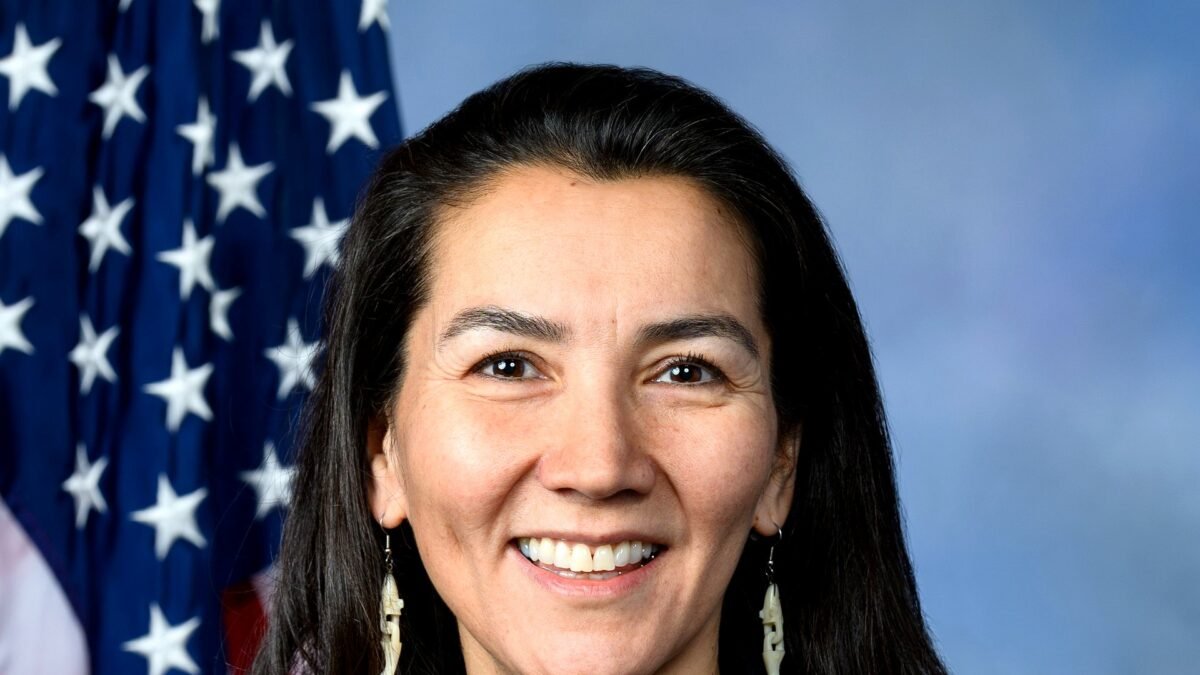
Democrat Mary Peltola has won Alaska’s hard-fought Senate race, defeating Republican incumbent Dan Sullivan and giving her party a 56th seat in the United States Senate, according to the Associated Press and other national outlets, which called the contest on Tuesday evening, two full weeks after voters cast their ballots on 3 November.
Peltola, a former congresswoman from Bethel in western Alaska, led Sullivan by 144,302 votes to 131,844 in the latest count from the Alaska Division of Elections, or 50.12 per cent to 45.80 per cent of first-choice votes, according to Alaska News. By crossing the 50 per cent threshold outright, she avoided the ranked-choice rounds that Alaska’s election system would otherwise have required, and she became the first Democrat to win a Senate race in the state since 2008 and the first Alaska Native ever to serve in the United States Senate, according to the BBC.
The result was the last Senate race in the country still undecided, and it completes a sweeping set of Democratic victories in the 2026 midterm elections. Democrats have now won 22 Senate seats in this cycle, by the Associated Press’s count, giving them 56 seats in the next Senate, including two independents who caucus with them, against 44 for the Republicans. It was the ninth Senate seat Democrats took from Republicans in these midterms, according to the BBC, and it hands the party control of Congress for the final two years of Donald Trump’s presidency, after Democrats also won back the House of Representatives.
Peltola declared victory on Tuesday evening, posting a video message to supporters shortly before 7pm, according to Alaska News. In her victory statement, she said the “status quo in DC is not working for Alaska”, and spoke of meeting elders in tears about empty fish racks and parents in rural Alaska forced to choose between heating their homes and putting food on the table, according to the BBC.
Sullivan has not conceded. His campaign said on Monday that it would not weigh in on the outcome until every vote had been counted and the results certified, a process Alaska aims to complete on 25 November. “As Senator Sullivan and his campaign have said since Election Day, Alaskans deserve a complete and accurate count, and we will let that process run its course until every legal vote is counted and certified,” campaign spokesperson Nate Adams said, with the words “and certified” bolded in the campaign’s original statement, according to Democracy Docket. The campaign also declined to comment on Peltola’s growing advantage, saying it would not weigh in on individual ballot updates or outside projections.
That refusal leaves the race in an unusual position: decided by every major news organisation, yet formally unfinished. About 500 accepted ballots were still to count statewide as of Tuesday afternoon, according to the Division of Elections, and overseas ballots postmarked by Election Day can still arrive by Wednesday, 18 November. The division plans its last count and its own ranked-choice tabulations on Wednesday, and it aims to certify the results on 25 November. A losing candidate, or ten voters, can ask for a recount once that review is done, according to Alaska News.
The count that took two weeks
Alaska’s Senate contest was always going to be the last one called. Collecting and counting ballots from across the state’s remote expanse is a logistical challenge unlike anywhere else in the country, and officials needed a fortnight to work through votes from far-flung communities, according to the BBC. The margin, though, moved in only one direction for the final week: Peltola passed Sullivan as absentee ballots came in, and she won 59 per cent of the Senate votes added on Tuesday, according to Alaska News.
On Monday she had fallen 146 votes short of a majority. On Tuesday she crossed it, ending the day about 260 votes over half, by Alaska News’s maths, after falling short the day before. That is more than half of the roughly 500 accepted ballots still to count, so she would stay above half even if none of them went to her. And if late overseas ballots did push her below half, she would still win the ranked-choice rounds: on the state’s ballot-level file, she would beat Sullivan 147,382 to 135,777 in a final round, according to Alaska News, whose analyses of that file have shown her winning a final round since 10 November.
Under Alaska law, a candidate who is the top choice on more than half of the active ballots wins without ranked-choice rounds, and that count includes write-ins and ballots that skipped the first ranking. Peltola also won more than 92 per cent of the overseas votes counted so far, according to Democracy Docket.
The other candidates on the ballot finished well behind. Republican Gerald L. Heikes took 2.12 per cent of first-choice votes and Daniel J. Sullivan Jr., the independent retired schoolteacher whose near-identical name became the strangest subplot of the race, took 1.65 per cent, according to the unofficial summary published on Monday, 16 November. The Associated Press estimated 99 per cent of the vote counted when it called the race.
Who Mary Peltola is
Peltola, who is Yup’ik, comes from Bethel, a hub city of about 7,000 people in western Alaska that is not connected to the state’s limited road system, according to the BBC. She served in the Alaska House of Representatives from 1999 to 2009, then returned to statewide prominence when she won a special election for Alaska’s lone House seat in 2022, becoming the first Alaska Native ever elected to Congress and the first woman to represent Alaska in the House. She won a full term that November, then lost the seat to Republican Nick Begich III in 2024.
Her Senate campaign was built on the themes Democrats stressed across the country: affordability, the cost of healthcare and accusations of corruption among Republicans, according to the BBC. Her motto was “fish, family, freedom”, and she leaned heavily on the salmon crisis on the Yukon and Kuskokwim rivers, an issue that first brought her statewide attention when she won the House seat in 2022. She also promised to crack down on industrial-scale pollock fishing in the Bering Sea, an industry many Alaskans blame for catching and wasting salmon, halibut and other species before they can reach the rivers where local people depend on them, according to the BBC.
Sullivan, a Marine Corps veteran who spent 30 years in the Corps and served as Alaska’s attorney general, was first elected to the Senate in 2014, defeating Democratic Senator Mark Begich, and was re-elected in 2020, according to Alaska News and the BBC. He campaigned on his record of delivering energy and military investment for the state, and as a steadfast ally of Trump, who appeared in person at a rally for him in Wasilla last month, according to the BBC. He was seeking a third term.
The result is striking because Trump carried Alaska in each of the last three presidential elections, winning the state by 13 percentage points in 2024, according to the BBC. Since then, his approval ratings in Alaska and nationally have fallen sharply, driven largely by opposition to the war in Iran and by anger over high prices, and the election results suggest that unpopularity weighed on Republican incumbents, the BBC reported.
The namesake on the ballot
The race was overshadowed in its final days by a report in the New York Times that aides to Peltola had tried to recruit a political unknown named Daniel J. Sullivan, who lives in a small coastal town and shares a name with the incumbent senator, in an alleged attempt to confuse voters, according to the BBC. Peltola denied having any knowledge of the alleged plan, and her campaign denied any involvement. NPR said it had not independently confirmed the reporting, according to the BBC.
The episode escalated far beyond a campaign controversy. The state’s Division of Elections found in June that the candidacy had been filed “with a purpose to confuse or mislead” and decertified it, but the Superior Court and then the Alaska Supreme Court overturned that decision, and the second Sullivan stayed on the ballot, according to reporting published on this site on 1 November. The Justice Department opened a criminal investigation, with a surge of FBI resources and grand jury subpoenas dating back to August, and on 22 October it sued Alaska in federal court, asking a judge to block certification of the results if Peltola won and the margin was smaller than the votes won by the other Sullivan. Judge Sharon Gleason dismissed that suit on 1 November; the department has appealed to the Ninth Circuit Court of Appeals, according to Democracy Docket.
State courts ruled that the second Daniel J. Sullivan could remain on the ballot, and election officials distinguished the two men on election materials, according to the BBC. Under ranked-choice voting, voters unsure which Sullivan was the incumbent could rank both men first and second, and any votes for the lesser-known candidate would then have been reallocated to the senator. Analysis by BBC Verify found that even if every vote for the other Sullivan had gone to the incumbent, Peltola would still have won, and preliminary results showed she had more votes than the other three candidates combined, according to the BBC. Independent analyses by BBC Verify and the New York Times found no sign voters were confused, and preliminary data showed more of the other Sullivan’s voters ranked Peltola above the senator, according to CNN.
Both the Justice Department and Alaska’s Republican governor said they would launch investigations into the episode, according to the BBC. Governor Mike Dunleavy ordered a state investigation by the Department of Public Safety, and the Justice Department’s criminal probe continues, with no charges filed and no court finding that the recruitment broke the law. The Trump administration also filed a lawsuit seeking to stop certification of the results if Sullivan lost, but a federal judge dismissed the case, concluding that such an order would “clearly violate” the right of Alaskans to a secret ballot. The Justice Department plans to appeal, and has said voters deserve a fair election rather than one shaped by an attempt to mislead them, according to the BBC.
On Tuesday, Trump demanded that all of Daniel J. Sullivan’s votes, as well as those for Heikes, be given to Senator Sullivan, according to Democracy Docket. Recruiting extra candidates and promoting spoilers is generally legal in Alaska and relatively common, according to the BBC, and super PACs aligned with both parties spent more than $2 million this year on efforts to shape the make-up of the ballot, in some cases elevating people who do not even live in Alaska, including a federal inmate in New York.
A rebuke from inside the Republican tent
The most pointed reaction to the result came not from a Democrat but from Alaska’s other senator, Republican Lisa Murkowski, who called the outcome an “unmistakable rebuke” of Trump and a “direct pushback” against him, according to CNN and Democracy Docket. “When you have a wave, whether it’s — you know, you can call it blue tsunami, call it whatever you will — when you have voters across the country speak out in a way that they did with this election, this is not some subtle message,” Murkowski told Alaska Public Media.
Murkowski, who endorsed Sullivan despite previously supporting Peltola’s congressional House campaign, said she had worked closely with Sullivan for more than a decade, but made clear she would work with Peltola if the Democrat wins. “If she is certified and elected, I will look forward to working with her just as I did before and build that relationship,” she said, according to Democracy Docket. Some Republicans in Congress have cast doubt on whether Peltola will be seated in the Senate, where she would become the Democrats’ 56th senator, according to Democracy Docket.
The result also completes a remarkable night for Alaska Democrats. Jonathan Kreiss-Tomkins won the governor’s race, ending 28 years of Republican rule, a result this site reported on 14 November; he takes office at noon on 7 December, with nonpartisan Zac Johnson as lieutenant governor, according to Alaska News. In the state House, Democrats won 17 seats, up from 14, with nonpartisan or undeclared members taking seven, up from five, and Republicans falling to 16, down from 21, according to Alaska News. Voters also rejected Ballot Measure 2, which would have repealed Alaska’s open primaries and ranked-choice general elections, with “No” leading 53.81 per cent to 46.19 per cent, and passed Ballot Measure 3, which adds the word “only” to the state law on who can vote, with 68.24 per cent voting “Yes”, according to Alaska News.
In the House race, Republican Representative Nick Begich, who won the seat from Peltola in 2024, leads nonpartisan Bill Hill 136,215 to 119,689 in first-choice votes, or 47.54 per cent to 41.77 per cent, and has led in every report since the election, according to Alaska News. That leaves him short of a majority, so the race goes to ranked-choice rounds, which the division plans to run on Wednesday. Alaska News ran those rounds on Tuesday’s ballot-level file and found Begich winning the final round 140,225 to 132,820.
What a 56-44 Senate means
The number matters beyond Alaska. A 56-44 majority is four seats more than the bare majority Democrats needed, and it changes what the party can do in the chamber’s final two years of Trump’s presidency. Democrats took control of Congress in these midterms after also winning back the House, and on Wednesday House Democrats meet privately to elect their leadership for the new Congress, with Hakeem Jeffries facing his first test on the way to becoming the nation’s first Black speaker of the House, according to the Associated Press.
With the Senate and the House both in Democratic hands, the party gains the power to set the agenda in both chambers, to open sweeping investigations of the Trump administration, and to block the president’s nominees and legislative priorities, a prospect Democratic lawmakers have been promising since their midterm victories, according to the Associated Press. The Senate majority also gives Democrats control of the chamber’s committees, the power to subpoena witnesses and documents, and a stronger hand in confirmations, including any future vacancies on the federal courts.
For Trump, the result closes the book on a midterm cycle in which his party lost ground in state after state, and it removes the last uncertainty about the size of the defeat. Alaska was the final Senate race to be decided, and its outcome — a Democratic flip in a state Trump won by 13 points two years ago — is the sharpest single illustration of how far the political ground has moved since 2024.
For Peltola herself, the win is a comeback. Two years after losing her House seat, she will return to Washington in the more powerful chamber, as the first Alaska Native senator in American history and as the first Democrat to hold one of Alaska’s Senate seats since Mark Begich, who lost to Sullivan in 2014. She will take her seat when the new Congress is sworn in on 3 January, if certification proceeds as the state expects.
Analysis: Why It Matters
The count was the campaign
Alaska’s Senate race was decided not on election night but in the fortnight that followed, and that is the first thing to understand about it. The state counts slowly because it has to: ballots travel by plane and boat from villages that no road reaches, and absentee votes keep arriving for days. Peltola’s campaign understood that rhythm and built its whole case around it, telling supporters from the start that the count would take weeks. When the lead finally flipped, it did so through the same absentee ballots that had always been expected to favour her, and the margin then grew every day until it crossed the line that made the ranked-choice rounds unnecessary. There was no late surprise in the numbers; there was only a slow count doing what slow counts do, and a campaign that had the patience to let it happen.
A rebuke that crossed party lines in Trump country
The second thing to understand is where this happened. Alaska is not a swing state that drifted Democratic. Trump won it by 13 points in 2024, and Sullivan is a two-term incumbent who had the president campaigning for him in person. Peltola won it anyway, and she won it while the state’s other Republican senator was calling the result an unmistakable rebuke of the president. That is not the language of a close race or a fluke. It is the language of a verdict, and it is the reason this single Senate seat carries more weight than the arithmetic of 56-44 suggests. When a state that backed Trump three times in a row elects a Democrat to the Senate, the message is not about Alaska. It is about the national mood, and every Republican reading the returns will have heard it.
The namesake affair backfired as a strategy
The strangest part of this race may turn out to be the most instructive. The attempt to put a second Dan Sullivan on the ballot, and then the attempt to use his presence to block certification, consumed enormous political energy: a criminal investigation, a federal lawsuit, a governor’s inquiry, and the president’s own intervention. Yet the evidence, as analysed by BBC Verify and the New York Times, showed no sign that voters were confused, and even on the most generous reading for the incumbent — giving him every one of the other Sullivan’s votes — Peltola still won. The affair did not save the seat. It gave the winner’s victory a second story: not just that she won, but that she won while the machinery of the federal government was being used to question the result. That will be remembered longer than the vote totals.
Fifty-six changes what Democrats can do
The fourth point is arithmetic, but arithmetic with consequences. Fifty-six is not fifty-one. A bare majority lives or dies on the health and attendance of every member; a four-seat cushion lets a party absorb absences, defections and the occasional difficult vote. It also changes the psychology of the chamber: committee majorities are more comfortable, subpoena fights are easier to win, and the minority’s leverage shrinks. For the final two years of Trump’s presidency, that means a Congress that can investigate the administration in earnest, block its nominees, and refuse its legislative priorities — and it means the president will have to govern, if at all, through executive action and the courts. The midterms have already redrawn the balance of power; Alaska has now set its final size.
The fight over certification is not over
The last point is a warning. Peltola has won the count, but she has not yet been certified, and the forces that tried to stop certification have not stood down. The Justice Department is appealing to the Ninth Circuit, the governor’s investigation is running, and the incumbent’s campaign has said it will not concede until certification — and has not said what it will do then. The state aims to certify on 25 November, and the governor and lieutenant governor have a statutory duty to do so. Nothing in the record so far suggests the result can be overturned: the margin is larger than the votes at issue, the courts have already dismissed the attempt to block certification once, and the state’s own analysis shows Peltola winning under every counting method. But the interval between a called race and a certified one is now the most contested space in American elections, and Alaska will spend the next week inside it.
What to Watch Next
- Wednesday’s final count: the Division of Elections counts its last ballots, including overseas votes, and runs its own ranked-choice tabulations, including for the House race.
- Certification on 25 November: the state aims to certify the results; watch whether the governor signs the certificate and whether any recount is requested.
- The Ninth Circuit appeal: the Justice Department’s appeal of Judge Gleason’s dismissal, and whether it seeks any emergency order before certification.
- Sullivan’s decision: whether the incumbent concedes once the race is certified, or whether his campaign pursues a recount or a legal challenge.
- The governor’s investigation: what, if anything, the state Department of Public Safety probe into the Daniel J. Sullivan candidacy produces.
- House Democrats’ leadership vote: Hakeem Jeffries’s election as the party’s leader on Wednesday, on his way to becoming the first Black speaker of the House.
- Swearing-in on 3 January: Peltola taking her seat in the new Congress as the first Alaska Native senator in American history, alongside a Democratic House and Senate.
Sources
- Alaska News — Analysis: Peltola flips Sullivan’s Senate seat
- BBC News, via World Right Now — Peltola takes Alaska as Democrats seal Senate control
- MS NOW — Mary Peltola Wins Alaska Senate Race, Giving Democrats Their 56th Seat
- Democracy Docket — Sen. Dan Sullivan campaign says it won’t concede Alaska Senate race until it’s certified
- Democracy Docket — Mary Peltola wins Alaska Senate race — but GOP looks set to fight results
- CNN, via Beezloop — Mary Peltola Beats Sen. Dan Sullivan in Alaska, Giving Democrats Their 56th Senate Seat

About the Author — Abdul Mannan
Related Articles
White House Drops Heidi Overton’s Nomination to Lead the FDA on Eve of Senate Committee Vote
The White House has pulled Dr Heidi Overton's nomination to lead the Food and Drug Administration hours before…

Mullin Flew Government Plane to LSU–Texas Game as Stranded Travellers Waited, Then Told CNBC: ‘We Still Gotta Live Our Life’
Homeland Security Secretary Markwayne Mullin flew on a government plane to the LSU–Texas game on Saturday, less than…

Trump Flies Into Manila for First Quad Summit in Two Years as Asia Trip Builds to Xi-Putin Meeting
Donald Trump lands in Manila on Tuesday for the first Quad leaders' meeting in two years, a gathering…