
World Court Finds Myanmar’s Forces Killed Around 10,000 Rohingya in 2017 Crackdown

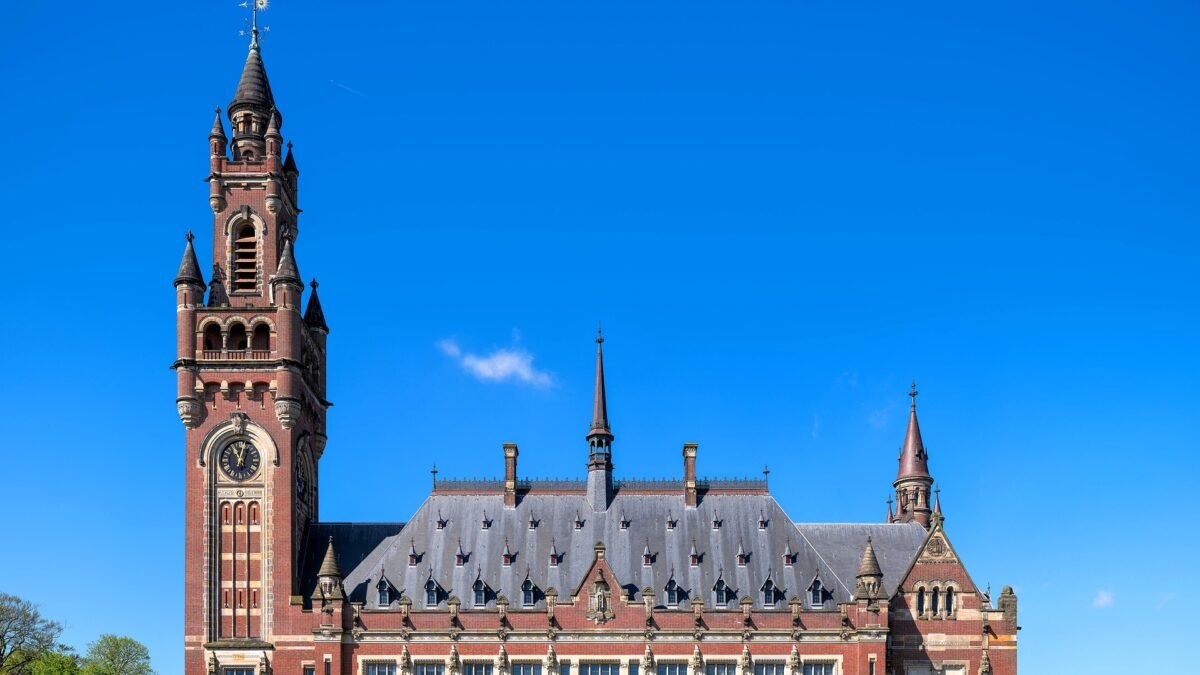
The International Court of Justice has found that Myanmar’s security forces killed around 10,000 Rohingya civilians during the 2017 military crackdown in Rakhine State, as the world’s highest court began delivering its long-awaited judgment on whether Myanmar committed genocide against the minority. The court, sitting at the Peace Palace in The Hague, also found that the military systematically spread hate speech portraying the Rohingya as “sub-human”, and that state policies were designed to reduce births within the group. The findings were read out by the court’s president, Judge Yuji Iwasawa of Japan, at a public sitting that began at 10 a.m. local time on Thursday 19 November 2026 and was expected to last up to three hours.
“The Court finds that Myanmar’s security forces killed thousands of Rohingya civilians, perpetrated widespread acts of sexual violence as well as acts of extreme violence against children and attacked fleeing Rohingya as they sought to flee in large numbers to Bangladesh,” the court said, according to Reuters. The court later put a figure on the killing, determining that around 10,000 Rohingya were “violently killed during clearance operations” in 2017, according to the evidence it had seen. The reading was still continuing when this article was published, and the court’s final determination on the central question — whether Myanmar, as a state, committed genocide — had not yet been delivered.
The judgment, in the case brought by The Gambia in November 2019, is the first time the court has ruled on the merits of a genocide case in more than a decade, and the first time any international court has been asked to find a state, rather than an individual, responsible for committing genocide. No state has ever been found guilty of the crime by an international court. The ruling is final and cannot be appealed, but the court has no means of enforcing its decisions.
What the court has found so far
The court began its reading by setting out the history of the Rohingya in Myanmar, noting that they have lived in the country for generations. Judge Iwasawa said the court found that “discriminatory laws and restrictions progressively eroded their rights and left them marginalised and particularly vulnerable, while military-sponsored hate speech fuelled hostility against them”, according to the BBC. The court also took account of Myanmar’s failure to investigate the alleged atrocities, noting its “failure genuinely to investigate the alleged atrocities and its refusal to facilitate access to evidence and witnesses to provide information requested”.
On the evidence, the court found The Gambia’s witnesses credible. During the oral proceedings in January 2026, the court heard testimony from four witnesses who had experienced violence during the final week of August 2017. “The court found The Gambia’s witnesses credible in their account of the particular events to which they testified,” Judge Iwasawa said, adding that “many of the witnesses’ key statements were unchallenged in cross-examination”, according to the BBC. The judge explained that the court had no comparable judicial decisions to rely on in this case and could therefore “only rely on the evidence provided by the parties to make its own determination of the facts”, taking into account the form of witness statements and the circumstances in which they were made, including the possibility that witnesses might fear reprisals.
On the scale of the violence, the court found that approximately 815,000 Rohingya who lived in northern Rakhine State before the 2017 clearance operation were targeted by Myanmar. “This number is clearly significant,” the judge said, adding that, based on its size, the group targeted by Myanmar is considered “substantial” for the purposes of the Genocide Convention. The court determined that around 10,000 Rohingya were violently killed during the clearance operations. Doctors Without Borders had separately estimated that at least 6,700 Rohingya were killed in the first month of the operations alone.
On hate speech, the court found that the Myanmar military “actively disseminated and promoted hate speech in a systematic and coordinated way” during the 2017 clearance operations, and noted an “overlap” between an “anti-Rohingya hate speech campaign” and the operations themselves. The hate speech portrayed the Rohingya as “sub-human” and “a violent threat”, which contributed to a “climate conducive to targeting a group for destruction”, the judge said.
On the question of birth rates, the court found that Myanmar imposed a regional order requiring special marriage permission for people described as Bengalis and limiting the number of children married couples were allowed to have — to two children. While the policies did not succeed in restricting the Rohingya birth rate, Myanmar accepts that the measure’s purpose was to slow the birth rate in this group. “Under these circumstances, the court is convinced that the order was a coercive measure directed at the Rohingya group, which was intended at the very least to reduce birth within the group including at the time of the clearance operations,” the judge said. The measures, alongside others, were “indicative” of the state’s intent to stop the Rohingya group from reproducing. The judge also cited the use of sexual violence during the clearance operations, which he said was intended to “physically and mentally impair the willingness and ability of the population to procreate”.
The judgment is being read by a bench of 15 elected judges, presided over by Judge Iwasawa, with two additional ad hoc judges: Nobel laureate Navi Pillay, chosen by The Gambia, and Claus Kress, chosen by Myanmar. Decisions are taken by majority vote, with the president holding a casting vote if the judges are evenly divided. Judge Iwasawa also set out the law on state responsibility, noting that a state may be held responsible for genocide or other acts if they are committed “by its organs, or by persons or groups whose acts are attributable to it”, and that while individuals face criminal responsibility, the obligations of states under international law are not of a criminal nature.
Seven years in the making
The case before the court was brought by The Gambia, a small Muslim-majority West African nation, on 11 November 2019, with the backing of the 57-member Organisation of Islamic Cooperation. It accused Myanmar of violating the 1948 Convention on the Prevention and Punishment of the Crime of Genocide through its treatment of the Rohingya, a Muslim minority in the remote western state of Rakhine. The argument, as set out in The Gambia’s filings, was that the August 2017 military campaign — the so-called “clearance operations” — amounted to genocide: the killing of members of the group, the causing of serious bodily and mental harm, and the deliberate infliction of conditions of life calculated to bring about the group’s physical destruction, in whole or in part.
The violence at the heart of the case began on 25 August 2017. Myanmar’s military launched a sweeping operation in northern Rakhine State after attacks by the Arakan Rohingya Salvation Army, an insurgent group, on police posts, in which 12 security personnel were killed, according to Myanmar’s account. What followed, according to United Nations investigations and the accounts of survivors, was a campaign of exceptional brutality: villages burned to the ground, mass killings, and widespread sexual violence. Doctors Without Borders estimated that at least 6,700 Rohingya were killed in the first month of the operations alone. At least 730,000 Rohingya fled across the border into Bangladesh in a matter of weeks, joining hundreds of thousands who had fled earlier waves of persecution. The exodus created what is now the world’s largest refugee settlement, at Cox’s Bazar in Bangladesh, where about 1.2 million Rohingya live today. Around 520,000 remain inside Myanmar, according to Al Jazeera, many of them confined to camps or villages under severe restrictions on movement, education and healthcare.
A United Nations fact-finding mission, which interviewed hundreds of survivors, concluded in 2018 that the military’s tactics were grossly disproportionate to any security threat, and its final report in September 2019 said Myanmar should be held responsible in international legal forums for alleged genocide. The mission found that the killings had continued through 2018 and were carried out with what it described as genocidal intent. Myanmar has consistently denied the allegation, maintaining that its security forces were responding lawfully to insurgent attacks and that there was no organised campaign against the Rohingya as a group.
The road to Thursday’s judgment ran for seven years. In December 2019, the court heard arguments on provisional measures, with Myanmar’s then leader, Aung San Suu Kyi, appearing in person to defend her country’s honour and to argue that the picture presented to the court was “incomplete and misleading”. In January 2020, the court unanimously ordered Myanmar to take all measures within its power to prevent genocidal acts, to ensure its military and irregular armed units did not commit them, to preserve evidence, and to report back on compliance within four months and every six months thereafter. The order was legally binding, but it was not a finding that genocide had occurred. In July 2022, the court rejected Myanmar’s preliminary objections to the case — the first three unanimously and the fourth with one judge dissenting — and allowed the case to proceed to hearings on its merits. Those hearings took place from 12 to 29 January 2026, including closed-door testimony from Rohingya witnesses, after which the judges retired to deliberate. Eleven countries intervened in the proceedings to present arguments on the interpretation of the Genocide Convention.
What the court had to decide
The case, formally titled Application of the Convention on the Prevention and Punishment of the Crime of Genocide (The Gambia v. Myanmar), is not a criminal trial. The International Court of Justice settles legal disputes between states; it does not sentence individuals to prison. The question before the judges was whether Myanmar, as a state, breached its obligations under the Genocide Convention — first, whether acts of genocide were committed by its security forces, and second, whether Myanmar failed in its duties to prevent and punish genocide.
At the centre of the case was the question of intent. The Genocide Convention requires proof that acts were committed with the intent to destroy, in whole or in part, a national, ethnical, racial or religious group, as such. Myanmar’s defence was that its operations had a different purpose — the defeat of an armed insurgency — and that the violence, however grave, was not driven by an intent to destroy the Rohingya as a group. The Gambia argued that the organised execution of the crackdown, the extreme brutality, the sexual violence and the targeting of children demonstrated that intent. The court’s approach to that question was watched closely by international lawyers: in its earlier Bosnia and Croatia cases, the court held that where genocidal intent is inferred from a pattern of conduct, it must be the only reasonable inference that can be drawn from the evidence. Legal scholars, including the Genocide Watch legal team in a paper published days before the judgment, argued that the standard should not defeat a finding of genocidal intent merely because another intent — such as forced displacement — coexisted alongside it. The court’s treatment of that question in this judgment will be studied for years.
The judgment is the court’s first genocide ruling in more than a decade, and only the third time it has ruled on the merits of a genocide case. It is also the first time any international court has been asked to find a state — rather than an individual — responsible for committing genocide. Individuals have been prosecuted for genocide before international tribunals for Rwanda and the former Yugoslavia, and before the International Criminal Court, but no state has ever been found guilty of the crime by an international court. In its 2007 Bosnia judgment, the court found that Serbia had failed to prevent the 1995 genocide at Srebrenica, but it stopped short of holding any state directly responsible for committing the crime.
A judgment with no enforcement
The ruling is final and cannot be appealed. But the court has no police force, no army and no independent means of enforcing its decisions. It cannot impose penalties, and any enforcement of reparations or restitution would depend on the United Nations Security Council, where allies of Myanmar’s military regime hold veto power. Myanmar remains engulfed in a civil war under the same military leadership that ordered the 2017 operations, and the generals who presided over the crackdown have shown no sign of accepting the court’s authority. The practical question, as it was after the 2020 provisional measures order, is whether the judgment changes anything on the ground for the Rohingya still in Myanmar or for the more than a million living in camps in Bangladesh.
For the refugees in Cox’s Bazar, the judgment is, in the first instance, a matter of recognition. “For more than a million Rohingya, today’s judgment is not the end of a legal case; it is the beginning of a test for the world,” said Abdul Malik Mujahid, an American Muslim leader and human rights advocate who is president of Justice For All and chairs the Burma Task Force, a coalition of 38 American and Canadian organisations campaigning for Rohingya rights. “The Gambia showed that a small nation can stand up for a persecuted people in the world’s highest court. Now every government that has signed the Genocide Convention must show that the Court’s words will be followed by action, for the families in Cox’s Bazar and for those still trapped in Arakan,” he said, according to Muslim Network TV.
Dr Naledi Pandor, South Africa’s former minister of international relations and cooperation, who was part of the South African government team that initiated genocide proceedings against Israel at the ICJ over its military campaign in Gaza, said the court faced another critical test. “The world is at a crisis point today. All I would say is that the International Court of Justice is being tested once more with a demand that it remain firmly committed to upholding human rights, and international humanitarian law. In an era in which the abuse of civilians has become so prevalent, the Court is a critical institution for affirming a more humane world,” she said.
The precedent beyond Myanmar
The judgment’s significance reaches well beyond Myanmar. It was The Gambia’s case that set the precedent for South Africa to bring its own genocide case against Israel to the court in December 2023, over the war in Gaza. The court’s reasoning on how to assess state responsibility, how to infer genocidal intent from a pattern of conduct, and what remedies follow a finding of breach will now shape that case and others. The judgment also matters for the principle that any state party to the Genocide Convention can bring a case against another state, even when it has not itself been directly harmed — a principle the court affirmed when it rejected Myanmar’s objections to The Gambia’s standing in 2022. That principle, if it holds, turns the Convention from a set of promises between states into a genuinely enforceable body of law, policed by any of its parties.
The case also tested whether the court, established in 1945 to settle disputes between states rather than to try international crimes, could handle the most serious allegation in international law. The Gambia chose the court because there were few other avenues: Myanmar is not a signatory to the International Criminal Court, so proceedings against individual officials accused of atrocities in Rakhine State could not be initiated there. The judgment now answers, one way or another, whether the court’s tools — built for boundary disputes and treaty interpretation — can carry the weight of a genocide case.
Analysis: Why It Matters
Seven years is a long time to wait for a word
The Rohingya have waited seven years for this judgment, and nine years since the 2017 crackdown. In that time, children born in the camps at Cox’s Bazar have started school there; the elderly who fled have died there; and the military that ordered the operations has seized power again, in the 2021 coup, and plunged Myanmar into civil war. The court’s pace is the pace of international law — deliberate, procedural, and slow — and it is a fair question whether a judgment delivered nine years after the fact can be called justice at all. But the alternative is worse: a world in which the most serious crime in the Convention’s catalogue is never tested against a state, and in which the only answer to a military campaign of this scale is silence. The judgment matters because it is being delivered by the world’s highest court, and because it is final.
The facts are now a matter of judicial record
Whatever the court’s operative conclusions, its factual findings now carry the authority of a judicial determination. The court’s statement that Myanmar’s security forces killed thousands of Rohingya civilians, perpetrated widespread sexual violence and extreme violence against children, and attacked people as they fled in large numbers to Bangladesh is no longer merely the conclusion of a UN mission or the testimony of survivors. It is the finding of the International Court of Justice, after hearing both sides, over seven years of proceedings. That matters for history, for the record, and for every future proceeding in which these events are discussed. Denial becomes harder when the denial has been tested in court and rejected.
Enforcement is the real test — and it starts now
The court’s lack of an enforcement mechanism is not a footnote; it is the central problem of the judgment. A ruling that cannot be enforced risks becoming a moral statement rather than a legal remedy. The test now passes to governments: to the states that intervened in support of The Gambia, to the members of the Security Council, and to Bangladesh, which hosts more than a million refugees and has borne the cost of the crisis. The judgment gives those governments a legal basis to act — to demand compliance, to press for reparations, to condition engagement with Myanmar’s military regime on the court’s findings. Whether they use it is a political choice, and it will be measured in the months ahead, not in the courtroom.
The precedent for Gaza and beyond
Every lawyer working on the South Africa case against Israel will read this judgment line by line. The court’s approach to intent — whether it required genocide to be the only reasonable inference, or whether it accepted that genocidal intent can coexist with other purposes — will shape how that case is argued and decided. The same is true of the court’s approach to remedies: what it orders, and whether it orders reparations, will set the template for what a state found in breach of the Genocide Convention can be made to do. The judgment is therefore not only about Myanmar and the Rohingya; it is about whether the Genocide Convention, nearly eighty years after it was written, can be enforced against a state at all.
The refugees are still waiting
For the more than a million Rohingya in Bangladesh, and the hundreds of thousands still in Myanmar, the judgment changes nothing today. No one is repatriated by a court ruling. No village is rebuilt. No one is released from a camp. The judgment’s value to them is indirect: it strengthens the hand of those who argue for their protection, their right to return, and their right to citizenship in the country of their birth. But it is worth being honest about the limits. The Rohingya crisis remains unresolved, and a judicial finding of state responsibility does not automatically guarantee the return of refugees, reparations, or the prosecution of individual perpetrators. The judgment is a beginning, not an end — and the measure of its worth will be what happens next, in the camps, in Rakhine, and in the councils where governments decide what to do with it.
What to Watch Next
- The court’s final determination on whether Myanmar committed genocide, its operative paragraphs and any orders on reparations or other remedies, and the vote counts behind each finding.
- Myanmar’s official response, and whether the military regime accepts, rejects or simply ignores the judgment.
- The reaction of The Gambia and the Organisation of Islamic Cooperation, and whether they seek enforcement through the United Nations Security Council.
- What the judgment means for South Africa’s genocide case against Israel at the same court, and how the court’s reasoning on intent is applied there.
- Whether any government uses the judgment to condition engagement, aid or trade with Myanmar’s military regime.
- The situation in Rakhine State, where hundreds of thousands of Rohingya remain, and whether the judgment brings any change to their conditions.
- Reactions from Rohingya refugees in Cox’s Bazar, and from the Bangladeshi government, which hosts the world’s largest refugee settlement.
Sources
- Reuters — World Court finds Myanmar forces killed thousands of Rohingya, ruling ongoing
- The Business Standard — World Court finds Myanmar forces killed thousands of Rohingya, ruling ongoing (live blog of the judgment reading)
- Muslim Network TV — Rohingya genocide judgment puts international community’s commitment to justice to test
- The Business Standard — Myanmar faces historic genocide verdict at UN court over Rohingya massacres
- BusinessWorld (Reuters) — Top UN court to rule on alleged genocide of Myanmar’s Rohingya
- International Court of Justice — Application of the Convention on the Prevention and Punishment of the Crime of Genocide (The Gambia v. Myanmar)
- Genocide Watch — The ICJ’s Erroneous Standard for Proof of Genocide

About the Author — Abdul Mannan
Related Articles
Bangladesh Shuts Down as Awami League Lockdown Turns Violent and Yunus’s Ancestral Home Is Torched
Parts of Bangladesh shut down on Thursday as a banned Awami League lockdown turned violent, with two ruling-party…
Saudi-Led Coalition Hits 60 Houthi Targets Across Yemen as Rebels Close on Aden and Missiles Fly at Riyadh
Saudi-led warplanes struck 60 Houthi targets across four Yemeni governorates on Tuesday as the rebels advanced to within…
Trump Hugged by Xi in Shenzhen and Shakes Putin’s Hand Ahead of Historic Three-Way Summit
Xi Jinping broke protocol to greet Donald Trump on the Shenzhen tarmac with a hug, and hours later…