
Bangladesh Shuts Down as Awami League Lockdown Turns Violent and Yunus’s Ancestral Home Is Torched

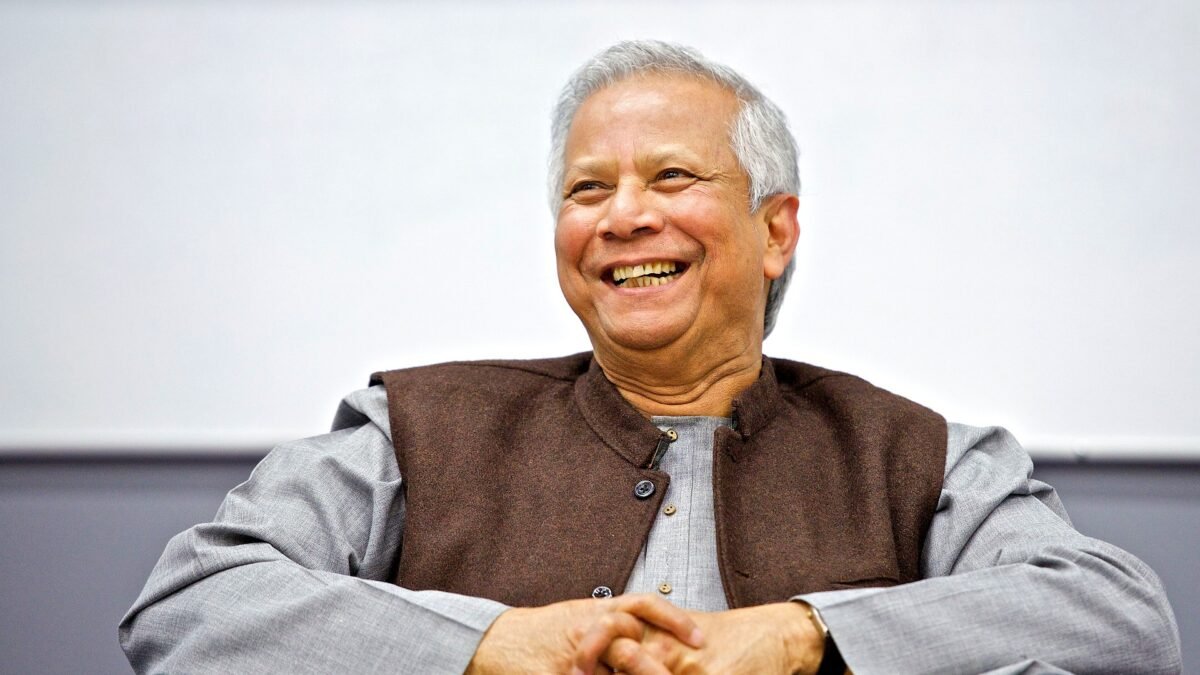
Parts of Bangladesh shut down on Thursday as a nationwide lockdown called by Sheikh Hasina’s banned Awami League turned violent, with police reporting that two members of the ruling party had been killed and the ancestral home of Muhammad Yunus, the Nobel Peace Prize laureate who led the country’s interim government after Hasina’s fall, set on fire overnight.
The lockdown, the culmination of a week of protests and rallies by Hasina’s supporters, was called to protest against the government’s refusal to issue the former prime minister a new passport and national identity card — documents she needs in order to return to Bangladesh in December, according to Reuters. By Thursday morning, the unrest had spread across much of the country: police reported dozens of crude bomb blasts and vehicles set on fire in at least 28 of Bangladesh’s 64 districts over the past ten days, and the Bangladesh Border Guard had fanned out 97 platoons across seven districts to deter further violence.
The most symbolically charged attack of the night came in Chattogram, about 300 kilometres south-east of Dhaka, where unidentified arsonists set fire to the ancestral home of Yunus in the Panchlaish area late on Wednesday. It is likely that flammable substances were thrown into an unused ground-floor room, Mozammel Haque, chief of the area’s Panchlaish police station, told Reuters, but Yunus’s paternal family members, who live on the upper floors, are safe. No one has been named as responsible for the fire, and Reuters said it could not immediately reach the Yunus Centre, the think tank that speaks on his behalf, for comment.
The attack on the house was part of a wider campaign against everything Yunus built. At least 37 branches and offices of Grameen Bank, the microfinance institution Yunus founded, have been targeted in arson attacks or attempted fires since 10 November, with 14 more attacked since midnight on Tuesday, the bank said, according to Reuters. Bangladeshi media reported that Grameen Bank branches had been set on fire in Sylhet, Rajshahi, Barishal and Faridpur over the past two days. The pattern is unmistakable: the violence is aimed not only at the government of the day but at the man who governed Bangladesh for the 18 months between Hasina’s ouster and the February 2026 election.
Two people were killed in the violence, according to police quoted by Reuters, both of them members of the ruling Bangladesh Nationalist Party (BNP). They died when Awami League activists allegedly attacked a BNP street march in the western district of Narail. Other reports put the toll higher: local media reported that a BNP leader and a transport worker were also killed in separate incidents in Faridpur and Pirojpur on Tuesday and Wednesday nights, which would bring the total to at least four dead, according to the Press Trust of India. The details of those incidents could not be independently verified, and the discrepancy between the police figure and the wider reports is a reminder of how hard it is to establish a reliable casualty count while the unrest is still unfolding. At least four people were wounded in explosions and arson in Dhaka on Wednesday night, according to police and witnesses quoted by Indian media.
A night of fire in Chattogram
The burning of Yunus’s family home was the single most startling image of the week, and the choice of target was plainly deliberate. Yunus is not a politician in the ordinary sense. He is a Nobel laureate whose Grameen Bank lent tiny sums to millions of poor Bangladeshis, mostly women, and whose global reputation gave the interim government he led a legitimacy that no party politician could have supplied. To set fire to his ancestral home is to attack the one figure in Bangladeshi public life who stood, however briefly, above the country’s zero-sum party war.
The house in Panchlaish is where Yunus’s paternal family still lives. According to the police account given to Reuters, the fire was started in an unused room on the ground floor, which suggests the arsonists wanted a fire that would be seen and reported rather than one designed to kill. The family upstairs escaped unharmed. But the symbolism of the act does not depend on its lethality. In a country where political violence has traditionally been aimed at party offices, rival activists and the homes of local leaders, the torching of the home of a Nobel laureate marks a widening of the target list, and it will be read in Dhaka as a warning to anyone associated with the post-Hasina order.
The arsonists were not acting alone in the streets. Newspaper reports said that suspected activists of Prime Minister Tarique Rahman’s BNP attacked or set fire to the residences of two Awami League leaders in Dhaka overnight, in what looks like retaliatory violence. That, too, is part of the pattern: once the cycle of arson begins, each side’s attacks become the other side’s justification. The police arrested 565 people in Dhaka over the past 24 hours, according to BDnews24, and on Thursday the authorities detained former education minister Nurul Islam Nahid, who faces charges over several killings during the 2024 protests, from his house in Dhaka, police officer Mohammad Khalid Mansur told Reuters.
The lockdown and the death toll
Thursday’s lockdown was the final day of a week-long programme of protests announced by the Awami League, and it was timed with precision. Tuesday marked one year since a local court — the International Crimes Tribunal — sentenced Hasina to death in absentia, finding her guilty of ordering a deadly crackdown on the student-led uprising that toppled her in 2024. The tribunal handed down a death sentence on one charge and life imprisonment on another. Hasina, who has lived in exile in India since fleeing Dhaka on 5 August 2024, has said she plans to return to Bangladesh in December.
The lockdown’s immediate demand is narrow: a new passport and a national identity card for Hasina, so that she can travel home. The government has rejected the request, and the Awami League has made the refusal the centrepiece of its campaign. But the demand is a proxy for a much larger question. Hasina has been sentenced to death. Her party has been banned. She cannot return without facing arrest, and the government cannot let her return without conceding that the verdicts and the ban are negotiable. The passport is the tripwire; the real dispute is whether the post-Hasina settlement of 2024–26 can hold.
The scale of the unrest is considerable. Over the last ten days of protests, police have reported dozens of crude bomb blasts and incidents of vehicles being set on fire in at least 28 districts, injuring several police officials and members of the public, according to Reuters. Buses have been torched in several parts of the country. In Gopalganj, Hasina’s home district and a stronghold of her supporters, around 30 people suspected of being Hasina supporters were arrested in her hometown of Tungipara on Tuesday, after which hundreds of people surrounded a police station. The Border Guard’s deployment of 97 platoons across seven districts, including Gopalganj and Faridpur, which its spokesperson Shariful Islam described as areas with many Hasina supporters, is the largest show of force since the February election.
The death toll, as noted, is contested. Reuters, citing police, reported two ruling-party members killed in the Narail attack. Reports carried by Indian media, drawing on the Press Trust of India, said four people had been killed in total, adding a BNP leader and a transport worker killed in Faridpur and Pirojpur. The two accounts are not necessarily contradictory — they may simply reflect different counting windows and different sources — but neither has been confirmed by an independent count, and this article does not present either figure as settled. What is certain is that people have died, that the violence has spread to nearly half the country’s districts, and that the government’s security response is now the largest it has mounted since the election.
Why Thursday, why now
To understand why Bangladesh is burning again, it is necessary to go back to August 2024. Sheikh Hasina, who had governed Bangladesh for more than 15 years, was driven from office by a student-led uprising — the July Uprising — after her government’s crackdown on protesters left more than 1,400 people dead, according to the figures cited in recent reporting. She fled to India on 5 August 2024. Muhammad Yunus, then 84, was asked to lead an interim government, and he governed for 18 months while the country prepared for elections.
The interim government banned the Awami League’s activities in May 2025, invoking the country’s anti-terrorism legislation. The ban prevented the party from taking part in the parliamentary election held on 12 February 2026, the first since Hasina’s fall. The BNP, led by Tarique Rahman, won a landslide: 209 of the 297 seats contested, a two-thirds majority in the Jatiya Sangsad, on about 50 per cent of the vote. The largest Islamist party, Jamaat-e-Islami, won 68 seats and became the official opposition for the first time. Turnout was almost 60 per cent, and the European Union’s election-observation mission described the elections as credible and competitive. Rahman, who had returned to Dhaka in December 2025 after 17 years of self-imposed exile in London, was sworn in as prime minister on 17 February 2026. Yunus stepped down the day before.
The election was meant to be the democratic reset, the moment when Bangladesh moved from interim rule to an elected government with a fresh mandate. Instead, it produced a parliament from which the country’s largest political tradition — the Awami League, which governed for 15 years and still commands a significant share of the electorate — was entirely absent. As the S. Rajaratnam School of International Studies noted in an analysis of the new government, excluding the Awami League from the ballot effectively disenfranchised a significant segment of the population, inviting street-level unrest and the emergence of a strong extra-parliamentary opposition. This week’s violence is that prediction coming true.
Hasina has not been idle in exile. According to reporting in the North Star Times, she has held online meetings covering 125 of the country’s 300 parliamentary constituencies, and the Awami League, banned under anti-terror law, is rebuilding from exile. Some analysts read her announced December return as a bid to keep a banned party alive and its base loyal rather than a plan she expects to carry out in full. December is the month Bangladesh calls its “victory month”, marking the 1971 liberation war, and a return then would carry maximum symbolic weight. The government, for its part, has branded her a terrorist and insisted on her extradition under the bilateral treaty with India — a demand New Delhi has not acted on.
The timing is sharpened by another deadline. The Ganga Water Treaty, signed on 12 December 1996 for 30 years, expires on 12 December 2026, four days before Victory Day. The treaty governs the sharing of the Ganges at Farakka, and its renegotiation is one of the most sensitive issues in the India–Bangladesh relationship. Delhi’s own signals, according to the North Star Times, link progress on the treaty and other files to a visit by Tarique Rahman, which has yet to happen. Rahman has prioritised outreach to China, Türkiye and others while skipping early engagement with India. A return by Hasina in the same month as the treaty’s expiry would put the new government’s India policy under maximum strain.
The government answers back
The Rahman government has not been conciliatory. On Wednesday night, the prime minister appealed to democratic forces to unite against what he described as an attempt by the Awami League to return to power, calling the banned party a “terrorist organisation” and a “defeated fascist force”. The language is the strongest a Bangladeshi prime minister has used about the Awami League since the election, and it was plainly intended as a signal to the party’s supporters, to the security forces and to the international community that the government will not negotiate with a banned organisation.
On Tuesday, Home Minister Salahuddin Ahmed accused Awami League leaders abroad of inciting supporters to destabilise Bangladesh and torch property, adding that those involved in the violence would be identified and prosecuted. The accusation is aimed at the party’s exiled leadership, which the government believes is directing the campaign from abroad. Awami League leaders, most of them in hiding, could not be reached for comment, according to Reuters.
The government’s actions have matched its words. The mass arrests in Dhaka, the Border Guard deployment, and the detention of Nurul Islam Nahid on Thursday all point to a security-led response. Nahid, a former education minister under Hasina, faces charges over several killings during the 2024 protests, and his detention on the morning of the lockdown will be read by the Awami League as a deliberate provocation and by the government’s supporters as a long-overdue act of accountability. Both readings can be true at once, which is precisely the problem: in Bangladesh’s polarised politics, every act of law enforcement is also an act of politics.
The economy, meanwhile, is not helping. The World Bank’s October 2026 update cut its growth forecast for Bangladesh in the 2026–27 fiscal year by 1.2 percentage points to 3.4 per cent, well short of the government’s 6.5 per cent target and the weakest in South Asia bar Afghanistan, according to the North Star Times. A government that cannot deliver growth will find it harder to argue that the post-Hasina order is working, and a banned party that can shut down half the country’s districts will find it easier to argue that it is not.
Analysis: Why It Matters
The arson was the message
The burning of Muhammad Yunus’s ancestral home is the detail that will be remembered from this week, and it deserves to be read as a message rather than as random vandalism. Yunus is the one figure in Bangladeshi public life who is not a party man. He was not elected; he was asked. He governed for 18 months, handed power to an elected government, and stepped aside. His Nobel Prize, his microfinance work and his global standing gave the interim government a credibility that no politician could have lent it. To burn his family’s home is to say that no one associated with the post-Hasina order is safe, and that the Awami League’s quarrel is not only with the BNP government but with the entire settlement that followed the 2024 uprising.
It is also, in a narrower sense, an attack on Grameen Bank itself. The 37 branches targeted since 10 November are not random commercial premises; they are the physical infrastructure of Yunus’s life’s work, and they serve some of the poorest people in the country. Burning them does not hurt the government. It hurts the women who borrow from them. That the campaign has targeted Grameen so systematically suggests that the violence is being directed at symbols as much as at the state, and that its authors understand exactly which symbols will wound.
A banned party that can still shut a country down
The most important fact of this week is not the arson or the death toll. It is that a party which is banned, whose leader is in exile under a death sentence, whose senior figures are in hiding or in jail, and which fielded no candidates in the last election, can still bring large parts of the country to a standstill. The Awami League called a lockdown, and the lockdown happened. That is a measure of organisational strength that the government cannot afford to ignore, and it is a measure of the limits of a ban.
Banning a party does not ban its supporters. The Awami League governed Bangladesh for 15 years, and in that time it built a network of local leaders, activists and beneficiaries that extends into every district. The February election excluded the party from the ballot, but it did not exclude its voters from the country. The RSIS analysis put it plainly: the exclusion created a strong extra-parliamentary opposition. A party with no seats in parliament has no reason to behave like a parliamentary party, and every reason to behave like a street movement. That is what Bangladesh is seeing now.
The government’s dilemma is real. Lifting the ban would admit that the post-Hasina settlement was incomplete, and it would put a party led by a woman sentenced to death back into electoral politics. Keeping the ban means governing a country in which a large minority of the population has no lawful political home, and in which the banned party’s only available politics is the politics of the street. There is no easy answer, and the government has not yet found one.
Rahman’s “terrorist” language raises the temperature
Tarique Rahman’s decision to call the Awami League a “terrorist organisation” on Wednesday night was not a slip of the tongue. It was a deliberate escalation, and it matters for two reasons. First, it closes the door, at least for now, on any negotiated path back for the party. A government does not negotiate with a terrorist organisation; it defeats one. Second, it gives the security forces a vocabulary that justifies a harder response. When the prime minister calls a party terrorist, the police and the Border Guard hear permission.
There is a risk in this language that goes beyond the immediate crisis. Bangladesh has a long history of governments using the language of terrorism and fascism against their opponents, and of opponents returning the compliment when the wheel turns. Hasina’s government used the same vocabulary against the BNP and Jamaat. The BNP is now using it against the Awami League. Each turn of the wheel makes the next turn more likely, and each escalation makes reconciliation harder. The language of the prime minister’s Wednesday speech will be quoted back to him if the Awami League ever returns to power.
None of this is to say that the government’s security concerns are invented. Crude bombs in 28 districts, torched buses, arson at dozens of bank branches and the burning of a Nobel laureate’s home are real crimes, and a government has a duty to stop them. The question is whether the language of terrorism helps the government stop them, or whether it simply makes the conflict harder to end. History suggests the latter.
December is the real deadline
Everything in this crisis points to December. Hasina says she will return then. The Ganga Water Treaty expires on 12 December. Victory Day falls on 16 December. The month is loaded with symbolism and with practical deadlines, and the government knows it.
If Hasina does attempt to return, the government will face a choice it has been able to avoid so far: arrest a former prime minister at the airport, on camera, in front of the world’s media, or let her in and watch the death sentence and the ban become dead letters. Neither option is attractive. Arresting her would confirm the Awami League’s claim that the government is afraid of her, and it would hand her supporters a martyr. Letting her in would confirm the party’s claim that the verdicts were political, and it would hand her a platform.
The likeliest outcome is that Hasina does not, in the end, board a plane in December. Her announcement may be a bid to keep her party alive and its base loyal, as some analysts have suggested, rather than a plan she expects to execute. But even if she does not come, the threat of her return has already done its work. It has forced the government to deploy the Border Guard, to arrest hundreds of people, and to use language it will find hard to walk back. The return does not need to happen to be effective. The announcement is the weapon.
The legitimacy question will not go away
Underneath the violence and the rhetoric lies a question that Bangladesh has not answered since August 2024: what makes a government legitimate? The February election was, by the EU mission’s account, credible and competitive. Turnout was nearly 60 per cent. The BNP won a two-thirds majority. By the ordinary standards of democratic politics, Tarique Rahman’s government has a mandate.
But a mandate won in an election from which the country’s largest party was excluded is a mandate with a hole in it, and the hole is now visible in the streets. The government’s answer is that the Awami League excluded itself, by the crimes of its leaders and the verdicts of its courts. The Awami League’s answer is that the courts were instruments of the interim government and the ban was a political act. Both answers have some force, and neither has persuaded the other side.
This is the deepest problem Bangladesh faces, and it will not be solved by arrests or by lockdowns. A democracy cannot function if a large part of its population believes the system is rigged against them, and a government cannot govern if a large part of its population believes it has no right to rule. The February election was supposed to settle the question of legitimacy. This week’s violence suggests that it has not, and that the question will now be fought out in the streets, in the courts and in December’s looming confrontation.
What to Watch Next
- Does Hasina actually try to return in December? Watch for any concrete step — a flight booking, a statement from New Delhi, a request for travel documents — rather than another announcement. The difference between a threat and a plan is a boarding pass.
- The Ganga Water Treaty on 12 December. The treaty’s expiry is a hard deadline that cannot be postponed by rhetoric. Watch whether Dhaka and New Delhi open formal renegotiation, and whether the treaty becomes entangled with the Hasina question.
- Whether the lockdown is extended. The Awami League called a one-day lockdown. If it calls another, or if the violence continues into next week, the crisis is escalating rather than contained.
- The death toll and the arrests. Watch for an official, independently verified casualty count, and for the number of people charged rather than merely detained. Mass arrests without charges will deepen the legitimacy problem; prosecutions that are seen as fair could begin to close it.
- Grameen Bank and the targeting of Yunus. If the attacks on Grameen branches continue, the campaign is widening from the state to civil society. Watch for a statement from the Yunus Centre and for any international reaction to the arson at his home.
- India’s position. New Delhi has sheltered Hasina for more than two years and has not acted on the extradition request. Watch for any shift in India’s public language, and for whether Tarique Rahman makes the visit to Delhi that Indian officials have linked to progress on the treaty and other files.
- The International Court of Justice ruling on the Rohingya case. The court is due to rule on Thursday on Gambia’s genocide case against Myanmar, a separate but related test of how international law treats the region’s unfinished business. A ruling in The Hague will be read in Dhaka as well as in Yangon.
Sources
- Reuters — Parts of Bangladesh shut down in protests by Hasina’s party, Yunus’ home set ablaze
- SRN News — Parts of Bangladesh shut down in protests by Hasina’s party, Yunus’ home set ablaze
- The Daily Jagran — Bangladesh Lockdown: Muhammad Yunus’s ancestral home torched ahead of Awami League’s protest
- IISS — Bangladesh: Rahman wins but faces challenges
- RSIS — The Challenges for Bangladesh’s New Government
- North Star Times — Bangladesh on the Brink: Hasina’s Shadow, a Fragile New Order

About the Author — Abdul Mannan
Related Articles
Saudi-Led Coalition Hits 60 Houthi Targets Across Yemen as Rebels Close on Aden and Missiles Fly at Riyadh
Saudi-led warplanes struck 60 Houthi targets across four Yemeni governorates on Tuesday as the rebels advanced to within…
Trump Hugged by Xi in Shenzhen and Shakes Putin’s Hand Ahead of Historic Three-Way Summit
Xi Jinping broke protocol to greet Donald Trump on the Shenzhen tarmac with a hug, and hours later…

Suspected Russian Aircraft Breach Japanese Airspace as Tu-95 Bombers Land in Vietnam in Biggest East Asia Deployment in a Decade
Two suspected Russian aircraft entered Japanese airspace before dawn on Tuesday, three countries scrambled fighter jets, and hours…