
Saudi-Led Coalition Hits 60 Houthi Targets Across Yemen as Rebels Close on Aden and Missiles Fly at Riyadh

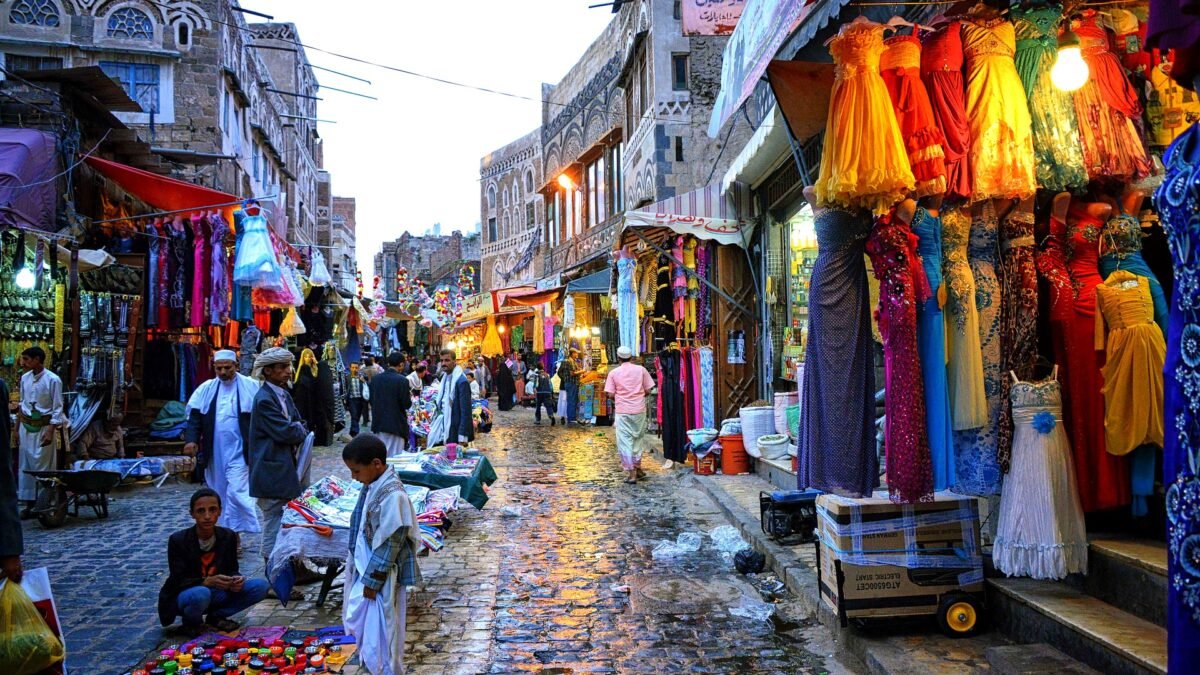
Saudi-led warplanes carried out their heaviest air campaign in Yemen in months on Tuesday, striking what the coalition said were 60 Houthi military targets across four governorates, as the rebels advanced to within 60 kilometres of Aden and fired missiles towards the Saudi capital, Riyadh.
The operation, announced on Wednesday by the coalition’s spokesman, Major General Turki al-Malki, hit targets in the capital, Sanaa, and in the governorates of Hodeidah on the Red Sea coast, Amran and Saada, according to the coalition. It was aimed, the spokesman said, at weakening the Houthis’ ballistic missile and drone capabilities and at neutralising what he called the maritime threat the group poses.
Houthi authorities said at least 17 people were killed in the strikes, including 15 at a foam factory in the port city of Hodeidah. The toll could not be independently verified, and the coalition gave no casualty figures of its own. The two sides’ accounts of the same night of bombing could hardly be more different: the coalition described a precision campaign against military targets, while Houthi-run outlets listed factories, grain silos and a shoe workshop among the places hit.
The strikes came at a moment when the map of Yemen’s war is moving fast. Days earlier, Saudi-backed forces withdrew from positions around Bab el-Mandeb, the narrow strait at the southern end of the Red Sea through which a large share of world shipping passes, to defend Aden, the seat of Yemen’s internationally recognised government. Houthi fighters moved into the vacated ground and pressed on towards the interim capital. The coalition’s air campaign was, in effect, an answer delivered from the sky to an advance it could not stop on the ground.
It also came against the background of a much wider regional war. The United States and Iran have been at war since February, the Strait of Hormuz has been effectively closed to much shipping, and the Gulf states have spent the week under Iranian drone attacks. Yemen’s fighting, which flared again in July after years of relative quiet, is now feeding directly into that wider conflict — and being fed by it.
What the coalition says it hit
Major General al-Malki announced the operation in a statement posted on X on Wednesday morning, describing it as a “precision operation” carried out on Tuesday, 17 November, according to Bloomberg and the Associated Press. He said coalition aircraft had destroyed 60 “legitimate military targets” in Sanaa, Hodeidah, Amran and Saada.
The targets, he said, included tunnels dug into mountains and used as workshops and storage facilities for ballistic missiles, as well as workshops where drones are assembled and stored. The operation, the coalition said, was designed to degrade the Houthis’ ability to fire missiles and drones and to neutralise the threat they pose to shipping.
Local sources in Sanaa told the South24 news centre that explosions were heard near Al-Hafa military camp and Mount Nuqum in the east of the city, and that strikes also hit Bani Jarmouz and Bayt Dahrah military camp to the north. The Houthi-run Saba news agency reported that three strikes hit the Al-Kabous grain silos and mills in Hodeidah, and that two more targeted Kamaran Island in the Red Sea.
The coalition did not specify the exact locations of the targets it struck, and it provided no figures for casualties. The announced target count and the claimed destruction have not been independently verified, a point the Associated Press made explicitly in its reporting.
Houthi military spokesman Yahya Saree gave a different number: he said areas under the group’s control had been subjected to 81 airstrikes and missile strikes over 24 hours. The two figures are not directly comparable — the coalition counted targets, Saree counted strikes — but the gap between them is a reminder that in Yemen’s war, even the basic arithmetic of a night’s bombing is contested.
Earlier in the week, Saudi Arabia assigned Fayyad al-Ruwaili to serve as commander of the Joint Forces, the command that leads the coalition supporting Yemen’s government, according to Bloomberg. The appointment came as the campaign entered its most intense phase in months.
The dead, and the dispute over who they were
The deadliest single strike reported was on a foam factory in the industrial area north of Hodeidah. Anees al-Asbahi, a spokesman for the Houthi-run health ministry, told the Associated Press that the strike on the Al-Khawlani foam factory killed at least 15 people and wounded 13 others. By Wednesday morning, the ministry said, the death toll at the factory had risen to 15 from a lower preliminary figure reported on Tuesday, and search operations for missing people were continuing.
Footage released by the Houthi-run Al-Masirah television channel showed black smoke and flames engulfing a factory in Hodeidah after the reported strikes, according to Reuters.
Houthi authorities put the overall death toll from the night’s strikes at at least 17. A second strike, in the Kitaf district of Saada governorate, killed at least two people and wounded four, according to the health ministry. A strike on a shoe factory in Sanaa wounded nine people, the ministry said.
Houthi-affiliated media reported that the strikes in Sanaa hit a footwear and textile factory operated by the Al-Yateem Foundation in the Al-Nahda neighbourhood of Al-Thawra district, a gypsum factory in Bani al-Harith, and the Proplast plastics factory in Hamdan district. The Houthi-run Ministry of Economy said nine workers were injured at the footwear and textile factory and estimated the damage at approximately $450,000. South24, which reported both accounts, noted that the nature of the targeted sites and the extent of the damage could not be independently verified.
The Houthi-run Civil Defense Authority accused Saudi forces of carrying out additional airstrikes during rescue operations, injuring three of its personnel and damaging fire engines. That allegation could not be independently verified either.
One point of confusion in early reporting deserves to be stated plainly. Some headlines described the dead as 17 Houthis killed by the coalition. That is not what the reporting supports. The figure of 17 comes from the Houthi-run health ministry as the total number of people killed, and the largest single group of them — 15 at the foam factory in Hodeidah — were, according to the ministry, workers at a civilian factory. The coalition itself gave no casualty figures at all. Whether the dead were fighters or factory workers is, on the available evidence, a claim made by one side and unverified by any independent source.
That uncertainty is not a detail. It is the central problem of reporting this war. The coalition does not publish casualty figures. Houthi authorities control the hospitals and the morgues in the areas they hold, and no independent monitors have access to the strike sites. What can be said with confidence is that at least 17 people died, according to the only authority counting them, and that a factory in Hodeidah was destroyed. Everything beyond that is a claim.
Missiles over Riyadh
While coalition jets were bombing Yemen, the Houthis were shooting back at Saudi Arabia. The coalition said on Wednesday that it had intercepted a cruise missile fired towards Riyadh, according to Bloomberg. The Houthis say they are targeting Riyadh’s main airport and its financial district, both of which, Bloomberg reported, have suffered damage in Houthi strikes in recent weeks.
Other reporting put the number of intercepts higher: the Associated Press reported that the coalition intercepted two cruise missiles launched towards the capital on Wednesday, and a live account of the day’s events said the coalition intercepted two cruise missiles and two drones. The discrepancy is not unusual in fast-moving reporting of air defences, where a single engagement can be counted differently by different sources, but it means the exact scale of Wednesday’s attack on Riyadh cannot yet be stated with certainty.
What is certain is that the Saudi capital has come under near-daily attack from the Houthis in recent weeks, according to Bloomberg, and that Saudi civil defence has repeatedly issued alerts for the city. On Tuesday, the Houthis said they had launched five drones towards two pumping stations on Saudi Arabia’s East-West oil pipeline, according to Reuters. Saudi authorities did not confirm any damage to the pipeline, and Bloomberg reported that operations on the pipeline — a critical conduit that moves Saudi oil to the Red Sea for export — were unaffected.
The pipeline had been targeted before. Last week, the Houthis struck at the same infrastructure, and the week before that the coalition said it had intercepted three missiles fired at the kingdom, two of them over Riyadh. The pattern is now a routine of the war: Houthi missiles and drones aimed at Saudi cities and energy infrastructure, Saudi air defences intercepting most of them, and Saudi jets answering with strikes on Yemen.
The routine, however, has grown more dangerous. The Houthis’ missiles now reach the capital regularly, and the coalition’s own statements acknowledge that some have caused damage. For a kingdom that has spent a decade trying to end its involvement in Yemen, the return of missiles over Riyadh is a failure of the first order — and the reason the coalition is bombing again.
The ground war: Aden in the rebels’ sights
The air campaign cannot be understood without the ground war that preceded it. On 15 November, the Saudi-backed Southern Armed Forces announced that they were redeploying from Dhubab airport and the area around Bab el-Mandeb to reinforce Aden and neighbouring governorates. The force said securing Aden, the interim capital, was the priority.
The Houthis moved quickly into the vacated positions. Houthi-run media said the group had taken control of the land near the strait, and by 16 November its fighters had reached Khor Omairh, roughly 100 kilometres west of Aden, according to the South24 centre. Four military sources within government forces and two government sources told the Agence France-Presse news agency that the Houthis had seized the Al-Maqatirah and Al-Madaribah districts in Lahj province and had advanced to about 60 kilometres from Aden.
Reuters, citing Yemeni military sources, placed Houthi forces outside Tur al-Bahah, about 80 kilometres from Aden, rather than at the closer position described to AFP. The difference matters less than the direction: in a matter of days, the rebels went from the coast to the approaches of the government’s last stronghold. Fighting resumed in Tur al-Bahah in Lahj, described as the first defensive line for Aden, and a South24 military source reported clashes there overnight on Tuesday into Wednesday. No fighting inside Aden itself has been reported.
The withdrawal ended weeks of government efforts to secure the strait. In September, the Houthis had seized the area around Bab el-Mandeb in a surprise advance, and government-aligned forces said in early October that they had retaken it. The November pullback handed it back. When the Houthis captured the area in September, they said their control would not endanger international shipping through the waterway, but that they would keep targeting vessels from Saudi Arabia, according to the BBC.
The strait is one of the world’s great shipping chokepoints. It connects the Red Sea with the Gulf of Aden, linking shipping from the Indian Ocean to the route through the Suez Canal. About 4.2 million barrels of oil a day crossed it in 2025, according to the Council on Foreign Relations. Satellite estimates by IMF PortWatch put transits at 26 a day as of 11 November, a figure 33.8 per cent down on the same week in 2025 — a measure of how far shipping has already retreated from the route.
That retreat is partly a consequence of the Houthis’ earlier Red Sea campaign, and partly of the wider war. With the Strait of Hormuz effectively closed by the US-Iran war, Saudi Arabia has been leaning on the Red Sea for its oil exports, according to the BBC. A Houthi grip on Bab el-Mandeb would close the second door just as the first one shut.
There was one piece of better news in the week. The Houthis released 600 members of government forces held since hostilities resumed in July, in what the group called the largest unilateral prisoner release and pardon operation in the history of the conflict, with the support of the International Committee of the Red Cross. It was a reminder that even in the middle of an escalation, the machinery of prisoner exchange still turns.
Taiz, the siege and the displaced
Further north, the fighting around Taiz has grown fiercer. Al Jazeera’s correspondent in the city reported fierce fighting between government and Houthi forces, with villages on Jabal Sabr under complete siege, according to the South24 centre. Taiz authorities have accused the Houthis of imposing levies at checkpoints and confiscating shipments of medicine. The city’s health office condemned the reported confiscations on Monday, and officials have appealed for United Nations intervention.
Taiz has been encircled since early October. The UN Office for the Coordination of Humanitarian Affairs says more than 340,000 people have been displaced across Yemen since August. Its reporting for the period from 1 August to 10 November put the number at 329,117 people, or 54,846 households. The International Organization for Migration’s displacement tracking put the figure higher still, at more than 334,000 as of 10 November. The United Nations has said more than 1,600 people have been killed and more than 300,000 displaced since fighting resumed.
The figures differ because they cover different periods and count different things, but they agree on the scale: the largest displacement in Yemen in years, in a country that was already facing one of the world’s worst humanitarian crises before the fighting resumed. In Taiz, the UN’s October update described a city increasingly cut off, with road closures disrupting supplies, water production down by about half and food prices up by about 50 per cent.
The UN refugee agency said it was gravely concerned by reports of clashes around the Kharaz refugee camp in Lahj province, adding that 9,600 refugees were at risk. No United Nations reaction to this week’s escalation had been reported by Wednesday.
A war that never ended
Yemen’s war began in 2014, when the Houthis — formally known as Ansar Allah, or Supporters of God — took Sanaa, the capital, and forced the internationally recognised government to flee. A Saudi-led coalition intervened the following year, in 2015, to support the government, which has operated from Aden ever since. The United Arab Emirates was among the coalition’s most prominent members.
An informal UN-brokered truce reached in 2022 brought a long period of relative calm, but it later collapsed as fighting escalated again. The current round of hostilities began in July, when, according to Bloomberg, Saudi jets struck an airport in Sanaa to prevent the landing of what the kingdom said was a Houthi delegation returning from Iran with weapons. Hostilities intensified in October, as Saudi-led forces launched a new campaign to take back control of Houthi-held areas.
The coalition that is bombing Yemen today is not the coalition of 2015. Abu Dhabi announced the completion of its military withdrawal from Yemen on 2 January 2026, following a dispute with Riyadh in late 2025 and a request by the Riyadh-based Yemeni government for Emirati forces to leave the country, according to South24. Saudi Arabia continues to use the name “Coalition to Support Legitimacy” in its military statements, although no Emirati participation in the latest airstrikes has been announced.
The war’s wider setting has also changed beyond recognition. The United States and Iran have been at war since February, and the Gulf states have spent the week under Iranian drone attacks. On Tuesday, the same day the coalition bombed Yemen, Iran fired drones at a US radar system in Bahrain for the third time in five days, and a US fighter jet struck an Iranian missile site on Qeshm Island. Three American aircraft carrier strike groups are now in the region. The Houthis, who are backed by Iran, are fighting their war inside a much larger one — and their missiles at Riyadh and their grip on Bab el-Mandeb are part of that larger war’s geography, not separate from it.
That is what makes this week’s escalation different from the rounds that came before it. Yemen’s war used to be a war of its own, fought over a country most of the world had forgotten. It is now a front in a regional war that reaches from the Strait of Hormuz to the Red Sea, and its outcome will be decided by forces far beyond Yemen’s borders as well as by the fighters on its ground.
Analysis: Why It Matters
1. The coalition bombed because it is losing on the ground
The most important fact about Tuesday’s strikes is not the number of targets claimed. It is the reason they were ordered. Days earlier, the coalition’s own allies gave up the Bab el-Mandeb strait — the single most valuable piece of ground in the war — and fell back to defend Aden. The air campaign was an attempt to do from the air what the coalition’s ground forces could not do on land: stop a Houthi advance that is now within 60 to 100 kilometres of the government’s capital.
Air power has been tried before in this war, for a decade, and it has never by itself decided anything. The Houthis have survived years of bombing by dispersing, by digging into mountains — the very tunnels the coalition says it destroyed on Tuesday — and by accepting losses that would have broken a conventional army. Sixty targets is a large number for one night, but it is a number the coalition has produced before, and the Houthis have always come back. The question is not whether the bombing hurts the Houthis. It is whether it changes the direction of a ground war that is moving against the coalition, and the evidence of the past decade says it does not.
2. Bab el-Mandeb is now the hinge of two wars at once
The strait matters because it is where Yemen’s war meets the world’s economy. With the Strait of Hormuz effectively closed by the US-Iran war, the Red Sea route through Bab el-Mandeb and the Suez Canal is the alternative path for oil and goods between Asia and Europe. The Houthis now control, or contest, both ends of that alternative. Transits are already down by a third on last year, and every week the strait stays contested, the cost of shipping rises and the pressure on the world’s energy markets grows.
That is why this is not only a Yemeni story, or even only a Saudi one. The governments that will feel the consequences of a Houthi-held Bab el-Mandeb are in Europe and Asia, not only in Riyadh and Aden. The coalition’s stated aim — to neutralise the maritime threat — is an admission that the threat is now the central fact of the war. But the bombing of Sanaa and Saada does not reopen a strait. Only a settlement on the ground, or a military reversal the coalition has not achieved in a decade, can do that.
3. The missiles over Riyadh are the war coming home
For Saudi Arabia, the return of Houthi missiles over its capital is the most politically damaging development of the week. The kingdom intervened in Yemen in 2015 to keep a friendly government in Sanaa and to keep its southern border quiet. Eleven years later, the Houthis hold the capital, control the Red Sea coast, and fire missiles at Riyadh almost daily. The war that was supposed to be won in weeks has become a permanent condition, and the missiles are its most visible proof.
That matters because the Saudi public, and the Saudi leadership, had been told the war was ending. The 2022 truce, the talks with the Houthis, the withdrawal of the Emiratis — all of it pointed towards an exit. The events of this week point the other way. A kingdom that is trying to present itself to the world as a stable hub for investment and diplomacy cannot easily do so while its capital is under regular missile attack, and the pressure to answer that attack with force is exactly what produced Tuesday’s bombing.
4. The casualty dispute is the story, not a footnote
The argument over who died on Tuesday — fighters or factory workers — is not a detail to be settled later. It is the central moral question of the war, and it is unanswerable on the evidence available. The coalition does not publish casualty figures. The Houthi authorities control the hospitals. No independent monitors have access to the sites. The result is that every strike produces two incompatible stories, and the world is left to choose between them.
That is worth saying plainly, because the alternative — repeating one side’s numbers as fact — is how wars are misreported. The foam factory in Hodeidah was, by every account, a factory. The Houthis say 15 of its workers were killed. The coalition says it hit a legitimate military target. Both statements could be true, if the factory was near a military site, or if the coalition’s intelligence was wrong. Or one of them could be false. Without independent access, nobody outside Yemen can know, and the honest thing is to say so rather than to pretend otherwise.
5. Yemen is no longer a war of its own
The deepest change this week is the one that is hardest to see: Yemen’s war has stopped being a war of its own and become a front in a regional one. The Houthis are backed by Iran, which is at war with the United States. The coalition is led by Saudi Arabia, which is under Iranian drone attack by proxy and by direct threat. The straits that frame the war — Hormuz and Bab el-Mandeb — are the two chokepoints of the world’s oil trade, and both are now contested at the same time.
That means the war in Yemen will not be ended in Yemen. It will be ended, if it is ended, by the outcome of the wider war, or by a settlement that addresses the region as a whole. The bombing of Tuesday will not do it. The advance on Aden will not do it. The missiles over Riyadh will not do it. What will decide Yemen’s future is whether the regional war that now contains it can be brought to an end — and on the evidence of this week, that prospect is further away than it has been all year.
What to Watch Next
- The advance on Aden: whether Houthi forces close the remaining distance to the interim capital, and whether government and Southern forces can hold the line at Tur al-Bahah, about 80 kilometres from the city.
- The strait: whether shipping through Bab el-Mandeb falls further, and whether the Houthis act on their statement that they will keep targeting Saudi vessels while sparing other shipping.
- Riyadh’s skies: whether Houthi missile and drone attacks on the Saudi capital continue at their current near-daily pace, and whether any get through the air defences.
- The casualty question: whether any independent source gains access to the strike sites in Hodeidah and Sanaa, and whether the coalition answers the Houthi account of civilian deaths.
- Taiz: whether the siege of the city tightens further, and whether the United Nations responds to the appeal for intervention.
- The wider war: whether the US-Iran fighting in the Gulf escalates further, and how far it pulls Yemen’s war into its orbit.
- The coalition’s next move: whether Tuesday’s air campaign is followed by a ground counter-offensive to retake the Bab el-Mandeb area, or whether the bombing continues alone.
Sources
- Bloomberg News, “Saudi-backed forces in Yemen step up attacks on Houthis” (via BusinessMirror), 18 November 2026
- South24 Center, “Riyadh Says 60 Houthi Targets Destroyed in Four Yemeni Governorates”, 18 November 2026
- The Globuzz, “Saudi-Led Coalition Says Yemen Strikes Hit 60 Houthi Targets” (Associated Press; Qatar News Agency; Reuters), 18 November 2026
- The Library Media, “Coalition Announces Strikes on 60 Houthi Targets as Fighting Intensifies West of Aden” (Associated Press reporting), 18 November 2026
- Daily Inference, “Report: Houthis take Bab al-Mandeb area as Yemeni forces fall back on Aden” (Reuters; BBC; Al Jazeera), 16 November 2026
- RIX News, “Houthi media say group took Bab al-Mandeb area” (BBC reporting), 15 November 2026

About the Author — Abdul Mannan
Related Articles
Trump Hugged by Xi in Shenzhen and Shakes Putin’s Hand Ahead of Historic Three-Way Summit
Xi Jinping broke protocol to greet Donald Trump on the Shenzhen tarmac with a hug, and hours later…
Suspected Russian Aircraft Breach Japanese Airspace as Tu-95 Bombers Land in Vietnam in Biggest East Asia Deployment in a Decade
Two suspected Russian aircraft entered Japanese airspace before dawn on Tuesday, three countries scrambled fighter jets, and hours…
Xi and Putin Meet in Shenzhen on Eve of Historic Three-Way Summit with Trump as Ukraine Fears Grow
Xi Jinping and Vladimir Putin met in Shenzhen on Wednesday, a day before their historic three-way summit with…