
Pochettino Vows to ‘Change Things’ as Manchester United’s New Era Begins at Anfield

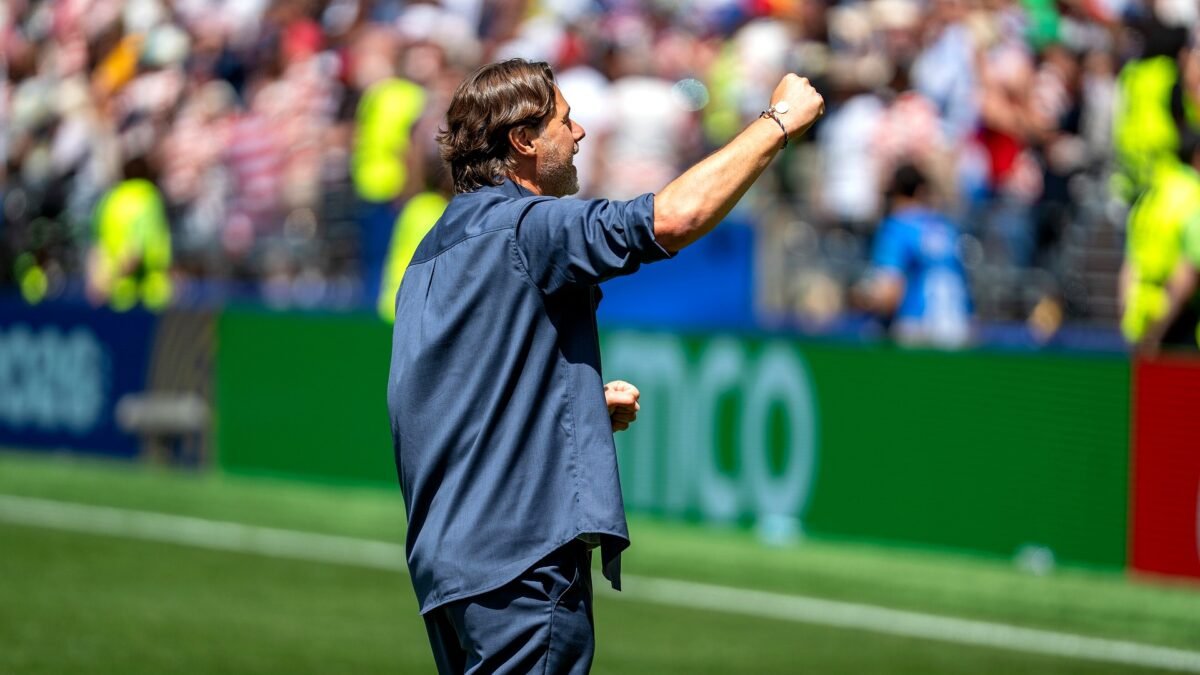
Mauricio Pochettino has vowed to “change things” at Manchester United, as the Argentine begins the most demanding rescue mission of his managerial career with a trip to Anfield on Sunday. The 54-year-old, who was confirmed as United’s new head coach last week, will take charge of his first match against Liverpool with the 20-time English champions sitting 18th in the Premier League, one place above the relegation zone, after the worst start to a season in 40 years.
According to Reuters, Pochettino will have had only three training sessions with his new players before Sunday’s game, after signing off his tenure as head coach of the United States men’s national team with a 2-0 win over Haiti on Tuesday. Yet in his first interview as United boss, given to Sky Sports, he struck a note of calm confidence rather than alarm.
“I think it’s a mistake to see the situation. We need to see the potential of this club,” Pochettino said. “It’s about to start to act and to change things, and to try to affect in a good way all the areas, to try to really believe that we can recover that feeling about to win.”
The scale of the task is stark. According to Reuters, United have won just one of their opening 10 Premier League matches, and talk of a relegation battle is “not misplaced”. A chaotic 4-4 draw at home to Aston Villa before the international break left United having conceded 19 goals in 10 league games, a total surpassed only by promoted Ipswich Town and bottom club Crystal Palace, Reuters reported. Sky Sports put the position in the same terms: 18th in the table, with the club’s dismal start defining everything about the new manager’s first days.
Pochettino is the eighth permanent manager to take charge at Old Trafford since Sir Alex Ferguson retired in 2013, according to Reuters, and none of his seven predecessors inherited a situation quite like this one. He has signed a two-and-a-half-year contract running until the summer of 2029, according to Sky Sports, after United triggered a release clause in his contract with US Soccer reported by ESPN to be worth $10 million (£7.5 million).
A baptism of fire at Anfield
There is no gentle introduction in English football quite like a first game at Anfield, and Pochettino’s debut could hardly be more unforgiving. Liverpool, under Andoni Iraola, are making a steady start to their own season, and the fixture remains one of the fiercest rivalries in the English game. According to Reuters, sympathy for the new United manager “will be in short supply at Anfield”.
Yet United carry a recent memory worth holding on to. According to Reuters, they won 2-1 at Anfield last season under Ruben Amorim and followed it with a 3-2 home win to complete a league double with Michael Carrick at the helm. The latest meeting will be a first for both managers, with Iraola also getting his first taste of the occasion.
Pochettino himself has played down concerns about his lack of preparation time. “We watch soccer every day, all the leagues, because that is our passion,” he said this week while preparing his United States team one last time, according to Reuters. “We know very well the team, every single team, and I think we don’t need too much preparation about the opponent. The most important thing is to know the details about our players, our staff, our culture, our identity, and from there to improve.”
Reuters also reported that, in some ways, Pochettino has a free hit on Sunday. Few would be surprised if United lost, while any positive result would be a bonus. The hard graft, the agency noted, begins after the Anfield game, when the new manager must turn a fractured, fragile squad into a functioning team.
How United got here
The speed of United’s collapse this season is what makes Pochettino’s appointment so striking. Less than six months ago, the club was celebrating a revival. According to Sky Sports, Michael Carrick was appointed head coach in January 2026 after Ruben Amorim was sacked earlier in the campaign, and he won 12 of his first 17 games in charge, securing Champions League football and earning a nomination for Premier League Manager of the Season. On 22 May, he was rewarded with a new two-year contract running to 2028.
That contract lasted barely six months. According to Sky Sports, Carrick was sacked on Thursday 12 November, 15 games into the two-year deal, after a draw with Aston Villa left United in the relegation zone after 10 league games. ESPN reported that the decision followed a meeting between United chiefs in Monaco, and that Pochettino had been the club’s preferred candidate from the start of the November international break.
The contrast between May and November captures the volatility that has defined United for more than a decade. A manager can be rewarded with a long contract in the spring and dismissed before the winter, and a squad that qualified for the Champions League can look, within months, like one fighting for survival. Pochettino inherits not just a team in 18th place, but a club whose decision-making has repeatedly swung between patience and panic.
The appointment itself was finalised with unusual speed. According to ESPN, United chief executive Omar Berrada told US Soccer on Wednesday that the club would trigger the release clause in Pochettino’s contract, which he had signed as part of a four-year extension in August. The formal announcement followed on Friday, with Pochettino expected to take charge officially on 18 November after fulfilling his final duties with the United States, according to the club’s statement reported by several outlets.
The first priorities: defence, fitness and Fernandes
According to Reuters, tightening United’s porous defence will be Pochettino’s first priority, alongside improving the fitness levels of a team that has been regularly out-run this season. The numbers support that diagnosis. Nineteen goals conceded in 10 games is the record of a side that cannot defend set pieces, cannot sustain pressure and cannot recover when the first plan fails.
Pochettino’s reputation as a coach is built on precisely those foundations. His teams at Southampton and Tottenham were defined by aggressive pressing, intensity and quick movement, and by a physical conditioning programme that made them among the hardest-running sides in the league. At Tottenham he turned a young squad into one that finished second in the Premier League in 2016-17 with 86 points, and he is renowned for his man-management and for developing young players.
The second priority, according to Reuters, is captain Bruno Fernandes. Former United defender Gary Neville told the Stick to Football podcast that Pochettino’s first big meeting should be with his captain. “I think Mauricio’s first big meeting is with Bruno Fernandes,” Neville said. “He’ll say ‘I’m gonna make you the best player in the league again, and I want you to be my captain, I want you to be brilliant. Let’s discuss the contract in the summer.’”
Fernandes has carried United’s creative burden for years, and his form and influence will shape how quickly the new manager’s ideas take hold. A captain who buys in can accelerate a rebuild; a captain who drifts can stall it. Pochettino’s record of building close relationships with senior players — Harry Kane at Tottenham was the most famous example — suggests he will invest heavily in that conversation.
Love the players he has
One of the most revealing passages of Pochettino’s first interview concerned the January transfer window. According to Sky Sports, the new manager is set to be backed in January, with the club targeting a left-back, a centre-back and a forward, and he is expected to have input on the targets pursued. But Pochettino was careful to push the focus back to the present.
“The best request that we can have, the players that we have, and we need to love the players that we have,” he said, according to Sky Sports. “We need to support the players, we need to provide all the tools for their performance. It’s only an act of responsibility now to start to work and provide them the possibility to translate all their talent on the field.”
The message is a familiar one from Pochettino, and a deliberate one. His best teams were built by improving the players already in the building rather than by shopping for new ones. At Southampton he took a squad many expected to struggle and finished eighth in 2013-14 with 56 points. At Tottenham he developed Kane, Dele Alli and Son Heung-min into one of the most exciting attacks in England. The subtext at Old Trafford is clear: the squad that sits 18th is not as bad as the table suggests, and the first job is to make it believe that.
According to Sky Sports, United have 10 fixtures across all competitions before they will be able to add reinforcements in the New Year. That run will define the first phase of Pochettino’s reign. If the team steadies, January becomes an opportunity to strengthen from a position of stability. If it continues to slide, the window becomes a rescue operation.
A career of near misses — and one big chance
Pochettino’s managerial career, which began at Espanyol in January 2009, has been a story of teams transformed and trophies narrowly missed. According to Sports Mole, he moved to Southampton in January 2013, then to Tottenham in May 2014, where he recorded 160 wins in 293 matches, guided Spurs to three consecutive top-three finishes and took them to their first Champions League final in 2019, losing 2-0 to Liverpool in Madrid. He was sacked that November, barely six months after the final.
At Paris Saint-Germain, where he replaced Thomas Tuchel in January 2021, he won the only three major trophies of his managerial career: the Trophée des Champions and the Coupe de France in 2021, then the Ligue 1 title in 2021-22. He left in July 2022 after the club’s Champions League ambitions were ended by Real Madrid. At Chelsea, in 2023-24, he inherited a young squad that had finished 12th, improved it to a sixth-place finish with 63 points and reached the League Cup final, which Chelsea lost to Liverpool after extra time. He departed by mutual consent in May 2024.
Then came international football. According to Sports Mole, Pochettino succeeded Gregg Berhalter as head coach of the United States in September 2024, drawn by the chance to lead the host nation at the 2026 World Cup. At the tournament, his side reached the round of 16, beating Paraguay, Australia and Bosnia and Herzegovina before losing 4-1 to Belgium. In August 2026 he signed a contract extension through the 2030 World Cup, an extension that contained the release clause United have now triggered.
The pattern is instructive. Pochettino has repeatedly built teams that play with identity, intensity and belief, and repeatedly fallen just short of the biggest prizes. At Tottenham he built a side good enough to reach a European final without ever winning a trophy. At PSG he won trophies that felt, in Paris, like the minimum. At Chelsea he restored order without delivering silverware. Manchester United is now the stage on which that pattern either breaks or repeats — and the starting point, 18th in the league, means the first test is not about trophies at all, but about survival and stability.
Analysis: Why It Matters
Manchester United’s decision to appoint Mauricio Pochettino is, on its face, the most logical appointment the club has made since Sir Alex Ferguson retired. That is both a compliment and an indictment: the logic has been obvious for a decade, and United spent that decade ignoring it.
The appointment United should have made years ago
Pochettino has been linked with the Old Trafford job almost continuously since his Tottenham side began challenging for the title in 2016. He was the outstanding candidate in 2019, when Ole Gunnar Solskjaer was given the job permanently, and again in 2022, when Erik ten Hag was chosen instead. Each time, United chose a different profile — a club legend, a proven winner from abroad, a caretaker who became permanent — and each time the cycle repeated itself.
What makes Pochettino different from his predecessors is not a trophy haul, which is modest, but a record of building. His best work has come with squads that needed structure, fitness, belief and a clear identity, which is an exact description of the current United squad. He does not need a blank cheque and a new team; his career suggests he needs time, authority and a dressing room willing to run. Whether United’s hierarchy, which has rarely granted all three at once, can do so now is the central question of this appointment.
The table does not lie, but it can mislead
Eighteen months ago, the same squad — or something close to it — was winning 12 of 17 games under Michael Carrick and qualifying for the Champions League. That does not mean the players are secretly a top-four side. It means the distance between competence and collapse at this club has become frighteningly small, and that confidence, structure and fitness — the things a manager controls most directly — are the difference between the two.
Pochettino’s first interview suggests he understands this. By insisting that the club must “see the potential” rather than the situation, and that the players already at the club must be loved and supported, he is framing the job as restoration rather than reconstruction. It is the right framing, and it is also the fastest route to points: a team that defends better, runs harder and believes in its captain can climb from 18th to mid-table in a month. The harder question is what happens after that, when the fixtures get harder and the January window opens and the club must decide whether it is building for survival or for something more.
Anfield will tell us little — and everything
Sunday’s result should not be over-read. As Reuters noted, Pochettino has had three training sessions, and a defeat at Anfield would surprise nobody. But the performance will matter more than the scoreline. Is the team organised? Does it press with intent? Does it look fit enough to sustain a game plan for 90 minutes? Does Bruno Fernandes look like a captain with a manager behind him?
The fixture also carries a peculiar symmetry. Pochettino’s greatest night as a manager, the 2019 Champions League final, ended in defeat to Liverpool. His first game as United manager comes against the same club, in the same competition of English football’s fiercest rivalry, with Liverpool themselves under a new manager, Andoni Iraola, who is also tasting the fixture for the first time. History does not repeat itself neatly in football, but it rhymes, and Sunday is a loud rhyme.
The January test
Behind the warm words about loving the current squad sits a harder reality: United are targeting a left-back, a centre-back and a forward in January, according to Sky Sports. Those three positions map exactly onto the team’s visible weaknesses — a defence that has conceded 19 goals in 10 games, a left side that has lacked balance, and an attack that has not scored enough to compensate.
The danger is that January becomes a repeat of previous windows, in which United spent heavily and incoherently. Pochettino’s insistence that he will have input on targets is therefore significant. His best signings have been players who fit a system — at Tottenham, the recruitment of players like Toby Alderweireld and Son Heung-min was defined by how they would function inside his pressing structure. If United give him genuine influence over January, the window could be the first evidence that this appointment is different from the last seven.
A club, not just a team
Finally, it is worth remembering what Pochettino said about culture and identity. “The most important thing is to know the details about our players, our staff, our culture, our identity, and from there to improve,” he said, according to Reuters. That is not a platitude. United’s problem for 13 years has not been a shortage of talent or money; it has been a shortage of identity. Managers have arrived with different philosophies, squads have been assembled from different eras, and the club has lurched between styles.
Pochettino brings a clear identity: high pressing, high fitness, young players trusted, senior players empowered. It is an identity that fits the club’s traditions and the squad’s strengths. The question, as ever at Old Trafford, is whether the club will give it time to take root. Two-and-a-half years is the contract. History says the patience may last far less. Pochettino’s first task is to make sure the results arrive quickly enough that the question never has to be asked.
What to Watch Next
- Sunday at Anfield: Pochettino’s first team selection, the shape he chooses and whether United can stay organised against Liverpool, who are themselves under new management in Andoni Iraola.
- The first month: United have 10 fixtures across all competitions before January. Results across that run will show whether the defensive and fitness work is taking hold.
- Bruno Fernandes: the captain’s form and body language in the opening games will be the clearest signal of whether the dressing room has bought into the new manager.
- The January window: whether United deliver the left-back, centre-back and forward Pochettino wants, and whether he has real influence over the targets.
- The relegation line: how quickly United climb out of the bottom three. The gap is small, but so is the margin for error: a club of United’s size cannot afford to spend the winter looking over its shoulder.
- The wider title race: as Reuters noted, champions Arsenal have seized early control while Manchester City, whose manager Enzo Maresca began with seven successive wins before three straight defeats, try to recover. United’s crisis has, for now, taken the spotlight off their neighbours.
Sources
- Reuters — Pochettino thrown in at the deep end as United reign begins at Anfield
- Sky Sports — Mauricio Pochettino at Manchester United: New boss vows to change situation at Old Trafford in first interview
- Sky Sports — Mauricio Pochettino: Manchester United agree two-and-a-half-year deal with USA manager to replace Michael Carrick
- ESPN — Mauricio Pochettino agrees Man United contract — sources
- Flashscore — Man Utd appoint Pochettino as new head coach after Carrick sacking
- Sports Mole — Mauricio Pochettino: Career, salary, tactics, clubs and trophies ahead of Man United appointment

About the Author — Abdul Mannan
Related Articles
Nicholls’ Unbeaten 113 Rescues New Zealand to 243 for 5 After Bumrah’s Opening Blitz in Wellington Test
Henry Nicholls' unbeaten 113 and Glenn Phillips' 94 not out rescued New Zealand to 243 for 5 on…
Pat Cummins Faces Captaincy Crisis as Bancroft’s Sandpapergate Tell-All Reopens Cricket’s Darkest Scandal
Cameron Bancroft's 4,000-word statement says the whole Australian team knew about the sandpaper plot — and the cricket…

Ben Duckett’s 133 Seals England’s First ODI Series Win in Australia in Eight Years as Hosts Collapse Again in Hobart
Ben Duckett struck 133 and Sonny Baker took four wickets as England beat Australia by 97 runs in…