
Ben Duckett’s 133 Seals England’s First ODI Series Win in Australia in Eight Years as Hosts Collapse Again in Hobart

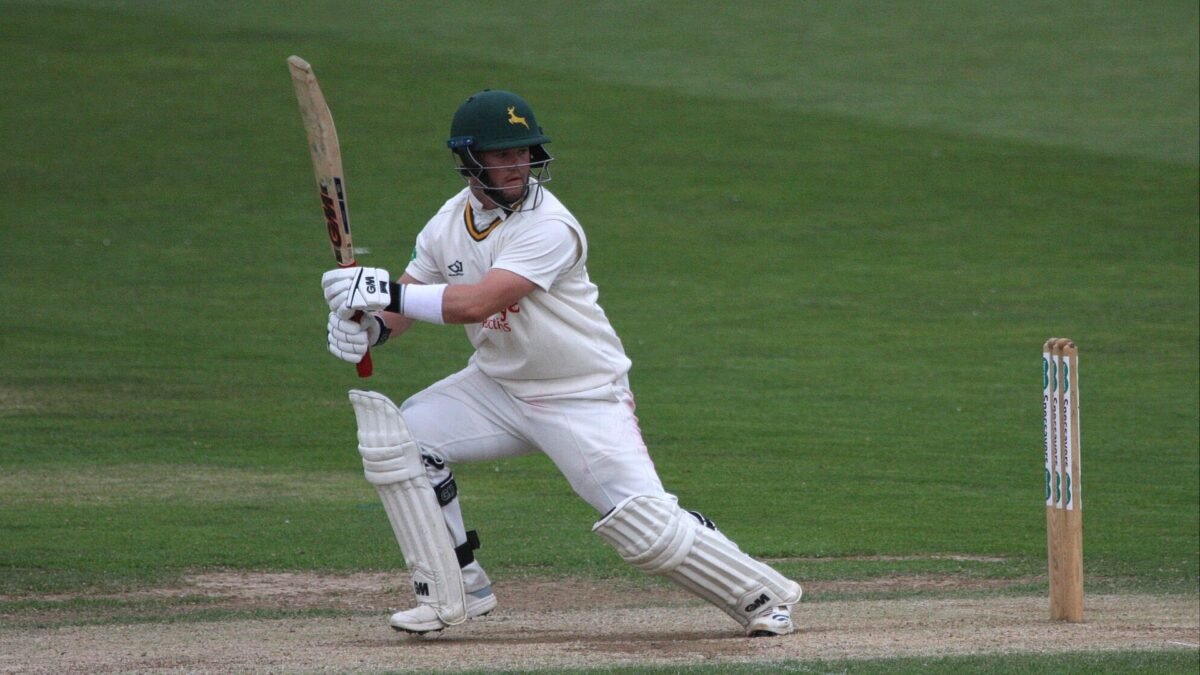
Ben Duckett struck a brilliant 133 and Sonny Baker took four wickets as England thumped Australia by 97 runs in the deciding third one-day international in Hobart on Wednesday, sealing a 2-1 series victory that ranks among the rarest achievements in English cricket. It was only the third time England have ever won a one-day series on Australian soil, and their first against Australia in the format for eight years.
England, who had been bowled out for 131 in the series opener in Perth five days earlier, completed a remarkable turnaround with a second successive comprehensive win, following Sunday’s 135-run victory in Adelaide. At Bellerive Oval, Duckett’s seventh one-day international hundred powered the tourists to 328 all out in 48.3 overs, and Australia, chasing a record target at the ground, folded for 231 in 46.5 overs.
Harry Brook, the England captain, won the toss and chose to bat in glorious conditions. His decision was vindicated within nine overs, as Duckett and Tom Banton shared an explosive 74-run opening stand, with Banton, fresh from his century in Adelaide, scoring 44 of England’s first 58 runs. Banton fell when he sliced Jack Edwards to mid-off, where Mitchell Marsh claimed a terrific juggled catch, running back with the flight of the ball and needing the third umpire to confirm that it had bobbled safely into his hands.
Duckett, by contrast, was a study in fortune and fortitude. He was first let off when his drive burst through the grasp of bowler Spencer Johnson, and he was dropped again when he pulled Mahli Beardman and Alex Carey floored the chance at square leg. Fortune favoured him, but he made the most of it. He hit Beardman for three consecutive fours and reached his hundred with a single off Cooper Connolly, his seventh ODI century coming off 94 balls. It was his fourth hundred of 2026 and his third in five one-day innings, and it took him past 2,000 runs in ODI cricket.
Around him, England’s innings was a mishmash. Joe Root was bamboozled by a beautifully flighted delivery from Matt Renshaw, Brook fell cheaply for the third time in the series, and Jordan Cox was stumped by Inglis off Renshaw. In the most surprising sight of the day, Jofra Archer was sent in to pinch-hit at number six, a position he had never occupied in his previous 26 ODI innings, and the bold tactic did not pay off: he made seven off seven balls before slog-sweeping Travis Head to deep midwicket.
Duckett marched on regardless, and his sublime knock ended in the 39th over when he top-edged a slog sweep off Renshaw and Josh Inglis pouched the catch. His 133 came off 115 balls and included 15 fours and three sixes. Will Jacks then lifted England with some big hitting at the death, making 59 off 48 balls at number seven before becoming the last batter dismissed, with nine deliveries left in the innings.
Australia had fought back well in the middle overs through Renshaw’s handy off-spin. The all-rounder, who finished with three for 51 off ten overs, the best figures of his List A career, changed his speeds superbly to pin down England’s scoring, settling into a groove alongside Connolly, while Head’s part-time spin also chipped in. With Adam Zampa ruled out with back spasms, Renshaw, Connolly and Head combined for five wickets in an admirable effort. Jack Edwards bowled well at the death to claim four for 31 off 5.3 overs, and Beardman, who had taken a six-wicket haul on ODI debut in Perth, finished with none for 54 off eight overs in his return after being rested for the second match.
Yet 328 was more than enough, and Australia’s chase was effectively over within eight overs. Baker and Gus Atkinson conjured considerably more swing than their Australian counterparts in a spectacular start with the new ball. Travis Head and captain Mitchell Marsh both fell to catches in the slips inside ten balls, Atkinson finding Head’s outside edge for a sharp catch by Joe Root, and Baker having Marsh edge a 144 kph delivery to second slip. Baker then nicked off Inglis, caught behind, to leave the hosts reeling at 34 for three.
Renshaw, moved from five to number three after Australia rejigged a batting line-up strengthened by Carey’s inclusion, gave the hosts faint hope with a half-century, his strong form continuing with 55. He received another reprieve when Baker spilled a straightforward chance, dropping a skier after running in from deep third when Renshaw was on six, and he was dropped again on 54 by Brook, an absolute sitter at wide long-off. But Liam Dawson, preferred all series ahead of veteran Adil Rashid, claimed a return catch to dismiss Renshaw shortly after being introduced into the attack in the 24th over, and the contest was essentially over.
What followed was more misery for the home side. Carey was run out in ham-fisted fashion after a slip, and Cameron Green had to retire hurt on three after a vicious bouncer from Atkinson smashed into his visor, leaving him with a bloodied lip and blood dripping from his mouth as he walked off. He was replaced under the concussion protocols by Ollie Peake, who made just five before holing out to Baker, who soon after added the wicket of Xavier Bartlett to complete his superb performance. Baker finished with four for 45 off ten overs, including a mesmerising opening spell of two for 20 off five, swinging the ball wickedly at speeds in the mid-140 kph range, while Dawson took three for 42. Edwards, who had decided not to go down without a fight, made 31, but it proved too little, too late.
The final wicket belonged, fittingly, to the captain. Brook surprisingly introduced himself to the attack and claimed his first-ever ODI wicket within five balls, dismissing Johnson for 15, caught by Duckett, after having a catch put down three deliveries earlier. England had won by 97 runs, and Duckett, player of the match in Hobart and player of the series with 190 runs, took the final catch after his star turn with the bat.
A comeback completed
The scale of England’s turnaround is hard to overstate. Five days earlier in Perth, they had been rolled for 131 and beaten by seven wickets, with Beardman taking six wickets on debut. They looked, in the words of Cricket Australia’s own match report, down and out. They rallied to win the final two matches in Adelaide and Hobart by 135 runs and 97 runs respectively, two of the most one-sided victories England have recorded against Australia in the format.
The series was won, according to Cricket Australia, on the back of England’s two openers. Duckett and Banton snapped a run of three straight series losses to Australia in the 50-over format dating back to 2018, and they did it by taking the attack to the home side from the first ball. In Hobart, Duckett and Banton blazed 101 runs from the first 12 overs, and in Adelaide, Banton had scored a century of his own. England’s batting, so fragile in Perth, suddenly looked like the side that had once posted 481 against this same opposition.
For Australia, the defeat was their fourth series loss this year by the same 2-1 margin, after going down to Pakistan and Bangladesh in June and South Africa in September. Their only ODI series win in 2026 was a 3-0 sweep of Zimbabwe, and their record in the format this year now stands at seven wins and seven defeats, with the World Cup less than a year away. They will not play another 50-over match until August next year, amid a heavy Test schedule, which means this defeat will linger. There is no quick chance to put it right.
A rare prize
England have only won two away ODI series against Australia before this one, and one of those was more than half a century ago. This was just the fifth time England have beaten Australia in a series Down Under in any format in the last 50 years, a measure of how rarely English sides have returned from Australia with a series win of any kind. The last ODI series victory over Australia, anywhere, came eight years ago, after defeats in 2020, 2022 and 2024.
Hobart added its own footnote. Wednesday’s victory was England’s first over Australia in Hobart in any format, and it ended the hosts’ perfect record against England at Bellerive Oval, where they had won all three previous men’s ODIs between the sides, in 2003, 2011 and 2015. Australia were chasing 329, a record target at the ground, and they never looked like getting there.
The win also underlined how much has changed in England’s white-ball side under Brook. The captain himself had a wretched series with the bat, scoring one, five and 17, yet his side won the series, and his own bowling sealed it. That is the mark of a team that is not dependent on one man, and it is a useful thing to learn about a side that has spent much of the last two years rebuilding after the retirements and departures that followed the 2023 World Cup.
The day Australian cricket was consumed by its past
Yet for all that happened on the field, the day will long be remembered for events that happened off it. As Renshaw and Carey tried to rebuild Australia’s chase, most fans in the country were probably distracted by Cameron Bancroft’s 4,000-word statement that had surfaced online, in which the former Test opener claimed that the whole Australian team knew about the ball-tampering plot in South Africa in 2018.
Bancroft, one of three players banned after Australia were caught using sandpaper to tamper with the ball during the third Test against South Africa in Cape Town, wrote that it was not just the three of them, himself, Steve Smith and David Warner, who knew about him using sandpaper on the ball in South Africa. “It was the whole team,” he wrote. He said sandpaper was first used during the second Test in Port Elizabeth, with Warner suggesting the method of ball manipulation and Bancroft asked to carry it out, before it was continued in Cape Town, where he was caught.
Bancroft admitted that he had not told the truth to Cricket Australia’s initial investigation, saying he withheld important details, such as when the use of sandpaper started, how long it lasted, and the involvement and awareness of others. “I did this to protect Cricket Australia’s investigation and not implicate others around me,” he wrote. He said his cricket career had been destroyed, and that he had reached a point where continuing to protect an incomplete account of events felt more damaging than the truth.
The final straw, Bancroft said, was Australian captain Pat Cummins’ marathon press conference on 13 November, in which Cummins denied Usman Khawaja’s version of events. Khawaja’s recently published autobiography had put the story back at the top of the news agenda eight and a half years after the scandal, and Bancroft said Cummins’ denials left him feeling “angry, betrayed and alone”. His account, published first by The West Australian, was released just hours after Cricket Australia declared that it was opening an independent forum where anyone from the 2018 team could share what they knew, but that it would not reopen the investigation and that there would be no further sanctions from anything said.
Cricket Australia’s chief executive, Todd Greenberg, spoke at a hastily convened press conference in Hobart ahead of the third ODI, playing down expectations of an eventual conclusion and seeking to argue that Khawaja’s and Cummins’ versions of events could coexist. Reacting to Bancroft’s words, Cricket Australia said in a statement: “We respect that Cameron Bancroft has told his story, and we will take time to consider his comments. We expect that there will be many dimensions to the events of 2018, which is why we have established the forum for individuals to give their version of events. We are finalising the terms of reference and will commence the process as soon as possible.”
Cummins’ manager, Neil Maxwell, responded that whilst the captain felt for Bancroft and everything he had been through, there was nothing in the statement that had not already been answered by Cummins in his press conference. But Bancroft’s intervention is the most significant yet, given his central role in the scandal, and scrutiny will no doubt ramp up again on the under-pressure Australia captain. The scandal that was supposed to have been settled in 2018, with three bans and a cultural review, is now, eight and a half years later, being re-litigated in public, one statement at a time.
Analysis: Why It Matters
The comeback is the story, not the scoreline
A 97-run win in a decider is emphatic, but it is the direction of travel that matters. England lost the first match by seven wickets after being bowled out for 131, and they won the next two by 135 runs and 97 runs. That is not a team that scraped through; it is a team that worked out what was going wrong and fixed it in the space of five days. The openers stopped being tentative, the bowlers found swing that Australia’s own attack could not, and the fielding held its nerve. Series are rarely won by the side that starts best. They are won by the side that adapts fastest, and England adapted.
Duckett has become England’s most reliable one-day batter
Four hundreds in a calendar year, three in five innings, 190 runs in this series, and a hundred in a decider on a ground where England had never beaten Australia. Duckett’s numbers are no longer a purple patch; they are a record. What stood out in Hobart was not the fluency, though there was plenty of that, but the stubbornness. He was dropped twice, he watched Root, Brook and Cox fall around him, he watched Archer walk out at number six in an experiment that failed, and he simply carried on. He has become the batter England build an innings around, and the fact that he did it while his captain scored 17 tells its own story about where this team’s runs now come from.
Australia’s one-day problems are now structural, not a blip
Four series defeats in a calendar year, all by 2-1, against Pakistan, Bangladesh, South Africa and now England. A 7-7 record for the year. A side that has lost its last three series to England’s great rivals and looks, on this evidence, a long way from the team that won the 2023 World Cup. The absences matter, Zampa’s back spasms left a hole that part-time spin could only partly fill, and the batting, which collapsed to 34 for three in the decider and then again after Renshaw’s dismissal, has now failed in two of the three matches. With the next World Cup less than a year away and no ODI cricket until August, Australia have time to think, but they do not have time to waste. The concern is not that they lost a series. It is that they lost it in the same way, twice in three days, to the same bowlers.
Baker and Dawson are the finds of the tour
Sonny Baker swung the ball wickedly at speeds in the mid-140 kph range and finished with four for 45, while Liam Dawson, preferred all series ahead of Adil Rashid, took three for 42 and removed the one Australian batter who looked capable of winning the game. England have spent years searching for a left-arm spinner they trust and a young seamer who can take the new ball in white-ball cricket. They may have found both in the same week. Baker’s opening spell of two for 20 off five overs decided the match before it had properly begun, and Dawson’s return catch to remove Renshaw was the moment the contest ended. England’s white-ball rebuild has been quiet and unglamorous, built on players like these rather than on stars. It is starting to look like a plan.
The Sandpapergate reckoning will not stay off the field
Bancroft’s statement landed in the middle of a match, and it will dominate Australian cricket for weeks. Cricket Australia’s answer, an independent forum with no fresh investigation and no new sanctions, was designed to let the story breathe out. Bancroft’s 4,000 words have done the opposite. The governing body’s claim that Khawaja’s and Cummins’ versions of events could coexist now sits alongside Bancroft’s flat assertion that the whole team knew, and the two cannot both be true in the way Cricket Australia needs them to be. The T20 series that starts on Saturday will be played against that backdrop, and every press conference will return to it. England won the cricket. Australian cricket’s hardest questions are still to come.
What to Watch Next
- The five-match Twenty20 series, which starts in Melbourne on Saturday, 21 November, with England chasing a white-ball double and Australia desperate for a win to bring attention back to on-field matters.
- Whether Cameron Green is fit to play any part in the T20 series after retiring hurt in Hobart with a bloodied lip and a suspected concussion, and what Cricket Australia’s concussion protocols conclude.
- Adam Zampa’s back, and whether the leg-spinner, ruled out of the decider with back spasms, is available for the T20 leg.
- How Cricket Australia’s independent forum into the 2018 ball-tampering scandal takes shape, and whether any other member of the 2018 side follows Bancroft in speaking publicly.
- Whether Pat Cummins responds directly to Bancroft’s claims, and how the Australia captain handles the scrutiny when the Test summer begins.
- Whether Ben Duckett’s form carries into the T20 series, and whether England’s openers can repeat their dominance in the shorter format.
- Harry Brook’s batting, after scores of one, five and 17 in the series, and whether the England captain can find runs before the T20s begin.
Sources
- Reuters — Duckett hammers hundred as England win ODI series against beleaguered Australia
- ESPNcricinfo — Duckett century, Baker four-for seal series win for England
- Cricket Australia — Run machine Duckett seals England ODI series comeback
- Sky Sports — England cruise to ODI series win over Australia as Ben Duckett scores century and Sonny Baker takes four wickets
- DAZN — Ben Duckett leads England to long-awaited ODI series victory against Australia
- DAZN — The whole Australia team knew: Cameron Bancroft speaks out on sandpaper scandal

About the Author — Abdul Mannan
Related Articles

India Beat Pakistan 2-1 to Win Record 10th SAFF Title as Both Teams Share Guards of Honour in Dhaka
India came from behind to beat Pakistan 2-1 in the SAFF Championship final in Dhaka, then both teams…
MS Dhoni Ends 19-Year IPL Playing Career as Chennai Super Kings Name Him Team Mentor for 2027
MS Dhoni has ended his 19-year IPL playing career and will serve as Chennai Super Kings' team mentor…

Declan Rice Agrees Five-Year Arsenal Contract Until 2031 as Gunners Lock Down Title-Winning Core
Declan Rice has agreed a new five-year contract with Arsenal that will keep the England midfielder at the…