
Iraq Strikes Last-Minute Deal to Avert Armed Clash With Iran-Backed Kataib Hezbollah Over Oil-Smuggling Stronghold

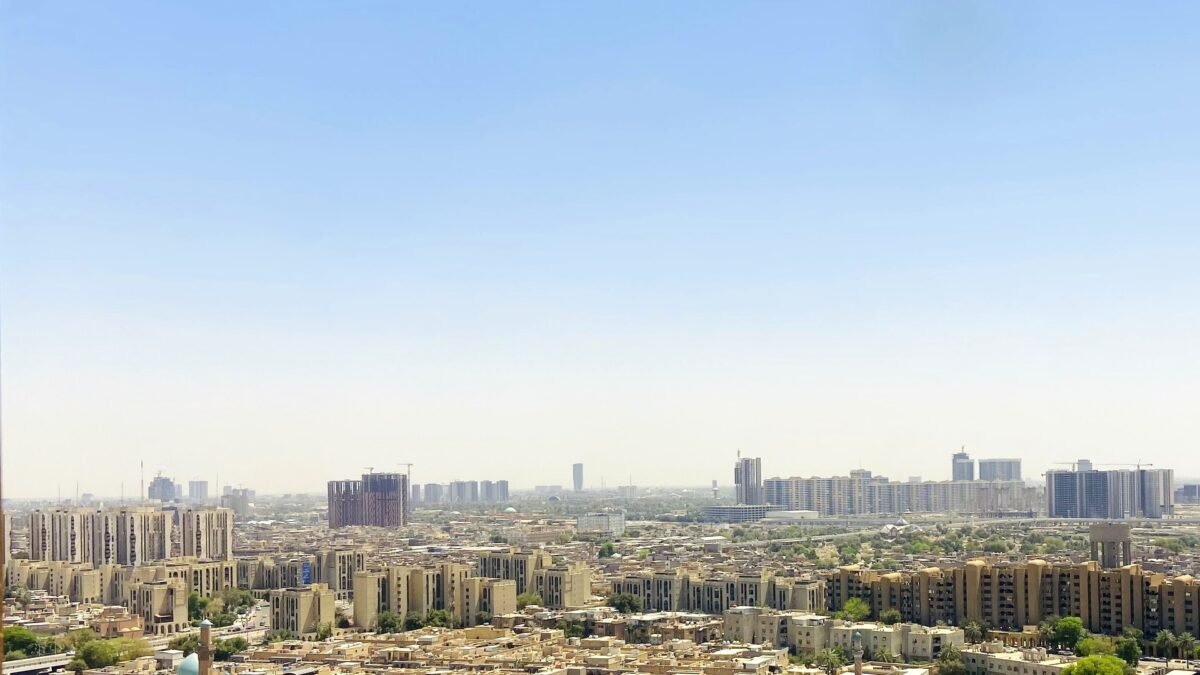
Iraq has struck a last-minute compromise with Kataib Hezbollah, the powerful Iran-backed militia, averting an armed confrontation over the group’s stronghold at Jurf al-Sakhar, according to three senior Iraqi security officials who spoke to Reuters on Thursday 19 November 2026. Under the deal, brokered by senior Shi’ite political leaders, government forces are expected to move into the militia’s stronghold on Friday, while Kataib Hezbollah’s fighters move to other areas, the officials said.
The agreement, if it holds, would defuse the most dangerous standoff between an Iraqi prime minister and an Iran-aligned armed group in years — a crisis that had threatened to turn into open fighting between the state and one of the country’s most heavily armed factions, at a moment when the wider war between the United States, Israel and Iran has already brought the region to the edge.
But the deal comes with a warning attached. The militia’s own commanders have publicly said they will not leave Jurf al-Sakhar, and neither Baghdad nor Tehran has publicly confirmed that any agreement exists. What the security officials described to Reuters as a compromise, the militia’s commander described this week as a fantasy. Friday will show which account is true.
Lieutenant General Saad Maan, head of Iraq’s Security Media Cell, told Reuters that Kataib Hezbollah’s forces would move to other areas as government troops entered the district. The officials said the arrangement had been brokered by senior Shi’ite political leaders to avert a confrontation, after Prime Minister Ali al-Zaidi readied security forces to move against the group.
The gravity of the crisis was underlined by the arrival in Baghdad late on Monday of Esmail Qaani, commander of Iran’s elite Revolutionary Guards’ Quds Force, who flew in to help defuse tensions with Tehran’s most powerful militia ally in Iraq, according to Iraqi Shi’ite political sources cited by Reuters. A spokesperson for Kataib Hezbollah said the group’s secretary-general, Abu Hussein al-Hamidawi, met Qaani, Hadi al-Amiri, head of the Badr Organization, another influential Iran-aligned militia, and other influential figures in a bid to prevent an escalation. Participants described the outcome of the talks as positive in a statement issued on Thursday.
The showdown that was hours away
The compromise came at the end of a week in which Iraq appeared to be sliding towards a direct clash between its own armed forces and a militia that is, on paper, part of those same armed forces. On Wednesday, Iraq’s armed forces command ordered the army, the federal police and the Popular Mobilization Forces to take control of Jurf al-Sakhar, according to the state Iraqi News Agency, and the prime minister set a deadline — Friday — for the armed faction to leave the area.
The trigger was an oil-smuggling scandal. Iraqi officials accused Kataib Hezbollah of running a smuggling ring that siphoned off hundreds of millions of dollars’ worth of state-owned oil, according to Reuters. A classified Iraqi Interior Ministry intelligence report, details of which were published by Iraqi media on 9 November, suggested the theft had been going on for at least five years. Drawing on satellite imagery, the report said oil had been siphoned from pipelines running through the area since 2021, transferred to a series of small refineries and then shipped out in tanker trucks that blended in with regular traffic on the road to Baghdad. The report did not name Kataib Hezbollah, but concluded that the smuggling was continuing “because the area is under the control and protection of one of the armed factions”. Iraqi media reports citing intelligence and ministerial findings have put the annual value of the diverted oil at nearly $2 billion — a far larger figure than the “hundreds of millions” cited by Reuters, a gap that reflects different measures of the same theft rather than a contradiction, but one that shows how much money is at stake.
Al-Zaidi responded with the boldest move of his six months in office. At an emergency meeting on Saturday, he reviewed the findings of a government investigation into the oil thefts, dismissed nine senior security and administrative officials in Babil province — including the provincial police chief and the director of the Oil Pipelines Company — and ordered that all suspects be referred to the judiciary. A high-level investigative committee had already entered the restricted zone on 13 November, backed by the military, to verify the smuggling allegations, and earlier this week it said it had identified several locations linked to smuggling operations in the area.
Kataib Hezbollah denied the allegations and hit back hard. In a statement issued on Sunday, the group accused the prime minister’s office of “fabricating lies”. Its senior figure Abu Talib al-Saidi, speaking to Agence France-Presse during a press visit the group organised to Jurf al-Sakhar on Tuesday, rejected the government’s accusations and the withdrawal order in the bluntest terms. “I can say with absolute certainty that the dream they harbour — that the Kata’ib would withdraw from Jurf al-Sakhar — will never be realised,” he said. “That will not happen, not even over our dead bodies.” He called al-Zaidi “an adventurer heading toward inciting discord” and warned: “Iraq is on the cusp of a major crisis.”
Al-Saidi also accused the prime minister of acting under American pressure, blaming Tom Barrack, the United States’ special envoy for Iraq and Syria, for the “escalation”. And he claimed that “understandings were reached at the end of September” regarding the group’s weapons, but that “the government refuses … to make it public”. The militia, meanwhile, mobilised approximately 8,000 fighters from various provinces towards Jurf al-Sakhar ahead of the government committee’s arrival, in a show of force that made the prospect of a clash look very real.
A town the state has not controlled for a decade
To understand why a single district 60 kilometres south-west of Baghdad could bring Iraq to the brink of an internal armed confrontation, it is necessary to understand what Jurf al-Sakhar has become. The area spans roughly 345 square kilometres and sits on the Shia pilgrimage route between Baghdad and the holy city of Karbala. It was once the site of former President Saddam Hussein’s military-industrial complexes, and its geography — remote, fortified, close to the capital — has long made it ideal for concealing weapons and other activities.
After the United States-led invasion of 2003 toppled Saddam, Jurf al-Sakhar became a hotspot for armed confrontations before the Islamic State group seized it in 2014. Later that year, the Popular Mobilization Forces, the umbrella organisation of mostly Shia armed groups, recaptured the territory from Islamic State. Kataib Hezbollah, one of the largest groups within the Popular Mobilization Forces, subsequently took full control, renamed the area Jurf al-Nasr — “Victory Bank” — and barred state institutions from entering. The militia sealed the town, citing security concerns, and in doing so effectively prevented the return of approximately 140,000 displaced residents, most of them Sunni, who have been kept out of their homes for more than a decade.
That sealed enclave is what makes the oil-smuggling allegations so damaging. According to security experts cited by Al Jazeera, the militia’s fierce resistance to the government’s move is driven less by security than by economics. The restricted zone is also alleged to host thousands of illegal fish farms, and the smuggling operation — pipelines tapped, crude processed in makeshift underground refineries, tankers dispatched to Baghdad — could only function, the Interior Ministry report concluded, because the area was under the control and protection of an armed faction. “The desperation over this area is not for security reasons but for financial reasons,” said Saif Raad, a security expert and former military officer, in comments reported by Al Jazeera.
Iraqi writer and journalist Hamza Mustafa told Al Jazeera that the militia’s mobilisation of thousands of fighters was “perhaps the last line of defence for them after their position appeared weak regarding the oil-smuggling operations”, noting that the group’s previous narrative — that it existed to fight terrorism — “no longer held”.
Qaani’s midnight mission
The man sent to stop the crisis from becoming a war was Esmail Qaani, the commander of the Quds Force, the external operations arm of Iran’s Revolutionary Guards. Qaani succeeded Qassem Soleimani, who was killed in a United States drone strike near Baghdad airport in January 2020 along with Abu Mahdi al-Muhandis, the Iraqi militia leader who had led Kataib Hezbollah. Two Kataib Hezbollah officials confirmed to the Associated Press that Qaani had come to Baghdad to mediate.
According to Kurdistan24, Qaani and al-Zaidi held talks until dawn on Tuesday, and the two men “reached an agreement under which Kataib Hezbollah would soon withdraw from the Jurf al-Sakhar sub-district in Babil province”. Kurdistan24 cited reporting by Alhurra, the United States-funded Arabic-language broadcaster, from sources within the Coordination Framework, the political alliance that backs the prime minister. Under the reported agreement, Jurf al-Sakhar would be occupied by “a joint force of the Popular Mobilization Forces and security forces”. No date was given for the reported withdrawal, and neither Baghdad nor Tehran has publicly confirmed the agreement.
The Reuters account, published on Thursday, goes further than the Kurdistan24 version: it says a compromise has been reached, names Friday as the day government forces are expected to move in, and quotes the head of Iraq’s Security Media Cell saying Kataib Hezbollah’s forces will move elsewhere. But it is worth noting what neither account does. Neither the Iraqi government nor the Iranian government has announced the deal. Neither has Kataib Hezbollah. The militia’s public position, as stated by its commander on Tuesday, remains outright rejection.
That gap is the heart of the story. It is possible that Qaani’s intervention produced a genuine agreement that the militia’s public rhetoric is designed to disguise — a face-saving formula in which the group withdraws while denying it ever agreed to. It is also possible that what the security officials described to Reuters is a hope rather than a settled deal, and that Friday’s move-in will meet resistance. As the Iraqi analyst Hamza Mustafa warned Al Jazeera, “Qaani has not been able to dismantle the scene so far like he used to,” adding that Tehran had come to realise the issue was larger than expected because of al-Zaidi’s insistence.
The prime minister’s riskiest gamble
For Ali al-Zaidi, the confrontation is the defining test of a premiership that is only six months old. He took office in May with the backing of United States President Donald Trump, and he has made the disarmament of Iraq’s armed factions his central project, under intense pressure from Washington, which has long demanded the decommissioning of the Iran-backed fighters.
In September, al-Zaidi gave himself nine months to achieve what many considered impossible: bringing all of the militias’ weapons under state control. There was a timetable, backed by the United States, rooted in diplomacy, with the ultimate goal of absorbing militia members into the Popular Mobilization Forces and bringing their weapons under state control by 30 June 2027. In July, he had given Trump a deadline of 30 September for the militias to hand over their weapons — the same date set for the withdrawal of American troops from Iraq. The troops withdrew on schedule. Al-Zaidi had already set a new disarmament deadline of 30 June 2027, in an interview with the New York Times published on 21 September. “This is not something that is optional,” he said. “It is a necessity.” His nation, he added, was determined “to build bridges and economic ties between Iraq and the countries of the world. Under this government, Iraq will be a meeting point, not a point of hostility.”
The plan’s first stage called for a 90-day period in which the militias would demonstrate good faith by carrying out no attacks, and in return would not be attacked by the United States. If that pause holds, the militias are scheduled to begin handing over their weapons in January, with the process due to finish by the end of June. At that point, the government has said, the militias will cease to exist and their members “will join the Popular Mobilization Forces as individuals and integrate into them”. Any groups that refuse “will be deemed outlaws”.
Reuters described the Jurf al-Sakhar confrontation as the riskiest move of al-Zaidi’s premiership so far, and the description is fair. Pro-Iranian militias, including Kataib Hezbollah, have resisted calls by al-Zaidi and Trump to disarm. These groups enjoy a semi-official status in Iraq, which critics say encourages them to act with impunity. Kataib Hezbollah and other militias say they are dedicated to Iraq’s security. But they have attacked American troops in solidarity with Iran since the United States and Israel launched a war against the Islamic Republic in February, and the group has repeatedly defied and challenged government statements calling for an end to attacks on American forces.
Al-Zaidi’s position is unusual, and it helps explain his boldness. As the Iraqi political analyst Fadel Abu Ragheef told Al Jazeera, the prime minister “did not come from a partisan or bloc background, so his decisions are characterised by boldness and daring”. The standoff has, however, deeply divided Iraq’s ruling Coordination Framework, prompting leaders such as Nouri al-Maliki, Hadi al-Amiri, Qais al-Khazali and Ammar al-Hakim to mediate frantically behind the scenes. Abu Ragheef suggested these factions are highly sensitive to the language of disarmament. “They harden their position if they hear the word disarmament or containment, so the concepts have shifted from disarmament and containment to organisation and management,” he said, noting that the change of language had provided a crucial negotiating window until the June 2027 deadline.
The militia at the centre of the crisis
Kataib Hezbollah — the Battalions of the Party of God — is not a fringe group. Founded in the aftermath of the 2003 United States-led invasion of Iraq, it is among the most influential members of the Islamic Resistance in Iraq, the umbrella group of hardline Shi’ite armed organisations supported by Iran. Like other Shi’ite armed groups, it reports directly to Iran’s Revolutionary Guards. It was led by Abu Mahdi al-Muhandis, a dual Iraqi-Iranian citizen, until he was killed in the same January 2020 drone strike that killed Soleimani.
The group is a shadowy organisation with no announced leadership structure and thousands of hardened fighters. It forms several battalions within the Popular Mobilization Forces, the grouping of armed factions originally set up to fight Islamic State in 2014 and subsequently recognised as an official security force. While it is technically under the command of Iraq’s prime minister as part of the Popular Mobilization Forces, the group often operates outside the chain of command — a contradiction that sits at the heart of the Iraqi state’s weakness. A militia that is simultaneously part of the state and beyond the state’s control is a problem no Iraqi prime minister has solved, and every one of them has tried.
The wider context makes the standoff more dangerous still. The war between the United States, Israel and Iran that began in February 2026 has already seen Iranian drones fired at American radar facilities in Bahrain and at the Ali Al Salem air base in Kuwait, and American strikes on Iranian facilities on Qeshm Island. Three American carrier strike groups are in the region. Kataib Hezbollah has attacked American troops in solidarity with Iran since the war began. Any armed clash between Iraqi government forces and the militia would not stay a purely Iraqi affair: it would draw in Tehran, which has already sent its most senior regional commander to Baghdad, and it would be watched in Washington, where the Trump administration has made the disarmament of the militias a condition of its support for al-Zaidi’s government.
There is also a precedent that al-Zaidi’s supporters point to. The security expert Saif Raad, in comments reported by Al Jazeera, compared the prime minister’s determination to his recent successful pacification of armed groups in the Sinjar district, in northern Iraq. “The prime minister will not be prevented by Qaani or anyone else from going and restoring the authority of the commander in chief of the armed forces over all Iraqi territories,” Raad said. “This crisis is a beginning to restore the sovereign decision of the state.”
That framing — the crisis as the beginning of the restoration of state sovereignty — is the most optimistic reading of events. It is also, for now, only a reading. What is certain is that al-Zaidi has chosen a confrontation that no predecessor was willing to attempt, and that he has done so over money rather than over weapons. The oil-smuggling allegation gave him a justification that disarmament alone could not: it turned a political demand into an anti-corruption campaign, and it made the militia’s resistance look like the defence of a criminal enterprise rather than the defence of the resistance. As Hamza Mustafa put it to Al Jazeera: “The issue here comes in the context of removing all pretexts from the armed factions after it was revealed that they are smuggling oil.”
Analysis: Why It Matters
The deal is real only if Friday happens peacefully
The most important fact in this story is also the most fragile one: nothing has happened yet. A compromise has been described to Reuters by security officials, and a reported agreement has been described by Kurdistan24, but the militia has publicly said it will not withdraw, and neither government has confirmed anything. The test is not what was said in Baghdad this week but what happens at Jurf al-Sakhar on Friday, when government forces are expected to move in. If they enter without a shot being fired and Kataib Hezbollah’s fighters are seen leaving, the deal is real and al-Zaidi will have achieved something remarkable. If they are met by barricades, or by fighters who have not moved, the compromise will be exposed as a fiction and Iraq will be back at the brink — with the added danger that both sides will have spent their credibility on a deal that did not exist.
Qaani’s presence is the story inside the story
That Iran’s Quds Force commander flew to Baghdad in person to mediate tells us two things, and they point in opposite directions. The first is that Tehran takes the crisis seriously enough to send its most senior regional operator — a sign that Iran wants to avoid a clash between its closest Iraqi ally and a prime minister it can still work with. The second is that Tehran felt it had to send him at all. In the past, the Quds Force could manage Iraq’s militias from a distance; the suggestion from Iraqi analysts that Qaani “has not been able to dismantle the scene so far like he used to” points to a real erosion of Iranian control. The militias are more independent, more commercially entrenched and more politically confident than they were. Iran is not losing Iraq, but it is discovering that its leverage there has limits — and that discovery matters for every other country in the region that deals with Tehran’s network.
The oil money is the point, not the pretext
It is tempting to read the smuggling allegation as a convenient excuse for a political crackdown, and Kataib Hezbollah has said exactly that. But the figures and the detail cut the other way. An Interior Ministry intelligence report built on satellite imagery, a five-year pattern of theft, makeshift refineries, tanker trucks, nine senior officials dismissed, a judicial committee that found physical evidence of smuggling sites — this is not a slogan, it is an investigation. The sums involved, hundreds of millions of dollars at least, are large enough to explain why a militia would seal a town of 140,000 displaced people for a decade and mobilise 8,000 fighters to defend it. The political lesson is broader: the militias’ power in Iraq is not only military and ideological, it is economic. Any disarmament plan that does not address the money — the oil, the fish farms, the contracts, the checkpoints — will leave the armed groups intact even after their weapons are handed in.
Al-Zaidi has changed the question
For years, the argument about Iraq’s militias was framed as disarmament: the state demanding that armed groups surrender their weapons, and the groups refusing on the grounds that their arms protected Iraq. Al-Zaidi has reframed it as sovereignty and corruption: the state demanding control of its own territory and its own oil revenue. That is a much harder position to argue against in public, and it is why the language inside the Coordination Framework has quietly shifted from “disarmament” to “organisation and management”. The risk is that the new framing only works if it produces results. If Friday passes and Jurf al-Sakhar is still closed to the state, the militias will have demonstrated that even a corruption case cannot move them — and al-Zaidi’s broader disarmament timetable, which runs to June 2027, will look like a dead letter.
The war next door raises the stakes of every move
None of this is happening in a vacuum. The United States, Israel and Iran have been at war since February, Iranian drones have been fired at American bases in Bahrain and Kuwait, American aircraft have struck Iranian facilities, and three carrier strike groups are in the region. In that environment, an internal Iraqi clash would not be a local event. It would be read in Tehran as an American-backed attack on its allies, in Washington as a test of whether its chosen prime minister can deliver, and in the Gulf as a warning about the fragility of the state that sits between them and Iran. The fact that the crisis has so far been managed through negotiation — through Qaani’s midnight talks and the Coordination Framework’s mediation — is itself a small sign that all sides understand how much is at stake. The danger is that a single miscalculation on Friday could turn a managed crisis into an unmanaged one.
What to Watch Next
- Friday’s move-in: whether government forces enter Jurf al-Sakhar without resistance, and whether Kataib Hezbollah fighters are seen leaving the district, as the security officials told Reuters.
- Any public statement from Kataib Hezbollah or from the Iraqi government confirming — or denying — the compromise, and whether Abu Hussein al-Hamidawi or Abu Talib al-Saidi speaks again.
- Whether the 140,000 displaced residents of Jurf al-Sakhar are allowed to begin returning, which would be the clearest sign that state control has genuinely been restored.
- The outcome of the oil-smuggling investigation: whether suspects are charged, and whether the judicial committee names those responsible for the thefts.
- Whether the 90-day good-faith pause in the disarmament plan holds, and whether the militias begin handing over weapons in January as scheduled.
- Any response from Washington — in particular from the Trump administration and from special envoy Tom Barrack, whom Kataib Hezbollah blamed for the escalation.
- Whether the Coordination Framework’s mediation holds together, or whether the standoff deepens the split inside Iraq’s ruling Shi’ite alliance.
Sources
- Reuters — “Iraqi forces strike compromise with powerful pro-Iran militia, security officials say”, 19 November 2026
- Islamabad Post (DNA News) — “Standoff with Kataeb Hezbollah tests Iraq’s plan to disarm militias”, 19 November 2026
- Al Jazeera explainer (via Jamaica Inquirer) — “What is Iraq’s Jurf al-Sakhar and what is behind gov’t push to control it?”, 18 November 2026
- WNCY (Reuters) — “Iraqi forces strike compromise with powerful pro-Iran militia, security officials say”, 19 November 2026
- World Today Journal — “Iraq’s Disarmament Plan at Risk as Standoff with Kataeb Hezbollah Over Oil Smuggling Escalates”, 19 November 2026
- Hasbara (reporting Kurdistan24) — “Iraqi Premier and IRGC Quds Force Commander Reportedly Agree on Kataib Hezbollah Withdrawal”, 19 November 2026

About the Author — Abdul Mannan
Related Articles
Denmark Expels Russian Defence Attaché After Thwarting Alleged Russian Plot to Kill Rapper Kyivstoner
Denmark has expelled Russia's defence attaché after police said they thwarted a Russian intelligence plot to assassinate US-Ukrainian…
Kushner Raised NATO Membership for Ukraine in Exchange for Donbas in Closed-Door Talks, Report Reveals
The Wall Street Journal reports that US envoy Jared Kushner has repeatedly raised NATO membership for Ukraine in…
COP31 Slips Into Overtime as Fossil Fuels Vanish From Draft Deal and Island Nations Say They Cannot Accept It
Negotiators in Antalya stripped every reference to ending fossil fuel use from the COP31 draft deal, dropped a…