
COP31 Slips Into Overtime as Fossil Fuels Vanish From Draft Deal and Island Nations Say They Cannot Accept It

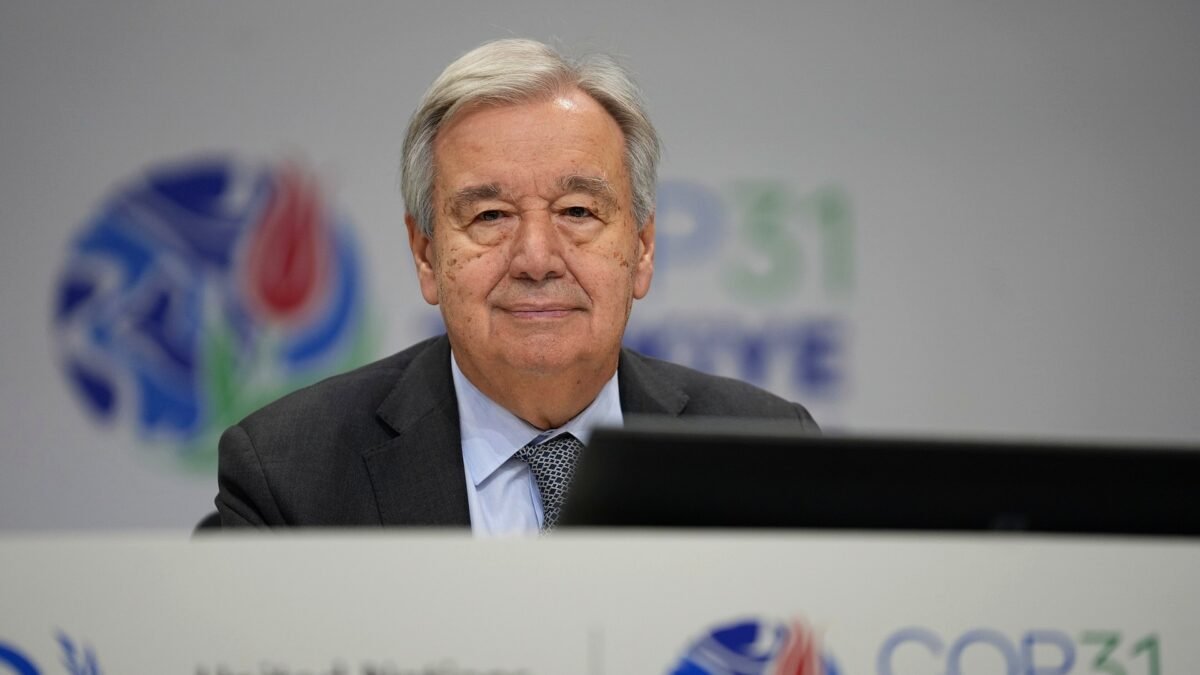
The United Nations climate summit in Antalya slipped into overtime on Friday after negotiators published a draft agreement that removed every reference to ending the use of fossil fuels, dropped a proposed $120 billion annual target for adaptation finance, and drew a blunt rejection from the small island nations most exposed to rising seas.
According to Reuters, the COP31 conference, which was scheduled to end on Friday, ran past its deadline as delegates from nearly 200 countries struggled to bridge deep divisions over fossil fuels and climate finance. A new version of the draft text was expected later on Friday, but hopes of major changes in tone were not high, Reuters reported.
The revised draft of the summit’s political agreement, known as the cover decision, was published on Thursday afternoon. According to Reuters, the slimmed-down text dropped or weakened language on several of the conference’s central issues, including fossil fuels, electrification and adaptation finance, compared with a first draft published on Monday.
Monday’s draft had contained two references to fossil fuels, including language on limiting their use. Both were removed. The revised text also removed a reference welcoming the roadmap developed under Brazil’s COP30 presidency to guide the transition away from fossil fuels, and it deleted any mention of a $120 billion target for finance to help developing countries adapt to climate change.
The objections came from Saudi Arabia and other major oil and gas producers, according to Reuters. The draft is not expected to be the final version, and negotiators have regularly blown past the Friday deadline by more than 24 hours in recent years as they seek agreement on contentious issues.
At the same time, the draft would mark the first time a COP cover decision has explicitly acknowledged that global warming is projected to exceed the Paris Agreement’s 1.5 degrees Celsius threshold. According to Reuters, the text acknowledged that warming could exceed 1.5 degrees and called for “deep, rapid and sustained” cuts to greenhouse gas emissions.
Australia’s Chris Bowen, who is leading the negotiations under a split presidency arrangement with Türkiye, told a press conference presenting the text that COP31 would be the first climate summit to acknowledge that the world would fail to hold warming to the 1.5-degree limit set out in the Paris Agreement.
“But we are determined that COP31 is not remembered for that, but is remembered as a COP which decides clearly and strongly that that is not acceptable,” Bowen said, according to UN News, referring to language in the cover text calling for any overshoot of 1.5 degrees to be kept as small and as short as possible. Bowen pledged to continue consultations through the night, adding: “We won’t be leaving the rooms of Antalya until we have that consensus.”
A draft that names the problem but not its cause
The most striking feature of the revised text is what it leaves out. The draft still reaffirms the 1.5-degree goal, and it still says that nations acknowledge “that the global transition towards low greenhouse gas emissions and climate-resilient development is irreversible”, according to Reuters. What it does not do is name the fuels whose burning drives most of those emissions.
Instead, the text emphasises clean energy and electrification, including Türkiye’s proposed target of raising electricity’s share of global final energy consumption to 35 per cent by 2035, up from around 23 per cent now. According to UN News, the COP31 Presidency presented an electrification package on Thursday supporting that goal, bringing together activities involving more than 150 countries plus the European Union, 37 cities and over 260 businesses, from expanding electricity grids to electrifying transport and industry.
Among the results highlighted were more than 21,000 kilometres of electricity grids built in 2025 and annual investment plans of at least $156 billion for grids, renewable energy and storage, according to UN News.
The draft also encourages efforts to scale up technologies that can remove carbon from the atmosphere. According to reporting on the draft, it introduces a provisional target to scale global carbon capture, utilisation and storage capacity to at least 500 million tonnes of carbon dioxide a year by 2035. COP31 President Murat Kurum defended the shift, arguing that carbon capture is vital for decarbonising hard-to-abate industrial sectors and that the COP28 Global Stocktake in Dubai had already established the transition away from fossil fuels.
But the pivot to carbon capture has become one of the sharpest points of contention in Antalya. Fiji’s Minister for Environment and Climate Change, Lynda Tabuya, who chairs the Pacific Small Island Developing States group, told a special ministerial meeting of the Alliance of Small Island States that carbon capture was “a hard red line” for her group.
“If we are going to set a target for CCUS, why aren’t we doing it for transitioning away from fossil fuel? In particular, we cannot live with language on utilisation,” Tabuya said, according to the Pacific Islands News Association. “Utilisation isn’t about reducing emissions. It’s pushing gas into oil wells to get more oil. This is different from utilisation. We cannot accept this.”
Tabuya also criticised language around electrification as implying that electricity is clean without putting measures in place to make it so, and she said the wording from the first Global Stocktake had been weakened by limiting it to national climate plans and adaptation plans.
More than 120 companies, investors and business groups staged a late intervention at the talks, urging an ambitious deal to accelerate electrification of the world economy, according to Reuters. The 123 signatories to the business statement followed the publication of a draft text that kept the goal of raising electricity’s share of global final energy consumption to 35 per cent by 2035 but weakened the obligation on individual countries to act. While some countries want the text to make explicit the need to generate that electricity from renewable sources, others are happy to be less specific, which could mean much of it would come from dirtier power sources such as coal, activists said, according to Reuters.
“We cannot accept it”: island nations draw a line
The strongest rejection of the draft came from the countries with the most to lose from a weak outcome. At the Alliance of Small Island States ministerial meeting, Tabuya said ministers had conferred and found serious flaws in the draft.
“As it stands, we cannot accept it. This text is not a meaningful response to overshoot,” she said, according to the Pacific Islands News Association. She described the draft as “a major setback on mitigation” that “risks increasing emissions”, singling out paragraph 36 of the 80-paragraph draft as a particular concern. In her account, the paragraph replaces hard-won commitments from the first Global Stocktake to transition away from fossil fuels with wording that, if implemented, would likely drive emissions higher and push the fossil fuel transition out of the text entirely.
The Alliance of Small Island States, which represents low-lying coastal and island nations most vulnerable to rising seas, warned that without grounding in science, the presidencies have “no legitimate basis for decision-making”, and it called for the final text to affirm explicitly that the Intergovernmental Panel on Climate Change provides the best available science.
Tabuya also raised the International Court of Justice advisory opinion on climate change, saying the proposed wording frames it within a broader paragraph on sea-level rise and Pacific leadership without acknowledging what the court actually held or what was passed by consensus in the United Nations General Assembly. “This frames the ICJ-AO as a regional rather than a universal initiative. This is unacceptable,” she said.
The criticism extended beyond the island states. Mohamed Adow, director of Power Shift Africa, said: “Antalya is in danger of being the worst COP ever.” Adow argued that rich countries were simultaneously demanding ambition from developing nations while blocking the public finance that would make such ambition possible. “You cannot keep your foot on the brake and complain that other countries are not moving fast enough,” he said.
Harjeet Singh, global convenor of the Fill the Fund campaign, issued a pointed rejection of the draft. “Civil society firmly rejects this COP31 draft text. It erases fossil fuels, deletes the money and buries the just transition, and we will not put our name to it. We call on developing country governments not to sign away their people’s survival for a deal that offers workshops instead of finance,” he said.
Teresa Anderson of ActionAid International told journalists at a press conference that announcements in the cover decision would not cover up the fact that negotiations were struggling. “Adaptation finance is not nice to have. Adaptation is how we all survive this climate crisis together,” she said, according to UN News, arguing that developing countries were still being asked to do more without adequate financial support.
The money that disappeared
For developing countries, the removal of the fossil fuel language is only half the grievance. The other half is finance. The revised draft dropped a proposed numerical target of at least $120 billion a year by 2035 for adaptation finance, a figure African countries and least developed nations had pushed to attach to the commitment to triple adaptation finance agreed at COP30.
According to UN News, the draft reaffirmed the goal of tripling adaptation funding by 2035 but left crucial details, including how to calculate that increase, for further discussion. The absence of a quantified target has raised concerns that governments could leave Antalya without a clear timetable or accountability framework for delivering the additional resources climate-vulnerable countries need.
The gap between need and delivery is already wide. The UN Climate Change Yearbook for 2026, presented during the summit, found that adaptation finance fell from $81.5 billion in 2022 to $64.1 billion in 2024, even as climate impacts intensified. The Yearbook tracks global progress across 96 indicators and found that only 44 were moving in the right direction, while 19 showed no progress and 33 lacked sufficient data. Renewable energy capacity grew by 17 per cent between 2024 and 2025, but energy efficiency gains remained well below what is needed, according to UN News.
UN climate chief Simon Stiell acknowledged that the benefits of the clean energy transition must reach further. “Vulnerable developing countries need affordable finance and technology. Workers and communities must help to shape and be supported through major change. Across the board, we need to move far faster to meet the demands of the science,” he said, according to UN News.
The finance dispute sits inside a larger argument about who pays for a transition that the whole world agreed to in principle but has never fully funded. At COP29 in Baku in 2024, countries agreed a goal of at least $300 billion a year in climate finance for developing countries by 2035. A separate Baku to Belém plan targets roughly $1.3 to $1.4 trillion a year by 2035, about two-thirds of it private capital. For the countries facing the sharpest end of warming, the question in Antalya is whether those numbers will ever be attached to real money, or whether they will remain aspirations in documents that grow shorter each year.
Host country Türkiye, meanwhile, has secured its own returns from the summit. According to Reuters, the country has agreed deals and plans worth more than $26 billion in total since it began hosting the climate conference on 9 November in Antalya, including a preliminary $15 billion renewable energy deal with China and $5.1 billion in financing agreements with development banks. Observers said the agreements, many of them related to clean energy, could help Türkiye with its own climate goals.
How the draft got here
The path to Thursday’s text explains much about why it looks the way it does. On Wednesday evening, COP31 President Murat Kurum gathered ministers for a Divan, a Turkish-style political exchange inspired by Ottoman tradition, in an effort to break the deadlock. According to UN News, some described the session as constructive, while ministers from vulnerable countries said little progress had been made.
The first draft, published on Monday 16 November, had contained competing formulations on fossil fuels, including language reaffirming the commitment made at COP28 in Dubai to transition away from fossil fuels in energy systems in a just, orderly and equitable manner. Neither formulation survived the Thursday revision. Instead, the revised text retains more general language encouraging a transition towards low-greenhouse-gas-emission and climate-resilient development, a formulation that avoids directly identifying fossil fuels as the principal source of greenhouse gas emissions or setting out a clear direction for reducing their use.
The retreat reflects deep divisions among countries over the future of fossil fuel production and consumption, with major oil-producing states resisting stronger language on phasing out fossil fuels. The need to limit rising global temperatures is widely accepted by participants, according to Reuters, but they do not all agree on the best way to do so, who should pay for it, and how quickly the world needs to act.
The talks are taking place at a time when the warming climate and its increasingly severe and regular effects, including heatwaves, floods and droughts, are competing for attention among policymakers and the public with war and rising living costs, according to Reuters. The summit opened on 9 November, and its first week produced warnings rather than agreements: UN Secretary-General António Guterres warned delegates of “mutually assured destruction” if the world failed to act, and UN climate chief Simon Stiell told the conference to “move swiftly” as the fossil fuel divide threatened a deal.
Outside the negotiating rooms, activists made their point with humour. Under a grey Antalya sky on Thursday morning, climate activists held up crumpled missing-cat posters outside the venue. Both cats were called Ambition. “Ambition hates overshooting the 1.5-degree temperature limit, loves a transition away from fossil fuels and responds to climate justice,” Philippine Menager of the Ecología y Desarrollo Foundation explained to UN News. “Right now, in this COP we are missing ambition,” she said, adding that the cats would only come home with a meaningful roadmap for moving away from fossil fuels. The campaign began at COP29, she said, and Ambition has apparently been disappearing ever since.
Other parts of the summit have also stalled. The agriculture track, the only one in UN climate negotiations dealing directly with food systems, collapsed after countries could not find consensus on a text full of political red lines, including trade measures and adaptation finance, and its future was kicked to intersessional discussions in Bonn, according to Carbon Brief. The first draft of the cover decision made no mention of food systems at all.
The human cost on display in Antalya
Across the venue, participants made sure delegates saw the human consequences of their political decisions. Kneeling before a crowd, a doctor told the story of Carter, a Canadian boy with asthma who went to the park, played in the water and attended a birthday party, unaware that nearby wildfires were thickening the air around him. Carter struggled to breathe, and his parents rushed him to the emergency room, but he did not survive, according to UN News. “Sometimes emergency doctors can’t fix everything,” the doctor said, adding that Carter’s parents wanted his story to be told at COP31.
Young Ugandans brought another warning: the growing threat of El Niño. Alison Nisima, from the village of Kakonkoma in southwestern Uganda, described children struggling along flooded paths to school, women walking long distances in search of safe water and families whose livelihoods depend on the rain, even when it becomes dangerous. “For some, heavy rainfall may mean carrying an umbrella or changing travel plans. For a child whose route to school is flooded, it may mean missing class,” she told a press conference, according to UN News. With El Niño raising fears of further flooding in parts of East Africa, she questioned whether communities would be able to act on warnings before disaster struck. “A family may know flooding is coming, but where can they go?” she asked, urging leaders to invest in safe water, roads and local preparedness, and to involve young people who know firsthand which areas are most vulnerable. “The purpose of an early warning should never be simply to tell people that danger is approaching. It should give them a fair chance to face it,” she said.
These are the stakes that the draft text is supposed to address, and they are the reason its omissions have drawn such anger. The countries that contributed least to warming are the ones paying first and most for its consequences, and they are the ones now being asked to accept a deal that neither names the cause nor guarantees the money to cope with it.
Analysis: Why It Matters
The words were the policy
It is tempting to treat a missing phrase in a UN document as a technicality, a matter of diplomatic wording with no real-world effect. That would be a mistake, and the history of these talks proves it. When COP28 in Dubai agreed in 2023 to “transition away” from fossil fuels, it was the first time in nearly three decades of climate negotiations that the words fossil fuels had made it into a COP outcome at all. The phrase was deliberately modest: it stopped short of the “phase-out” many countries wanted, and it carried no timeline and no binding obligation. Yet it mattered, because it put the cause of warming on the record and gave governments, investors, courts and campaigners a sentence to point to. The COP31 draft takes that sentence away. A climate agreement that refuses to name fossil fuels is not a neutral document; it is a document that has chosen, under pressure, to describe a fire without mentioning what is burning. The question now is whether the final text restores the words, and if it does not, whether the Dubai consensus survives as anything more than a historical footnote.
An overshoot admitted, a response avoided
The draft’s one genuine first is also its most revealing contradiction. For the first time, a COP cover decision would formally acknowledge that the world is projected to overshoot 1.5 degrees Celsius, the limit the Paris Agreement set in 2015 as the threshold for avoiding the worst impacts of warming. Chris Bowen presented this as a mark of honesty, and in one sense it is: the science has been pointing this way for years, and pretending otherwise would have been worse. But the acknowledgement sits beside a text that has removed the clearest available lever for limiting the overshoot, which is a managed decline in fossil fuel use. The draft’s answer to overshoot is to deploy carbon removal technologies at scale and hope temperatures can be brought back down later. That is a gamble, and it is worth saying plainly what it gambles with: the lives of people in places that cannot wait for a technological rescue. Overshoot is not an abstract line on a graph. It is hotter summers, failed harvests, flooded schools and wildfire smoke in a child’s lungs. Admitting the overshoot while deleting the remedy is honesty without responsibility.
Carbon capture is becoming the escape hatch
The elevation of carbon capture, utilisation and storage in the draft deserves close attention, because it is the mechanism by which the text can claim ambition while avoiding the hard decision. Carbon capture has a real role in decarbonising cement, steel and chemicals, where alternatives are limited. But the draft’s provisional target of at least 500 million tonnes of carbon dioxide a year by 2035, set against roughly 38 billion tonnes of current annual global energy-related emissions, is modest in scale and enormous in political convenience. It allows oil and gas producers to present themselves as part of the solution while continuing to produce. Fiji’s objection cuts to the heart of this: the “utilisation” in CCUS often means injecting captured carbon dioxide into oil wells to extract more oil, which is not a climate policy at all but a production subsidy dressed as one. The test for any carbon capture target is simple. If it sits alongside a declining fossil fuel commitment, it is a tool. If it replaces that commitment, it is an alibi. The COP31 draft, as written, fails that test.
The finance gap is the trust gap
Every COP is, at bottom, a negotiation about trust, and trust in Antalya is running out. Developing countries were promised that the transition would be funded. The $300 billion annual climate finance goal agreed at COP29 was already criticised as far below what is needed, and the Baku to Belém plan’s $1.3 trillion figure is mostly private capital that has not yet materialised. Now the draft has removed even the $120 billion adaptation target, while the UN’s own Yearbook shows adaptation finance actually falling, from $81.5 billion in 2022 to $64.1 billion in 2024. From the perspective of a government in Fiji, Senegal or Uganda, the pattern is unmistakable: ambition is demanded of them, money is withheld from them, and the documents get shorter. Mohamed Adow’s warning that Antalya could be “the worst COP ever” is not only about this draft. It is about a decade of promises that have not been kept, and the risk that the countries most exposed to warming will conclude that the process itself is no longer worth their faith. If that conclusion spreads, the damage will outlast any single summit.
What Antalya decides about the COP itself
The deeper question hanging over the overtime hours in Antalya is whether the COP process can still produce outcomes that match the science. The pattern of recent years is familiar: a draft that offends everyone is published, the deadline passes, ministers are locked in rooms through the night, and a compromise emerges that is hailed as the best available and criticised as inadequate in the same breath. That pattern has delivered real progress, from the Paris Agreement to the Dubai fossil fuel language, but it depends on a shared belief that the process moves in one direction. COP31 tests that belief. If the final text restores fossil fuel language and puts a number on adaptation finance, the process will have bent but not broken. If it does not, the summit will be remembered as the one where the world’s governments, faced with the first formal admission that 1.5 degrees will be overshot, responded by deleting the words that described how to stop it. The next COP would then begin from a worse position than this one did, and the missing-cat posters would not be a joke any more. They would be a diagnosis.
What to Watch Next
- The new draft, expected later on Friday: whether the revised text restores any reference to fossil fuels, the COP30 transition roadmap or the $120 billion adaptation finance target, or whether it holds the line on the deletions.
- Whether the talks run into the weekend: COP summits have regularly blown past their Friday deadlines by more than 24 hours, and the overtime hours are when the real bargaining happens.
- The island states’ position: whether the Alliance of Small Island States and the Pacific group hold their refusal to accept the text, and whether they put forward alternative language, as Fiji’s minister indicated they could.
- Panama and the wider developing-country bloc: whether countries beyond the island states join the push to restore fossil fuel, finance and science language in the final decision.
- Saudi Arabia and the oil producers: whether the objections that stripped the language out are softened in the final hours, or whether the producers hold their position to the end.
- The carbon capture target: whether the provisional 500-million-tonne CCUS goal survives, and whether any fossil fuel transition language is attached to it.
- The 1.5-degree overshoot language: whether the first formal COP acknowledgement of overshoot survives into the final text, and what, if anything, is agreed to keep that overshoot as small and as short as possible.
Sources
- Reuters — COP31 climate talks spill into overtime as nations quarrel over fossil fuels
- Reuters — COP31 negotiators publish revised deal text with no mention of fossil fuels
- UN News — COP31: Ambition goes missing as fossil fuel language drops from draft deal
- Reuters — Climate Focus: COP31 draft deal strips fossil fuel references
- Reuters — COP31 delivers deals for host Turkey as climate diplomacy stalls
- Pacific Islands News Association — ‘We cannot accept it’: Fiji Climate Change Minister Tabuya rejects COP31 draft text

About the Author — Abdul Mannan
Related Articles
Denmark Expels Russian Defence Attaché After Thwarting Alleged Russian Plot to Kill Rapper Kyivstoner
Denmark has expelled Russia's defence attaché after police said they thwarted a Russian intelligence plot to assassinate US-Ukrainian…
Kushner Raised NATO Membership for Ukraine in Exchange for Donbas in Closed-Door Talks, Report Reveals
The Wall Street Journal reports that US envoy Jared Kushner has repeatedly raised NATO membership for Ukraine in…
Russian Missiles Land in Poland as Tusk Denounces ‘Deliberate Provocation’ and Warsaw Seeks More NATO Support
Two suspected Russian missiles and a jet-powered drone crashed in south-eastern Poland during a huge Russian attack on…