
Denmark Expels Russian Defence Attaché After Thwarting Alleged Russian Plot to Kill Rapper Kyivstoner

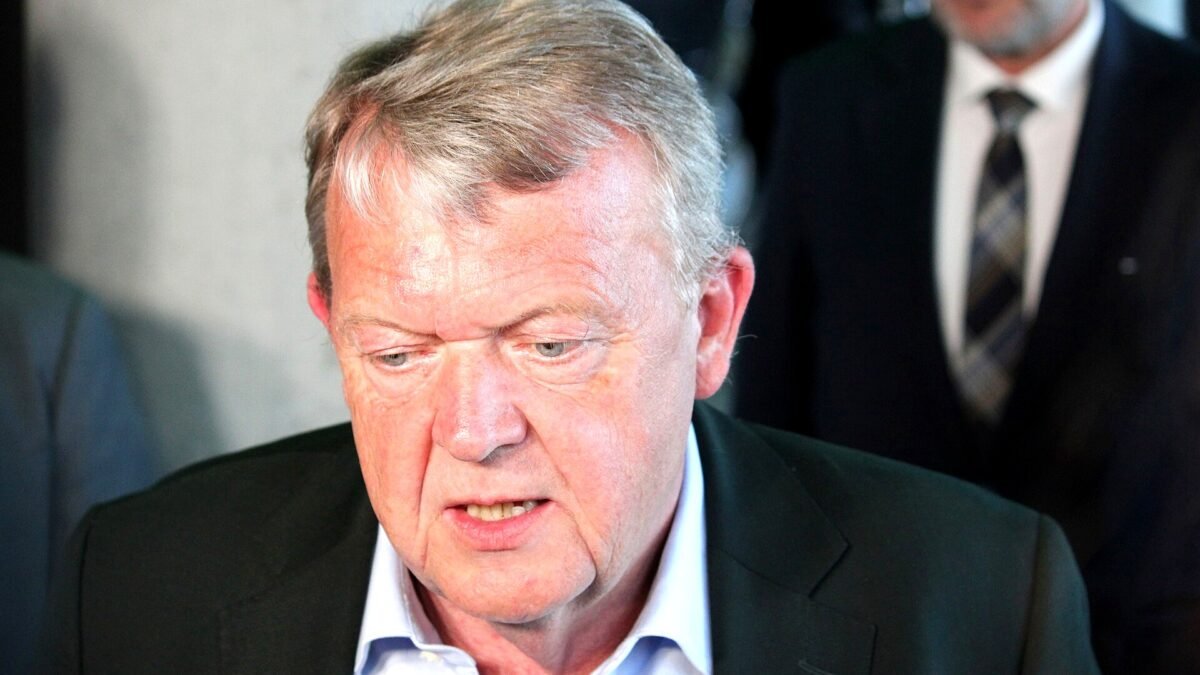
Denmark has expelled Russia’s defence attaché after Danish police and intelligence officials said they thwarted a plot by Russian intelligence services to assassinate a United States-Ukrainian rapper on Danish soil, according to Reuters. The announcement, made on Friday, 20 November 2026, marks the first time Danish authorities have publicly accused Moscow of ordering a killing on their territory, and it sets up a fresh diplomatic confrontation between Copenhagen and the Kremlin.
Foreign Minister Lars Løkke Rasmussen said Denmark had summoned the Russian ambassador to the foreign ministry and ordered the defence attaché to leave the country within seven days. The decision followed the disclosure that two Danish men had been charged with attempting to murder the rapper known as Kyivstoner ahead of a concert near Copenhagen in September, an attempt that police stopped only minutes before the performance was due to begin.
“We don’t want to break off diplomatic relations with Russia in this particular situation that Denmark and Europe are in,” Rasmussen said, according to Reuters. “But on the other hand, we want to send a very, very strong signal.”
The head of Denmark’s national security and intelligence service, PET, left no doubt about where Copenhagen believes the order came from. “It is our clear assessment that the assassination attempt was planned by the Russian intelligence services,” PET chief Rasmus Kieffer-Kristensen told a press conference in Copenhagen.
Russia rejected the accusation. The Russian embassy in Copenhagen called the Danish allegations baseless, and the Russian foreign ministry said Moscow would give an appropriate response, according to the state news agency TASS.
Stopped Five Minutes Before the Concert
According to Reuters, police thwarted the attempt when they arrested men with links to the Danish criminal underworld shortly before Kyivstoner was due to perform at a concert north of Copenhagen on 25 September. The concert, part of a European tour, was subsequently cancelled.
Prosecutors told the court that the suspects were driving towards the venue with two loaded pistols and two knives when police stopped their car at around 9.55 p.m. local time, five minutes before the concert was due to begin. One of the suspects had bought a ticket to the concert on 5 September, according to the charges. The venue was a century-old inn in Hellerup, a suburb north of Copenhagen known for hosting weddings and conferences, according to The Wall Street Journal.
Two other men who were detained in the same car in Hellerup were not charged in connection with the alleged plot, according to Danish broadcaster DR, cited by Reuters. All four men have been held in custody since September, the broadcaster reported.
Danish police said they had been aware of the threat to the rapper as soon as he entered Denmark, and that the operation to stop the attack had been prepared in advance. Local media reported that Kyivstoner said in an Instagram post that Danish intelligence officials had warned him of a threat to his life and prevented him from performing.
Two Men Charged, Both Deny Wrongdoing
The two Danish men appeared in court near Copenhagen on Friday, charged under Section 108 of Denmark’s Criminal Code, which covers assisting a foreign intelligence service, as well as attempted murder, according to court documents cited by Reuters. Both men denied wrongdoing, DR reported. A judge ordered them to remain in custody.
The charges were made public at a hearing in Lyngby, north of Copenhagen, on the same day that the police, PET, the foreign minister and the justice minister held press briefings to address the case. Justice Minister Nicolai Wammen was among the officials due to brief the press on Friday, according to Reuters.
Danish police said the foiled plot had been orchestrated by Loyal to Familia, a Danish street gang that has been banned since 2018. The would-be assassins were likely directed by some of the gang’s leaders based abroad, in countries such as Turkey or Morocco, National Commissioner of the Danish Police Lasse Boje said at a press conference, according to The Wall Street Journal.
Kieffer-Kristensen underlined the gravity of the case for Denmark. “A Russian assassination attempt is not something we’ve seen in Denmark before, and that gives me an impression of an increasingly aggressive and risk-taking Russia,” he said. “We believe that the case is important for understanding the threat that Denmark faces from Russia.”
Copenhagen’s Response: Expulsion, Not a Break
Rasmussen announced the expulsion at a news conference on Friday, after summoning the Russian ambassador, Vladimir Barbin, to the foreign ministry. “We have just summoned the Russian ambassador to the ministry of foreign affairs and notified him of the government’s decision to expel the Russian defence attache from Denmark” within seven days, Rasmussen said.
“We are saying this very clearly: we have exposed you,” he added, in remarks reported by Danish public broadcaster DR and cited by The Guardian. Rasmussen called the alleged plot an unacceptable transgression, and said the government was also considering suspending Schengen visas for Russian citizens.
Prime Minister Mette Frederiksen said the operation had been driven by Russian intelligence services and reflected the serious security situation facing both Denmark and all of Europe, according to Danish media reports. In a statement, she said the diplomat had been given seven days to leave Denmark.
The choice of target for the expulsion was deliberate. Rasmussen said he would not expel Russia’s ambassador, in order to maintain some level of diplomatic contact. Copenhagen does not plan to cut diplomatic contacts with Russia completely, but aims to send a signal by removing the defence attaché, DR reported.
The measured response reflects a calculation that has become familiar across Europe: punish the act firmly enough to impose a cost, while keeping a channel open for the crises that may follow. Denmark has been one of Ukraine’s most committed supporters since Russia’s full-scale invasion in 2022, and it has repeatedly warned that Russian hybrid operations, meaning incidents of aggression that fall short of acts of war, are intensifying across the region.
Moscow Denies Everything
Russia’s response was swift and dismissive. The Russian embassy in Copenhagen called the Danish allegations baseless. The notion that Russia would assassinate “a musician with limited political influence and questionable fame” was “absurd,” the embassy said, according to The Wall Street Journal.
Russian Foreign Ministry spokeswoman Maria Zakharova said Moscow would give an appropriate response to Denmark’s decision to expel the military attaché, without elaborating, according to TASS.
Moscow has regularly denied accusations of stepping up hybrid attacks in the region following its full-scale invasion of Ukraine in 2022, Reuters noted. The denial follows a well-established pattern: Russian officials reject each new allegation as it emerges, while European governments publish more of the evidence behind their claims.
The Danish case is unusual, however, in the bluntness of the language used. Rasmussen said Denmark was “absolutely certain” that Russian intelligence services were behind the plot, according to The Wall Street Journal. That level of public confidence from a foreign minister, combined with criminal charges in a Danish court, gives the accusation a weight that intelligence briefings alone do not carry.
Who Is Kyivstoner, and Why Would Russia Want Him Dead?
Kyivstoner is the stage name of Albert Vasiliev, a 34-year-old Ukrainian rapper, comedian and streamer who also performs under the name Slevin Dadyan. He was one of the founders of the Ukrainian band Hryby, known in English as Mushrooms, and later built a solo career posting humorous videos online and acting in films.
According to The Wall Street Journal, his most popular songs have gathered 1.2 million streams on Spotify and 31 million views on YouTube, a modest level of fame that makes the Russian embassy’s description of him as a musician of limited influence factually unremarkable, and the alleged effort to kill him all the more striking.
Before Russia’s full-scale invasion in 2022, Vasiliev spent time in Moscow and collaborated with the Russian rapper Vasily Vakulenko. After the invasion began in February 2022, he left Kyiv with his young son and wife and travelled to the United States, where he remained for about two years, according to The Times. Since 2024, he has said publicly that he lives with his family in Slovakia, continuing his musical career and taking part in esports, or competitive video gaming.
Russia’s Federal Security Service, the FSB, accused Vasiliev in July 2026 of plotting an attack against a defence enterprise in the Moscow region, under the direction of Ukraine’s security services, using drones smuggled from Slovakia. Moscow added him to its list of people involved in extremist and terrorist activities. Vasiliev has denied those claims, according to Ukrainian media reports cited by Polish outlets.
The accusation against him fits a pattern in which Moscow has used terrorism and extremism designations against Ukrainian public figures, including artists, journalists and activists, whose work it regards as hostile. Whether Vasiliev’s real offence in Russian eyes is his public support for Ukraine, his fundraising for the Ukrainian army, which his wife has said he provides, or simply his visibility as a Ukrainian voice with an American passport, the FSB’s July accusation turned a performer into a named target.
The Polish Plot in August
The Danish case is not the first time Vasiliev is reported to have been the target of an assassination plot. In August 2026, Polish Prime Minister Donald Tusk announced the arrest of a Russian man accused of planning to kill a United States-Ukrainian dual citizen in Warsaw.
Polish authorities said the country’s ABW domestic intelligence service and police had detained a 29-year-old Russian national with roots in the Donbas region of eastern Ukraine, who was using a Ukrainian passport, in the Mokotów district south of central Warsaw on 7 August. Tusk said the plot had been thwarted at the last moment thanks to an operation by the ABW and police, acting on a tip from United States intelligence.
Tusk said it was the first time Russia had ordered an attack on a citizen of the United States in a NATO country. Polish news outlet RMF24 subsequently identified the intended victim as Vasiliev, reporting that Russia’s FSB suspected him of supervising and managing the logistics of delivering drones to the Moscow region, which were to be used to attack strategic facilities in and around the Russian capital.
The Polish authorities did not officially name the person who could have been the target, and the identification of Vasiliev as the likely target came from RMF FM citing its own sources, according to Ukrainian media. But the Danish disclosure now gives the Polish case a new shape. Two alleged plots, in two NATO countries, within two months, against the same man, and both attributed by the governments concerned to Russian intelligence.
Recent episodes in Poland have included the assassination of a Russian satirical artist based in the country, the sabotage of a railway line connecting Warsaw with the east, and a Russian cruise missile crashing in the country’s eastern Lublin region, according to The Times. The pattern, as European security services describe it, is one of deniable, low-cost operations carried out by proxies, each small enough to avoid a military response and cumulatively large enough to unsettle whole societies.
The Gang in the Middle: Loyal to Familia
The Danish case also illustrates how such operations are said to work in practice. According to Danish security services, the plot was orchestrated by Loyal to Familia, a Danish street gang banned since 2018. The gang is one of Denmark’s most notorious criminal organisations, and its members have been involved in violent crime, drug trafficking and extortion.
The use of a criminal gang as an intermediary is, according to The Wall Street Journal, the latest example of a government accusing Russia of engaging proxies to commit a crime on European soil. The model offers Moscow several advantages: local criminals know the terrain, they can move weapons and buy tickets without attracting the attention that a foreign operative would, and their arrest leaves the state sponsor one step removed from the act itself.
Danish police said the gang’s leaders abroad, in countries such as Turkey or Morocco, were likely directing the would-be assassins. That detail matters, because it suggests a network rather than a single transaction, with organisers operating from jurisdictions where Danish police cannot easily reach them.
The arrangement also fits with a warning PET issued in September, when it said Russia was recruiting Danish citizens to help plan sabotage against Danish defence firms with ties to Ukraine. The recruitment of locals, whether gang members or ordinary citizens, is cheaper and harder to detect than the deployment of trained intelligence officers, and it turns a country’s own criminal underworld into a weapon against it.
Analysis: Why It Matters
A first for Denmark
Denmark is a small country that has long regarded itself as relatively insulated from the sharp end of Russian operations. It is a founding member of NATO, a close ally of the United States, and one of the most consistent supporters of Ukraine in Europe. It is also, until now, a country where no Russian assassination attempt had ever been publicly recorded.
That is why Kieffer-Kristensen’s words carry such weight. “A Russian assassination attempt is not something we’ve seen in Denmark before,” he said. The admission is also a warning: if Denmark is now a target, no European country can assume it is exempt. The geography of Russian operations in Europe has been widening for years, from Salisbury to Berlin to Warsaw, and Copenhagen is the latest capital to discover that distance from the front line is no protection.
The timing adds to the significance. The disclosure came in the same week that the leaders of the United States, China and Russia met in Shenzhen for their first-ever trilateral summit, a meeting that produced a four-point declaration on nuclear risks, United Nations reform and energy supplies, but said nothing about Ukraine or the war in Europe. Denmark’s announcement is a reminder that while great powers talk about strategic stability, the conflict’s shadow operations continue at street level, in concert halls and car parks, far from the summit rooms.
The criminal-proxy model
The most important feature of the Danish case is not the target but the method. If the Danish account is correct, Russian intelligence did not send its own officers to Copenhagen. It hired, or directed, members of a banned Danish street gang, who bought a concert ticket, acquired pistols and knives, and drove to the venue.
This is the proxy model that European security services have been warning about for two years. It lowers the cost of an operation, increases the chance of success, and gives Moscow a layer of deniability: the men in the car are Danish criminals, not Russian agents, and the gang’s leaders are in Turkey or Morocco, not Moscow. The Wall Street Journal’s observation that this is the latest example of a government accusing Russia of engaging proxies to commit a crime on European soil captures the trend precisely.
The model also creates a new kind of vulnerability for European states. Counter-intelligence agencies are built to watch foreign spies, not to monitor every member of a domestic street gang for signs of foreign recruitment. PET’s September warning that Russia was recruiting Danish citizens for sabotage against defence firms suggests the agency was already watching this space, and the Kyivstoner case may be the visible tip of a wider recruitment effort.
For other European governments, the lesson is uncomfortable. A gang that can be hired to kill a rapper can be hired to sabotage a factory, burn a warehouse or intimidate a journalist. The boundary between organised crime and state-sponsored attack is dissolving, and the legal and policing tools designed for one do not always fit the other.
A measured diplomatic blow
Denmark’s response was carefully calibrated. Expelling a defence attaché is a serious step: the attaché is a serving military officer, and the expulsion is a public humiliation for the embassy that hosted him. But it is not the most severe step available. Rasmussen deliberately kept the ambassador in place, preserving a channel of communication, and framed the decision as a signal rather than a rupture.
That calibration reflects Denmark’s position. It wants to impose a cost on Moscow, to show its own public that the state can protect people on its soil, and to stand alongside allies who have taken similar steps. But it does not want to close the door entirely, because the same channel may be needed if the confrontation escalates, or if a future negotiation requires it.
The visa lever is the next step in reserve. Rasmussen said Denmark was considering suspending Schengen visas for Russian citizens, a measure that would affect ordinary Russians rather than officials, and would require coordination with European partners. Holding it back gives Copenhagen something to escalate to if Moscow retaliates, as Zakharova has promised it will.
The message to Europe
The Danish disclosure lands in a Europe that is already debating how to respond to Russian hybrid operations. In recent months, governments have accused Moscow of sabotage, arson, cyberattacks and assassination plots across the continent, from the Baltic states to Germany and the United Kingdom. Each case on its own can be dismissed, as the Russian embassy in Copenhagen dismissed this one, as absurd. Taken together, they describe a campaign.
Denmark’s case is valuable to that debate precisely because it is so fully documented. There are criminal charges, a court hearing, weapons seized, a ticket purchase, and a named intelligence assessment. It is harder to dismiss than an anonymous briefing, and it gives other governments a concrete example to point to when they argue for tougher collective measures.
It also tests the willingness of European states to act together. An expulsion by one small country is a signal; coordinated expulsions by several would be a statement. Whether Denmark’s allies follow its lead, and whether the European Union takes up the visa question, will determine whether this remains a bilateral dispute or becomes a wider European response.
Why a rapper?
The choice of target is the part of the story that invites the most reflection. Kyivstoner is not a general, a minister or a spy. He is a performer whose most popular songs have gathered a little over a million streams, a comedian who posts humorous videos, a man whose fame is real but modest.
That modesty may be the point. Assassinating a prominent political figure would be an act of war in all but name, and would invite a response that Moscow might not want. Killing a rapper sends a different message: no Ukrainian voice, however small, is safe, anywhere in Europe, even on a concert stage in a quiet suburb of Copenhagen. It is intimidation aimed not at one man but at a whole diaspora of Ukrainians living in the West, and at the European publics who host them.
There is also the matter of his American citizenship. Tusk’s remark in August, that the Polish plot was the first time Russia had ordered an attack on a citizen of the United States in a NATO country, applies with equal force to the Danish case. A successful killing would have forced Washington to respond to the murder of one of its own citizens by a foreign intelligence service on allied soil, a crisis that no one in Moscow, Washington or Copenhagen would have wanted. The fact that the plot went ahead anyway suggests either a miscalculation in Moscow, or a deliberate decision to test how far Russia could go.
What to Watch Next
- The trial: the two charged men remain in custody, and the court proceedings in Lyngby will test the evidence behind PET’s assessment. Watch for what prosecutors disclose about how the suspects were recruited and who gave the orders.
- Moscow’s response: Maria Zakharova has promised an appropriate response. Russia has typically answered expulsions with tit-for-tat expulsions of Danish diplomats, and Copenhagen will be watching for the scale of the retaliation.
- The visa decision: Rasmussen said Denmark was considering suspending Schengen visas for Russian citizens. Any decision will need European coordination, and it would mark a significant escalation in the dispute.
- Further disclosures: PET said in September that Russia was recruiting Danish citizens for sabotage against defence firms. Watch for further arrests or warnings, which would show whether the Kyivstoner plot was an isolated case or part of a wider network.
- Allied reactions: whether other European governments expel Russian diplomats, or raise the case in NATO and European Union forums, will show how far Denmark’s stand travels.
- Kyivstoner’s safety: with two alleged plots against him in two countries within two months, the rapper’s security arrangements, and whether he resumes performing, will be closely watched.
For Denmark, the case is already a turning point. A country that had never seen a Russian assassination attempt on its soil now has one in its courts, two men in custody, a diplomat expelled and a foreign minister saying, in public, that his government is absolutely certain who ordered it. The words Rasmussen chose, “we have exposed you”, were addressed to Moscow, but they were also addressed to every other European capital watching to see what happens next.
Sources
- Reuters — Denmark says it thwarted Russian plot to assassinate US-Ukrainian rapper
- Reuters — Two Danes suspected of being hired by Russia to kill Ukrainian rapper
- The Wall Street Journal — Denmark Accuses Russia of Trying to Kill Ukrainian Rapper
- The Times — Russian hitman ‘targeted rapper with US citizenship’ in Poland plot

About the Author — Abdul Mannan
Related Articles
Kushner Raised NATO Membership for Ukraine in Exchange for Donbas in Closed-Door Talks, Report Reveals
The Wall Street Journal reports that US envoy Jared Kushner has repeatedly raised NATO membership for Ukraine in…
COP31 Slips Into Overtime as Fossil Fuels Vanish From Draft Deal and Island Nations Say They Cannot Accept It
Negotiators in Antalya stripped every reference to ending fossil fuel use from the COP31 draft deal, dropped a…
Russian Missiles Land in Poland as Tusk Denounces ‘Deliberate Provocation’ and Warsaw Seeks More NATO Support
Two suspected Russian missiles and a jet-powered drone crashed in south-eastern Poland during a huge Russian attack on…