
Kushner Raised NATO Membership for Ukraine in Exchange for Donbas in Closed-Door Talks, Report Reveals

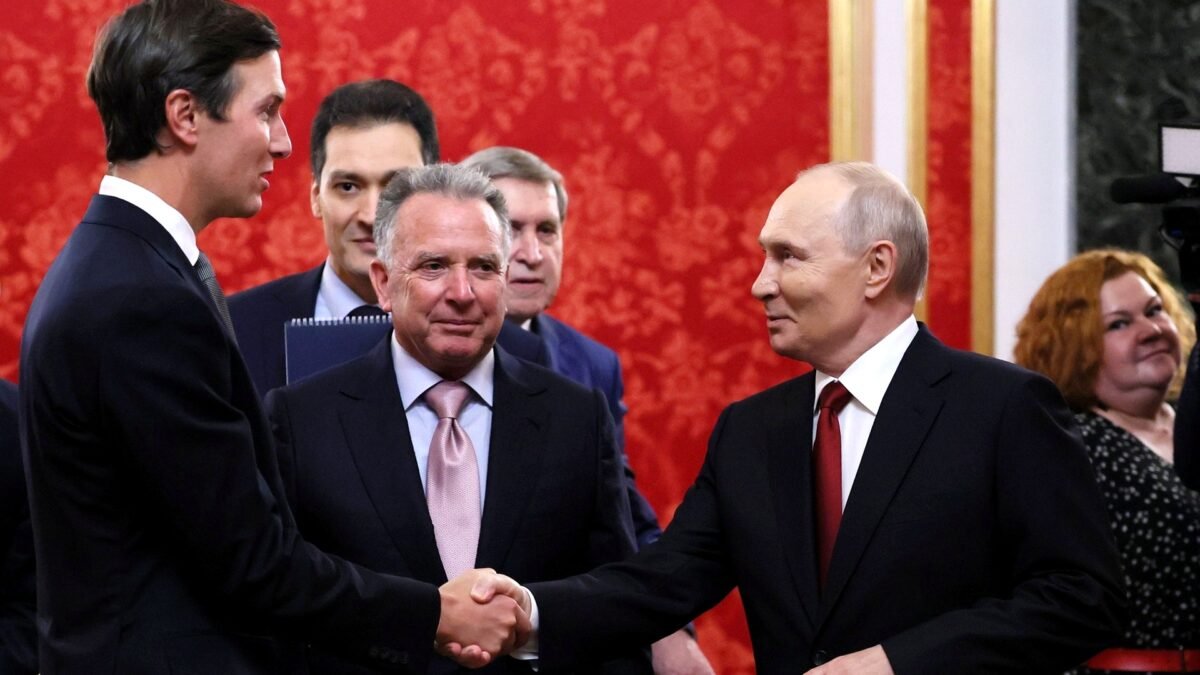
In closed-door peace talks over the past few months, President Donald Trump’s son-in-law and special envoy Jared Kushner has repeatedly raised an idea that was once considered dead on arrival in Washington: NATO membership for Ukraine, in exchange for Kyiv giving up the territory it still holds in the eastern Donbas region to Russia. That is the central revelation of a report published on Friday by The Wall Street Journal, which says the proposal has been discussed in several conversations between Kushner, his fellow envoy Steve Witkoff and European officials, and was raised most recently at a military airfield in Dublin last week.
According to the Journal, which cited people familiar with the matter, Kushner discussed the possibility with Ukrainian President Volodymyr Zelenskyy and European officials at the Dublin meeting, where the American envoys also met Zelenskyy’s adviser Rustem Umerov and selected European national-security advisers. The idea also came up in at least one meeting last week in the United Arab Emirates, where Kushner and Witkoff were meeting Ukrainians, Europeans and Russians in a series of sessions aimed at negotiating an end to the war. One European leader told the newspaper that the idea had first been raised in a telephone call as early as August.
The report describes two scenarios that the United States has raised in recent talks. Under the first, Ukraine would give up the territory it still controls in the Donbas, the eastern region where the two sides have fought for much of the war, in exchange for full membership of the North Atlantic Treaty Organization. Under the second, the conflict would be frozen along the current front line, which would leave part of the Donbas in Ukrainian hands, and Ukraine would instead receive security guarantees to protect it from a future Russian assault through an international treaty with the United States, and potentially with European allies.
A United States official told the Journal that negotiators were discussing many ideas, but that both Ukraine and Russia would need to agree to any final deal. The newspaper also reported that it was not clear how seriously the American mediators were entertaining the NATO membership idea, or whether Mr Trump himself had changed his view on the question. Mr Trump ruled out NATO membership for Ukraine early last year as unacceptable to Russia, according to the Journal, and bringing a new country into the alliance requires the unanimous consent of all 32 member states.
Zelenskyy disclosed the idea last week
The Journal’s report is the fullest account yet of a proposal that first entered the public record a week ago, when President Zelenskyy himself disclosed that American negotiators had raised it with him. Speaking to journalists on Friday 13 November, in comments released the following day, Mr Zelenskyy said the United States had floated the idea of Ukraine ceding the eastern Donbas region to Russia in exchange for NATO membership, and that it was the first time such a proposal had been raised in the talks.
“The Americans raised a question: ‘What if Ukraine joins NATO? Would Ukraine withdraw from Donbas?'” Mr Zelenskyy told reporters, according to CNN and the Journal. “This was the first time this had been raised,” he said. He stressed that Ukraine would not give up territory, but said that if he received a “comprehensive security package” — which would include a strong Ukrainian army and guarantees from NATO and the European Union — he would put a proposal to the Ukrainian people.
“If the American side confirms precisely this to us, together with other NATO partners, then I will ask our Ukrainian society what it thinks: do we accept it or not? I have no right to make that decision on my own. But we need specifics, and we don’t have them yet,” Mr Zelenskyy said, according to CNN. He added that any agreement would come “without any recognition of the occupied territories as Russian”, according to the Kyiv Independent.
Mr Zelenskyy also made clear where Kyiv stands on the land itself. “I have said repeatedly: Ukraine is not retreating and is not giving up its land to terrorists,” he said, according to the Journal. Last week he said Kyiv was still discussing security guarantees with the United States and Europe, and that American negotiators had described those guarantees as bilateral agreements, “similar to what Israel has”.
The new reporting adds the detail that was missing from Mr Zelenskyy’s disclosure: who raised the idea, where and when it was discussed, and what Moscow has said in reply. The Journal’s account places the proposal at the centre of the American mediation effort, discussed not once but in a series of meetings over several months, in Dublin and in the Emirates, and on a telephone call as early as August — months before Mr Zelenskyy made it public.
Moscow’s written answer: no NATO, no troops, no arms
Russia’s answer, according to the Journal, was set out in writing during talks in Abu Dhabi last week, where Russian negotiators explicitly demanded that Ukraine abandon any ambition to join NATO. In a paper distributed to negotiators and seen by the Journal, Moscow demanded that Ukraine remove its aspirations to join NATO from its constitution. Russian negotiators also insisted that the alliance commit not to station troops or military equipment in Ukraine, and that Western arms deliveries to Kyiv cease.
The demands, laid out in what the Journal described as a so-called non-paper because it contains unofficial positions for the purposes of negotiation, went further. Moscow called for NATO to roll back its military infrastructure in Eastern Europe to 1997 levels, the year the alliance and Russia established a cooperation forum. The document also insisted on the removal of missiles capable of reaching Russia from countries across Europe and the Caucasus, as well as the withdrawal of offers by France and Britain to extend nuclear protection to other European nations.
European negotiators dismissed the demands as maximalist positions designed to be opening bids, rather than a final settlement blueprint, according to the Journal. The newspaper noted that, in keeping with agreements made with Russia, NATO has not built significant military infrastructure in eastern member states, with the exception of radar systems in Poland and Romania, and a base for a German unit that will be permanently stationed in Lithuania — a move that was a response to Russia’s full-scale invasion of Ukraine.
Moscow’s public position hardened further on Friday. Russian Deputy Foreign Minister Sergei Ryabkov said any form of “quasi-membership” of NATO for Kyiv was totally unacceptable, according to Reuters, which cited Russian state media. “I would like to say that even the notion of a formula for Ukraine’s quasi-membership of NATO, and the search for some sort of — in inverted commas — ‘creative solution’ in this area, is an option that is unacceptable to us,” Mr Ryabkov was quoted as saying by the Interfax news agency. “As far as Ukraine is concerned, let them recognise the irrevocable nature of our demand that this state must not join NATO. When that happens, I think the issue of security guarantees can be discussed in one way or another,” he added.
Mr Ryabkov made the comments a day after French President Emmanuel Macron said, following a summit of Ukraine’s allies in Berlin, that the question of Ukraine’s NATO membership “should be reopened”. Mr Ryabkov also confirmed that a potential visit to Moscow by representatives from Britain, Germany and France was being worked on, according to Reuters. President Vladimir Putin said on Thursday that Russia had proposed that the European envoys come to Russia to clarify their position on Ukraine peace negotiations before the format of further talks is decided.
Berlin: Macron reopens the question, Merz closes it
The Berlin meeting on Thursday 19 November, of the so-called Coalition of the Willing, was where the NATO question burst into the open. Mr Macron told reporters after the summit that, faced with the maximalist nature of the Russian position, Europe needed to reopen the question of Ukraine’s accession to NATO. “Faced with the maximalist nature of the Russian position, I believe we need to reopen the question of Ukraine’s accession to Nato,” Mr Macron said, according to The Times. He also called on Ukraine’s allies to do the “maximum” to deliver the air defence systems Kyiv needs, adding that the priority was to deploy anti-missile systems and interceptors.
Mr Kushner, speaking at the same event, sought to reassure European allies. He said Mr Trump wanted Europe at his side in any peace deal and that Russia had agreed to take part in multilateral talks involving Europe. According to Mr Kushner, the Russian government had become “comfortable” with the concept that any security guarantee for Ukraine would be based on Article 5, NATO’s collective defence clause, which deems an attack on one member an attack on all. “There will be huge deterrence and massive consequences if it’s ever violated,” Mr Kushner said, according to the Journal. “You make it so good that hopefully you don’t have to use it because the deterrence is so strong.”
Mr Kushner also said Mr Trump was open to giving such guarantees as part of a broader security package, and that the talks in Berlin had “made a lot of progress on what those security guarantees can look like”, as well as on a postwar prosperity plan, according to The Times. “From America’s perspective, giving an Article 5-like security guarantee is a really, really big deal. And I think that that’s something that President Trump is open to,” Mr Kushner said.
But the Journal reported that the issue of advancing Ukraine’s NATO bid also came up in the Berlin talks, and that the German hosts were unwilling to pursue it. German Chancellor Friedrich Merz, who is 70, told aides that Ukraine would not join NATO in his lifetime, according to people who attended the meeting cited by the Journal. The split matters because the alliance can only expand by consensus, and Germany has long been opposed to Kyiv’s membership — a point the Journal made explicitly.
Mr Trump himself called into the Berlin meeting from Air Force One, after returning from the first-ever three-way summit with Mr Putin and Chinese leader Xi Jinping in Shenzhen, China. According to the Journal, which cited two people present, Mr Trump told the European leaders that Mr Putin was tired of war and willing to settle. Speaking over the telephone to the European leaders, including Mr Zelenskyy, who were gathered with Mr Kushner, Mr Trump said they could save a lot of money supporting Ukraine if they reached a peace deal with Mr Putin, according to the Journal and The Times.
The land at the centre of the trade
The Donbas, made up of the Donetsk and Luhansk regions in eastern Ukraine, has been the main battlefield for much of the war, and it is the territory at the centre of the proposed trade. Russia controls about 80 per cent of Donetsk and nearly all of Luhansk, according to estimates dated 11 November by the United States-based Institute for the Study of War, cited by the New York Post. After nearly five years of war, Russia still has not been able to take the whole of the Donbas, as the Journal noted — which is why the land Kyiv still holds there has become the negotiating currency.
Ukraine fears that ceding the territory it controls in the Donbas would help the Kremlin stage future offensives, a concern Mr Zelenskyy has raised repeatedly. The region’s fortified towns, including Sloviansk and Kramatorsk, anchor Ukraine’s defensive line in the east, and giving them up would hand Russia ground it has failed to take by force. That is the military objection to the trade, and it sits alongside the political one: Mr Zelenskyy has said any deal would have to be put to the Ukrainian people, and that he has no right to decide it alone.
Kyiv formally applied for accelerated NATO membership in September 2022, following Russia’s full-scale invasion, and the alliance promised at its 2008 summit in Bucharest that Ukraine would one day become a member. But no timetable was ever set, and the United States and Germany have consistently blocked movement towards an invitation, fearing that doing so would risk drawing the West into a direct confrontation with Moscow. Some European leaders share that fear, according to the Journal.
The talks in which the proposal has been raised form part of a diplomatic effort that has accelerated sharply in recent weeks. American-brokered peace talks between Ukraine and Russia took place in Abu Dhabi on 10 and 11 November, mediated by Mr Kushner and Mr Witkoff, and marked the first talks involving both parties in months, although they ended without a breakthrough, according to CNN. The envoys then met Mr Zelenskyy in Ireland, before travelling to Moscow to meet Mr Putin on 12 November, and the European allies gathered in Berlin on Thursday to press for a seat at the table.
That diplomacy has unfolded against the backdrop of the war itself. On Friday, hours after Mr Putin left Shenzhen following the trilateral summit, Russia launched what Mr Zelenskyy called the biggest attack of the year on Ukraine, firing more than 400 drones and over 110 missiles, including 27 ballistic missiles, and killing at least eight people, according to CNN. Russian missiles also landed in Poland, a NATO member, prompting Prime Minister Donald Tusk to denounce what he called a “deliberate provocation” — an incident covered in a separate report on this site.
Analysis: Why It Matters
The idea that was dead is now the idea on the table
For most of this war, NATO membership for Ukraine was treated in Washington as the one concession that could never be offered, because it was the one concession Moscow had gone to war to prevent. Mr Trump ruled it out early last year, and the Biden administration before him kept it at arm’s length for the same reason. What the Journal’s reporting establishes is that the idea has not merely been mentioned in passing. It has been raised repeatedly, by the president’s own son-in-law, in Dublin, in the Emirates and on the telephone since August, and it has now been discussed openly at a summit of Ukraine’s allies. An idea that was dead on arrival is now the idea on the table, and that shift alone changes the negotiation, whatever happens next.
Two scenarios, two very different endings
The two scenarios the Americans have raised are not variations on the same deal; they are two different wars’ endings. The first — full NATO membership in exchange for the Donbas — would settle the security question definitively, at the price of land Ukraine still holds and has bled to keep. The second — a freeze along the front line plus a treaty guarantee — would cost Kyiv less territory but leave the central question open: whether a piece of paper signed in Washington is worth more than the Budapest Memorandum, the 1994 agreement under which Ukraine gave up its nuclear weapons in exchange for security assurances that proved worthless when Russia invaded. Mr Kushner’s insistence that the guarantee would carry “huge deterrence and massive consequences” is an attempt to answer that doubt before it is asked. But deterrence is only as strong as the willingness to enforce it, and the Budapest precedent is the reason Kyiv keeps asking for membership itself rather than a promise of it.
Moscow’s non-paper is the real price list
Russia’s written demands, as described by the Journal, deserve to be read as a price list rather than a negotiating position. The demand that Ukraine strip NATO membership from its constitution is a demand that Kyiv rewrite its own founding document. The demand that NATO roll its military infrastructure back to 1997 levels would undo three decades of the alliance’s eastern enlargement. The demand that Western arms deliveries to Kyiv cease would disarm Ukraine while Russia rearms. And the demand that France and Britain withdraw their nuclear protection offers would strip Europe of its own deterrent. European negotiators were right to call these maximalist opening bids. But they are also a measure of how far Moscow believes it can push: a Russia that is being offered the Donbas is asking, in return, for the demilitarisation of Eastern Europe. The gap between what Washington is floating and what Moscow is demanding is the distance this negotiation still has to travel.
The Berlin split: Paris opens the door, Berlin holds it shut
Thursday’s meeting in Berlin exposed a division that matters more than any single proposal. Mr Macron’s call to “reopen the question” of Ukraine’s NATO membership was the first time a major European leader had said so publicly since the war began, and it was a deliberate signal that Paris is willing to contemplate what Berlin is not. Mr Merz’s reported remark — that Ukraine would not join NATO in his lifetime — is the bluntest expression yet of German opposition, and it carries a veto in practice, because the alliance expands only by consensus. The split is not new, but it is now public, and it gives Moscow exactly what it wants: a Europe that cannot agree on the one guarantee that would make a land deal survivable for Kyiv. Until Paris and Berlin reconcile, the NATO-for-Donbas trade is a proposal without a sponsor.
Why the referendum is the hardest part
Mr Zelenskyy’s insistence that any deal would go to the Ukrainian people is not a delaying tactic; it is the hardest part of the whole proposal. A referendum would ask Ukrainians to vote on giving up land their soldiers are still dying to defend, in exchange for a membership that no NATO ally has yet promised to grant. The vote would be held in a country under bombardment, with millions of citizens displaced and a fifth of its territory occupied. And it would hand Moscow a veto by other means: if Ukrainians vote no, the deal dies; if they vote yes, Russia can claim the land was surrendered rather than taken. Mr Zelenskyy is right that he has no right to decide this alone. But the referendum he is promising may be the most difficult election ever held in wartime Europe — and the proposal cannot move forward until someone explains how it would work.
What to Watch Next
- Washington’s confirmation: whether the White House confirms or distances itself from the Journal’s account, and whether Mr Trump himself repeats his earlier ruling-out of NATO membership or leaves the question open.
- Moscow’s next move: whether Russia’s written demands harden further after Mr Ryabkov’s public rejection of “quasi-membership”, and what the proposed visit of British, German and French envoys to Moscow produces.
- The Berlin follow-up: whether the Coalition of the Willing meets again, and whether Mr Macron’s call to reopen the NATO question gains support from other allies or is quietly dropped.
- Germany’s position: whether Chancellor Merz repeats his reported view in public, and whether Berlin’s opposition to Ukrainian membership becomes an explicit veto.
- Kyiv’s referendum question: whether Mr Zelenskyy spells out what a “comprehensive security package” would have to contain before he would put any proposal to the Ukrainian people.
- The next round of talks: when and where the American envoys meet the parties again, and whether the two scenarios — full membership or a frozen front line with a treaty guarantee — are put to Moscow formally.
- The battlefield: whether Russia’s missile campaign against Ukrainian cities and infrastructure continues at Friday’s intensity, and what it does to the political space for any compromise.
Sources
- The Wall Street Journal — “U.S. Has Floated NATO Membership for Ukraine in Recent Meetings”
- Reuters — “Russia pushes back against US idea of NATO-style security guarantees for Ukraine”
- The Times — “Trump, Xi and Putin pledge to reform UN and boost oil production — as it happened”
- CNN — “US floated idea of Ukraine swapping land for NATO membership, Zelensky says”
- AnewZ — “Coalition of the willing Berlin Ukraine talks”
- The Guardian (via Europe Says) — “Ukraine war briefing: Trump ‘open’ to Kyiv getting Nato-like mutual defence guarantee, says Kushner”

About the Author — Abdul Mannan
Related Articles
Denmark Expels Russian Defence Attaché After Thwarting Alleged Russian Plot to Kill Rapper Kyivstoner
Denmark has expelled Russia's defence attaché after police said they thwarted a Russian intelligence plot to assassinate US-Ukrainian…
COP31 Slips Into Overtime as Fossil Fuels Vanish From Draft Deal and Island Nations Say They Cannot Accept It
Negotiators in Antalya stripped every reference to ending fossil fuel use from the COP31 draft deal, dropped a…
Russian Missiles Land in Poland as Tusk Denounces ‘Deliberate Provocation’ and Warsaw Seeks More NATO Support
Two suspected Russian missiles and a jet-powered drone crashed in south-eastern Poland during a huge Russian attack on…