
US Unveils New Tariffs on China, EU and 12 Other Partners in Section 301 Overcapacity Crackdown

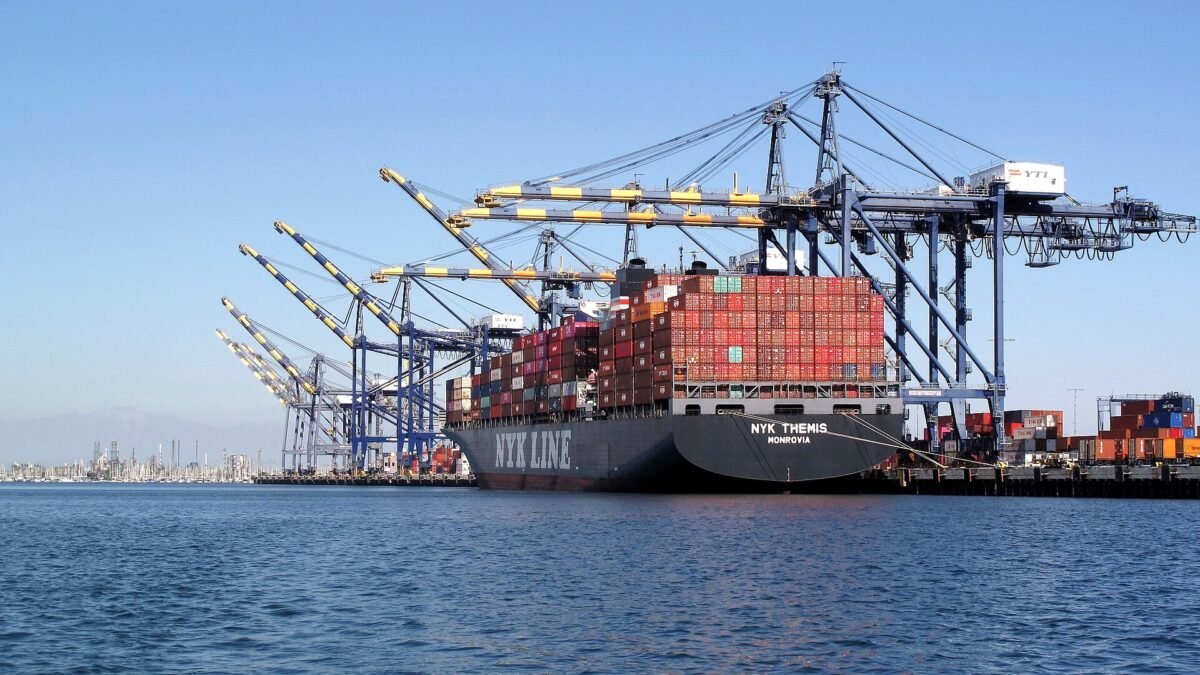
The United States on Wednesday proposed sweeping new tariffs on 14 major trading partners, including China and the European Union, after an eight-month investigation concluded that their industrial subsidies have created excess factory capacity that floods world markets with cheap goods and undercuts American manufacturers.
The Office of the United States Trade Representative (USTR) announced the duties after completing its inquiry under Section 301 of the Trade Act of 1974, the same trade law the Trump administration has turned to as it rebuilds a tariff regime the Supreme Court struck down in February. China would face the highest rates: a proposed 20 per cent tariff on most Chinese products, which would sit on top of roughly 25 per cent in duties imposed during President Donald Trump’s first term, and which officials said could rise to 40 per cent if trade negotiations between Washington and Beijing collapse.
A senior United States official, briefing reporters on the announcement, said the new duties would apply to goods from China, Bangladesh, Cambodia, the European Union, India, Indonesia, Japan, South Korea, Malaysia, Singapore, Switzerland, Taiwan, Thailand and Vietnam. The specific rates for each partner were to be published in a notice in the Federal Register on Wednesday, according to Reuters, and the duties will be subject to a public notice and comment period, with a hearing scheduled before they can take effect. That process could push implementation into January at the earliest, the official said.
The announcement is the most significant step yet in the administration’s effort to reconstruct its tariff policy on firmer legal ground, and it lands just weeks after Republicans suffered losses in the November midterm elections and with a year-old trade truce with China due to expire on 10 January. It also arrives on the eve of the Thanksgiving holiday, with American markets closed on Thursday, giving businesses and trading partners the long weekend to digest a proposal that touches nearly every major economy the United States trades with.
For all its scale, the proposal was deliberately calibrated to avoid the sharpest shocks. The duties will not exceed the tariff limits agreed in trade deals the administration negotiated in 2025, the official said, and they will not be added on top of a separate round of tariffs imposed in July on 60 economies over allegations of lax enforcement of anti-forced-labour laws. Instead, whichever rate is higher between the two sets of duties will apply. “The expectation yesterday was that previous deals would be honoured,” Andrzej Szczepaniak, a senior European economist at Nomura, told Reuters, while cautioning that the new headlines suggested Washington “may raise the minimum tariff” and that more clarity on the details was needed.
The rates in detail
China sits at the top of the list, as it has throughout the investigation. The proposed 20 per cent excess-capacity tariff on most Chinese goods would be added to the roughly 25 per cent in duties from Mr Trump’s first term, according to Reuters and the Wall Street Journal. But it would not be added to the 12.5 per cent anti-forced-labour duty already imposed on all Chinese imports in July, meaning the effective increase for many Chinese goods is 7.5 percentage points rather than the full 20.
The 20 per cent figure is not an accident. Under the trade truce between Washington and Beijing, which is due to expire on 10 January, the administration capped second-term tariffs on Chinese goods at 20 per cent, in addition to the first-term duties of about 25 per cent. The senior United States official said the new duties would respect that cap as long as the truce is extended. If it expires, the official said, the excess-capacity rate on China would snap to a higher level, with 40 per cent the figure officials have cited for a world without an agreement. That structure gives Beijing a direct incentive to extend the truce, and it gives Washington leverage in the negotiations that are expected to continue into December.
For the allies that struck trade deals with the administration in 2025, the ceilings agreed in those deals will hold, at least initially. The overall tariff rate on the European Union, Japan and South Korea will not exceed 15 per cent, the official told reporters, and the same 15 per cent cap was reported to apply to Taiwan and Switzerland. Several Southeast Asian economies — Cambodia, Indonesia, Malaysia, Thailand and Bangladesh — were reported to face caps of 18 per cent. Vietnam’s proposed rate was reported at 20 per cent, which would leave China’s combined burden above Vietnam’s even though the headline excess-capacity rates are the same.
The proposal also reaches beyond the 14 partners. The official said Brazil faces additional tariffs under a separate Section 301 investigation, including a proposed 10 per cent tariff on finished aircraft. And the duties will not apply to about $30 billion worth of Chinese consumer goods that the United States and China have identified for lower tariffs as part of their Board of Trade initiative, a bilateral process aimed at cutting duties on non-strategic imports.
Some goods are outside the scope of the action altogether. The new tariffs will not affect steel, aluminium and automobiles, which are already covered by separate national-security levies imposed under Section 232 of the Trade Expansion Act of 1962 during Mr Trump’s second term. The proposal applies to most other exports from the targeted economies.
Who is targeted — and who is spared, for now
The investigation, when it was opened on 11 March, named 16 economies: China, the European Union, Singapore, Switzerland, Norway, Indonesia, Malaysia, Cambodia, Thailand, South Korea, Vietnam, Taiwan, Bangladesh, Mexico, Japan and India. Two of them — Mexico and Norway — will not face new duties in this round. The senior United States official said the administration was still reviewing the excess-capacity probes into those two countries and declined to give a timeline for their completion.
The exemption for Mexico is the most consequential of the two, and the most politically loaded. Mexico is the United States’ largest trading partner, and the three countries are in the middle of a high-stakes renegotiation of the United States-Mexico-Canada Agreement, the trade pact that governs most North American commerce. Imposing new duties on Mexico now would have complicated those talks and risked retaliation against American exporters. Norway, a much smaller trading partner, was also spared, though officials gave no public reason.
For the 14 that were named, the official said Washington had concluded that each “creates, sustains, or contributes to structural excess capacity and production in manufacturing sectors through various acts, policies, and practices that we find to be unreasonable and burden or restrict US commerce.” USTR defines structural excess capacity as a situation in which countries maintain production capacity out of line with domestic and global demand, kept in place or expanded through government intervention or policy incentives, leading to overproduction, persistent trade surpluses or idle plants.
The administration has singled out China as the biggest source of the problem, pointing to steel, aluminium, electric vehicles, appliances and solar products. The probe is also partly directed at Chinese investment in Southeast Asia, including in Vietnam, Indonesia and Cambodia, where Chinese firms have built factories to manufacture goods for the American market and, in the administration’s view, to avoid earlier tariffs. China recorded a goods trade surplus of more than $1.2 trillion in 2025, according to the Federal Register notice that opened the investigation, a figure the administration has cited repeatedly as evidence of the scale of the imbalance.
Several of the targeted economies disputed the allegations when the probe was opened. India formally rejected the claims in April, ahead of public hearings held in Washington from 5 to 8 May, after USTR pointed to India’s $58 billion trade surplus with the United States in 2025 and alleged excess capacity in solar modules, petrochemicals and steel. Singapore, Norway and Vietnam also pushed back. The European Commission rejected the allegations at the time as well; its spokesman, Olof Gill, said the sources of global overcapacity “do not lie in Europe”, and Brussels warned it would respond proportionately if new American tariffs breached the bilateral deal struck in July 2025.
What happens next
The proposal is not yet law. Under the Section 301 process, the administration must publish its findings and proposed duties in the Federal Register, open a public comment period and hold a hearing before the tariffs can be imposed. The senior United States official said that process could push implementation into January at the earliest. United States officials briefed congressional committees on the changes late on Tuesday, before the public announcement.
That timetable matters because it leaves room for negotiation. The official said the new duties were expected to result in more trade agreements being negotiated and finalised, possibly at the G20 leaders’ summit in Miami in December, where Mr Trump and Chinese President Xi Jinping are scheduled to meet. The administration has also said the rates could be raised further if countries do not take steps to reduce excess production capacity, and could be lowered if they do.
The calendar is also shaped by statute. Under American trade law, a Section 301 case that does not involve trade-agreement dispute settlement must be decided within 12 months of its start, which put a deadline of March 2027 on this investigation. USTR Trade Representative Jamieson Greer telegraphed on Friday, in an interview with Bloomberg Television, that the investigation was nearing its conclusion, and the administration has long signalled its intention to restore tariffs to previously negotiated levels.
Legal challenges are likely, as they have been at every stage of this tariff rebuild. The separate forced-labour tariffs imposed in July are already under challenge at the United States Court of International Trade, and trade lawyers expect the excess-capacity duties to be challenged too. “The next thing to watch is if these tariffs can stand the test of time,” Lee Hardman, a senior currency analyst at MUFG, told Reuters. Section 301 gives the trade representative broad authority, and unlike the emergency-powers tariffs struck down in February, duties imposed under it can remain in place indefinitely.
Why the administration says it is doing this
Mr Greer has framed the investigation as a defence of American industry. When he opened the probe in March, he said: “The United States will no longer sacrifice its industrial base to countries exporting their excess capacity.” The administration’s argument is that foreign governments subsidise their industries — through cheap credit, energy support, tax breaks and direct grants — allowing firms to build far more capacity than their home markets can absorb and then sell the surplus abroad at prices American producers cannot match.
That argument has a long history in American trade policy, and it is not confined to China. The United States has complained about global overcapacity in steel for decades, and the European Union itself has said that China’s industrial policies create overcapacity with negative effects for many members of the World Trade Organization. What is new is the breadth of the response: a single investigation covering 16 economies, including close allies, and a single instrument — Section 301 — used to impose duties on all of them at once.
The political context is impossible to ignore. The tariffs follow brutal losses for Mr Trump’s Republican Party in the midterm elections, and they come after the Supreme Court’s February ruling stripped the administration of the emergency-powers tariffs that had been the centrepiece of its trade policy. A Reuters/Ipsos opinion poll conducted after the midterms found that 62 per cent of respondents would support efforts to repeal the tariffs, and Reuters has reported that the duties have contributed to higher prices on consumer goods in the United States. The administration has nonetheless pressed ahead, arguing that the tariffs are necessary to protect American manufacturing and to force trading partners to the negotiating table.
Analysts who follow the administration’s trade policy were not surprised by the announcement, only by its timing. “Some investors might have been caught off guard by news that the administration is on track to release more tariffs, but the key question about the administration unveiling new tariffs from the Section 301 overcapacity investigation has never been an issue of whether but when,” Sarah Bianchi and Karlin Gatton of Evercore wrote in a note late on Tuesday.
The legal rebuild after the Supreme Court ruling
To understand why this announcement matters, it helps to understand what it replaces. In February 2026, the Supreme Court struck down the broad “reciprocal” tariffs Mr Trump had imposed in his second term under a 1970s emergency-powers law, ruling that he had overstepped his authority. The decision removed the legal foundation for much of the administration’s tariff regime and forced its trade team to rebuild it piece by piece, using older and more cumbersome trade statutes.
Section 301 of the Trade Act of 1974 is the most powerful of those statutes. It allows the trade representative to investigate foreign practices that are found to be unreasonable or discriminatory and to burden American commerce, and then to impose tariffs, restrict imports or suspend trade benefits in response. It is the law the first Trump administration used for its tariffs on China, and it is the law the Biden administration used to keep many of them in place. Unlike emergency-powers tariffs, Section 301 duties are not subject to a time limit and are harder to challenge in court.
The administration opened two Section 301 investigations in March. The first, into industrial overcapacity, is the one concluded on Wednesday. The second, into weak or lax enforcement of anti-forced-labour laws in 59 countries and the European Union, produced preliminary findings in July, proposing tariffs of 10 per cent on more than a dozen trading partners, including Canada, Mexico and the European Union, and 12.5 per cent on more than 40 nations, including China, India, Japan and South Korea. According to USTR, those duties would cover 99 per cent of American trade.
The two investigations are designed to work together, and the decision not to stack the new duties on top of the forced-labour tariffs is the clearest sign of that design. By applying whichever rate is higher, rather than adding them together, the administration has kept the total burden within the caps agreed in its 2025 trade deals, avoiding a breach of those agreements while still creating a new and durable instrument for raising tariffs in the future.
Beijing’s response — and the view from Brussels
China’s first public response to the announcement was firm in language but restrained in substance. Foreign Ministry spokesperson Guo Jiakun said Beijing reiterated its opposition to “trade wars” and dismissed the notion of overcapacity, but stopped short of threatening retaliation. “The so-called ‘overcapacity’ is a false issue, and China opposes using it as an excuse for political manipulation,” Mr Guo said, urging the world’s two largest economies to maintain stable relations.
That restraint is notable, and it reflects the state of the relationship. The two countries are operating under a trade truce that has held for a year, and both sides have reasons to keep it. The truce caps second-term American tariffs on Chinese goods at 20 per cent, and it is tied to Chinese commitments on rare-earth supplies, agricultural purchases and agreed tariff reductions. American officials said on Wednesday that they did not anticipate Chinese retaliation, a judgement that will be tested in the days ahead as Beijing weighs its response.
China’s position has been consistent since the probe was opened: its exports reflect competitive advantages, not subsidies, and its manufacturing strength is the result of investment, scale and efficiency rather than government distortion. That argument has found some sympathy among economists, who note that China’s dominance in sectors such as solar panels and electric vehicles owes much to years of investment and to a vast domestic market. But it has not persuaded Washington, which points to the scale of state support for Chinese industry and to the size of China’s trade surplus as evidence that the playing field is not level.
Brussels had not publicly commented on the announcement at the time of writing, but its position is well established and deeply awkward. The European Union shares Washington’s diagnosis of the China problem: the European Commission has said that China’s distortive industrial policies create overcapacity with negative effects for many World Trade Organization members, and it has recast its own import-monitoring approach around sustained rises in imports at falling prices. But Brussels rejects the idea that European subsidies belong in the same category, and it has warned that it would respond proportionately if new American tariffs breached the deal struck at Turnberry in Scotland in July 2025, when European Commission President Ursula von der Leyen and Mr Trump agreed an all-inclusive 15 per cent ceiling on most European exports. Brussels scrapped its own tariffs on American industrial goods on 1 July under that agreement.
The European dilemma is sharpened by the fact that the United States singled out Germany and Ireland in its formal notice as the main sources of European excess capacity, pointing to their trade surpluses in chemicals, machinery and vehicles. The German Chamber of Commerce and Industry rejected that premise in written comments submitted in April, arguing that Germany’s surplus with the United States did not stem from structural overcapacity or sustained state intervention. Whether the 15 per cent cap holds in practice will depend on the details of the Federal Register notice, and on whether the administration treats the cap as a ceiling on the total tariff or only on the new excess-capacity duty.
Markets and the economy
Financial markets reacted quickly to the announcement, though not dramatically. United States stock futures slid, with futures on the S&P 500 down 2.1 per cent and those on the Nasdaq 100 down 3.1 per cent, according to Reuters. European equities dipped, bond yields remained lower on the day and the dollar edged up against a basket of currencies. The reaction was sharper than the underlying economics might suggest, because it came on top of a difficult week for markets: technology stocks have been selling off, Anthropic’s shares fell below their $83 initial public offering price on Tuesday, and Dell’s shares dropped despite record results.
Analysts were divided on how much the tariffs would matter for the economy. Mr Hardman at MUFG said the announcement was “not that surprising” and that he did not see it as “a big market mover”, because the administration was “finding an alternative way for the tariffs back in place” and “as it’s replacing similar tariff rates it shouldn’t have a major effect on the inflation outlook”. Mr Szczepaniak at Nomura was more cautious, noting that the new headlines suggested the United States might raise both the minimum tariff and the general ceiling, and that more clarity was needed before judging the impact.
The broader economic question is whether the tariffs will raise prices for American consumers. The administration’s earlier tariffs have contributed to higher prices on consumer goods, according to Reuters, and the new duties will apply to most imports from 14 of the largest trading partners. But because the duties are capped at negotiated levels and will not be added to the forced-labour tariffs, the immediate increase in the cost of imports is smaller than the headline rates suggest. For China, the effective increase is 7.5 percentage points on goods already subject to the 12.5 per cent forced-labour duty. For the European Union, Japan and South Korea, the total tariff rate will not exceed the 15 per cent already agreed in their trade deals, which means many goods will see no increase at all.
That calibration is the most interesting feature of the announcement. It suggests an administration that wants the tariffs as an instrument of leverage — a standing threat that can be raised or lowered in negotiation — rather than as an immediate shock to the economy. The 40 per cent figure for China is a threat, not a rate. The January implementation date is a deadline, not a fait accompli. And the comment period and hearing are an invitation to negotiate, not merely a procedural formality.
Analysis: Why It Matters
This announcement matters less for what it does today than for what it makes possible tomorrow. The duties proposed on Wednesday are, for the most part, not new burdens: they replace tariffs the Supreme Court struck down, they respect the caps in deals already signed, and they will not be added to duties already in place. What is new is the instrument. Section 301 gives the administration a durable, court-tested legal basis for tariffs that can be raised, lowered or extended indefinitely, and it gives the trade representative a standing process — investigation, finding, duty — that can be repeated against any country, at any time, for almost any reason.
That is a significant change in how American trade policy works. For most of the post-war era, tariffs were negotiated multilaterally, through the World Trade Organization, or bilaterally, through trade agreements. Section 301 turns that logic on its head: the United States investigates, the United States finds, and the United States imposes. The trading partner’s role is to respond — by negotiating, by retaliating or by challenging the finding in an American court. It is a unilateral instrument, and its use against 14 economies at once, including America’s closest allies, is a statement about how the administration intends to conduct trade policy for the rest of its term.
The second thing that matters is the choice of target. “Excess capacity” is a genuinely difficult problem, and it is not an invention. China does produce far more steel, solar panels and electric vehicles than its domestic market can absorb, and that surplus does depress prices worldwide and put pressure on manufacturers everywhere, including in Europe and in developing countries. The European Union, Japan and India have all complained about Chinese overcapacity in their own ways. By framing the tariffs as a response to overcapacity rather than as a simple revenue measure or a negotiating tactic, the administration has chosen a rationale that many of its trading partners privately share, even as they object to being targeted themselves.
But the breadth of the target list undermines the rationale. If the problem is Chinese overcapacity, why impose duties on Switzerland, Singapore and Taiwan? Why investigate Norway and Mexico? The administration’s answer is that overcapacity is a global problem, sustained by subsidies in many countries, and that Chinese investment in Southeast Asia has spread it beyond China’s borders. That answer is plausible for Vietnam, Indonesia and Cambodia, where Chinese firms have built factories to serve the American market. It is harder to sustain for Switzerland or Singapore, whose surpluses with the United States are small and whose industrial policies are not obviously distortive. The risk is that the investigation’s breadth makes it look less like a targeted response to a real problem and more like a pretext for a general increase in tariffs.
The third thing that matters is the timing. The announcement comes after midterm losses, before a G20 summit, and weeks before a trade truce expires. Each of those dates creates pressure, and the administration has used all three. The midterms showed that voters are unhappy about prices, and the decision to cap the duties and avoid stacking them is a recognition of that unhappiness. The G20 summit in Miami gives the administration a deadline and a stage: a meeting with President Xi at which a new truce can be announced, with the 40 per cent figure as the alternative. And the 10 January expiry of the truce gives the 20 per cent cap a built-in escalation, turning a routine renewal into a negotiation with real stakes.
For businesses, the practical consequence is uncertainty. Importers must now plan for tariffs that may take effect in January, may be changed after the comment period, and may be raised further if negotiations fail. That uncertainty has a cost, and it is one reason markets fell on the announcement even though the immediate economic impact is modest. For exporters in the targeted countries, the consequence is a new and durable source of risk: a Section 301 finding does not expire, and the duties it produces can be raised at any time.
For the rest of the world, the announcement is a reminder that the rules of global trade are being rewritten unilaterally. The World Trade Organization, which was designed to prevent exactly this kind of unilateral tariff action, has not been mentioned in the administration’s announcements, and no trading partner has suggested taking the case there. Instead, the response has been bilateral: negotiation, warning and, in China’s case, a careful refusal to escalate. That is the world trade now operates in — a world of deals and deadlines rather than rules and institutions.
What happens next will depend on three things. First, the details in the Federal Register notice: the exact rates, the product lists and the exclusions will determine how much the duties actually cost. Second, the negotiations before January: the comment period and the G20 summit give both sides a chance to reach a deal that avoids the duties altogether, or at least limits them. And third, the response from Beijing and Brussels: if China retaliates, or if the European Union concludes that the 15 per cent cap has been breached, the careful calibration of this announcement could unravel quickly. For now, the administration has proposed tariffs that are significant but not shocking, broad but not unlimited, and final in form but not in fact. That is a deliberate choice, and it leaves every party with something to negotiate over.
What to watch next
The Federal Register notice, expected on Wednesday, will be the first thing to read. It will contain the specific rates for each of the 14 partners, the product coverage and the exclusions, and it will show whether the 15 per cent and 18 per cent caps reported on Wednesday are ceilings on the total tariff or only on the new excess-capacity duty. The distinction matters: if the cap applies only to the new duty, the total tariff on some goods could exceed 15 per cent.
The public comment period and the hearing that follows will be the next test. American businesses that import from the targeted countries are expected to argue for exemptions, as they did in earlier tariff rounds, and the administration will have to decide how many to grant. The number and scope of exemptions will be a measure of how seriously the administration takes the economic costs of its own policy.
The G20 summit in Miami on 14 and 15 December is the diplomatic deadline. Mr Trump and President Xi are scheduled to meet there, and the administration has said it expects more trade agreements to be negotiated and finalised around the summit. Whether the two leaders can agree to extend the trade truce beyond 10 January — and on what terms — will determine whether the 20 per cent rate on China holds or snaps to 40 per cent.
Finally, watch the courts and the Congress. The forced-labour tariffs are already being challenged at the Court of International Trade, and the excess-capacity duties are likely to follow. Congress, meanwhile, has shown little appetite for restraining the administration’s tariff powers, but the midterm results may change that calculation. A Reuters/Ipsos poll found that 62 per cent of Americans would support efforts to repeal the tariffs, and that figure will weigh on every member of Congress who votes on trade.
Sources
- Reuters — US proposes new tariffs on 14 trading partners to fight excess factory capacity
- The Wall Street Journal — US set to raise tariffs on China, EU and others
- Reuters — View: US proposes new tariffs aimed at factory overcapacity
- MarketWatch — US proposes fresh tariffs on China, others as Trump doubles down on his favorite trade weapon
- Reuters — Trump administration set to unveil new tariffs after probe on excess factory capacity, sources say

About the Author — Abdul Mannan
Related Articles
Asian Markets Tumble as Tariff Threats and AI Doubts End the Nvidia Relief Rally
Asian stocks tumbled on Wednesday as fresh tariff threats from Washington and fading faith in the AI rally…

Huawei Convicted on 10 of 12 Counts in US Criminal Trial Over Trade Secrets and Iran Sanctions
A Brooklyn jury convicted Huawei on 10 of 12 counts, including conspiracy to steal trade secrets and bank…
Capita Chief Executive Quits as Pension Failures Wipe 70% Off Shares in a Day
Capita chief executive Adolfo Hernandez has stepped down with immediate effect after the outsourcer's botched running of the…