
Spain’s Conservatives Win Snap Election as Sánchez Concedes and Vox Becomes Kingmaker

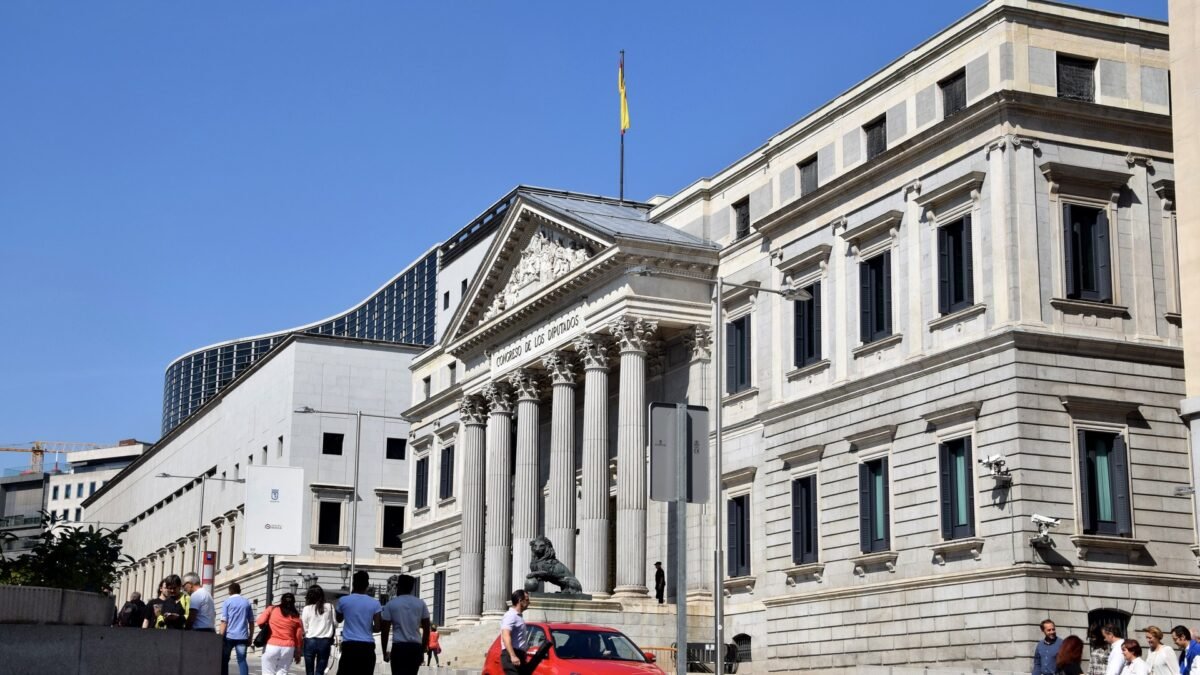
Spain’s conservative People’s Party has won the most seats in the country’s snap general election, ending eight years of Socialist government under Pedro Sánchez, who conceded defeat on Sunday night as the far-right Vox party emerged as the kingmaker of the next government.
Alberto Núñez Feijóo, the People’s Party leader, told supporters at the party’s headquarters on Calle Génova in Madrid that Spaniards had voted for change and that he would seek to form a stable government quickly, according to reports of his election-night remarks. Sánchez, who has been prime minister since 2018, conceded that his party had not won enough support to continue in office and said the Socialists would act as a firm opposition.
The result settles the central question of the campaign — who won — but leaves the decisive one open: whether Feijóo can assemble a working majority in the 350-seat Congress of Deputies, where 176 seats are needed for an absolute majority. The People’s Party fell short of that number on its own, according to official results published by the Interior Ministry, and will need the support of Vox, led by Santiago Abascal, to govern. Vox’s support, either through a formal coalition or through abstention in an investiture vote, would allow Feijóo to become prime minister.
A voter survey for Spain’s public broadcaster RTVE, based on 19,500 telephone interviews conducted between 13 and 28 November, put the People’s Party on 32.2 per cent of the vote and between 129 and 134 seats, with Reuters reporting the range as 131 to 136 seats. The same survey gave the Socialists 28.8 per cent and between 119 and 124 seats, and Vox 16.2 per cent and between 44 and 48 seats, up from the 33 seats Vox won in 2023. Adding the two seats projected for the Navarrese People’s Union, the PP’s allies in Navarre, the survey put the right-wing bloc at between 175 and 184 seats — straddling the 176-seat majority line. The exact shape of the next government will therefore depend on the final count, and on the bargaining that follows it.
Turnout was strikingly high. The interior ministry put it at 68.1 per cent by 6 p.m., up from 53.1 per cent at the same point in the 2023 election, according to Reuters. About 38.7 million Spaniards were eligible to vote. The high turnout did not deliver the progressive majority Sánchez had said a turnout of 75 per cent or more would likely produce.
Sánchez remains acting prime minister until a new government wins a vote in parliament. The new Cortes must convene, and King Felipe VI must hold consultations with party leaders before nominating a candidate — expected to be Feijóo — for an investiture vote. No timetable has been set.
A government brought down by housing
The election began as a housing election, and housing never left it. In late September 2026, María del Carmen Abascal, an 87-year-old woman, was removed from the Madrid flat where she had lived for about 70 years after she could not pay a rent rise of about 230 per cent demanded by the investment firm that owned the building, according to the BBC and The Guardian. The eviction ignited demonstrations across the country and turned housing affordability into the defining political flashpoint of the autumn.
Sánchez moved quickly, pushing two emergency decree-laws through cabinet. The first suspended evictions of vulnerable tenants until 2030, extended leases due to expire before 2028 by two years, raised taxes on tourist apartments and restricted purchases by investment funds. The second pointed toward automatic renewal of rental contracts, a core demand of tenants’ unions. But on 2 October, the Congress of Deputies struck down both decrees — the first by 178 votes to 172, the second by 184 to 166 — after Junts per Catalunya, the Catalan party whose support had kept Sánchez’s minority government in office, joined the People’s Party and Vox in opposition. Housing Minister Isabel Rodríguez made a last-minute appeal from the floor, telling Junts that 90 per cent of their demands had been incorporated into the texts. The Catalan bloc held its no vote regardless.
Three days later, Sánchez stepped before the cameras and announced a snap general election for 29 November, well ahead of the deadline in the summer of 2027. It was a trademark gamble by a habitual risk-taker, in the words of one account of the decision: a bet that the parliamentary deadlock would work in his favour, and that voters would blame the right for blocking help for renters rather than his government for failing to deliver it.
The gamble failed. The housing crisis had been deepening for years. According to estimates by the Bank of Spain, the country is currently short of around 750,000 homes, and the figure could exceed one million by 2028. Rents in Madrid and Barcelona had risen far faster than wages, and the shortage sat at the top of Spaniards’ list of concerns for around three years. The government proposed a tax on fortunes above 100 million euros to fund childcare, housing and public services, but the measures that might have eased the crisis never became law.
A campaign fought on several fronts
Housing was the dominant issue, but it was not the only one. Immigration ran through the campaign as Vox’s defining theme. Abascal, described by one report as the bearded and barrel-chested leader of the far right, campaigned almost entirely on an immigration crackdown, and both he and Feijóo condemned a migrant legalisation measure introduced by the government. The issue had been inflamed in the summer, when about 70,000 to 80,000 people crossed from Morocco into Ceuta within a short period, straining reception services and dominating the news for days.
Corruption also hung over the government. Sánchez entered the race burdened by the 24-year prison sentence handed to the Socialist Party’s former secretary of organisation in the Koldo corruption case, a scandal that touched people close to the prime minister and that the opposition returned to again and again. And the campaign was interrupted in late October by the Urda rail crash, in which 69 people were killed in Spain’s second deadly rail disaster in nine months. The transport minister, Óscar Puente, resigned on 3 November. Feijóo cited the crash after the election was called, telling voters that it was not Spain that was failing but its government.
Sánchez’s government had, in truth, been running on fumes for months. Since the 2023 election, he had governed without a majority in parliament. His Socialists formed a coalition with the left-wing Sumar alliance but depended on the support of smaller parties, above all Junts, the Catalan separatists, and Basque and Catalan regional parties. Parliament had not passed a regular budget since 2023, and in the first half of 2026 alone the government lost almost one in four votes. The housing decrees were the final blow, not the first.
In the only televised debate of the campaign, held on the Thursday before polling day, Sánchez conceded that his government had made mistakes, according to France 24, while insisting that it had always steered the country in the right direction. Feijóo rejected that assessment, arguing that holding a job no longer guarantees Spaniards can cover their bills or afford a home, and accusing Sánchez of having crushed the middle class. Sánchez countered by warning that a coalition between the People’s Party and Vox would reverse social rights and economic progress that had been hard to achieve, promising greater social justice and better public services if re-elected. Abascal was not part of the debate and dismissed it, saying his absence meant there would be no real clash of opinions.
Why this result is different from 2023
The 2026 result is, in one sense, the mirror image of 2023. That year, the polls predicted a People’s Party and Vox majority; they finished with 170 seats, six short, and Sánchez built a new government 116 days later with the votes of Catalan and Basque nationalists. The People’s Party won 137 seats in 2023, the Socialists 121 and Vox 33. This time, the right’s majority exists on paper, at least in the survey ranges, and the only open question is its shape.
The difference is not only arithmetic. In 2023, Sánchez could still assemble a left-wing and regionalist majority because the smaller parties had somewhere to go. In 2026, according to the Interior Ministry count, Sumar and the regional nationalist parties that propped up Sánchez’s minority government lacked the seats to sustain a fresh left-wing majority. No combination backing Sánchez reaches 176. The left’s fragmentation, and the collapse of the parliamentary arithmetic that sustained it, is what makes this result final in a way that 2023’s was not.
There is also a difference in what the result means for Vox. In 2023, Vox lost seats, falling to 33 from 52 in 2019, and the party’s moment appeared to have passed. In 2026, Vox has roughly doubled its representation, according to the RTVE survey, and has become the indispensable partner of any right-wing government. The party is already a coalition partner of the People’s Party in some regions. The question now is whether it enters the national cabinet — which would put a far-right party in Spain’s national government for the first time since the death of General Francisco Franco in 1975 — or supports a Feijóo government from outside.
Analysis: what a PP-Vox government would mean
The first thing to say about this result is that it is a verdict on a government, not only a choice of a new one. Sánchez has been one of Europe’s most prominent left-wing leaders since 2018, when he arrived at La Moncloa following a successful motion of no confidence against the conservative prime minister Mariano Rajoy. He survived the pandemic, the energy crisis and a hung parliament, and he won admirers on the international left for his clashes with the United States president Donald Trump and with Israel. But at home he became a divisive figure, and the election was widely seen as a referendum on his eight years in office. The voters’ answer was clear, even if the parliamentary arithmetic is not.
The second thing is that the result turns on a negotiation that has not yet begun. Feijóo faces hard bargaining over whether Vox joins the government or supports it from outside, and the terms of that bargain will define the next government’s character. Vox’s price is likely to be felt in immigration policy, where it has demanded a crackdown, and in social policy, where it has opposed the government’s reforms on abortion and transgender rights and attacked a badly framed law on sexual consent. A cabinet role for Vox would be a historic break: no far-right party has held national office in Spain since the dictatorship gave way to democracy. Support from outside, by contrast, would let Feijóo govern while keeping Vox at arm’s length — but it would leave him dependent on a party whose votes he would need for every budget and every bill.
That dependence is the third point. Even with Vox, a Feijóo government would govern with a narrow majority in a parliament where the left, though defeated, remains large and organised. The Socialists, with around 120 seats, will be a formidable opposition, and Sánchez’s promise of a firm opposition is not empty rhetoric: the party has the parliamentary weight to make life difficult for a minority or narrow-majority government, just as the right made life difficult for his. The investiture vote itself will be the first test. Spain’s system allows a candidate to win on a simple majority in a second vote, but the first vote requires an absolute majority, and the negotiations that precede it will set the tone for the whole legislature.
The fourth point concerns housing, the issue that caused the election. The irony of the campaign is that the party which called the election over housing has lost it, while the parties that blocked the housing decrees have won it — and now face the same housing crisis, with the same shortage of homes, the same rising rents and the same angry tenants. The People’s Party and Vox will have to produce a housing policy of their own, and it will be judged against the promises that brought them to power. If they cannot show progress on rents and supply, the issue that destroyed one government could damage the next.
Finally, the result will be read across Europe ahead of an election-packed 2027, in which voters head to the polls in France, Italy, Greece and Poland. Spain is one of Europe’s largest economies, and a government depending on Vox would move Spain right on immigration and social policy, according to The Times, and would be read as the latest step in a wider shift that has already seen right-wing parties gain ground in Sweden, Finland and Italy. For the European left, the loss of one of its most prominent leaders is a blow. For the European right, Spain’s election is evidence that the tide that carried them in other countries has now reached Madrid.
Why it matters
This election matters because it closes a chapter in Spanish politics and opens one whose ending is unknown. The Sánchez era — eight years, a pandemic, a cost-of-living crisis, a hung parliament held together by Catalan votes — is over. What replaces it will be decided not by the voters alone but by the negotiation between Feijóo and Abascal in the coming weeks.
It matters, too, because of what is at stake in that negotiation. If Vox enters the cabinet, Spain will have a far-right party in national government for the first time in half a century, and the country’s politics will have crossed a line that has held since the restoration of democracy. If Vox supports from outside, Feijóo will govern on sufferance, and the stability he promised voters will depend on a party that has shown it is willing to use its leverage. Either way, the government that emerges will be shaped by a party that campaigned on an immigration crackdown and on reversing the social reforms of the past eight years.
And it matters because the problems that decided the election have not gone away. The housing shortage is real, measured in hundreds of thousands of missing homes. The cost of living is real, felt in every household budget. The migration pressures at Ceuta are real, and the corruption cases are real. Whoever governs Spain will have to answer for them, and the voters who turned out in record numbers to deliver this verdict will be watching.
What to watch next
The first thing to watch is the final count. The figures reported on election night are provisional, and the definitive count, including votes cast by Spaniards abroad, follows in the coming days. The exact number of seats held by the People’s Party and Vox will determine whether their combined total clears 176 comfortably or sits on the line — and how much leverage each side carries into the negotiations.
The second is the negotiation itself. Feijóo must decide how much he is willing to concede to Vox, and Abascal must decide how much he is willing to accept. The two men have governed together in the regions, but a national coalition is a different matter, and the talks are likely to dominate Spanish politics in the coming weeks. Watch for the language used by both sides: whether they speak of a coalition, a pact or merely an investiture agreement will tell you a great deal about what is being agreed.
The third is the investiture process. The new Cortes must convene, and King Felipe VI must hold consultations with party leaders before nominating a candidate for the investiture vote. The timetable has not been set, but the process will be the first formal test of whether Feijóo can command a majority. If the first vote fails, a second vote on a simple majority follows, and the arithmetic of abstentions becomes as important as the arithmetic of votes.
The fourth is what happens to Sánchez. His bid for another term is over, and whether he stays on as Socialist leader in opposition has not been settled. The party will need to decide whether the man who led it for eight years, and who called the election that ended his government, is the right person to lead it in opposition. That decision will shape Spanish politics for years, whatever the next government does.
And the fifth is housing. The new government will be judged, sooner than it expects, on whether it can do what the last one could not: build homes, bring down rents and give tenants security. The eviction of an 87-year-old woman from her Madrid flat set this election in motion. The voters who marched in her name will not wait long to see what the new government does for them.
Sources
- Reuters — Spain election live: Center-right PP and far-right Vox seek to oust Socialist Sánchez
- Reuters — Spain’s right appears on course for majority in election, survey shows
- CNN — Conservatives win Spain’s election but need far right to govern, polls show
- The Times — Spain election live: New poll points to conservative victory
- Next Edition — Feijóo’s People’s Party wins most seats in Spanish election but falls short of majority, leaving Vox as kingmaker

About the Author — Abdul Mannan
Related Articles

Eight Nations Tell Abbas to Hold Palestinian Elections by Early 2027 After Vote Postponed Again
Eight countries, including France and the United Kingdom, have urged the Palestinian Authority to hold legislative and presidential…
Zelenskyy Offers Front-Line Ceasefire but Rejects US Deal That ‘Makes Ukraine Pay for the War’
Ukraine's president says Kyiv will halt fighting along the current front line to open peace talks, but will…
Spain Votes in Snap Election as Far Right Eyes First Place in Government Since Franco
Spain votes on Sunday in a snap election that could end eight years of Socialist rule, with polls…