
Eight Nations Tell Abbas to Hold Palestinian Elections by Early 2027 After Vote Postponed Again

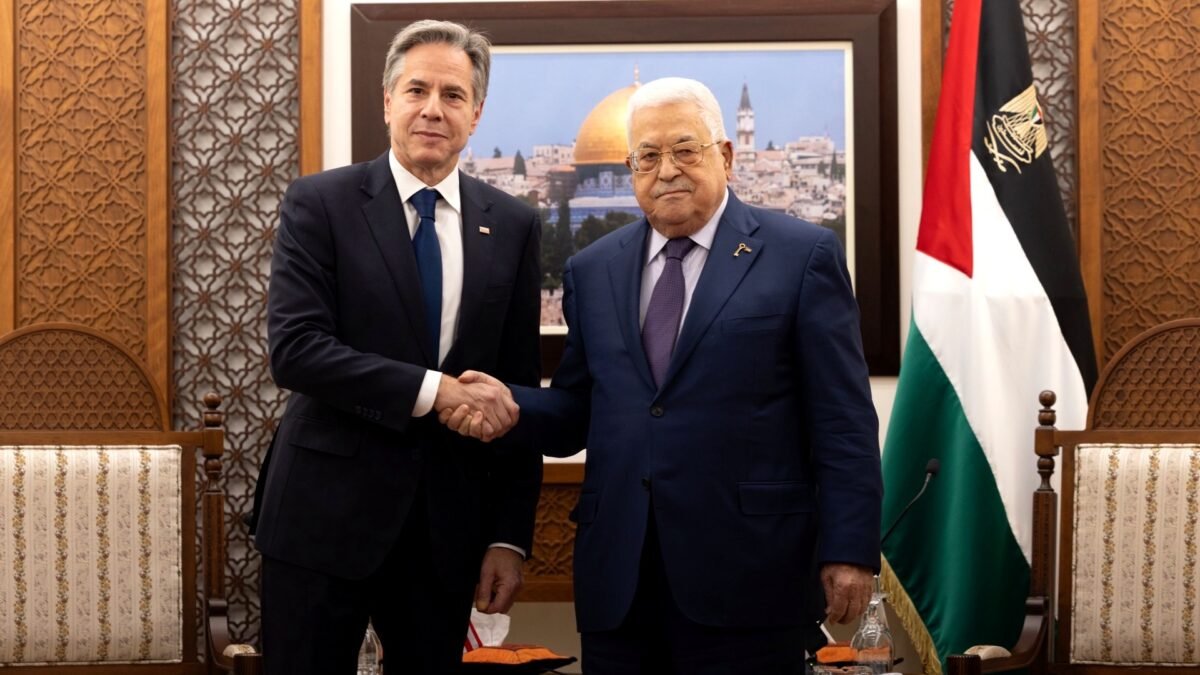
Eight countries have called on the Palestinian Authority to hold legislative and presidential elections in the first quarter of 2027, after President Mahmoud Abbas postponed a vote that Palestinians had been due to cast on Saturday, 28 November. The foreign ministers of Australia, Belgium, Canada, France, Luxembourg, Norway, Poland and the United Kingdom issued the demand in a joint statement published on Saturday, expressing what they described as deep regret over the delay and warning that two decades without a national vote have stripped Palestinian institutions of democratic legitimacy.
“On this day when Palestinians should have been exercising their democratic right to vote, we once again express our deep regret over the decision taken by President Abbas to postpone the Palestinian legislative elections, which were scheduled for November 28th, as well as the presidential election planned for early 2027,” the ministers said in the statement, according to the text published by the Norwegian government.
The statement, released by the French foreign ministry and republished by the governments of the signatory countries, is the sharpest collective rebuke yet of the Palestinian leadership from the Western states that recognised a Palestinian state in September. It ties their continued support for the Palestinian Authority directly to democratic renewal, and it sets a deadline — the first three months of 2027 — that is far earlier than the September 2027 date Abbas set when he postponed the vote last month.
Palestinians have not voted in a national election since 2005–06, when Abbas was elected president and Hamas won a majority in the Palestinian Legislative Council. Abbas has governed by decree since his presidential mandate expired in 2009, and the legislature he was elected alongside has not sat in any meaningful sense for almost twenty years. The election that should have taken place on Saturday was itself the product of a year of international pressure, and its postponement has now become a test of whether the wave of recognition that swept Western capitals in September carries any real conditions at all.
What the eight countries asked for
The joint statement, issued on 28 November, calls on the Palestinian Authority to honour the commitments it made under the New York Declaration and to organise both legislative and presidential elections in the first quarter of 2027. It also calls on all parties to take the necessary steps to make voting possible throughout the occupied Palestinian territory, and offers practical help — including an election observation mission from the European Union and support for the independent electoral commission.
“Twenty years after the last national election in Palestine, and five years after the postponement of the legislative elections planned for 2021, this lack of elections continues to deprive the Palestinian people of the right to express themselves democratically through the ballot box and to choose their representatives in free and transparent elections, as President Abbas had pledged,” the ministers said.
The statement links the demand for elections explicitly to the planned return of the Palestinian Authority to Gaza and to the survival of the two-state solution. “The holding of free and transparent elections is essential to preserve the democratic principles that must remain at the heart of Palestinian institutions, and to enable Palestinian leaders to represent the aspirations of the Palestinian people for dignity, freedom, and self-determination with renewed legitimacy,” it said. “It is also of particular importance in view of the return of the Palestinian Authority to Gaza and the restoration of its authority over the entire Palestinian territory. In this sense, the democratic renewal of Palestine is inseparable from the preservation of the two State solution, which we remain steadfastly committed to.”
The eight governments also made clear that their backing is not unconditional. “Our continued support for the Palestinian Authority and our commitment to strengthening its institutions go hand in hand with the respect for the commitments made regarding reforms and democratic renewal,” the statement said. “We remain fully committed to the right of the Palestinian people to self-determination and are determined to work, with our partners, to achieve the two-state solution in the best interests of both Palestinians and Israelis.”
The timing was deliberate. The statement was published on the very day the legislative election had been scheduled, turning an ordinary diplomatic communiqué into a public reminder of a vote that did not happen. According to Reuters, the European Union’s foreign policy chief, Kaja Kallas, had already expressed regret last month when the postponement was announced, saying that holding democratic elections throughout the occupied Palestinian territory was “long overdue”.
The postponement: what Abbas decided in October
Abbas postponed the elections on 10 October, issuing a presidential decree that pushed the legislative vote from 28 November to 11 September 2027 and set the presidential election for the same day. The decree revoked an earlier decree that had scheduled the legislative election for November, and it followed a resolution by the Executive Committee of the Palestine Liberation Organization, according to the official Palestinian news agency WAFA.
The decree cited what it called obstacles posed by Israeli measures and the need to establish suitable political, security and on-the-ground conditions for “free, fair and inclusive elections”, WAFA reported. It pointed to continued Israeli military operations, settlement expansion, settler violence and restrictions on movement across the West Bank, including East Jerusalem, as well as Israel’s continued withholding of Palestinian tax revenues, which it said created challenges for preparing and holding elections.
In Gaza, the decree pointed to what it described as exceptional security and humanitarian conditions, the incomplete withdrawal of Israeli forces, the lack of progress in reconstruction and the failure to implement arrangements for deploying international stabilisation forces and police. It also noted restrictions on access to Gaza and East Jerusalem for staff of the Palestinian Central Elections Commission and for international observers, which it said had hindered preparations.
Under the decree, the Central Elections Commission remains responsible for preparing, organising and supervising both elections in accordance with the General Elections Law, and the decree called on Palestinians in Jerusalem, the West Bank and Gaza to vote. WAFA reported that the decision followed consultations with the PLO Executive Committee and various Palestinian political factions, which it said produced a national consensus on the obstacles and on the need for an inclusive national dialogue aimed at fostering internal unity.
The postponement was not a surprise to close observers. Abbas’s vice president, Hussein al-Sheikh, had written to the French foreign minister, Jean-Noël Barrot, on 8 October saying that the election would be postponed because of what he called fundamental obstacles imposed by the Israeli authorities, according to the Washington Institute for Near East Policy. Two days later, the decree made it official.
The reaction from the four countries that had led the recognition drive — Australia, Canada, France and the United Kingdom — was swift and unusually blunt. In a joint statement in October, they said the delay would be “deeply disappointing and once again deprive Palestinians of the opportunity to vote and will further erode public confidence in democratic institutions”, according to the Washington Institute. Their frustration was sharpened by the fact that, before they recognised Palestine, they had received written commitments from Abbas on holding national elections. Saturday’s eight-country statement, which added Belgium, Luxembourg, Norway and Poland to the original four, escalates that criticism and attaches a specific deadline to it.
Hamas, for its part, described the postponement as a step in the right direction, citing the absence of conditions for free elections across the occupied territories, including Jerusalem, and offering to join dialogue on reorganising Palestinian institutions. The result is a rare point of agreement between the two rival Palestinian factions: neither Fatah nor Hamas currently wants a vote.
Twenty years without a vote
The scale of the democratic gap is difficult to overstate. Palestinians last chose a president in January 2005, when Abbas won the election held after the death of Yasser Arafat. A year later, in January 2006, Hamas won the legislative election, taking 74 of the 132 seats in the Palestinian Legislative Council against 45 for Abbas’s Fatah movement, in a vote that international observers broadly described as free and fair. About three in four registered voters cast ballots.
What followed destroyed the democratic experiment almost immediately. Fatah refused to accept the result in practice, Hamas formed a government that the international community largely boycotted, and within eighteen months the two movements were fighting each other in the streets of Gaza. By June 2007, Hamas controlled Gaza and Fatah controlled the West Bank, a split that has defined Palestinian politics ever since. The Legislative Council stopped functioning, Abbas’s four-year presidential term expired in 2009, and he has ruled by decree ever since — now, at 91, in the twenty-first year of a presidency that was supposed to last four.
It is not as though elections have never been tried since. In 2021, Abbas decreed legislative elections for May and a presidential vote for July, the first such attempt in fifteen years. Factions registered, lists were drawn up, and campaigning had begun. Then, on 29 April 2021, Abbas postponed the vote indefinitely, citing Israel’s refusal to guarantee that Palestinians in East Jerusalem could vote — the same issue that features in the current postponement. Critics at the time, including many Palestinians, argued that Fatah’s fear of losing to a Hamas-backed list was the real reason. Whatever the motive, the result was the same: no vote.
The current attempt began with more fanfare. In January 2026, at a meeting of the Fatah Revolutionary Council, Abbas proclaimed 2026 “the year of elections” for Palestinians. The election was first announced in July, largely as a result of steady pressure from Western countries following the recognition of Palestine by France and others, according to the Washington Institute. The Central Elections Commission, a respected Ramallah-based body, began preparations, and for a few months it appeared that Palestinians might finally vote. Then, three weeks before polling day, the decree of 10 October ended the prospect — again.
The pattern is now familiar enough that many Palestinians treat election announcements with open scepticism. An entire generation has grown up without ever voting in a national election. More than half the population of the West Bank and Gaza is under 30, which means that a majority of Palestinians have never had the chance to choose their leaders. The Palestinian Authority that is supposed to govern them, negotiate for them and now return to Gaza on their behalf derives its authority from a vote held before many of its subjects were born.
The recognition bargain
Understanding why eight foreign ministers chose this moment to intervene requires understanding the bargain struck in the summer of 2025. On 9 June that year, Abbas wrote to the French president, Emmanuel Macron, and to the Saudi crown prince, Mohammed bin Salman. In the letter, he condemned Hamas’s attacks of 7 October 2023, endorsed the disarmament of Hamas, said the movement should play no role in governing Gaza, and pledged reforms and general elections under international supervision within one year.
That letter became the foundation of the New York Declaration, the outcome document of a high-level United Nations conference on the two-state solution co-chaired by France and Saudi Arabia in New York from 28 to 30 July 2025. The declaration set out a fifteen-month plan towards a sovereign Palestinian state, welcomed the Palestinian Authority’s “One State, One Government, One Law and One Gun” policy, and recorded Abbas’s commitment to holding democratic elections. On 12 September 2025, the UN General Assembly voted 142 in favour of endorsing the declaration.
Ten days later, on 22 September 2025, Macron announced at the UN General Assembly that France recognised the State of Palestine. The United Kingdom, Canada, Australia, Belgium, Luxembourg, Portugal, Malta and others followed in the same wave. It was the largest single expansion of recognition for Palestine in decades, and it was explicitly presented as part of a package: recognition in exchange for reform, elections and a reformed Palestinian Authority that could credibly govern both the West Bank and Gaza.
Saturday’s statement is, in effect, the recognising countries presenting the bill. They gave Abbas the diplomatic prize he had sought for years, and in return they expected a vote within a year. Instead, they got a postponement to September 2027 — nearly two years after the recognition wave, and more than two years after the commitment in Abbas’s letter. The eight countries’ insistence on the first quarter of 2027 is an attempt to hold him to something closer to the original timetable, and their reference to continued support going “hand in hand” with democratic renewal is the closest they have come to making that support conditional.
The stakes for the recognising countries are also domestic. In Britain, France and Canada, recognition was controversial, and critics warned that it rewarded a leadership with no democratic mandate. If the Palestinian Authority cannot even hold the election its own president promised, those critics will say they were right. The eight governments therefore have a political interest of their own in seeing a vote happen — and in being seen to demand one.
Gaza and the road back
The elections question is inseparable from the future of Gaza. Under the ceasefire that took hold in October 2025 and the plan endorsed by the UN Security Council in Resolution 2803, the Palestinian Authority is supposed to return gradually to Gaza and restore its authority over the whole of the Palestinian territory. A transitional National Committee for the Administration of Gaza, appointed by the Board of Peace, is meant to run day-to-day affairs, while an international stabilisation force is supposed to provide security. None of that has happened on schedule: Israeli forces have not fully withdrawn, reconstruction has barely begun, the stabilisation force has not deployed, and Hamas has not disarmed.
The eight countries’ statement makes the connection explicit. Free elections, it says, matter “in view of the return of the Palestinian Authority to Gaza and the restoration of its authority over the entire Palestinian territory”. The logic is straightforward. An Authority that returns to Gaza without a democratic mandate would arrive as an imposed administration, welcomed by neither Gazans nor the international donors expected to pay for reconstruction. An Authority that has just won an election, by contrast, could claim to speak for Palestinians in both territories and could present itself to Israel and to the world as a legitimate partner.
The obstacles Abbas cites are real, and it would be wrong to dismiss them as pretexts. Holding an election in Gaza today would be extraordinarily difficult. Much of the territory is in ruins, hundreds of thousands of people are displaced, the Central Elections Commission cannot move freely, and Israel controls access. In East Jerusalem, the question that sank the 2021 vote remains unresolved: Israel has not permitted Palestinian voting there since 2006, and there is no sign that it will do so now. In the West Bank, Israeli military operations, movement restrictions and settler violence make campaigning and polling hazardous. A vote held under these conditions could be neither free nor fair, and a flawed election might damage the Palestinian cause more than no election at all.
Yet the obstacles are also, in part, of the Palestinian leadership’s own making, and this is the uncomfortable point the eight countries are pressing. The Authority has had years to prepare for elections in difficult conditions — to register voters, to build the commission’s capacity, to negotiate arrangements for Jerusalem and Gaza — and has repeatedly chosen delay over the attempt. Hamas’s agreement with the postponement, for its own reasons, removes the one pressure that might have forced the issue: a rival demanding a vote. And Abbas’s own interest is obvious. At 91, governing by decree, with a vice president, Hussein al-Sheikh, appointed rather than elected, he has little to gain from a contest that could produce a legislature he does not control and a presidential challenger he might not beat.
There is also the question of who would be allowed to stand. Any credible election would have to decide whether Hamas, which won the last one, can take part in the next — and under what conditions. The New York Declaration envisages a Palestinian state with one government, one law and one gun, which implies Hamas disarming and leaving governance. But Hamas remains armed and present in Gaza, and it has shown no sign of accepting political marginalisation. An election that excludes Hamas would be denounced as illegitimate by its supporters; an election that includes it would alarm Israel and the Western countries demanding the vote. The eight countries’ statement does not address this dilemma, but it will have to be confronted before any ballot can be held.
Analysis: Why It Matters
The dispute over a postponed election is about much more than a date on a calendar. It goes to the heart of the question that has haunted the Palestinian national movement for two decades: who speaks for the Palestinians, and by what right?
For the eight countries, the answer they are offering is that legitimacy must be earned at the ballot box, and that the international community’s investment in a Palestinian state — recognition, funding, diplomatic cover, and now the plan to return the Authority to Gaza — depends on it. Their statement is not merely a complaint about a missed date. It is an attempt to attach a price to recognition after the fact, to convert a diplomatic gift into a contract. The demand for elections in the first quarter of 2027, rather than September, is a deliberate choice: it is close enough to be a real test, and far enough away to be achievable if the political will exists.
For Abbas and the Palestinian Authority, the calculation is different. The leadership’s legitimacy has never rested on elections alone; it rests on history, on the PLO’s status as the recognised representative of the Palestinian people, on international recognition, and on the absence of any plausible alternative. From Ramallah’s perspective, holding an election in the middle of a ruined Gaza, under military occupation, with Jerusalem closed to voters and Hamas still armed, risks producing a result that nobody can implement — or worse, a result that hands power to forces that would destroy the Authority itself. The leadership’s caution is not only self-interest; it is also a genuine fear that a badly run election could be the last one.
Both positions have merit, and that is what makes the standoff so difficult. The eight countries are right that twenty years without a vote is indefensible, and that an Authority which asks the world to trust it with Gaza should first ask its own people. Abbas is right that the conditions for a free election do not currently exist, and that Israel’s cooperation — on Jerusalem, on Gaza access, on the tax revenues that fund the Authority itself — is a precondition that he cannot supply on his own.
The danger is that the two positions harden into a stalemate that serves everyone except the Palestinian public. The recognising countries can issue statements and feel they have done their duty. Abbas can cite Israeli obstacles and postpone again. Israel, which has no interest in a legitimised Palestinian Authority returning to Gaza, can quietly ensure that the obstacles remain. And the Palestinian people, who have waited twenty years, can wait another two — and then another.
Breaking that stalemate would require the eight countries to do more than demand a date. Their offer of an EU election observation mission and support for the electoral commission is a start, but it is modest. If they are serious, they would need to press Israel, publicly and privately, to allow voting in East Jerusalem and to give the Central Elections Commission access to Gaza — the two obstacles that have sunk every attempt since 2006. They would also need to put real weight behind the link between support and reform, making clear what happens if September 2027 comes and goes without a vote. A statement that is ignored costs the issuer credibility as well as the recipient.
Equally, the Palestinian leadership would need to show that it is preparing for an election rather than preparing excuses for the next postponement. That means visible work by the Central Elections Commission, a published timetable, voter registration in Gaza, and a serious national dialogue — the one Abbas’s decree itself promised — about the terms on which Hamas and other factions take part. The decree’s promise of inclusive dialogue is welcome, but it will be judged by whether it happens, not by whether it was announced.
There is also a wider lesson here for the two-state project itself. The New York Declaration and the recognition wave of September 2025 were built on a sequence: reform, elections, a reformed Authority, a return to Gaza, and then a sovereign state. If the second step fails, the rest of the sequence collapses. A Palestinian state whose government has no democratic mandate would be a state in name only — recognised abroad, unaccountable at home, and incapable of carrying the weight that its supporters have placed on it. That is why eight foreign ministers spent their Saturday issuing a statement about an election that did not happen: because everything else they have promised depends on it happening.
What to watch next
The immediate question is whether Abbas responds to the eight countries, and whether he moves the date. The September 2027 date he set is more than nine months away; the first quarter of 2027, which the eight countries demand, begins in five weeks. The gap between the two dates is the space in which diplomacy will now operate, and it will be filled with pressure from the recognising countries, from the European Union and from Arab states that have their own interest in a legitimate Palestinian partner.
The second question is what the Central Elections Commission does next. If it publishes a timetable, begins voter registration and starts preparations for voting in Gaza and East Jerusalem, that will be a sign the September date is real. If it stays silent, the postponement will look like what its critics say it is: an indefinite delay dressed up as a new date.
The third question is Israel. None of this can happen without Israeli cooperation on access to Gaza and East Jerusalem, and the Israeli government has shown no enthusiasm for a Palestinian election — particularly one that might strengthen the Authority’s claim to Gaza. Whether the eight countries are prepared to press Israel as firmly as they have pressed Abbas will be the real test of their statement.
The fourth question is Hamas. The movement welcomed the postponement, but its long-term position matters more. If Hamas insists on retaining its weapons and its role in Gaza, no election can produce the unified Palestinian government the New York Declaration envisages. If it agrees to disarm and compete politically, an election becomes possible — and the Authority’s reluctance to hold one becomes harder to defend.
Finally, there is the question of Abbas himself. At 91, he is the oldest leader in the region, and the succession question hangs over everything. His appointment of Hussein al-Sheikh as vice president in April 2025 was meant to answer it, but an appointed successor is not an elected one. A presidential election in 2027 would settle the question democratically; another postponement would leave it to be settled by crisis. For the Palestinian people, who have waited twenty years to choose, that is the real cost of a vote that never happens.
Sources

About the Author — Abdul Mannan
Related Articles

Zelenskyy Offers Front-Line Ceasefire but Rejects US Deal That ‘Makes Ukraine Pay for the War’
Ukraine's president says Kyiv will halt fighting along the current front line to open peace talks, but will…
Spain Votes in Snap Election as Far Right Eyes First Place in Government Since Franco
Spain votes on Sunday in a snap election that could end eight years of Socialist rule, with polls…
Myanmar Military Strikes Kill Dozens at Wedding Venue and School in Three Days of Bombing
At least 21 people, including five children, were killed when a military airstrike hit a wedding in Moe…