
Apple Unveils First Touchscreen MacBook Pro With OLED Display, Starting at $2,899

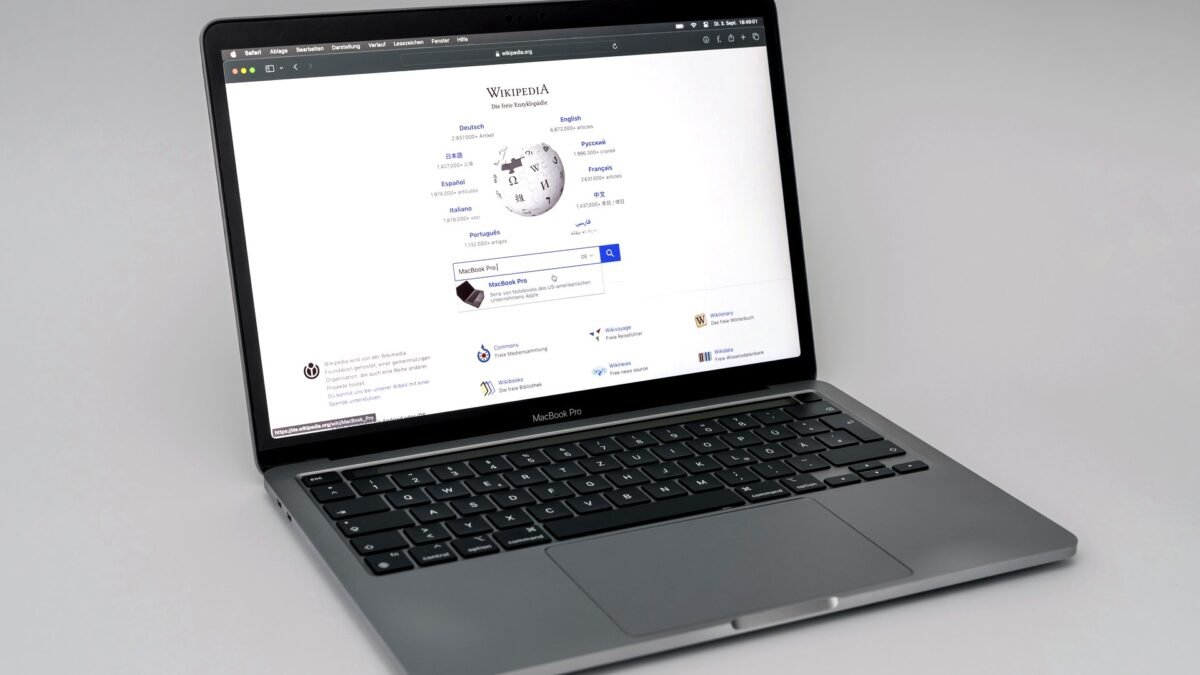
Apple has made its first laptop with a touchscreen. According to Apple, the new MacBook Pro with PROLED XDR Display, announced on 28 October 2026, brings touch input to the Mac for the first time, alongside a new tandem OLED screen, and it will reach customers on 6 November 2026. According to Reuters, the machine was unveiled by John Ternus, Apple’s chief executive, at an event in Los Angeles, where he presented it to an audience of content creators and creative professionals.
The announcement ends one of the longest-held positions in the personal computer industry. For more than a decade, Apple argued in public that a laptop screen should not respond to a finger. According to Reuters, Steve Jobs described laptop touchscreens as “ergonomically terrible” in 2010, and Tim Cook, who led Apple until recently and is now executive chair of its board, said in 2012 that combining a tablet and a laptop would be as pleasing as converging a toaster and a refrigerator. Ternus himself had previously argued, according to Reuters, that Apple already made a touchscreen computer in the iPad. The new MacBook Pro abandons that argument in practice, while keeping the keyboard, the trackpad and the familiar shape of a laptop intact.
Apple is selling the new models alongside its existing MacBook Pro range rather than replacing it. The touchscreen machines come in two sizes, described by Apple as 14-inch and 16-inch models, with measured display sizes of 14.2 inches and 16.3 inches. Both use Apple’s M5 Pro or M5 Max chips. Pre-orders opened on 28 October in 30 countries and regions, including the United States, according to Apple, with availability in Apple Stores and through authorised resellers from Friday 6 November. The 14-inch model with the M5 Pro chip starts at $2,899 in the United States, and the 16-inch model with the same chip starts at $3,399, according to Apple. Versions with the more powerful M5 Max chip start at $4,499 for the 14-inch model and $4,799 for the 16-inch model.
The screen is the centre of the announcement, and Apple has given it a new name: PROLED XDR. According to Apple, the display uses tandem OLED technology, in which two self-illuminating pixel layers are stacked together. The company says this arrangement, combined with its display engine and factory calibration, produces up to 2,000 nits of peak brightness for both HDR and SDR content, a contrast ratio of 10,000,000:1, and a variable refresh rate from 10Hz to 120Hz through ProMotion. The panel covers both the P3 colour space and Adobe RGB, according to Apple, with more than 80 per cent coverage of Rec. 2020, which matters for HDR video editing and colour grading. An anti-reflective coating is standard, and a nano-texture option, etched into the cover glass, is offered for users who want still less glare.
That combination of brightness and contrast is the technical answer to the oldest objection to OLED in a professional laptop: that a single OLED layer, however vivid, could not stay bright enough for sustained work in a bright room, and could show uneven brightness or halos around bright objects on dark backgrounds. Apple says its two-layer design, with algorithms controlling each pixel in real time and compensating for content, temperature, environment and pixel use over time, keeps brightness and grey tones uniform and avoids blooming. Those are manufacturer claims, not independent measurements, and they will need to be tested on production machines in ordinary working light. But the specification itself sets a clear target. If the display performs as described, it would give photographers, colourists and video editors a reference-grade screen they can carry, rather than a screen they must check against an external monitor.
Touch is built into that panel rather than added on top of it. According to Apple, the touch sensor sits directly within the display, which the company says reduces latency so that using a finger feels like touching the content itself rather than instructing it from a distance. Everyday gestures are deliberately ordinary: swiping to scroll a web page, pinching to zoom into a photograph, dragging slides from one presentation to another, double-tapping a window to fill the screen, or flicking to tile a window into place. Apple says macOS translates touches into clicks automatically, so many existing applications should respond to touch immediately, without waiting for developers to rewrite them. Updated system gesture interfaces are also available for developers who want to design interactions specifically for touch.
The company is pitching touch first as a professional tool, not as a replacement for the keyboard. According to Apple, graphic designers will be able to use the whole display as a canvas instead of being limited to the area of the trackpad when drawing; musicians will be able to play software instruments directly on screen; and app developers will be able to test how touch behaves in their iPhone and iPad applications on the Mac display itself. A redesigned hinge is intended to keep the screen steady when it is touched, and Apple says advanced video stabilisation smooths the camera feed in real time when touch is used during a video call, addressing the small but visible problem of a laptop camera shaking each time a finger lands on the screen.
A list of third-party applications that Apple says will take advantage of touch underlines where the company expects the feature to be used first. According to Apple, they include everyday productivity and collaboration tools such as Notion, Canva, Zoom, Microsoft Word, Excel, PowerPoint and Outlook; photo and video tools including Adobe Lightroom and DaVinci Resolve; three-dimensional modelling and animation applications including Blender, Maxon Cinema 4D, Maxon ZBrush and Shapr3D; and the music application Algoriddim djay Pro. Apple’s own Creator Studio applications are also being adapted: according to Apple, Pixelmator Pro will let creators draw, paint and select directly on the canvas, Logic Pro will offer a fully multi-touch polyphonic keyboard with tappable chord and drum pads, and Final Cut Pro will let editors mark ranges, drop clips into place and pinch to zoom into a cut by touch. Apple notes that some of the listed applications will arrive with touch support later in the year.
The top of the screen changes as well. The notch that housed the camera on recent MacBook Pro models is replaced by the Dynamic Island, the pill-shaped area first seen on the iPhone. According to Apple, the Dynamic Island on the Mac becomes the home for Spotlight, Live Activities and Siri AI, where users can search the machine, see real-time updates, take a phone call, control music, accept an AirDrop request or pause a song with a tap. Apple adds a condition in a footnote to its announcement: Spotlight moves to the Dynamic Island only if Siri AI is available and enabled. There is no Face ID on the new models; Touch ID remains the method for secure sign-in, according to independent coverage of the announcement, which also noted that Apple made no mention of Apple Pencil support for the touchscreen.
Under the display, the new design is thinner and lighter than the MacBook Pro it sits beside. According to Apple, the 14-inch model now weighs 3 pounds, half a pound less than before, while the 16-inch model weighs 4 pounds, 0.7 pounds lighter than before. The 16-inch model is nearly a millimetre thinner and the 14-inch model half a millimetre thinner, with slimmer display borders accounting for the slightly larger measured screen sizes. A redesigned thermal system is intended to sustain the performance of the M5 Pro and M5 Max chips in the lighter body while directing warm air away from the display. Apple rates battery life at up to 24 hours, based on testing it says it conducted in September 2026, with the usual caution that battery life varies by use and configuration. Fast charging can take the battery to 50 per cent in 30 minutes, according to Apple.
The chips themselves are not new. The M5 Pro and M5 Max are the chips Apple put into the MacBook Pro in March, according to independent reporting on the announcement, and Apple describes them as its most powerful chips built for a professional laptop. Both offer faster unified memory, according to Apple, with up to 128GB of unified memory and storage configurable up to 16TB. Each graphics core contains a Neural Accelerator, according to Apple, intended to speed artificial intelligence work such as running a coding agent with an on-device language model, and Apple says the M5 Max can run large language models with hundreds of billions of parameters entirely on the device. The graphics processors also carry enhanced shader cores and a third-generation ray-tracing engine for more realistic lighting and faster renders in three-dimensional work. That on-device emphasis matters for professionals who work with sensitive material or without a reliable connection, and for Apple’s broader argument that serious AI work need not leave the machine.
Connectivity and sound follow the existing professional pattern, with upgrades at the margins. According to Apple, the new MacBook Pro includes three Thunderbolt 5 ports, HDMI, an SDXC card slot, MagSafe charging and a headphone jack. The M5 Pro version supports up to three external displays and the M5 Max version up to four. Wi-Fi 7 and Bluetooth 6 run on Apple’s N1 wireless chip, according to Apple, and a 12MP Center Stage camera and studio-quality microphones complete the video-call setup. The six-speaker sound system has a new woofer design that Apple says delivers 50 per cent deeper bass, with new tweeters shaping sound dispersion, and dedicated audio tuning for closed-lid use when the laptop is connected to an external display.
The machines run macOS 27, which Apple calls Golden Gate, with Apple Intelligence and Siri AI. According to Apple, Siri AI is a more conversational and personal assistant that can draw on personal context across messages, emails and photographs, answer questions, and carry out tasks across applications, with privacy protections that Apple describes as groundbreaking. Siri AI is integrated into Spotlight and system-wide context menus, according to Apple, and a keyboard shortcut lets users ask about what is on the display through Visual Intelligence. In Safari, Apple Intelligence organises tabs into topics, notifies users of website changes such as restocks or price drops, and allows custom extensions to be created from a description, according to Apple. The announcement’s footnotes record limits that buyers should note: Siri AI is available in beta in macOS 27.2, in a limited set of languages, and certain features that rely on server-side models are subject to daily usage limits, with expanded access to be offered for a fee in the future.
For colour-critical and broadcast work, Apple has added features that will mean little to most buyers and a great deal to a small number of them. According to Apple, the display offers calibration through the Apple Pro Display Calibrator and industry-standard reference modes for cinema, photography, print and design, as well as new DICOM medical imaging reference modes for non-diagnostic review, research and education, where grey-scale accuracy and contrast matter. Support for genlock lets the display synchronise its refresh rate with a camera’s capture rate to reduce ghosting and tearing when filming, according to Apple, which is valuable for virtual production and on-set work. Through Apple Color Matching Function 2026, the display is intended to give a consistent visual experience when paired with the iPhone 18 Pro or Studio Display XDR, according to Apple.
The environmental claims in the announcement follow Apple’s established pattern of publishing material percentages rather than general promises. According to Apple, the new MacBook Pro is made with 55 per cent recycled content overall, including 100 per cent recycled aluminium in the enclosure and 100 per cent recycled cobalt in the battery, and, in a first for Apple, 100 per cent recycled tantalum in multiple capacitors. It is manufactured with 45 per cent renewable electricity across the supply chain, according to Apple, and the company repeats its plan to be carbon neutral across its entire footprint by 2030. The paper packaging is 100 per cent fibre-based and designed to be recycled, according to Apple.
One small design detail has attracted outsized attention. According to Reuters, Ternus told the Los Angeles audience that Apple would return to a glowing logo on the back of the laptops, a feature that disappeared from MacBook models about a decade ago and remained a quiet marker of affection among long-time Mac users. Its return is cosmetic, but it is also a signal. Apple is presenting this machine as a break with the recent past, and a glowing logo is an inexpensive way to make that break visible from across a room, a cafe or a studio.
The launch also needs to be read in the context of Apple’s crowded autumn and of its new leadership. According to CNN, the touchscreen MacBook is the latest in a burst of new products during Ternus’s first two months as chief executive, following the folding iPhone Duo, which went on sale in September, and the HomeView smart home hub introduced earlier in October. According to Reuters, Ternus, a former Apple hardware veteran, took over as chief executive after Cook, and the Los Angeles event was part of a media blitz of product launches ahead of the holiday shopping season. CNN reports that Wall Street will watch Apple’s earnings call in the coming week for signs of how the new products are being received, following reports of broken screens on some iPhone Duo handsets. The MacBook Pro announcement does not answer that question by itself, but it raises the stakes of it: Apple is asking buyers and investors to judge a new chief executive not on one product, but on a run of them.
Buyers also need to keep the new touchscreen models distinct from another MacBook Pro announced days earlier. According to independent coverage, Apple announced a separate 14-inch MacBook Pro with the newer M6 chip on 27 October, starting at $1,999 in the United States with a Liquid Retina XDR display and no touchscreen, alongside an M6 iMac. The touchscreen PROLED models cost $900 more at the entry level for the same screen size, use the older chip family, and offer the new display and touch in return. That distinction will be the single most common source of confusion in shops and online listings in the coming weeks, and it should be checked on the exact display name, PROLED XDR, rather than on the words “new MacBook Pro” alone.
Analysis: Why It Matters
The most interesting fact about this announcement is not the touchscreen itself. Touchscreens on laptops have existed for more than a decade, and Apple is, by any honest measure, late. According to CNN, Microsoft pushed the industry towards touch with Windows 8 in 2012, early touchscreen laptops were clunky, expensive and awkward to use as tablets, and the hardware and software have improved steadily since. Touchscreens still accounted for only 16.3 per cent of global laptop shipments in 2025, according to market research from the International Data Corporation cited by CNN, largely because commercial buyers tend to plug laptops into monitors at a desk. What matters is why Apple has changed its mind now, what it has chosen to build, and what that choice reveals about where the Mac is heading.
A reversal framed as a professional tool, not a concession
Apple has not presented touch as a correction of an error. It has presented it as a new instrument for a specific audience. The announcement is addressed, in almost every paragraph, to designers, musicians, developers, photographers, colourists, film-makers and engineers, and the examples are all drawn from their working day. That framing is deliberate, and it is clever. A touchscreen added for general use would invite the old objection, repeated by Jobs and Cook, that reaching up to a vertical screen is tiring and imprecise. A touchscreen added so that a designer can draw across a full canvas, a musician can play a keyboard that is wider than a trackpad, or an editor can place a clip by hand, is much harder to dismiss, because the benefit is visible in the gesture itself. Whether the framing holds will depend on how often those gestures are actually used after the first week. A feature that is demonstrated beautifully and then ignored is not a new way of working; it is a more expensive way of doing the old one.
The display is the product; the chip is not
The pricing structure makes Apple’s own judgement plain. The cheapest way into a touchscreen Mac is $2,899, against $1,999 for the separate M6 MacBook Pro, and the extra money buys the screen, the touch sensor, the thinner and lighter body and the glowing logo, not a faster chip. In fact, the buyer who wants both the newest chip family and a touchscreen cannot have both in this range at all. That is an unusual position for Apple, which usually lets a buyer pay more and receive more of everything. Here, the choice is a trade-off, and Apple is betting that a meaningful number of professional buyers will choose the display over the chip number. The bet is not unreasonable. A processor improvement is felt in render times and compile times, which are real but intermittent. A display improvement is felt in every minute the machine is open. For work in which colour, contrast and the ability to touch the work itself are the job, the screen is the machine. For work in which raw speed matters most, the cheaper M6 model or the existing mini-LED models remain the rational purchase. The risk for Apple is not that buyers will fail to understand the trade-off, but that reviewers will measure the new machine against the M6 model on speed alone and call it overpriced, missing the point that the two machines are optimised for different things.
Touch as an addition, not a new operating system
Apple’s technical approach is cautious in a way that deserves attention. Rather than redesigning macOS around fingers, Apple has translated touches into clicks, so that existing software works on the first day. That is the least ambitious way to add touch, and also the most useful. It avoids the trap that caught early Windows touch laptops, where a new interface sat awkwardly on top of an old one, and it avoids asking developers to rebuild their applications before anyone can benefit. The cost of caution is that the first version of touch on the Mac may feel like a polite guest in an operating system built for a pointer. Buttons designed for a cursor are small for a fingertip; menus designed to be hovered over do not hover well; and a screen that must be reached, touched and then released, dozens of times an hour, may prove tiring in exactly the way Jobs warned about. The redesigned hinge and the video stabilisation suggest Apple has thought about the physical consequences. The real test will be in hands-on reviews over weeks, not minutes: do people keep reaching for the screen when the novelty fades, or do they return to the trackpad and forget touch is there? If the answer is the second, Apple will have added cost and complexity for a feature that changes little. If the answer is the first, the pressure to redesign more of macOS for touch will grow quickly, and the click-translation shortcut will look, in hindsight, like the first step rather than the finished design.
A reference display that happens to be a laptop
The least discussed part of the announcement may be the most consequential for Apple’s professional reputation. Reference modes, factory calibration, DICOM modes and genlock are not consumer features. They are the vocabulary of broadcast, medical imaging research and colour-critical post-production, where a display is a measuring instrument as much as a viewing surface. By putting them into a portable machine, Apple is arguing that the MacBook Pro should be trusted as the final word on colour, not merely as a convenient preview of it. That argument will be judged by people who own instruments that measure colour for a living, and it will not survive exaggeration. If the panel performs as specified, Apple will have strengthened its hold on a market in which loyalty is earned slowly and lost quickly. If it does not, the gap between the marketing language and the measured result will be documented in detail, because that is what this audience does.
What the wider market should take from a minority feature
The IDC figure cited by CNN, that touchscreens were only 16.3 per cent of laptop shipments in 2025, is sometimes read as proof that touch on laptops does not matter. That reading is too simple. A feature can be a minority of shipments and still change expectations, because the people who buy premium laptops disproportionately influence what software is built and what the next generation of buyers expects. Apple sells enough MacBook Pros to change what developers bother to support. If touch controls become normal in professional Mac applications, the same applications on Windows may follow, and the old argument that laptops should never have touchscreens will be harder to sustain anywhere. Equally, Apple’s entry may raise the bar for Windows rivals, as one analyst told CNN, even if it does not dramatically change the overall personal computer market. The sensible expectation is not a sudden conversion of the laptop market to touch, but a slow normalisation: touch as one input among several, used when it is the natural gesture, ignored when it is not, and expected to be present on a premium machine in the way a good trackpad is expected today.
The Ternus test, and what to watch next
Finally, this launch should be judged as part of a leadership story as much as a product story. Ternus is a hardware specialist succeeding an operations specialist, and his first months have been defined by a rapid succession of firsts: a folding phone, a home hub, and now a touchscreen Mac. That pace creates its own risk. A company that launches many new categories at once must support, explain and refine all of them at once, and any quality problem in one launch colours the reception of the next. Reports of broken Duo screens, noted by CNN, are therefore relevant even though they concern a different product: they set the standard of scrutiny the MacBook Pro will face. What to watch next is concrete. First, hands-on reviews of the display: measured brightness, contrast and colour accuracy, uniformity, reflections, and any sign of the burn-in or uneven ageing that OLED panels must manage over years. Second, the touch experience over time: latency, accuracy at the edges of the screen, smudges and cleaning, and whether the hinge truly holds the screen still. Third, real battery life under professional workloads, as opposed to Apple’s test conditions. Fourth, developer uptake: which of the named applications deliver genuinely useful touch controls, and which merely translate a tap into a click and stop there. Fifth, pricing and availability beyond the United States, and whether the $900 gap to the M6 model narrows or widens as configurations change. And sixth, whether Apple extends touch, and the PROLED display, to other Macs, or keeps them as a premium distinction for the MacBook Pro alone. The answers to those questions, over the next three to six months, will tell us whether 28 October 2026 was the day the Mac gained a new sense, or the day it gained an expensive extra.
For now, the verified facts are clear enough. Apple has built its first touchscreen laptop, wrapped it in its brightest and highest-contrast laptop display to date, priced it firmly at the professional end of the market, and asked buyers to choose the screen over the newest chip. That is a coherent, if expensive, proposition. Its success will not be decided by the announcement, but by the hands, eyes and working days of the professionals it was built for.
Sources
- Apple Newsroom — Apple unveils groundbreaking MacBook Pro with PROLED XDR Display and Touch for the first time on Mac, 28 October 2026
- Reuters — Apple shows pricey touchscreen laptops, a first for the iPhone maker, 28 October 2026
- CNN — Apple just announced its first ever MacBook with a touchscreen, 28 October 2026
- Pocket-lint — Apple officially unveils its touchscreen OLED MacBook Pro, starting at $2,900, 28 October 2026
- GSMArena — Apple announces new MacBook Pro models with OLED and touchscreen, 28 October 2026

About the Author — Abdul Mannan
Related Articles

Amazon Unveils Five New Alexa Devices Led by Echo Show 16, With Cameras Moving Into More Rooms
Amazon has unveiled five new Alexa devices, led by a redesigned 16-inch Echo Show 16, as it pushes…
Apple Acknowledges iPhone Duo Screen Cracks and Will Replace Affected Units Days After Launch
Apple has acknowledged that a small number of iPhone Duo units show inner-display problems days after launch and…
Astronomers Find a Galaxy-Sized Cloud of Gas With Almost No Stars — a Possible ‘Dark Galaxy’ 310 Million Light-Years Away
Astronomers have found a vast cloud of hydrogen 310 million light-years away that holds about two billion times…