
Wall Street Sell-Off Spreads to Asia as S&P 500 Hits Seven-Month Low and Nikkei Plunges 5%

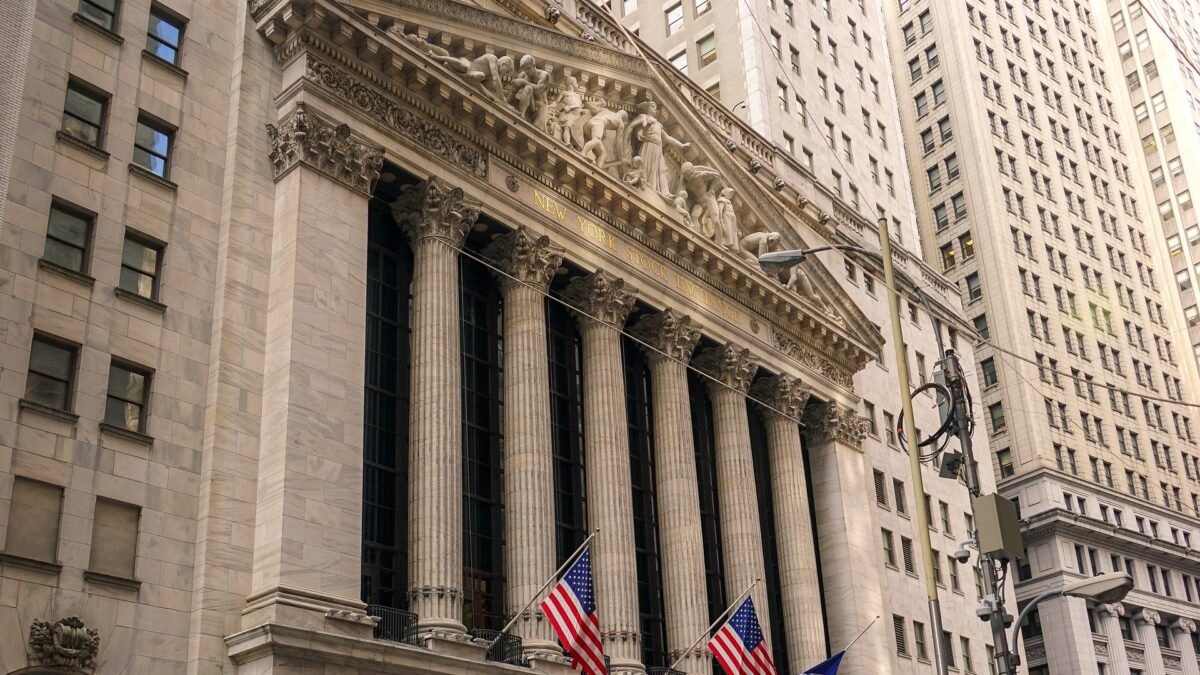
Wall Street fell sharply on Thursday, dragging the S&P 500 and the Nasdaq to fresh seven-month lows, and the sell-off spread across Asia on Friday, where Japan’s Nikkei plunged about 5 per cent and South Korea’s KOSPI lost more than 5 per cent. According to Reuters, United States stocks slumped about 2 per cent on Thursday, with the S&P 500 recording its longest losing streak since April 2024, as investors looked past the euphoria of the largest stock market debut in history and focused instead on growing doubts about the artificial intelligence trade and the prospect of further interest rate rises from the Federal Reserve.
The Dow Jones Industrial Average fell 2.2 per cent, the S&P 500 fell 2.0 per cent and the Nasdaq Composite fell 2.3 per cent on Thursday, according to Reuters and Alliance News. Every one of the 11 sectors in the S&P 500 ended the day lower. Communication services and consumer cyclicals each fell about 3 per cent, while technology, industrials, materials and healthcare each fell about 2 per cent. The scale of the decline was striking because it came on the very day that Anthropic, the maker of the Claude chatbot, completed the biggest initial public offering in history. Its shares had briefly valued the company at about $2 trillion in early trading before closing at $97, up 17 per cent on the $83 offer price, yet even that landmark debut could not lift the wider market.
The selling continued in Asia on Friday. According to investingLive, the Nikkei 225 fell about 4.7 per cent, or roughly 2,800 points, while the broader TOPIX lost about 3.5 per cent, with Advantest, SoftBank Group and Kioxia leading the declines. South Korea’s KOSPI dropped about 5.1 per cent and the KOSDAQ fell nearly 4.9 per cent, with Samsung Electronics and SK Hynix each down more than 6 per cent. Hong Kong’s Hang Seng fell about 2.1 per cent and the Shanghai Composite about 1.6 per cent. Alliance News reported the Nikkei down 5.1 per cent in early Friday trading, with figures showing that Japanese consumer price inflation had accelerated in October. United States equity futures stayed soft, with Nasdaq 100 futures down about 0.7 per cent and S&P 500 futures around 0.3 per cent lower.
London was braced for a weaker open as well. According to Alliance News, IG futures indicated that the FTSE 100 would open 64.4 points lower, or 0.6 per cent, at 10,388.28 on Friday, after the index of London large-caps closed down 0.9 per cent at 10,452.68 on Thursday. In European equities on Thursday, the CAC 40 in Paris was down 0.8 per cent and the DAX 40 in Frankfurt was down 1.1 per cent, according to AJ Bell.
The AI trade under pressure
At the centre of the sell-off is a question that has been building for weeks: whether the enormous sums being poured into artificial intelligence will ever earn a return. Nvidia, the chipmaker at the heart of the AI boom, fell 3.3 per cent on Thursday and is now about 40 per cent below its peak of last month, according to Reuters. Advanced Micro Devices fell more than 7 per cent after the investment firm Hunterbrook Capital disclosed a short position against the company and alleged that a blacklisted Chinese server maker had kept using newer AMD firmware, a claim AMD rejects, according to investingLive and AJ Bell. Copper, a metal closely tied to data centre construction and industrial demand, slipped to a seven-month low after falling 6 per cent the previous day, according to Reuters.
The doubts go beyond individual shares. According to Reuters, total compute commitments across the AI industry now stand at around $900 billion, perhaps closer to $1 trillion, with around half of that due by 2030. Analysis by the Financial Times, cited by Reuters, suggests Anthropic would need to generate annual revenue of about $600 billion to justify its valuation, far more than Alphabet and Apple currently turn over, while its annualised revenue last month was running at just over $80 billion. Anthropic raised $81 billion in its offering at $83 a share, valuing the company at around $1.5 trillion, after the expected valuation had been cut by about a quarter in the space of a few months.
The China angle sharpened overnight. According to investingLive, a United States House committee said Washington had approved about 880,000 Nvidia and AMD artificial intelligence chip shipments to Chinese firms over six months, a disclosure that raised fresh questions about export controls and about how far American technology is still reaching Chinese buyers. The People’s Bank of China held its one-year and five-year loan prime rates at 3.0 per cent and 3.5 per cent for an 18th month, as expected, according to Alliance News and investingLive.
The Federal Reserve replaces AI as the market’s main worry
If the AI trade supplied the spark, the Federal Reserve supplied the fuel. According to investingLive, J.P. Morgan has joined Deutsche Bank and Bank of America in forecasting interest rate rises in December, January and March, while Barclays expects two rises. Philadelphia Fed President Anna Paulson said the Fed has more tightening to do at a deliberate pace, after a speech that offered no near-term steer on rates. Chicago Fed President Austan Goolsbee warned that the AI investment boom risks overheating the American economy. The yield on the United States 10-year Treasury was quoted at 5.08 per cent, according to AJ Bell, and held near 5.0 per cent, according to investingLive.
The shift in expectations has been rapid. Only weeks ago, many investors expected the Fed to be finished with rate rises. Now the debate is about how many more are coming, and the minutes of the Fed’s latest meeting have already pointed in that direction. The change matters because higher rates for longer raise the cost of the borrowing that has financed the AI build-out, and they make the future earnings of fast-growing technology companies worth less in today’s money. When the world’s most valuable companies are priced on profits that are years away, even a small move in rates can take a large slice off their value.
Japan added its own rate pressure. According to the Statistics Bureau of Japan, cited by Alliance News, the national consumer price index rose 2.3 per cent year on year in October, accelerating from a 2.1 per cent increase in September. Core inflation, which excludes fresh food, rose 2.2 per cent, below the 2.3 per cent forecast but still above the Bank of Japan’s 2 per cent target, according to investingLive, while the index excluding fresh food and energy slowed to 2.2 per cent from 2.4 per cent. A December rate rise to 1.50 per cent remains the base case, and some analysts now see Japanese rates reaching 2.5 per cent by mid-2027, although markets price an endpoint of around 1.75 to 2 per cent. The dollar was quoted at about 159 yen, close to the 160 level, and the yield on the Japanese 10-year government bond eased about 4 basis points to around 2.80 per cent.
Gold, Bitcoin and the broken safe-haven script
One of the most unsettling features of the sell-off is that the usual refuges have not worked. Gold, which closed in London on Thursday at $3,686.50 an ounce, was quoted at $3,557.43 early on Friday, according to Alliance News, and spot gold later slid to around $3,530, down about 2.6 per cent, according to investingLive. Reuters reported gold down 1.5 per cent to $3,662 an ounce in Thursday trading. Silver lost more than 3 per cent to around $41.50. Bitcoin fell about 3 per cent to around $61,600, its lowest since July, according to investingLive, and Reuters described it as sitting at a four-month low.
Normally, when shares fall, money runs to gold and government bonds. This time, gold fell with shares, and bond yields stayed high. Part of the explanation is the stronger dollar, which rose against most major currencies and makes gold more expensive for buyers outside the United States. Part of it is that rising rate expectations push up real yields, which compete directly with gold, an asset that pays no income. But the deeper signal is that investors are not simply moving from risk to safety. They are selling across the board, raising cash and waiting for clarity on rates and on the AI outlook. UBS, for its part, upgraded gold to Attractive and still sees $5,000 an ounce by December 2027, although it has pushed back the timing of that target, according to investingLive.
Oil was the exception. Brent rose about 0.5 per cent to around $92.40 a barrel and West Texas Intermediate was near $82.90, according to investingLive. The International Energy Agency’s World Energy Outlook called the disruption in the Strait of Hormuz the largest energy supply shock on record, and its Executive Director, Fatih Birol, said there is no credible path back to pre-war markets. Goldman Sachs still sees Brent easing to $78 by the end of 2027 as bypass pipelines come into use and a supply surplus builds. The cost of the United States war with Iran has risen to $48.3 billion, according to figures presented to the United States Senate and reported by Alliance News, a reminder that the conflict continues to carry a heavy fiscal as well as human price.
Strategists are openly split about what comes next. According to investingLive, UBS downgraded global equities to Neutral in its 2027 outlook, citing concentration and AI risks, only days after Morgan Stanley moved to maximum overweight. That disagreement at the top of the industry captures the mood of the market: the same facts are producing opposite conclusions, and conviction is in short supply.
Analysis: Why It Matters
The AI trade is being repriced, not abandoned
The first thing to understand about this sell-off is what it is not. It is not a verdict that artificial intelligence has failed. The technology is real, its use is spreading, and the companies building it are still growing. What the market is questioning is the price, not the product. When Nvidia falls 40 per cent from its peak in a month, when a company can raise $81 billion in the largest offering in history and still fail to lift its own sector on debut day, the market is saying that the sums involved have run ahead of the revenues that can plausibly support them. That is a repricing, and repricings can be brutal without being fatal. The danger is that the repricing feeds on itself: falling share prices make it harder and more expensive to raise the capital that funds the next round of data centres, and slower building then undermines the growth forecasts that justified the valuations in the first place. The $900 billion of compute commitments cited by Reuters is the thread that ties the whole trade together, and it is also the thread that could unravel it.
The Federal Reserve has taken over the story
The second point is that the market’s centre of gravity has shifted. For two years, the story was AI: its promise, its profits, its potential. Now the story is the Fed. The speed of the shift in rate expectations, from cuts to three more rises, shows how fragile the consensus had become. Inflation has not gone away, and the Fed’s own officials are now saying so in public. The significance goes beyond share prices. Higher rates for longer mean dearer mortgages, dearer corporate borrowing and dearer government debt, and they arrive at a moment when, according to JPMorgan analysis cited by Reuters, developed economy deficits are projected at 5.5 per cent of GDP this year, the highest outside a recession since at least the Second World War. More than 70 per cent of developed economies have weaker fiscal balances than before the pandemic. The market is therefore being asked to believe two things at once: that governments can keep borrowing heavily, and that interest rates will stay high enough to restrain inflation. Those two beliefs sit uneasily together, and the tension is now showing up in prices.
Asia is no longer a bystander in an American sell-off
The third point is geographical. It used to be said that when America sneezes, the rest of the world catches a cold. On Friday, Asia caught pneumonia. The Nikkei’s fall of about 5 per cent and the KOSPI’s fall of more than 5 per cent were sharper than anything Wall Street suffered, and they were concentrated in exactly the companies that supply the AI trade: Samsung and SK Hynix down more than 6 per cent, Advantest and SoftBank leading Tokyo lower. That is because Asia does not merely watch the AI boom; it manufactures it. The chips, the memory, the testing equipment and the assembly all run through Japan, South Korea and Taiwan, so a doubt about American AI spending lands first and hardest on Asian factory floors. Add a Bank of Japan that is preparing to raise rates and a yen hovering near 160 to the dollar, and the region faces a squeeze from both directions: weaker demand from its biggest customer and dearer money at home.
The safe-haven script has broken down
The fourth point is the behaviour of gold and Bitcoin. In a normal market fright, gold rises and the dollar’s rivals steady themselves. This time gold fell, Bitcoin fell to its lowest since July, and the dollar rose. That combination tells its own story: investors are not rotating into safety, they are raising cash. Cash is the one asset that gains when both shares and gold fall, and a dash for cash is a sign of genuine uncertainty rather than a routine wobble. It also leaves portfolios with nowhere to hide, which is why the declines have felt so broad. All 11 sectors of the S&P 500 fell on Thursday. When everything falls together, diversification stops working, and that is when ordinary savers, pension funds and small investors start to feel the strain.
The stakes for ordinary people
The final point is the one that matters most and is discussed least. A stock market sell-off is often reported as a game played by traders, but its consequences reach far beyond dealing rooms. Pension funds hold shares on behalf of millions of retirees. Companies that see their share prices halve find it harder to borrow, invest and hire. And when the world’s largest economy slows, the effects travel through trade, remittances and commodity prices to countries that had no part in the original excess. The American economy, according to Apollo’s Torsten Sløk, cited by Reuters, now derives about two-thirds of its GDP growth from AI, and Barclays expects consensus earnings growth of 15 per cent next year. If those numbers are right, the AI boom is no longer a stock market story; it is the story of the whole economy. That is what makes this sell-off different from an ordinary correction. The market is not just questioning a sector. It is questioning the engine of growth itself.
What to Watch Next
- Friday’s United States data: the University of Michigan consumer sentiment survey and its inflation expectations reading, due on Friday, will show whether households are starting to expect higher prices, and speeches from Fed Governors Christopher Waller and Lisa Cook may sharpen the picture on rates.
- The United Kingdom’s retail sales and borrowing figures: due at 0700 GMT on Friday, with sales expected to be unchanged month on month in October after a 0.4 per cent decline in September, and public sector net borrowing forecast at £18 billion for October, according to Alliance News.
- The Bank of Japan’s December decision: with core inflation still above target and some analysts seeing rates at 2.5 per cent by mid-2027, the central bank’s next move will shape the yen and the flow of money out of Japan.
- Nvidia and the chipmakers: whether the selling in Nvidia, AMD, Samsung and SK Hynix stabilises or spreads will be the clearest signal of whether the market believes the AI correction has run its course.
- Gold and the dollar: if gold keeps falling while the dollar rises, the dash for cash is continuing; a recovery in gold would suggest investors are finding their footing again.
- The Trump–Xi summit: the meeting between Presidents Donald Trump and Xi Jinping, with artificial intelligence at the centre of their economic rivalry, could reset the terms of the technology trade, for better or worse.
- European Central Bank President Christine Lagarde’s speech: due on Friday, it will show whether Europe’s central bank shares the Fed’s hawkish turn or charts a different course.
Sources

About the Author — Abdul Mannan
Related Articles

Barclays Circles Metro Bank as £1.2 Billion Takeover Interest Emerges a Week After Challenger Put Itself Up for Sale
Barclays is among the early suitors circling Metro Bank after the challenger lender put itself up for sale,…

Anthropic Closes Record Nasdaq Debut at $97.17, Up 17%, After Opening Pop Briefly Valued It at $2 Trillion
Anthropic closed its first day on the Nasdaq at $97.17, up 17% on its $83 IPO price, after…

Walmart Beats Forecasts as Revenue Hits $188.8 Billion and Raises Full-Year Outlook — But Shares Slip
Walmart beat Wall Street's forecasts for its fiscal third quarter, reporting revenue of $188.8 billion and raising its…