
Christine Lagarde to Step Down as ECB President on 7 February 2027 as Bank Holds Rates at 2.5%

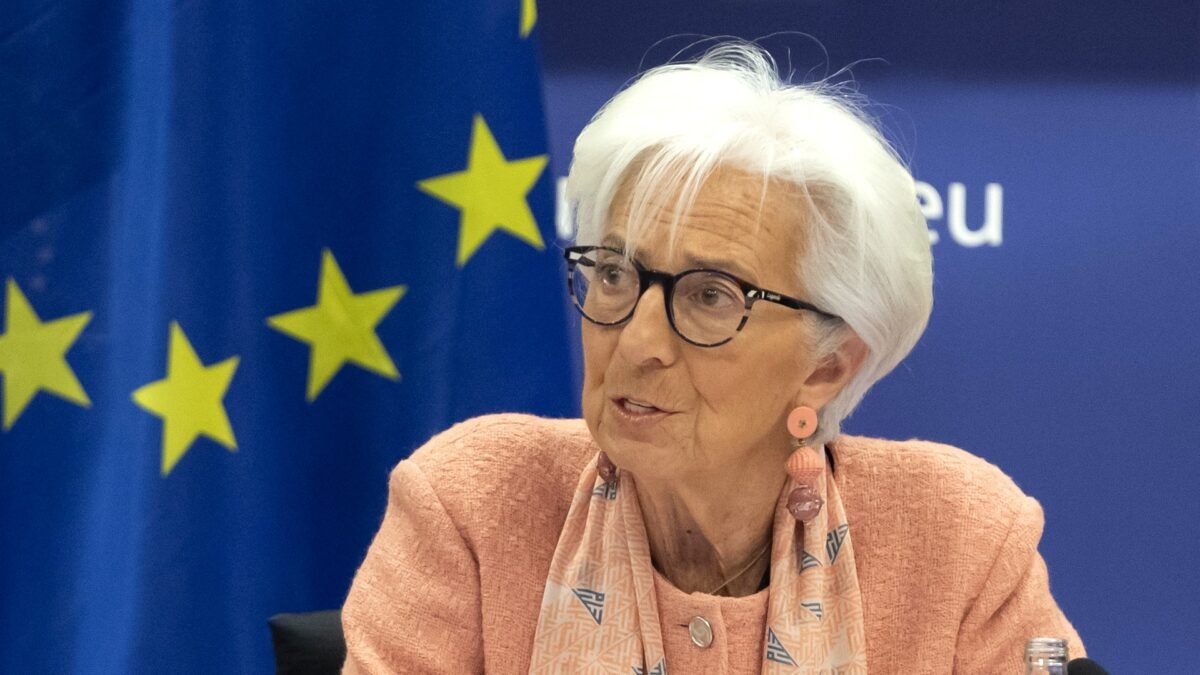
Christine Lagarde will step down as President of the European Central Bank on 7 February 2027, almost nine months before her eight-year term was due to end, the bank announced on Thursday, 29 October 2026. The announcement came on the same day the ECB’s Governing Council left its three key interest rates unchanged, holding the deposit rate at 2.50 per cent while warning that rising energy prices posed upside risks to inflation and downside risks to growth.
According to the ECB, Lagarde informed the Governing Council and António Costa, the President of the European Council, on Thursday that she would step down on 7 February 2027. The bank said in a short press release that her successor would be appointed by the European Council following the nomination process set out in Article 283 of the Treaty on the Functioning of the European Union. The Governing Council, the statement said, thanked Lagarde warmly and gave her a long standing ovation.
Lagarde, who is 70, took office on 1 November 2019, succeeding Mario Draghi. Her non-renewable eight-year mandate was scheduled to run until 31 October 2027. Her departure on 7 February 2027 therefore ends her presidency just over seven years after it began, and opens a succession contest months earlier than markets and European governments had formally expected, even though speculation about an early exit had been building for months.
The ECB’s statement gave no reason for the early departure. It did not announce Lagarde’s next role, an interim arrangement, or a timetable for naming her successor beyond the treaty procedure. Costa said the selection process would be initiated immediately and would proceed without delay, according to reports of his statement, and praised Lagarde’s stewardship through the pandemic, the war in Europe, energy crises and inflation shocks.
In a video message posted on X, Lagarde said it had been a great pride and a huge privilege to serve the institution, according to the Associated Press, which reported her words as: “I think that I leave this institution with a sense of good work done and an ECB that is fit for the future.” The message framed the departure as a handover from a position of institutional strength. The politics of its timing, however, ensured that it would be read in Frankfurt, Paris and the other euro-area capitals as something more than a routine retirement announcement.
Reuters reported this month that the World Economic Forum could appoint Lagarde as its next chair as soon as November, a report that fuelled the speculation about an accelerated exit. The Times reported on Thursday that Lagarde was expected to become chair of the Forum, whose annual meeting takes place in Davos in January. Neither the ECB nor the Forum confirmed a future appointment in the material published on Thursday, and the reports should be treated as reported expectations rather than confirmed facts. What is confirmed is the date, the procedure, and the fact that European leaders now have just over three months, from announcement to departure, to settle a choice that would normally have had almost a year to run.
The resignation landed hours before the ECB’s scheduled monetary policy announcement, and the two events together defined the bank’s day. The Governing Council decided to keep the interest rates on the deposit facility, the main refinancing operations and the marginal lending facility unchanged at 2.50 per cent, 2.65 per cent and 2.90 per cent respectively, according to the ECB’s monetary policy statement.
The statement said energy prices had continued to rise, posing upside risks to the inflation outlook and downside risks to the growth outlook. While the full effects of the energy shock were still unfolding, underlying inflation had remained broadly stable so far and wages did not show a material response at this stage, the ECB said. The increased magnitude and duration of the energy shock, as well as the implications for indirect and second-round effects, were likely to drive up inflation and lower growth, it added. Financing conditions had tightened since the Governing Council’s last meeting, which was likely to weigh on inflation and growth.
The Council said it remained well positioned to navigate the current elevated uncertainty and would follow a data-dependent and meeting-by-meeting approach. It was not pre-committing to a particular rate path, and it remained committed to setting monetary policy to ensure that inflation stabilised at its 2 per cent target in the medium term, according to the statement.
The hold had been widely expected. The ECB had already raised rates twice since June, with quarter-point increases in June and September that took the deposit rate to 2.50 per cent. A Reuters poll of economists taken between 5 and 8 October found that 70 of 73 expected the deposit rate to stay at 2.50 per cent in October, while 64 of 73 expected a further quarter-point increase in December, according to Reuters. Money markets were pricing roughly three further rate increases over time, which would take the deposit rate to 3.25 per cent, Reuters reported before the decision. The question for Thursday was therefore never really whether the ECB would move. It was what Lagarde would say about December, about French bond markets, and about her own future. The resignation announcement answered the third question before the press conference began.
Euro-area annual inflation reached 3.8 per cent in September 2026, up from 3.2 per cent in August, according to Eurostat’s final estimate published on 16 October and reported in market previews of the meeting. That was the highest rate since September 2023. Energy prices were the principal driver, rising 18.8 per cent over the year, according to reports of the Eurostat data. Core inflation, excluding energy, food, alcohol and tobacco, rose to 2.5 per cent from 2.4 per cent, and services inflation to 3.2 per cent from 3.0 per cent, according to the same previews. The October flash estimate was not due until 4 November, after the meeting, so the Governing Council went into its deliberations with September as its latest full reading.
The inflation backdrop explains why a hold in October was not read as an end to tightening. The ECB is caught, in the language of its own statement, between an energy shock that threatens to push prices higher and tighter financing conditions that threaten to push growth lower. Policymakers have sought to prevent an oil-price shock linked to the conflict involving Iran and the United States from feeding into other prices and wages, according to Reuters. At the same time, Lagarde has said that higher bond yields will curb growth and inflation, Reuters reported, a judgement that gives the bank a reason to wait and watch the effect of its September increase before moving again.
That tension was sharpened by events in France. French government bond yields surged on the country’s debt and budget worries, with the 10-year yield topping 5 per cent for the first time since 2002, according to reports of market data. The spread between French 10-year bonds and German Bunds widened to its widest since late 2011, according to Dow Jones Newswires. Prolonged stress in French bonds could spread financial instability across the euro area, market analysts warned, and the ECB was expected to face questions about whether it might use its Transmission Protection Instrument, an untested tool designed to counter unwarranted fragmentation in bond markets. Reuters reported before the meeting that Lagarde was likely to push back firmly against speculation about intervention of that kind, while leaving the door open to a December increase.
The succession question now sits on top of that policy dilemma. According to Reuters, the former central bank governors of the Netherlands and Spain, Klaas Knot and Pablo Hernández de Cos, are seen as frontrunners to replace Lagarde. Knot led De Nederlandsche Bank and Hernández de Cos led the Bank of Spain; Hernández de Cos now heads the Bank for International Settlements. The Times also named François Villeroy de Galhau, a former governor of the French central bank, among the contenders, according to its survey of economists. No candidate had been formally nominated in the material published on Thursday, and the contest is expected to involve the familiar negotiation among euro-area capitals over north and south, hawk and dove, and national balance at the top of European institutions.
The Associated Press reported that the resignation opens the way for complex political negotiation over Lagarde’s successor and replacements for two other top officials who are leaving next year. The ECB president leads the Governing Council, which sets interest rates for the 21 countries that use the euro, affecting borrowing costs for house purchases, business investment and government debt, and serves as the European Union’s chief crisis fighter in times of economic and financial turbulence, according to the Associated Press. A change at the top therefore matters well beyond Frankfurt. It changes who chairs the room in which those decisions are made, who explains them to the public, and who carries the bank’s authority into the next crisis.
Lagarde arrived in Frankfurt in 2019 as the first ECB chief with no formal economics training or central banking experience, Reuters reported. She had been France’s economy and finance minister from 2007 to 2011 and managing director of the International Monetary Fund from 2011 to 2019. Some market participants labelled her a credibility risk at the time, according to Reuters, which also reported that Lagarde later said she had accepted the job thinking the presidency was a five-year mandate rather than eight. Her background was in law and politics, not in monetary economics, and her appointment was understood from the start as a political choice as much as a technical one.
Her presidency was quickly defined by successive crises. Within months of taking office, the coronavirus pandemic forced the ECB to launch emergency bond-buying to stabilise markets. The bank’s Pandemic Emergency Purchase Programme eventually reached an envelope of 1.85 trillion euros, according to reports of its history. In 2021, Lagarde led the ECB’s first comprehensive strategy review since 2003, establishing a symmetric 2 per cent inflation target over the medium term, replacing the previous formulation of inflation below, but close to, 2 per cent, according to the same accounts.
The subsequent inflation surge brought a sharp reversal. Following Russia’s full-scale invasion of Ukraine in 2022 and the energy shock that followed it, the ECB raised its key interest rates ten times between July 2022 and September 2023, increasing them by a cumulative 4.5 percentage points, according to reports of the tightening cycle. The deposit rate rose from minus 0.50 per cent to a peak of 4.00 per cent. Euro-area inflation peaked above 10 per cent, and the bank later acknowledged that it had been slow to recognise the full impact of spiking energy prices, according to Reuters. By the end of 2025, headline inflation had returned near target, at around 2.1 per cent, according to assessments cited in coverage of her tenure, before the renewed energy shock of 2026 pushed it back up to 3.8 per cent in September.
There were missteps along the way, and Lagarde’s critics have not forgotten them. In March 2020, early in the pandemic, she said the ECB was “not here to close spreads” on Italian sovereign bonds, a comment that triggered an immediate sell-off in bond markets and forced a swift walk-back, according to Reuters. The episode became a shorthand for the communication risk of a president who spoke in political language about a market-sensitive institution. Supporters point to the correction that followed, and to the emergency programme that stabilised markets, as evidence that the institution learned quickly. Critics point to the original remark as evidence of the risk itself. Both readings are part of the record she leaves behind.
Her leadership style, as described by Reuters, used political skills to repair rifts on the Governing Council. Unlike her predecessor Mario Draghi, whose top-down style embittered some hawkish northern European peers, Lagarde worked to build consensus among the euro area’s 21 national central bank chiefs, according to the news agency. She once described economists as a “tribal clique”, a provocative remark that she later softened by saying she hoped to join the tribe, Reuters reported. The line captured something real about her presidency: a leader who did not pretend to be a conventional central banker, and who treated communication, coalition-building and political judgement as central to the job rather than as distractions from it.
That willingness to wade into politics remained visible to the end. In January, Lagarde walked out of a World Economic Forum dinner in Davos during a speech by United States Commerce Secretary Howard Lutnick that criticised Europe, according to Reuters, an episode that underscored fraught transatlantic relations. The walkout was widely read as a statement of European self-assertion. It also foreshadowed, in retrospect, the reports linking her to the Forum itself. Whether the Forum appointment materialises or not, the episode illustrates why her departure is being discussed in political terms: Lagarde never governed the ECB as if politics could be kept outside the building.
The announcement also arrives in a crowded week for central banks. The Federal Reserve left its rates unchanged on Wednesday, 28 October, holding its target range at 3.75 per cent to 4 per cent while keeping the door open to further tightening, a decision covered in detail on this site. The Bank of Japan was due to announce its decision on Friday, 30 October. The ECB’s hold therefore sits inside a global pattern of central banks pausing to assess the same energy shock, rather than as an isolated European choice. The difference in Frankfurt is that the pause now comes with a leadership transition attached to it.
Analysis: Why It Matters
The facts of Thursday are short enough to fit in a single ECB press release. Their significance is not. A central bank president resigning nine months early, on the day of a rate decision, in the middle of an energy shock and a French bond-market crisis, is a decision about who gets to choose the next president, and under what political conditions. The analysis that follows is this publication’s own assessment, grounded in the verified facts reported above. It does not reproduce any other outlet’s commentary.
1. The timing is the message
Central bankers are trained to separate the institution from the news cycle. Lagarde’s resignation does the opposite, and that is the point. By leaving on 7 February 2027, she gives European Union leaders time to pick a successor well before a French presidential election next spring that opinion polls suggest the far-right candidate Marine Le Pen is favourite to win, according to Reuters. The election is not a footnote to the succession. It is, on the reporting available, the reason the succession is happening now.
Consider the alternative. Had Lagarde served her full term until 31 October 2027, the choice of her successor would have fallen after the French vote, under a president who might have been Le Pen, or under a weakened incumbent, and in a political environment shaped by the result. By stepping down in February, she moves the decision into a window in which Emmanuel Macron is still in office and pro-European leaders still control the process. That is a political calculation, whether or not anyone involved uses that word. It is also, from the perspective of the institution, a protective one: a successor chosen in February arrives with a settled mandate, rather than as the product of a contested post-election bargain.
The cost of that protection is a different kind of vulnerability. The ECB fiercely guards its independence from political meddling, and a departure timed to a national election invites exactly the criticism the bank most dislikes. Paul De Grauwe, a professor at the London School of Economics, told Reuters that the move was “debasing the institution and just following the purely political calculus of the French president”, according to the news agency’s profile of Lagarde. That is a harsh judgement, and it is one person’s view, but it captures a real tension. An institution that claims to stand above politics cannot easily explain a timetable that looks designed around a political calendar. Lagarde and Macron have not addressed such criticism directly, according to Reuters. The silence leaves the interpretation to the market, and the market will read timing as intent until it is given a better explanation.
There is a second, quieter reading of the timing that deserves equal weight. Lagarde is 70. She has led the ECB through a pandemic, an inflation spike, a land war in Europe and a renewed energy shock. A departure in February 2027, after just over seven years, is not an abandonment in the middle of a single crisis. It is an exit at a moment when the bank’s framework is settled, its rates are positive, and its next big decisions — the December projections, the question of a further hike — are still ahead but not yet taken. A successor who arrives in February inherits the December decision as history, not as an immediate test. That is a kinder handover than a mid-crisis departure, and it may be part of why the Governing Council responded with a standing ovation rather than with visible alarm.
2. A political president leaves a political question
Lagarde’s defenders and critics agree on one description of her presidency, even when they disagree about its value: it was political. Frederik Ducrozet, head of strategy and macro research at Pictet Wealth Management, told Reuters that Lagarde “was put there for a reason: being more political than her predecessor and, on that mission, I think she largely succeeded”. Willem Buiter, an economist and former Bank of England official, told Reuters that her seven years at the ECB had been, on the whole, pretty good, and that the bank had managed to bring inflation back down faster than peers in Britain and the United States.
Both judgements point to the same underlying fact. The ECB Lagarde inherited was an institution whose authority rested on technical credibility and on Draghi’s promise to do “whatever it takes”. The ECB she led through the pandemic and the inflation shock needed something else as well: the ability to hold together 21 national central bank chiefs with different inflation experiences, different fiscal positions and different domestic politics, and to explain decisions in language that parliaments and publics could follow. Her lack of formal economics training, which critics treated as a weakness, became in practice a different kind of strength. She communicated, she negotiated, and she absorbed political pressure that a more conventional central banker might have deflected back onto the Council.
The question her departure poses is whether that model survives her. A successor chosen for technical credentials — a former national central bank governor such as Knot or Hernández de Cos — would bring deep monetary expertise and a different style of authority. A successor chosen for political weight would bring a different set of risks. The treaty procedure, with its recommendation, consultation and qualified-majority decision, is designed to produce a compromise. Compromises, in this case, will be read as signals. A northern hawk signals a bank determined to finish the inflation fight. A southern dove signals a bank worried about growth and fragmentation. A French candidate signals continuity with Lagarde’s political approach. A non-French candidate signals a deliberate break. None of those signals is neutral, and all of them will move markets before the new president has chaired a single meeting.
That is why the succession race matters more than the usual speculation about names. It is not only about who leads the ECB. It is about what kind of leadership European governments think the ECB needs next: a technician to manage a difficult disinflation, a politician to manage a difficult union, or some combination that has not yet been named. Lagarde’s early departure forces that choice into the open, months earlier than planned, and in the shadow of a French election that will shape the answer.
3. The successor inherits a two-sided squeeze
Whoever takes over on 7 February 2027 will inherit the exact dilemma described in Thursday’s monetary policy statement, with no softening in sight. Energy prices are rising, posing upside risks to inflation. Financing conditions have tightened, weighing on growth. Underlying inflation is broadly stable for now, and wages have not yet responded materially, but the ECB itself warns that the increased magnitude and duration of the energy shock are likely to drive up inflation and lower growth through indirect and second-round effects.
This is the hardest configuration for a central bank. If it hikes, it risks deepening a slowdown that tighter financing conditions are already producing, and it risks worsening the bond-market stress that is raising borrowing costs for households and businesses. If it waits, it risks allowing an energy shock to become embedded in wages and prices, repeating the error the ECB acknowledged after the 2022 shock, when it was slow to recognise the full impact of spiking energy prices. The December meeting, with its new staff projections, will be the first test of how the Council weighs those risks. The February handover will be the second, because a new president will have to own a strategy they did not design.
The market’s current pricing tells the story of that uncertainty. Roughly three further rate increases are priced over time, taking the deposit rate to 3.25 per cent, according to Reuters, and a December hike was seen as likely by most economists polled. But pricing is not a promise. It is a bet on how the data will look in December, and on how a Governing Council in transition will read that data. A lame-duck president chairing the December meeting, with a successor already being negotiated, faces a particular constraint: any strong signal about the future path will be read as an attempt to bind the successor, and any weak signal will be read as drift. Lagarde’s final months will therefore require the same consensus-building skill that defined her presidency, exercised under the added pressure of her own announced departure.
There is also a less visible inheritance: the ECB’s credibility on forecasting. The bank’s 2021 strategy review, with its symmetric 2 per cent target, was designed for a world in which inflation undershot the target. The world of 2022 to 2026 has been one in which inflation overshot it, repeatedly, for different reasons. The successor will need to explain whether the framework still fits, and whether the bank’s tolerance for temporary overshoots has changed. That is a technical question with political consequences, and it will be asked in the European Parliament’s monetary dialogues, in national capitals, and in bond markets, all at once.
4. France is now the ECB’s hardest problem
It is striking, and it should not be overlooked, that the two pressures converging on the ECB on Thursday both run through France. The succession is timed around a French election. The bond-market stress is concentrated in French government debt. The outgoing president is French. The debate about the ECB’s future is, in part, a debate about France’s future inside the euro area.
The French bond story is not a footnote. A 10-year yield above 5 per cent for the first time since 2002, and a spread over German Bunds at its widest since late 2011, describe a market that is pricing fiscal and political risk, not merely interest-rate expectations. France’s debt and budget deadlock, combined with street protests driven in part by demands for more spending on public services, created uncertainty that pushed yields to their highest level since 2002, according to the Times. The ECB’s problem is that the tool it would use to counter a disorderly widening of spreads — the Transmission Protection Instrument — is untested, politically sensitive, and difficult to deploy while the bank is also warning about inflation. Using it would look like monetary financing to critics. Not using it, if stress spreads, would look like indifference to fragmentation.
Lagarde’s reported expectation that higher yields will curb growth and inflation offers the bank a way through that dilemma, but only if the market cooperates. If French yields keep rising because of fiscal worries rather than monetary conditions, the tightening they impose will fall unevenly across the euro area, hitting France hardest and leaving the ECB with a fragmentation problem it cannot solve with interest rates alone. The successor’s first crisis may therefore not be an inflation shock or a growth shock, but a French shock that arrives disguised as a market event. How the ECB responds — with words, with purchases, or with silence — will define the new president’s authority in the first weeks of the job.
This is also why the Reuters Breakingviews argument, that the next ECB chief matters more for France than the rate decision itself, deserves to be taken seriously. A French successor would be read in Paris as a guarantee of attention to French conditions. A non-French successor would be read as a guarantee of distance from them. Both readings are simplifications, and both would be unfair to any individual candidate, but markets and governments trade on simplifications in moments of uncertainty. The appointment process, which Costa said would proceed without delay, is therefore not only a personnel decision. It is a market event in its own right, and it will be priced, leaked and debated as one.
5. What “fit for the future” still has to prove
Lagarde’s farewell formulation — an ECB that is “fit for the future” — invites a question she did not answer on Thursday: fit for what future, exactly? The institution she leaves is, on one reading, stronger than the one she inherited. It has a modernised strategy, a tested emergency toolkit, normalised interest rates, and a record of bringing inflation down from double digits. On another reading, it faces a set of challenges that its existing framework was not designed to handle: repeated energy shocks linked to geopolitical conflict, fiscal stress in its largest member states, a digital euro project still in preparation, and a political environment in which central bank independence is contested from several directions at once.
The digital euro project still in preparation points to an ECB trying to prepare for a financial system that is changing underneath it. That work will not be decided by the president alone, and it will not be completed by February. But they illustrate the breadth of the job. The next president must be a monetary policymaker, a crisis manager, a communicator to 21 publics, and a steward of a payments and financial infrastructure that is becoming more digital and more contested. Lagarde’s political background prepared her for the first three roles. Her successor will need to demonstrate the same range, with a different background.
There is a final, human dimension to the handover that should not be lost in the market analysis. Lagarde took a job she thought lasted five years, stayed for more than seven, and leaves saying the work is done well. Whether history agrees will depend on what happens next: whether inflation returns to 2 per cent without a deep recession, whether French bond markets stabilise without ECB intervention, and whether the succession produces a president who can hold the Council together. Those are not questions Lagarde can answer from outside the building. They are the questions her departure creates. The standing ovation on Thursday was a tribute to a presidency. The work of proving it “fit for the future” now belongs to someone else.
What to Watch Next
- The succession timetable: Costa said the appointment process would begin immediately and proceed without delay. Watch for the first formal signals — a Council recommendation, consultation with the European Parliament and the Governing Council, and any narrowing of the field around Knot, Hernández de Cos or other names — and for whether the process stays on track for a decision well before 7 February 2027.
- The December meeting: The Governing Council meets again on 16 and 17 December, with new staff projections. Watch for the October flash inflation estimate on 4 November, the December inflation forecast, and whether the Council follows the Reuters poll’s expectation of a quarter-point hike or holds again in the face of tighter financing conditions.
- French bonds and the budget: Watch the French 10-year yield and its spread over German Bunds, the progress of the 2027 budget debate, and any ECB language about fragmentation or the Transmission Protection Instrument. A further widening would put the bank’s “wait and see” stance under immediate strain.
- The World Economic Forum question: Reuters reported that the Forum could appoint Lagarde as its next chair as soon as November. Watch for any announcement from the Forum, and for what Lagarde says about her future role, which would confirm or close down the most widely reported explanation for the timing of her departure.
- The handover itself: Watch Lagarde’s remaining public appearances, including her final press conferences, for signals about the December decision and the state of the Council, and watch the 7 February 2027 handover for the new president’s first statements on inflation, independence and the ECB’s role in a fragmenting bond market.
Sources
- European Central Bank — ECB President Lagarde to step down on 7 February 2027
- European Central Bank — Monetary policy decisions, 29 October 2026
- Reuters — ECB President Lagarde resigns effective Feb 7
- Associated Press — European Central Bank head resigns, allowing search for successor to begin before French election
- Reuters — ECB to hold rates as investors focus on French bonds, Lagarde’s future
- Reuters — Christine Lagarde: The outsider who led the ECB her way

About the Author — Abdul Mannan
Related Articles
Fed Holds Rates at 3.75% to 4% in 10-2 Vote as Two Officials Push for Another Hike
The Federal Reserve held its benchmark rate at 3.75% to 4% in a 10-2 vote on 28 October…

Brazil’s Markets Steady After Election Sell-Off as Finance Minister Vows Fiscal Discipline
Brazil's real and Bovespa steadied on Tuesday after Monday's historic sell-off, as Finance Minister Dario Durigan blamed investor…

The Day Wall Street Tried to Buy the Future: Anthropic’s IPO and the $158 Billion Answer
Anthropic's IPO filing landed on 26 October 2026 — and Wall Street answered the same day with $158…