
Covid Inquiry Finds UK Care Home Residents Were ‘Sacrificed’ as Virus ‘Spread Like Wildfire’

Elderly and vulnerable residents of Britain’s care homes were effectively sacrificed in the scramble to protect the National Health Service during the Covid-19 pandemic, the UK’s public inquiry into the crisis has concluded, finding that government failures allowed the virus to tear through residential care “like wildfire” and left tens of thousands to die “abandoned and alone”.
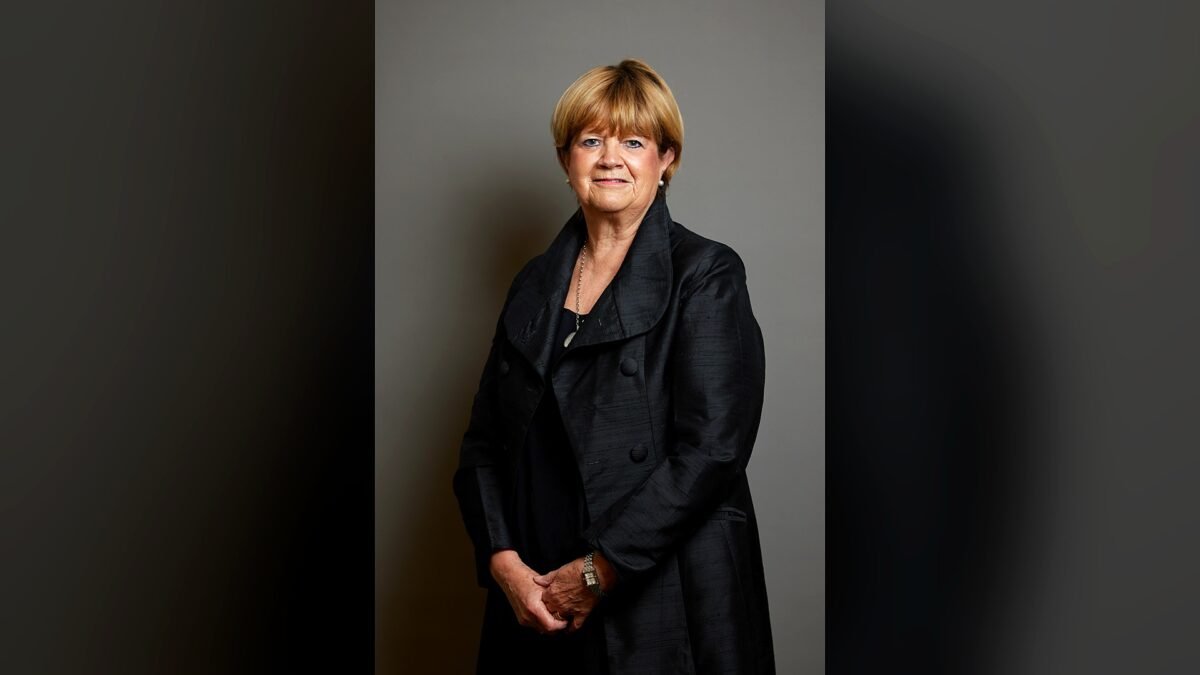
Baroness Heather Hallett, the retired Court of Appeal judge chairing the UK Covid-19 Inquiry, published her sixth report on Tuesday, focused entirely on the adult social care sector. In unsparing language, the report found that ministers and officials treated care homes as “something of an afterthought” while the country mobilised around a single mantra: protect the NHS.
“The adult social care sector as a whole appeared to be something of an afterthought, where the mantra of ‘protecting the NHS’ sometimes came at the expense of the users and providers of care,” Hallett wrote, according to The Guardian. “Care homes received insufficient protection at the time they most needed it. These failures created environments in care settings in which the virus could spread like wildfire.”
More than 43,000 people died from Covid-19 in UK care homes between March 2020 and July 2022, the report confirmed. One civil servant, quoted in the findings, described what happened as a “generational slaughter within care homes”, The Times reported.
At the heart of the report is a verdict on one of the most contested decisions of the pandemic’s first weeks: the mass discharge of hospital patients into care homes without testing. The inquiry called the absence of any advice that discharged patients should be isolated on arrival a “significant omission”. With no isolation guidance and severe shortages of personal protective equipment for staff, the virus moved rapidly among residents and workers who stood in its path with almost no defence.
The report reserved its sharpest language for the claim made by Matt Hancock, the health secretary at the time, that the government had thrown a “protective ring” around care homes “right from the start”. Hallett described that assertion as “unfounded”. “Quite the opposite was true,” she said, according to The Times.
Hancock had made the claim at a Downing Street press conference on 15 May 2020. He resigned from the government the following year. The policy of discharging untested patients into care homes to free hospital beds was later ruled unlawful by the High Court — a judgment the inquiry’s findings now appear to underline in devastating detail.
Beyond the failures of infection control, the report turned its attention to the human cost of the measures imposed inside care homes themselves. Draconian visiting restrictions, kept in place for much of the pandemic, caused “incalculable harm”, the inquiry found, and meant that many residents died alone without the comfort or support of their loved ones.
The report set out individual cases that have already drawn widespread attention. One mother was unable to visit her severely autistic son for 24 weeks. People living with dementia “forgot who they were” because they were denied contact with friends and family, The Times reported. One woman told the inquiry she remained “angry, powerless and distraught” about her mother’s death, saying: “My mother’s death in the care home — alone and confused about why her only child appeared to have abandoned her. It absolutely kills me to think about it.”
Hallett said the blanket visiting bans left many families “racked with guilt they do not deserve to carry”. The report made eight recommendations for how the country should better prepare for future pandemics, covering planning, protective measures and support for care staff.
The report is the sixth of ten planned volumes from what has become the most expensive public inquiry in British history, costing more than £200 million. Across the six reports published so far, the inquiry has made 55 recommendations on how the country can better prepare for the next pandemic, according to The Guardian. The BBC also reported the care homes findings, confirming the story’s place at the centre of the day’s national news.
Analysis: Why It Matters
The arithmetic of a “protective ring”
The most politically explosive finding in Hallett’s report is not new evidence but a judgment about language. The “protective ring” phrase was never a technical description of a policy; it was a rhetorical device deployed at a press conference to reassure a frightened public. What the inquiry has done is to set that rhetoric against the documented reality — untested discharges, missing isolation guidance, staff without adequate protective equipment — and found the two irreconcilable.
That matters because the phrase was, in a real sense, the government’s whole answer on care homes for the critical weeks of spring 2020. If the ring was “unfounded”, as Hallett says, then the policy debate of those weeks was not about hard trade-offs made honestly; it was about a comfort blanket offered in place of protection. The distinction between a difficult decision taken openly and a difficult decision disguised is the space in which public trust is won or lost — and inquiries, with their access to internal documents and candid testimony, are precisely the instruments that pry the two apart.
Care homes as “the afterthought” — a structural failure, not a one-off
The report’s description of adult social care as “something of an afterthought” will ring true to anyone who has watched British governments of every stripe treat the sector as the NHS’s poor relation. Social care is chronically underfunded, fragmented across private providers and local authorities, and staffed largely by low-paid workers — many of them women, many of them migrants — whose labour is essential and whose pay rarely reflects it.
That structure did not cause the pandemic, but it shaped the catastrophe. A sector built on thin margins and overstretched staff had no resilience to spare when the virus arrived; a workforce without sick pay could not stay home; homes without testing capacity became traps. The inquiry’s findings describe the pandemic’s damage, but the vulnerability they expose is a standing condition. That is why the eight new recommendations matter less as paperwork than as a test: whether the next government’s social care policy treats the sector as infrastructure or, once again, as an afterthought.
The visiting bans — the part with no virus in it
Of all the report’s findings, the section on visiting restrictions may prove the most enduring in public memory, because it concerns suffering that cannot be blamed on a novel pathogen. Infection control may have demanded restrictions in the earliest, most uncertain weeks. But keeping them in place for “most of the pandemic”, as the report notes, while dementia patients lost their grip on themselves and families were barred from dying loved ones, represents a different order of failure: one of proportionality, and of forgetting that a care home is also a home.
Hallett’s language here — “immense emotional harm”, guilt that the bereaved “do not deserve to carry” — is the inquiry at its most humane, and it carries an implicit warning. The next pandemic plan will be written by people whose instinct, forged in 2020, may be to lock down harder and earlier. The report insists that any future plan must weigh the protection of bodies against the protection of the things that make bodies’ lives worth living.
Hancock and the gap between podium and policy
The report’s treatment of Matt Hancock is unlikely to surprise those who followed the inquiry’s earlier hearings, at which he conceded that the discharge policy was, in effect, the least bad option available. But Hallett’s formulation — “quite the opposite was true” — converts a contested judgment into something close to a historical verdict.
There is a broader lesson here about crisis communication. In the spring of 2020, the British public was asked to accept extraordinary restrictions on the strength of official assurances. Those assurances were issued daily, on camera, in the language of certainty. The inquiry’s slow, document-driven method is systematically unpicking that certainty, finding after finding. The cumulative effect is not merely reputational damage to individual ministers; it is a standing question over whether the public will believe the next emergency broadcast. Governments trade in credibility. This report spends some of it.
Why this report lands hardest now
The timing of the sixth report gives it a particular political edge. It arrives more than four years after the events it describes, when the temptation is to file the pandemic under history. But its recommendations — eight of them, on planning, protection and workforce support — are forward-looking, and they land on a government that has promised to fix social care while inheriting the same fiscal constraints and the same fragmented system that failed last time.
The 43,000 deaths are a statistic; the report’s power is in making them a reproach. The care home catastrophe of 2020 was, in Hallett’s telling, not an act of God but a foreseeable consequence of choices made by named people in specific rooms. The inquiry’s ultimate audience is not the past but the next cabinet minister who, in some future emergency, will have to decide whether the mantra of the moment — whatever it is — once again comes at the expense of the people nobody is looking at.
What to Watch Next
- The government’s formal response. Ministers will have to answer Hallett’s verdict that the “protective ring” was unfounded — and say which of the eight recommendations they will implement, and on what timetable.
- Social care reform. The report renews pressure on the long-promised overhaul of adult social care funding and workforce pay. Watch whether the response treats the sector as infrastructure or as an afterthought once more.
- The remaining four reports. With six of ten volumes published, the inquiry still has more to say. Each new module will reopen the record — and the remaining recommendations will join the 55 already made.
- The families. Bereaved relatives who gave evidence will judge the response not on its speed but on its substance. Their testimony is what gave this report its moral force; their verdict on the follow-through will matter.
- The next pandemic plan. The recommendations on visiting, isolation and protective equipment will feed into future emergency planning. The test is whether proportionality for residents’ dignity gets written into the plan before the next crisis, not after.
Sources
- The Times — “Covid inquiry: Care home residents were sacrificed to save NHS”
- The Guardian — “UK government failures led to Covid spreading ‘like wildfire’ in care homes, inquiry finds”
- The Sun — “Care home residents sacrificed to ‘protect the NHS’ during Covid”
- Kratko News — “UK Government Failures Led to COVID-19 Spreading Like Wildfire in Care Homes, Inquiry Finds”

About the Author — Abdul Mannan
Related Articles

UK Unemployment Falls to 4.7% in Pre-Budget Boost, but Job Vacancies Sink to Five-Year Low
Official figures show the UK jobless rate fell to 4.7% in the three months to August, but vacancies…
Burnham Vows to End ‘Rip-Off’ Parking Charges as Sweeping New Driver Rights Go Before Parliament
Drivers across England, Scotland and Wales are set for the biggest shake-up of private car park rules in…
UK Launches ‘Share the Journey, Not the Noise’ Campaign With £100 Bus Fines for ‘Loudcasting’
The government has launched a national rail campaign against 'loudcasting' and published guidance letting English councils fine bus…