
Deadly Fire Erupts at Canada’s CFB Wainwright After ‘Serious Incident’; Defence Minister Confirms Fatalities

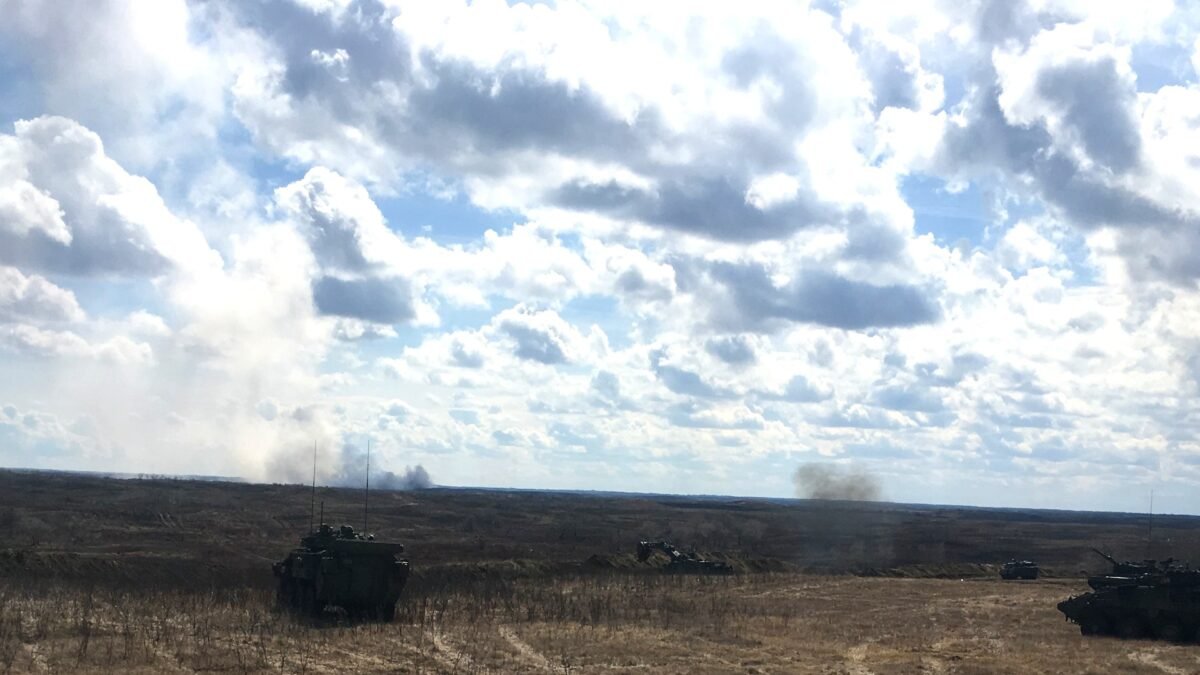
Canada is reeling after what federal officials are calling an unprecedented emergency at one of the country’s busiest military bases. A “serious incident” at Canadian Forces Base Wainwright in Alberta has triggered a major fire that officials say has killed and injured people, with Defence Minister David McGuinty confirming fatalities in a sombre statement on Saturday evening.
“I’m saddened to share that there have been both fatalities and injuries as a result of an incident on the base,” McGuinty told reporters in Ottawa, according to CNN. The minister declined to say how many people were killed or injured, or what caused the “tragic” situation at the base, and described the matter as an “active and delicate situation” under investigation by the Canadian Armed Forces and the Royal Canadian Mounted Police.
The fire, which broke out on Saturday, continued to burn into the evening, and McGuinty said authorities were still working through what actually happened. “I cannot recall an incident like this in recent memory,” he said, adding that a formal investigation would be launched and that further information would be provided as it becomes available.
The incident took place at CFB Wainwright, located about 210 kilometres (130 miles) east of Edmonton, according to Reuters. The base ranks among the busiest Army installations in Canada and is home to the Canadian Manoeuvre Training Centre, where units from across the country — and frequently from allied nations — prepare for operational deployments through realistic, large-scale battlefield exercises.
Fire Spreads Beyond the Base Fence
The blaze did not stay inside the base’s perimeter. The Municipal District of Wainwright said in a statement that the fire had crossed the base fence and was “spreading rapidly due to high winds,” while crews from multiple jurisdictions worked to bring it under control. In a separate update on Saturday evening, the municipality said the fire was being “actively managed” by firefighters deployed from across the region.
No evacuation order had been issued as of Saturday evening, officials said. But residents were asked to avoid the incident area, keep roads clear for first responders, and stay away from the Wainwright Health Centre except for critical medical needs so that the facility could focus on the emergency response.
CNN reported that firefighters were still working late Saturday to prevent the blaze from crossing into residential areas, with the fire described as still “underway on the ground.” The rapid spread driven by high winds underscored the scale of the emergency — a wind-driven grass fire moving across the dry Alberta prairie can travel frightening distances in a matter of hours, and the surrounding rural district faced a genuinely fluid situation.
Carney: “A Serious Incident Creating a Major Fire”
Prime Minister Mark Carney was the first to publicly flag the emergency, posting on social media on Saturday: “A serious incident creating a major fire has occurred at CFB Wainwright, in Alberta.” He added: “Our thoughts are with all the brave women and men affected,” and said his government was working closely with the Government of Alberta and local authorities.
Carney’s wording — carefully chosen, as prime ministers’ words always are — confirmed two things at once: that something genuinely grave had occurred, and that the details were not yet ready for public release. The phrasing set the tone for the evening’s briefings, in which every official, from the defence minister to the base’s own spokespeople, kept strictly to confirmed facts while refusing to speculate on the cause.
Alberta Premier Danielle Smith described the fire as “significant and tragic” and said it was affecting many military personnel. General Jennie Carignan, the chief of Canada’s Defence Staff, said on social media that the Canadian Armed Forces were fully engaged with federal, provincial and local authorities, and that the priority remained “the welfare of our members, their families and their community.”
Opposition leader Pierre Poilievre said he had spoken with Carney and McGuinty about the fire, thanked emergency responders, and added: “Pray for Wainwright, everyone.”
What We Know — and What We Don’t
As of Saturday night, the confirmed facts are these: a serious incident occurred on CFB Wainwright on Saturday; it triggered a major fire that spread beyond the base’s fence into the surrounding municipal district; there have been fatalities and injuries; the exact casualty count has not been released; the cause of the incident has not been disclosed; the RCMP and the Canadian Armed Forces are jointly investigating; and the fire was still burning late Saturday.
What remains unknown is almost everything else. McGuinty gave no indication of the number of casualties, the nature of the triggering event, or whether the dead and injured were military personnel, civilian staff, or both. Officials described the investigation as “very, very active and delicate” — language that suggests the initial scene presented investigators with conditions difficult to work in, and that establishing a reliable sequence of events will take time.
It is worth noting what officials did not say. There was no suggestion in any of the official briefings of hostile action or any broader threat, and no wider security alert was issued. The response on the ground — firefighters, military emergency teams, police investigators, and local health services — was consistent with a major industrial or training accident that escalated into a wildfire, though that remains an inference, not a confirmed fact.
Canada’s Busiest Training Base
CFB Wainwright is not an ordinary military installation. Alongside the Canadian Manoeuvre Training Centre, it hosts the 3rd Canadian Division Training Centre, and its ranges and training areas are used for the most demanding collective exercises the Canadian Army conducts — the kind where brigades move, live-fire, and rehearse for operations under conditions meant to resemble combat as closely as training allows.
Allied forces regularly rotate through Wainwright as well. The base’s central role in preparing Canadian and partner troops means that a serious incident there reverberates far beyond Alberta: the training calendar, the units preparing for deployments, and the commanders who certify readiness all feel the effects of a base that is suddenly a disaster scene rather than a training ground.
The town of Wainwright, a community of about 6,600 people just north of the base, lives in a symbiotic relationship with the installation. Base personnel and their families are woven into the town’s schools, businesses and sports leagues, and the municipality was providing hospital and firefighting support to the emergency response on Saturday, according to AAP. A tragedy on the base is, in that town, a tragedy for everyone.
Analysis: Why It Matters
Start with the defence minister’s own sentence, because it is doing more work than it appears to: “I cannot recall an incident like this in recent memory.” A defence minister who says that on camera is not merely expressing sympathy. He is telling the country, in calibrated language, that the military itself regards what happened at Wainwright as outside the bounds of the ordinary — outside the familiar category of training accidents that, while always tragic, are events the institution has seen before and knows how to process. Something rarer has happened here, and the institution knows it.
The second thing to notice is the discipline of the official communications. In an age when unverified claims, social-media speculation and premature casualty counts routinely outrun the facts, every Canadian official — the prime minister, the defence minister, the chief of the defence staff, the Alberta premier, the municipal authorities — kept to the same narrow set of confirmed facts. No one speculated about the cause. No one offered casualty numbers. The RCMP’s “active and delicate” framing was not evasion; it was the professional standard of investigators who know that getting the facts wrong on day one is worse than releasing them slowly. That discipline matters, because the investigation that follows will be judged by whether it was built on solid ground from the first hour.
The third point is the fire itself — and what it tells us about the geography of this emergency. A military base is a controlled environment, but it sits inside an uncontrolled one: the dry, windswept Alberta prairie. A fire that starts within the fence can cross it in minutes under the right wind conditions, and suddenly the emergency is no longer a military matter alone. It becomes a civil-protection problem for an entire rural district — homes, livestock, infrastructure — and the response has to scale from a base emergency plan to a multi-jurisdiction operation. The municipal authorities’ statements on Saturday evening were a window into exactly that transition happening in real time.
Fourth, consider the institutional weight of CFB Wainwright. This is where the Canadian Army certifies its readiness for war. An incident severe enough to kill, injure and set fire to the training area does not just interrupt a training schedule; it forces a reckoning inside the institution about the safety of the activities it conducts in the name of preparing soldiers for combat. Training that is realistic enough to save lives in battle carries inherent risk — every army in the world lives with that trade-off — and the investigation will inevitably examine whether that risk was being managed as it should have been on this particular day.
Finally, there is the human dimension, which is the one that will linger longest. Military communities are close-knit in a way outsiders sometimes underestimate. The soldiers, civilian employees and families at Wainwright are not abstractions; they are a town of thousands who will wake up Sunday to an investigation, a burning landscape, and names they know on a casualty list that has not yet been released. The prime minister’s “thoughts are with all the brave women and men affected” was the standard language of officialdom, but for once it was not hollow. The people affected will be waiting for names, for answers, and for the day their base goes back to being a training ground instead of a crime scene.
What to Watch Next
- The casualty count. The single most important outstanding fact. Officials confirmed fatalities and injuries on Saturday evening but released no numbers — the first briefing on Sunday will be watched closely, with particular attention to whether the dead and injured were serving personnel, civilian employees, or both.
- The cause. What triggered the “serious incident” remains entirely undisclosed. Expect the official investigation — now involving both the Canadian Armed Forces and the RCMP — to be the only authoritative source, and for any early leak or speculation to be treated with extreme caution until it is corroborated.
- The fire’s containment. The blaze was still burning late Saturday and had crossed into the surrounding district under high winds. Sunday’s wind forecast and the status of containment lines will determine whether nearby communities face evacuation orders or further restrictions.
- The investigation’s shape. Whether this becomes a full military board of inquiry, a civilian-led process, or a combination of both — and what safety stand-downs or training pauses follow across the Army — will signal how seriously the institution treats what happened.
- National response. With the prime minister, the defence minister, the Alberta premier and the opposition leader all engaged within hours, watch for any national-level announcements: memorial observances, support measures for affected families, and the inevitable parliamentary questions about training safety.
Sources
- Reuters: “Serious incident at Canada military base in Alberta causes major fire, Carney says”
- CNN: “Deadly fire breaks out after ‘serious incident’ at Canada military base”
- AAP (Australian Associated Press): “Deadly incident and fire at Canadian military base”
- Featured image source: Wikimedia Commons (File: Canadian Combat Team Live Fire Wainwright.jpg)

About the Author — Abdul Mannan
Related Articles

Fourteen Killed as Paddy-Laden Truck Rams Devotees Near Gwalior’s Sheetla Mata Temple During Navratri
At least 14 people were killed and dozens injured when an out-of-control paddy-laden truck broke through a police…

Nineteen Killed in Stampede at Kolkata Durga Puja Pandal as Judicial Probe Ordered
Nineteen people have been killed and around 25 injured in a stampede at the Chorbagan Sarbojanin Durga Puja…
Guatemala’s Former Anti-Corruption Prosecutor Juan Francisco Solórzano Foppa Shot Dead in Guatemala City
Former prosecutor Juan Francisco Solórzano Foppa, 43, was shot dead at a Guatemala City sports complex; President Bernardo…