
Fourteen Killed as Paddy-Laden Truck Rams Devotees Near Gwalior’s Sheetla Mata Temple During Navratri

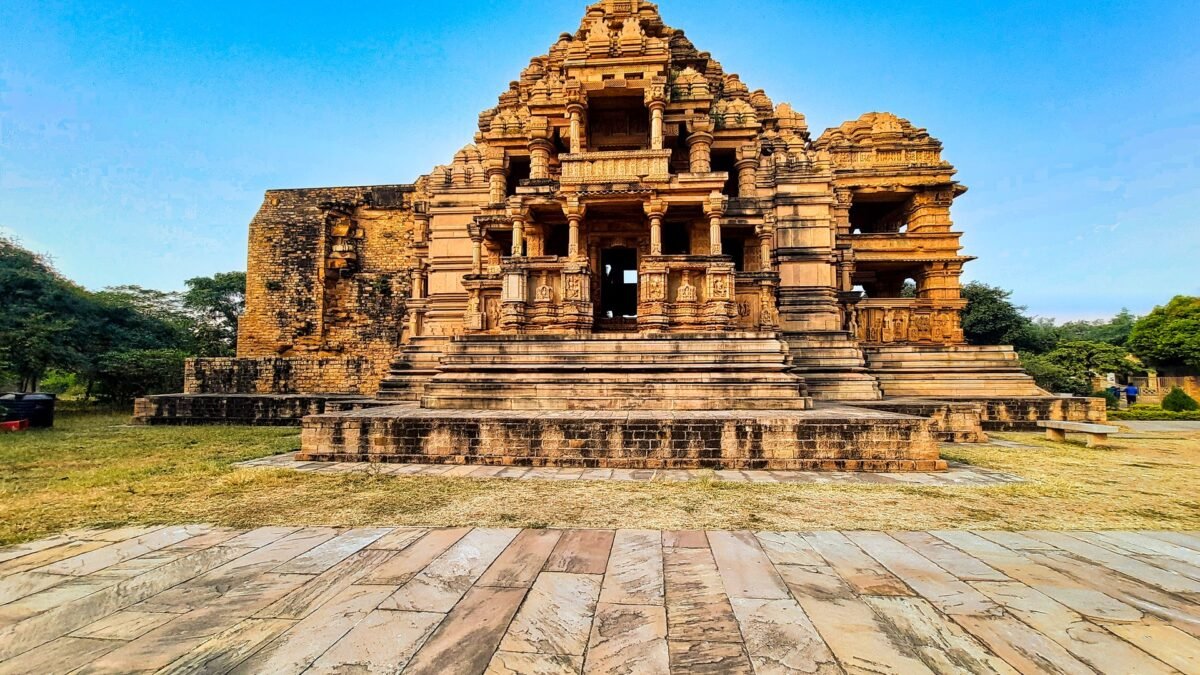
At least 14 people were killed and dozens injured in the early hours of Sunday, 18 October, when an out-of-control truck loaded with paddy broke through a police barricade and ploughed into devotees walking towards the Sheetla Mata Temple near Gwalior in Madhya Pradesh, according to police and district officials.
The crash happened at around 1:30 am on the sloping road from the Chhinor direction, a stretch where heavy vehicles are banned from entering. According to Gwalior Senior Superintendent of Police Dharmveer Singh, speaking to the ANI news agency, the truck suddenly lost control on the steep descent, smashed through the police barricades, ran over pilgrims who were on the road, and then crashed into the outer wall and gate of the temple.
“This is a tragic incident where pilgrims were travelling to Sheetla Mata Temple in large numbers. The road coming from the Chhinor side has a steep slope where heavy traffic is restricted. Around 1.30 am, a truck loaded with paddy was stopped there. It broke through the police barricades, suddenly lost control, came down, and crashed into the outer wall and gate of the temple. The devotees who were on the road were crushed underneath it, leading to this accident,” the SSP said, according to ANI.
Death toll rises to 14
According to the SSP, 39 people were taken to hospital following the crash. Early reports put the death toll at 12, but Gwalior District Collector Ruchika Chauhan later confirmed to reporters that the toll had risen to 14, with five to six patients critically injured with fractures and around 29 others being treated for various injuries. Two police personnel who were on duty at the spot were also injured, and their treatment is ongoing, according to ANI.
The injured, including women, children and two police personnel, were taken to J.A. Hospital in Gwalior, where five were reported to be in critical condition, according to a report by the Indo-Asian News Service. The bodies of those killed were moved to Jaya Arogya Hospital in Gwalior for post-mortem examination.
The truck also damaged five to six prasad stalls set up along the road before its momentum was stopped by the temple’s entrance gate and outer wall, according to the Kashmir Post. The force of the impact brought down part of the gateway structure, and several people were trapped beneath the debris, prompting an immediate rescue response from police personnel, emergency teams and local residents.
Navratri crowds on the road
The crash struck at the height of Navratri, the nine-night Hindu festival honouring the goddess Durga, when temples across India see some of their heaviest pilgrim footfall of the year. According to the SSP, a large number of devotees were heading towards the Sheetla Mata Temple for darshan because of the festival.
The Sheetla Mata Temple, situated about 18 km from the Gwalior district headquarters, is dedicated to Goddess Sheetla, worshipped as a protector against diseases and ailments. According to local accounts, the temple dates back centuries and its history is traced to 1726. The temple complex bustles with activity during festivals and auspicious days, when the surrounding area fills with small shops selling religious items, flowers and prasad, and pilgrims walk the approach roads on foot in large numbers.
It was on just such a road — the sloping approach from the Chhinor side, where heavy vehicles are prohibited — that the paddy-laden truck appeared in the early hours of Sunday. Officials are now examining how the vehicle reached the restricted stretch at all, given that a police checkpoint and a barricade were in place because of Navratri.
CM announces compensation, orders probe
Madhya Pradesh Chief Minister Mohan Yadav expressed grief over the deaths and announced financial assistance for the affected families. In a post on X, the Chief Minister said the state government stood with the families affected by the tragedy and that instructions had been issued to provide Rs 4 lakh to the families of each deceased person, Rs 2 lakh to each seriously injured person and Rs 50,000 to each of the other injured, according to Desi Talk Chicago. He added that all the injured would receive free treatment.
“The news of the deaths of devotees in the truck accident that occurred in Gwalior is extremely heart-wrenching. In this hour of grief, the state government stands with all affected families,” Yadav wrote. He also directed Ministers Aidal Singh Kansana and Rakesh Shukla to reach Gwalior. The Chief Minister said the affected families were from Gwalior, Shivpuri and Sheopur districts, and added prayers for the departed souls and a swift recovery for the injured.
District Collector Ruchika Chauhan, who reached the hospital in the early hours of the morning, said ambulances and other emergency vehicles had been dispatched as soon as information about the accident was received. She said an investigation was underway to determine how the truck managed to cross the barricades and the police checkpoint set up on the road during Navratri. “A stopper and a police checkpoint were present on that road during Navratri, so how the vehicle managed to get inside is a matter of investigation. We have also sent an RTO team to inspect the truck mechanically and find out what issue occurred and how it veered to the left,” she said, according to Desi Talk Chicago.
Families allege negligence, delayed rescue
Amid the official response, relatives of the victims have accused the police and administration of negligence and a delayed rescue. One relative told ANI that the family learnt of a victim’s death only through a friend and not from the police. “They were saying yesterday at the trauma centre that he was walking, so we sat there until 4 o’clock. We came home at 3 o’clock. We got the information at 3 o’clock. Then the police didn’t call the house. A friend called and told us; that’s when we came,” the relative said, according to Desi Talk Chicago.
A woman whose daughter was reported missing accused the police of preventing the family from searching for her. “Why didn’t the cops let us search? My daughter is looking for her, but they won’t let her go inside. The cops refused, saying she wasn’t in there. Isn’t it your duty to search for someone if they go missing? But no, they didn’t search, and they didn’t let my daughter search either. I want my child back,” she told ANI.
A local resident described the scene to Bilkul Online: “When I looked around, there was utter chaos and distress. People were screaming and frantically searching for their loved ones. It was heartbreaking to see people trapped beneath the truck. As for negligence, this is a result of gross negligence by the Gwalior administration. It is a major lapse that led to this tragedy at the Sheetla Mata Temple.” A shopkeeper, Bablu Prajapati, said his father’s shop was among those damaged and that four people at the shop, including two relatives, were injured and undergoing treatment.
Context: a deadly week for festival crowds
The Gwalior crash comes barely a day after a stampede at a Durga Puja pandal in north Kolkata killed 19 people on 17 October, an event that led West Bengal Chief Minister Suvendu Adhikari to order a judicial probe. Two mass-casualty incidents at religious gatherings within about 36 hours have intensified scrutiny of crowd and traffic management during India’s festival season.
The Sheetla Mata Temple approach road itself has seen pilgrim deaths before. In July 2025, four kanwariya pilgrims were killed and two injured near the Sheetla Mata Mandir Tiraha on the Gwalior–Shivpuri link road when an over-speeding car suffered a tyre burst and ploughed into the group, according to ANI reporting carried by Web India 123. The district administration had at that time announced a Rs 4 lakh compensation per deceased pilgrim — the same figure announced on Sunday.
According to Nation Press, the Gwalior crash is one of the deadliest road accidents in Madhya Pradesh in recent months. The Daily Jagran also reported a separate deadly accident in the same news cycle: eight people killed and six injured after a bus fell into a ditch on the Delhi–Mumbai Expressway in Rajasthan’s Kota district.
Analysis: Why It Matters
The most damning fact about the Gwalior tragedy is not the slope, the darkness, or even the overloaded truck — it is the barricade. A heavy vehicle was, by the administration’s own account, banned from that road. A police checkpoint stood on it because of Navratri. And yet, at 1:30 in the morning, a paddy-laden truck crossed both, descended a steep slope into a walking crowd of pilgrims, and killed 14 people. When a restriction exists on paper but not on the road, the question shifts from mechanical failure to governance failure: who was manning the checkpoint in the small hours, was the barricade a physical barrier or a symbolic one, and does a prohibition enforced only in daylight have any meaning on a festival night when the roads are fullest?
This is also a story about predictable surges meeting unprotected spaces. Navratri does not arrive unannounced; temple towns know exactly when and where crowds will concentrate. The standard response — barricades, checkposts, announcements — keeps failing at the same points: a vehicle enters where it should not, a crowd is funnelled through a narrow approach, and the margin for error is zero. That the Kolkata stampede (19 dead) and the Gwalior crash (14 dead) happened within roughly 36 hours of each other at religious gatherings suggests not a coincidence of bad luck but a shared national weakness in managing festival-time crowds and traffic.
The technical investigation matters too. The Collector has ordered an RTO mechanical inspection of the truck — brakes, load, vehicle fitness — and that report will determine whether the driver had any chance of stopping once the vehicle began its descent. Paddy is a dense, heavy load; an overloaded truck on a steep slope with degraded brakes is a physics problem that ends only one way. But whatever the RTO finds, it answers a secondary question. The primary one — how the truck got onto a road closed to heavy vehicles during a festival — is about human systems, and it is the harder one to fix.
Then there is the second, quieter tragedy unfolding in the families’ accounts: the missing daughter whose mother says police stopped her from searching, the death learned through a friend’s phone call rather than an official one. These allegations, reported by ANI, may be the grief of a chaotic night — or they may point to a real breakdown in casualty information management. Either way, they erode the one thing a police checkpoint is supposed to provide: trust that the authorities on the spot are in control. An administration that cannot tell families where their people are, hours after a crash, will struggle to convince them that the barricade breach was unavoidable.
Finally, the compensation numbers deserve a sceptical read. The Chief Minister’s announcement — Rs 4 lakh per deceased, Rs 2 lakh for the seriously injured, Rs 50,000 for others, plus free treatment — arrived within hours, exactly as similar announcements arrived after the July 2025 kanwariya deaths near the same temple. Speedy compensation is a humane gesture, but it has become the predictable first move in a script that rarely reaches its second act: structural change. The real measure of this tragedy will not be how quickly cheques are written, but whether the Chhinor approach road gets a permanent, physical heavy-vehicle barrier, whether checkpoint staffing is reviewed, and whether anyone in the chain of command is held accountable for a truck crossing a closed road during Navratri.
What to Watch Next
- The toll may still change. Five to six of the injured were reported to be in critical condition with fractures, and the toll has already risen from 12 to 14. Watch hospital updates from J.A. Hospital in Gwalior over the next 24–48 hours.
- The RTO mechanical report. The district administration has sent a Regional Transport Office team to inspect the truck. Its findings on brakes, load and vehicle fitness will determine whether this was primarily a mechanical failure or something the checkpoint should have prevented.
- Accountability for the barricade breach. The Collector has openly asked how the truck crossed a stopper and a police checkpoint during Navratri. Watch for suspensions, transfers or a formal inquiry — and whether grieving families’ demand for accountability is answered or absorbed into a routine file.
- Compensation on the ground. The Chief Minister announced Rs 4 lakh per deceased family, Rs 2 lakh for the seriously injured and Rs 50,000 for others, with free treatment for all injured. Watch whether the money reaches the families from Gwalior, Shivpuri and Sheopur, and how quickly.
- A wider festival-safety review. With 19 dead in Kolkata and 14 in Gwalior within about 36 hours, pressure will build on the Madhya Pradesh government — and on temple administrations — to review how pilgrim routes are kept free of vehicles during festival nights. Watch for any statewide order on traffic restrictions around religious sites.
Sources
- LatestLY (ANI wire): “Madhya Pradesh: 12 Dead, Several Injured as Truck Runs over Devotees Near Gwalior’s Sheetla Mata Temple”
- The Daily Jagran: “12 Killed, 27 Injured After A Truck Lost Control, Crashed Into Devotees Near Gwalior’s Sheetla Mata Mandir In MP”
- Desi Talk Chicago: “Gwalior truck accident: Death toll rises to 14; families allege police negligence, delay in rescue-search”
- Nation Press: “12 killed as truck ploughs into shops near Gwalior temple during Navratri”

About the Author — Abdul Mannan
Related Articles
Deadly Fire Erupts at Canada’s CFB Wainwright After ‘Serious Incident’; Defence Minister Confirms Fatalities
A "serious incident" at Canadian Forces Base Wainwright in Alberta triggered a major fire that has killed and…
Nineteen Killed in Stampede at Kolkata Durga Puja Pandal as Judicial Probe Ordered
Nineteen people have been killed and around 25 injured in a stampede at the Chorbagan Sarbojanin Durga Puja…
Guatemala’s Former Anti-Corruption Prosecutor Juan Francisco Solórzano Foppa Shot Dead in Guatemala City
Former prosecutor Juan Francisco Solórzano Foppa, 43, was shot dead at a Guatemala City sports complex; President Bernardo…