
Denmark Votes 109-0 to Ratify Trump’s Greenland Security Deal, Ending a Two-Year Standoff Over the Arctic Island

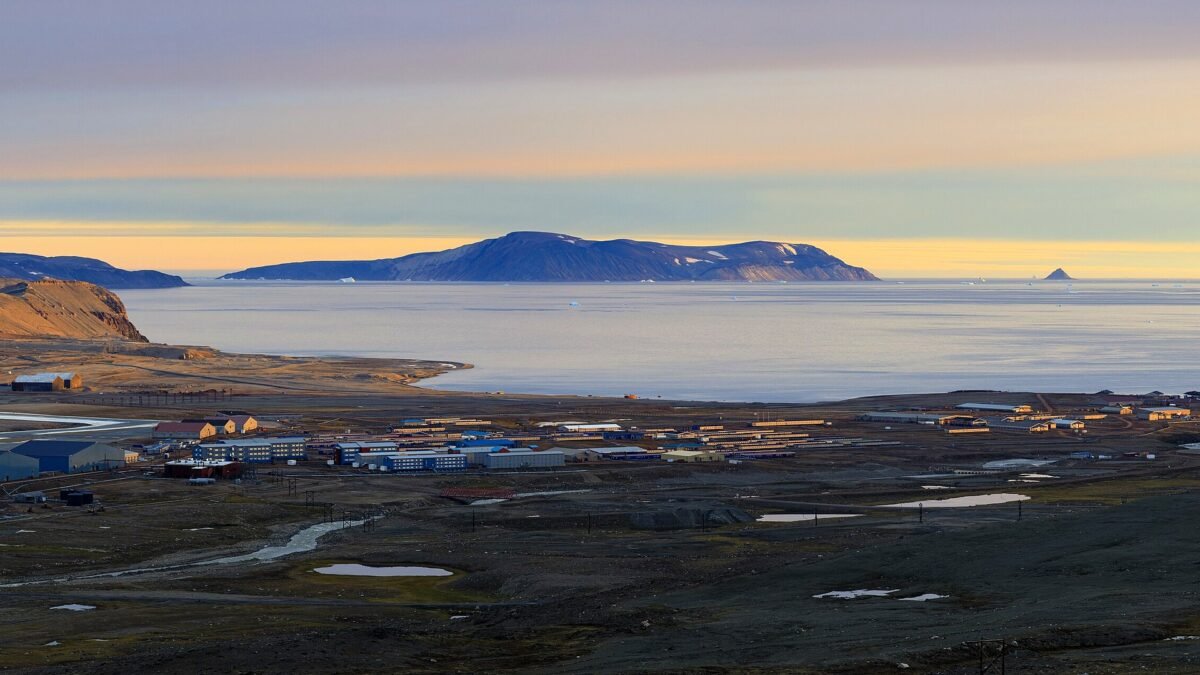
Denmark’s parliament voted unanimously on Thursday to ratify a security agreement with the United States and Greenland, bringing to a close a two-year standoff over the Arctic island that had shaken the Western alliance and opened the way for an expanded American military presence in the far north.
All 109 lawmakers present in the Folketing voted in favour of the agreement, with none against and none abstaining, according to Reuters. The vote, which followed the bill’s second and final reading, went through without debate, and Danish lawmakers expressed relief and hope that the deal would normalise the situation in Greenland, Reuters reported.
The agreement was signed in New York on 22 September by President Donald Trump, Danish Prime Minister Mette Frederiksen and Greenland’s Prime Minister Jens-Frederik Nielsen, on the sidelines of the United Nations General Assembly. It amends and supplements a defence pact first agreed in 1951, which has governed the American military presence on the island ever since, according to the Associated Press.
Thursday’s vote was the final parliamentary step. Greenland’s own parliament, the Inatsisartut, approved the agreement earlier this month, also with no opposition. The deal will enter into force once Denmark’s foreign ministry informs Washington through a diplomatic note that all necessary procedures have been completed, according to Reuters. Because the agreement is an executive agreement rather than a treaty, it does not require approval from the United States Senate.
The United States ambassador to Denmark, Kenneth Howery, welcomed the result, calling the agreement “a tremendous accomplishment” that bolsters the security of all sides, including NATO, according to Reuters. Writing on X, Mr Howery said the agreement “modernizes our partnership for the security challenges of the future and bolsters the security of the United States, the Kingdom of Denmark, including Greenland, and all of NATO,” the Associated Press reported.
For Denmark and Greenland, the vote closes a chapter that began in January, when Mr Trump refused to rule out military or economic force to acquire the island, triggering what Reuters described as a diplomatic crisis within NATO. For the United States, it secures a durable military foothold on the world’s largest island, at the top of the world, without the annexation Mr Trump spent much of the year demanding.
What the Agreement Does
At its core, the agreement modernises and expands the American military presence in Greenland while leaving the island under Danish sovereignty. Its preamble reaffirms that Greenland remains a part of Denmark, with the Greenlandic people’s right to self-determination, as set out in Greenland’s 2009 self-government law, according to FactCheck.org, which examined the published text of the agreement.
The centrepiece is Pituffik Space Base, in north-west Greenland, the northernmost American military installation in the world. Under the agreement, the United States may modernise and expand its activities at the base, which conducts space surveillance and provides missile warning and missile defence, according to FactCheck.org. The base, known as Thule Air Base until it was renamed in 2023, sits about 750 miles north of the Arctic Circle and is operated by the 821st Space Base Group.
Beyond Pituffik, the agreement allows the United States to establish additional defence areas at Narsarsuaq, in the south of Greenland, and Mestersvig, on the east coast, according to the Associated Press. The precise arrangements, technical details and environmental safeguards for those sites remain to be agreed between the parties, according to defence analysts who have studied the text.
The agreement also grants American vessels and aircraft free movement between defence areas, including undersea access to Greenland’s territorial waters, according to FactCheck.org. It provides for stronger NATO planning, exercises, intelligence collection and military presence across the Arctic and North Atlantic, and it opens the way for the United States to establish elements of Mr Trump’s proposed “Golden Dome” missile defence system in Greenland.
Just as important is what the agreement keeps out. It bars countries outside the European Union and NATO from strategic sectors in Greenland, a provision officials have linked to limiting Chinese or Russian influence, particularly through investment. The text also bars non-NATO states from military installations, manned or unmanned, or a persistent military presence, unless the parties agree otherwise. The signatories will now start work on a new Greenlandic law to screen outside investors on security grounds, Denmark’s Defence Minister Jeppe Bruus told Reuters.
Two features of the agreement give it unusual permanence. It carries no end date, and it can be changed only by mutual consent, borrowing its amendment procedure from the 1951 agreement it amends. And, according to the Associated Press, it would still apply if Greenland eventually chooses independence — a reminder that the deal is written to outlast the constitutional question that has shaped Greenlandic politics for a generation.
A Vote Without a Single Dissent
The scale of Thursday’s majority was itself a statement. The Folketing has 179 seats, and all 109 members present voted in favour after the second reading, according to the Associated Press. There was no debate and no opposition, a striking outcome for a question that has divided Danish politics for two years and dominated Greenlandic public life.
The vote took place under Section 19 of the Danish Constitution, which required the Folketing’s consent because the agreement modifies the defence framework governing the Kingdom of Denmark and Greenland. It was the second and final reading of parliamentary resolution B 36.
Greenland’s parliament had already given its consent on 3 November, voting 16 in favour with none against and seven abstentions, according to defence publications that reported the vote. Denmark’s approval completed the legislative side of the process, leaving only the formal diplomatic notification to Washington before the agreement takes effect.
Danish lawmakers expressed relief after the vote, according to Reuters, and the mood in Copenhagen was one of hope that the deal would normalise a situation that has strained relations inside NATO for nearly two years. Naaja Nathanielsen, a Greenlandic member of the Danish parliament, told Reuters that Mr Trump’s pressure had led to distrust in Greenland towards the American administration. “It’s been really difficult for Greenlanders these past two years. It’s been seeping into every aspect of our lives,” she said, adding that she hoped the agreement would open a path to dialogue after hurtful rhetoric within the Western alliance.
Mr Bruus, the Danish defence minister, told Reuters that the signatories would now start work on the investment-screening law and on plans for the two new American military bases outlined in the agreement. “I expect that the US will now also start to be more concrete on the purposes and the arrangement around these two areas,” he said.
How Two Years of Pressure Produced a Deal
The agreement signed in September was the product of months of quiet, behind-the-scenes negotiations, according to the Associated Press, and it followed a period in which the future of Greenland had become one of the most corrosive questions inside the Western alliance.
Mr Trump first floated the idea of buying Greenland during his first term, in 2019, when Denmark’s prime minister dismissed the suggestion as absurd. The idea returned with far greater force after his return to the White House. In January, he refused to rule out using military or economic force to take control of the island, a refusal that triggered a diplomatic crisis within NATO, according to Reuters. He argued repeatedly that Greenland was essential to American security, and in an address to a joint session of Congress in March he told Greenlanders that the United States would welcome them, adding: “One way or the other, we’re going to get it.”
The pressure was not only rhetorical. In March, Vice-President JD Vance visited Pituffik Space Base, where he accused Denmark of underinvesting in Greenland’s security and said the island’s people would be better off under American protection. Danish and Greenlandic leaders rejected that argument, and public opinion in Greenland hardened against the United States, even as Copenhagen began raising its own Arctic defence spending.
Behind the public confrontation, negotiators from the three governments worked for months on a compromise. The result, signed on 22 September at the United Nations headquarters in New York, gave Washington much of what it said it wanted on security — expanded access, new sites, a missile-defence role and a lock on outside investment — while giving Copenhagen and Nuuk what they said they needed: sovereignty preserved, self-determination reaffirmed, and no transfer of territory.
Mr Trump presented the outcome in sweeping terms. Addressing the General Assembly on the day of the signing, he told delegates that the agreement gives the United States “permanent control over security and all other needs” on Greenlandic territory. A White House spokesperson later said the deal “secures permanent American security control over Greenland, ensures that Greenland will forever be a part of the strategic defense area of North America, and excludes any adversary from Greenland and the surrounding region,” according to FactCheck.org.
That framing has been challenged. FactCheck.org, examining the published text, concluded that the United States did not “get” Greenland and does not now own it, and that the agreement primarily allows Washington to expand its military presence indefinitely while preventing its adversaries from doing the same. The distinction matters, because it is the gap between the two descriptions — permanent control in Washington’s telling, expanded access within Danish sovereignty in Copenhagen’s — that will shape how the agreement is judged in the months ahead.
The tension surfaced again last month, when Mr Trump said that “massive oil, gas and mineral exploration” was set to begin on Greenland. Greenland banned new drilling for crude oil in 2021, and Denmark has said that any resource extraction must respect local law, according to Reuters. The agreement itself says nothing about granting Washington rights over Greenland’s minerals, and the question of who benefits from the island’s resources remains governed by Greenlandic law.
Why Greenland Matters
Greenland’s importance is a matter of geography before it is a matter of politics. The island, home to about 57,000 people, lies on the shortest route between Europe and North America, and the American base at Pituffik sits directly beneath the polar flight paths that a missile launched from Russia towards the United States would most likely follow. The base’s radars provide early warning of such a launch, and its location makes it one of the most strategically valuable pieces of ground in the American defence system.
The 1951 agreement that first allowed the American presence was signed in the early years of the Cold War, when the United States built Thule Air Base as a forward outpost against the Soviet Union. The agreement was updated in 2004, in the Igaliku Agreement, which gave Greenland a greater say over the base. The new agreement is the third chapter in that history, and the first to be negotiated with a Greenlandic government sitting at the table as a signatory in its own right.
The Arctic around Greenland has grown more contested as the ice has receded. Russia has reopened Soviet-era bases along its northern coast and expanded traffic along the Northern Sea Route, the shipping lane that runs along Siberia. China has described itself as a “near-Arctic state,” invested in Arctic research and mining, and sought a foothold in Greenlandic infrastructure and minerals. Both developments have sharpened Washington’s interest in an island that American strategists have coveted since the Second World War, when the United States first stationed forces there.
Greenland’s underground wealth adds a commercial edge to the strategic argument. The island holds deposits of rare earth elements, uranium, zinc, iron and other minerals that matter to modern industry, and its offshore waters are believed to hold oil and gas. Greenland’s 2021 ban on new oil exploration reflected a political choice by its government to prioritise climate and fishing over drilling, but the minerals question has never gone away, and it is one reason outside investors — including Chinese companies — have circled the island for years.
For Denmark, the agreement resolves an immediate crisis but leaves a deeper question open. Greenland’s right to declare independence is written into its self-government law, and a majority of Greenlanders have long said they favour independence in principle, even if they disagree about when and how. The new agreement’s provision that it would survive independence suggests all three governments expect that question to remain live for years, and that the security arrangements for the island are now deliberately insulated from it.
Analysis: Why It Matters
The unanimity is the message
A 109-0 vote, with no debate, is not how parliaments normally handle a question as sensitive as foreign troops on national territory. The absence of dissent is the story of Thursday’s vote, and it says more about the past two years than about the text itself. Danish politics has been divided over many things in recent years, but the experience of sustained pressure from Washington produced a consensus that the crisis had to end, and that this agreement was the way to end it. The unanimity also serves a practical purpose: it denies any future American administration an easy argument that the deal lacks democratic legitimacy in Denmark. When every lawmaker present votes the same way, the agreement arrives in Washington with the full weight of the Danish state behind it, and that is a deliberate part of the design.
The deal gives Washington presence, not ownership
The central question about this agreement has always been whether it amounts to a transfer of Greenland in all but name. The text says no, and the distinction is worth taking seriously. The United States gains the right to modernise and expand its operations at Pituffik, to establish defence areas at two further sites, to move its vessels and aircraft freely between them, and to host elements of a missile defence system. It does not gain sovereignty, ownership, or any right over Greenland’s minerals, and the agreement explicitly reaffirms Danish sovereignty and the Greenlandic people’s right to self-determination. Mr Trump’s description of “permanent control” describes influence, not title, and the gap between those two things is where the politics of this agreement will be fought. What Washington has won is the ability to shape decisions about security and strategic resources on the island for the indefinite future. That is a great deal of power. It is not the same as owning the island, and the difference matters to the people who live there.
Golden Dome is the real prize
Much of the public debate about Greenland has focused on flags and sovereignty, but the most consequential provision of the agreement may be the least discussed: the opening for Mr Trump’s Golden Dome missile defence system. Golden Dome is the president’s plan for a layered shield against missile attack, which he has said would cost about $175 billion, and its architecture depends on sensors and interceptors placed as far north as possible, where incoming missiles would first appear. Greenland is the ideal location, and Pituffik is the ideal site. The agreement does not itself build Golden Dome, and no interceptor has been purchased or deployed under it, but it removes the political obstacle that would have stood in the way. If Golden Dome is built, it will almost certainly run through Greenland, and that gives the island a permanent place in the architecture of American homeland defence that no change of government in Copenhagen or Nuuk can easily undo.
The investment-screening clause is aimed at Beijing
The provision that has received the least attention in the coverage of the vote may prove the most consequential after the military clauses: the commitment to screen outside investment on security grounds, and the bar on countries outside the European Union and NATO from strategic sectors. This is, in substance, a lock on Chinese and Russian economic influence in Greenland. For years, Chinese companies have shown interest in Greenlandic mining, infrastructure and telecommunications, and each approach has alarmed Washington and Copenhagen in equal measure. The new law the signatories have promised will give Greenland a formal mechanism to refuse such investment on security grounds, and the agreement gives Washington a say in how that mechanism is used. The clause converts a geopolitical anxiety into a legal instrument, and it does so in a way that will outlast the current American administration.
Ratification ends the crisis but starts the argument
Thursday’s vote closes the diplomatic crisis, but it opens a series of arguments that will run for years. The first is about the two new defence areas: where exactly they will be, what will be built there, and what environmental and social conditions Greenland will attach. Mr Bruus’s remark that he expects Washington to become “more concrete” about the purposes and arrangements for the two areas is a polite way of saying that the hardest negotiations are still to come. The second argument is about money and minerals, and about who benefits from the island’s resources as the Arctic opens. The third, and deepest, is about trust. Ms Nathanielsen’s account of two difficult years, in which American pressure seeped into every aspect of Greenlandic life, is a reminder that the damage done by the annexation debate will not be repaired by a parliamentary vote. The agreement gives the three governments a framework for working together. Whether it gives them a relationship is a question that will be answered in Nuuk, not in Copenhagen or Washington.
What to Watch Next
- The diplomatic note. The agreement enters into force once Denmark’s foreign ministry formally notifies Washington that all procedures are complete. Watch for the date of that note, which will mark the moment the agreement becomes legally binding.
- The two new defence areas. The locations named in the agreement are Narsarsuaq in the south and Mestersvig in the east, but the modalities and technical details remain to be agreed. Watch for announcements on what will be built, when construction begins, and what conditions Greenland attaches.
- The investment-screening law. The signatories have promised a new Greenlandic law to screen outside investors on security grounds. Watch for its drafting, its scope, and whether it is used to block any pending Chinese or Russian-linked investment.
- Golden Dome decisions. The agreement opens the way for missile-defence elements in Greenland, but none has been ordered or deployed. Watch for Pentagon planning documents and budget requests that show whether Pituffik is formally included in the Golden Dome architecture.
- The Greenlandic debate. Greenland’s parliament approved the agreement 16-0, but seven lawmakers abstained, and the independence question remains live. Watch for how the agreement is debated in Nuuk, and whether any party makes the defence areas an issue in Greenlandic politics.
- The minerals question. Mr Trump’s claim about “massive” oil, gas and mineral exploration sits uneasily with Greenland’s 2021 oil-drilling ban and its own laws. Watch for any mining licences, exploration announcements or investment proposals that test the agreement’s limits.
- The wider Arctic. Russia and China will have watched Thursday’s vote closely. Watch for their responses, and for whether the agreement changes the pattern of Russian activity along the Northern Sea Route or Chinese investment approaches in the Arctic.
Sources
- Reuters — Denmark ratifies Trump deal over Greenland, hoping to end conflict
- Associated Press — Greenland security deal with U.S. and Denmark OK’d by Danish lawmakers
- FactCheck.org — Explaining the U.S. Defense Agreement with Greenland and Denmark
- The Defense News — Greenland Approves Expanded U.S. Military Access, Paving Way for Two New Defense Sites
- Defence Agenda — Greenland Parliament Approves the Arctic Security Pact
- RoAdevăr — 2026 United States–Denmark–Greenland agreement (text and analysis)

About the Author — Abdul Mannan
Related Articles
Putin Rules Out Ceasefire Talks and Vows ‘Far More Painful’ Response After Ukraine’s Kerch Bridge Strikes
Vladimir Putin said Russia would no longer discuss a ceasefire with Ukraine after Kyiv's three strikes on the…

Iraq Strikes Last-Minute Deal to Avert Armed Clash With Iran-Backed Kataib Hezbollah Over Oil-Smuggling Stronghold
Iraq has reached a last-minute compromise with the Iran-backed militia Kataib Hezbollah, averting an armed clash over its…

World Court Rules Myanmar Committed Genocide Against the Rohingya in Landmark First-Ever Verdict
The International Court of Justice has found Myanmar guilty of committing genocide against the Rohingya, the first time…