
Putin Rules Out Ceasefire Talks and Vows ‘Far More Painful’ Response After Ukraine’s Kerch Bridge Strikes

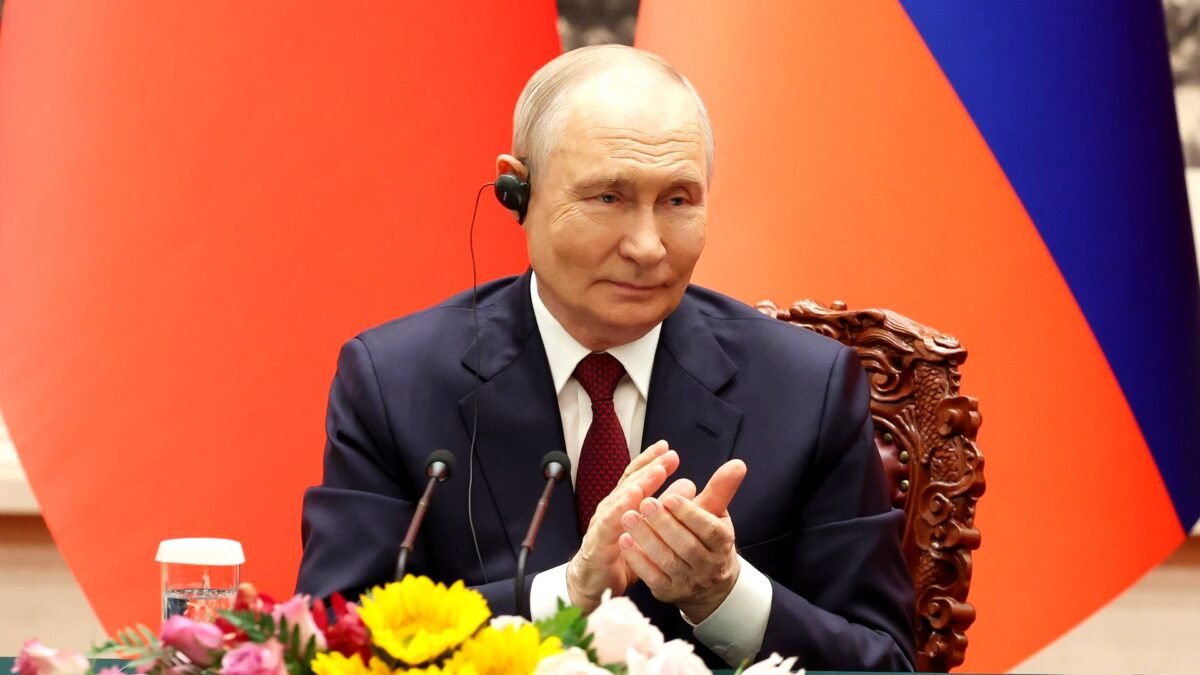
Russian President Vladimir Putin said on Thursday that Moscow would no longer discuss a ceasefire with Ukraine, closing the door on the limited truce he had himself been considering and warning that Russia’s retaliation for Kyiv’s attacks on the Kerch Bridge would be far more painful than the damage to the crossing.
“After the strikes on the Crimean Bridge, there will be no agreements. We will respond to these strikes. And I want everyone to know this: I believe our response will be far more painful than what the Kyiv regime did to the bridge,” Putin told reporters in Shenzhen, China, according to Reuters.
The remarks, delivered at a press conference after his first-ever three-way meeting with United States President Donald Trump and Chinese President Xi Jinping, landed on the same day that Ukraine’s European allies gathered in Berlin to insist that no peace in Ukraine can be settled over their heads. In the space of a few hours, the two tracks of the war’s diplomacy — the great-power pageant in China and the European effort in Germany — pulled in opposite directions, and the fighting went on regardless.
Putin said he had discussed a possible halt to attacks at sea and on energy facilities with Russia’s Security Council and had asked its members to think the matter over in the hope that some agreement could be reached. The bridge attacks, he said, ended that consideration. He also ruled out any agreement not to hit energy infrastructure, according to the New York Post’s account of the briefing.
“We will, of course, restore the bridge. The road section suffered serious damage,” Putin said, adding that the railway section had already been restored. He insisted that the bridge was used exclusively for civilian purposes and not to transport military equipment or petroleum products, a claim Kyiv disputes.
The statement was the Russian president’s first public reaction to a week in which Ukraine struck the bridge three times, and it turned a tactical success for Kyiv into a strategic complication: the one partial ceasefire that had been on the table — a truce covering the Black Sea and energy infrastructure — is now, by Moscow’s own account, off it.
The bridge strikes
Ukraine struck the Kerch Bridge, the 19-kilometre road and rail crossing over the Kerch Strait that links mainland Russia with occupied Crimea, for the third time in a week in the early hours of Thursday, according to Ukraine’s General Staff. The General Staff said Neptune cruise missiles hit the area near the arch and the railway tracks, and satellite imagery published later in the day showed impact points on the rail span to the left of the arch, consistent with Ukraine’s account, according to The War Zone.
Rail traffic across the bridge was halted after the overnight attack, and Russia’s Transport Ministry said nobody was hurt. It was the third attack on the crossing in four days: Ukrainian forces hit the bridge on 16 November, again on 17 November, when a section of the roadway collapsed after a strike, and a third time on 19 November.
Russian Deputy Prime Minister Marat Khusnullin told the official Russian news agency TASS that the authorities would determine a timeline for restoration within a week. Crimean occupation authorities said free ferries between Kerch and Kavkaz would begin running from 20 November to carry traffic while the bridge is repaired.
The bridge, which Putin ceremonially opened himself in 2018 and which is reported to have cost about $3.6 billion, has been struck repeatedly since Russia’s full-scale invasion began: it was damaged in an explosion in October 2022 and again in a sea-drone attack in July 2023. For Kyiv it is a legitimate military target, the supply artery for Russian forces in occupied Crimea and southern Ukraine. For Moscow it is the physical symbol of the 2014 annexation, and Putin has treated attacks on it as attacks on Russia itself.
One detail of Tuesday’s strike drew attention in Europe. The Netherlands-based defence company Destinus said its missiles were the only foreign-made weapons used in Ukraine’s attack on the bridge that day, and that its staff had only supported the Ukrainian military in line with its contracts, according to The Times.
The Shenzhen summit and what it did not do
Putin’s remarks came immediately after the first trilateral meeting of the leaders of the United States, Russia and China, held on Thursday on the sidelines of the Asia-Pacific Economic Cooperation summit in Shenzhen. Trump, Xi and Putin met for more than an hour, the first time the three leaders had ever sat down together, and afterwards issued a joint “declaration for peace” covering reform of the United Nations, nuclear weapons, oil production and international law, including curbs on the International Criminal Court.
What the declaration did not mention was the war in Ukraine. No concrete measures on Ukraine were agreed, and the leaders’ own accounts of the meeting made clear that the gathering was, in the words of one analysis in The Times, above all an exercise in optics. Trump embraced Putin and called him “my friend” during a face-to-face meeting before the talks, a moment that drew a furious response from the senior US Democrat Chuck Schumer, who called it “despicable” and noted that Putin “has abducted tens of thousands of children, killed tens of thousands of civilians, targeted civilian infrastructure across Ukraine” and continues to do so daily.
While Putin held talks with Trump and Xi, his forces launched a wave of drone attacks on Kyiv, killing at least one person and injuring five others in a daylight assault, according to The Times. The Dutch embassy in Kyiv suffered minor damage when a projectile landed near the building; nobody was hurt, and the Dutch foreign minister, Tom Berendsen, said his country was investigating exactly what had happened. Austria’s embassy was also damaged by drone strikes, Ukrainian Foreign Minister Andrii Sybiha said, posting pictures of the building. The Russian embassy in the Netherlands responded by saying it was becoming “increasingly difficult to regard the Netherlands as a mere bystander” in the war.
Kyiv’s reaction to the Shenzhen meeting was scathing. “Putin posed as a global leader in Shenzhen. In reality, he is a global criminal and terrorist. And he should be treated as such,” Sybiha wrote on X.
Berlin answers back
Hours after the Shenzhen talks, the leaders of Ukraine’s principal European supporters gathered in Berlin for a meeting of the so-called Coalition of the Willing, the forum of more than 40 countries that has backed Kyiv since the war began. German Chancellor Friedrich Merz hosted the meeting at the Federal Chancellery, alongside French President Emmanuel Macron, British Prime Minister Andy Burnham, Polish Prime Minister Donald Tusk and Italian Prime Minister Giorgia Meloni, with NATO Secretary-General Mark Rutte and Ukrainian President Volodymyr Zelenskyy also present.
The timing was deliberate. German officials said the group wanted to be able to react fast to whatever came out of Trump’s meetings in China, and the meeting’s message was aimed squarely at the Shenzhen format. Merz dismissed the trilateral as “above all a photo op” and said a Yalta-style format “will not bring peace to Europe”.
“As the coalition of the willing, we have made it clear together today that we welcome the United States’ move to initiate new negotiations with Russia,” Merz said after the meeting. “We want to be involved in these negotiations. We want to do it as a team with Kyiv and Washington.”
The Berlin meeting agreed to back a four-party negotiating format involving Ukraine, Europe, the United States and Russia, and the leaders of the E3 countries — the UK, Germany and France — together with Ukraine called on Russia to agree to a ceasefire to stop attacks on energy infrastructure for the duration of winter. They also called for a ceasefire to allow food exports from the Black Sea region, citing the importance of safe passage and freedom of navigation for global food security.
Macron said the Berlin meeting, not the Shenzhen summit, was the decisive gathering of the day. “Today, if there is one critical factor in Europe’s reorganisation, its security, it is precisely the meeting that took place in Berlin,” he told reporters. He called on Ukraine’s allies to do the “maximum” to deliver the air defence systems Kyiv needs, and urged them to “reopen the question” of Ukraine’s membership of NATO, arguing that “faced with the maximalist nature of the Russian position, I believe we need to reopen the question of Ukraine’s accession to Nato”.
Zelenskyy thanked the countries that attended, saying discussions had centred on European states providing further military support for Ukraine, including strengthening air defence, a winter package of anti-ballistic interceptors, and 45 billion euros to cover budgetary needs. “I am grateful to everyone who strengthens our defence and works to bring Russia’s war to an end,” he said on X.
Burnham said the American involvement in the Berlin meeting provided a moment to move towards peace. “This clearly has got to be a moment to move towards peace because of the US involvement that we’ve seen today and the progress clearly that is being made,” he said. “Europe is ready to enter these negotiations.”
The meeting was also attended by Trump’s special envoys, Steve Witkoff and Jared Kushner, who briefed the Europeans on the talks in China. Kushner later told reporters that the US talks in Berlin with European leaders and Zelenskyy had “made a lot of progress on what those security guarantees can look like”, as well as on a postwar prosperity plan, and that Trump was open to a NATO Article 5-style security guarantee for Ukraine as part of a broader security package.
Trump’s call and the money argument
Trump himself phoned into the Berlin gathering on Thursday after his meeting with Putin and Xi, according to Kushner, who revealed the call but did not disclose what was said. According to The Times, citing an official present, Trump told the European leaders they would not need to spend such large sums propping up Ukraine’s defences if they put more effort into ending the conflict.
“He was telling the Europeans, ‘Enough already, you’re spending so much money on the war and you need to be spending it on your own countries’,” the official said. “He was setting out the cost in terms of all the lives lost and the millions spent, presenting it as another reason for them to hurry up and help end the war.”
The message was consistent with the line Trump has taken since returning to the White House: American support for Ukraine has tapered, and Europe should carry more of the burden. It was also, in the view of the Europeans in Berlin, precisely the wrong message to send on the day Putin was ruling out a ceasefire. Denmark’s prime minister, Mette Frederiksen, speaking in Berlin, described it as “incomprehensible” that an American president would sit with Putin “at a time when they continue to attack Europe”, adding that the only message that should have been delivered to the Russian leader was to “stop that war”.
Kushner’s account of the call was more upbeat. He said the US-European position on Ukraine was “growing closer”, and the fact that Trump was willing to discuss an Article 5-style guarantee — the NATO clause under which an armed attack against one member is treated as an attack on all — was read in Berlin as a genuine, if conditional, American commitment. Whether that openness survives contact with Moscow, and with the politics of the White House, is now one of the central questions of the diplomacy.
Trump said he would hold a news conference at the White House on his return from China, and told NBC News that he would meet the North Korean leader, Kim Jong-un, “at some point”. He also told reporters aboard Air Force One that his talks with Xi had included agreement that guardrails on artificial intelligence would be “a positive thing”.
The war goes on while they talk
The gap between the diplomacy and the battlefield was on display all day. Even as the three leaders issued their declaration for peace in Shenzhen, Russian drones were hitting Kyiv and damaging two European embassies. Even as the Europeans in Berlin called for a winter energy ceasefire, Putin was telling reporters that no such agreement would now be reached.
The energy war is the most immediate threat to Ukrainian civilians. Russian attacks on power generation and distribution infrastructure have repeatedly left consumers in the Dnipropetrovsk, Zhytomyr, Zaporizhzhia, Mykolaiv and Sumy regions without electricity, and a fragile ceasefire announced in September collapsed after Russian strikes hit power plants in Kyiv. With winter approaching, the E3’s call for an energy truce was the most practical proposal on the table in Berlin — and Putin’s answer, delivered within hours, was no.
The bridge campaign is part of the same logic. Ukraine has spent the autumn hitting the infrastructure that sustains Russia’s war effort, from refineries to the Kerch crossing, and the strikes on the bridge were the most symbolically charged of them. The cost to Kyiv is now clear: the partial ceasefire that might have protected its own energy grid through the winter is gone, and a Russian retaliation that Putin himself has promised will be “far more painful” is coming.
There is also a longer history behind Thursday’s statements. The United States, Russia and Ukraine held their first trilateral peace talks in nine months in Abu Dhabi earlier this month, and the first day ended with no breakthrough, though the tone was described as constructive. Putin said on Thursday that Russia remained interested in ending the conflict, but that Ukraine must accept compromises to bring it to a close, and that Moscow was prepared to continue negotiations — though the timing of any next round remains unclear. He also said he had invited European Union representatives to Moscow through diplomatic channels to clarify Europe’s position on resolving the war.
That is the shape of the diplomacy as it stands: a Russian president who says he wants the war to end, on terms Kyiv must accept; a Ukrainian president who says he wants peace and works constructively, but will not accept a settlement made without him; European leaders who insist they must be at the table; and an American president who has met Putin as a friend, told Europe to spend less on the war, and left his envoys to assure the allies that a security guarantee is still possible.
Analysis: Why It Matters
The bridge was the last off-ramp, and Kyiv burned it
Putin’s own account of Thursday is the most revealing part of the story. He did not say a ceasefire was impossible in principle. He said he had asked his Security Council to study one — a halt to attacks at sea and on energy facilities — and that he had hoped an agreement might be reached. The bridge strikes changed his mind. Whether that account is sincere or a convenient justification, its public effect is identical: the one partial truce that was actually under discussion inside the Kremlin is now dead, killed by the very attacks that were meant to strengthen Kyiv’s hand. Ukraine traded a possible winter reprieve for its energy grid for a spectacular blow against a symbol. It may prove to have been the right trade — symbols matter in war, and the bridge is the symbol of the annexation itself — but it was a trade, and it should be recognised as one. The Ukrainians who will sit in the dark this winter if Russia’s retaliation targets the grid are paying for it.
Three summits, three different wars
Thursday produced three separate gatherings, and each of them was really about a different war. In Shenzhen, three nuclear-armed leaders talked about reforming the United Nations and curbing the International Criminal Court, and said nothing about Ukraine. In Berlin, the Europeans talked about security guarantees, a winter energy ceasefire and a seat at the negotiating table. In Kyiv, the war itself went on, with drones, dead civilians and damaged embassies. The diplomacy and the fighting are no longer on the same track. That is not unusual in the late stages of a war — diplomacy often accelerates precisely when the fighting does — but the scale of the disconnect on Thursday was striking. The leaders who can stop the war were in one room talking about something else; the leaders who cannot stop it were in another room talking about how to be included; and the people being killed were in neither room.
Trump sent two messages, and Europe heard both
The American president’s day contained a contradiction that his envoys spent the evening trying to smooth over. In Shenzhen he embraced Putin and called him his friend. In his call to Berlin he told the Europeans they were spending too much money on Ukraine and should spend it on their own countries instead. Kushner’s assurance that the US-European position is “growing closer”, and that Trump is open to an Article 5-style guarantee, is the counterweight — and it is a substantial one, because a guarantee of that kind is the single thing Kyiv has wanted most since the war began. But guarantees are only as good as the politics behind them, and the politics on display on Thursday were of a president who treats the war as a cost to be cut and a friendship to be maintained. Europe’s problem is not that Washington has abandoned Kyiv; it is that Washington’s commitment now has to be re-established, meeting by meeting, phone call by phone call, and can be undone by a handshake in the next one.
The energy war is the winter war
The most consequential sentence in Berlin was not about NATO membership or security guarantees. It was the E3’s call for a ceasefire on energy infrastructure for the duration of winter. That proposal was aimed at a single, concrete human fact: millions of Ukrainians face the cold months with a power grid that Russia has spent the autumn systematically attacking. Putin’s refusal, delivered within hours, means that war will continue through the winter as a war on heat and light. It also means the Berlin meeting’s most practical achievement was stillborn on the day it was announced. The embassy strikes in Kyiv on Thursday — a Dutch mission and an Austrian mission damaged while their staff sheltered — were a small, sharp illustration of the same point: there is no part of the war that is safely diplomatic, and no building in Kyiv, however protected by convention, that is outside it.
“Far more painful” is a promise with a deadline
Putin did not merely refuse a ceasefire; he promised a retaliation, and he promised it would be worse than the attack that provoked it. That is a commitment he has now made in public, on camera, after a summit with the American and Chinese presidents. It creates an expectation inside Russia that something large will follow, and it creates a dread in Ukraine about what that something will be. The bridge itself will be rebuilt — Putin said so, and the ferries will run from Friday — so the damage to the crossing is temporary. The damage to the diplomacy may not be. Every day that passes without the promised retaliation will be read in Moscow as hesitation and in Kyiv as a reprieve; when it comes, its scale will be read as the measure of how seriously Putin took the insult. Threats of this kind narrow everyone’s room for manoeuvre, including the man who made them.
What to Watch Next
- Russia’s retaliation: the scale, timing and targets of the response Putin has promised. Watch in particular whether it hits Ukraine’s energy grid, and whether it comes before or after Trump’s White House news conference on Friday.
- Trump’s White House press conference: the president said he would brief reporters at noon on Friday on his return from China. Watch for any shift in his language on Ukraine, on the Article 5-style guarantee Kushner raised, and on what he told Putin in their separate meeting.
- The four-party format: whether the negotiating format agreed in Berlin — Ukraine, Europe, the United States and Russia — actually convenes, and whether Moscow accepts a format that gives Europe the seat it has been demanding.
- The winter energy ceasefire: whether Moscow gives a formal answer to the E3’s call, and whether any channel — through the Security Council discussions Putin described, or through the Abu Dhabi track — keeps the idea alive.
- The security guarantee talks: what Witkoff and Kushner bring back from Berlin, and whether Trump’s openness to an Article 5-style guarantee becomes a written American position or fades after the Shenzhen handshake.
- The Kerch Bridge: the restoration timeline Khusnullin promised within a week, the ferry service starting on Friday, and whether Ukraine attempts a fourth strike while repairs are under way.
- Ukraine’s deep-strike campaign: the Associated Press has reported that the United States told Ukraine’s Western backers that deep strikes into Russia are ineffective and urged them to focus on front-line equipment instead. Watch whether Washington presses that case harder after the bridge campaign, and whether Kyiv listens.
Sources
- Reuters — Putin rules out Black Sea, energy truce after Crimea bridge strike
- Reuters — Ukraine’s European allies meet in Berlin in show of support
- The Times — Trump, Xi and Putin pledge to reform UN and boost oil production (live coverage)
- The Times — Your Putin meeting changes nothing for Ukraine, Europe tells Trump
- The War Zone — Impacts of latest Neptune missile strike on Kerch Bridge seen in satellite imagery
- New York Post — Putin vows to rain down hellfire on Ukraine after Crimean Bridge attack

About the Author — Abdul Mannan
Related Articles

Iraq Strikes Last-Minute Deal to Avert Armed Clash With Iran-Backed Kataib Hezbollah Over Oil-Smuggling Stronghold
Iraq has reached a last-minute compromise with the Iran-backed militia Kataib Hezbollah, averting an armed clash over its…
Denmark Votes 109-0 to Ratify Trump’s Greenland Security Deal, Ending a Two-Year Standoff Over the Arctic Island
Denmark's parliament voted unanimously on Thursday to ratify a security agreement with the United States and Greenland, expanding…

World Court Rules Myanmar Committed Genocide Against the Rohingya in Landmark First-Ever Verdict
The International Court of Justice has found Myanmar guilty of committing genocide against the Rohingya, the first time…