
World Court Rules Myanmar Committed Genocide Against the Rohingya in Landmark First-Ever Verdict

The International Court of Justice has found Myanmar guilty of committing genocide against the Rohingya, the first time in the court’s 80-year history that it has held a state responsible for the crime of genocide. The ruling, delivered in The Hague on Thursday, was carried by nine votes to six and came with orders for Myanmar to pay reparations, to allow the Rohingya to return home, and to investigate and prosecute those responsible.
The judgment closes a case that has run for seven years and that survivors have waited almost a decade to see decided. It does not bring anyone back. But it does something no international court has ever done before: it names a state, in a final and binding judgment, as a perpetrator of genocide.
The court’s president, Judge Yuji Iwasawa, read the judgment over nearly three hours at the Peace Palace in The Hague, according to CNN. By the end of the reading, the court had issued 13 operative rulings covering the genocide itself, Myanmar’s failure to prevent and punish it, the destruction of evidence, and the remedies owed to the victims.
“The court is of the view that the only reasonable inference that can explain Myanmar’s actions is an intention to destroy” the Rohingya population in northern Rakhine state, Judge Iwasawa said, according to CNN. The court said it was “fully convinced that Myanmar committed acts under Article II (a), (b), and (d) of the Genocide Convention with an intent to destroy a substantial part of the Rohingya population of Myanmar,” according to Fortify Rights, which was present in the courtroom.
The ruling was the operative verdict that had still been pending when this site reported the court’s findings earlier on Thursday. That earlier report recorded what the court had established during the reading — that Myanmar’s forces had killed around 10,000 Rohingya, that sexual violence was widespread, and that the military had promoted hate speech against the group. What it could not yet say, because the court had not yet said it, was whether Myanmar had committed genocide. Now the court has said it, and the answer is yes.
The thirteen rulings
The court’s judgment was not a single yes-or-no answer. It was thirteen separate decisions, each voted on by the fifteen judges on the bench, and the pattern of those votes tells its own story about where the court agreed and where it divided.
On the central question — whether Myanmar committed genocide against the Rohingya in northern Rakhine State during the 2017 military operations — the court voted nine to six in favour. The nine judges who supported the finding were President Iwasawa, Judges Hilary Charlesworth, Leonardo Nemer Caldeira Brant, Juan Manuel Gómez Robledo, Sarah H. Cleveland, Bogdan-Lucian Aurescu, Dire Tladi and Mahmoud Daifallah Hmoud, and Judge ad hoc Navanethem Pillay, according to Muslim Network TV, which published the full voting record from the court’s press release. The six against were Vice-President Julia Sebutinde, Judges Peter Tomka, Ronny Abraham, Xue Hanqin and Georg Nolte, and Judge ad hoc Claus Kress.
By the same nine-to-six margin, the court found that Myanmar had violated its obligation to prevent genocide, including genocide committed by individuals acting alongside its security forces. And by eleven votes to four, it found that Myanmar had violated its obligation to punish genocide and other acts prohibited under Article III of the Genocide Convention.
The court was far more united on the practical orders that follow from those findings. By thirteen votes to two, it ordered Myanmar to investigate individuals reasonably suspected of committing genocide and related acts during the 2017 operations and, where warranted, to prosecute and punish them. By fourteen votes to one, it found that Myanmar had failed to enact legislation giving effect to the Genocide Convention, and by the same margin it ordered the country to pass such laws and end the continuing violation.
On reparations, the court voted ten to five to order Myanmar to provide restitution to Rohingya victims, including allowing displaced Rohingya to return safely, voluntarily and with dignity to their places of residence, and enabling the reunification of families, whether they were displaced inside Myanmar or abroad. By the same ten-to-five margin, it ordered Myanmar to compensate the Rohingya group and its members for damage that cannot be remedied through restitution. The court will itself determine the amount and the form of that compensation in subsequent proceedings, and Myanmar must submit a report within two years setting out the restitution measures it has taken and the compensation arrangements it proposes.
By eleven votes to four, the court found that Myanmar had violated its own January 2020 provisional measures order, which required it to prevent the destruction of evidence relating to the alleged genocidal acts and to ensure that evidence was preserved. By nine votes to six, it ordered Myanmar to provide assurances and guarantees that the violations would not be repeated.
On one count, Myanmar won. By fourteen votes to one, the court found that Myanmar had not directly and publicly incited genocide through private individuals in northern Rakhine State. And by fifteen votes to none, it rejected the remaining submissions made by The Gambia that were not granted under the preceding rulings — a routine closing decision that, as Muslim Network TV noted, does not affect the court’s findings that Myanmar committed genocide and violated its international obligations.
The split on the central finding deserves to be stated plainly, because it will be the first thing Myanmar’s defenders point to. Six of the fifteen judges, including the court’s vice-president and two former presidents, did not accept that the evidence proved genocidal intent. But several of those same judges voted for the orders that follow from a genocide finding: Judge Tomka, for example, voted in favour of restitution, compensation and the investigation of suspects, even while voting against the genocide finding itself. The dissent, in other words, was about the label and the standard of proof for intent — not about whether terrible crimes were committed. Nobody on the bench denied that.
What the court found happened in 2017
The judgment rests on the court’s findings about what Myanmar’s security forces did in northern Rakhine State in 2016 and 2017, findings that were read out during the three-hour sitting and reported earlier on Thursday.
The court determined that around 10,000 Rohingya were killed during the military’s so-called clearance operations, according to Reuters. Médecins Sans Frontières separately estimated that more than 6,700 Rohingya were killed in the first month of the crackdown alone. The court found that the military “engaged in indiscriminate killings” and gave particular weight to the “widespread acts of sexual violence, and extreme acts of violence against children” as well as attacks on Rohingya “as they sought to flee in large numbers to Bangladesh,” according to CNN.
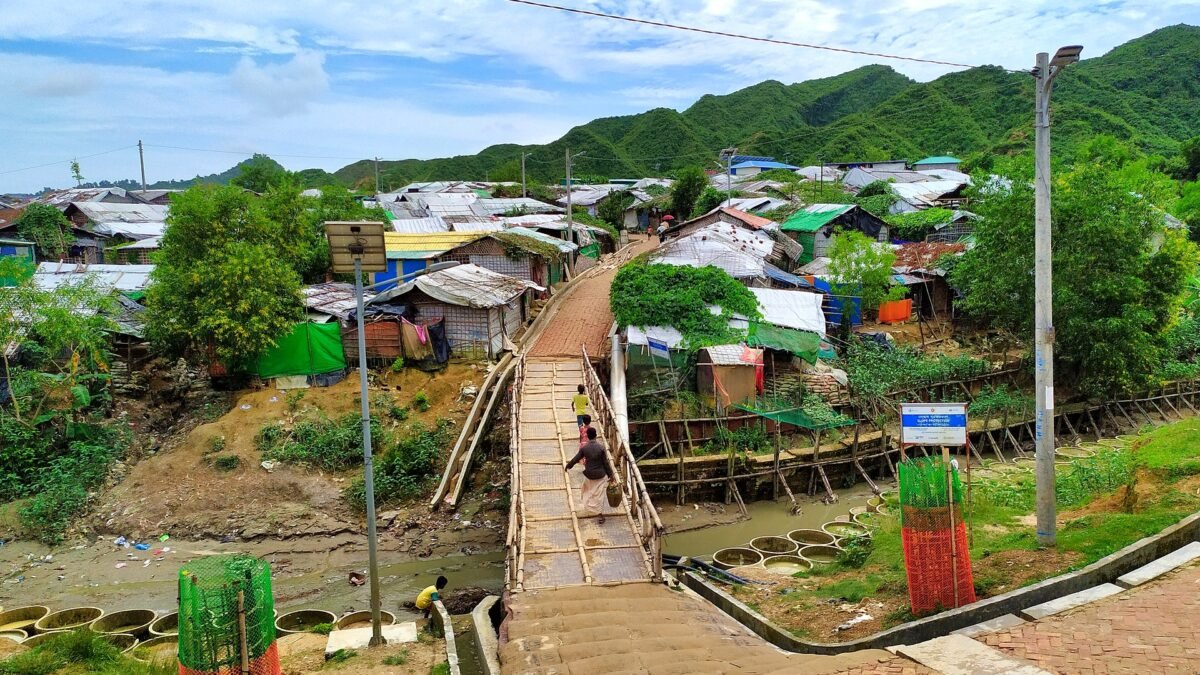
About 815,000 Rohingya in northern Rakhine were targeted by the operations, the court found, and the group was “clearly significant” and “substantial” for the purposes of the Genocide Convention. More than 740,000 people fled to Bangladesh in the weeks that followed. The camps at Cox’s Bazar, where most of them still live, now hold more than 1.2 million people and are the largest refugee settlements in the world.
The court also found that Myanmar’s military had “actively disseminated and promoted hate speech in a systematic and coordinated way,” portraying the Rohingya as “sub-human” and “a violent threat,” and that this contributed to a “climate conducive to targeting a group for destruction.” It found that regional rules requiring Rohingya to seek special permission to marry, and a two-child limit imposed on Rohingya families, were coercive measures intended at the very least to reduce births within the group — the conduct covered by Article II (d) of the Convention. It found that sexual violence was intended to “physically and mentally impair the willingness and ability of the population to procreate.”
Myanmar’s defence was that its forces were conducting legitimate counter-terrorism operations against a Rohingya insurgent group, the Arakan Rohingya Salvation Army, after attacks on security posts in August 2017 that killed twelve security personnel. The court rejected that defence. It found that the military did not distinguish between militants and civilians, and that the scale and nature of the atrocities “went well beyond what would be required to punish the population and are instead characteristic of an intent to destroy a substantial part of the group.”
The court also found that Myanmar had failed genuinely to investigate what happened, had refused to facilitate access to evidence and witnesses, and had destroyed crucial evidence — the finding that underlies its ruling that the January 2020 provisional measures order was breached. Four witnesses from the final week of August 2017 were found credible by the court, and many of their statements went unchallenged in cross-examination.
A case seven years in the making
The case was brought by The Gambia, a small West African country thousands of miles from Myanmar, which filed its application on 11 November 2019. It was the first time a state with no direct connection to the alleged crimes had asked the court to rule on genocide, and it was backed by the 57-member Organisation of Islamic Cooperation. The Gambia asked the court to declare that Myanmar had violated the Genocide Convention, to order reparations, and to secure the safe return of the refugees.
The court moved quickly at first. In January 2020, it unanimously ordered provisional measures requiring Myanmar to prevent acts of genocide, to prevent the destruction of evidence, and to report back on its compliance. In July 2022, it rejected Myanmar’s preliminary objections to the case proceeding. The hearings on the merits ran from 12 to 29 January 2026. Eleven states intervened in the proceedings — Belgium, Canada, the Democratic Republic of Congo, Denmark, France, Germany, Ireland, the Maldives, the Netherlands, Slovenia and the United Kingdom.
The bench that decided the case comprised fifteen elected judges plus two judges ad hoc: Navanethem Pillay, appointed by The Gambia, and Claus Kress, appointed by Myanmar. Pillay, a former United Nations High Commissioner for Human Rights, won the 2026 Nobel Peace Prize in October, weeks before the judgment was delivered. Her vote was with the majority on every one of the thirteen rulings.
The United States and Canada had already declared the atrocities against the Rohingya to be genocide, in 2022 and 2018 respectively, and their determinations were part of the political background to the case. But a government declaration is a political act. What the court delivered on Thursday is a judicial finding, final and binding, by the United Nations’ highest court. No state has ever been found by an international court to have committed genocide before. In the court’s only previous genocide case on the merits, in 2007, it found that Serbia had failed to prevent the Srebrenica massacre in Bosnia — but it did not find that Serbia itself had committed genocide. That distinction is what makes Thursday’s ruling historic.
The reactions: “a day of justice”
The first reactions came from the people the judgment is about. Yasmin Ullah, a Rohingya activist who sat in the court as part of The Gambia’s delegation, told Reuters: “Today is a day of justice. I am a survivor of genocide, and I stood in the Court as part of The Gambia’s delegation. Today the world’s highest court has looked at what was done to the Rohingya and named it for what it was. Genocide. Let me say that again … genocide, the crime of crimes. The Rohingya never needed a court to tell us what happened to us. We needed the world to hear it, and today it has.”
Wai Wai Nu, a Rohingya activist and executive director of the Women’s Peace Network, said: “For decades, the Burmese military tried to erase our identity, deny our existence, and dismiss our suffering. By finding that Myanmar committed genocide, ordering a guarantee of non-repetition, and ordering restitution and compensation, the world’s highest court has permanently shattered that state-sponsored lie.”
Nay San Lwin, a Rohingya activist and co-chair of the Arakan Rohingya National Council, said: “For the Rohingya, justice means the restoration of our citizenship, recognition of our identity, and our safe and dignified return home. Our struggle will continue until that day comes.”
Inside Myanmar, a 30-year-old Rohingya who asked not to be named for fear of reprisal told Reuters: “To begin with, I got chills when I heard the verdict that this was genocide. Even now, we still see hate speech on social media. I hope this judgment will lead the people of Myanmar to realize themselves that our country did commit genocide against the Rohingya, and in the future, I hope people will treat one another as human beings, without discriminating by religion or ethnicity and without looking down on anyone.”
In the camps at Cox’s Bazar, the judgment landed as something more personal than a legal ruling. Murshid Alam, who was twelve years old when he was driven from his home in Rakhine state and was shot in the ear during the escape, told CNN that the ruling was a “turning point.” “It is the difference between being told our history was a tragedy, and being told our history was a crime that must be answered for,” he said. Alam, now 22, works to educate and advocate for young people in the camps as founder of the Rohingya Youth Union. “Our generation has grown up in displacement. We have known nothing but statelessness,” he said. “The Rohingya do not want to live in refugee camps forever. We want to return to our homeland in Rakhine state with our rights, our citizenship, and our dignity fully restored.”
The United Nations’ human rights chief, Volker Türk, said: “This judgment clearly concludes the State of Myanmar stands responsible for one of the most egregious crimes known to humankind. The suffering, misery and humiliation inflicted on the Rohingya by the Myanmar State is a stain on the conscience of humanity. I salute the courage of the victims and survivors whose horrific experiences were before the Court. I commend the States that intervened in this case.”
Amnesty International said: “After years of denial, impunity and suppression of truth, this ruling is a historic and authoritative recognition of the atrocities committed against the Rohingya and a rare moment of justice for survivors, victims and their families.”
Maria Elena Vignoli, senior international justice counsel at Human Rights Watch, said: “Myanmar should swiftly comply with the court’s judgment and end its oppression of the Rohingya. Concerned governments should strongly support the Rohingya and promote justice for atrocities, press Myanmar’s junta to comply with the judgment, and ensure the safe and voluntary return of Rohingya refugees to Myanmar.”
James Goldston, executive director of the Open Society Justice Initiative, said: “At a moment when international law and the institutions that uphold it face growing pressure, the Court’s decision reaffirms the vital role they play in establishing truth, assigning responsibility, and protecting the values that bind our common humanity.”
Sheikh Hasina, who was Bangladesh’s prime minister at the time of the exodus, said: “Bangladesh played a central role in the investigations and in gathering crucial evidence from witnesses and survivors in the refugee camps. Those efforts have now come to a successful conclusion. This is a proud moment for Bangladesh.”
In Britain, Rushanara Ali and Jeremy Hunt, the Labour and Conservative co-chairs of the all-party parliamentary group on Burma, said: “The British government must resume regular rounds of sanctions against the Myanmar military and, as penholder on Myanmar at the UN Security Council, must bring a resolution to the Council compelling enforcement action.”
Rawan Arraf, executive director of the Australian Centre for International Justice, added a warning about how the atrocities were prepared: “The ICJ’s ruling on the genocide against the Rohingya is a landmark moment for accountability but it must also force us to confront the role technology can play in enabling mass atrocities. In Myanmar, social media algorithms helped amplify anti-Rohingya hatred and ethnic violence, demonstrating how technology can become a tool of persecution.”
Fortify Rights, which attended the judgment in the courtroom, said the court had found that Myanmar “had failed to take any significant steps to investigate and where appropriate hold accountable those responsible for the acts of genocide, had prevented and interfered with international investigations, destroyed crucial evidence, and failed to provide any remedies to the Rohingya victims of genocide.” It called the judgment “the first time the ICJ has found a state responsible for committing genocide.”
Myanmar’s military-backed government had not responded publicly by the time the judgment was reported. CNN said it had reached out to the government for comment. The head of the military during the 2017 operations, Min Aung Hlaing, is now the country’s leader after overthrowing the elected government in 2021, and has dismissed the Rohingya identity as “imaginary.” His government has shown little interest in allowing the Rohingya to return.
Analysis: Why It Matters
A word the court had never spoken before
The International Court of Justice is eighty years old. In all that time, it had never found a state guilty of committing genocide. It came close once, in the Bosnia case, and stopped short: Serbia had failed to prevent a genocide, the court said, but it had not committed one. That restraint was not an accident. The Genocide Convention sets the bar for state responsibility deliberately high, and the court has always been conscious that its judgments are final, with no appeal. Thursday’s ruling is therefore not just a verdict on Myanmar. It is the first time the court has been willing to say, of a state, that it intended to destroy a people. That is a Rubicon crossed, and every government watching the court’s other genocide case — South Africa’s case against Israel over the war in Gaza, in which more than 74,000 Palestinians have been killed, according to CNN — will have understood exactly what it means.
Nine to six is a verdict, not a consensus
The margin matters, and it would be dishonest to pretend otherwise. Six judges — more than a third of the bench, including the vice-president and two former presidents of the court — did not accept that the evidence proved genocidal intent. Myanmar will seize on that, and so will every government that fears the court turning its attention to its own conduct. But two things should be kept in view. First, the operative finding is the finding: nine votes is a majority, and the judgment is final and binding regardless of the dissent. Second, the dissenters were not a bloc defending Myanmar. Several of them voted for the orders that only make sense if grave crimes were committed — investigation, prosecution, restitution, compensation. The disagreement, on the face of the voting record, was about whether the evidence met the court’s exacting standard for proving intent to destroy a group, not about whether the Rohingya were slaughtered, raped and driven from their homes. The full dissenting opinions, when they are published, will show the reasoning. What they cannot do is unmake the finding.
Reparations are the part that changes lives
The headlines will rightly focus on the word “genocide.” But for the people in the camps at Cox’s Bazar, the most consequential part of Thursday’s judgment may turn out to be the orders on reparations. The court did not merely declare a violation and move on. It ordered Myanmar to let the displaced return safely, voluntarily and with dignity, to reunite families, to return property that was lost or damaged, and to pay compensation for damage that restitution cannot repair. It kept the question of how much compensation, and in what form, for itself, to be decided in later proceedings — and it gave Myanmar two years to report on what it has done. That structure matters. It means the case is not over. The court retains jurisdiction over the remedies, and Myanmar will have to come back and account for itself. For a community that has been told for decades that it does not exist, that it has no citizenship and no home, an order from the world’s highest court to restore its property, its families and its right to return is not symbolic. It is the first legal foundation for a future that is not a refugee camp.
The enforcement gap is now the whole story
And yet the honest truth is that the court has no army, no police and no power to make Myanmar do any of this. Its judgments are final and binding, but its orders are sent to the United Nations Security Council, which would have to decide to enforce them through a resolution — and the Council is the same body that has been unable to agree on almost anything to do with Myanmar for years. The general who commanded the military during the massacres now runs the country. His government has not even responded to the judgment. And the Rohingya’s homeland is not even under the government’s control: the Arakan Army, an ethnic armed group, controls the vast majority of Rakhine state, including the areas that border Bangladesh, and has itself been accused of abuses against civilians, while the military has responded to its territorial losses with airstrikes on markets and hospitals. So the question of what the Rohingya would return to is, as CNN put it, another question entirely. The judgment changes the legal reality. It does not, by itself, change the facts on the ground. Everything now depends on whether governments — the intervening states, the Security Council’s penholder, Bangladesh, the United States — treat the ruling as a verdict to be enforced or a statement to be admired and filed away.
The precedent reaches far beyond Myanmar
The timing of this judgment is impossible to ignore. It arrives at a moment when the idea of international justice is under open attack: the Trump administration is campaigning to “dismantle” the International Criminal Court, and its ambassador to the United Nations, Mike Waltz, warned last month against the ICJ lowering the threshold for a genocide verdict in this very case, claiming it could be “weaponised” against American soldiers. The court has now delivered its verdict anyway, and it has done so by the narrowest of majorities on the central question. That combination — a landmark finding, a divided bench, and a hostile political climate — is the real test of the institutions. If the judgment is enforced, even partially, it proves that international law can still bite. If it is ignored, it will be cited by every sceptic as proof that the court can speak but cannot act. And the precedent it sets will be read, line by line, by the lawyers in the Gaza case, by governments weighing whether to intervene in future cases, and by every military commander wondering how much the world will tolerate. The Rohingya waited nine years for a word. What the world does with that word, now that it has been spoken, is the next question.
What to Watch Next
- The full text of the dissenting opinions, which will show why six judges — including the vice-president and two former presidents — voted against the genocide finding, and whether their reasoning rests on the evidence or on the legal standard for intent.
- Myanmar’s formal response to the judgment, and whether the military-backed government engages with the court at all or dismisses the ruling outright, as it has dismissed every previous finding against it.
- Whether any member of the United Nations Security Council — with Britain as the penholder on Myanmar — brings a resolution to enforce the judgment, and whether it survives the Council’s divisions.
- The reparations phase: how the court decides the amount and form of compensation, and what Myanmar puts in the report it must file within two years on restitution and compensation arrangements.
- Whether the judgment changes anything for the roughly 520,000 Rohingya who remain in Myanmar, and for the more than 1.2 million in the camps in Bangladesh, including whether any safe, voluntary return becomes possible while the Arakan Army controls Rakhine state.
- What the ruling means for the court’s other genocide case, South Africa’s case against Israel over the war in Gaza, and whether the nine-to-six majority emboldens or cautions the judges hearing it.
- Whether governments that intervened in the case — including Canada, France, Germany, the Netherlands and the United Kingdom — follow up with sanctions, diplomatic pressure or support for enforcement, or treat their intervention as complete now that the judgment is delivered.
Sources
- CNN — UN top court finds Myanmar guilty of committing genocide against Rohingya minority
- Reuters — Reactions as top UN court finds Myanmar guilty of genocide against Rohingya
- Muslim Network TV — How ICJ judges voted on 13 rulings in Rohingya genocide case
- Fortify Rights — World Court Finds Myanmar Responsible for Rohingya Genocide, Failed to Hold Perpetrators Accountable
- Fros News — ICJ Finds Myanmar Acted with Genocidal Intent Against Rohingya
- Muslim Network TV — Nine ICJ judges find Burma responsible for genocide

About the Author — Abdul Mannan
Related Articles
Putin Rules Out Ceasefire Talks and Vows ‘Far More Painful’ Response After Ukraine’s Kerch Bridge Strikes
Vladimir Putin said Russia would no longer discuss a ceasefire with Ukraine after Kyiv's three strikes on the…
Iraq Strikes Last-Minute Deal to Avert Armed Clash With Iran-Backed Kataib Hezbollah Over Oil-Smuggling Stronghold
Iraq has reached a last-minute compromise with the Iran-backed militia Kataib Hezbollah, averting an armed clash over its…
Denmark Votes 109-0 to Ratify Trump’s Greenland Security Deal, Ending a Two-Year Standoff Over the Arctic Island
Denmark's parliament voted unanimously on Thursday to ratify a security agreement with the United States and Greenland, expanding…