
ESO Warns a Million SpaceX Satellites Would Fundamentally Alter the Night Sky for Everyone

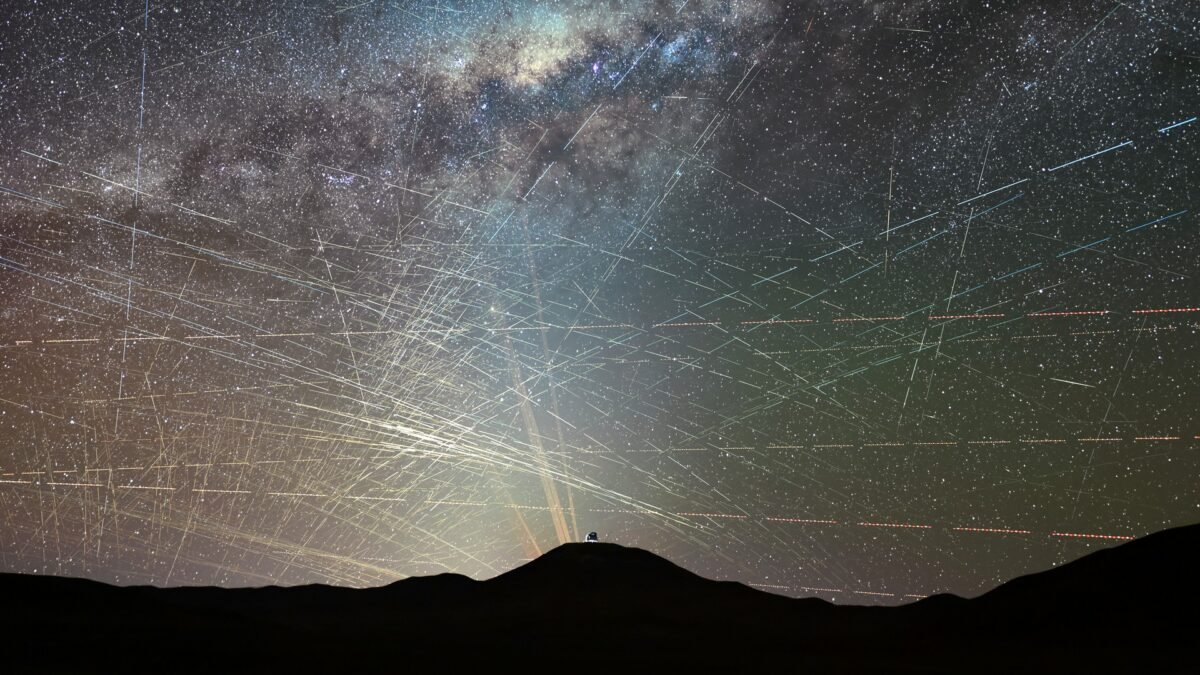
The European Southern Observatory has warned that the United States’ decision to allow SpaceX to launch up to one million satellites into low Earth orbit would not only damage astronomy but would fundamentally change the night sky for everyone on the planet. In a statement issued on 26 November 2026, the world’s leading ground-based astronomy organisation said the approval exposed the absence of any international system capable of weighing decisions whose consequences cross every national border.
According to the European Southern Observatory, known as ESO, the Federal Communications Commission (FCC), the United States regulator, announced on 25 November 2026 that it had authorised SpaceX to deploy a constellation of one million satellites that would work as data centres in space. The network, called Starmind, would carry powerful computer chips into orbit, run artificial intelligence calculations there using sunlight for power, and send the results back to Earth. It is the first time any regulator has approved a constellation of data centres in space, and by far the largest satellite network ever proposed.
“As approved, this project would not only have profound consequences for astronomy, but also fundamentally alter the night sky for everyone on the planet,” said Andreas Kaufer, the Director General of ESO. “We demonstrated these impacts in an extensive technical analysis, and raised them in a response to the US FCC, as did other organisations worldwide. This approval highlights the urgent need for international mechanisms capable of assessing activities whose impacts extend far beyond national borders and affect a global common good.”
The warning is not a casual objection. It rests on a peer-reviewed technical analysis led by ESO astronomer Olivier Hainaut and published in the journal Astronomy and Astrophysics earlier this year, which simulated the positions, motion and brightness of present and planned satellite constellations and measured what they would do to observations of the night sky. The study found that planned constellations, including SpaceX’s data centres, would hinder humanity’s ability to observe faint cosmic targets, including far-away galaxies, some Earth-like planets around other stars, and even asteroids that could be dangerous to Earth.
ESO operates some of the most powerful telescopes on Earth from the Atacama Desert in Chile, including the Very Large Telescope, the Atacama Large Millimeter/submillimeter Array, the 3.6-metre telescope, and the Extremely Large Telescope, a 39-metre instrument still under construction that is intended to drive astronomical discoveries for decades. Its statement was the most detailed institutional response yet to the FCC’s decision, and it landed alongside a chorus of criticism from the American Astronomical Society, the Royal Astronomical Society, the International Astronomical Union and the dark-sky campaign group DarkSky International.
What the FCC approved
The FCC’s authorisation, announced on Wednesday 25 November 2026, grants SpaceX permission to deploy up to one million satellites in low Earth orbit at altitudes of between 500 and 1,002 kilometres. The satellites would operate as orbital compute modules, processing artificial intelligence workloads in space and communicating with each other mainly through laser links, with Ka-band radio used for backup control. The licence runs for 15 years and sets a series of deployment milestones: SpaceX must put its first operational Starmind satellite into orbit by November 2033, deploy 10 per cent of the constellation, or 100,000 satellites, by November 2035, reach half the network by November 2038, and complete all one million by 2040. If the company misses a deadline, the authorisation becomes void.
The FCC presented the decision as a historic first in the race for artificial intelligence. According to the regulator, approving the constellation would help meet rapidly growing demand for AI computing, a demand that is already straining power grids, land and water supplies on Earth. FCC Chairman Brendan Carr, who was appointed by President Donald Trump, said in a statement that the approval came at a pivotal time in America’s development of what he called super intelligence, and that the commission was granting SpaceX authorisation to deploy one million orbital compute modules to process massive amounts of data for use back here on Earth.
Supporters of the concept argue that moving computing into space would ease pressure on Earth. Satellites in near-constant sunlight could generate their own solar power, and cooling could be handled by pumping liquid coolant through radiative panels instead of drawing vast quantities of water from rivers and reservoirs, as ground-based data centres do. The idea has also attracted other companies: Blue Origin is considering its own orbital data centre system, called Project Sunrise, which would involve 51,000 satellites, according to reports.
But the authorisation is conditional, not a blank cheque. The FCC’s own order noted that SpaceX’s orbital debris plan passed only for satellites below 600 kilometres. Four of the six planned orbital shells lie between 686 and 1,002 kilometres, and before launching there SpaceX must file a modification with a final debris plan. The regulator set no limit on the total number of satellites, and it declined to create one. Environmental review was not required, because an FCC order from October treats operations in space as outside United States territory. SpaceX has 30 days to decline the grant with its conditions; if it does not answer, it is taken to have accepted them.
The American Astronomical Society, which had asked the FCC in March to refuse the application, said it was “disheartened and dismayed” by the decision. The society said the proposed constellation would undermine decades of federal investment in astronomical facilities and “the ability of astronomers and the public to enjoy and study the night sky”. The satellite communications company Viasat and Amazon-owned Kuiper Systems were among those who also called on the regulator to deny the proposal. The FCC rejected the petitions to deny permission filed by stakeholders including the American Astronomical Society, and declined to impose additional conditions to protect astronomy.
The numbers behind the warning
ESO’s technical analysis, led by Olivier Hainaut, is the most detailed attempt yet to quantify what a sky full of satellites would mean for astronomy. The study simulated every present and planned constellation, from the roughly 14,000 satellites in orbit today, most of them Starlink, to proposals totalling more than 1.7 million new satellites, and measured their effects on direct trail losses, diffuse background light and scattered sky brightness.
The findings draw a sharp line. Constellations with up to about 60,000 member satellites have a negligible, but not imperceptible, effect on observations. Above that number, things change for the worse. According to the study, mega-constellations with a million satellites render trails pervasive, thereby affecting the majority of long exposures, the long camera exposures that are critical in modern astronomy for observing faint, distant objects.
The figures for SpaceX’s own constellation are stark. The study’s simulation of a one-million-satellite orbital data centre constellation found that a 300-second exposure with the spectrograph at the Very Large Telescope would contain, on average, more than eight satellite trails per image at the zenith, even 1.3 hours after the end of astronomical twilight, and more than 20 trails in some observations. More than half the sky would remain affected by satellite streaks at that hour of the night. The effect on a 15-second exposure with the 3-degree camera of the Vera Rubin Observatory, which is surveying the entire southern sky, would be similar. For the Rubin Observatory’s camera, the study found that dozens of trails would appear in each image taken two hours into the night, representing field-of-view losses of up to 28 per cent.
The Royal Astronomical Society estimated in March that an average image from ESO’s Very Large Telescope would lose 10 per cent of its data to satellite trails under the planned constellations. The Hainaut study also counted the satellites that would be visible to the naked eye. In its simulation of the SpaceX constellation, 1,867 satellites would be brighter than magnitude 7, the astronomers’ threshold for naked-eye visibility, and 247 would be brighter than magnitude 5. For comparison, only about 3,000 to 4,000 stars in the entire sky are that bright. In other words, on a clear night, a substantial share of the brightest points of light overhead would be machines rather than stars.
The study also examined a second, very different threat: Reflect Orbital, an American start-up that intends to launch large, mirror-like satellites to reflect sunlight down to Earth at night, illuminating solar farms and work sites after dark. A constellation of 5,000 such extremely bright satellites could elevate the scattered sky background by 20 to 30 per cent, the study found, and a population of 50,000 could increase it by 200 to 300 per cent. For the Rubin Observatory’s camera, the effects would be devastating. The study found that the 2030 constellation of 5,000 satellites would ruin 3 per cent of the camera’s field of view at the zenith and 12 per cent at 30 degrees elevation one hour after sunset, and that with the 2035 constellation of 50,000 satellites, the losses would be catastrophic, about 30 per cent at the zenith and 100 per cent at 30 degrees, meaning all of the observatory’s images would be entirely unusable.
ESO’s conclusion was a number: to safeguard astronomy, the total satellite population should remain below about 100,000 satellites, and every satellite should be fainter than magnitude 7, too dim for the naked eye. The FCC’s approval of a million satellites for a single company, on top of the constellations already planned, goes ten times beyond that limit.
What astronomers stand to lose
The stakes are not abstract. Long exposures are how astronomers see the faintest and most distant objects in the universe: galaxies whose light has travelled for billions of years, Earth-like planets around other stars, and the faint, fast-moving asteroids that could one day threaten Earth. When a satellite crosses a telescope’s field of view, it leaves a bright streak across the image, erasing whatever lay behind it. Astronomical telescopes can take short exposures and stack them to deal with some satellite light-streak pollution, but that has its limits, and for the most sensitive instruments a single bright satellite crossing the frame can saturate the detector and ruin the observation.
The Vera Rubin Observatory, whose 3.2-gigapixel camera is the largest ever built for astronomy, is designed to photograph the entire visible southern sky every few nights for a decade, tracking asteroids, exploding stars and the structure of the universe itself. Its wide field of view makes it especially vulnerable: a single satellite trail can cross a large fraction of the frame. The Extremely Large Telescope, ESO’s 39-metre flagship now rising on Cerro Armazones in the Atacama Desert, is meant to image Earth-like exoplanets directly and to study the first galaxies. Both instruments represent decades of work and billions of dollars of public investment, much of it by European governments through ESO, and both would operate under a sky that, as approved, would be crossed by satellites for most of every night.
The damage would not stop at optical astronomy. One million satellites would generate radio noise that would interfere with radio astronomy, which studies the universe at wavelengths invisible to the eye and tracks distant objects called quasars to measure the Earth’s rotation, measurements on which satellite navigation systems like GPS depend to remain accurate. The American Astronomical Society also warned of waste heat from the constellation raising the infrared background, a further source of interference for telescopes that observe the sky in infrared light.
There is also a human cost that has nothing to do with telescopes. The night sky is the oldest shared human experience, a common good that belongs to no country and to every culture that has ever looked up and told stories about the stars. ESO’s statement made that point deliberately: the project would “fundamentally alter the night sky for everyone on the planet”, not only for the astronomers who work in the Atacama Desert. DarkSky International, which campaigns against light pollution, has opened a letter to SpaceX calling on the company to conduct a full environmental review, commit to satellite invisibility standards, and engage with the scientific community before deploying a constellation of this scale. Its argument is that the night sky is being changed without the consent of the people who live under it.
Beyond astronomy: collisions, debris and the atmosphere
The warning from ESO reaches beyond the night sky. A million satellites would crowd low Earth orbit, and crowding raises the risk of collisions. One crash creates debris, and that debris causes more crashes, a cascade that could leave a cloud of junk in orbit and threaten the satellites on which modern life depends, from weather forecasting and navigation to communications and Earth observation. Adam Becker, an astrophysicist and the author of a 2025 book on the futures promised by Silicon Valley, told the Associated Press that the prospect of launching a million satellites to create data centres in space was “a fantasy”, adding: “It’s not going to happen.” He cited what he called the basic physical limits of shedding heat in a vacuum, and warned: “You could end up with a cascading set of space junk collisions.” Such crashes, he said, could leave “a cloud of debris” in low Earth orbit. “It also is pollution of the night sky to the naked eye,” he added.
SpaceX says it has a plan for dealing with dead satellites, and the FCC has accepted it, but the plan is really just disposal by atmospheric re-entry: satellites that fail or reach the end of their lives would be steered down to burn up in the upper atmosphere. That creates a second problem. In a 2021 paper published in the journal Nature, researchers warned that satellite re-entries from the Starlink mega-constellation alone could deposit more aluminium into the Earth’s upper atmosphere than meteoroids do, becoming the dominant source of high-altitude alumina. High-altitude alumina is a concern because it may trigger chemical reactions that destroy ozone, and the alumina itself is not destroyed in the process, so it could drive multiple cycles of ozone destruction. A million satellites, each replaced several times over the life of the constellation, would multiply that effect many times over, alongside the pollution from the thousands of rocket launches needed to put them there.
The scepticism about whether Starmind will ever be built at full scale is widespread. Even SpaceX’s supporters acknowledge enormous technical and financial obstacles. The satellites would be larger and brighter than Starlink’s, because they must carry powerful computer chips and cooling systems, and they would fly on higher orbits, which means they would remain illuminated by the Sun and visible from the ground for longer periods of the night. The company has not said publicly whether it intends to launch the full volume of one million satellites included in the approval. But astronomers argue that the approval itself matters, because it sets a precedent: if one company can be licensed for a million satellites without a comprehensive environmental review, others will follow, and the total number of satellites in orbit could grow far beyond anything the current rules were designed to handle.
The governance gap
At the heart of ESO’s statement is a question about who gets to decide. The FCC is an American agency, but the night sky is not American. It is a global common good, shared by every country and every person. Under Article IX of the 1967 Outer Space Treaty, space activities must be conducted with due regard to the interests of other states. Dr Filippo Marchetti, an associate professor of international law and technology at the University of Westminster, said the FCC’s decision to license up to one million SpaceX satellites was significant for its scale, noting that only around 17,000 active satellites orbit the Earth today and that low Earth orbit is a limited resource. “In such numbers, these satellites could affect astronomical observation of the sky from every country,” he said. “This is not only a concern for astronomers: for example, radio telescopes track distant objects called quasars to measure the Earth’s rotation, and satellite navigation systems like GPS depend on this to remain accurate. Yet the FCC rejected the petitions to deny permission filed by stakeholders like the American Astronomical Society, and declined to impose additional conditions to protect astronomy. While the license conditions are a domestic matter, the night sky is not, and it can be argued that Article IX exists for exactly this kind of situation.”
ESO’s own engagement with the process illustrates the gap. Earlier this year, when the FCC invited public comment on the SpaceX and Reflect Orbital proposals, ESO submitted a response based on its technical study, outlining the threats to astronomy, in collaboration with the United Kingdom’s Royal Astronomical Society and the International Astronomical Union. The American Astronomical Society did the same. Their objections were considered and rejected. No international body was consulted, because no international body has the authority to assess a project of this kind. ESO’s statement calls for international governance frameworks that balance innovation in space with the protection of the night sky, scientific research and the long-term sustainability of the space environment, and says that as space activities expand rapidly, decisions with global consequences should be informed by scientific evidence and assessed through appropriate international mechanisms. It does not name a specific forum or treaty body that should take on that role, and it does not say whether it will take any further step.
The problem is not new, but its scale is. Astronomers have warned for years about the growing number of satellites. Since 2019, the number of satellites orbiting Earth has increased rapidly to more than 14,000 today, dominated by SpaceX’s Starlink telecommunications satellites, and even at that scale the effects are already measurable: telescope images streaked with satellite trails, radio observations interrupted, and a night sky that is measurably brighter than it was a decade ago. SpaceX has taken measures to make its Starlink satellites less reflective, and those changes reduced the harm to research, though they did not remove it. But the Starmind constellation is, in the words of the American Astronomical Society, “a fundamentally different initiative” that is at odds with a spirit of cooperation and goodwill. The satellites would be larger, brighter and more numerous, on higher orbits, and the sheer number approved means the total count of streaks in images would pass what such mitigation can handle.
What happens next
For now, the approval is a licence, not a launch. SpaceX has until November 2033 to put its first operational Starmind satellite into orbit, and until 2040 to complete the constellation, and it must file a final debris plan for its higher orbital shells before it can launch there. The company has not publicly answered the astronomers’ objections, and it did not immediately respond to requests for comment from the Associated Press when the approval was announced. It has 30 days from the grant to decline it with its conditions.
The opposition is organising. DarkSky International is gathering signatures for its open letter to SpaceX, and the astronomical community is pressing for the kind of international assessment mechanism that ESO’s statement calls for. The European Southern Observatory’s own image of the problem, a one-hour stack of satellite trails over the Atacama Desert, shows what is already happening: hundreds of bright streaks crossing the Milky Way in a single hour, above the dome of the Extremely Large Telescope and the laser beams of the Very Large Telescope. That image was taken in October 2025, when there were roughly 14,000 satellites in orbit. The FCC has now authorised a constellation more than seventy times that size.
Whether Starmind is ever built in full, the decision has changed the terms of the debate. A single national regulator has approved a project that would transform a resource shared by all of humanity, without an environmental review and without the agreement of the countries whose skies it would fill. The astronomers who study the universe from the Atacama Desert have now put their objection on the record in the clearest terms available to them. The question they have raised, about who owns the night sky and who gets to decide what happens to it, will not be answered by a licence. It will be answered, if at all, by the international system they are calling for, and by whether the public notices what is being lost before it is gone.
Analysis: Why It Matters
This story matters because it is about something that cannot be bought back. A data centre can be dismantled. A rocket can be grounded. A night sky, once filled with a million moving lights, cannot be emptied by a change of policy. The FCC’s decision is best understood not as a verdict on a single company’s business plan, which may or may not survive contact with physics and finance, but as a precedent about who decides the fate of a shared human inheritance.
The first thing to notice is the asymmetry of the decision. The benefits of orbital data centres would flow mainly to one company and its customers: cheaper computing power, less pressure on terrestrial grids, and a spectacular demonstration of American technological leadership. The costs would fall on everyone else, and they would fall unevenly. Astronomers in Chile would lose observing time. Radio astronomers everywhere would lose quiet sky. People in the remotest deserts and the densest cities alike would lose a dark sky that has belonged to no one and therefore to everyone. That is why ESO, an organisation not known for dramatic language, chose the phrase “fundamentally alter the night sky for everyone on the planet”. It is a claim about fairness as much as about science.
The second thing to notice is how thin the process was. The FCC considered the objections of the world’s astronomers and rejected them, declined to impose additional conditions to protect astronomy, and required no environmental review, on the reasoning that operations in space fall outside United States territory. That reasoning is technically defensible and practically absurd: the satellites would be launched from American soil, licensed by an American agency, operated by an American company, and their effects would be felt in every country on Earth. The Outer Space Treaty, written in 1967 when a few dozen satellites circled the planet, requires states to conduct space activities “with due regard” to the interests of others. It was not written for a world in which one regulator could authorise a million satellites, and it shows.
The third point is that the science behind the warning is unusually solid. This is not a campaign group’s estimate. It is a peer-reviewed study by the astronomer who leads ESO’s own work on satellite interference, published in one of the field’s leading journals, and its central findings are quantitative and testable: eight satellite trails per image at the Very Large Telescope, a quarter of the Rubin Observatory’s field of view lost, a hard ceiling of about 100,000 faint satellites for the whole of low Earth orbit. The study also makes a point that should worry even those who do not care about astronomy: the same crowding that ruins telescope images raises the risk of collisions, and the same re-entries that dispose of dead satellites may damage the ozone layer. The night sky is the visible symptom; the disease is an orbital environment being filled faster than the rules for managing it can evolve.
None of this means that space-based computing is a bad idea in principle. The argument for moving data centres off Earth, that sunlight is free in orbit and cooling does not consume rivers, is a serious one, and it deserves a serious hearing. But a serious hearing is precisely what has not happened. There has been no comprehensive environmental review, no international assessment, and no agreement on how bright a satellite may be or how many of them the sky can hold. The FCC’s licence answers none of these questions. It simply grants the largest number ever requested and leaves the consequences to be discovered later.
What should be watched next is whether the gap ESO has identified begins to close. There are three tests. The first is whether SpaceX answers the astronomers at all, and whether it accepts any brightness or numbers limit voluntarily, as it did in part with Starlink. The second is whether other governments, particularly in Europe, where ESO’s member states fund the telescopes that would suffer most, press for an international mechanism, whether through the United Nations Committee on the Peaceful Uses of Outer Space, the International Telecommunication Union, or a new agreement altogether. The third is whether the public treats the night sky as something worth defending. DarkSky International’s open letter is a small test of that, but the larger test is whether people notice, and object, when the stars begin to compete with machines for space in the sky.
The image that accompanies ESO’s statement is worth a long look. It is a single hour over the Atacama Desert in October 2025: the Milky Way crossed by hundreds of satellite trails, the dome of the Extremely Large Telescope silhouetted below, the laser beams of the Very Large Telescope reaching up from 22 kilometres away. That was the sky with about 14,000 satellites in orbit. The FCC has now approved a constellation of one million. The astronomers are not asking for the satellites to disappear. They are asking for someone, somewhere, to decide how many is too many before the decision is made for us by the sky itself.
Sources
- European Southern Observatory — “ESO statement on approval of launch of one million space data centres” (26 November 2026)
- American Astronomical Society — Statement on the FCC approval of the SpaceX data centre constellation
- Associated Press via Phys.org — “FCC says SpaceX can deploy 1 million satellites for data centers in space. Scientists are skeptical”
- BBC Sky at Night Magazine — “Starlink approved for launch of one million satellites into Earth orbit to create data centres in space”
- DarkSky International — “A million satellites? Sign DarkSky’s open letter to SpaceX”

About the Author — Abdul Mannan
Related Articles
Hera Reveals Stadium-Sized Crater on Asteroid Dimorphos Left by NASA’s DART Impact
Four years after a NASA spacecraft deliberately slammed into a small asteroid to test whether humanity could push…
Los Angeles Just Told Google: Our Children Are Not Your Product
Los Angeles Unified quietly switched off Google's AI Overview on school devices, becoming the largest district in America…

Africa’s Coastal Cities Are Sinking, Satellites Reveal — Seven Million People at Flood Risk by 2050
Satellite radar shows Africa's coastal cities are sinking faster than global models assumed, putting more than seven million…