
Target Beats Forecasts as Shoppers Return, Raising Its Full-Year Outlook Ahead of the Holidays

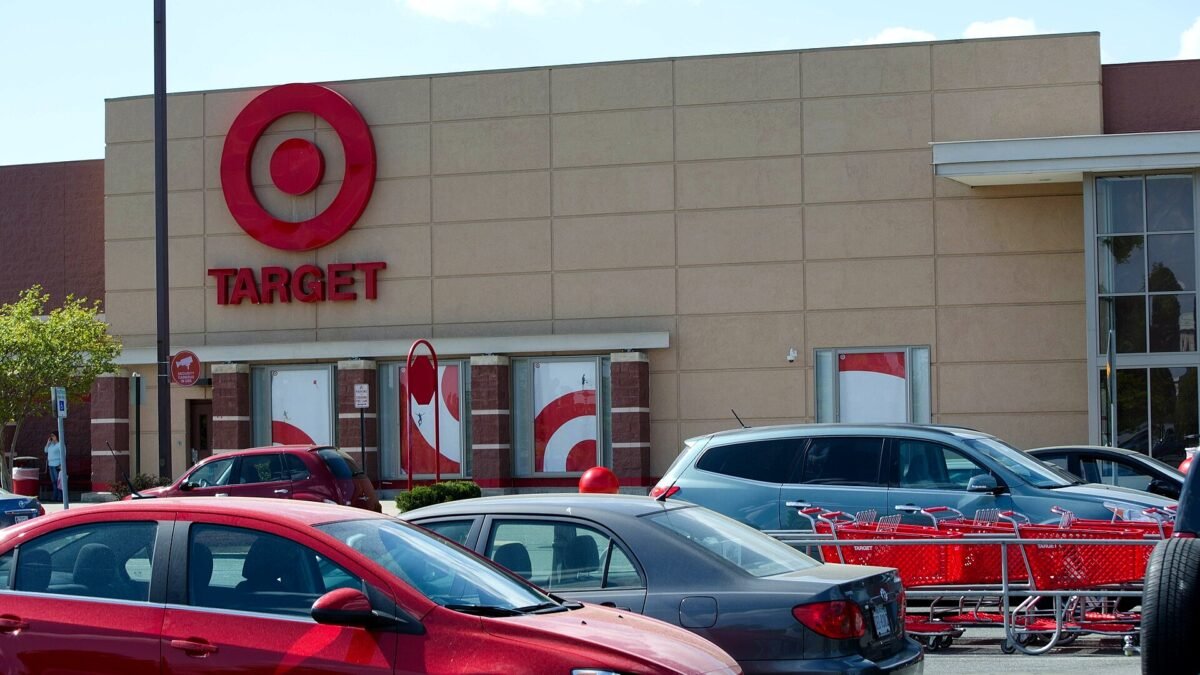
Target Corporation reported third-quarter earnings on Wednesday that beat Wall Street forecasts on every major measure, as shoppers returned to its stores in greater numbers and the retailer raised its full-year outlook for the third time this year, according to Reuters and the company’s own earnings release.
The Minneapolis-based retailer earned $2.65 a share in its fiscal third quarter, the three months ended 31 October, on both a GAAP and an adjusted basis, against $1.51 a share on a GAAP basis and $1.78 a share on an adjusted basis a year earlier, according to the company. Analysts had expected earnings of $2.08 a share, according to FactSet figures cited by the Associated Press. Net sales rose 7.1 per cent to $27.07 billion, ahead of the $26.5 billion analysts had expected, and net income jumped 75.8 per cent to $1.21 billion.
Comparable sales, which track stores and digital channels open for at least a year, rose 5.6 per cent, well ahead of the roughly 3.5 per cent analysts had forecast, according to Reuters. Sales in stores open at least a year rose 4.6 per cent and digital comparable sales rose 9.8 per cent, the company said. Comparable traffic rose 5.0 per cent, while the average transaction value rose only slightly, by 0.6 per cent, according to Zhitong Finance, meaning the growth came from more shoppers walking through the doors rather than from shoppers spending much more per visit.
The results included a $301 million pre-tax tariff refund, worth $0.50 a share. Stripping that benefit out, Target said, GAAP earnings per share would have risen 42 per cent and adjusted earnings per share 21 per cent from a year earlier, leaving underlying earnings of about $2.15 a share — still ahead of the $2.08 analysts had expected. Operating income in the quarter was $1.7 billion, against $0.9 billion on a GAAP basis and $1.1 billion on an adjusted basis a year earlier.
Target also lifted its guidance for the full fiscal year. It now expects net sales growth of about 6 per cent, up from about 5 per cent in its August guidance, and earnings per share of $10.65 to $11.40, up from $9.90 to $10.90. The new earnings range includes about $2.14 a share in tariff refunds recognised so far this year, according to the company. Analysts had been forecasting full-year earnings of $10.25 a share, according to FactSet figures cited by Barron’s.
The company said November net sales so far were in line with its full-year outlook and were accelerating from October trends, and that most of its new holiday items cost $20 or less. It also said it expected to spend between $5 billion and $6 billion on capital expenditure in 2027, on store remodels and technology, after investing around $5 billion this year to freshen its merchandise mix, according to Reuters.
Shares in Target rose 0.3 per cent to $160 in pre-market trading on Wednesday after closing at $159.53 on Tuesday, according to Barron’s. The stock has risen about 63 per cent in 2026, according to Barron’s and MarketWatch, reflecting investors’ belief that the turnaround under chief executive Michael Fiddelke is finally working. Even after that rally, the shares remain about 40 per cent below their record closing high of $266.39, reached on 16 November 2021.
A third strong quarter in a row
Wednesday’s report was the third consecutive strong sales quarter for Target, according to Reuters, and the latest step in its emergence from a multi-year slump. Fiddelke, a 49-year-old company veteran, took over as chief executive on 1 February, succeeding Brian Cornell, and the recovery has gathered pace in each quarter since.
In the second quarter, net sales rose 5.3 per cent to $26.5 billion and comparable sales rose 3.8 per cent, with transactions up 3.6 per cent and digital comparable sales up 8.7 per cent. That quarter’s headline earnings of $4.11 a share included a $994 million tariff refund worth $1.65 a share; without it, earnings still rose about 20 per cent. The third quarter built on that pattern: comparable sales growth of 5.6 per cent was stronger than the second quarter’s 3.8 per cent, and the beat against expectations was wider.
“One of the most important things is that we’re seeing growth driven by traffic; it’s not just one category, it’s the cumulative impact of all of what we’re doing that has guests picking Target more often — that’s encouraging,” Fiddelke said on a media call ahead of the report, according to Barron’s.
Target said guest satisfaction “meaningfully improved again in the third quarter”, as did on-shelf product availability, and that it had lowered prices on nearly 2,000 additional items in the period, according to Barron’s. The company has overhauled its grocery section, added new snacks, tried to punch up its toy and trading-card selections, redesigned its shopping carts and added “beauty studios” in more than 600 stores, according to MarketWatch.
Food and beverages, Target’s largest category, saw sales rise 6.6 per cent in the quarter, according to Reuters. But not every part of the store shared in the recovery. Revenue in apparel and accessories fell 3.8 per cent, while sales in home furnishings and decor rose only about 2.5 per cent. All of Target’s other major categories saw sales growth, according to MarketWatch.
“To be clear, we have more work to do, particularly in home and apparel, where we’ve made progress but are not satisfied with performance,” Fiddelke said on a call with reporters, according to MarketWatch.
Cara Sylvester, Target’s chief merchandising officer, said on the same call that the company had made “resets” in its home segment in categories such as decorative accessories, bedding, bath supplies and children’s home decor. Within apparel, she said, men’s, children’s and “young contemporary” lines had done well, while women’s clothing and the broader shoe section were still in the process of being fixed. Executives described turning the home section around as a “multiyear journey”, according to MarketWatch.
The tariff refund behind the headline
A large part of Target’s reported profit growth this year comes not from selling more goods but from money the United States government is returning to importers. The refunds follow the Supreme Court’s ruling on 20 February 2026, in Learning Resources, Inc. v. Trump, in which the court held 6-3 that the sweeping tariffs imposed by the Trump administration under the International Emergency Economic Powers Act were unlawful, because Congress, not the president, holds authority over tariffs.
The Court of International Trade subsequently ordered Customs and Border Protection to refund the duties collected under those tariffs, and the agency built a new system, known as CAPE, to process the claims. Roughly $166 billion in duties is at issue, with tens of billions already paid back to importers, according to reports on the refund programme. Walmart received about $2.9 billion, Target about $994 million in the second quarter and a further $301 million in the third, Ford about $1.3 billion and Home Depot about $730 million, according to those reports.
The refunds go to the importers of record — the companies that paid the duties at the border — not to the consumers who ultimately bore much of the cost through higher prices while the tariffs were in effect. Senator Elizabeth Warren has written to Target, Apple, Amazon, Nike, Motorola, Walmart and Energizer urging each company to pass the refunds along to consumers, according to the same reports. Target has not committed to doing so.
For investors, the refunds cut both ways. They have flattered Target’s headline earnings all year: of the $10.65 to $11.40 a share the company now expects to earn in fiscal 2026, about $2.14 comes from refunds recognised so far. Without them, the underlying guidance range would be roughly $8.51 to $9.26 a share. But the refunds are also finite — once the back catalogue of claims is paid, the benefit stops — so the market’s real question is whether the underlying business, stripped of the windfall, can keep growing. On Wednesday’s numbers, the answer for the third quarter was yes: even without the $0.50 a share, earnings beat expectations and sales growth was the strongest in years.
The tariff landscape itself has also changed since the court ruling. The administration replaced the struck-down tariffs with a 10 per cent global surcharge under Section 122 of the Trade Act of 1974, which hit its 150-day legal limit on 24 July 2026 and was allowed to lapse, and has since leaned on a two-tier tariff under Section 301 on about 60 trading partners. Tariffs imposed under other statutes, including Section 232 duties on steel and aluminium and Section 301 duties on Chinese goods, were not part of the Supreme Court ruling and remain in force.
A bellwether for the American consumer
Target’s results land at a sensitive moment for the American economy. Wall Street has just endured a four-session sell-off: on Tuesday the Dow Jones Industrial Average fell 848 points, or 1.6 per cent, the S&P 500 fell 1.0 per cent to its lowest level since July, and the Nasdaq Composite fell 0.7 per cent, as technology stocks swung sharply ahead of Nvidia’s earnings and a fresh round of technology outages hit the National Security Agency and Apple’s services. Against that backdrop, a clean beat from one of America’s biggest retailers stood out.
Target is also one of the first big reads on the American shopper heading into the holiday season. Walmart, the world’s largest retailer, reports its own third-quarter results on Thursday, giving investors the next piece of the picture before Black Friday on 27 November. Target’s statement that November sales were in line with its guidance and accelerating from October will be read closely alongside whatever Walmart says.
The broader backdrop is mixed. UK inflation accelerated to 3.6 per cent in October, and the US Federal Reserve held interest rates at 3.75 to 4.00 per cent at its October meeting, with markets pricing a high probability of an increase in December. The 10-year US Treasury yield has climbed above 5 per cent. In that environment, a retailer that can show shoppers returning, traffic rising and prices being cut on 2,000 items is telling a story investors want to hear — but it is also a story that depends on consumers keeping spending as borrowing costs stay high.
Analysis: Why It Matters
The beat was real, not just a refund
The easiest criticism of Target’s quarter — that the numbers were flattered by a $301 million tariff refund — does not survive contact with the numbers themselves. Strip the refund out entirely and earnings were still about $2.15 a share, ahead of the $2.08 consensus. Comparable sales of 5.6 per cent beat expectations by roughly two percentage points, and traffic rose 5 per cent. A refund can inflate a profit line; it cannot fill a car park. The refund is a real and important part of the story, and Target is right to disclose it prominently, but it is not the story. The story is that more Americans chose to shop at Target, in stores and online, than at any point in years. That distinction matters because it is the difference between a one-off accounting gain and a business that is actually healing.
Traffic is the turnaround’s proof
Retail turnarounds are easy to announce and hard to prove, and the proof is almost always traffic. A retailer can lift revenue by raising prices, by opening new stores, or by selling higher-margin goods to the same customers — none of which proves that shoppers have changed their minds. Target’s growth is coming from more visits: traffic up 5 per cent, with the average transaction barely moving. That is the hardest kind of growth to fake and the most encouraging kind to see, because it suggests the changes Fiddelke’s team has made — the grocery overhaul, the fuller shelves, the lower prices on 2,000 items, the beauty studios, the trading cards — are collectively giving people a reason to come back. It is also the third quarter in a row in which the pattern has held, which is what turns a good quarter into a credible turnaround. One quarter is a data point; three is a trend.
The refund flatters — and complicates — the story
None of which means the refund should be ignored. About a fifth of Target’s full-year earnings guidance — $2.14 of the $10.65 to $11.40 range — is money returned by the government, not earned at the till. That creates two problems. The first is comparability: next year, when there are no more refunds to recognise, Target’s headline earnings growth will look far weaker unless the underlying business accelerates further. The second is political: the refunds are, in effect, a transfer from shoppers who paid higher prices while the tariffs were in force to the companies that imported the goods, and senators are already asking why none of it is being passed back. Target’s answer so far has been to cut prices on 2,000 items, which is something, but it is not a refund to the shopper. The company will have to manage that argument carefully, because a windfall that looks like profiteering can undo the goodwill a turnaround depends on.
Apparel and home are the unfinished half
The quarter also showed exactly where the turnaround has not yet reached. Apparel and accessories sales fell 3.8 per cent, and home furnishings grew only about 2.5 per cent — the two categories Target’s own chief executive says he is “not satisfied” with. That matters more than it might seem, because home and apparel are precisely the categories that distinguish Target from Walmart and Amazon. Nobody goes to Target for the cheapest tin of beans; they go for the sense that the store has taste. UBS analysts said this month that those two sections would be crucial to driving the next round of growth, and they were right. Food and beverages can bring people through the door, but it is the discretionary categories — the dress, the lamp, the bedding set — that carry the margin and the brand. Fiddelke calls the home fix a “multiyear journey”, which is honest, but it also means the hardest part of the job is still ahead.
The holiday test starts now
Everything Target has built this year will be judged in the next five weeks. The company says November sales are in line with guidance and accelerating, and that most new holiday items cost $20 or less — a deliberate pitch to shoppers watching their budgets. But Black Friday on 27 November and the weeks after it are where retail years are made, and where a fragile recovery can still be broken by a weak season. Walmart’s numbers on Thursday will give the first indication of whether Target’s strength is a Target story or an American consumer story. If both retailers report strong holiday demand, the narrative of a resilient consumer holds; if Target stands alone, the questions will return. The $5 billion to $6 billion of capital spending planned for 2027 is a bet that the recovery is durable. The holiday season is the test of whether that bet is justified.
What to Watch Next
- Walmart’s results on Thursday: the world’s largest retailer reports its third quarter the day after Target. If Walmart also beats forecasts and raises guidance, it will confirm broad consumer strength; a miss would suggest Target’s gains are company-specific.
- Black Friday, 27 November: the first hard read on holiday demand. Target says most new holiday items cost $20 or less and November sales are accelerating; footfall and sales over the Black Friday weekend will show whether shoppers are spending or merely browsing.
- December trading updates: any update from Target or its rivals on December sales will set expectations for the fourth quarter, traditionally the biggest of the year, before the full results arrive.
- Fourth-quarter results in early 2027: the full holiday-season numbers, and the first guidance for fiscal 2027 without the cushion of tariff refunds, will show whether the underlying business can stand on its own.
- The apparel and home reset: watch for evidence that women’s clothing, shoes and home furnishings are improving. Fiddelke has called the home fix a multiyear journey; investors will want to see the declines narrowing quarter by quarter.
- Capital spending execution: Target plans $5 billion to $6 billion of investment in 2027 in store remodels and technology. Whether that spending lifts sales or simply lifts costs will be a key test of management’s judgement.
- The tariff-refund debate: pressure from lawmakers to pass refunds back to consumers is growing. Any commitment by Target — or any move by Congress — would affect both the company’s margins and its public standing.
Sources
- Reuters — “After another strong quarter, Target lifts annual sales growth target to 6%”
- Barron’s — “Target Earnings Get Boost From Rising Store Traffic and a Tariff Windfall”
- MarketWatch via Morningstar — “Target is seeing a revival — but it still needs to work on shoes and women’s clothing”
- Target Corporation — “Target Corporation Reports Third Quarter Earnings” (company press release)
- Political.org — “Businesses Pocket Billions in Tariff Refunds While Consumers Who Paid Higher Prices Are Left Empty-Handed”
- National Taxpayers Union — “Are the $2,000 Tariff Rebate Checks Real? Live Status Tracker” (Supreme Court ruling, 20 February 2026)

About the Author — Abdul Mannan
Related Articles

Dow Drops 849 Points as Global Sell-Off Deepens and S&P 500 Hits Lowest Close Since July
Wall Street's four-day slide deepened on Tuesday as the Dow fell 849 points, the S&P 500 hit its…

Nvidia Board Rules Out Jensen Huang’s Return as CEO After Record $115.8 Billion Quarter
Nvidia's board has formally ruled out bringing back Jensen Huang as chief executive, hours after the chipmaker reported…

Carney and Xi Widen Canada-China Trade Deal as Ottawa Cuts Its Reliance on the United States
Canada and China have agreed to cut tariffs on a further C$400 million of Canadian exports and extend…