
Cryptography Trick Finds a Pulsar Spinning 261 Times a Second in 15 Years of NASA Fermi Data

A dead star spinning 261 times every second hid in plain sight for 15 years. Astronomers have now found it — not with a bigger telescope or a faster supercomputer, but with a trick borrowed from the mathematics of code-breaking. The discovery, published on 19 November in the journal Physical Review Letters, shows that a method adapted from cryptography can search the archives of NASA’s Fermi Gamma-ray Space Telescope about a million times faster than the best techniques used until now, according to NASA and the Max Planck Institute for Gravitational Physics.
The new pulsar, catalogued as PSR J1622−7204, is an isolated neutron star rotating 261 times per second. The team behind the find needed the equivalent of just 10 hours of computing time on a single standard processor core to locate it in 15 years of data from Fermi’s Large Area Telescope. By comparison, the previous state-of-the-art method failed to detect the same object even after consuming enough computing power that a single processor would have needed around 600 years to finish the calculation, according to the paper’s abstract.
The result matters for more than one star. The researchers believe the same approach can unlock a hidden population of pulsars — perhaps tens or even hundreds of them — sitting unrecognised in Fermi’s public archive, including a class of objects in binary star systems that astronomers have long considered almost impossible to find. The method is set to be folded into Einstein@Home, the volunteer computing project that puts idle home computers to work on the data, in a combination the team hopes will turn a slow, expensive hunt into a routine one.
“We don’t see every rotation from the pulsar, and we can’t just count the rotations to work out where the photon came from,” said lead author Daniel Pook-Kolb, a scientist at the Max Planck Institute for Gravitational Physics — the Albert Einstein Institute, known as the AEI — in Hannover, Germany. “We have a four-dimensional grid, and we must search each direction with millions of trials in it. There’s just not enough computing power on Earth to do it.”
A million-fold shortcut
The paper, titled “Gamma-Ray Pulsar Discovery Using a Lattice-Based Method”, was published as an Editors’ Suggestion in Physical Review Letters and featured in the American Physical Society’s Physics magazine. Its authors are Pook-Kolb and Colin J. Clark and Bruce Allen of the AEI, Dotan Gazith and Barak Zackay of the Weizmann Institute of Science in Israel, and Erik Agrell of Chalmers University of Technology in Sweden. The paper was received in May 2026, revised in July and accepted in September before its publication on 19 November, according to the journal.
The core insight came from Gazith and Zackay, who realised that the search for a gamma-ray pulsar could be recast as a geometry problem: finding the shortest vector in a high-dimensional lattice, a regularly spaced grid of points. That is the same class of problem that cryptographers study when they design and test encryption meant to resist code-breaking by future quantum computers. The algorithms built for that purpose — tools for identifying short vectors in lattices — turned out to be exactly what the pulsar search needed.
“We have nothing to do with cryptography in our analysis here, but those algorithms can help us solve the problem of searching for pulsars in our data,” Gazith said, according to NASA.
The practical difference is stark. The team began by selecting just 80 gamma-ray photons from among those most likely to have come from the pulsar. Each trial run of the new algorithm took about five minutes on a single processor core — work that, as the AEI noted, is easily achievable on an ordinary laptop. Once the algorithm flagged a candidate, the researchers fed in the full Fermi data set, and the signal that emerged was so strong that it could not have been a chance occurrence, according to NASA.
In total, the pulsar was identified using roughly 16,000 photons detected by Fermi over about 15 years, and the initial screening took around 100 minutes on a standard workstation. The previous best method, a semicoherent search, had failed after an estimated 600 CPU years of effort. The new approach, the researchers reported, is roughly a million times faster.
Why gamma-ray pulsars are so hard to find
A pulsar is a rapidly spinning neutron star — the collapsed, city-sized core left behind when a massive star dies — that sweeps beams of radiation across space like a lighthouse. When one of those beams points at Earth, telescopes see a regular pulse. Finding such objects in gamma-ray data is extraordinarily difficult, and the reasons are physical as much as computational.
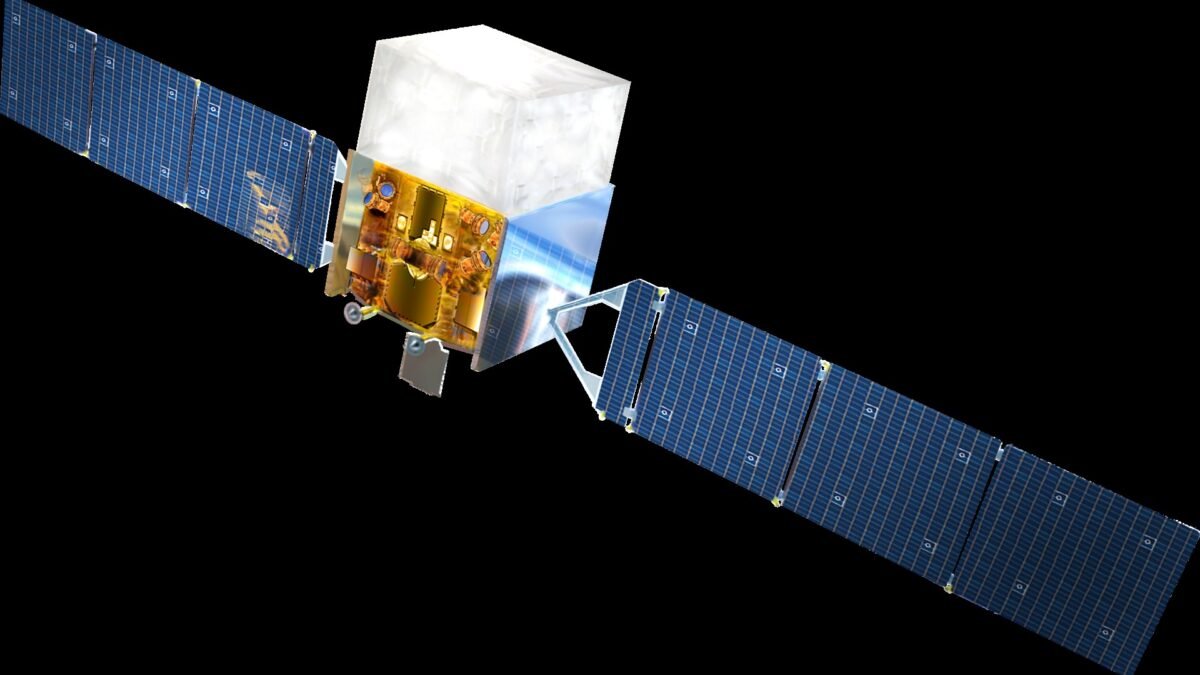
Fermi, launched in 2008, surveys the entire sky every three hours, observing the universe in gamma rays, the highest-energy form of light. But it captures only a tiny fraction of the photons a given pulsar emits — typically only about one photon per hundred million rotations, according to the paper. Those few photons arrive mixed in with background noise from other gamma-ray sources and from the universe at large.
To extract a signal, researchers must guess several unknowns simultaneously: how fast the star spins, how quickly that spin is slowing down, and precisely where the star sits in the sky. Searching every possible combination would require an impossible number of computations. Until now, scientists have coped by breaking the Fermi data into smaller chunks and analysing them with the distributed volunteer computing project Einstein@Home. Even with volunteers around the world contributing their computers’ unused processing power, it typically took the equivalent of hundreds of computer-years to identify a single pulsar — and the project has so far discovered more than 80 new pulsars that way, according to the AEI.
PSR J1622−7204 was hiding in a source that astronomers had already flagged as suspicious. The team hunted for pulsations from the unassociated gamma-ray source 4FGL J1622.2−7202, whose spectral and other properties had long suggested that it might host a pulsar. The new method found the star in about one per cent of its trial runs — and each run took under five minutes on one CPU core, making it, in the paper’s words, “by far the least computationally expensive successful blind gamma-ray pulsar search to date”.
The pulsar itself is a millisecond pulsar, a class of neutron star that spins hundreds of times per second. At 261 rotations a second, it completes a full turn roughly every four milliseconds. Such objects are among the most precise natural clocks known, and astronomers prize them as tools: networks of millisecond pulsars are used as a galaxy-scale detector for low-frequency gravitational waves, and individual pulsars serve as laboratories for physics under conditions no laboratory on Earth can reproduce.
Open data made the discovery possible
The discovery would not have happened without NASA’s longstanding policy of making its science data freely available to anyone, NASA said. After an initial one-year calibration period, all Fermi data became fully public and continues to be released as soon as it is processed. That openness allowed researchers from outside the Fermi mission — including a team whose core idea came from cryptography — to apply a completely new approach to the same archive.
“The nice thing about NASA data is it’s all open,” said Clark, an astrophysicist at the AEI who co-authored the study. “All 18 years of Fermi data have been made public, and the data just keeps growing.”
The mission’s catalogue has grown from a few hundred gamma-ray sources to thousands as new findings emerge from fresh ideas applied to old data, according to NASA. The Fermi team also supports the community with open software and tools, including the Fermitools package, which the pulsar team used to prepare its data set before beginning the analysis.
“Any search that one team is doing, another team can just go and do that and check the search,” said Elizabeth Hays, the Fermi project scientist at NASA’s Goddard Space Flight Center in Greenbelt, Maryland. “It’s made all of the science better.”
That reproducibility is part of why the result carries weight. The claim does not rest on a single group’s private pipeline: the data is public, the paper is peer-reviewed, and the method is described in full. Other teams can repeat the search, test the algorithm on other sources, and check whether the speedup holds — exactly the kind of scrutiny that has made the Fermi archive one of the most productive data sets in astronomy.
The next frontier: pulsars in binary systems
The team’s next goal is more ambitious still: finding pulsars in binary systems, where a pulsar orbits a companion star. Those discoveries have long been considered out of reach, because the companion star’s gravity distorts the signal in ways that have made the pulsars essentially impossible to discover with traditional methods.
“We know that there are probably tens or maybe even hundreds of these pulsars in the data set that we just couldn’t find,” said Clark, who leads a research group at the AEI. “The next goal is to extend the searches and use the combination of the new algorithm and the crowdsourced computing power from volunteers in our Einstein@Home program to hopefully find many new pulsars that we think should be there.”
Binary pulsars are especially valuable. A pulsar orbiting another star lets astronomers measure masses, test general relativity in strong gravitational fields and probe how binary systems evolve. The most famous binary pulsar, discovered in 1974 by Russell Hulse and Joseph Taylor, provided the first indirect evidence for gravitational waves and won the 1993 Nobel Prize in Physics. Finding more of them in gamma rays — a wavelength that can reveal systems invisible to radio telescopes — could add a new population to that work.
The researchers also plan to search the publicly available Fermi data for further examples of rapidly rotating objects, according to the AEI. The method’s authors expect that, using the new algorithm and Einstein@Home, they will be able to find gamma-ray pulsars in binary systems that have hitherto been almost impossible to detect. The paper notes that the approach may enable the discovery of many new gamma-ray pulsars, including in binary systems, “a previously intractable problem without detailed prior knowledge of the orbital parameters”.
Analysis: Why It Matters
A borrowed idea beats a bigger machine
The most striking thing about this discovery is what it did not require. No new telescope was launched. No supercomputer was booked. The data had been sitting in a public archive for 15 years, and the previous best method had already failed on it after the equivalent of six centuries of computing. What changed was the shape of the question.
That is a pattern worth noticing, because it runs against the grain of how big science usually advances. The default answer to a hard search problem is more computing power: more cores, more volunteers, more time. The lattice method instead reframed the search itself, turning an exhaustive scan of a four-dimensional grid into a geometry problem that cryptographers had already learned to solve efficiently. The million-fold speedup did not come from hardware. It came from recognising that two unrelated fields were, underneath, solving the same problem.
It is also a reminder that the most valuable scientific infrastructure is not always the newest instrument. Fermi has been in orbit since 2008, and its data is now old enough to vote. Yet the archive keeps yielding discoveries, because each new analytical idea reopens the same photons to a fresh question. The telescope’s legacy may end up being measured less in the sources it catalogued at launch than in the discoveries other people keep making from its data decades later.
Open data is a discovery engine, not a courtesy
NASA’s open-data policy is often described as a matter of transparency or public accountability. This result shows it as something more practical: a research strategy. The team that found PSR J1622−7204 was not part of the Fermi mission. Its core insight came from cryptography, a field with no obvious connection to gamma-ray astronomy. No mission scientist would have been expected to look there, and no closed data set would have let outsiders try.
The contrast with how some modern data is handled is sharp. Large private data sets — in astronomy and far beyond it — are increasingly held behind access agreements, embargoes and commercial terms. Fermi’s model, in which all data becomes public and stays public, allowed a small team with an unusual idea to outperform the best-funded search running on the same archive. That is not a sentimental argument for openness. It is an empirical one: the open archive found a pulsar that the closed, expensive search missed.
There is a cost argument too. The previous method’s 600 CPU years represent real electricity, real hardware and real carbon. A search that runs in 10 CPU hours on a laptop is not merely faster; it is cheaper by orders of magnitude, and it puts the work within reach of researchers and institutions that could never afford a supercomputer allocation. If the method generalises, the savings compound across every future search.
The binary pulsar prize is the real test
Finding one isolated pulsar is a proof of concept. Finding binary pulsars would be a transformation. Astronomers have long believed that Fermi’s data contains pulsars orbiting companion stars, but the orbital motion smears the signal in ways that defeat conventional searches. Each additional unknown — the orbit’s period, its shape, its orientation — multiplies the search space beyond what brute force can handle.
The lattice method’s promise is that it collapses that space. If it works for binaries as it did for PSR J1622−7204, the payoff could be substantial: new tests of general relativity, new measurements of neutron star masses, and new insight into how these extreme systems form and evolve. The team’s stated plan to combine the algorithm with Einstein@Home’s volunteer computing is the right pairing — a smarter search running on a crowd of ordinary machines, rather than a dumber search running on a supercomputer.
It is worth keeping the scale in perspective. One pulsar does not rewrite astrophysics, and the method still has to prove itself on the harder binary problem. But the history of pulsar astronomy is a history of single discoveries that opened new fields: the first pulsar in 1967, the first binary pulsar in 1974, the first millisecond pulsar in 1982. Each began as one object in one data set. PSR J1622−7204 is unlikely to be the last product of this method — and if the team’s estimate of tens or hundreds of hidden pulsars is right, the archive may be about to get a great deal busier.
What the numbers really mean
The headline figure — a million times faster — deserves a careful reading. It compares the new method’s roughly 10 CPU hours with the roughly 600 CPU years the previous method would have needed, and the paper is explicit that the comparison is against the semicoherent search that failed. A million-fold improvement in a search does not mean a million-fold improvement in astronomy as a whole; confirmation, follow-up and interpretation still take human time. But as a measure of how much computational waste the old approach carried, it is a striking one.
Equally important is what the discovery says about the value of old data. The photons that revealed PSR J1622−7204 were collected over 15 years, most of them long before the method that found them existed. In an era when new missions are judged by their first results, Fermi’s second decade is a quiet argument for patience: sometimes the discovery is not in the next observation, but in the archive, waiting for the right idea.
What to Watch Next
- The binary search: whether the team extends the lattice method to pulsars in binary systems, and how quickly the first binary gamma-ray pulsar emerges from the Fermi archive.
- Einstein@Home integration: how the lattice pipeline is folded into the volunteer computing project, and whether the combination accelerates the discovery rate beyond the 80-plus pulsars found so far.
- How many are hiding: whether the team’s estimate of tens or hundreds of undiscovered pulsars in the Fermi data holds up as the search widens to new sources.
- Follow-up observations: whether radio telescopes pick up PSR J1622−7204, which would pin down its distance, its environment and its precise spin-down behaviour.
- The method beyond pulsars: whether the lattice approach is adapted to other needle-in-a-haystack searches in astronomy, from gravitational-wave signals to fast radio bursts.
- Fermi’s continuing haul: what else the 18-year public archive yields as new analytical methods are applied to it, and whether other “impossible” searches fall the same way.
- Peer response: how the wider pulsar community tests and adopts the technique, and whether independent teams reproduce the speedup on other unassociated Fermi sources.
Sources
- NASA Science — “NASA Science Data Powers New Method to Discover Hard-to-Find Pulsars”
- Physical Review Letters — “Gamma-Ray Pulsar Discovery Using a Lattice-Based Method” (Pook-Kolb et al., 19 November 2026)
- Max Planck Institute for Gravitational Physics (Albert Einstein Institute) — “Finding gamma-ray pulsars a million times faster”
- TML News — “New Fermi Pulsar Spins 261 Times Each Second”

About the Author — Abdul Mannan
Related Articles

Astronomers Watch a Giant Star Swallow Its Companion in Andromeda in the First-Ever Observed Stellar Merger
For the first time, astronomers have watched a giant star swallow its smaller companion whole — a seven-year…

Japan’s Fugaku Supercomputer Breach Widens: 430 Stolen Keys Confirmed as RIKEN Treats 4,222 Users’ Data as Leaked
RIKEN confirms intruders stole 430 credentials — including 233 SSH private keys with no passphrase — from Japan's…

Astronomers Find a Triple Star System 28 Light-Years Away That ‘Should Not Exist’
Astronomers hunting for planets around a red dwarf 28 light-years away found a triple star system with two…