
Hakeem Jeffries Wins Speaker Nomination 251-11 as Democrats Prepare to Make Him the First Black Speaker in US History

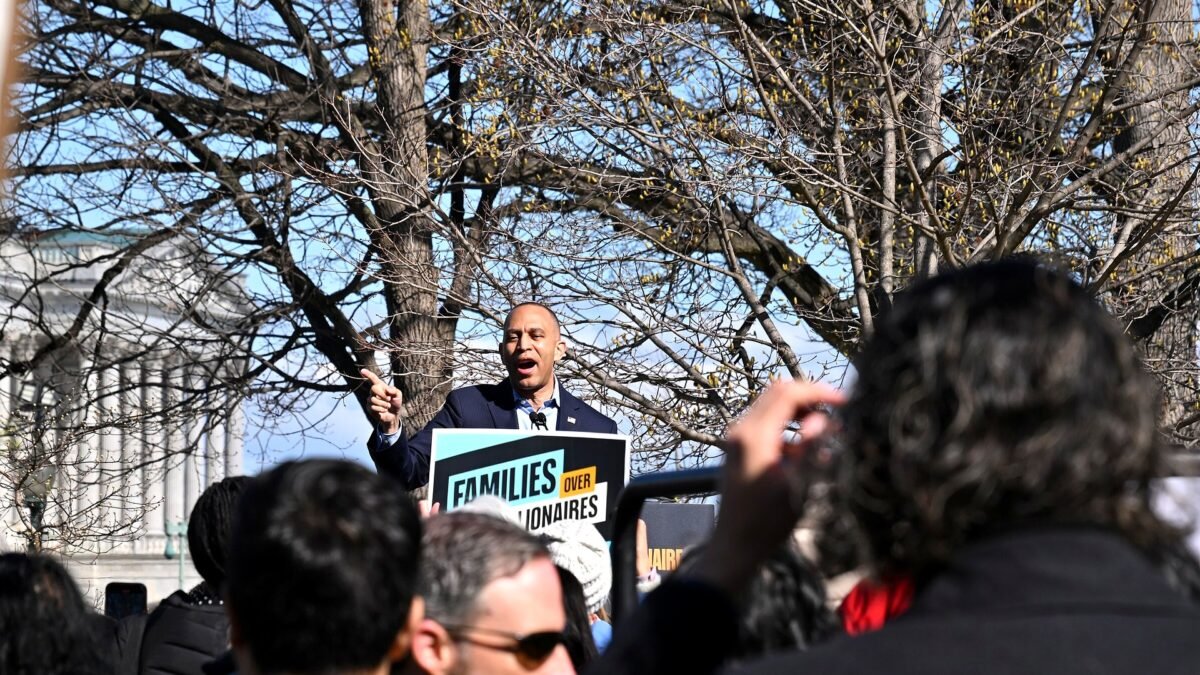
House Democrats have voted to nominate Hakeem Jeffries as the next Speaker of the House, putting the 56-year-old Brooklyn congressman on course to become the first Black Speaker in the history of the United States Congress when the new House meets on 3 January 2027.
Jeffries won the closed-door secret-ballot vote on Wednesday, 18 November, by 251 votes to 11, according to CNN and the Wall Street Journal, which cited people familiar with the count. Two members did not vote, according to the New York Post. The result was never in serious doubt, but its scale matters: only 11 of the 262 Democrats who cast a ballot withheld their support, and Jeffries now needs only to survive the formal floor vote in January to take the gavel.
“People of this country are demanding big, dramatic and transformational change. The status quo is unacceptable. And we’re committed to delivering in a meaningful way the type of change that the American people deserve,” Jeffries told reporters after clinching the nomination, according to CNN.
The Speaker is second in line to the presidency, behind only the vice president, and the post carries control of the House floor: what gets voted on, when it gets voted on, and which investigations the chamber pursues. If the full House elects him in January, Jeffries will take charge of the largest Democratic House majority since the 1990s, a caucus swollen by a midterm sweep that flipped more than 40 Republican-held districts, according to USA Today.
Jeffries has led House Democrats since 2023, when he succeeded Nancy Pelosi as the party’s top House figure. He is the first Black person to lead a party in either chamber of Congress. The speakership would be the next, and far larger, first.
The vote that was never close — and the eleven who said no
The nomination had been expected to be a formality. Democrats are set to hold roughly 260 seats in the next House, according to the Wall Street Journal, and USA Today put the figure at the same level. With a majority that large, it would take the defection of more than 40 Democrats to block Jeffries on the floor, and his allies said privately that he took nothing for granted anyway, meeting face to face with incoming members who had refused to commit and sitting down with every major faction of the caucus — the centrists, the New Democrat Coalition, the Blue Dog Caucus and the Congressional Progressive Caucus — before the vote.
Moments before the formal vote, Jeffries received a powerful endorsement inside the room from Representative Jim Clyburn of South Carolina, a longtime ally and one of the most senior members of the Congressional Black Caucus. “Hakeem is interested in headways and not headlines,” Clyburn declared in his signature baritone, according to two people in the room cited by CNN, delivering a speech that one of them described as powerful as the caucus formally nominated the nation’s first Black speaker.
Former Speaker Nancy Pelosi, who faced her own defectors during her leadership runs, downplayed the impact of the 11 Democratic “no” votes. “I’m glad he took the vote so people could see how small the opposition was to him,” she said, according to CNN. “Don’t make a big deal. Each one of them is important. As 11, not so important compared to 250 some votes that he received.”
The 11 dissenters were not a random collection. Seven of them were newly elected ultra-progressive members who had refused to commit to Jeffries ahead of the vote, demanding concessions that included votes on Medicare for All and a ban on arms sales to Israel. In a joint statement, the seven said they voted “no” because they are still seeking commitments from Jeffries on key priorities, including votes on Medicare for All and ending what they called “the genocide in Gaza”, according to CNN. The seven are Representatives-elect Darializa Avila Chevalier of New York, Adam Hamawy of New Jersey, Frederick Haynes of Texas, Melat Kiros of Colorado, Donavan McKinney of Michigan, Chris Rabb of Pennsylvania and Claire Valdez of New York.
Democratic Representative-elect Don Leonard told CNN that he also voted against nominating Jeffries, saying he wants commitments that Jeffries will prioritise key issues like money in politics and blocking United States aid to Israel. “We’re looking for a strong commitment to end the Citizens United this Congress through a 28th Amendment, and we’re looking to call a vote on US aid to Israel,” Leonard said. “Until I get confirmation on those votes he does not have my support. We’ve got until the first week of January, I’m still holding out hope.”
Valdez later told CNN that she needed to “stand up” for the voters who elected her earlier this month. “I think there’s a lot that’s still on the table right now, and I’m really eager to continue conversations and fighting for everything we can at this moment,” she said.
Asked about the defectors, Jeffries would say only: “Our job is to fight MAGA extremism, not each other.” Other Democrats were more blunt. Representative Hillary Scholten, a centrist from Michigan, complained that “infighting over leadership positions” would not help deliver on the party’s campaign promises. “There’s even still a few that you know didn’t want to own up to how they voted,” she said, calling out “a lot of disorganization in that segment of the caucus right now.”
A leadership team of firsts
The rest of Wednesday’s leadership elections produced a team that is itself historic. Representative Katherine Clark of Massachusetts was chosen as the next majority leader, the first woman to hold that job. Representative Pete Aguilar of California was selected as majority whip, the party’s number-three position, and will be the first Latino to hold it. And the Democrats’ only competitive leadership election of the day, for vice chair, also produced a historic result: Representative Lauren Underwood of Illinois will become the highest-ranking Black woman in Congress, according to CNN.
Inside the room, Underwood — who has earned respect in the party for her heads-down approach to legislating — made a remark that some fellow Democrats took as a criticism of her competitor for the post, Representative Sara Jacobs. “Being wealthy is not the primary or important qualification for leadership,” Underwood said in a speech just ahead of the vote, according to two people in the room cited by CNN.
The new team takes over a caucus transformed by the midterm elections. Democrats flipped more than 40 Republican districts, according to USA Today, and completed a sweep that also delivered them the Senate: Alaska Democrat Mary Peltola’s victory gave the party a 56-44 Senate majority, as previously reported on this site. The House majority is the party’s largest since the 1990s, according to the Wall Street Journal, and the incoming class of freshmen is one of the biggest in living memory — more than 100 new members, the largest intake since 1933, according to ABC News.
That scale is both Jeffries’ strength and his problem. A majority of roughly 260 seats gives him room to lose dozens of votes and still pass legislation, but it also means managing a caucus that now stretches from democratic socialists elected for the first time to centrists who won in districts Donald Trump carried. The seven progressives who voted against him on Wednesday are a small faction, but they represent the wing of the party that believes the midterm victory was a mandate for confrontation, not consolidation.
The price of unity: a shift on health care
Jeffries did not win the nomination by standing still. In the days before the vote, he made a significant move on one of the left’s biggest policy demands. On Friday, he announced that he backs major tenets of a universal health-care system: lowering the eligibility age for Medicare, creating a new programme that guarantees universal coverage for children, and adding hearing, dental and vision coverage to the programme, according to CNN.
It was a major nod to progressive priorities, mirroring Senator Bernie Sanders’ approach of phasing in a Medicare for All system, and it drew a statement from the Congressional Progressive Caucus saying the group had “made significant progress since the election” with Jeffries, according to USA Today. Jeffries has not endorsed Medicare for All itself, and centrist Democrats have pushed instead for a Medicare-like public option, but the shift was enough to peel away some of the pressure — though not the votes of the seven freshmen, who want a floor vote, not a policy statement.
On Tuesday, the day before the vote, Jeffries met with the board of the Congressional Progressive Caucus, which is led by Representative Greg Casar of Texas, according to the Wall Street Journal. He had already spoken with the caucus’s other factions. The message from his team, repeated in private conversations, was that the party’s divisions are real but secondary to the task ahead.
That task, as Jeffries has defined it, is affordability. He has made tackling high costs his main focus, outlining plans to quickly push legislation to reverse cuts to Medicaid and Supplemental Nutrition Assistance Program benefits, along with measures to extend the enhanced Affordable Care Act tax credits that lapsed last year, according to the Wall Street Journal. In an interview with USA Today last month, Jeffries acknowledged that there are competing factions in his caucus, but stressed that all Democrats remain united in pursuing a bold affordability agenda and pushing back on President Donald Trump’s policies. “I’m convinced that every single part of the House Democratic caucus will understand the mission, which is deliver for the American people,” he said. “What’s most important, in terms of how I proceed, is us figuring out what unites us.”
The affordability agenda is also the ground on which the party fought the government funding battle that shut down federal operations for 41 days, the longest shutdown in American history, a fight in which the lapsed health-care subsidies were the central Democratic demand. The shutdown ended with a funding deal that did not include the subsidy extension, and the promise of a Senate vote on the issue by the second week of December. That unfinished business is now Jeffries’ to carry into the new Congress.
What happens on 3 January
The nomination is not the speakership. The full House will hold a separate Speaker election when the new Congress convenes on 3 January 2027, and Jeffries is expected to face the incoming House Republican leader, Jim Jordan of Ohio, according to the North Jersey Record. A candidate typically needs 218 votes if all 435 House members participate. With Democrats set to hold at least 257 seats, and several races still uncalled, Jeffries can afford to lose nearly 40 members of his own party and still win, according to the Herald Ghana and the Wall Street Journal.
Current Speaker Mike Johnson, a Republican from Louisiana, remains in the post until then. He will not run to lead his party in the minority, and House Republicans have nominated Jordan, the Judiciary Committee chairman, to lead their caucus in the next Congress.
The jockeying is not confined to the House. In the Senate, Jeffries’ fellow New Yorker Chuck Schumer is contending with a more liberal challenger, Maryland Senator Chris Van Hollen, for the majority leader job, according to USA Today. Schumer remains favoured to be chosen by his peers again in early December, but the contest has divided Democrats, leaving many worried about distracting from their electoral gains.
For Jeffries, the weeks between now and 3 January are a negotiation. The seven progressives who voted against him have until the first week of January to extract commitments, as Don Leonard put it, and Jeffries has signalled that he is willing to talk — he met them face to face before the vote, and his team has kept the private discussions closely guarded. The question is whether talk produces votes: a commitment to hold a vote on Medicare for All, or on arms sales to Israel, or on a constitutional amendment to overturn Citizens United, would each carry a political cost with the centrists whose seats made the majority possible.
Analysis: Why It Matters
1. The 251-11 margin is the story, not the 11
It is tempting to read Wednesday’s vote as a story of division, because 11 dissenters make a better headline than 251 supporters. That would be the wrong reading. Pelosi understood it instantly: Jeffries could have been nominated by acclamation, with no ballots cast and no count taken, as the New York Post noted. He chose a recorded vote, and the count showed that his opposition amounts to roughly four per cent of his caucus. In a party that has spent two years arguing about its direction, that is a mandate, not a warning. The seven freshmen who voted no are new to the institution and have not yet had to govern; Jeffries has. The vote measured the difference between those two positions, and it measured it decisively.
2. A majority this big changes the job of Speaker
Jeffries will lead the largest Democratic majority since the 1990s, and that changes what the speakership is. Recent Speakers have governed on knife-edge margins, where a handful of members could hold the whole chamber hostage — Kevin McCarthy needed fifteen ballots to win the gavel in January 2023, and Mike Johnson’s tenure was defined by the same arithmetic. Jeffries, by contrast, can lose 40 votes and still pass a bill. That freedom is real, but it is also a trap. A Speaker with a big majority is expected to deliver big things, and the excuses available to a Speaker with a two-seat majority do not exist for one with a 40-seat cushion. The affordability agenda Jeffries has promised — reversing Medicaid and food-assistance cuts, restoring the lapsed health-care tax credits — will be judged not on whether it passes the House, which it almost certainly will, but on whether it becomes law. That requires the Senate, where the same party holds a far narrower edge, and a president of the opposite party. The size of the majority raises the bar for what counts as success.
3. The left flank has set its price — and it is not cheap
The seven progressives who voted against Jeffries did not ask for a meeting or a hearing. They asked for floor votes: on Medicare for All, on ending arms sales to Israel, on a constitutional amendment to overturn Citizens United. Each of those votes would force the moderate Democrats who won Trump-leaning districts to take a position their constituents may not share, and each would hand Republicans a ready-made attack line. Jeffries’ response so far has been to move on policy — the Medicare expansion announcement — without conceding the votes themselves. That is a defensible strategy, but it has a shelf life. The dissenters have until 3 January to hold out, and they know that the leverage they hold now, before Jeffries has the gavel, is greater than anything they will hold afterwards. The negotiation between now and January will show whether Jeffries intends to govern his caucus by accommodation or by arithmetic.
4. Affordability is the mandate — and the test
Every Democrat who won on 3 November ran, in one form or another, on the cost of living. Jeffries has read that result correctly: his first commitments are about Medicaid, food assistance and the health-care tax credits that lapsed last year. But there is a gap between the mandate and the mechanism. The lapsed credits were the central Democratic demand in the 41-day government shutdown, and the shutdown ended without them. Restoring them requires either a Senate vote that has been promised but not held, or a new bill that must survive a presidential veto. The Medicare expansion Jeffries announced on Friday — lower eligibility age, universal coverage for children, hearing, dental and vision benefits — is a substantial policy programme, and it is also, for now, a press-conference promise. The measure of Jeffries’ speakership will be whether the affordability agenda survives contact with a Senate and a White House that did not vote for it.
5. The speakership is now the Democrats’ governing test, not just their prize
For two years, House Democrats have been an opposition party, and opposition is a simpler job than government. The midterm victory changed that. With the House, and with the Senate, the party now owns outcomes: if the affordability bills fail, if the investigations it has promised stall, if the caucus fractures in public, there is no Republican majority left to blame. Jeffries’ own words after the vote — “the status quo is unacceptable” — set a standard he will now be judged against. The history he is about to make, as the first Black Speaker, guarantees that his tenure will be watched; the size of his majority guarantees that it will be judged on results. The 251 votes he won on Wednesday were the easy part. The hard part begins on 3 January, when the counting stops and the governing starts.
What to Watch Next
- The 3 January floor vote: the formal election of the Speaker, the size of Jeffries’ margin, and whether any of the 11 dissenters vote against him on the floor — or vote “present” to lower the threshold.
- The progressive negotiation: whether Jeffries offers the seven freshmen and Don Leonard any concrete commitments on Medicare for All, arms sales to Israel or a Citizens United amendment before January, and what he asks for in return.
- The health-care credits: the Senate vote on the lapsed Affordable Care Act subsidies promised for the second week of December, and whether Jeffries makes the credits his first bill of the new Congress.
- The Medicare expansion detail: whether Jeffries turns Friday’s announcement — lower eligibility age, universal coverage for children, hearing, dental and vision benefits — into legislation, and how the Congressional Progressive Caucus and the centrists each respond to the text.
- The Senate leadership contest: Chuck Schumer’s re-election bid against Chris Van Hollen in early December, and what the result says about the party’s appetite for a leadership fight in both chambers at once.
- The new leadership team in action: how Katherine Clark, Pete Aguilar and Lauren Underwood — each making history in their own role — divide the work of holding a 260-seat caucus together.
- The oversight agenda: what the new majority does with the investigations House Democrats have already signalled, including the probes into the Trump administration outlined by Representative Robert Garcia and the move to impeach Defence Secretary Pete Hegseth, and whether Jeffries treats oversight as a first-100-days priority or a later one.
Sources
- CNN — Hakeem Jeffries overwhelmingly wins House speaker nomination despite threats from ultra-progressives
- USA Today — Hakeem Jeffries poised to make history after Democrats nominate him for speaker
- Wall Street Journal — Democrats Back Hakeem Jeffries for Speaker Amid Left-Wing Objections
- New York Post — House Democrats nominate Hakeem Jeffries for speaker
- NPR Illinois — Democrats formally nominate Hakeem Jeffries for speaker of the House
- NorthJersey.com — Hakeem Jeffries won the Speaker vote. Is he Speaker now?

About the Author — Abdul Mannan
Related Articles

Hegseth Signs Military Pact in Caracas as US and Venezuela Restore Defence Ties Ten Months After Maduro’s Capture
US Defence Secretary Pete Hegseth made an unannounced visit to Caracas on Wednesday and signed a deal restoring…
Mary Peltola Wins Alaska Senate Race, Giving Democrats a 56th Seat and Completing the Midterm Sweep
Democrat Mary Peltola has defeated Republican Senator Dan Sullivan in Alaska, completing the Democrats' midterm sweep with a…
White House Drops Heidi Overton’s Nomination to Lead the FDA on Eve of Senate Committee Vote
The White House has pulled Dr Heidi Overton's nomination to lead the Food and Drug Administration hours before…