
HRCP Demands End to Governor’s Rule in Khyber Pakhtunkhwa and Release of Detained Leaders

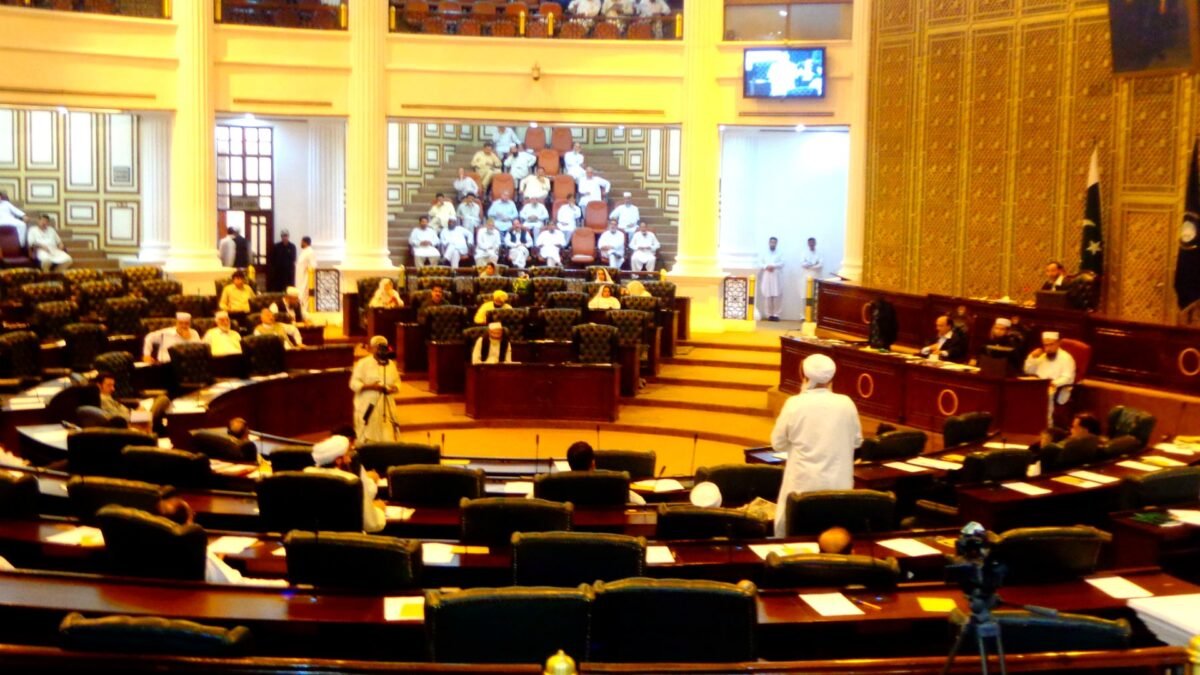
The Human Rights Commission of Pakistan (HRCP) has demanded an immediate end to emergency and governor’s rule in Khyber Pakhtunkhwa, the release of the province’s chief executive and all others it says have been arbitrarily detained, and the restoration of the provincial assembly. In a statement shared on X on Sunday, 25 October, the country’s leading independent rights body said two weeks of direct federal control had deepened, rather than resolved, a political crisis that now touches democratic representation, personal liberty and the everyday conditions of civilian life in the province.
According to IANS, which reported the statement, the HRCP described the detention of the elected chief executive as a “grave affront to democratic norms”. The body argued that Khyber Pakhtunkhwa’s status as Pakistan’s only opposition-led province made the intervention particularly troubling. Its central warning was stark: “governing by emergency rather than consensus could irretrievably weaken Pakistan’s democracy”.
The statement was the HRCP’s second formal intervention in the crisis. Before the emergency was imposed, it had cautioned the federal government and parliament against such a step. Two weeks on, it said, it was reiterating that opposition without qualification. Its concerns, as reported, were the erosion of democratic space, the disenfranchisement of the province’s electorate, arbitrary and preventive detention, and the disproportionate impact of security measures on civilians.
The HRCP did not confine its demands to a single release. It called for the immediate release of the chief executive and all others arbitrarily detained, the lifting of emergency and governor’s rule, and the restoration of the provincial assembly. It also urged the federal government and Pakistan Tehreek-e-Insaf (PTI) to resume comprehensive political dialogue, involving civil society, to address militancy, protect fundamental rights and secure local ownership of resources.
What the HRCP is asking for, and why it says safeguards matter
At the heart of the statement is a distinction the HRCP has drawn repeatedly in its work: between counter-terrorism conducted within the law, and counter-terrorism used as a justification for measures that bypass ordinary legal safeguards. According to IANS, the body said it condemns militancy and terrorism, but stressed that counter-terrorism measures must be taken within the law and must not become a pretext for collective punishment, the use of excessive force or the suppression of fundamental rights.
The HRCP also warned that military operations risk civilian casualties and mass displacement, and that force alone has repeatedly failed to deliver lasting peace. That argument is important because it goes to the federal government’s stated rationale for the intervention. Islamabad has said the provincial government deliberately disengaged from the fight against terrorism, and that the security situation in the province left it with no alternative. The HRCP does not accept that a security argument, even if serious, can suspend the ordinary rules that govern detention and political representation.
On detention itself, the statement set out the safeguards it expects to be observed. According to IANS, it said preventive and unlawful detention must not become a tool for silencing opposition or bypassing judicial safeguards. Detainees, it said, must be informed of the grounds for their detention, given access to lawyers and families, and produced before a court within the legally mandated timeframe. It added that the province’s history of opaque internment centres makes those safeguards particularly urgent.
That last point carries a specific local resonance. Khyber Pakhtunkhwa, including the former tribal districts merged into the province in 2018, has a long and contested history of detention practices that have been difficult for families, lawyers and journalists to scrutinise. The HRCP’s reference to that history is a reminder that, for many families in the province, a detention order is not an abstract constitutional question. It is a question of whether a relative can be seen, whether a lawyer can be instructed, and whether a court will hear the case within days rather than months.
The statement also addressed the treatment of women in detention, saying it must be scrutinised. It linked that concern to what it described as a wider crackdown on political activity, including the arrests of women PTI workers in Punjab. The HRCP did not present every such claim as a proven fact. On several reports, it was explicit that further verification was required. That qualification matters, and this article preserves it: where the HRCP flagged a report as unverified, it is reported here as the HRCP’s concern about a report, not as an established fact.
The detentions at the centre of the dispute
The immediate trigger for the HRCP’s demand was the detention of Khyber Pakhtunkhwa Chief Minister Sohail Afridi and other provincial figures. According to IANS, citing Dawn, Afridi and several cabinet members were detained on 12 October, the day after the provincial government was suspended under emergency rule. IANS also reported that National Assembly member Junaid Akbar and provincial assembly Speaker Babar Saleem Swati were taken into what the authorities described as preventive custody.
Those detentions followed the federal government’s decision on 11 October to impose an emergency under Article 232 of the Constitution and governor’s rule under Article 234. President Asif Ali Zardari approved the measures on the advice of Prime Minister Shehbaz Sharif and the federal cabinet. Powers passed to Governor Faisal Karim Kundi, assisted by an 11-member advisory council, and the army was authorised to deploy in aid of civil power.
The federal government has defended the intervention on security grounds. It has pointed to a surge in militant attacks, to attacks on government installations and law enforcement, and to what it calls the provincial administration’s failure to cooperate effectively in counter-terrorism. It has also argued that the provincial government’s position risked destabilising the national economy and undermining security operations. Those are the government’s stated reasons, and they have been repeated by federal ministers in parliament and in public statements since 11 October.
PTI, by contrast, has described the intervention as an attack on provincial autonomy and on the public mandate. Its chairman, Barrister Gohar Ali Khan, challenged the emergency and governor’s rule in the Peshawar High Court, arguing that the measures lacked a sufficient constitutional and factual basis and that no provincial assembly resolution had been passed as required. The court issued notices to the federal government and other parties on 20 October and adjourned the main petitions to 10 November, leaving the constitutional question open while the emergency continues on the ground.
The HRCP’s statement sits between those two positions, but it does not sit neutrally on the question of detention. It says the detention of an elected chief executive, whatever the security context, cannot be treated as a routine administrative step. For a rights body, the test is not whether a government believes a detention is useful. It is whether the detention is lawful, time-bound, reviewable by a court, and open to challenge by the person detained and their family.
Reports of raids, gatherings and shutdowns
Beyond the high-profile detentions, the HRCP raised a series of concerns about conditions in the province. According to IANS, it voiced concern over reports of police raids on PTI workers in Peshawar, Swat and Khyber, and the dispersal of gatherings. In Bara, it said, police reportedly used a lathi charge against a gathering estimated at between 2,000 and 4,000 people. The HRCP itself said those reports require further verification, and that the absence of complete information must not be mistaken for an absence of violations.
That careful wording is worth noting. The HRCP is not claiming to have independently verified every incident in a province where reporting has been constrained. It is saying that, in such conditions, the burden should not fall on victims and families to prove a violation before anyone investigates it. Restrictions on peaceful assembly, it said, must be lawful, necessary and proportionate.
The statement also criticised initial internet and mobile shutdowns in the province, saying they restricted access to information and undermined education, communication and livelihoods. It said curfews and military deployments in North and South Waziristan, Bannu and Miranshah continue to disrupt civilian life. Those claims, again, are reported here as the HRCP’s account of the situation. They are consistent with the pattern described in earlier reporting on the emergency, in which targeted communications disruptions and heavy security deployments were reported in parts of the province in the first days after 11 October, but the HRCP’s statement is the source for the specific current assessment.
For residents, the practical consequences of such measures are not abstract. A shutdown can interrupt a student’s classes, a trader’s payments, a farmer’s market information and a family’s ability to check on relatives in another district. A curfew can close a road, a clinic or a school. The HRCP’s argument is that these are not incidental side effects to be weighed only against a security objective. They are rights in themselves, and any restriction must be justified, limited and time-bound.
How the crisis reached this point
To understand why the HRCP’s intervention has attracted attention, it helps to retrace the fortnight that preceded it. The crisis did not begin on 11 October. It grew out of months of disagreement between the federal government and the PTI-led provincial government over counter-terrorism operations, over the terms of any political settlement, and over the future of a protest march that PTI had planned towards Islamabad to demand the release of its founder, former prime minister Imran Khan, who has been in prison since 2023.
Talks between federal and provincial representatives on 2 and 3 October ended without agreement. The federal government said it had offered the provincial leadership extensive support and cooperation, and that its demands — including a public condemnation of militancy, attendance at funerals for security personnel killed in militant attacks, and cooperation with the counter-terrorism effort — had been rejected. PTI said the government’s demands were designed to be unacceptable, and that the real objective was to remove its last provincial government.
On 11 October, the federal cabinet recommended the emergency and governor’s rule, and the president approved them. The next day, the chief minister and other provincial figures were detained. On 14 October, parliament endorsed the emergency, with opposition members protesting. On the same day, Gohar filed the PTI’s court challenge. On 17 October, opposition leaders announced plans for a joint campaign against the intervention. On 20 October, the Peshawar High Court issued notices and set the next hearing for 10 November.
Meanwhile, the political argument continued in public. On 22 October, Prime Minister Shehbaz Sharif visited Peshawar for the first time since the intervention, chaired an apex committee meeting at the Governor House, and announced a Rs160 billion development package for the province. He accused the previous provincial administration of callousness and criminal negligence on terrorism, and cited corruption allegations involving provincial projects. PTI rejected those allegations as a justification for removing an elected government, and pointed to the court challenge as the proper forum for testing the intervention’s legality.
On 23 October, talks between the government and the opposition over a possible dialogue remained stalled over terms and venue, with each side insisting the other was not serious. The opposition said meaningful negotiations were impossible without a meeting with Imran Khan. The government said it was ready to meet, but that the agenda mattered more than the venue. By 25 October, when the HRCP issued its statement, the political track and the legal track were both open, but neither had produced a settlement.
The HRCP’s intervention therefore lands at a moment when the crisis has moved from an emergency decision to a sustained condition. Two weeks is long enough for the initial shock to wear off, and for the question to shift from whether an emergency was justified on a single day to whether its continuation can be justified week after week, while an elected assembly remains suspended and its chief executive remains detained.
Analysis: Why It Matters
1. The only opposition province is the test case
The HRCP’s observation that Khyber Pakhtunkhwa is Pakistan’s only opposition-led province is not a decorative detail. It is the reason the case is being watched as a precedent. If an elected provincial government can be suspended, and its chief minister detained, in the one province where the opposition still holds power, then the question for every other province is not whether the same could happen to them, but under what circumstances it would be considered acceptable.
Supporters of the intervention argue that the province’s security situation is distinct, and that the measure should not be read as a general precedent. Critics reply that a precedent is set by what is done, not by what is said about it. Once the mechanism has been used in this way, the next government that faces a difficult provincial administration will have a recent example to point to, and the next court that hears a challenge will have a recent practice to weigh. That is why rights bodies, opposition parties and legal commentators have all treated the constitutional question as larger than a single province.
2. Detention safeguards are the practical test of the rule of law
Constitutional arguments can feel remote. Detention safeguards are not. Whether a detained person is told why they are held, whether they can see a lawyer, whether their family can visit, and whether a court hears their case within the required time are questions that can be answered, day by day, with names, dates and court orders.
The HRCP’s focus on those safeguards is therefore a practical challenge as much as a legal one. If the government can show that every detention under the emergency has been grounded, notified and brought before a court, then its claim that the measures are lawful and proportionate is strengthened. If it cannot, then the HRCP’s warning about arbitrary detention gains force, regardless of the security argument. The next hearing in the Peshawar High Court, on 10 November, will be one place where those questions are tested, but the daily record of detentions, releases and court appearances will matter just as much.
3. Security and democracy are not competing goods to be traded
The federal government’s case rests on a genuine problem. Khyber Pakhtunkhwa has suffered a severe militant threat, with attacks on police, soldiers and civilians, and with the Tehreek-e-Taliban Pakistan (TTP) operating from across the Afghan border. No serious analysis of the province can ignore that threat, and the HRCP itself says it condemns militancy and terrorism.
The HRCP’s argument, however, is that security and democracy are not goods to be traded against each other, with one sacrificed to save the other. Its view is that counter-terrorism is more, not less, effective when it is conducted with public consent, with an elected provincial government that can mobilise local support, and with security forces that are seen to act within the law. A strategy that removes the elected government, detains its leaders and restricts assembly may produce short-term control, but it risks deepening the alienation that militant groups exploit. That is a judgement about strategy as well as principle, and it is one the government will have to answer with results, not only with intentions.
4. The dialogue deadlock is now the central political problem
The HRCP’s call for comprehensive dialogue, involving civil society, is an attempt to break a deadlock that has persisted since the emergency was imposed. The government says it is ready to talk. The opposition says talks cannot be meaningful while its leader remains inaccessible and its provincial government remains suspended. Each side accuses the other of setting preconditions designed to fail.
Dialogue in such conditions is difficult, but it is not impossible. Previous rounds of talks between the government and PTI, including the discussions in early October, produced drafts and proposals even when they did not produce agreement. The HRCP’s suggestion of involving civil society is an attempt to widen the table, so that the conversation is not only about the interests of two political camps, but about the conditions under which ordinary residents can live, work and travel in the province. Whether either side accepts that wider table will be a test of whether dialogue is a genuine objective or a rhetorical position.
5. Restoration of the assembly is the clearest measure of resolution
Among the HRCP’s demands, the restoration of the provincial assembly is the most concrete and measurable. A release can be partial, a dialogue can be endless, and a security assessment can be contested. The restoration of an assembly, by contrast, is either done or it is not. Its members either sit, legislate and hold the executive to account, or they do not.
That is why the assembly has become the symbol of the crisis, even for people who do not follow the legal arguments in detail. The chamber in Peshawar is where the province’s elected representatives are supposed to debate its budget, its schools, its hospitals and its security policy. While it remains suspended, those debates happen elsewhere, or not at all. The HRCP’s demand to restore it is therefore not only about a building or a procedure. It is about returning the province’s politics to a place where it can be seen, heard and challenged in public.
What to Watch Next
- The Peshawar High Court hearing on 10 November, when the main petitions against the emergency and governor’s rule are next listed, and whether the court issues any interim direction on detentions or on the suspension of the assembly.
- Any response from the federal government to the HRCP’s statement, including whether it publishes the legal grounds for individual detentions, the dates on which detainees were produced before a court, and the steps taken to restore normal assembly functions.
- Whether the government and PTI move from arguing about the venue for talks to agreeing an agenda, and whether civil society organisations are invited to participate in any renewed dialogue.
- Reports from Peshawar, Swat, Khyber and the merged districts on raids, gatherings, curfews and communications, and whether independent verification becomes possible as reporting conditions change.
- The wider political response, including whether other opposition parties, bar councils and rights organisations join the HRCP’s call, and whether parliament revisits the emergency as its initial period runs its course.
Sources
- IANS: Pakistan: Rights group demands end to governor’s rule in Khyber Pakhtunkhwa, release of detained leaders
- Nation Press: HRCP demands end to governor’s rule in Khyber Pakhtunkhwa, release of CM Afridi
- New Kerala (IANS): HRCP seeks end to governor’s rule in Khyber Pakhtunkhwa
- The Business Standard: Pakistan imposes emergency, governor’s rule in Khyber Pakhtunkhwa

About the Author — Abdul Mannan
Related Articles
Pakistan Demands ‘Verifiable Action’ From Afghan Taliban Against TTP Sanctuaries as War of Words Escalates
Pakistan has demanded verifiable action from Afghanistan's Taliban government against TTP and BLA sanctuaries, rejecting Kabul's claim that…

Jamaat-e-Islami Launches Third Phase of Petroleum Levy Protests as Fresh Talks With Government End Without Breakthrough
Jamaat-e-Islami has launched the third phase of its nationwide campaign against the petroleum levy with sit-ins and rallies…
Federal Cabinet Bans Tehreek-e-Labbaik Pakistan Under Anti-Terrorism Law After Violent Protests
Pakistan's federal cabinet has unanimously banned the Tehreek-e-Labbaik Pakistan under the Anti-Terrorism Act, declaring it a proscribed organisation;…