
Pakistan Demands ‘Verifiable Action’ From Afghan Taliban Against TTP Sanctuaries as War of Words Escalates

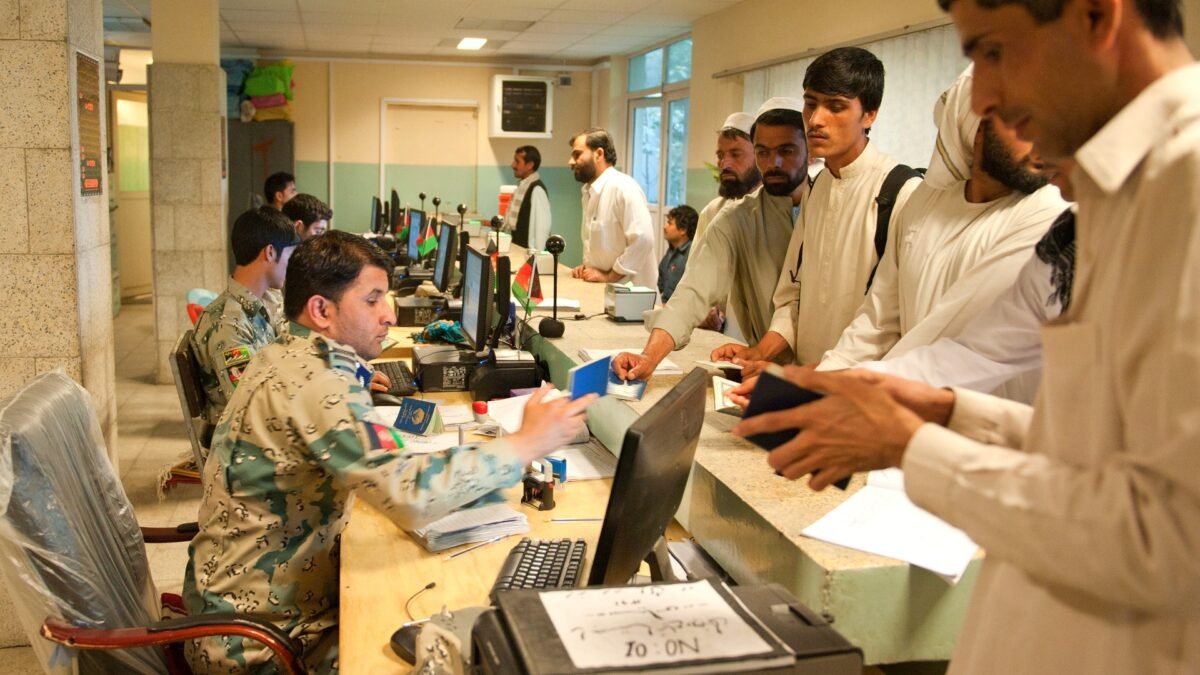
Pakistan has demanded “verifiable action” from Afghanistan’s Taliban government against militant groups it says operate from Afghan soil, sharply escalating a war of words between the two neighbours over cross-border terrorism. In a statement issued on Saturday 24 October, Pakistan’s Ministry of Information and Broadcasting rejected Kabul’s claim that Afghanistan lacked the capacity or the interest to destabilise Pakistan, calling the argument a diversion and insisting that only concrete, checkable steps would answer Islamabad’s concerns.
The statement, reported by the Associated Press (AP) and Pakistan’s state news agency APP, is the latest exchange in a dispute that has moved in recent weeks from diplomatic complaint to border clashes and airstrikes. It names two groups in particular: the Tehreek-e-Taliban Pakistan (TTP), the Pakistani Taliban, and the Balochistan Liberation Army (BLA), along with their affiliates. Islamabad wants Kabul to end what it calls tolerance, facilitation or support for those groups and to ensure that Afghan territory is not used to plan, prepare or launch attacks against Pakistan.
“Blaming Pakistan’s security institutions does not absolve the regime of its responsibility to prevent Afghan territory from being used for terrorism against Pakistan,” the ministry said, according to APP. “Pakistan’s concerns are not based on conjecture,” it added, pointing to international assessments that it says document the presence and activity of militant groups in Afghanistan.
The ministry cited two documents in support of its case. The first is the sixteenth report of the United Nations Security Council’s Analytical Support and Sanctions Monitoring Team, numbered S/2025/796, which examined the presence and activities of terrorist groups in Afghanistan. The second is the United States Lead Inspector General’s Operation Enduring Sentinel report to Congress covering January to March 2026. According to the ministry’s account of that American report, the Afghan Taliban continued to allow the TTP to operate from Afghan territory, and Taliban support and greater freedom for the group contributed to increased attacks against Pakistan. The report, as cited by the ministry, estimated TTP strength at between 4,000 and 6,000 fighters.
Those figures are the ministry’s reading of the American assessment, and they matter because they turn an abstract complaint about “sanctuaries” into a measurable claim: a force of thousands, operating with a degree of freedom that Islamabad says would be impossible without at least tacit acceptance by the authorities who control the territory. Kabul disputes that reading entirely, and the gap between the two positions is now the central obstacle to any settlement.
The immediate trigger for Saturday’s statement was a message posted on X on Friday 23 October by the Afghan Taliban’s chief spokesperson, Zabihullah Mujahid. According to AP and APP, Mujahid said it was not in Afghanistan’s interest to create insecurity in Pakistan or to support acts of instability there, and that the Taliban government did not possess the capabilities or resources to foment or finance insecurity in other countries. He also argued, in terms reported by several outlets, that Pakistan’s military establishment and security agencies shifted blame onto Afghanistan when they failed to maintain security at home, in an attempt to mislead their own people.
Islamabad’s reply dismissed that argument as “diversionary allegations”. The ministry said Kabul’s assertion about lacking capacity or interest “does not address these documented concerns”, and that repeated attempts by armed fighters to infiltrate across the Pakistan-Afghanistan border warranted serious scrutiny. It also pointed to the killing of Afghan nationals and members of militant groups during Pakistan’s counterterrorism operations, and to the recovery of foreign-origin weapons from militant elements, as matters requiring credible explanation rather than blanket denial.
In a further point that widens the argument beyond the TTP, the ministry said it had raised concerns about alleged facilitation of militant groups by Afghan Taliban officials, including officials in Kandahar. “Such concerns cannot be dismissed through blanket denials; they require credible explanations and verifiable action,” the ministry said, according to the Islamabad Post’s account of the statement.
The statement was careful, however, to draw a line between the Taliban government and the Afghan people. Pakistan’s security measures, it said, were directed against terrorist threats, not against Afghans, and peace and stability in both countries were closely linked. Islamabad said it remained open to responsible engagement based on mutual respect, verifiable commitments and concrete action against terrorist sanctuaries, support networks and cross-border infiltration. Its closing line set the condition plainly: regional peace could prevail only if the Afghan Taliban regime verifiably addressed what Pakistan calls its core concern of terrorism originating from Afghanistan.
A second, separate dispute was folded into Saturday’s exchanges. Former United States special representative for Afghanistan Zalmay Khalilzad had said on Friday, citing reports he did not identify, that Pakistan was arming Afghans to fight the Taliban inside Afghanistan and recruiting Afghan nationals to fight insurgents targeting Pakistan. Pakistan’s information ministry rejected both allegations in a separate statement on X on Saturday, describing them as baseless and misleading, according to AP. Khalilzad offered no evidence and did not name his sources, and his intervention — from the diplomat who negotiated the February 2020 United States-Taliban agreement that paved the way for the withdrawal of American and NATO forces — added an American voice to an already crowded argument without settling any part of it.
The context for the exchange is a long and deteriorating security relationship. Pakistan says militant violence, particularly in Khyber Pakhtunkhwa and Balochistan, has risen sharply since the Afghan Taliban returned to power in August 2021. The Islamabad Post reported that Pakistan recorded its highest monthly number of militant attacks in twelve years during September 2026, a claim that underlines why the government in Islamabad treats the issue as urgent rather than rhetorical. At the same time, the two governments tell sharply different stories about who is crossing the border and in which direction. Afghan authorities have in turn accused fighters of crossing from Pakistan into Afghanistan, and have publicised operations in September in which they said their forces killed and captured fighters, including alleged Islamic State members. The competing tallies for those operations differ between reports, which is itself a measure of how little common ground remains on basic facts.
Pakistan’s Foreign Ministry spokesman, Sajjad Haider Khan, set out Islamabad’s broader framing at a press conference on 23 October, according to Asia Daily’s account. Citing United Nations monitoring and American assessments, he said more than twenty terrorist groups were based in Afghanistan and operating without effective control, and named China, Uzbekistan and Iran among the countries threatened by those groups. He said further dialogue required the Taliban to acknowledge the presence of terrorist groups in Afghanistan and to agree to a credible mechanism for preventing threats to neighbouring countries. In practical terms, Islamabad wants commitments backed by arrangements for checking whether armed groups are being contained — the same “verifiable” test at the heart of Saturday’s statement.
Pakistan has also said it pursued discussions with Taliban authorities through bilateral meetings and international forums since 2021, including the Moscow Format and meetings involving Qatar, Türkiye, Saudi Arabia and China, but that those efforts failed to produce the action it sought. Russia’s special presidential representative for Afghanistan, Zamir Kabulov, confirmed that the eighth Moscow Format meeting ended without a joint declaration because of disagreements between Pakistan and the Taliban, according to Asia Daily. Pakistan has said it is prepared to reopen border crossings and resume trade if Taliban authorities cooperate in preventing armed groups from entering Pakistan — a direct link, for traders and communities whose livelihoods depend on cross-border movement, between security cooperation and economic relief. No date was announced for new talks, for a verification arrangement, or for the reopening of crossings.
The TTP and the BLA are distinct organisations, and the distinction matters to understanding Islamabad’s demand. The TTP, commonly called the Pakistani Taliban, is separate from Afghanistan’s ruling Taliban, although the two movements are closely allied and share ideological roots. Pakistan accuses TTP leaders and fighters of using shelter in Afghanistan to organise attacks inside Pakistan. The BLA is a separatist militant group operating in Pakistan’s south-western Balochistan province. By naming both groups, Islamabad’s demand extends beyond the north-west frontier to violence affecting another large stretch of its western border, and it signals that no partial answer — action against one group but not the other — will satisfy it.
Analysis: Why It Matters
“Verifiable” is the whole argument in one word
Diplomatic language usually softens disagreements; this statement hardens one. By insisting on “verifiable action” rather than assurances, Islamabad is saying that promises from Kabul no longer count as currency. That is a deliberate choice with a practical consequence: it sets a test that can be failed in public. If attacks continue, Pakistan can say the test was not met; if Kabul takes visible steps — arrests, closures of facilities, restrictions on movement — Islamabad will have to acknowledge them or explain why they do not count. Either way, the argument moves from what each side says to what each side can show, and that is a harder argument for both governments to control.
The international reports give Islamabad an audience beyond Kabul
Citing a United Nations monitoring report and an American inspector-general report is not accidental. Pakistan is not only addressing the Taliban government; it is addressing the countries that read those reports and that have their own concerns about militant groups in Afghanistan. The spokesman’s reference to more than twenty groups threatening China, Uzbekistan and Iran as well as Pakistan is an attempt to widen the dispute from a bilateral quarrel into a regional security question. Whether those countries accept Islamabad’s framing is another matter — each has its own relationship with Kabul — but the strategy is clear: make the Taliban’s record a matter of shared international concern, not a private grievance between neighbours.
Kabul’s denial is also a strategy, not just a refusal
Mujahid’s argument — that Afghanistan neither wants instability in Pakistan nor has the capacity to create it, and that insecurity next door would hurt Afghanistan economically and socially — deserves to be taken seriously as a position, even by readers who doubt it. It reframes the issue: Kabul presents itself as a government struggling with its own constraints, not as a sponsor of violence, and it turns the accusation back on Pakistan’s institutions. That framing resonates with audiences sceptical of Pakistan’s security establishment, and it gives Kabul’s supporters a reason to treat Islamabad’s demands as political pressure rather than evidence. The result is two self-contained stories, each plausible to its own audience, with no agreed facts in between.
The numbers will not settle this — and that is the problem
Readers should be cautious about every casualty and attack total circulating in this dispute. Reports attribute different figures to different authorities, covering different periods and different definitions of what counts as a cross-border attack, and those figures cannot be reconciled from the statements released so far. The one figure that is consistent across the reporting is the ministry’s citation of the American estimate of 4,000 to 6,000 TTP fighters — and even that is a range, attributed to a report, not a headcount anyone can verify from the ground. When neither side accepts the other’s numbers, the dispute cannot be resolved by arithmetic. It can only be resolved by the kind of observable action — or inaction — that both sides can see: border posts that are open or closed, fighters who are detained or free, attacks that happen or do not.
Trade and talks are now hostages to the security argument
Pakistan’s explicit link between security cooperation and the reopening of border crossings matters for ordinary people on both sides of the frontier. Cross-border trade, the movement of goods, and the livelihoods of border communities all depend on crossings functioning. When those crossings become bargaining chips in a security dispute, the cost falls first on traders, transport workers and families, not on governments. The same logic applies to diplomacy: the failure of the Moscow Format meeting to produce a joint declaration shows that multilateral forums can host the argument without resolving it. Until one side offers something the other can verify, the forums will keep meeting and the crossings will keep closing.
What to Watch Next
- Any response from Kabul beyond Mujahid’s Friday message — particularly whether the Taliban government addresses the specific demand for verifiable action or repeats its general denial.
- Whether Pakistan publishes further detail from the United Nations or American reports it cites, or names specific facilities, individuals or incidents it wants acted upon.
- Movement at the border crossings: any reopening, closure or change in trade flows would signal whether the security argument is easing or hardening in practice.
- Statements from China, Iran, Uzbekistan and other regional governments on whether they share Islamabad’s assessment of militant groups operating from Afghan territory.
- Whether the dispute produces further border incidents or military action, or whether both sides return to a negotiating format with a verification mechanism on the agenda.
Sources
- Islamabad Post — Pakistan slams Afghan Taliban regime over ‘diversionary allegations’, demands verifiable action against terrorists (24 October 2026)
- Asia Daily — Pakistan Demands Verifiable Taliban Action Against TTP (24 October 2026)
- APP via Tez Khabar — Afghan Taliban’s blanket denials cannot address Pakistan’s legitimate security concerns: MoIB (24 October 2026)
- Afghanistan Peace Campaign — Associated Press report: Pakistan urges Taliban to take verifiable action against militants (24 October 2026)

About the Author — Abdul Mannan
Related Articles
Jamaat-e-Islami Launches Third Phase of Petroleum Levy Protests as Fresh Talks With Government End Without Breakthrough
Jamaat-e-Islami has launched the third phase of its nationwide campaign against the petroleum levy with sit-ins and rallies…
Federal Cabinet Bans Tehreek-e-Labbaik Pakistan Under Anti-Terrorism Law After Violent Protests
Pakistan's federal cabinet has unanimously banned the Tehreek-e-Labbaik Pakistan under the Anti-Terrorism Act, declaring it a proscribed organisation;…

Government Offers Talks as Opposition Insists on Its Terms, Venue Row and Imran Khan Access Demands Stall Dialogue
Islamabad renews its dialogue offer to the opposition, but a venue row, the demand for access to Imran…