
Shehbaz Defends Governor’s Rule in Khyber Pakhtunkhwa, Orders Quick Relief and Halts Long-Term Projects

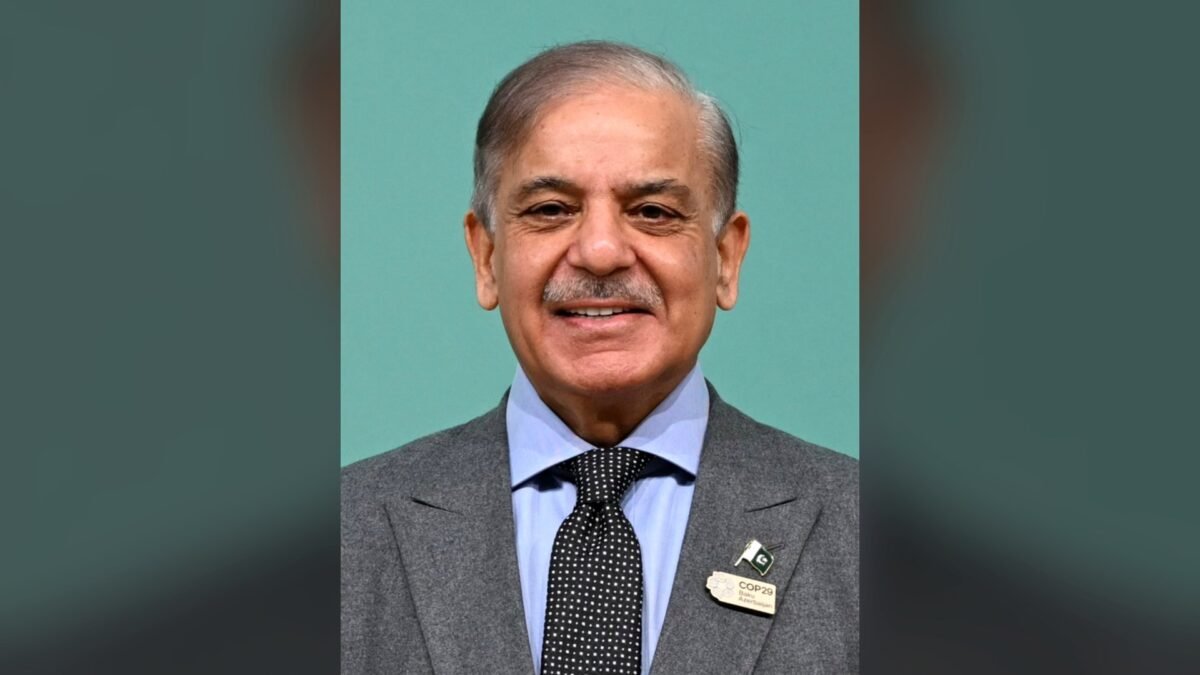
Prime Minister Shehbaz Sharif has mounted a vigorous public defence of the emergency and governor’s rule in Khyber Pakhtunkhwa, describing the federal takeover of the opposition-run province as unavoidable, and has ordered his party’s provincial leadership to shelve long-term projects in favour of quick, visible relief for people he said had been neglected for 13 years.
Addressing a meeting of the Pakistan Muslim League-Nawaz (PML-N) parliamentary party from Khyber Pakhtunkhwa (KP) in Islamabad on Saturday, the prime minister said the decision to impose emergency rule had been forced on the government after 48 hours of negotiations with the Pakistan Tehreek-e-Insaf (PTI) failed to produce an agreement, according to The News.
“Long-term projects should be suspended. If you take small steps to improve law and order, build a school and ensure medicines reach hospitals, people who have been deprived for 13 years will pray for you,” Mr Sharif told the meeting, in remarks reported by The News and the DNA News Agency.
The address, delivered three weeks after President Asif Ali Zardari declared a state of emergency in the province on 11 October, was the prime minister’s fullest public justification yet of a move that suspended an elected provincial government, handed its functions to the governor, and drew condemnation from the opposition and from human rights campaigners.
Defending the intervention, Mr Sharif said the federal government had “no other option but to save the country, the economy, society and KP”, and warned that further delay could have exposed the province and the country to greater damage. He said committees representing the PML-N and the Pakistan Peoples Party (PPP) had held discussions with the PTI for 48 hours and prepared a draft proposal, but the approval the government was waiting for never came — particularly from the then chief minister, Sohail Afridi.
“We had no other option,” the prime minister said, adding that the decision had become necessary to protect the people, the country, the economy and society, according to The News.
A sweeping attack on 13 years of PTI rule
Much of the prime minister’s address was devoted to an attack on the PTI’s record in the province, which the party has governed since the 2013 general election. Mr Sharif questioned what the provincial government had achieved in education, healthcare, infrastructure and governance, and asked whether public funds had been spent transparently.
“They made slogans and delivered speeches, but what did they actually achieve?” he asked, according to the DNA News Agency, adding that the party had made numerous claims about development projects. “How many development projects were completed? Were public funds spent judiciously and what steps were taken against corruption?” he asked, in remarks carried by The News.
The prime minister said the PTI leadership had remained focused on political protests and sit-ins instead of addressing the socio-economic problems of the province. He recalled that after the 2013 general election, former prime minister Nawaz Sharif had allowed the majority party in KP to form the provincial government, which he presented as evidence of the PML-N’s commitment to democratic traditions.
He also criticised the PTI’s 2014 sit-ins in Islamabad, saying they had coincided with and delayed the historic visit of Chinese President Xi Jinping to Pakistan. Major bilateral agreements were subsequently signed in 2015, he said, while the Nawaz Sharif government also addressed the problem of prolonged electricity load-shedding.
Mr Sharif turned to the province’s finances, questioning the use of the additional resources KP has received under the 2010 National Finance Commission (NFC) Award, which was finalised during the tenure of former prime minister Yusuf Raza Gilani with the consensus of all chief ministers. The award gave KP an additional one per cent share, enabling the province to receive approximately Rs800 billion over the years, according to The News.
He asked how much of that allocation had been spent on strengthening the Counter-Terrorism Department (CTD) and equipping the provincial police to combat terrorism, arguing that proper use of the money could have significantly improved the force’s capacity. He also pointed out that around 8,000 police positions remained vacant in the province, according to The News.
The prime minister said the federal government had highlighted development initiatives for KP, particularly the establishment of Daanish Schools in remote and underdeveloped districts, with campuses being set up in Chitral, Haripur, Mansehra, Bajaur and Shangla, and plans to announce additional campuses later this year.
“We had no other option”: the failed talks
At the heart of the prime minister’s defence was the claim that the government had exhausted negotiation before acting. According to Dawn, Mr Sharif said a joint delegation of the ruling coalition and opposition had engaged in intensive dialogue, holding talks “day and night, for 48 hours”, and that a draft was ready under which the PTI was to call off its long march.
“Both sides held negotiations for 48 hours. I was told that the draft had been finalised and would be signed within minutes, following approval from then-chief minister Sohail Afridi. However, the approval never came, and we are still waiting,” he said, according to Dawn.
The prime minister said he had held several meetings directly with Mr Afridi, whose role as chief minister now stands suspended under the emergency, as well as with his predecessor, Ali Amin Gandapur. According to Dawn, he told the meeting he had personally assured the KP government of Islamabad’s backing, saying he would make administrative, resource and operational decisions in direct consultation with the chief minister.
He also complained about the opposition’s approach to protest, asserting that while the federal government made many efforts to resolve the situation, it was met with threats and long marches. “Last year as well, you saw how the entire country was jammed by staging a sit-in in Islamabad,” he said, referring to the PTI’s November protest that led to violent clashes with state security forces, according to Dawn.
Mr Sharif said the government had repeatedly invited political stakeholders to join a collective effort against terrorism, as had been done in the past, but its appeals had not received the desired response.
Terrorism, sacrifice and the security argument
The prime minister placed the security situation at the centre of his case. Highlighting the sacrifices of the people of KP in the fight against terrorism, he said residents of the province, police personnel, the armed forces and political leaders had made immense sacrifices to eliminate militancy.
He recalled that Pakistan had lost approximately 80,000 lives and suffered economic losses estimated at $150 billion to $200 billion in the prolonged war against terrorism, according to The News, and referred to the Army Public School attack in Peshawar as one of the darkest chapters in the country’s history.
Mr Sharif said terrorism had been eliminated from KP during 2017-18 through the collective efforts of the nation and state institutions under Nawaz Sharif’s leadership. He alleged, however, that terrorists were subsequently brought back from Afghanistan and resettled in 2019 and 2020, contributing to the resurgence of militancy and the deterioration of the security situation.
That claim connects directly to the government’s wider confrontation with the Afghan Taliban. On Saturday, Pakistan’s information ministry declared that terrorism emanating from Afghan soil was a “red line”, and the United States secretary of state, Marco Rubio, said at the G20 meeting in Atlanta that Washington had heard Pakistan’s concerns and would play a productive role if one existed. The security argument for the KP emergency and the cross-border argument are, in the government’s telling, two faces of the same crisis.
The prime minister also pointed to the economic pressures created by the crisis in the Gulf region, which he said had pushed up international energy prices. He said the federal government had nevertheless ensured uninterrupted supplies of petrol and diesel across the country, and referred to a targeted fuel subsidy programme launched in February with an allocation of Rs75 billion, under which relief vouchers had been provided to approximately 130 million citizens, according to The News.
What the emergency means on the ground
President Zardari declared the state of emergency in Khyber Pakhtunkhwa on Sunday, 11 October, under Articles 232 and 234 of the Constitution of Pakistan, suspending the elected provincial administration and installing direct governor’s rule, according to Dawn. Under the arrangement, KP Governor Faisal Karim Kundi — a leader of the PPP — exercises the provincial government’s functions on behalf of the federation, assisted by an 11-member advisory council, while parliament exercises the provincial assembly’s legislative powers, according to the DNA News Agency.
The Centre had alleged shortcomings in the provincial government’s counterterrorism efforts as the grounds for the decision. The move has drawn intense criticism. The PTI denounced the imposition of emergency as a “disguised coup”, and the International Human Rights Foundation condemned the emergency rule, calling it a “military-backed power grab” and demanding the restoration of democratic rights, according to Dawn. The foundation also objected to the presence of troops on the streets, the detention of former chief minister Sohail Afridi and an internet blockade in the province.
The imposition also drew criticism from Maulana Fazlur Rehman, the Jamiat Ulema-e-Islam chief, who had made efforts to reduce tensions between the federal and KP governments before the emergency was declared.
Addressing the PML-N meeting, Engineer Amir Muqam, the minister for Kashmir affairs and Gilgit-Baltistan, said the PML-N enjoyed considerable public support in KP and had the capacity to overcome the challenges facing the province.
In a separate message on the 79th anniversary of Gilgit-Baltistan’s National Day on 1 November, the prime minister congratulated the people of the region on the anniversary of its liberation from Dogra rule in 1947 and its subsequent accession to Pakistan, and said the federal government remained steadfastly committed to the development and prosperity of Gilgit-Baltistan and to ensuring a bright future for its youth.
Analysis: Why It Matters
A defence aimed at two audiences
Mr Sharif’s address was not really aimed at the PML-N workers in the room. It was aimed at two much larger audiences: the people of Khyber Pakhtunkhwa, who have lived under an elected PTI government for 13 years and have now had that government suspended by decree, and the wider public and institutional opinion that will judge whether the emergency was a reluctant necessity or a political power grab. The prime minister’s language — “compelled”, “no other option”, “unavoidable” — is the language of a government that knows the burden of proof is on it. Suspending an elected government is the most drastic step a federation can take against a province, and it cannot be justified by administrative convenience. It can only be justified, if at all, by showing that every other path was tried and failed. That is why the 48 hours of talks, the draft agreement and the approval that never came featured so prominently in the speech. The government is building a record: we negotiated, we waited, we were left with nothing.
The money question is the sharpest weapon — and the biggest risk
The most politically potent part of the speech was also the most specific: roughly Rs800 billion in extra NFC transfers, and around 8,000 vacant police posts. If the figures hold, they are a devastating indictment of a provincial government that controlled the province through a period of rising militancy. A province that cannot fill its police ranks or fund its counter-terrorism department while receiving hundreds of billions in additional transfers has serious questions to answer. But the argument cuts both ways. The federal government is now responsible for the province. If, six months from now, the police posts are still vacant and the CTD is still under-equipped, the same questions will be asked of Islamabad — with the added sting that the federal government seized power precisely on the promise of doing better. The Rs800 billion figure also invites scrutiny of its own: the government will need to show, in detail, where the money went, because a headline number without an audit is an accusation, not evidence. The PTI will certainly demand that accounting, and the public deserves it.
“Quick relief” is a political strategy, not just a policy
The instruction to suspend long-term projects and focus on small, visible improvements — a school here, medicines in a hospital there, a safer street — is shrewd politics. Long-term projects take years to show results; a government installed by emergency decree does not have years of goodwill to spend. It has months. By directing his party to deliver things people can see and feel within six months to a year — the prime minister’s own timeframe — Mr Sharif is trying to convert an act of constitutional force into a story of service delivery. The Daanish Schools in Chitral, Haripur, Mansehra, Bajaur and Shangla fit the same pattern: concrete, named, local. The risk is that “quick relief” becomes a substitute for the harder work of restoring democratic government. A school built by an unelected administration is still a school, and children will benefit from it. But it does not answer the question of who should govern KP, and for how long the people of the province will be governed by a governor and an advisory council rather than by representatives they elected.
The constitutional clock is ticking
Emergency rule is, by design, temporary. The Constitution places limits on how long such arrangements can run, and the longer governor’s rule lasts without a political settlement, the harder the questions become. Every week that passes without an elected government in Peshawar strengthens the opposition’s argument that the emergency is less about counter-terrorism than about removing a political rival, and weakens the government’s argument that it was a reluctant, last-resort step. The prime minister’s emphasis on negotiation suggests the government knows this: it wants to be able to say it kept the door open. But an open door is only meaningful if someone walks through it. The PTI, whose chief minister is detained and whose leaders describe the emergency as a coup, has little incentive to accept terms dictated from Islamabad. The longer the stalemate lasts, the more likely it is that the courts, parliament or the streets become the arena where the emergency is ultimately judged.
The security argument is real — and it is not enough on its own
There is no serious doubt that Khyber Pakhtunkhwa faces a genuine security crisis. The province has borne the heaviest human cost of Pakistan’s war against militancy, the Army Public School massacre remains a national wound, and the government’s own figures — 80,000 lives lost, hundreds of billions of dollars in economic damage — describe a catastrophe, not a talking point. The resurgence of cross-border militancy, which Islamabad blames on sanctuaries in Afghanistan and which Washington has now publicly acknowledged as a legitimate Pakistani concern, gives the security argument real weight. But a security crisis does not automatically justify suspending an elected government. The question is not whether KP is insecure — it plainly is — but whether the elected provincial government was the obstacle to security, and whether federal rule will make the province safer. That is an empirical claim, and it will be tested by events: by whether attacks fall, whether the police are rebuilt, and whether the province’s people feel safer in six months than they do today. If the answer is yes, the government will say the emergency was vindicated. If the answer is no, the emergency will be remembered as a political intervention dressed in security language.
What to Watch Next
- Delivery on the ground: The prime minister has set his own test — visible improvement in law and order, schools and hospitals within six months to a year. Watch whether the advisory council fills police vacancies, funds the CTD and opens the promised Daanish School campuses in Chitral, Haripur, Mansehra, Bajaur and Shangla.
- The PTI’s response: Watch for legal challenges to the emergency, the fate of detained former chief minister Sohail Afridi, and whether the PTI returns to street protests or seeks a negotiated path back to elected government.
- Parliament’s role: Parliament now exercises the provincial assembly’s legislative powers for KP. Watch how it uses them, and whether any debate emerges about the duration and limits of the emergency.
- The security situation: Watch whether militant attacks in KP fall or rise under governor’s rule, and whether the federal government’s parallel confrontation with the Afghan Taliban over cross-border terrorism produces any change on the ground.
- Public opinion in KP: The decisive audience is the people of the province. Watch local reporting, by-elections and public reaction for signs of whether “quick relief” is winning acceptance — or whether resentment at the suspension of elected government is hardening.
Sources
- The News — “PM says KP needs prompt relief, wants long-term projects halted”
- DNA News Agency — “PM Shehbaz seeks suspension of long-term projects in KP, urges short-term steps”
- Dawn (via Webindia123) — “Pakistan PM claims govt compelled to impose emergency rule in Khyber Pakhtunkhwa amid political fallout”
- WE News — “Shehbaz Sharif Defends Governor’s Rule In KP, Questions PTI Performance”
- Particle — “Shehbaz Sharif Defends Governor’s Rule in Khyber Pakhtunkhwa and Orders Quick Relief”

About the Author — advmannan1
Related Articles
One Killed, 18 Injured in Stampede at TikTok Star’s Pre-Wedding Event in Sialkot
A mehndi celebration in Sialkot ended in tragedy on Saturday night when a crowd surge at the Faraz…
Pakistan Tells Taliban Terrorism Is a ‘Red Line’ as Rubio Backs Islamabad at G20
Pakistan warns the Afghan Taliban that terrorism is a 'red line' and reserves the right to act, as…
Imran Khan’s Son Warns His Father’s Life Is in Danger as Family Says No Contact Since August
Sulaiman Khan says neither Imran Khan's family nor his lawyers have seen or heard from the former prime…