
Pakistan Welcomes US Offer to Facilitate Talks With the Taliban — but Sets a Hard Condition

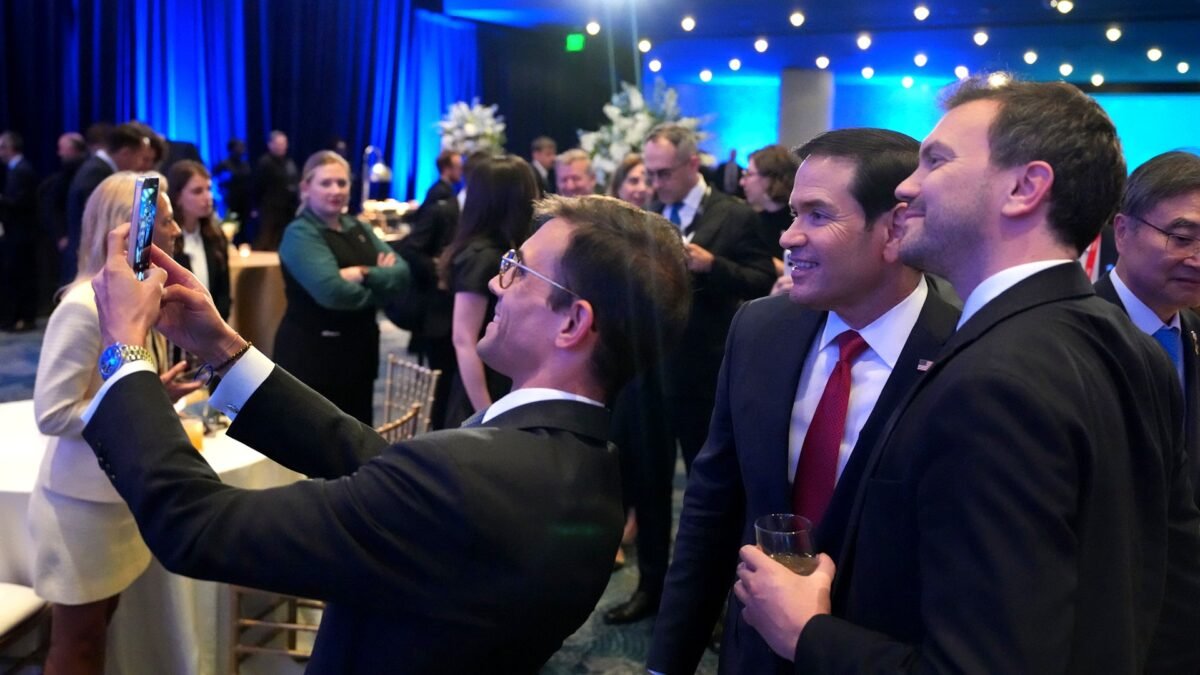
Pakistan has said it would welcome the United States playing a role in facilitating talks with Afghanistan, a day after US Secretary of State Marco Rubio signalled that Washington was open to helping ease the worst crisis between the two neighbours in years. But Islamabad attached a condition that goes to the heart of the dispute: Kabul must first take concrete, sustained and verifiable action against the militant groups Pakistan says operate from Afghan soil.
The exchange, reported by Dawn and The Express Tribune on 1 November, marks the first time the United States has publicly offered to step into a diplomatic track that has defeated every mediator who has tried it so far — Qatar, Türkiye, China and, most recently, Russia. Whether it becomes a real process or another round of public positioning will depend on a question neither side has yet answered: what, exactly, would count as verifiable action, and who would verify it?
Foreign Office spokesman Sajjad Haider Khan set out Pakistan’s position on Sunday, 1 November, in remarks to Independent Urdu, according to Pakistan Today. “Pakistan would welcome sincere efforts by friendly countries, including the United States, to facilitate dialogue with Afghanistan,” he said, adding that any meaningful dialogue must rest on a “clear commitment” by the Afghan Taliban authorities to take concrete, sustained and verifiable action against the Tehreek-e-Taliban Pakistan (TTP), the Balochistan Liberation Army (BLA) and other groups. “Pakistan remains open to constructive engagement, provided it leads to tangible outcomes addressing our legitimate security concerns,” he added.
The statement was a direct response to Rubio, who had addressed the dispute the previous day at the G20 foreign ministers’ meeting in Atlanta, Georgia. Speaking to reporters on Saturday, 31 October, Rubio said the United States had heard Pakistan’s complaint and did not want Pakistan to be targeted by terrorism. “Pakistan is concerned about terrorist attacks that are being sponsored from the territory of Afghanistan. They feel as if the Taliban has not done enough to constrain those attacks, and they’ve taken action against it,” he said, according to Geo News. “We obviously have heard those concerns on their part. We obviously don’t want them to be targeted by terrorism. So if there’s a productive role for us to play, we would play it.”
Rubio was careful to limit what he was offering. He noted that Washington did not “necessarily have the closest relationship with the Taliban”, while adding that the United States had “seen some of those attacks that they point to”. His broader line — “We’re against terrorism no matter where it emanates from and who it targets” — was a statement of principle rather than a policy commitment. He announced no envoy, no venue and no timetable, and he did not say what form any American role might take: mediation, intelligence sharing, pressure on Kabul, or something else entirely.
That caution matters, because the gap between the two governments’ positions is not small. Pakistan wants action against named groups before talks can be meaningful. The Taliban government in Kabul denies that its territory is used for attacks against Pakistan at all. And on the same day Rubio spoke, the Taliban said its own efforts at dialogue had already failed.
What Rubio said in Atlanta
The G20 foreign ministers’ meeting in Atlanta was not convened to discuss Pakistan and Afghanistan. Rubio was answering a question about the tensions between the two countries, and his answer ran to a handful of sentences. But in the context of the past three weeks, those sentences carried weight. Pakistan has spent that period making its case at the United Nations, on the border and in public statements, and this was the first public American acknowledgement of it.
According to Dawn, Rubio said Washington had acknowledged Pakistan’s security concerns about terrorism originating from Afghanistan and would be willing to take on a productive role if an opportunity arose. The Associated Press of Pakistan, reporting the same briefing, said Rubio had told reporters that the United States shared Pakistan’s concerns about cross-border attacks and had signalled openness to playing a productive role in easing tensions. “We don’t want Pakistan to be targeted for terrorism,” he said, according to APP.
The phrasing deserves close reading. “Obviously heard” acknowledges a complaint without accepting every element of it. “If there’s a productive role for us to play, we would play it” makes any involvement conditional on a judgement Washington reserves to itself. And the observation that the United States has “seen some of those attacks” is the closest Rubio came to endorsing Pakistan’s account of events — a significant step for a government that, since its withdrawal from Afghanistan in 2021, has had limited visibility into, and limited leverage over, what happens on Afghan territory.
Rubio also used the same briefing to address the separate standoff with Iran, saying that President Donald Trump preferred a diplomatic solution and had not yet decided whether to resume military operations against Tehran. The two files — Iran and Afghanistan — are distinct, but they share a feature: in both, Washington is weighing whether diplomacy can still work after military action has already been taken or threatened.
Pakistan’s condition: verifiable action first
The operative word in the Foreign Office statement is “verifiable”. Pakistan is not asking for promises. It is asking for measures it can see and measure — against the TTP, the BLA and other groups it describes as terrorist organisations operating from Afghan territory. What it has not done is publish a list of the specific steps it expects, a monitoring mechanism, or a timeline for judging compliance.
That ambiguity is not accidental, but it is also the reason earlier talks foundered on the same question. Pakistan has demanded for years that Kabul act against groups it says launch attacks from Afghan soil. The Taliban government has denied responsibility, said it cannot control armed groups that do not answer to it, or insisted that no such groups exist on its territory. The demand is also broad enough to cover the BLA, which operates mainly in Balochistan and is not an Afghan Taliban affiliate — Pakistan has linked the TTP and the BLA to what it calls a single cross-border security problem.
The condition effectively sets a test before any US-facilitated process can begin. It is not a ceasefire offer, and it does not commit Pakistan to pause its military campaign along the border. Pakistan’s position, as stated by its information ministry on the same day, is that terrorism is a red line and the security of its citizens is non-negotiable — and that it reserves the right to take all necessary measures, in accordance with international law, to eliminate threats to its national security, wherever they originate.
Islamabad’s welcome is therefore conditional in both directions. It says the United States and other friendly countries are welcome to try, but it does not say Pakistan has asked Washington to take the lead, nor does it set out what Pakistan would offer in return. A facilitation role that begins with a demand for prior action by one side is, in practice, a facilitation role that may never get started.
A week of escalation: the road to Atlanta
The Rubio remarks and the Foreign Office response landed at the end of a week in which the relationship between Islamabad and Kabul deteriorated sharply, on the diplomatic, military and rhetorical fronts at once.
On Saturday, 31 October, the Afghan Taliban’s chief spokesman, Zabihullah Mujahid, said Afghanistan had made its final efforts through talks to ease tensions with Pakistan, that these had so far produced no results, that messages had been exchanged between Kabul and Islamabad, and that mediation efforts by other countries had also failed to reduce tensions, according to The Express Tribune. Pakistan Today carried the same spokesman’s complaint, made to Hurriyat Radio, that Pakistan “does not want to resolve the conflict with Afghanistan through talks” and “lacks the necessary readiness for a peaceful resolution of differences”.
Pakistan’s answer came the same day. In a statement dated 31 October, the Ministry of Information and Broadcasting said the spokesman’s remarks showed the Taliban’s “deeply misguided approach” and its unwillingness to confront the root cause of deteriorating relations. The ministry said the Taliban “continues to blame Islamabad’s policies while conveniently ignoring the single most important issue poisoning bilateral relations: its persistent failure to address terrorism emanating from Afghan soil”. It stated the position without hedging: “Pakistan’s position is unequivocal: terrorism is a red line and the security of its citizens is non-negotiable.”
The statement went further. Pakistan would not tolerate militant sanctuaries across its border, it reserved the right to take “all necessary measures, in accordance with international law, to eliminate threats to its national security, wherever they originate”, and it cautioned that “Pakistan’s resolve to protect its people must never be mistaken for weakness”, according to Geo News. Its closing line drew the most attention: “Pakistan’s security will not be held hostage to Afghan Taliban’s inaction, evasions or misplaced priorities.”
The military track moved in the same window. Radio Pakistan, citing security sources, said the army had targeted and destroyed several Afghan Taliban posts and military positions in areas adjacent to South Waziristan and Parachinar, after the Taliban opened fire on Pakistani border posts and civilian areas in the Angoor Adda area on Thursday, 30 October, with heavy weaponry, according to The Express Tribune. The same account said security forces remained committed to national security and that there would be “no compromise on national security”.
That exchange came less than a week after the army struck Afghan check posts following a mortar attack on the Angoor Adda bazaar on 27 October that killed one civilian and wounded five members of the same family. Afghanistan’s Defence Ministry offered a contrasting account of the border confrontation, accusing Pakistan of initiating the hostilities. In a statement posted on X on 28 October, the ministry alleged that Pakistani military personnel had carried out four drone strikes targeting the Angoor Adda market and a commission in Afghanistan’s Paktika province around noon on 27 October. The two accounts cannot both be right about who fired first, and neither has been independently verified — a reminder that the public record of this conflict is built, on both sides, from official claims that outsiders cannot easily check.
The strikes belong to the air-and-ground campaign Pakistan launched in February as Operation Ghazab lil-Haq, whose recent actions include airstrikes in Kunar and Helmand on 1 October. The diplomatic track, meanwhile, had already stalled: a Moscow Format consultation on 5 October ended without a joint communiqué, after sharp disagreements between the Pakistani and Taliban delegations, and earlier rounds facilitated by Qatar and Türkiye had failed to produce a workable solution. Efforts this year involving China had also failed to yield a breakthrough, according to Pakistan Today.
The argument was also made in New York. Speaking for Pakistan at the General Assembly’s Third Committee interactive dialogue on Afghanistan on 29 October, Counsellor Muhammad Jawad Ajmal urged the Taliban to end the repression of women and girls and to take decisive action against militant groups operating from Afghan territory, including the TTP, the BLA, the Majeed Brigade, Islamic State in Khorasan (ISKP) and the East Turkestan Islamic Movement, according to Geo News. He said the Taliban’s continued failure to publicly denounce these groups “raised serious questions about their complicity and support”, and that Pakistan could not remain passive and would exercise its right of self-defence whenever necessary and in accordance with international law.
The numbers behind Pakistan’s case
Behind the statements sits a measured security problem, and Pakistan has put specific figures on it. According to Geo News, citing the Pakistan Institute for Conflict and Security Studies, Pakistan recorded 225 militant attacks in September 2026, the highest monthly tally in 12 years. Pakistani authorities put the human cost of terrorism launched from Afghan soil in 2026 at 1,327 Pakistanis killed and 2,484 injured, according to The Express Tribune, and security officials estimate that up to 70 per cent of the Fitna al-Khawarij militants who infiltrate Pakistan are of Afghan origin.
The Foreign Office’s remarks came as Islamabad says around 4,700 of its nationals have been killed over the past three years in militant attacks originating from Afghanistan, according to Pakistan Today. Pakistan had put that three-year death toll before the UN General Assembly’s Third Committee on 29 October. Geo News also reported that Pakistan has seen a sharp spike in terrorism in Balochistan and Khyber Pakhtunkhwa, the two provinces bordering Afghanistan, since the Taliban’s return to power in 2021.
These figures are Pakistan’s own. They have not been independently audited, and Kabul disputes the premise on which they rest — that the attacks originate from sanctuaries on Afghan territory with the Taliban government’s knowledge or tolerance. But the scale of the numbers, and the fact that Islamabad is now presenting them in international forums rather than only in domestic press conferences, helps explain why the government treats the issue as a red line rather than a negotiating point.
There is also a complicating history that neither side mentions in its official statements. Former US envoy Zalmay Khalilzad alleged last week that Pakistan is arming former Afghan nationals against the Taliban, which Islamabad dismissed. The allegation, whether true or not, illustrates how little trust remains between the parties — and how a new mediator would inherit a dispute in which each side accuses the other of sponsoring armed proxies.
Analysis: Why It Matters
A new channel after every other mediator stalled
The most important thing about the American offer is not its content — which is deliberately vague — but its timing. It arrives after Qatar and Türkiye mediated multiple rounds that failed, after China tried and failed this year, after a Moscow Format meeting collapsed without even a joint statement, and after Russia renewed an offer to mediate that Pakistan has not taken up. Foreign Office spokesman Sajjad Haider Khan noted that talks cannot be unconditional and that no formal separate Russian initiative is currently under discussion. The United States is, in effect, the last major power that has not yet tried and failed to bridge this gap — and the first one whose involvement would change the balance of pressure on Kabul rather than simply adding another voice to the room.
That is because American leverage, such as it is, is of a different kind from Qatari or Turkish good offices. Washington controls sanctions relief, recognition, and the frozen Afghan central bank assets — the three things the Taliban government wants most from the outside world and has been denied since 2021. None of those levers has been offered, and Rubio’s remarks did not hint that they would be. But the mere fact that Washington is now talking about a “productive role” gives Kabul something to think about: the country that once occupied Afghanistan for twenty years, and that still controls the financial instruments that matter most to its economy, is now publicly aligned with Pakistan’s reading of the problem.
Washington’s leverage is real but limited
It would be a mistake to overstate what the United States can actually do. Washington left Afghanistan in 2021 and has limited leverage in Kabul. It has no embassy there, no troops, and — as Rubio himself acknowledged — no close relationship with the Taliban authorities. Its remaining instruments are sanctions relief, recognition and frozen assets, and it has been reluctant to trade any of them. The Taliban government has survived five years of isolation and sanctions without conceding on the issues the international community cares most about, including the rights of women and girls; there is no reason to assume it would concede on the TTP because Washington asks nicely.
American interest in this file is also not neutral, and not identical to Pakistan’s. Washington’s principal concern in Afghanistan is Islamic State in Khorasan, which threatens both countries and which the United States has struck from the air even after its withdrawal. That shared target is the most plausible basis for any cooperation, and it is narrower than what Pakistan is asking for. Pakistan wants action against the TTP and the BLA; the United States wants action against ISKP. Those are overlapping but different agendas, and a facilitation role built on the narrower one would disappoint Islamabad.
There is a further constraint. The United States is simultaneously managing a confrontation with Iran, in which Pakistan is a neighbour with its own interests and vulnerabilities. Rubio’s Atlanta briefing covered both files, and the administration will not want progress on one to come at the cost of complications on the other. Any American role in the Pakistan-Afghanistan dispute will be calibrated against the much larger question of whether Washington is heading toward another military confrontation in the Gulf.
The condition is the whole story
Strip away the diplomatic language, and the Foreign Office statement is a demand, not an invitation. Pakistan will talk — but only after Kabul has done something verifiable against the groups Pakistan names. The Taliban government says it has already made its final efforts at talks and that they produced nothing. Between those two positions there is no obvious starting point for a negotiation, because each side’s precondition is the other side’s concession.
This is the structural problem that defeated Qatar, Türkiye, China and Russia. Mediators can arrange rooms and draft agendas, but they cannot resolve a dispute in which one party’s entry condition is the other party’s surrender of its central claim. The Taliban’s position is that it does not harbour these groups; Pakistan’s position is that it does, and that the evidence is measured in bodies. No mediator can bridge that gap without an independent means of establishing the facts on the ground — and no such mechanism exists, because Kabul would have to consent to it, and consenting would concede the premise.
The practical consequence is that the most likely outcome of the American offer is not a negotiation but a period of positioning, in which both sides use Washington’s involvement to strengthen their own case. Pakistan will present it as international validation of its position. Kabul will present it as evidence that Pakistan cannot resolve the dispute bilaterally and needs outside help. Both readings can be true at once, and neither brings a single militant to justice.
Kabul’s silence is the loudest signal
As of publication, there is no public indication that Kabul has accepted a US role. The Taliban has not responded directly to Pakistan’s welcome, and its spokesman’s most recent statement — that Afghanistan had made its final efforts through talks — points in the opposite direction. That silence is itself informative. A government that wanted American facilitation would say so quickly, if only to shape the terms. A government that does not want it has every reason to say nothing and let the offer fade.
Kabul’s calculation is understandable from its own perspective. Accepting an American facilitator would mean accepting, implicitly, that the dispute is about something the Taliban government has failed to do — act against groups on its territory. It would also mean accepting a mediator that Pakistan chose, rather than one both sides chose together. Qatar and Türkiye were acceptable to both sides because both had relationships with both. The United States, in Kabul’s eyes, is a party with a history, a grievance and an agenda of its own — not a neutral broker.
There is also the question of what Kabul would get in return. The Taliban government’s priorities are recognition, sanctions relief and the release of frozen assets. None of those was on offer in Atlanta, and none is likely to be offered as the price of action against the TTP, a group with deep historical and ideological ties to the Afghan Taliban itself. Without something concrete on the table, Kabul has little incentive to move — and every incentive to wait and see whether Washington’s interest survives the midterm elections and the Iran crisis.
Domestic politics and the cost of American help
For Pakistan, an American role carries a domestic cost that its government has not yet had to pay. Cooperation with Washington on counterterrorism has a long and contested record in Pakistan, from the drone campaign of the 2000s and 2010s to the political fallout of the war in Afghanistan. A government that invites American facilitation of talks with the Taliban will face questions — from its own political opposition, from religious parties, and from a public that remembers the costs of the last American war in the region — about what it has conceded in return.
That cost is manageable if the facilitation produces results. It is much harder to justify if it produces nothing, or if it is seen to have given Washington a seat at a table where Pakistan previously sat alone. The Foreign Office’s careful wording — welcoming “sincere efforts by friendly countries, including the United States” — spreads the credit and the risk across several countries rather than placing it on Washington alone. It is the language of a government that wants the option without owning the consequences.
The domestic politics on the other side are simpler and harsher. The Taliban government does not face elections, but it does face an internal constituency that regards any concession to Pakistan — let alone one brokered by the United States — as a betrayal of the movement’s independence. Its spokesman’s declaration that talks have failed may have been aimed as much at that audience as at Islamabad.
What to Watch Next
- Whether Washington formalises the offer. The test of Rubio’s remarks is whether they are followed by an envoy, a venue, a date or a phone call. No meeting, envoy or timeline has been announced, and until one is, the offer remains a press-briefing sentence rather than a policy.
- Kabul’s first response. The Taliban government has not yet answered Pakistan’s welcome directly. Its next statement — whether it accepts, rejects or ignores an American role — will tell us more than anything Washington or Islamabad says.
- The border. The military campaign has not stopped, and the 30 October exchange at Angoor Adda shows how quickly firing can resume. Any diplomatic opening that coincides with fresh border clashes will be stillborn.
- What “verifiable” means in practice. Pakistan has not published a list of the steps it expects or a mechanism for judging compliance. The first concrete proposal — from either side — on monitoring or verification will be the first sign that this is a negotiation rather than a press release.
- The Iran file. Rubio addressed Afghanistan and Iran in the same briefing, and the administration’s bandwidth for a second diplomatic track in the region will depend on whether the Iran standoff moves toward talks or toward strikes. A new crisis in the Gulf would push Afghanistan down Washington’s list of priorities.
Sources
- KhabarWire — Pakistan welcomes US mediation offer on Taliban talks (2 November 2026)
- The Pakistan Daily — Rubio open to US role on Afghan terror concerns (1 November 2026)
- Associated Press of Pakistan, via TezKhabar — US shares Pakistan’s concerns over Afghan-based cross-border terror attacks, Rubio (1 November 2026)
- KhabarWire — Pakistan red line as Taliban says talks have failed (1 November 2026)
- Ariana News, via EuropeSays — Pakistan welcomes US offer to facilitate dialogue with Kabul (1 November 2026)

About the Author — Abdul Mannan
Related Articles
Shehbaz Defends Governor’s Rule in Khyber Pakhtunkhwa, Orders Quick Relief and Halts Long-Term Projects
Prime Minister Shehbaz Sharif has defended the emergency and governor's rule in Khyber Pakhtunkhwa as unavoidable, ordered his…
One Killed, 18 Injured in Stampede at TikTok Star’s Pre-Wedding Event in Sialkot
A mehndi celebration in Sialkot ended in tragedy on Saturday night when a crowd surge at the Faraz…

Pakistan Tells Taliban Terrorism Is a ‘Red Line’ as Rubio Backs Islamabad at G20
Pakistan warns the Afghan Taliban that terrorism is a 'red line' and reserves the right to act, as…