
Masked Israeli Settlers Attack European Diplomatic Delegation in West Bank Village of Taybeh

Masked Settlers Confront a Diplomatic Convoy
Masked Israeli settlers attacked a delegation of European diplomats visiting the occupied West Bank on Saturday, striking a convoy that included Belgium’s consul general and diplomatic representatives from France and Poland, according to CNN. The assault took place in Taybeh, a predominantly Christian Palestinian village a few kilometres northeast of Jerusalem, and marks one of the most diplomatically explosive incidents of the West Bank’s increasingly violent autumn.
Video footage circulating online showed masked men confronting the convoy, blocking roads and demanding identification, according to CNN. Reports indicated that stones were thrown during the attack, according to the BBC. Belgian authorities said a car belonging to the country’s consulate had a window smashed, while a French mayor travelling with the group was assaulted. Video showed a man wearing the French tricolour sash slumped beside a vehicle, according to the BBC.
The attack on accredited diplomats — a category of visitor governments normally go to great lengths to protect — drew immediate condemnation across Europe and uncomfortable, conflicting responses inside Israel, where the prime minister’s office sought to cast doubt on the events even as the military, police and foreign minister condemned them.
Who Was in the Convoy
The delegation included Belgium’s consul general, diplomats from France and Poland, Catholic representatives and local Palestinians, according to Belgium’s deputy prime minister and foreign minister, Maxime Prevot. Israel’s military, which condemned the attack, identified the victims as European officials attacked by Israeli rioters, according to the Wall Street Journal. A spokesman for Poland’s foreign ministry said Polish diplomats were in the convoy but were unharmed and did not appear to be “direct targets” of the attack, according to the Wall Street Journal.
The French official seen sitting on the ground beside a vehicle with a smashed window was Bernard Baudoux, the mayor of Aulnoye-Aymeries in northern France, according to French Foreign Minister Jean-Noël Barrot. In one of the most widely shared images from the incident, Baudoux — identifiable by his tricolour mayoral sash — sat slumped outside the damaged car. Army Radio, citing testimonies relayed by the Times of Israel, reported that seven masked settlers surrounded the vehicles, demanded identity documents and smashed the window of the Belgian consulate car, according to the Continental Patriot.
The diplomats had come to Taybeh to assess conditions on the ground after weeks of near-daily attacks by Israeli settlers on Palestinians attempting to bring in their olive harvest, according to the BBC. Their visit coincided with the most dangerous weeks of the Palestinian agricultural calendar, when olive-picking families fan out across hillsides that are also the front line of a land dispute.
Outrage in Brussels, Paris and Warsaw
Belgium reacted the most forcefully. Prevot said the assault on his country’s consul general and the other envoys was directly linked to what he called Israel’s “illegal settlement policy,” and he pledged to push for further European Union sanctions, according to Daily Guardian Europe. “As the occupying power, Israeli authorities must protect Palestinians, ensure the safety of diplomats and journalists, and bring those responsible to justice,” Prevot said in a statement, adding: “Impunity for violent settlers must end.”
“Palestinians face this violence every day. Settlers also target journalists reporting on it and diplomats. Harvesting olives, reporting the news or carrying out diplomatic duties should never put anyone at risk of attack,” Prevot said, according to the BBC. He demanded that Israel bring those responsible to justice.
France’s foreign minister called the attack “outrageous” and urged the Israeli government to arrest those responsible immediately, according to CNN. Barrot said Baudoux had been “violently assaulted by extremist settlers,” according to the Wall Street Journal.
Poland’s foreign ministry said it was “deeply outraged” and condemned the incident “in the strongest possible terms,” according to CNN. Warsaw said it expected Israeli authorities “to provide urgent and detailed explanations, identify those responsible and ensure that they are held accountable,” according to CNN. “Poland has consistently opposed violence perpetrated by Israeli settlers in the occupied West Bank. Attacks against members of the diplomatic corps are absolutely unacceptable,” the ministry said, according to CNN.
Israel Condemns — and Casts Doubt
Israel’s official response was strikingly split. The Israel Defense Forces condemned what it called “the severe act of violence” and said it was investigating, according to the BBC. Israeli police said they had opened an investigation following the footage circulating online, and pledged to work “to complete these investigations until everyone who took part in these cases is brought to justice,” according to Daily Guardian Europe. Foreign Minister Gideon Saar said he “strongly condemn[s] the severe acts of violence by Israeli rioters,” adding that his ministry was in contact with the ambassadors of the countries concerned, according to Daily Guardian Europe.
But the office of Prime Minister Benjamin Netanyahu struck a very different note, casting doubt on what had happened and suggesting the reports were part of a “coordinated campaign to smear Israel,” according to the BBC. Netanyahu’s office urged caution before “drawing conclusions,” according to the Wall Street Journal, even as the prime minister said violence against diplomats was unacceptable.
The military also argued that the diplomats had not coordinated their visit with it — a step it described as important to prevent incidents of this kind — and noted that no soldiers were at the scene, according to the Wall Street Journal. Israeli police said they were working to locate the victims and identify the suspects, according to reports.
The attack comes as Netanyahu heads into a closely contested election later this month, according to the Wall Street Journal, a contest in which settler voters and the pro-settlement political camp are an important constituency.
A Weekend of Escalating Violence
Saturday’s assault on the diplomats was the second high-profile attack in as many days. It came only a day after a number of Palestinians and Heidi Levine, a Washington Post photographer, were injured in a separate assault by settlers in another West Bank village, according to the BBC and CNN. The back-to-back attacks have sharply intensified international scrutiny of settler violence during the olive harvest.
The diplomats’ mission itself illustrated the pattern: they were visiting Taybeh precisely because of near-daily attacks on Palestinian farmers trying to gather the harvest. The Continental Patriot reported, citing the Palestinian health ministry, that at least four people have already been killed and more than a hundred injured in harvest-season violence, while the United Nations counted 178 olive-harvest-related settler attacks in 2025 alone.
According to UN figures reported this week, the olive harvest in October 2026 has featured 126 attacks on Palestinians and their property across 70 West Bank towns and villages — nearly three times the number of attacks and double the communities targeted during the 2023 harvest — with more than 4,000 olive trees and saplings vandalised, the highest number in six years. Almost half of those attacks have occurred in Ramallah governorate, which includes Taybeh. UN data also shows more than 1,000 Palestinians have been killed by Israeli forces and armed settlers since October 7, 2023, and the UN’s humanitarian office has tallied more than 1,000 West Bank attacks through August 2026, on track for the most violent year on record.
On Friday, settlers attacked at least eight villages in the northern West Bank, according to Daily Guardian Europe — a further sign that the weekend’s violence was part of a broader surge rather than an isolated incident.
Taybeh: The Village at the Centre
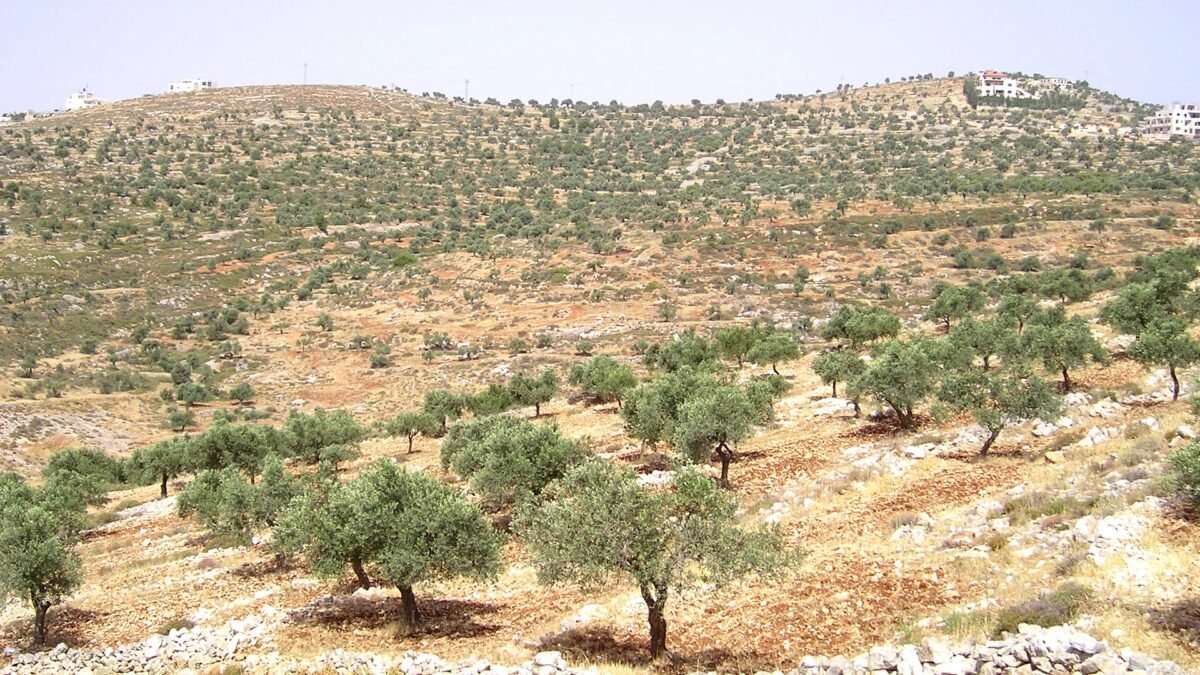
Taybeh, whose name means “the goodly” in Arabic, is one of about a dozen majority-Christian villages in the West Bank and home to around 1,200 to 1,340 residents, according to Palestinian statistics. It sits about 15 kilometres northeast of Jerusalem and 12 kilometres northeast of Ramallah, amid the olive-covered hills visible in photographs of the area. Jesus is said to have retired to the town — then called Ephraim — with his disciples, and its fifth-century Church of St. George is among the oldest Christian sites in Palestine.
The village has endured repeated attacks in the past two years. The Washington Post confirmed that on June 25, 2025, Taybeh and the nearby village of Kafr Malik were attacked by dozens of armed Israeli settlers who set fire to homes and vehicles; three Palestinians were shot dead, according to the newspaper. In July 2026, settlers set fires in the vicinity of the Byzantine-era Christian cemetery and the ruins of the Church of St. George, according to Vatican News. Reporting this year described a village hollowed out by roadblocks and fear: only a handful of tourists visited in two years, ten families emigrated, and the Oktoberfest that once drew 16,000 visitors has withered.
Christians make up only about one to two per cent of the three million Palestinians in the West Bank, down from roughly ten per cent when Israel was founded in 1948, according to reporting this week — which is part of why attacks on Taybeh resonate far beyond its size, drawing statements from church leaders and, in July, a visit from US Ambassador Mike Huckabee.
Analysis: Why It Matters
Settler violence against Palestinians in the West Bank is, grimly, routine. What makes Saturday’s attack different is the target: accredited diplomats from three European states, including Belgium’s consul general. Attacking a diplomatic convoy is a category error of a different order from the daily harassment of farmers — it turns a local human-rights problem into a state-to-state incident, and it forces governments that have mostly watched from the sidelines to respond in the language of diplomacy: condemnation, explanations demanded, ambassadors summoned, sanctions mooted. Prevot’s pledge to push for further EU sanctions is the most concrete sign yet that this incident could move from statements to policy.
The split-screen inside Israel is equally significant. The IDF, the police and the foreign minister condemned the attack — a textbook institutional response. The prime minister’s office, meanwhile, reached for the language of conspiracy: a “coordinated campaign to smear Israel,” caution against “premature conclusions.” When a government simultaneously condemns violence and casts doubt on verified reports of it, it hands its critics the argument they have been making for years: that accountability is theatrical. The Yesh Din figures give that argument its statistical backbone — more than 93 per cent of police investigations into settler violence between 2005 and 2023 closed without an indictment, with only three per cent ending in conviction. The question now is whether an attack witnessed by European diplomats, captured on video, and condemned by Israel’s own military produces a different outcome from the usual impunity.
The military’s “not coordinated” argument deserves scrutiny too. Diplomatic visits to the West Bank are frequent, and the convention — indeed, under international law, the obligation — is that the occupying power protects diplomats, whether or not their itinerary was cleared in advance. Prevot’s framing was deliberate: “As the occupying power, Israeli authorities must protect Palestinians, ensure the safety of diplomats and journalists.” That framing will be familiar to international lawyers, and its appearance in a Belgian foreign ministry statement suggests it is being readied as a legal argument, not just a talking point.
Then there is the calendar. Netanyahu heads into a close election later this month, according to the Wall Street Journal, and his political survival depends on a coalition that includes the settler movement and its supporters. His office’s reflexive defence — doubt the reports, blame the messenger — reads less like an assessment of the evidence and more like campaign positioning: unwilling to be seen coming down on settlers, unwilling to openly defend an attack on European diplomats, settling for a neither-confirm-nor-deny that satisfies no one. European capitals will read it that way too.
Finally, the two-day sequence — a Washington Post photographer attacked on Friday, European diplomats attacked on Saturday — punctures the idea that this violence is incidental. The diplomats were in Taybeh to document the very phenomenon that then engulfed them; the photojournalist was covering it when she was hurt. Journalists and diplomats are, in effect, becoming witnesses under attack — which is precisely why Prevot grouped the three categories together: “Harvesting olives, reporting the news or carrying out diplomatic duties should never put anyone at risk of attack.” When the people whose job is to watch are themselves assaulted, the world watches the watchers — and the footage, this time, is unambiguous.
What to Watch Next
- The police investigation: Israeli police say they are working to identify the suspects and bring them to justice. Watch for actual arrests and indictments — or whether the case quietly joins the more than 93 per cent of settler-violence investigations that the Israeli human rights group Yesh Din says closed without an indictment between 2005 and 2023.
- Europe’s response: Prevot has pledged to push for further EU sanctions. Watch for summons of Israel’s ambassadors in Brussels, Paris and Warsaw, and whether the EU moves beyond statements — measures against violent settlers have been discussed for years, with limited bite.
- The Israeli election campaign: With Netanyahu heading into a close vote later this month, watch how he and his rivals handle the incident. Any shift in rhetoric — toward accountability or toward the settler base — will signal where the political costs are seen to lie.
- The olive harvest’s remaining weeks: The harvest is the most dangerous season in the West Bank, and the diplomats’ visit was meant to assess it. Watch whether European governments now attach conditions or security demands to future delegations — and whether the attention changes anything on the ground for the farmers.
- Taybeh’s Christians: The village has already lost ten families to emigration in two years. Watch for statements from the Latin Patriarchate and other church leaders, and whether the international attention translates into protection — or merely into another round of sympathy statements as the community continues to shrink.
Sources
- CNN — Israeli settlers attack group of European diplomats in the occupied West Bank (17 October 2026)
- The Wall Street Journal — Masked Israeli Settlers Attack European Diplomats in West Bank (17 October 2026)
- Daily Guardian Europe — European diplomats attacked by Israeli settlers amid rising violence in occupied West Bank (17 October 2026)
- Nabih Bulos — “Test of faith for this Palestinian Christian village” (Taybeh background and UN/OCHA data, October 2026)

About the Author — Abdul Mannan
Related Articles
Trump Rules Out Nuclear Strike on Iran but Says US May Target Fortified ‘Pickaxe Mountain’ Nuclear Site
In a Newsmax interview, Trump said he "wouldn't use nuclear" against Iran, clarified the MOAB is conventional, and…

Missiles Strike Aden Airport as Saudi-Led Coalition Intercepts Ballistic Missile Aimed at Yanbu Oil Hub
Two missiles landed on Aden International Airport's grounds on Friday as the Saudi-led coalition said it intercepted a…
UNICEF Warns Gaza’s Malnutrition Gains Are “Fragile” as Commercial Supply Halt Bites
UNICEF's Ricardo Pires urges that all Gaza crossings remain open as a new report finds only one in…