
Trump Rules Out Nuclear Strike on Iran but Says US May Target Fortified ‘Pickaxe Mountain’ Nuclear Site

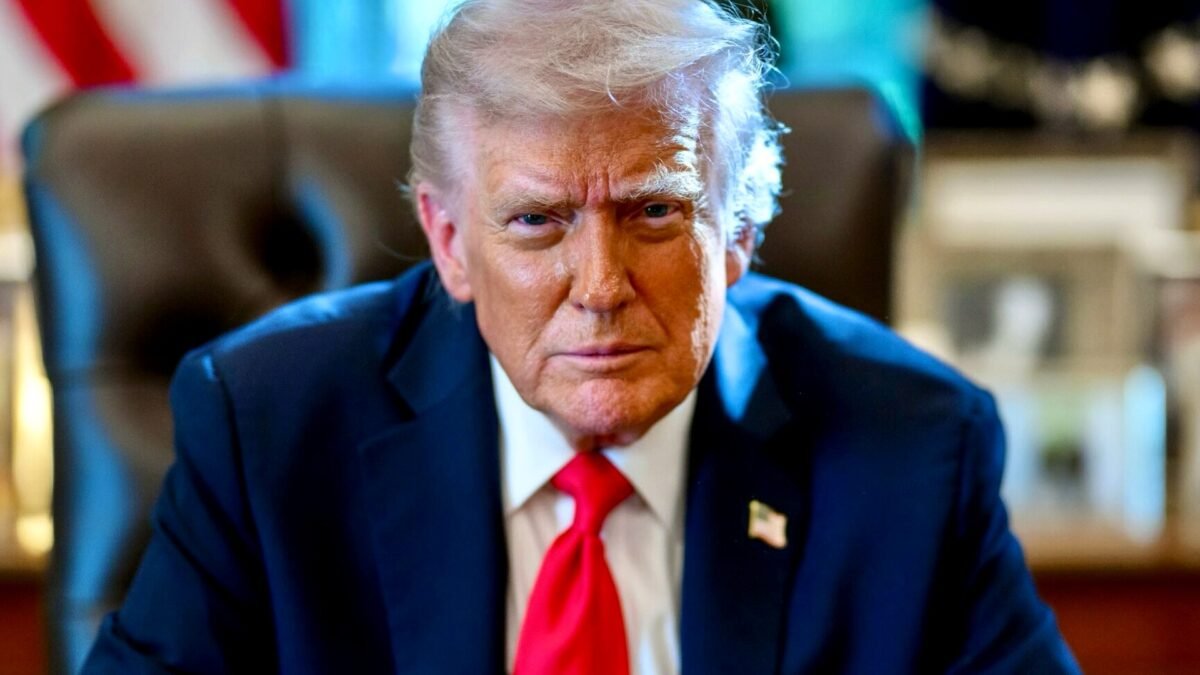
Trump Tells Newsmax the US Would Not Go Nuclear
United States President Donald Trump has ruled out the use of nuclear weapons against Iran, while simultaneously naming a specific Iranian nuclear facility as a possible target for a future American strike. In a Thursday-night interview with Newsmax, Trump said the United States did not need to go nuclear to achieve its goals in the conflict with Iran, which began in February with US-Israeli strikes, according to Reuters.
“No, I wouldn’t use nuclear. We don’t have to. We’re the greatest nuclear power in the world,” Trump said, in remarks reported by Reuters from the interview. The president added that there was no need to use a nuclear bomb in Iran, telling the outlet plainly: “I wouldn’t use nuclear. We don’t have to.”
The comments came in response to questions about reports that American military planners had developed new strike options against Iran — options that, according to CNN, could include the use of the GBU-43/B Massive Ordnance Air Blast bomb, better known as the “mother of all bombs,” against Iranian energy infrastructure and nuclear sites.
Pickaxe Mountain Named as a Possible Target
Trump singled out one underground facility by name. “Their nuclear is buried under millions of tons of mountain. Now we’re looking at Pickaxe Mountain. We may have to go there. We’ll take a shot at that one. We’ll knock it out fast,” the president said, according to Reuters.
Pickaxe Mountain — known in Iran as Kuh-e Kolang — is a complex of tunnels built into a mountain a few miles from Natanz, one of Iran’s main nuclear sites. Iran declared it a centrifuge-assembly site in 2021, and analysts estimate it is buried roughly 100 metres underground. It is widely described as the last significant nuclear-linked site in Iran to have escaped the wave of American and Israeli strikes earlier this year, and Trump has repeatedly threatened to hit it since July, according to reports summarised by InvestingLive.
Analysts have cautioned, however, that even the heaviest American bunker-busting munitions may not guarantee the destruction of a site that deep. The reservation hangs over Trump’s confident assertion that the United States could “knock it out fast.”
The “Mother of All Bombs” Question
Trump neither confirmed nor denied whether he had authorised the use of the MOAB against Iranian targets, but he was emphatic about what the weapon is and is not. “The mother of all bombs is not nuclear. It’s not nuclear at all. This is just an extremely large bomb. It’s like a tiny nuclear bomb. But the mother of all bombs is one big bomb, but it’s not nuclear,” he said, according to the Newsmax interview as reported by multiple outlets.
The GBU-43/B weighs roughly 21,600 pounds, or about 9.8 metric tons, and carries approximately 8,500 kilograms of H6 explosive. It was developed in 2003 and first saw combat in 2017, when American forces used it against an Islamic State tunnel complex in Afghanistan. It is the largest non-nuclear bomb in the American arsenal, according to JFeed.
The MOAB question had gained urgency after CNN reported that new American strike plans against Iran’s energy infrastructure and nuclear facilities could include the weapon, and after CBS News reported that the White House and the Pentagon had prepared plans to use one of the largest conventional bombs in the American inventory against Iranian military sites if the president ordered it.
Trump also drew a second red line in the interview: he said he did not anticipate deploying American ground troops to Iran. Ruling out both nuclear weapons and ground forces narrows the American range of options, but leaves air strikes firmly on the table.
Stated Goal: Iran Will Never Get a Nuclear Weapon
The president tied the threat to a single strategic objective: preventing Iran from acquiring a nuclear weapon. Asked why Washington would not simply declare victory and leave, Trump replied that the United States wanted “to make it so that they will never have a nuclear weapon, because if they had it, they would use it, in my opinion, instantaneously,” according to Reuters.
He also said he was speaking with Russia and China about denuclearisation, without offering details on those discussions, according to InvestingLive. The mention of Moscow and Beijing as interlocutors is notable: both have long been Tehran’s key international partners and arms-supply and diplomatic lifelines, and any settlement that constrains Iran’s nuclear programme would need at least their acquiescence.
Mixed Signals Before the Midterms
The Newsmax remarks add to a pattern of mixed signals from Washington. Last week, Trump said the United States would not attack Iran before the midterm elections in early November, and pointed to what he described as productive conversations with Tehran. The United States and Israel conducted the earlier strikes on Iranian nuclear sites this year and have since paused full combat operations, with Trump continuing to say the conflict would end soon.
Yet the new interview revived the threat of strikes, with reports circulating of new strike packages that could be executed before or after the midterms. Israel’s security establishment, for its part, raised its alert level on Wednesday to the highest point in months, as intelligence assessments pointed to a possible Iranian attack, according to JFeed.
Analysis: Why It Matters
The most important fact in this story is not the threat but the boundary. By ruling out nuclear weapons and ground troops on the record, Trump has publicly defined what the American response will not look like — and what it will. The message is a familiar one from his presidency: maximum rhetorical pressure, maximum optionality, but escalation kept to the air domain, where American advantages are overwhelming and the costs are borne by aircraft and munitions rather than soldiers and cities.
Naming Pickaxe Mountain specifically is a form of pressure in itself. The site matters because it represents the last significant nuclear-linked target that survived the year’s earlier bombing campaign. If American intelligence believes centrifuge components or related equipment are stored under that mountain — as US and Israeli officials have suggested — then the facility is the hinge on which Iran’s ability to reconstitute its nuclear programme turns. Threatening it publicly tells Tehran that Washington’s patience with the pause in combat operations is conditional, and that the “knock it out fast” option sits in a drawer with the president’s signature nearby.
The MOAB discussion is equally deliberate. By clarifying that the weapon is conventional, Trump defuses the most alarming reading of the CNN report — that Washington might escalate to nuclear use — while keeping the substance of the threat intact. The MOAB was designed for exactly this kind of problem: tunnel complexes too deep for standard bombs. It is a message aimed as much at Tehran as at the American public ahead of the midterms: restraint on nuclear weapons, no American boots on the ground, but overwhelming conventional power available if ordered.
But the analysts’ caveat deserves weight. A tunnel complex buried 100 metres into a mountain is not a problem that one bomb, however large, is guaranteed to solve. The 2017 Afghanistan strike demonstrated the MOAB’s power against tunnel networks, but Pickaxe Mountain was built by a state that has spent decades studying American weapons and hardening against them. “Knock it out fast” is presidential rhetoric; the engineers’ view is less certain. The gap between the two is where miscalculation lives.
The economic backdrop sharpens the stakes. Disruptions to shipping in the Strait of Hormuz and attacks on tankers have kept US crude near $97 a barrel despite accelerated emergency stock releases by the International Energy Agency, according to InvestingLive. Iran’s military chief, Major General Amir Hatami, said this week that the Strait of Hormuz would remain closed until the rights of the Iranian people are respected, according to Pakistan TV’s live coverage. A fresh American strike campaign — or an Iranian retaliation — would hit an energy market that is already strained, and the cost would land on American voters weeks before the midterms. That economic reality may be the strongest argument for why the threat remains a threat rather than an imminent operation.
Finally, the regional context cannot be ignored. On the same day Trump spoke, Iran denied Saudi Arabia’s accusation that it had encouraged the Houthis’ recent escalation against the kingdom, and renewed its offer to mediate between Riyadh and the rebels, according to The Obesiologia News and multiple outlets. The Saudi-led coalition said it intercepted a ballistic missile aimed at Yanbu, drones over Riyadh and the southern region, and cruise missiles over the Red Sea. The Houthis are part of the same Iranian-linked network that the Americans and Israelis have been fighting since February. Tehran’s simultaneous denial and mediation offer, alongside the American threat of new strikes, captures the whole Middle East moment: everyone positioning, everyone signalling, no one certain whether the next move is a deal or a bombing run.
What to Watch Next
- Whether the threat becomes an order. Trump said “we may have to go there” — the key question is whether new strike packages reported by CNN and CBS News move from planning to execution before or after the midterm elections in early November.
- Iran’s response. Israel’s security establishment has raised its alert level over possible Iranian attack preparations. Any Iranian move — direct or through proxies like the Houthis — would force Washington to decide whether the red lines hold.
- The Russia-China channel. Trump’s mention of denuclearisation discussions with Moscow and Beijing was vague but potentially significant. If those talks are real, they could provide the off-ramp; if they are rhetoric, the off-ramp may not exist.
- Energy markets. With US crude near $97 and Hormuz disruptions already biting, watch oil prices and the IEA’s emergency stock posture for early signals of how seriously markets take the threat of escalation.
- The midterm clock. Trump promised no attack before the elections. The November deadline is both a constraint and a countdown — and what happens after it is the question that matters most.
Sources

About the Author — Abdul Mannan
Related Articles
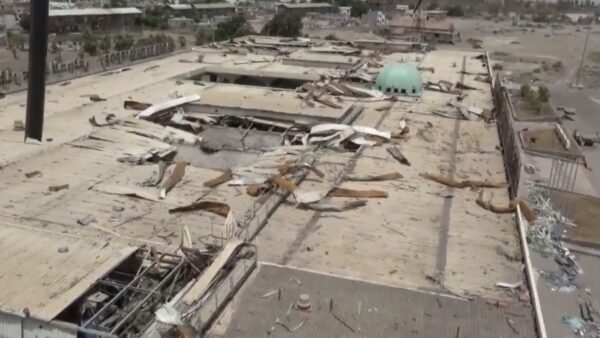
Missiles Strike Aden Airport as Saudi-Led Coalition Intercepts Ballistic Missile Aimed at Yanbu Oil Hub
Two missiles landed on Aden International Airport's grounds on Friday as the Saudi-led coalition said it intercepted a…
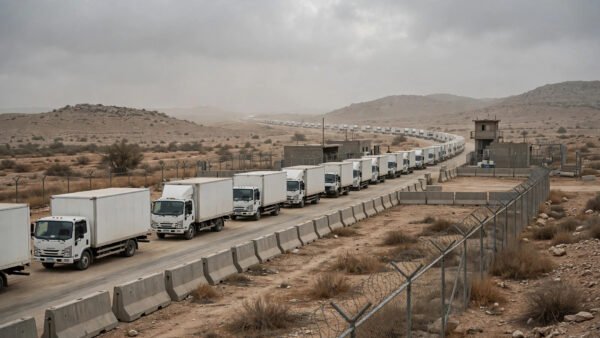
UNICEF Warns Gaza’s Malnutrition Gains Are “Fragile” as Commercial Supply Halt Bites
UNICEF's Ricardo Pires urges that all Gaza crossings remain open as a new report finds only one in…
Hezbollah Lawmaker Admits Seized Explosives Belonged to Group, Says They Were Meant for Israel
Hezbollah MP Hassan Fadlallah publicly claimed ownership of a 500kg explosives shipment seized in the Bekaa, demanding its…